
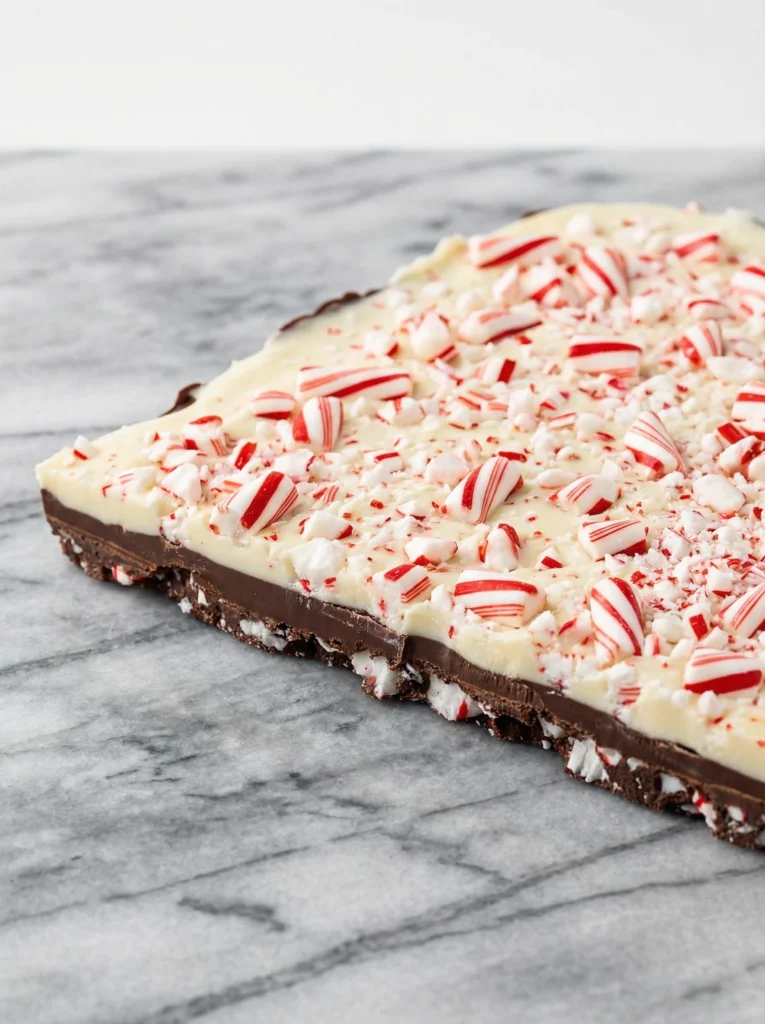
Peppermint bark stands as one of the most beloved holiday treats you can make at home. This simple recipe combines smooth chocolate layers with crunchy peppermint candy pieces to create a festive dessert that tastes just like the expensive store versions. I’ve been making this treat for over 15 years during the holiday season, and it never fails to impress guests or make perfect gifts.
The contrast between the rich chocolate and refreshing peppermint creates a flavor combination that kids and adults both love. You only need a few basic ingredients and about 30 minutes of active time to make this candy. The result is a professional-looking treat that tastes better than anything you’ll find at fancy candy shops. This recipe breaks down into simple steps that anyone can follow, even if you’ve never made candy before.
Reasons to Try Peppermint Bark
The flavor profile of peppermint bark makes it special. The dark chocolate base provides a rich, slightly bitter foundation that balances perfectly with sweet white chocolate. The crushed peppermint candies add a cool, refreshing burst that cuts through the richness of the chocolate layers. The texture offers another dimension of enjoyment. The smooth, creamy chocolate contrasts beautifully with the crunchy candy pieces scattered throughout and on top.
This recipe costs a fraction of what you’d pay for pre-made peppermint bark at specialty stores. A single batch yields enough pieces to fill multiple gift bags or serve a large gathering. The visual appeal of this candy makes it a stunning addition to any holiday dessert table. The red and white candy pieces against the dark and white chocolate create a festive presentation that screams Christmas.
Making peppermint bark at home lets you control the quality of ingredients. You can choose premium chocolate and adjust the amount of peppermint to match your taste preferences. The recipe scales easily, so you can double or triple the batch for larger gatherings or more gifts.
 Save
SaveWhere Did Peppermint Bark Come From?
Peppermint bark traces its roots to American candy-making traditions from the mid-20th century. The combination of chocolate and peppermint became popular during the 1940s and 1950s as candy makers experimented with holiday flavors. The bark format, which involves spreading melted chocolate in a thin layer and breaking it into irregular pieces, comes from traditional candy bark recipes that date back even further. A famous San Francisco chocolatier popularized the modern version of peppermint bark in the 1990s, transforming it into a luxury holiday item sold in specialty stores. The treat gained massive popularity as a homemade gift during the early 2000s when food blogs started sharing simple recipes that anyone could make at home.
Ingredients Notes
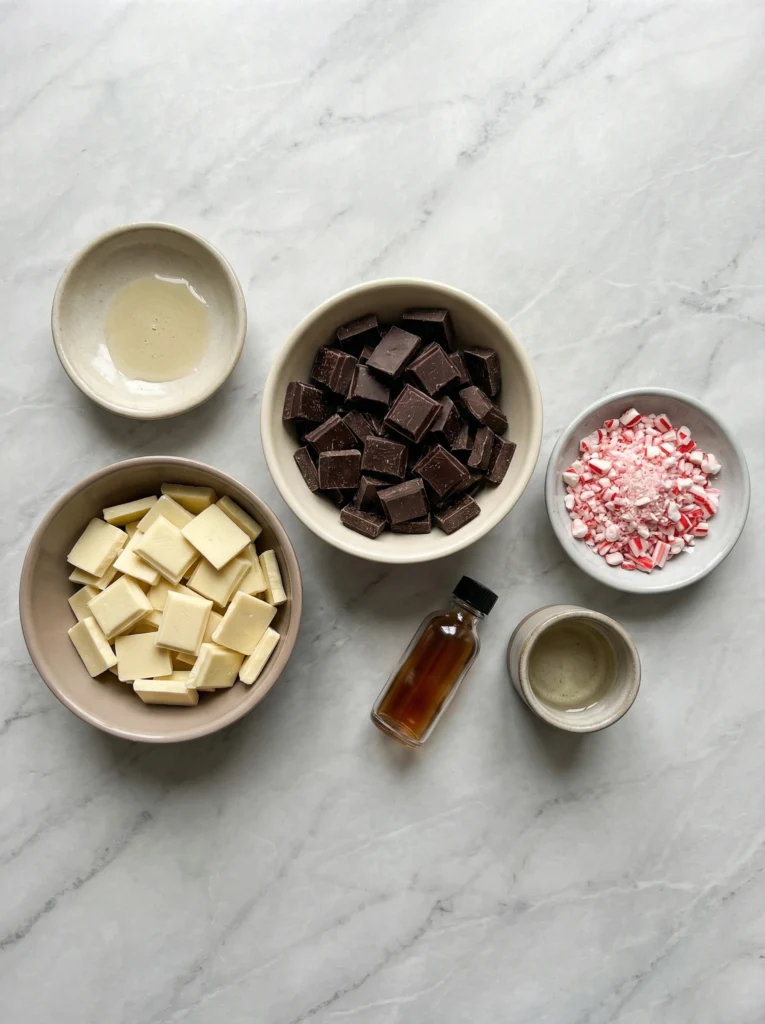
Dark Chocolate: I recommend using high-quality dark chocolate chips or chopped chocolate bars with 60-70% cacao content. The chocolate forms the base layer and needs to melt smoothly without seizing. Avoid chocolate chips labeled as “candy coating” or “melting wafers” for the dark layer because they lack the rich flavor you need. Real chocolate tastes better and sets properly at room temperature.
White Chocolate: Choose real white chocolate, not white candy coating or almond bark. Check the ingredient list and make sure cocoa butter appears as the first fat source. White chocolate can be tricky to melt because it burns easily, but the real stuff creates a creamy, smooth layer that’s worth the extra care.
Peppermint Candies: Traditional candy canes or round peppermint candies work equally well. I prefer using candy canes because they’re easy to find during the holiday season and come individually wrapped, which keeps them fresh. The candy pieces add both flavor and visual appeal to the finished bark.
Peppermint Extract: A small amount of pure peppermint extract intensifies the mint flavor in the white chocolate layer. Don’t use imitation extract because it tastes artificial and can make your bark taste like toothpaste. Pure extract costs more but delivers natural mint flavor that complements the chocolate.
Vegetable Oil: Adding a tiny bit of vegetable oil to the melted chocolate helps create a smoother consistency and makes spreading easier. You only need about one teaspoon per pound of chocolate. This step is optional but makes the process simpler, especially for beginners.
 Save
SaveHow to Make Peppermint Bark
Step 1: Line a 9×13 inch baking pan with parchment paper or aluminum foil. Make sure the paper extends over the edges because you’ll use these overhangs to lift the finished bark out of the pan. Spray the paper lightly with cooking spray to prevent sticking.
Step 2: Place your candy canes or peppermint candies in a zip-top plastic bag. Seal the bag and crush the candies using a rolling pin or meat mallet. Hit them firmly but not too aggressively because you want a mix of fine pieces and small chunks. Set aside about half of the crushed candy for topping the bark later.
Step 3: Melt the dark chocolate in a microwave-safe bowl. Heat it in 30-second intervals, stirring between each interval, until the chocolate is completely smooth. This usually takes about 2-3 minutes total. You can also melt the chocolate in a double boiler if you prefer that method. Add one teaspoon of vegetable oil and stir until combined.
Step 4: Pour the melted dark chocolate into your prepared pan. Use a rubber spatula to spread it into an even layer that covers the entire bottom of the pan. Tap the pan gently on the counter a few times to release any air bubbles trapped in the chocolate.
Step 5: Sprinkle half of your crushed peppermint candies over the dark chocolate layer. Press them gently into the chocolate using the back of a spoon so they stick. Place the pan in the refrigerator for about 20 minutes until the chocolate sets completely and feels firm to the touch.
Step 6: Melt the white chocolate using the same method as the dark chocolate. White chocolate burns more easily, so use 20-second intervals instead of 30-second intervals. Stir frequently and stop heating as soon as the last few lumps remain, then stir until completely smooth. Add one teaspoon of vegetable oil and 1/4 teaspoon of peppermint extract. Stir well to combine.
Step 7: Remove the pan from the refrigerator. Pour the melted white chocolate over the set dark chocolate layer. Spread it evenly using a rubber spatula, making sure to cover all the edges and corners. Work quickly because white chocolate starts to set faster than dark chocolate.
Step 8: Immediately sprinkle the remaining crushed peppermint candies over the white chocolate layer. Press them gently into the surface so they stick when the chocolate hardens. You can create patterns or scatter them randomly, depending on your preference.
Step 9: Return the pan to the refrigerator and chill for at least one hour until both layers set completely. The bark should feel solid and cold when you touch it. For best results, leave it in the refrigerator for two hours.
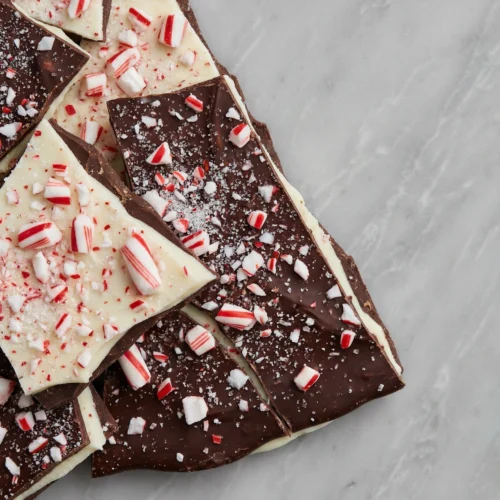
Step 10: Remove the pan from the refrigerator and lift the bark out using the parchment paper overhangs. Place it on a cutting board. Use a large, sharp knife to cut the bark into squares or break it into irregular pieces using your hands. I prefer breaking it by hand because the irregular shapes look more rustic and authentic.
What You Must Know About Peppermint Bark
Never let water touch your melting chocolate. Even a single drop of water will cause the chocolate to seize and turn into a grainy, lumpy mass that can’t be fixed. Make sure all your bowls and utensils are completely dry before you start melting chocolate.
Don’t rush the cooling process by putting the bark in the freezer instead of the refrigerator. Freezing causes chocolate to form condensation when it warms up, which creates a cloudy appearance and can make the texture grainy. The refrigerator provides the right cooling speed for smooth, shiny chocolate.
White chocolate requires more attention than dark chocolate when melting. It contains milk solids that burn easily, so keep your heating intervals short and stir frequently. If the white chocolate seems too thick, add vegetable oil one teaspoon at a time until it reaches spreading consistency.
The candy pieces can dissolve slightly if they sit on warm chocolate for too long. Work quickly when adding the crushed peppermint to the white chocolate layer, and get the pan back into the refrigerator within five minutes of spreading the white chocolate.
Room temperature affects how well the chocolate sets. If your kitchen feels very warm, the bark might not harden properly. Try to work in a cool room and keep the chocolate chilled until you’re ready to serve it.
Helpful Tips
Place the candy canes in the freezer for 10 minutes before crushing them. Frozen candy canes break into smaller, more uniform pieces and create less dust than room-temperature candies. The cleaner pieces look better on the finished bark.
Use a pizza cutter to slice the bark into uniform squares if you want neat, professional-looking pieces. Wipe the blade clean between cuts to prevent the chocolate layers from smearing.
Microwave your chocolate at 50% power instead of full power if your microwave tends to run hot. This gentler heating reduces the risk of burning and gives you better control over the melting process.
Add a pinch of salt to the dark chocolate layer for a more complex flavor profile. The salt enhances the chocolate taste and creates an interesting contrast with the sweet peppermint.
Make cleanup easier by melting chocolate in glass measuring cups instead of bowls. The spouts make pouring easier, and the handles stay cool while you work.
 Save
SaveVariations and Substitutions
Substitute milk chocolate for dark chocolate if you prefer sweeter bark. Milk chocolate creates a milder flavor that kids often enjoy more than dark chocolate. Use the same melting technique but watch it carefully because milk chocolate can burn more easily than dark.
Replace peppermint candies with crushed cookies for a different flavor profile. Oreos, graham crackers, or chocolate wafer cookies all work well. This creates a cookies-and-cream variation that’s perfect for people who don’t like mint.
Use crushed pretzels instead of candy canes for a sweet and salty version. The pretzel pieces add crunch and a savory element that balances the sweetness of the chocolate. This variation pairs especially well with milk chocolate.
Add chopped nuts to either layer for extra crunch and nutrition. Almonds, pecans, or walnuts complement both dark and white chocolate. Toast the nuts first to enhance their flavor.
Make a single-layer version using only dark chocolate or only white chocolate if you want to save time. The single layer still tastes delicious and requires half the work. Just use double the amount of crushed candy on top.
Create swirled bark by dropping spoonfuls of white chocolate onto the dark chocolate layer before it sets, then using a knife to swirl the two colors together. This technique creates a marbled effect that looks impressive.
Serving Suggestions for Peppermint Bark
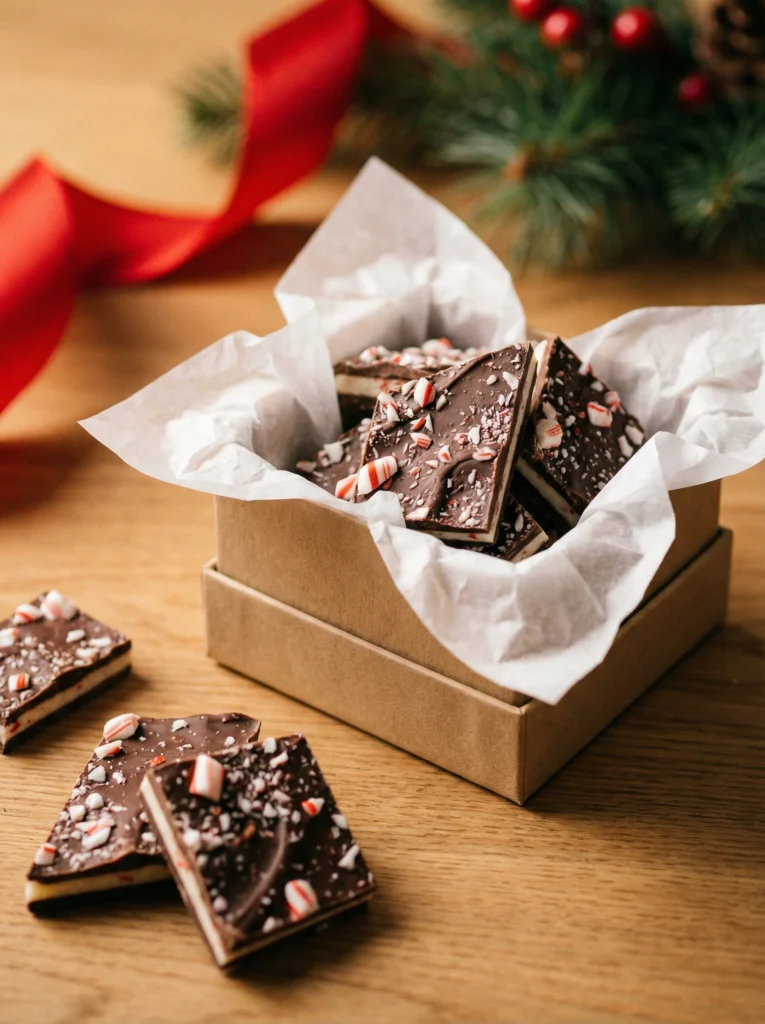
Break the bark into small pieces and package them in clear cellophane bags tied with red ribbon for homemade gifts. Stack several pieces in each bag and add a festive gift tag with the recipe name.
Arrange bark pieces on a white serving platter surrounded by fresh pine branches and small ornaments for a beautiful holiday presentation. The red and white candy pieces complement traditional Christmas decorations perfectly.
Serve peppermint bark alongside hot chocolate or coffee as an after-dinner treat. The cool mint flavor refreshes your palate after a heavy meal, and the chocolate melts slightly when paired with hot drinks.
Crush bark pieces and sprinkle them over vanilla ice cream or frozen yogurt for an easy dessert topping. The crunchy pieces add texture and festive flavor to plain ice cream.
Include peppermint bark as part of a dessert board with other holiday treats like cookies, fudge, and brownies. The variety gives guests options and creates an impressive spread.
Chop bark into small chunks and fold them into vanilla cake batter or brownie batter before baking. The chocolate pieces melt slightly during baking and create pockets of minty flavor throughout the dessert.
 Save
SaveStorage
Store peppermint bark in an airtight container in the refrigerator for up to three weeks. Place sheets of parchment paper between layers to prevent the pieces from sticking together. The cool temperature keeps the chocolate firm and prevents the candy pieces from becoming sticky.
Keep the container away from foods with strong odors because chocolate absorbs smells easily. Store it on a shelf by itself or with other desserts rather than near onions, garlic, or other savory items.
Peppermint bark can be frozen for up to two months if you need to make it far in advance. Wrap the pieces tightly in plastic wrap, then place them in a freezer bag with all the air pressed out. Thaw the bark in the refrigerator overnight before serving to prevent condensation from forming on the chocolate.
Let refrigerated bark sit at room temperature for about 10 minutes before serving. This allows the chocolate to soften slightly and makes the bark easier to bite through. The flavor also tastes more pronounced at room temperature than when cold.
Frequently Asked Questions about Peppermint Bark
Can I use chocolate chips instead of chocolate bars?
Yes, chocolate chips work fine for peppermint bark. Use high-quality chips made with real chocolate, not compound coating. Because chips contain stabilizers, you may need to add a small splash of vegetable oil so they melt smoothly.
Why did my chocolate turn white and streaky after it set?
That discoloration is called bloom. It forms when chocolate undergoes temperature changes or moisture exposure. It usually happens if chilled bark sits in a warm room and condensation forms. It is harmless but affects appearance. Let the bark warm gradually and store it airtight to prevent blooming.
Can I make peppermint bark without peppermint extract?
Yes. Crushed candy canes alone give enough mint flavor for most people. Peppermint extract simply boosts intensity across the entire white chocolate layer. Without it, the bark still tastes minty but milder.
How do I prevent the two chocolate layers from separating?
Let the dark chocolate layer cool and set before adding the white chocolate. Press crushed peppermint pieces lightly into the dark chocolate so they anchor both layers when the white chocolate goes on top.
Can I make peppermint bark in advance for gifts?
Yes. Peppermint bark keeps well for up to three weeks in an airtight container in the refrigerator. Package it for gifting right before giving it so it looks freshly prepared.
What should I do if my chocolate seizes and becomes grainy?
If it seized because moisture got in, add warm milk or cream in small amounts while stirring until smooth. If the chocolate burned, discard it because the bitterness cannot be fixed.
Nutrition Facts (Per Serving)
| Nutrient | Amount |
|---|---|
| Calories | 180 |
| Total Fat | 11g |
| Saturated Fat | 7g |
| Cholesterol | 5mg |
| Sodium | 20mg |
| Total Carbohydrates | 21g |
| Dietary Fiber | 1g |
| Sugars | 19g |
| Protein | 2g |
| Calcium | 40mg |
| Iron | 1mg |
Nutritional values are approximate and based on one piece of bark (assumes recipe yields 24 pieces)
Perfect Peppermint Bark Recipe
Ingredients
- 12 ounces dark chocolate chips or chopped dark chocolate 60-70% cacao
- 12 ounces white chocolate chips or chopped white chocolate
- 2 teaspoons vegetable oil divided
- 1/4 teaspoon pure peppermint extract
- 10-12 candy canes or 1 cup peppermint candies crushed
- Cooking spray for pan
Instructions
- Line a 9×13 inch baking pan with parchment paper, extending the paper over the edges, and spray lightly with cooking spray.
- Place candy canes in a sealed plastic bag and crush with a rolling pin until you have a mixture of fine pieces and small chunks. Set aside half for later use.
- Melt dark chocolate in a microwave-safe bowl in 30-second intervals, stirring between each interval, until smooth. Add 1 teaspoon vegetable oil and stir to combine.
- Pour melted dark chocolate into prepared pan and spread evenly with a rubber spatula. Tap pan gently on counter to release air bubbles.
- Sprinkle half of the crushed peppermint candies over the dark chocolate layer and press gently with the back of a spoon. Refrigerate for 20 minutes.
- Melt white chocolate in a microwave-safe bowl in 20-second intervals, stirring frequently, until smooth. Add 1 teaspoon vegetable oil and 1/4 teaspoon peppermint extract. Stir well.
- Remove pan from refrigerator and pour melted white chocolate over the set dark chocolate layer. Spread evenly with a rubber spatula.
- Immediately sprinkle remaining crushed peppermint candies over white chocolate layer and press gently into surface.
- Refrigerate for at least one hour until completely set and firm.
- Lift bark from pan using parchment paper overhangs, place on cutting board, and break into irregular pieces or cut into squares with a sharp knife.