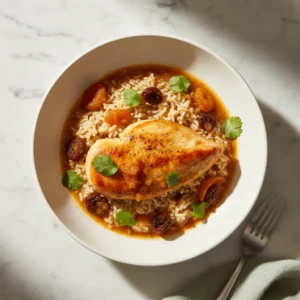
Apricot Chicken
Try this elegant apricot chicken recipe with dried apricots, warm spices, and a silky sauce. Restaurant-quality yet simple. Perfect for weeknight dinners.
Ingredients
- 4 boneless skinless chicken breasts (about 6 ounces each)
- 1 cup dried apricots chopped
- 1 medium onion diced
- 3 cloves garlic minced
- 1 cup chicken broth
- 1/2 cup apricot preserves
- 2 tablespoons soy sauce
- 1 tablespoon balsamic vinegar
- 1 teaspoon ground ginger
- 1/2 teaspoon ground cumin
- 1/4 teaspoon cayenne pepper
- 2 tablespoons olive oil
- 1 teaspoon salt
- 1/2 teaspoon black pepper
- 2 tablespoons fresh cilantro chopped
- 1 tablespoon cornstarch
- 2 tablespoons water
Instructions
- Pat 4 boneless, skinless chicken breasts dry with paper towels. Season both sides generously with 1 teaspoon salt and 1/2 teaspoon black pepper. Let sit at room temperature for 5 minutes so seasoning adheres.
- Pour 2 tablespoons olive oil into a large skillet (12 inches or wider). Heat over medium-high heat for 2-3 minutes until the oil shimmers and moves freely across the pan. A drop of water should sizzle immediately.
- Carefully place chicken breasts into the hot skillet, laying them away from you to avoid splashing. Do not move them for 5-6 minutes. The bottom should be golden brown and release easily when you lift with tongs.
- Flip each chicken breast and cook the other side for 5-6 minutes until golden brown. A meat thermometer inserted into the thickest part should read 155°F (this will finish cooking in the sauce). Transfer chicken to a clean plate.
- In the same skillet, add 1 medium onion, diced into 1/4-inch pieces. Stir constantly for 3-4 minutes until the onion is soft and translucent. You should smell the sweet onion aroma.
- Add 3 cloves garlic, minced very fine. Stir for exactly 1 minute until fragrant. Do not let garlic brown or it will taste bitter.
- Sprinkle 1 teaspoon ground ginger, 1/2 teaspoon ground cumin, and 1/4 teaspoon cayenne pepper over the onion and garlic. Stir constantly for 30 seconds. The spices will bloom and smell warm and toasty.
- Pour 1 cup chicken broth into the skillet and scrape the bottom with a wooden spoon to release any browned bits (this is called deglazing). Stir in 1/2 cup apricot preserves, 2 tablespoons soy sauce, and 1 tablespoon balsamic vinegar. Mix until the preserves dissolve completely (about 1-2 minutes of stirring).
- Stir in 1 cup chopped dried apricots. The sauce should look golden and smell sweet and savory.
- Nestle the seared chicken breasts back into the skillet, skin-side up, making sure they are mostly covered by sauce. Reduce heat to medium-low. Cover with a lid (or foil if you don't have a lid).
- Simmer for 15-18 minutes. After 15 minutes, insert a meat thermometer into the thickest part of the chicken (not touching bone). It should read 165°F. If not, cover and cook 2-3 more minutes, then check again. The chicken should feel firm to the touch and juices should run clear.
- Mix 1 tablespoon cornstarch with 2 tablespoons water in a small bowl until smooth with no lumps. Remove the skillet from the lid. Stir the cornstarch slurry into the sauce.
- Simmer uncovered for 2-3 minutes, stirring occasionally, until the sauce thickens enough to coat the back of a spoon. If you run your finger across the spoon, the line should hold.
- Taste the sauce. Add more salt, pepper, or soy sauce to your preference. The sauce should taste balanced between sweet (apricot), savory (soy and spices), and tangy (vinegar).
- Remove from heat. Sprinkle 2 tablespoons fresh cilantro, finely chopped, over the chicken and sauce.
- Let rest in the pan for 2-3 minutes before serving. The residual heat will continue to cook any remaining undercooked portions and the sauce will set slightly.
- Checkpoint: You are ready to serve when the chicken reaches 165°F internally, the sauce coats a spoon, and the apricots are tender and infused with sauce.