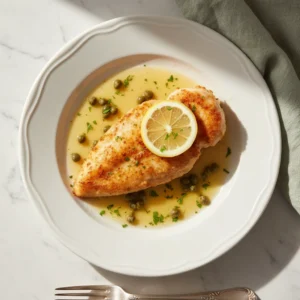
Chicken Piccata
Quick and elegant chicken piccata with bright lemon-caper sauce. Ready in 30 minutes. Perfect for weeknight dinners or special entertaining.
Ingredients
- 4 boneless skinless chicken breasts (about 6 ounces each)
- 1/2 cup all-purpose flour
- 1 teaspoon salt
- 1/2 teaspoon black pepper
- 1/2 teaspoon garlic powder
- 3 tablespoons olive oil
- 2 tablespoons butter
- 1/2 cup dry white wine
- 1 cup chicken broth
- 1/3 cup fresh lemon juice
- 1/4 cup capers drained
- 3 cloves garlic minced
- 1/2 teaspoon red pepper flakes
- 2 tablespoons fresh parsley chopped
- 1 lemon sliced into thin rounds
- Salt and pepper to taste
Instructions
- Prep the chicken: Place one chicken breast between two pieces of plastic wrap on a cutting board. Using a meat mallet (flat side), pound gently and firmly from the center outward until the chicken is an even 1/4 inch thick all over. This should take 1–2 minutes per breast. Repeat with remaining breasts. Checkpoint: All chicken pieces should be roughly the same thickness so they cook evenly.
- Make the flour mixture: Pour 1/2 cup all-purpose flour into a shallow plate or wide bowl. Add 1 teaspoon salt, 1/2 teaspoon black pepper, and 1/2 teaspoon garlic powder. Stir with a fork until combined. Checkpoint: The mixture should look evenly seasoned with no lumps.
- Coat the chicken: Take one pounded chicken breast and dredge it in the flour mixture, pressing gently so the coating adheres. Flip and coat the other side. Tap off excess flour and place on a clean plate. Repeat with all chicken breasts. Checkpoint: Each piece should have a light, even flour coating with no bare spots.
- Preheat the skillet: Place a large skillet (10- to 12-inch) on the stovetop and set to medium-high heat. Add 3 tablespoons olive oil and 1 tablespoon butter. Heat for 2–3 minutes until the butter foams and the oil shimmers. Tilt the pan to coat evenly. Checkpoint: A drop of water should sizzle immediately in the hot oil.
- Sear the chicken (first batch): Carefully lay chicken breasts flat in the hot skillet, leaving about 1 inch of space between them. Do not move them for 3–4 minutes. The bottom should turn golden brown. Flip each breast and cook the other side for 3–4 minutes until golden brown. The internal temperature should reach 165°F on an instant-read thermometer. Transfer to a clean plate. Checkpoint: Both sides should have a deep golden-brown crust.
- Sear the chicken (second batch, if needed): If you have more than 2 chicken breasts, repeat step 5 with the remaining pieces, adding a bit more oil if the skillet looks dry. Transfer all cooked chicken to the plate.
- Make the sauce base: In the same skillet (do not rinse), add 3 minced garlic cloves and 1/2 teaspoon red pepper flakes. Stir constantly for 30 seconds—45 seconds until the garlic becomes fragrant and light golden. Do not let it burn. Checkpoint: You should smell a strong, pleasant garlic aroma.
- Deglaze with wine: Carefully pour 1/2 cup dry white wine into the skillet. Use a wooden spoon to scrape the bottom, loosening all the browned bits (called fond) stuck to the pan. This adds huge flavor. Let the wine bubble gently for 2 minutes until the liquid reduces slightly and smells less sharp. Checkpoint: The wine should reduce by about one-third, and most of the alcohol smell should be gone.
- Add broth and lemon juice: Pour 1 cup chicken broth and 1/3 cup fresh lemon juice into the skillet. Stir well and let simmer for 1 minute. Checkpoint: The sauce should look light yellow and smell bright and tangy.
- Return chicken to the pan: Lay all cooked chicken breasts back into the skillet, nestling them into the sauce. Simmer gently (small bubbles rising slowly) for 3–4 minutes, turning once halfway through, until the chicken is heated all the way through. Checkpoint: The chicken should feel hot when you touch it lightly with a clean finger.
- Add capers and butter: Drain 1/4 cup capers in a colander and rinse under cold water if they taste very salty. Add the rinsed capers to the skillet. Cut 1 tablespoon cold butter into small pieces and add to the sauce. Stir gently for 1 minute until the butter melts completely and the sauce becomes smooth and glossy. Checkpoint: The sauce should coat the back of a spoon and look rich and silky.
- Taste and season: Carefully spoon a tiny bit of sauce into a clean spoon, let it cool for a few seconds, and taste. Add a small pinch of salt and pepper if needed. Stir to combine. Checkpoint: The sauce should taste bright (lemony), salty (from capers and salt), and slightly peppery with no single flavor overpowering the others.
- Plate and garnish: Transfer one chicken breast to each serving plate using tongs. Spoon the sauce and capers generously over and around each piece. Sprinkle 1/2 tablespoon fresh chopped parsley on top of each plate. Lay a thin lemon slice on top or to the side as decoration. Checkpoint: The plated dish should look elegant with a light yellow sauce, visible capers, green parsley, and a yellow lemon slice.