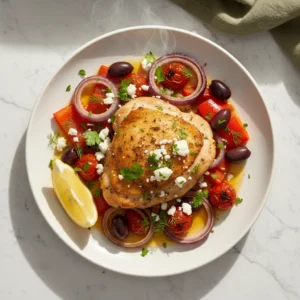
Greek Chicken Thighs
Easy Greek chicken thighs with olives, feta, and roasted vegetables. Authentic Mediterranean flavors with tender, juicy meat. One-pan dinner recipe.
Ingredients
- 8 boneless skinless chicken thighs
- 1/4 cup extra virgin olive oil
- 3 tablespoons red wine vinegar
- 6 cloves garlic minced
- 2 teaspoons dried oregano
- 1 teaspoon dried thyme
- 1 teaspoon paprika
- 1/2 teaspoon red pepper flakes
- 1 teaspoon salt
- 1/2 teaspoon black pepper
- 1 lemon cut into quarters
- 1 red onion cut into thick rings
- 2 red bell peppers cut into chunks
- 2 cups cherry tomatoes
- 1 cup Kalamata olives pitted
- 1/2 cup crumbled feta cheese
- 2 tablespoons fresh parsley chopped
- 1 tablespoon fresh dill chopped
- 1 cup chicken broth
Instructions
- In a large bowl, whisk together 1/4 cup extra virgin olive oil, 3 tablespoons red wine vinegar, 6 minced garlic cloves, 2 teaspoons dried oregano, 1 teaspoon dried thyme, 1 teaspoon paprika, 1/2 teaspoon red pepper flakes, 1 teaspoon salt, and 1/2 teaspoon black pepper. Mix for about 1 minute until well combined. Checkpoint: The marinade should be fragrant and well-blended with no streaks of oil remaining.
- Pat dry 8 boneless, skinless chicken thighs with paper towels—this helps the marinade stick better. Approximately 30 seconds per thigh.
- Place dried chicken thighs into the marinade bowl and toss with tongs or clean hands until all surfaces are coated, about 2 minutes. Checkpoint: Every piece of chicken should be glistening with marinade.
- Cover the bowl with plastic wrap or transfer to a large zip-top bag. Refrigerate for at least 2 hours, or preferably 8–12 hours overnight. If using a longer overnight marinade in a cold kitchen, the thighs will still be tender and flavorful.
- Remove marinated chicken from the refrigerator 30 minutes before cooking—this brings it to room temperature and ensures even cooking. Leave on the counter uncovered.
- Preheat your oven to 400°F and position the oven rack in the center. This takes about 10–12 minutes. Checkpoint: Your oven should be fully preheated before chicken enters.
- Transfer all marinated chicken thighs to a large roasting pan (13 x 9 inches) or 12-inch cast-iron skillet, reserving any excess marinade in the bowl. Arrange thighs skin-side up (if using skin-on) or flat in a single layer without overlapping. Approximately 2 minutes to arrange.
- Cut 1 lemon into quarters and arrange around the chicken thighs. Cut 1 red onion into thick rings and scatter throughout the pan. Cut 2 red bell peppers into 1-inch chunks and distribute evenly. This arrangement takes about 3 minutes.
- Add 2 cups cherry tomatoes and 1 cup pitted Kalamata olives to the pan, scattering them among the chicken and vegetables. Pour 1 cup chicken broth slowly into the bottom of the pan around (not directly over) the chicken—this keeps the chicken moist without steaming it. Approximately 2 minutes to add liquid and vegetables.
- Transfer the roasting pan to the preheated 400°F oven on the center rack. Roast uncovered for 35–40 minutes. At the 20-minute mark, stir the vegetables gently (leaving chicken undisturbed) to ensure even cooking. Checkpoint: Chicken is done when an instant-read thermometer inserted into the thickest part of a thigh reaches 165°F, or when juices run clear when pierced with a fork. Thighs should be golden-brown on top.
- Remove the roasting pan from the oven and let the chicken rest in the pan for 5 minutes. This allows juices to redistribute, keeping meat tender. Do not cover.
- Sprinkle 1/2 cup crumbled feta cheese, 2 tablespoons fresh chopped parsley, and 1 tablespoon fresh chopped dill evenly over the chicken and vegetables. Approximately 1 minute.
- Serve immediately from the pan or transfer to a large serving platter, spooning pan juices and vegetables over chicken. Garnish with additional fresh herbs if desired.
- Troubleshooting:If chicken thighs are uneven in thickness, place thicker ones toward the hotter part of the oven and thinner ones toward the center or back.
- If vegetables aren't tender after 40 minutes, remove chicken to a plate, continue roasting vegetables for 5 more minutes, then return chicken.
- If pan juices are too thin, transfer chicken to a serving plate, set roasting pan on stovetop over medium-high heat, and simmer liquid for 3–5 minutes to concentrate flavors before drizzling over chicken.
- If chicken looks dry when sliced, it may have been overcooked; thighs are forgiving, but 40 minutes at 400°F is the upper limit. Next time, check temperature at 33 minutes.
- If feta cheese gets too hot and oily, add it just before serving rather than during the last minute of cooking.