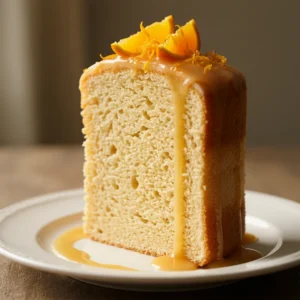
Orange Chiffon Cake
Learn how to make a light and fluffy orange chiffon cake with fresh citrus flavor. Detailed step-by-step instructions for bakery-quality results at home.
Ingredients
- 2 cups cake flour
- 1.5 cups granulated sugar
- 1 tablespoon baking powder
- 0.5 teaspoon salt
- 0.5 cup fresh orange juice
- 0.25 cup vegetable oil
- 4 large egg yolks
- 2 tablespoons orange zest
- 1 tablespoon vanilla extract
- 8 large egg whites
- 0.5 teaspoon cream of tartar
- 2 cups powdered sugar
- 3 tablespoons fresh orange juice
- 1 tablespoon butter softened
- 1 teaspoon orange zest for garnish
- Fresh orange slices for garnish
Instructions
- Preheat and prepare: Preheat your oven to 325°F. Use a 10-inch tube pan (the removable bottom type). Do NOT grease or oil it—the cake needs the friction of the dry pan sides to climb up and rise properly. This is non-negotiable. (5 minutes)
- Sift dry ingredients: Sift cake flour (use a sifter or fine-mesh strainer), 1 cup of granulated sugar, 1 tablespoon baking powder, and 0.5 teaspoon salt into a large mixing bowl. Sifting removes lumps and aerates the flour. (3 minutes)
- Create the yolk mixture: Make a shallow well in the center of the sifted flour mixture. Add 0.5 cup fresh orange juice (squeeze it fresh if possible—bottled lacks brightness), 0.25 cup neutral vegetable oil, 4 large egg yolks (separated from whites), 2 tablespoons fresh orange zest (use a microplane grater for fine texture), and 1 tablespoon vanilla extract. Using an electric mixer on medium speed, beat for about 2 minutes until the mixture is pale, smooth, and well combined. It should look like thick batter. Checkpoint: The yolk batter should be completely smooth with no streaks of flour visible. (5 minutes)
- Prepare egg white bowl: In a completely clean, dry bowl (any grease will prevent proper rising), add 8 large egg whites at room temperature and 0.5 teaspoon cream of tartar. Cream of tartar stabilizes the foam and helps it reach maximum volume. (1 minute)
- Whip egg whites: Using an electric mixer on high speed, beat the egg whites for 2–3 minutes until they become foamy and increase in volume. Gradually add the remaining 0.5 cup granulated sugar while continuing to beat. Continue beating for another 3–4 minutes until stiff peaks form—when you lift the beater, the peaks should stand straight up and not fold over. The mixture should be glossy, white, and thick. Checkpoint: The egg whites should not slip around in the bowl when you tilt it slightly. They should be thick and hold their shape. (7 minutes)
- Fold in egg whites (first addition): Pour about one-third of the beaten egg white mixture into the yolk batter. Using a rubber spatula, gently fold by cutting down through the center, sliding along the bottom, and bringing the mixture up and over the top. Rotate the bowl and repeat 8–10 times until the whites are mostly combined but some streaks remain. This first addition incorporates the whites gently without deflating them too much. (2 minutes)
- Fold in egg whites (second addition): Add half of the remaining egg white mixture and fold gently the same way until partially combined—a few white streaks are fine. (2 minutes)
- Fold in egg whites (final addition): Add the remaining egg white mixture and fold until just combined. The batter should look light and fluffy with no visible white streaks, but handle it very gently to preserve the airy texture. Overmixing at this stage will deflate the cake and make it dense. Checkpoint: The batter should be light, fluffy, and mousse-like. When you scoop a spoonful, it should feel airy and light. (3 minutes)
- Pour into pan: Gently pour the batter into the ungreased 10-inch tube pan, smoothing the top with a spatula. Do not tap the pan on the counter—this can deflate the batter. (2 minutes)
- Bake the cake: Place the pan on the middle oven rack. Bake at 325°F for 50–60 minutes. The cake is done when the top is golden brown, it springs back when lightly touched (but don't press hard), and a wooden toothpick inserted into the center comes out clean with no wet batter attached. The cake should not jiggle when you gently shake the pan. Checkpoint: The top should be golden, not pale, and a toothpick should come out clean. If the top is browning too quickly, tent loosely with foil for the last 10 minutes. (55 minutes)
- Cool upside down immediately: This is critical for chiffon cakes. As soon as you remove the cake from the oven, immediately invert the pan upside down. If your pan has legs or a removable center tube, place the center tube over a glass bottle neck or place the outer ring on a tall cooling rack so air can circulate underneath. The cake must hang as it cools to maintain its height and prevent it from shrinking back into the pan. Let it cool upside down for 2–3 hours at room temperature. Do not skip this step. (120 minutes)
- Remove from pan: Once completely cooled, use a thin, sharp knife (a long serrated knife works well) to carefully run around the outer edge of the pan, sliding it between the cake and the metal. Then run the knife around the center tube the same way. If your pan has a removable bottom, press up from underneath to release it. Carefully invert the cake onto a serving plate. The cake should release cleanly. (5 minutes)
- Make the glaze: In a small bowl, whisk together 2 cups powdered sugar, 3 tablespoons fresh orange juice (adjust the juice amount if the glaze is too thick or thin—it should be pourable but coat the back of a spoon), and 1 tablespoon softened butter. Whisk until completely smooth and no lumps remain. The glaze should be thick enough to drip slowly but not so thin that it runs off immediately. (3 minutes)
- Glaze the cake: Slowly pour the glaze over the top of the cooled cake, letting it drip naturally down the sides. Use the back of a spoon to help guide it if needed. Let the glaze set for 10–15 minutes before serving. (15 minutes)
- Garnish and serve: Just before serving, sprinkle 1 teaspoon fresh orange zest over the top of the cake and arrange fresh orange slices around the base or on top as a garnish. Slice with a serrated knife using a gentle sawing motion—don't press down or you'll crush the delicate crumb. Serve at room temperature or chilled. (5 minutes)