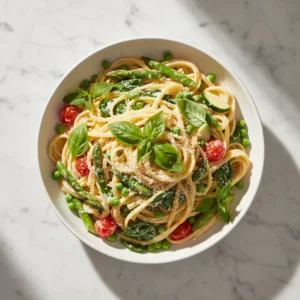
Spring Vegetable Pasta
Discover this vibrant spring vegetable pasta recipe with creamy ricotta, fresh asparagus, peas, and herbs. Ready in 20 minutes. Perfect for spring dinners.
Ingredients
- 1 pound fresh pasta or dried linguine
- 2 tablespoons olive oil
- 3 cloves garlic minced
- 1 cup fresh asparagus cut into 2-inch pieces
- 1 cup fresh snap peas halved
- 1 cup fresh baby spinach
- 1 cup fresh peas shelled
- 1 medium zucchini diced
- 1 cup cherry tomatoes halved
- 4 ounces fresh ricotta cheese
- 1/2 cup reserved pasta water
- 2 tablespoons fresh lemon juice
- 2 tablespoons fresh basil chopped
- 1 tablespoon fresh dill chopped
- 1/4 cup grated Pecorino Romano cheese
- Salt to taste
- Black pepper to taste
- Red pepper flakes to taste
- 1 tablespoon fresh mint chopped
Instructions
- Bring a large pot (at least 6 quarts) of salted water to a rolling boil over high heat, about 8–10 minutes. The water should taste like seawater. Checkpoint: Large bubbles are rapidly breaking the surface.
- Add 1 pound fresh or dried pasta to the boiling water and stir immediately to prevent sticking. Cook according to package directions (fresh pasta typically 2–3 minutes, dried 8–10 minutes) until al dente, which means tender but still firm when you bite it. Before draining, scoop out and reserve 1/2 cup of starchy pasta cooking water in a small bowl. Set aside. Drain pasta into a colander but do not rinse. Checkpoint: Pasta should bend easily but have no white uncooked center when you bite a piece.
- While pasta cooks, prepare your vegetables: Cut 1 cup fresh asparagus into 2-inch pieces, halve 1 cup snap peas lengthwise, dice 1 medium zucchini into small bite-sized pieces, halve 1 cup cherry tomatoes, and measure out 1 cup fresh shelled peas. Mince 3 cloves garlic finely. Checkpoint: All vegetables are prepared and ready to add to the skillet quickly.
- Heat 2 tablespoons olive oil in a large skillet (12-inch is ideal) over medium heat for 1–2 minutes. The oil should shimmer and move easily when you tilt the pan. Checkpoint: Oil is hot but not smoking.
- Add minced garlic to the hot oil and stir constantly for 30 seconds. You should smell a strong, fragrant aroma. Do not let it brown or it will taste bitter. Checkpoint: Garlic is fragrant and light golden but not brown.
- Add the asparagus and snap peas to the skillet. Stir every 15–20 seconds for 2–3 minutes total. The vegetables should begin to soften slightly but still feel crisp when you bite one. They will continue cooking after you add other ingredients. Checkpoint: Asparagus is bright green and tender-crisp, snap peas are still snappy.
- Add the diced zucchini and fresh peas to the skillet. Stir frequently for exactly 2 minutes. The fresh peas should turn from pale to bright green. Zucchini should soften slightly but remain firm. Checkpoint: Peas are bright green, zucchini edges are soft but centers are still slightly firm.
- Add 1 cup baby spinach and halved cherry tomatoes to the skillet. Toss gently and continuously for 1 minute using a wooden spoon or tongs. The spinach will wilt and turn dark green; this is correct. Checkpoint: Spinach is completely wilted and dark green, tomatoes are warm.
- In a small bowl, combine 4 ounces fresh ricotta, 2 tablespoons fresh lemon juice, 2 tablespoons chopped fresh basil, 1 tablespoon chopped fresh dill, 1/2 teaspoon salt, and 1/4 teaspoon black pepper. Whisk together with a fork until well combined and slightly loose. The ricotta should be spreadable, not stiff. Checkpoint: Ricotta mixture is creamy, fragrant, and free of lumps.
- Add the drained pasta to the vegetable skillet. Pour the ricotta mixture over the pasta and vegetables. Using tongs or two wooden spoons, toss everything together gently but thoroughly for 1–2 minutes. Checkpoint: Ricotta is beginning to coat the pasta strands.
- While tossing, slowly pour in the reserved pasta water, a little at a time (start with 2 tablespoons), while continuing to toss. Add more pasta water only if the pasta looks dry or clumpy. You want a silky sauce that coats the pasta, not a soup. This should take 1–2 minutes. Checkpoint: Pasta is evenly coated in a creamy sauce; no dry spots or excess liquid pools at the bottom.
- Taste a bite of the pasta. If it needs more salt, add 1/4 teaspoon at a time and toss. If it needs brightness, add a squeeze more lemon juice. If you like spice, sprinkle 1/8 teaspoon red pepper flakes and toss. Adjust until the flavors feel balanced and fresh. Checkpoint: Flavors are bright, balanced, and delicious.
- Divide the pasta among 4–6 serving bowls (serve immediately so it stays warm). Top each bowl with 1 tablespoon grated Pecorino Romano cheese, a small pinch of fresh mint leaves, and a light drizzle of olive oil. Checkpoint: Pasta is served hot, creamy, and fragrant.