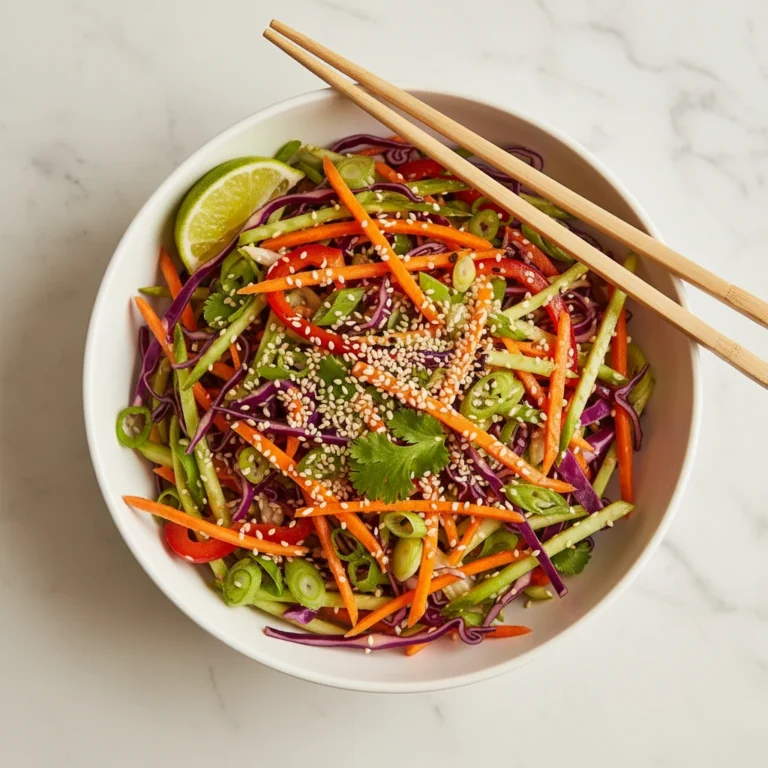
An Asian slaw recipe is a vibrant, crunchy side dish that brings authentic Asian flavors to any meal. Combining crisp cabbage, colorful vegetables, and a tangy sesame-ginger dressing, this slaw offers a perfect balance of sweet, savory, and spicy notes. Light yet satisfying, it pairs beautifully with grilled meats, seafood, or as a topping for tacos and noodle bowls. This versatile recipe is quick to prepare, naturally gluten-free, and a crowd-pleasing addition to any table.
Reasons to Try Asian Slaw
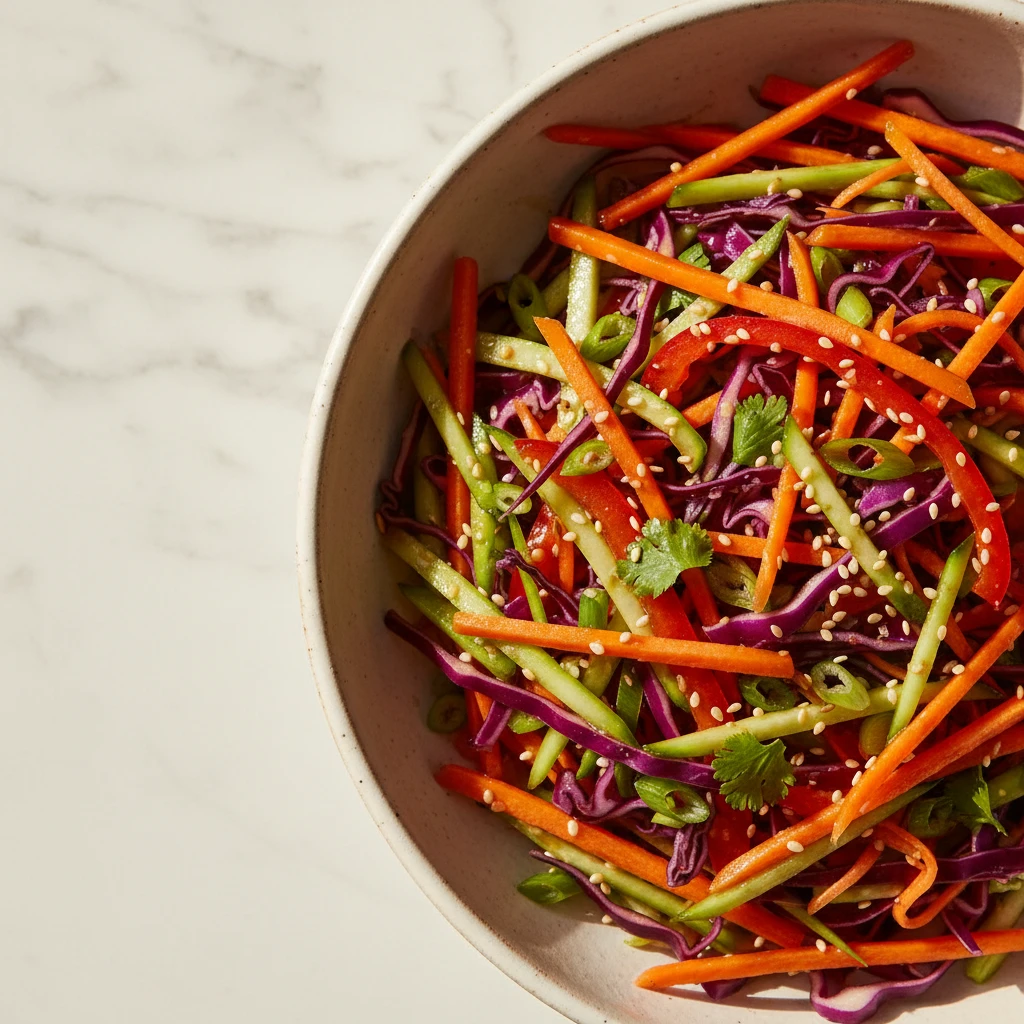
Crisp Texture and Vibrant Colors: This slaw features a satisfying crunch that stays fresh and never becomes soggy. The mix of green, purple, and red vegetables creates a visually stunning dish that’s as appealing to the eye as it is to the palate.
Bold Asian Flavors: The sesame-ginger dressing delivers authentic umami depth with notes of soy, sesame oil, and fresh ginger. The combination of rice vinegar and lime juice adds brightness without overwhelming the delicate vegetables.
Versatile and Quick: This recipe comes together in under 15 minutes, making it perfect for weeknight dinners or meal prep. Serve it as a side, topping, or standalone salad—it adapts to any cuisine or occasion.
Healthy and Nutrient-Dense: Packed with raw vegetables, this slaw is low in calories while being rich in vitamins, minerals, and antioxidants. The addition of sesame seeds provides a dose of calcium and healthy fats.
Naturally Gluten-Free and Vegan: This dish accommodates most dietary preferences without compromising on flavor or texture, making it an inclusive option for shared meals.
 Save
SaveIngredients Notes
- Green cabbage
- Purple cabbage
- Carrots
- Red bell pepper
- Green onions
- Sesame seeds
- Fresh cilantro
- Rice vinegar
- Low-sodium soy sauce
- Sesame oil
- Honey
- Fresh ginger
- Garlic
- Lime juice
- Red pepper flakes
- Vegetable oil
How to Make Asian Slaw
- Prepare all vegetables by slicing cabbage thinly, julienning carrots, and slicing bell pepper and green onions into thin strips.
- Toast sesame seeds in a dry skillet over medium heat for 1–2 minutes until fragrant, then set aside.
- In a small bowl, whisk together rice vinegar, soy sauce, sesame oil, honey, ginger, garlic, lime juice, and red pepper flakes. Slowly drizzle in vegetable oil while whisking to emulsify.
- Combine all prepared vegetables and cilantro in a large mixing bowl.
- Pour the dressing over the vegetables and toss thoroughly to coat evenly, about 2 minutes.
- Top with toasted sesame seeds and serve immediately, or chill for up to 2 hours before serving.
What You Must Know About Asian Slaw
Don’t Over-Dress Too Early: While this slaw can be made ahead, add the dressing just 30 minutes to 2 hours before serving. Adding dressing too early will cause the cabbage to become overly soft and lose its satisfying crunch. For meal prep, store dressed and undressed components separately and combine shortly before serving.
Use a Sharp Knife or Mandoline: Thin, uniform slicing is crucial for both texture and appearance. A dull knife will crush the vegetables rather than slice them cleanly, compromising the crisp texture. A mandoline slicer makes this task faster and more consistent, though a sharp chef’s knife works well if you’re careful.
Toast the Sesame Seeds Fresh: Pre-toasted sesame seeds lack the depth of flavor that freshly toasted seeds provide. Spend the extra 2 minutes toasting them—the difference is noticeable. Watch them carefully, as they can burn quickly.
Adjust Spice Level to Taste: The red pepper flakes add gentle heat, but if you prefer a milder slaw, reduce them to 1/4 teaspoon or omit entirely. Conversely, if you enjoy more heat, increase to 1 teaspoon or add fresh sliced chili pepper.
Room Temperature Serving is Best: While this slaw is refreshing chilled, serving it at room temperature allows the flavors of the dressing to shine more prominently. If you’ve refrigerated it, remove it from the cold 10 minutes before serving for optimal taste.
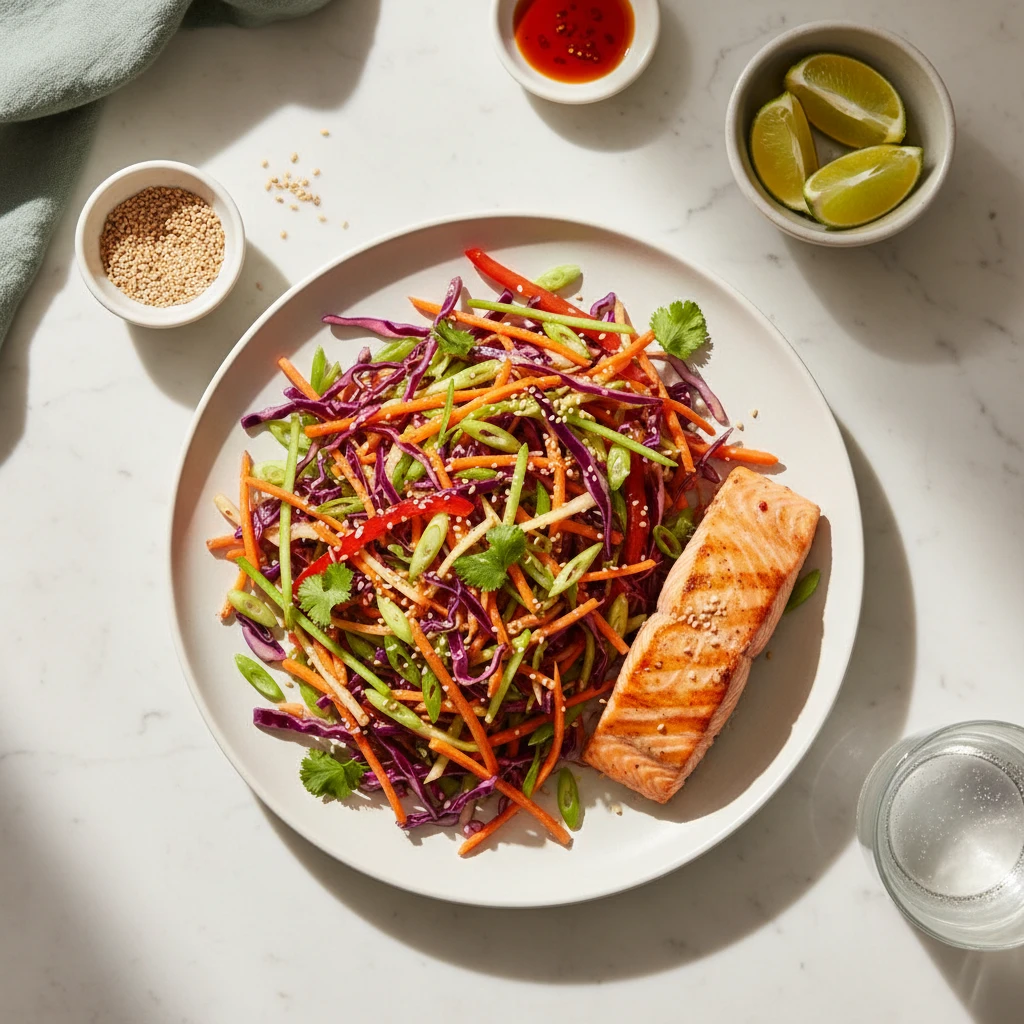
Helpful Tip—Make It a Meal: Transform this slaw into a complete meal by serving it as a bed for grilled chicken, salmon, or tofu. You can also use it as a topping for crispy rice bowls, lettuce wraps, or even sandwiches and tacos for an Asian fusion twist.
Variations and Substitutions
Protein Additions: Add grilled chicken, pan-seared tofu, roasted chickpeas, or cooked shrimp to transform this slaw into a satisfying main dish. A handful of roasted peanuts or cashews also adds protein and textural contrast.
Different Cabbage Options: Napa cabbage creates a milder, slightly sweet flavor profile. Bok choy adds a different texture and a subtle bitterness. Red cabbage alone creates a stunning monochromatic presentation.
Spicy Upgrade: Stir in 1 tablespoon of sriracha or chili paste for deeper heat and complexity. Add fresh sliced Thai chili or jalapeño for fresh, bright heat.
Nutty Variation: Replace sesame oil with peanut oil and add 2 tablespoons of crushed peanuts or almond butter to the dressing for an earthy, richer version.
Asian Cucumber Slaw: Add 1 large cucumber (julienned and lightly salted to remove excess water), reducing cabbage slightly. This adds refreshing crispness and is particularly good in summer.
Dressing Substitutes: Swap rice vinegar for apple cider vinegar for a slightly sweeter profile. Use tamari instead of soy sauce for a gluten-free option. Add 1 tablespoon of peanut butter to the dressing for a Thai peanut slaw.
Herb Variations: Use mint or basil instead of cilantro for a different Asian flavor profile. A combination of cilantro, mint, and Thai basil is outstanding.
Vegetable Swaps: Add thinly sliced radishes for peppery crunch, shredded daikon for crisp sweetness, or snap peas for substantial bite. Include edamame for protein and pop of color.
Serving Suggestions for Asian Slaw
With Grilled Proteins: Serve this slaw alongside grilled chicken breast, pork tenderloin, or salmon. The bright, tangy flavors cut through rich proteins beautifully and add freshness to the plate.
As a Taco Topping: Use this slaw as a crunchy topping for Korean beef tacos, fish tacos, or pulled pork tacos. The Asian flavors create an interesting fusion that feels modern and intentional.
Over Rice or Grain Bowls: Layer this slaw over jasmine rice, brown rice, or quinoa. Top with a fried egg, roasted vegetables, and a drizzle of sriracha mayo for a complete bowl meal.
As a Lettuce Wrap Filling: Serve this slaw inside crisp butter lettuce or iceberg lettuce leaves with sliced chicken or tofu for a light, low-carb meal.
Alongside Asian Noodles: Pair this slaw with chilled ramen noodles, cold sesame noodles, or pad thai for a refreshing noodle salad experience.
Garnish Ideas: Top with toasted peanuts, crispy fried onions, sesame seeds, fresh cilantro, and lime wedges. A drizzle of sriracha or hot chili oil adds visual appeal and an extra kick.
On Sliders or Sandwiches: Use this slaw to top gourmet sliders with Asian-inspired proteins like teriyaki chicken or Korean beef.
Appetizer Platter: Serve small portions of this slaw in endive leaves or crispy wonton cups for an elegant, handheld appetizer at parties.
 Save
SaveStorage and Reheating
Storage Guidelines: This slaw is best served fresh, but it can be stored in the refrigerator for up to 2 days. Store the dressed slaw in an airtight container; over time, the vegetables will release liquid and soften, so consume within 24 hours for optimal crispness. For longer storage, keep components separate: store undressed vegetables in one container and dressing in another for up to 3 days, then combine just before serving.
Making Ahead: Prepare all vegetables in advance (slice, julienne, and chop) and store them in separate airtight containers in the refrigerator for up to 2 days. This makes assembly quick and easy for busy weeknights. Toast sesame seeds fresh on the day of serving for maximum flavor.
Reheating Note: This is a fresh, cold dish and should not be reheated. If you’ve refrigerated the slaw and prefer it at room temperature, remove it from the cold about 10 minutes before serving and toss gently to redistribute the dressing.
Refreshing Wilted Slaw: If your slaw has become slightly limp after refrigeration, drain excess liquid, add a handful of fresh, crisp vegetables (shredded cabbage or julienned carrots), toss well, and serve immediately.
Frequently Asked Questions About Asian Slaw
Can I make Asian slaw ahead of time?
Yes, but with strategy. Prepare all vegetables the day before and store them separately in airtight containers in the refrigerator. Make the dressing the night before as well. Combine everything no more than 2 hours before serving to maintain maximum crispness. If serving at a party or event, dress the slaw 30 minutes to 1 hour before guests arrive.
Is this slaw vegan and gluten-free?
Yes, this recipe is naturally vegan and gluten-free as written. The only potential concern is soy sauce, which typically contains gluten. To make it fully gluten-free, use tamari (gluten-free soy sauce) instead. All other ingredients are naturally plant-based and gluten-free.
What can I use instead of sesame oil?
If you don’t have sesame oil or dislike its flavor, substitute with extra-virgin olive oil, peanut oil, or avocado oil. Peanut oil will give a slightly nutty flavor similar to sesame, while olive oil provides a Mediterranean twist. Use the same quantity.
Can I add crunch with nuts or seeds?
Absolutely! Besides sesame seeds, you can add toasted peanuts, sliced almonds, crispy fried onions, or sunflower seeds. Add these just before serving to prevent them from becoming soggy. A total of 3–4 tablespoons of additional crunch is ideal.
How do I prevent the slaw from becoming soggy?
The key is timing and proper slicing. Slice vegetables thinly but not so thin that they’re crushed. Don’t dress the slaw more than 2 hours in advance. If you need to prepare it earlier, store the dressed and undressed components separately and combine just before serving. Drain any excess liquid before serving if it accumulates.
What’s the best way to slice cabbage thinly?
A mandoline slicer is fastest and most consistent, but requires careful handling to avoid cuts. A sharp chef’s knife works well if you carefully slice the cabbage lengthwise into thin sheets. You can also use the slicing blade of a food processor, though this is less controlled. Practice makes perfect—aim for slices thin enough to see light through them.
Can I substitute rice vinegar with other vinegars?
Yes, but with flavor differences. Apple cider vinegar creates a slightly sweeter slaw. White vinegar is sharper and more acidic—use slightly less. Red wine vinegar adds depth but will tint the slaw. Rice vinegar is mild and slightly sweet, making it ideal, but the alternatives work if that’s what you have on hand.
How do I adjust the spice level?
Start with the 1/2 teaspoon red pepper flakes as written. If you prefer milder heat, reduce to 1/4 teaspoon or omit entirely. For more heat, increase to 1 teaspoon, add fresh sliced chili pepper, or stir in 1/2 teaspoon sriracha. Taste as you go, adding in small increments.
Nutrition Facts (Per Serving)
Nutrition Facts (Per Serving)
| Nutrient | Amount | % Daily Value |
| Calories | 145 | 7% |
| Total Fat | 9g | 14% |
| Saturated Fat | 1.2g | 6% |
| Total Carbohydrates | 14g | 5% |
| Dietary Fiber | 3g | 12% |
| Sugars | 8g | — |
| Protein | 3g | 6% |
| Sodium | 240mg | 10% |
| Vitamin A | 185% DV | 185% |
| Vitamin C | 95% DV | 95% |
| Calcium | 150mg | 12% |
| Iron | 1.2mg | 7% |
Dietary Notes: This Asian slaw is naturally vegan and gluten-free (when using tamari instead of regular soy sauce). It’s low in calories and high in vitamins A and C, making it an excellent choice for health-conscious eaters. The sesame seeds provide calcium and healthy fats. One serving is approximately 1.5 cups.
Asian Slaw Recipe
Ingredients
- 1 pound green cabbage thinly sliced
- 8 ounces purple cabbage thinly sliced
- 3 large carrots julienned or grated
- 1 red bell pepper thinly sliced
- 4 green onions sliced
- 3 tablespoons sesame seeds
- 1/4 cup fresh cilantro chopped
- 3 tablespoons rice vinegar
- 2 tablespoons low-sodium soy sauce
- 1 tablespoon sesame oil
- 1 tablespoon honey
- 1 teaspoon grated fresh ginger
- 2 cloves garlic minced
- 1 teaspoon lime juice
- 1/2 teaspoon red pepper flakes
- 2 tablespoons vegetable oil
Instructions
- Slice the green and purple cabbage into very thin strips using a sharp knife or mandoline slicer. You should have about 2 cups of each. This takes about 5 minutes. Checkpoint: Cabbage should be thin enough to see light through individual slices.
- Julienne (cut into thin matchsticks) the 3 carrots using a julienne peeler or knife. This takes about 3–4 minutes. If you don't have a julienne peeler, a box grater works fine. Checkpoint: You should have about 1.5 cups of carrot matchsticks.
- Slice the red bell pepper into very thin strips, removing seeds and white pith first. Slice the green onions into thin rounds, separating white and green parts. This takes about 3 minutes. Checkpoint: Vegetables should be uniform in size for even texture.
- Place a dry skillet over medium heat for 30 seconds until warm. Add 3 tablespoons sesame seeds and toast, stirring constantly, for 1–2 minutes until light golden and fragrant. Immediately transfer to a small plate. Do not let them burn. Checkpoint: Sesame seeds should smell nutty and toasted, not burned or bitter.
- In a small mixing bowl, add 3 tablespoons rice vinegar, 2 tablespoons soy sauce, 1 tablespoon sesame oil, 1 tablespoon honey, 1 teaspoon fresh ginger (grated), 2 cloves garlic (minced), 1 teaspoon lime juice, and 1/2 teaspoon red pepper flakes. Whisk together for 30 seconds until combined. Checkpoint: Dressing should smell aromatic with balanced sweet and savory notes.
- While whisking continuously, slowly drizzle in 2 tablespoons vegetable oil into the dressing bowl. Whisk for about 1 minute until the oil is fully incorporated and the dressing looks slightly thickened. Checkpoint: Dressing should be smooth and slightly emulsified, not separated.
- In a large mixing bowl, combine the sliced green cabbage, purple cabbage, carrots, red bell pepper, green onions, and 1/4 cup fresh cilantro (chopped). Do not add dressing yet. Checkpoint: All vegetables should be prepped and ready to dress.
- Pour the entire dressing over the vegetables and toss vigorously using two forks or tongs for 2–3 minutes until all vegetables are evenly coated and slightly wilted. Checkpoint: Every piece of vegetable should glisten with dressing; no dry spots should remain.
- Sprinkle the toasted sesame seeds over the top and toss gently one more time to distribute. This takes 30 seconds. Checkpoint: Sesame seeds should be visible throughout.
- Taste a bite of the slaw. The flavor should be balanced: slightly tangy, savory, with a hint of heat and sweetness. If it needs more lime juice, add a squeeze. If it needs more soy sauce, add 1/2 teaspoon at a time. This takes 1 minute.
- Serve immediately for maximum crispness, or cover and refrigerate for up to 2 hours. If chilling, stir again just before serving to redistribute the dressing.