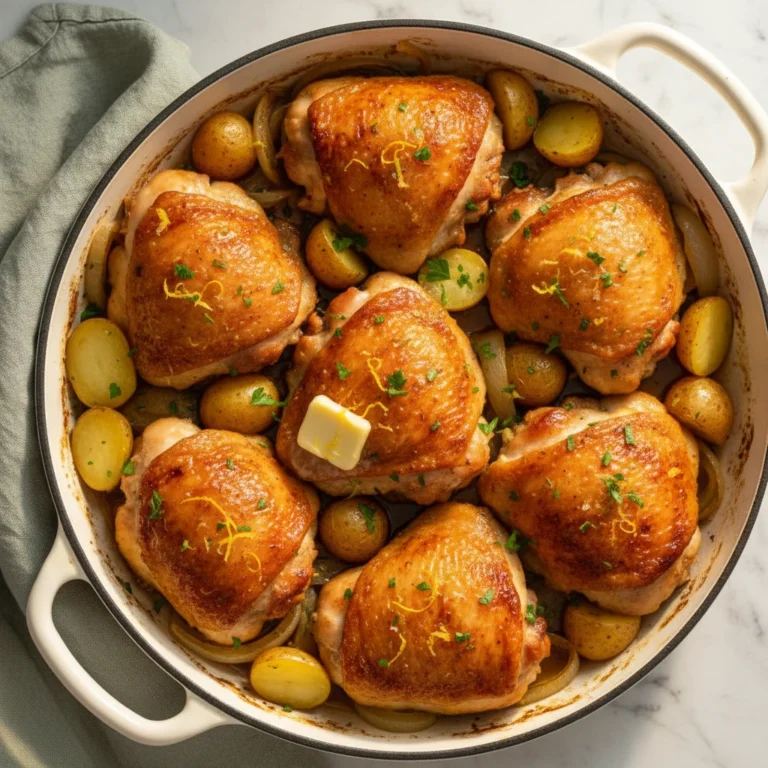
Chicken thighs in oven is a rustic, one-pan dish that delivers tender, juicy meat with crispy, golden skin. Unlike chicken breasts, thighs stay moist during roasting thanks to their higher fat content, making them forgiving for home cooks. Combined with roasted vegetables, aromatic herbs, and a rich pan sauce, this humble weeknight dinner becomes restaurant-worthy comfort food that’s simple enough for busy families yet elegant enough for entertaining guests.
Reasons to Try Chicken Thighs in Oven
Chicken thighs are a culinary treasure often overlooked by home cooks focused on leaner breasts. Here’s why you should embrace them:
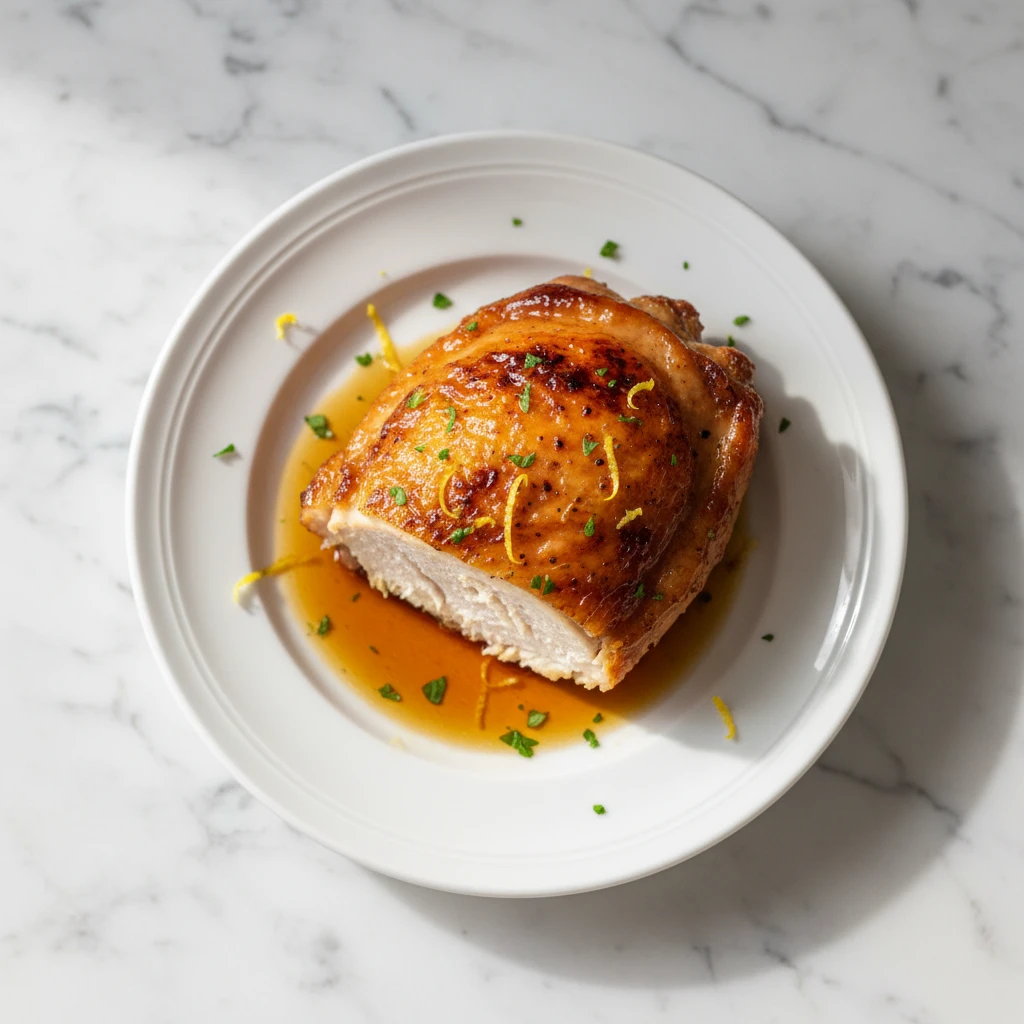
- Superior Flavor: The higher fat content creates deep, savory notes that are naturally more delicious than white meat. The skin crisps beautifully when roasted, delivering that coveted textural contrast.
- Forgiving Nature: Thighs are nearly impossible to dry out, even if you overcook them slightly. This makes them perfect for anxiety-free weeknight cooking and meal prep.
- One-Pan Convenience: Everything cooks together in a single baking dish—chicken, vegetables, aromatics, and sauce. Less cleanup, maximum flavor.
- Budget-Friendly: Chicken thighs are typically less expensive than breasts, making this an economical choice for feeding a family without sacrificing quality.
- Versatile Centerpiece: The basic technique works with countless flavor profiles—Mediterranean herbs, Asian glazes, BBQ spice rubs, or creamy sauces. One recipe, infinite possibilities.
- Restaurant-Quality Results: With minimal effort, you achieve restaurant-caliber caramelization and sauce development that impresses everyone at the table.
 Save
SaveIngredients Notes
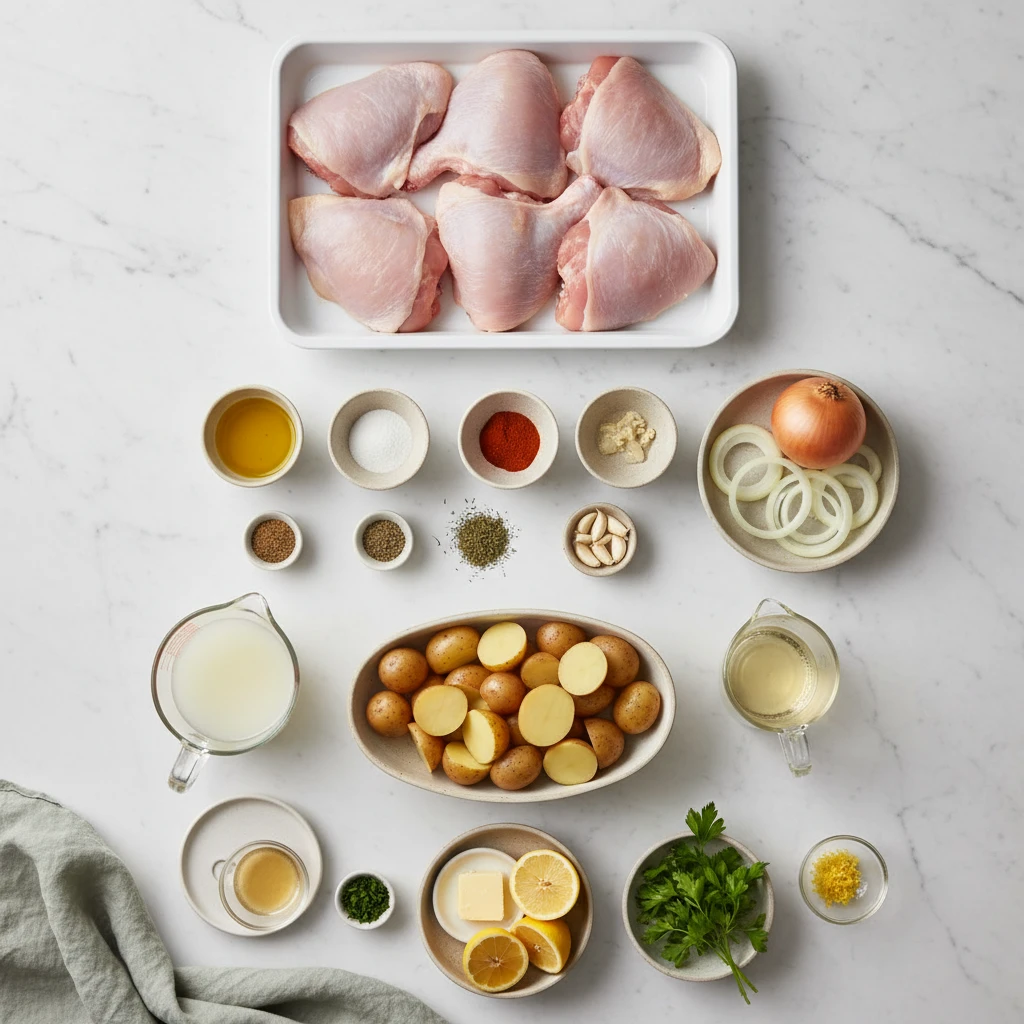
- Bone-in, skin-on chicken thighs—the bone and skin are essential for flavor and moisture. Pat dry before cooking to help skin crisp.
- Olive oil—used for roasting and building fond. Extra virgin works, but a neutral oil won’t burn as easily at high heat.
- Kosher salt and black pepper—the foundation of all seasoning. Kosher salt dissolves evenly and won’t make the dish overly salty.
- Garlic powder, paprika, thyme, and rosemary—warm spices that complement chicken without overpowering it. Fresh herbs can be substituted in equal amounts.
- Fresh garlic and onion—add aromatic depth and caramelize in the pan sauce.
- Baby potatoes—halved so they roast evenly in the same time as the chicken. Waxy varieties hold their shape better than starchy.
- Chicken broth—the base of the pan sauce. Use low-sodium to control salt levels.
- White wine—optional but adds brightness and acidity. Skip it if you prefer a lighter sauce.
- Fresh lemon juice and zest—provide tang and fresh citrus notes that balance richness.
- Butter—swirled in at the end for silkiness and shine.
- Fresh parsley—adds color and a mild herbal note when used as garnish.
 Save
SaveHow to Make Chicken Thighs in Oven
- Preheat oven to 425°F and position rack in the middle.
- Pat chicken thighs dry with paper towels to remove excess moisture.
- Mix salt, pepper, garlic powder, paprika, thyme, and rosemary in a small bowl.
- Season both sides of chicken thighs generously with the spice mixture.
- Heat olive oil in a large oven-safe skillet over medium-high heat until shimmering.
- Place chicken thighs skin-side down in the hot skillet and sear 4–5 minutes until skin is golden and crispy. Do not move them during this time.
- Flip thighs skin-side up and transfer skillet to the preheated oven.
- Roast uncovered for 15 minutes.
- Remove skillet from oven, scatter potatoes and onion around the chicken. Pour broth and wine around (not over) the chicken.
- Return to oven and roast 12–15 minutes more until chicken reaches 165°F internally and potatoes are tender.
- Remove from oven, stir in lemon juice and butter until combined.
- Garnish with fresh parsley and lemon zest before serving.
What You Must Know About Chicken Thighs in Oven
Bone-In, Skin-On Is Essential: Boneless, skinless thighs will not deliver the same depth of flavor or texture. The bone adds richness to the pan sauce, and the skin is where the magic happens. Don’t substitute unless absolutely necessary.
Dry Your Chicken: Moisture is the enemy of crispy skin. After patting thighs dry with paper towels, let them sit uncovered in the fridge for 15–30 minutes if time allows. This further dries the surface and promotes browning.
Don’t Skip the Sear: Searing the chicken skin-side down in oil before roasting creates a protective, flavorful crust that seals in juices. This step takes just 4–5 minutes but transforms the dish from good to exceptional.
Use a Meat Thermometer: The only reliable way to know when chicken is done is with a thermometer inserted into the thickest part of the thigh without touching bone. Aim for 165°F (74°C)—no higher, or it will dry out.
Temperature Control Matters: A 425°F oven is hot enough to finish the chicken and vegetables quickly while maintaining skin crispness. Lower temps (375°F) will cook the thighs but won’t crisp the skin as effectively. Higher temps (450°F+) risk burning the skin before the meat cooks through.
Room Temperature Chicken Cooks Evenly: Remove thighs from the fridge 20–30 minutes before cooking. Cold chicken straight from the fridge will need longer in the oven, potentially drying out the exterior.
Helpful Tips
Build Fond for Sauce: The browned bits stuck to the bottom of the skillet (called fond) are pure flavor. When you add the broth and wine, gently scrape the pan with a wooden spoon to dissolve all the fond into the sauce. This is restaurant technique done simply.
Customize the Vegetables: Beyond potatoes and onion, try halved Brussels sprouts, baby carrots, fennel, or mushrooms. Add denser vegetables (like carrots) with the potatoes; lighter ones (like zucchini) can go in during the final 10 minutes to prevent overcooking.
Make Ahead Prep: Season the chicken up to 8 hours ahead and store covered in the fridge. Skip the searing step initially, then sear and roast fresh. Or cook the entire dish and reheat gently in a 350°F oven for 12–15 minutes before serving.
Pan Selection Matters: Use an oven-safe skillet with a metal handle (no plastic). Cast iron is ideal for even heat distribution and superior browning. If using stainless steel, ensure the handle is truly oven-safe to 425°F.
Wine Optional But Recommended: The wine adds brightness and acidity that balances the richness. If omitting, use an extra 1/2 cup broth and consider adding 1 tablespoon of white vinegar or fresh lemon juice to the pan sauce for complexity.
Variations and Substitutions
Mediterranean Herb Version: Replace thyme and rosemary with 1 teaspoon dried oregano, 1/2 teaspoon dried basil, and a pinch of dried marjoram. Add 1/2 cup kalamata olives and 1/4 cup sun-dried tomatoes to the pan after the first roast. Finish with fresh oregano and crumbled feta cheese.
Asian Ginger-Soy Glaze: Swap the spice rub for 2 teaspoons five-spice powder and 1 teaspoon ground ginger. Replace the broth-wine mixture with 1 cup chicken broth, 3 tablespoons soy sauce, 2 tablespoons rice vinegar, and 1 tablespoon honey. Add 2 teaspoons minced fresh ginger and 2 minced garlic cloves to the pan. Garnish with sliced green onions and sesame seeds.
Creamy Dijon Version: After roasting is complete, stir 1/2 cup heavy cream and 2 tablespoons whole-grain Dijon mustard into the pan sauce instead of lemon juice and butter. Simmer 2 minutes until creamy. Omit wine and add 1/2 teaspoon ground mustard powder to the spice rub.
BBQ Smoky Finish: Use 1 teaspoon smoked paprika, 1/2 teaspoon cumin, 1/4 teaspoon cayenne pepper, and 1/4 teaspoon cinnamon in the rub. Replace broth with 1 cup BBQ sauce mixed with 1 cup chicken broth. Add a splash of apple cider vinegar instead of wine. Brush an additional tablespoon of BBQ sauce on the chicken during the final 5 minutes of roasting.
Lemon-Garlic Lighter Version: Use the base recipe but increase fresh garlic to 6–8 cloves, increase fresh lemon juice to 1/4 cup, and omit wine and butter. Add 1/2 teaspoon lemon zest to the spice rub. This version is lighter and brighter, perfect for warm months.
Sheet Pan Simplification: If you don’t have an oven-safe skillet, sear the chicken on your stovetop, then transfer to a sheet pan lined with foil. Arrange potatoes and onion around the chicken, pour sauce over, cover tightly with foil, and roast at 425°F for 25–30 minutes. Remove foil for the final 5 minutes to re-crisp the skin.
Vegetable Substitutions: Trade baby potatoes for cubed sweet potatoes, parsnips, or celery root. Swap onion for leeks (white and light green parts only). Use cherry tomatoes in the final 5 minutes of roasting so they don’t burst. Thick-cut zucchini or eggplant can replace some vegetables for a different texture.
Wine-Free Version: Use 2 cups total chicken broth and add 1 tablespoon apple cider vinegar or white vinegar for acidity and depth. The result is slightly heavier but still delicious—perfect for alcohol-free meals.
Serving Suggestions for Chicken Thighs in Oven
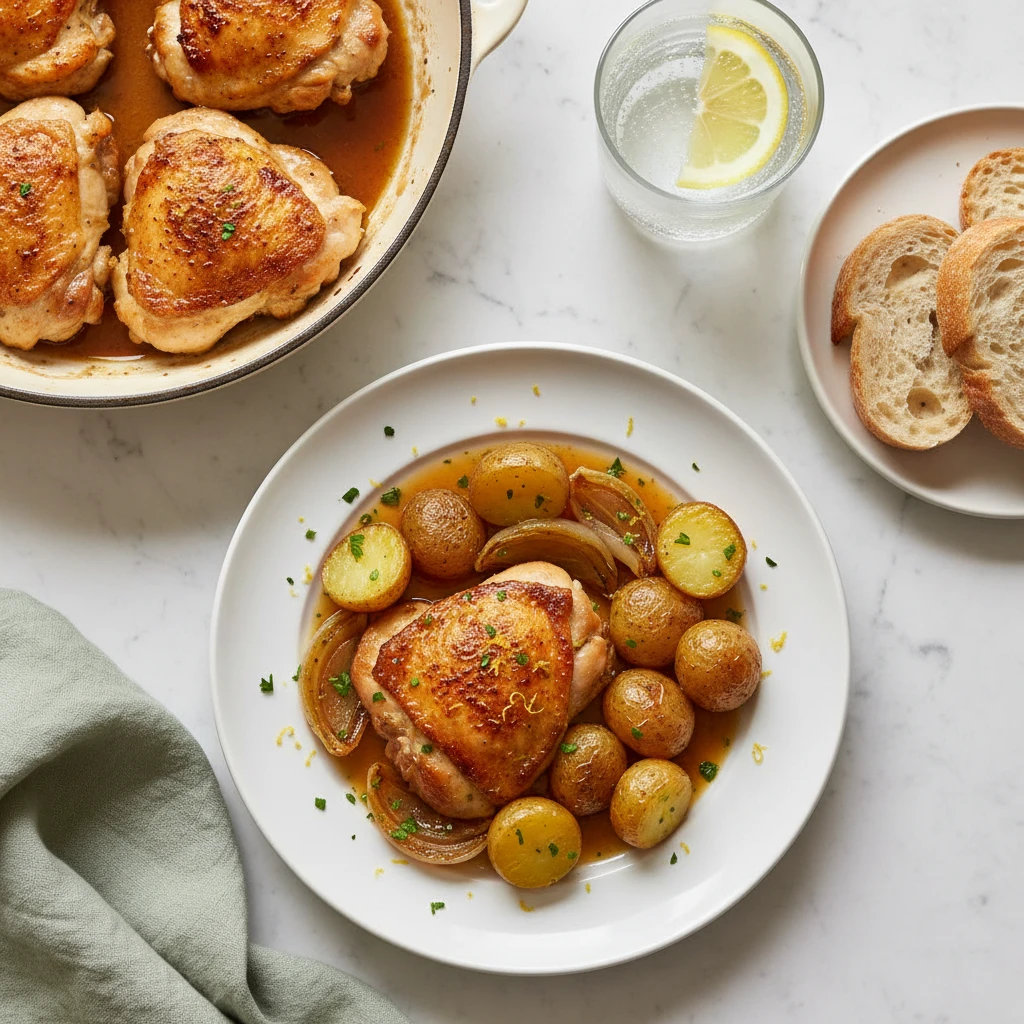
Simple Plating: Transfer the hot chicken and vegetables directly from the skillet to a large serving platter. Spoon the pan sauce over everything, ensuring each piece of chicken gets a generous coating. Garnish with fresh parsley and lemon zest. Serve family-style, letting guests help themselves.
Individual Plates: Place one chicken thigh in the center of a shallow bowl or plate. Arrange roasted potatoes and onions to one side. Spoon the pan sauce around the plate, creating a light pool. Finish with a small pinch of fresh parsley and lemon zest for elegance.
With Crusty Bread: Serve alongside thick slices of crusty sourdough, focaccia, or ciabatta. Guests can tear pieces of bread and dip them in the rich pan sauce—it’s far too good to waste.
Green Salad Pairing: Offer a simple arugula or mixed green salad dressed with a light vinaigrette on the side. The fresh, peppery greens provide a bright contrast to the rich, roasted chicken and its sauce.
Couscous or Grain Alternative: Serve chicken and sauce over fluffy couscous, pearl barley, farro, or wild rice pilaf. The grains soak up the delicious pan sauce beautifully.
Polenta Bed: For a more elegant presentation, spread creamy, buttered polenta on a platter and nestle the chicken thighs on top. The soft polenta catches all the pan sauce and is absolutely luxurious.
Roasted Asparagus or Green Beans: Prepare a second vegetable side by tossing fresh asparagus or trimmed green beans with olive oil, salt, and pepper, then roasting them on a separate sheet pan alongside the chicken. The contrast of tender chicken against a crisp vegetable side is restaurant-quality.
Creamed Spinach: Make a simple creamed spinach side dish (sautéed spinach with butter, garlic, and a splash of cream) to serve alongside. The richness complements the chicken’s depth.
Garnish Ideas: Beyond parsley and lemon zest, try crispy pancetta bits, toasted breadcrumbs, fresh tarragon or thyme, grated Parmesan, crispy fried shallots, or a drizzle of truffle oil for extra elegance. Even a simple crack of fleur de sel (finishing salt) adds restaurant appeal.
 Save
SaveStorage and Reheating
Refrigerator Storage: Store leftover chicken thighs and vegetables in an airtight container or tightly covered bowl. The pan sauce can be stored separately or with the chicken. Properly stored, this dish keeps for 3–4 days in the refrigerator. Make sure the chicken has cooled to room temperature before storing to prevent condensation and food safety issues.
Freezer Storage: You can freeze this dish for up to 2 months. Transfer chicken, vegetables, and sauce to a freezer-safe container or sturdy ziplock bag, removing as much air as possible. Label with the date. Thaw overnight in the refrigerator before reheating. Freezing may slightly soften the skin’s crispness, so plan to reheat in a way that restores some texture.
Reheating on the Stovetop (Best Method): Place the chicken, vegetables, and sauce in a large skillet over medium heat. Cover with a lid and warm for 8–10 minutes, stirring gently once halfway through, until the chicken reaches 165°F internally. Remove the lid for the final 2 minutes to allow any excess moisture to evaporate and to restore a bit of texture to the skin. This method ensures the sauce reheats evenly without the chicken drying out.
Reheating in the Oven: Preheat the oven to 350°F (175°C). Transfer the chicken, vegetables, and sauce to an oven-safe baking dish. Cover tightly with foil and bake for 15–18 minutes until heated through (165°F at the thickest part). Remove the foil for the final 3 minutes if you’d like to crisp the skin slightly, though it won’t restore full crispness.
Microwave Reheating (Not Recommended): While possible, microwaving can make the chicken dry and rubbery and will soften the skin. If you must use a microwave, place a single portion on a microwave-safe plate, cover loosely (not tightly), and heat at 50% power for 2–3 minutes, checking after 2 minutes. This slower reheating minimizes drying.
Using Leftovers Creatively: Shred leftover chicken (discard bones and skin) and use it in a salad, grain bowl, sandwich, or soup. The flavorful pan sauce becomes an excellent dressing for these applications. Or dice the chicken and vegetables, combine with the sauce, and use as a filling for crepes or pastry puffs.
Frequently Asked Questions about Chicken Thighs in Oven
Can I use boneless, skinless chicken thighs instead of bone-in, skin-on?
Technically yes, but the result will be significantly less flavorful and less moist. The bone contributes to both the pan sauce depth and moisture retention in the meat. Boneless, skinless thighs will also not develop crispy edges. If you must use them, reduce cooking time to 20–25 minutes total and monitor closely with a meat thermometer to avoid drying out.
What if my oven temperature doesn’t reach 425°F or I want a slower cook?
You can roast at 375°F instead, but increase the total cooking time to 35–40 minutes after searing. The skin won’t crisp as aggressively at this lower temperature. Sear the chicken longer (6–7 minutes skin-side down) at the start to make up for it. Avoid cooking below 375°F, as this dramatically increases the risk of bacteria growth before the chicken reaches a safe internal temperature.
How do I know when the chicken thighs are done without a meat thermometer?
A meat thermometer is the only reliable method. If you don’t have one, pierce the thickest part of the thigh (avoid bone) with a sharp knife or skewer—the juices should run clear, not pink. The meat should feel firm, not soft or squishy. However, visual checks are less reliable than a thermometer, which instantly reads 165°F to confirm safety.
Can I prep the chicken the night before?
Yes, absolutely. Season the raw chicken thighs with the spice mixture up to 24 hours ahead. Store them uncovered on a plate in the refrigerator so the surface continues to dry, which promotes skin crispness. When ready to cook, bring them to room temperature (20–30 minutes) and proceed with searing. You can even sear them the day before, chill, then finish roasting the next day, though the skin will be less crispy.
Why is my pan sauce too thin or watery?
This usually means the sauce didn’t reduce enough during roasting. To thicken it, transfer the skillet to the stovetop over medium-high heat and simmer uncovered for 3–5 minutes, stirring occasionally, until it reaches the consistency you want. Alternatively, mix 1 tablespoon cornstarch with 2 tablespoons cold water to make a slurry, stir it into the sauce, and simmer 1–2 minutes until thickened. Avoid making it too thick—a light sauce complements the chicken better than gravy.
Is it necessary to use white wine, or can I substitute something else?
Wine is optional but adds brightness. Substitute with 1/2 cup additional chicken broth plus 1 tablespoon of white vinegar, apple cider vinegar, or fresh lemon juice for acidity. Dry vermouth works as a 1:1 replacement for wine. If making the dish alcohol-free, use the broth-vinegar combination for the best results.
Can I cook this in a Dutch oven instead of a skillet?
Yes, a Dutch oven works well. Sear the chicken on the stovetop (the Dutch oven must be oven-safe), then proceed with the recipe. A Dutch oven’s thicker walls and lid help retain moisture, so check internal temperature at 20–22 minutes instead of 27–30 minutes—cooking time may be slightly shorter due to better heat retention. Leave the lid off during the roast to keep the skin crispy.
Nutrition Facts (Per Serving)
| Nutrient | Amount per Serving |
|---|---|
| Calories | 385 kcal |
| Protein | 32g |
| Total Fat | 22g |
| Saturated Fat | 7g |
| Cholesterol | 135mg |
| Total Carbohydrates | 18g |
| Dietary Fiber | 3g |
| Sugars | 2g |
| Sodium | 620mg |
| Potassium | 485mg |
Dietary Notes: This recipe is naturally high in protein, making it excellent for muscle maintenance and satiety. The skin-on thighs provide beneficial fats for hormone production and nutrient absorption. Potatoes add resistant starch and fiber. To reduce sodium, use low-sodium broth and reduce added salt slightly. To lower calories, use skinless thighs (reduces ~80 calories and 9g fat per serving). This dish is naturally gluten-free when made with standard ingredients.
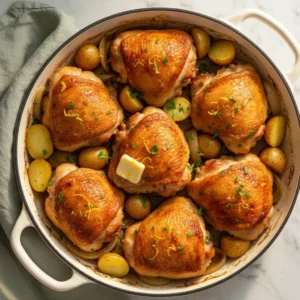
Chicken Thighs in Oven
Ingredients
- 6 bone-in skin-on chicken thighs
- 3 tablespoons olive oil
- 2 teaspoons kosher salt
- 1 teaspoon black pepper
- 1 teaspoon garlic powder
- 1 teaspoon paprika
- 1/2 teaspoon dried thyme
- 1/2 teaspoon dried rosemary
- 4 cloves garlic minced
- 1 medium yellow onion sliced
- 8 ounces baby potatoes halved
- 2 cups chicken broth
- 1/2 cup white wine optional
- 2 tablespoons fresh lemon juice
- 2 tablespoons butter
- 1 tablespoon fresh parsley chopped
- Zest of 1 lemon
Instructions
- Preheat your oven to 425°F (220°C). Place the oven rack in the middle position. Checkpoint: Your oven should be fully heated before you begin cooking—about 15 minutes.
- Pat 6 bone-in, skin-on chicken thighs completely dry using paper towels. This is crucial—moisture prevents the skin from crisping. The thighs should feel dry to the touch.
- In a small bowl, combine 2 teaspoons kosher salt, 1 teaspoon black pepper, 1 teaspoon garlic powder, 1 teaspoon paprika, 1/2 teaspoon dried thyme, and 1/2 teaspoon dried rosemary. Mix with a fork until evenly distributed.
- Lay the chicken thighs on a clean cutting board. Sprinkle the spice mixture generously on both the skin side and the meat side of each thigh. Use your fingers to gently press the spices into the skin so they adhere. You should smell the herbs releasing their aroma.
- Pour 3 tablespoons olive oil into a large, oven-safe skillet (10–12 inches wide, ideally cast iron or stainless steel). Heat over medium-high heat for 2–3 minutes. The oil should shimmer and move easily around the pan, and a tiny drop of water should sizzle immediately when it hits the oil.
- Carefully lay the chicken thighs skin-side down in the hot skillet, starting from the side closest to you. You should hear a loud sizzle—this is the sound of proper searing. Do not move the thighs for the next 4–5 minutes. You're building golden-brown, crispy skin. Peek after 3 minutes—the skin should be turning light golden brown.
- After 4–5 minutes, using tongs, flip each thigh so the skin side faces up. The skin should be deep golden brown and feel firm. Transfer the hot skillet directly into the preheated 425°F oven. Roast uncovered for 15 minutes.
- Remove the skillet from the oven carefully (the handle will be very hot—use an oven mitt). The chicken should be partially cooked and smell fragrant. Scatter 8 ounces halved baby potatoes and 1 medium sliced yellow onion around the chicken. Pour 2 cups chicken broth and 1/2 cup white wine (or an extra 1/2 cup broth if not using wine) around the chicken and vegetables, not directly over the chicken skin. The liquid should come about halfway up the sides of the pan.
- Return the skillet to the oven and roast uncovered for 12–15 minutes. The chicken is done when a meat thermometer inserted into the thickest part of the largest thigh (without touching bone) reads exactly 165°F (74°C). The potatoes should be fork-tender, and the thighs should look golden and cooked through.
- Remove from the oven. Using a meat thermometer, double-check at least 2 thighs to confirm they've reached 165°F. Stir 2 tablespoons butter and 2 tablespoons fresh lemon juice into the pan sauce until the butter melts and the sauce is silky. It should smell bright and citrusy.
- Sprinkle 1 tablespoon fresh chopped parsley and the zest of 1 lemon over the dish. Serve hot directly from the skillet or transfer to a serving platter.
- Let rest for 5 minutes before serving so juices redistribute throughout the meat. The chicken should be juicy and tender, not dry.