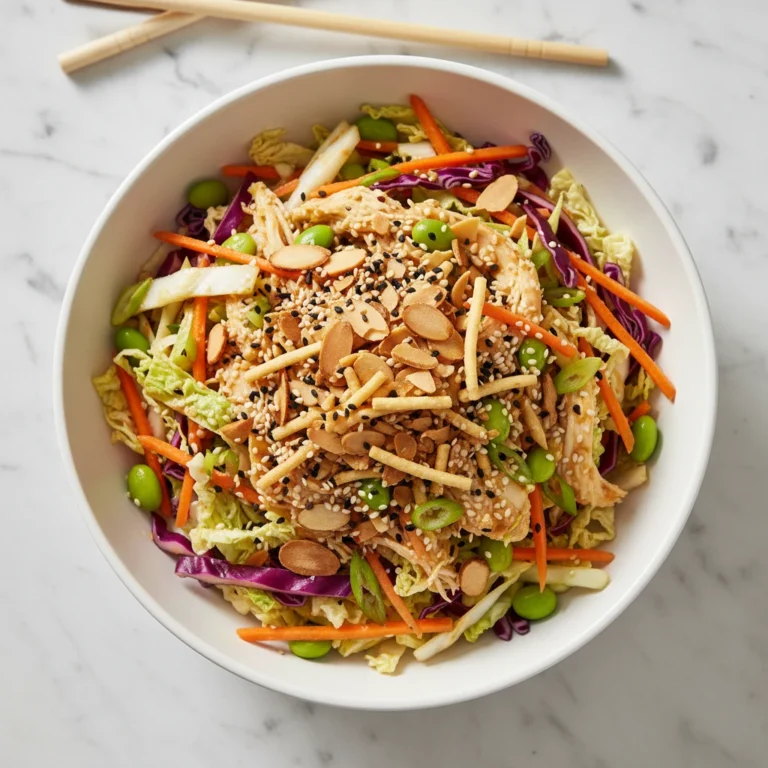
Chinese chicken salad is a vibrant, crunchy favorite that combines tender poached chicken with crisp vegetables, a silky sesame-ginger dressing, and toasted nuts. This restaurant-quality dish is light yet satisfying, making it perfect for lunch, dinner, or meal prep. With its balance of textures and bold Asian-inspired flavors, it’s easy to see why this salad has become a beloved staple at home dinner tables and casual eateries alike.
Reasons to Try Chinese Chicken Salad
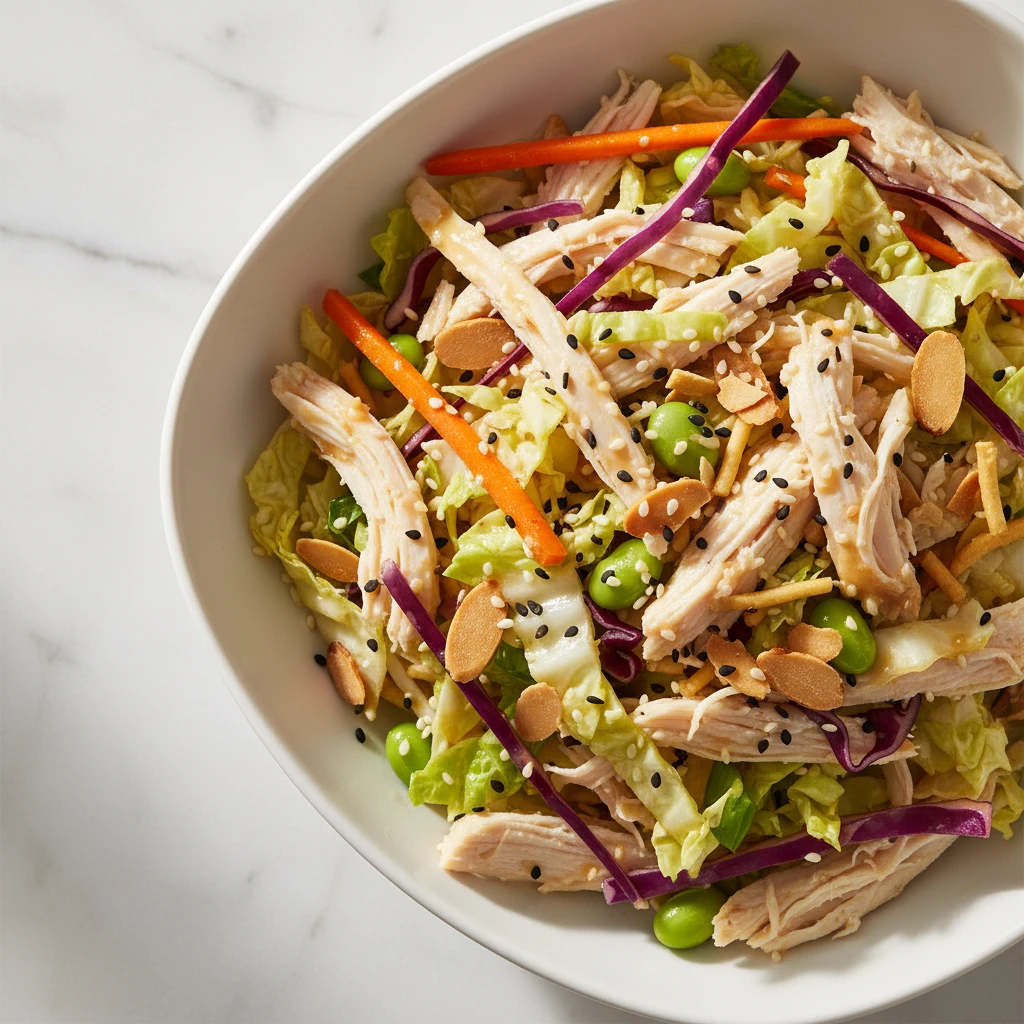
Vibrant Textures and Flavors: This salad delivers a perfect contrast—tender chicken, crisp cabbage and carrots, chewy edamame, and crunchy almonds and noodles all come together in one bowl. Every bite offers multiple layers of flavor and texture.
Restaurant Quality at Home: The creamy sesame-ginger dressing rivals any takeout spot, but you control the salt, sugar, and ingredients. It’s easier and more economical to make at home than ordering delivery.
Quick and Healthy: With minimal cooking required (just poaching the chicken), this salad comes together in under 30 minutes. It’s packed with lean protein, vegetables, and healthy fats from sesame oil and almonds, making it a nutritious weeknight dinner.
Naturally Gluten-Free Friendly: By swapping soy sauce for tamari and using certified gluten-free noodles, this salad easily accommodates dietary restrictions without sacrificing flavor.
Perfect for Meal Prep: Assemble the components separately and store them in airtight containers. Combine everything with the dressing just before eating to keep the salad crisp and fresh throughout the week.
 Save
SaveIngredients Notes
- Boneless, skinless chicken breasts
- Napa cabbage, thinly sliced
- Red cabbage, thinly sliced
- Shredded carrots
- Edamame, shelled
- Sliced green onions
- Sesame seeds
- Slivered almonds, toasted
- Sesame oil
- Rice vinegar
- Soy sauce
- Dijon mustard
- Honey
- Garlic, minced
- Fresh ginger, grated
- Red pepper flakes
- Vegetable oil
- Salt and black pepper
- Crispy chow mein noodles or wonton strips
How to Make Chinese Chicken Salad
- Poach the chicken breasts in simmering water for 12–15 minutes until cooked through (165°F internal temperature), then cool and shred into bite-sized pieces.
- Whisk together sesame oil, rice vinegar, soy sauce, Dijon mustard, honey, minced garlic, grated ginger, and red pepper flakes in a small bowl to make the dressing.
- Toast the almonds in a dry skillet over medium heat for 3–4 minutes until fragrant, then set aside to cool.
- Combine napa cabbage, red cabbage, carrots, edamame, and green onions in a large bowl.
- Add the shredded chicken to the vegetable mixture.
- Pour the dressing over the salad and toss well to coat all ingredients.
- Divide the salad among serving bowls and top with toasted almonds, sesame seeds, and crispy noodles just before serving.
What You Must Know About Chinese Chicken Salad
Don’t Overcook the Chicken: The most common mistake is overcooking chicken, which makes it dry and rubbery. Use a meat thermometer to check for doneness at 165°F. Once it reaches this temperature, remove it immediately from the water. Chicken continues to cook slightly as it cools, so err on the side of slightly underdone if unsure.
Toast Your Nuts: Toasting almonds brings out their natural oils and deepens their flavor significantly. Untoasted almonds taste bland by comparison. Toast them in a dry pan over medium heat for 3–4 minutes, stirring frequently so they don’t burn. The moment you smell their nutty aroma, they’re done.
Prepare Components Separately: If making this salad ahead for meal prep, store the cooked chicken, sliced vegetables, dressing, and crispy toppings in separate airtight containers. Combine them only just before serving to maintain crispness. The salad will stay fresh for up to 3 days when stored separately.
Balance Your Dressing: The sesame-ginger dressing is savory, nutty, and slightly sweet. If your dressing tastes too salty, adjust with honey or rice vinegar. If it tastes too acidic, add a touch more honey or sesame oil. The dressing should be bold enough to flavor the entire salad but not overpower it.
Add Crispy Elements Last: Crispy chow mein noodles, wonton strips, and sesame seeds should be added just before serving. If tossed into the salad too early, they’ll absorb moisture from the vegetables and dressing and become soggy, losing their essential crunch.
Helpful Tip — Slice Vegetables Uniformly: Use a mandoline slicer or sharp knife to cut cabbage and carrots into thin, even pieces. This not only makes the salad look more appealing but also allows the dressing to coat all surfaces evenly and makes each bite more pleasant.
Helpful Tip — Make Extra Dressing: This dressing is so versatile and delicious that you may want extra on the side. Make 1.5 times the dressing recipe and serve the extra in a small bowl for guests to add more if they’d like.
Variations and Substitutions
Protein Swaps: Use shredded rotisserie chicken for even faster prep, or substitute turkey, pork, or baked tofu for a vegetarian option. Shrimp also works beautifully—simply poach for 3–4 minutes until pink.
Vegetable Variations: Swap out vegetables based on what’s in your fridge. Try thinly sliced bell peppers, cucumber, snap peas, shredded beets, or water chestnuts. Corn, mushrooms, and bok choy are also delicious additions.
Nut Alternatives: If you’re allergic to almonds, use cashews, peanuts, or sunflower seeds for crunch. Each will add a different flavor profile but will work well with the Asian-inspired dressing.
Noodle Substitutions: If crispy chow mein noodles aren’t available, crumbled wontons, crispy fried onions, or even crushed tortilla chips add similar crunch. For a lower-carb option, skip them entirely or use crumbled seeds.
Dressing Customizations: Swap rice vinegar for apple cider vinegar for a slightly fruitier note. Add 1 teaspoon of chili paste or sriracha for extra heat. For a creamier version, whisk in 2 tablespoons of mayonnaise or cashew cream.
Make It Spicy: Increase red pepper flakes to 1/2 teaspoon, add sliced fresh jalapeños, or drizzle with sriracha for a kick of heat.
Gluten-Free Version: Use tamari instead of soy sauce and ensure chow mein noodles are certified gluten-free. All other ingredients are naturally gluten-free.
Serving Suggestions for Chinese Chicken Salad
As a Standalone Meal: Serve in a large shallow bowl or on a bed of mixed greens. This salad is substantial enough to be a complete lunch or light dinner on its own, especially with the protein and healthy fats.
With Sides: Pair with steamed jasmine rice, fried rice, or noodles on the side for a more filling meal. A simple miso soup or egg drop soup complements it beautifully.
Over Greens: Toss the salad ingredients with baby spinach or mixed greens for added nutrition and volume. The dressing will coat everything evenly.
In Lettuce Wraps: Spoon the salad mixture into large butter lettuce or romaine leaves for a fun, interactive way to serve it at gatherings.
Garnish Ideas: Top with fresh cilantro, thinly sliced scallions, a drizzle of sesame oil, a sprinkle of white or black sesame seeds, and crispy chow mein noodles. A lime wedge on the side adds brightness and allows guests to adjust acidity to their taste.
Temperature Serving: Serve this salad at room temperature or chilled, depending on preference. A chilled version is refreshing on hot days, while room temperature allows the flavors of the dressing to shine more prominently.
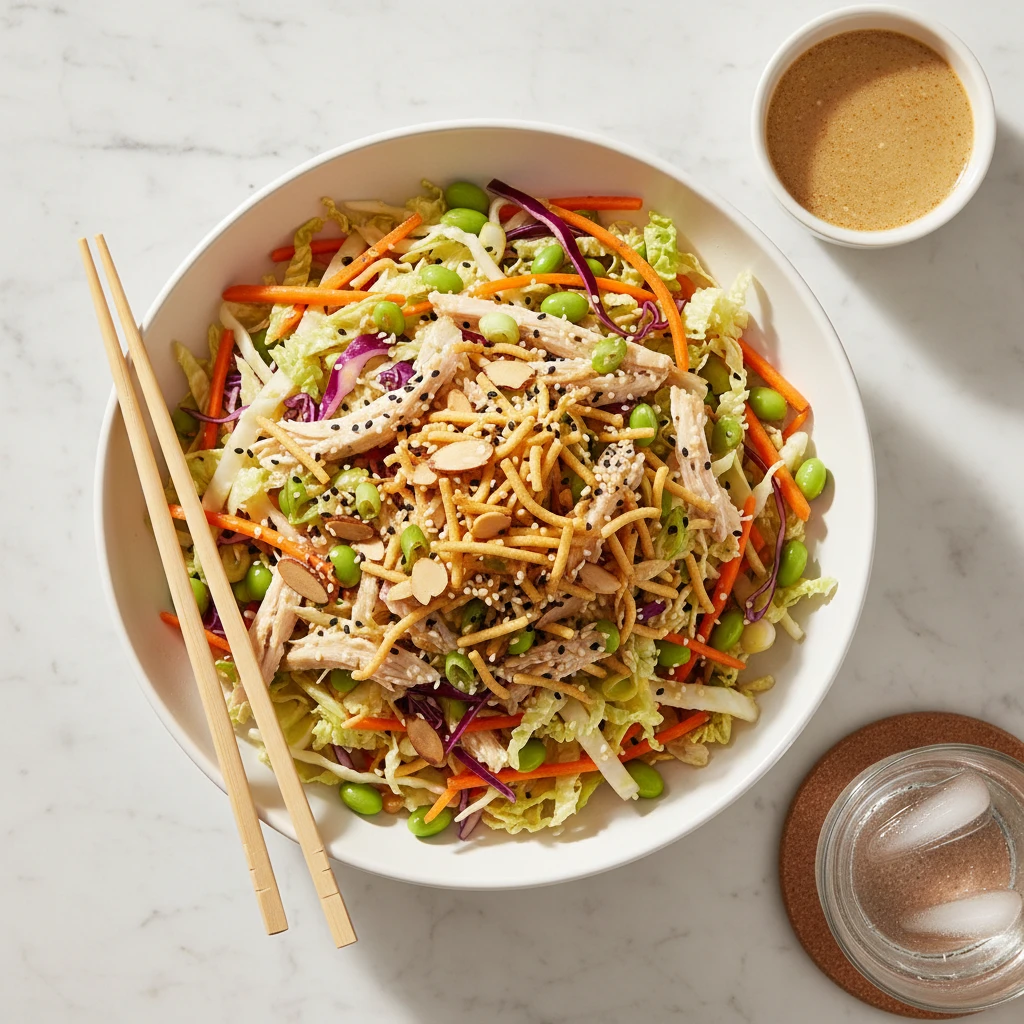
Entertaining Tip: For a crowd, assemble the salad on a large platter in the center of the table with the crispy noodles and extra dressing on the side. Guests can serve themselves and customize toppings as desired.
 Save
SaveStorage and Reheating
Storing Components Separately (Recommended): For best results, store each component in separate airtight containers in the refrigerator for up to 3 days. Keep the cooked chicken, shredded vegetables, dressing, and crispy toppings separate. This method preserves the texture of all elements.
Storing Assembled Salad: If you assemble the salad ahead, store it in an airtight container for up to 24 hours. The vegetables will gradually release moisture and soften, and crispy elements may become less crunchy. Add fresh crispy noodles and sesame seeds just before serving for the best texture.
Freezing: The cooked chicken can be frozen in an airtight container for up to 3 months. Thaw overnight in the refrigerator before assembling the salad. Do not freeze the assembled salad, as the vegetables will become soggy upon thawing.
Reheating: This salad is best served cold or at room temperature and does not require reheating. If you prefer warm chicken, you may gently reheat the shredded chicken in a microwave (1–2 minutes) or in a skillet over low heat (2–3 minutes), keeping it moist by adding a splash of broth or water. Always add reheated chicken to freshly assembled salad components for the best experience.
Dressing Storage: Store the sesame-ginger dressing in an airtight glass container in the refrigerator for up to 1 week. The flavors may intensify slightly, which is often desirable. Shake well before using, as sesame oil may separate.
Frequently Asked Questions about Chinese Chicken Salad
Can I make Chinese chicken salad ahead of time?
Yes, but store components separately for best results. Keep the cooked chicken, sliced vegetables, dressing, and crispy toppings in separate airtight containers in the refrigerator for up to 3 days. Assemble the salad just before serving to maintain crispness and texture. If you must assemble it ahead, eat within 24 hours and add crispy noodles and sesame seeds just before serving.
What can I use instead of sesame oil?
While sesame oil is essential for authentic flavor, you can substitute peanut oil or a mild vegetable oil in a pinch. However, you’ll lose the distinctive nutty sesame flavor that makes this salad special. Another option is to use less sesame oil and add 1 tablespoon of sesame tahini to the dressing for a creamier, nutty result.
How do I know when the chicken is fully cooked?
Use a meat thermometer to check the internal temperature of the thickest part of the chicken breast. It should read exactly 165°F (74°C). Alternatively, cut the largest piece open and check that the meat is white throughout with no pink remaining. The juices should run clear when pierced with a fork.
Is Chinese chicken salad healthy?
Yes, it’s a nutritious choice. It’s high in lean protein from the chicken, rich in vitamins and minerals from fresh vegetables, and contains healthy fats from sesame oil, almonds, and sesame seeds. A typical serving contains around 350–400 calories with good macro balance. For a lighter version, reduce the amount of almonds and noodles or skip them entirely.
Can I make this salad vegetarian or vegan?
Absolutely. Replace the chicken with baked tofu, tempeh, or chickpeas for vegetarian protein. Use a vegan dressing by ensuring all ingredients are plant-based (all listed ingredients already are). Use toasted almonds or seeds for crunch. The salad will be equally delicious and satisfying without the chicken.
Why does my salad taste too salty?
Soy sauce is high in sodium. Reduce the amount to 1.5 tablespoons or switch to low-sodium soy sauce or tamari. Balance saltiness with extra honey or rice vinegar. You can also add a splash of water or vegetable broth to the dressing if it’s too strong. Always taste and adjust to your preference.
How long can I keep the dressing?
Store the sesame-ginger dressing in an airtight glass container in the refrigerator for up to 1 week. The flavors actually intensify and improve after a day, making it even more delicious. Shake well before each use, as sesame oil may separate from the other ingredients. If you notice any off smell or appearance, discard it.
Can I serve this salad warm?
This salad is typically served cold or at room temperature to preserve the crispness of the vegetables and noodles. However, you can gently warm the chicken component if desired by reheating it in a skillet over low heat for 2–3 minutes. Always keep the vegetables, nuts, and crispy toppings at room temperature or chilled for the best texture and eating experience.
Nutrition Facts (Per Serving)
| Nutrient | Amount (Per Serving) |
|---|---|
| Calories | 380 |
| Total Fat | 18g |
| Saturated Fat | 2.5g |
| Cholesterol | 95mg |
| Sodium | 680mg |
| Total Carbohydrates | 18g |
| Dietary Fiber | 4g |
| Sugars | 6g |
| Protein | 35g |
| Calcium | 120mg |
| Iron | 2.5mg |
Dietary Notes: This salad is high in lean protein and vegetables, making it an excellent choice for balanced nutrition. It contains healthy unsaturated fats from sesame oil, almonds, and sesame seeds. The fiber content from vegetables and nuts supports digestive health. Sodium is moderate; using low-sodium soy sauce or tamari reduces it further. Naturally gluten-free when made with tamari instead of soy sauce and gluten-free noodles.
Chinese Chicken Salad
Ingredients
- 2 pounds boneless skinless chicken breasts
- 6 cups napa cabbage thinly sliced
- 2 cups red cabbage thinly sliced
- 1 cup shredded carrots
- 1 cup edamame shelled
- 1/2 cup sliced green onions
- 1/4 cup sesame seeds
- 1/2 cup slivered almonds toasted
- 3 tablespoons sesame oil
- 3 tablespoons rice vinegar
- 2 tablespoons soy sauce
- 1 tablespoon Dijon mustard
- 1 tablespoon honey
- 1 clove garlic minced
- 1 teaspoon fresh ginger grated
- 1/4 teaspoon red pepper flakes
- 2 tablespoons vegetable oil
- Salt and black pepper to taste
- 2 tablespoons crispy chow mein noodles or wonton strips
Instructions
- Place chicken breasts in a large pot and cover with cold water. Bring to a boil over high heat (about 5 minutes), then reduce heat to medium-low and simmer gently for 12–15 minutes. The chicken is done when a meat thermometer inserted into the thickest part reads 165°F. Remove chicken with a slotted spoon and place on a cutting board to cool for 5 minutes. Checkpoint: Chicken should be white throughout with no pink in the center.
- While the chicken cools, prepare the dressing. In a small mixing bowl, whisk together 3 tablespoons sesame oil, 3 tablespoons rice vinegar, 2 tablespoons soy sauce, 1 tablespoon Dijon mustard, 1 tablespoon honey, 1 minced garlic clove, 1 teaspoon grated fresh ginger, and 1/4 teaspoon red pepper flakes. Whisk for about 1–2 minutes until well combined and the honey is dissolved. Checkpoint: The dressing should be smooth and unified in color.
- In a dry skillet over medium heat, add 1/2 cup slivered almonds. Toast for 3–4 minutes, stirring frequently, until fragrant and lightly golden. Pour onto a plate to cool completely (about 3 minutes). Checkpoint: Almonds should smell nutty and appear light golden brown.
- Once the chicken is cool enough to handle (should be warm or room temperature), shred it into bite-sized pieces using two forks or your hands. Discard any bones or tough bits. You should have about 3 cups of shredded chicken. Checkpoint: All chicken pieces should be roughly the size of your thumb.
- In a large mixing or salad bowl, combine 6 cups thinly sliced napa cabbage, 2 cups thinly sliced red cabbage, 1 cup shredded carrots, 1 cup shelled edamame, and 1/2 cup sliced green onions. Toss gently with your hands or two spoons to mix evenly (about 1 minute). Checkpoint: All vegetables should be well distributed and mixed together.
- Add the shredded chicken to the vegetable mixture. Pour the prepared dressing over everything (about 30 seconds to pour). Using two large spoons or salad tongs, toss the entire salad for 2–3 minutes, lifting from the bottom and turning over the top until every ingredient is coated with dressing. Checkpoint: Every piece of cabbage and vegetable should glisten with dressing.
- Divide the salad among 4 serving bowls or plates (about 2 cups per bowl). The salad should sit on the plate in a generous mound. Sprinkle 1–2 tablespoons of toasted almonds on top of each serving (total 1/2 cup), then add about 1 tablespoon sesame seeds per bowl, and finally top with 1/2 tablespoon of crispy chow mein noodles or wonton strips per serving. Checkpoint: The salad should look colorful, crunchy, and appealing with visible layers of toppings.
- Serve immediately at room temperature or slightly chilled. If you prefer a chilled salad, refrigerate the assembled salad for up to 30 minutes before eating. Checkpoint: The salad is ready to eat when it looks fresh and all components are combined.