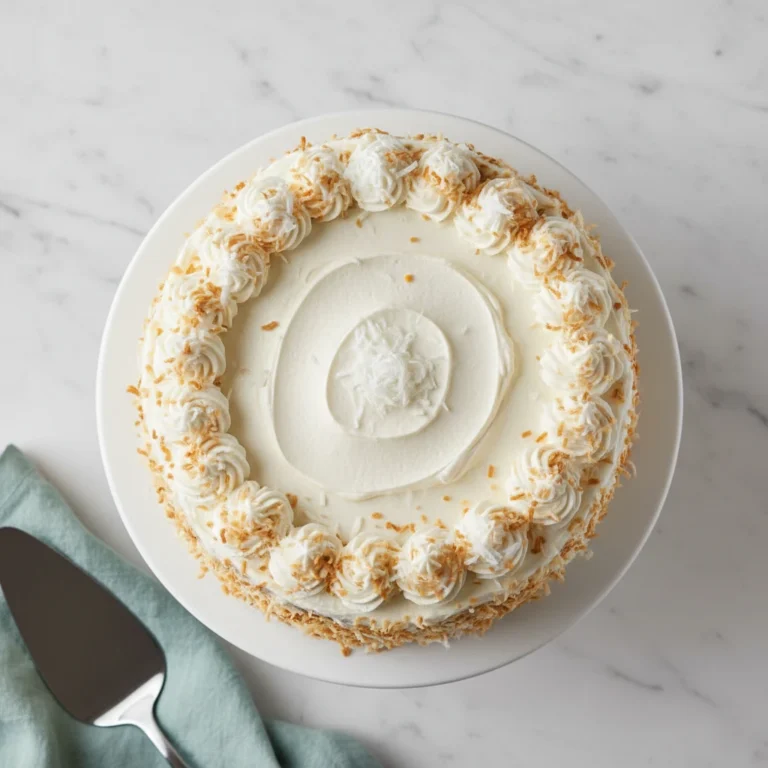
Cream of coconut cake is a luxurious tropical dessert that combines moist, tender cake layers with silky coconut-infused frosting. This elegant yet approachable cake captures the essence of coconut through both the batter and a rich cream cheese-free frosting, creating a dessert that feels like a vacation in every bite. Perfect for celebrations or when you want to impress guests with something truly special.
Reasons to Try Cream of Coconut Cake
Tropical Flavor Profile: The combination of cream of coconut and shredded coconut creates an authentic, deeply satisfying coconut taste that’s neither artificial nor overpowering. This is tropical baking done right.
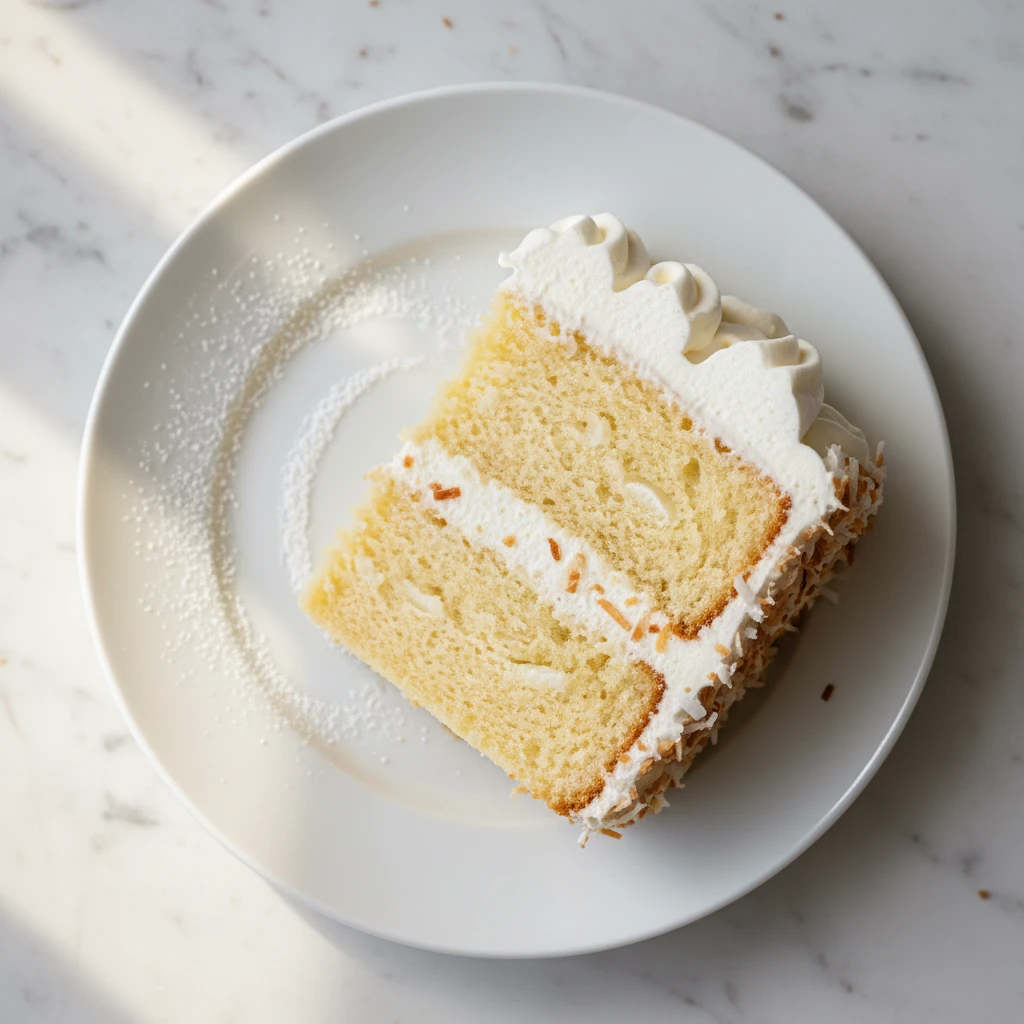
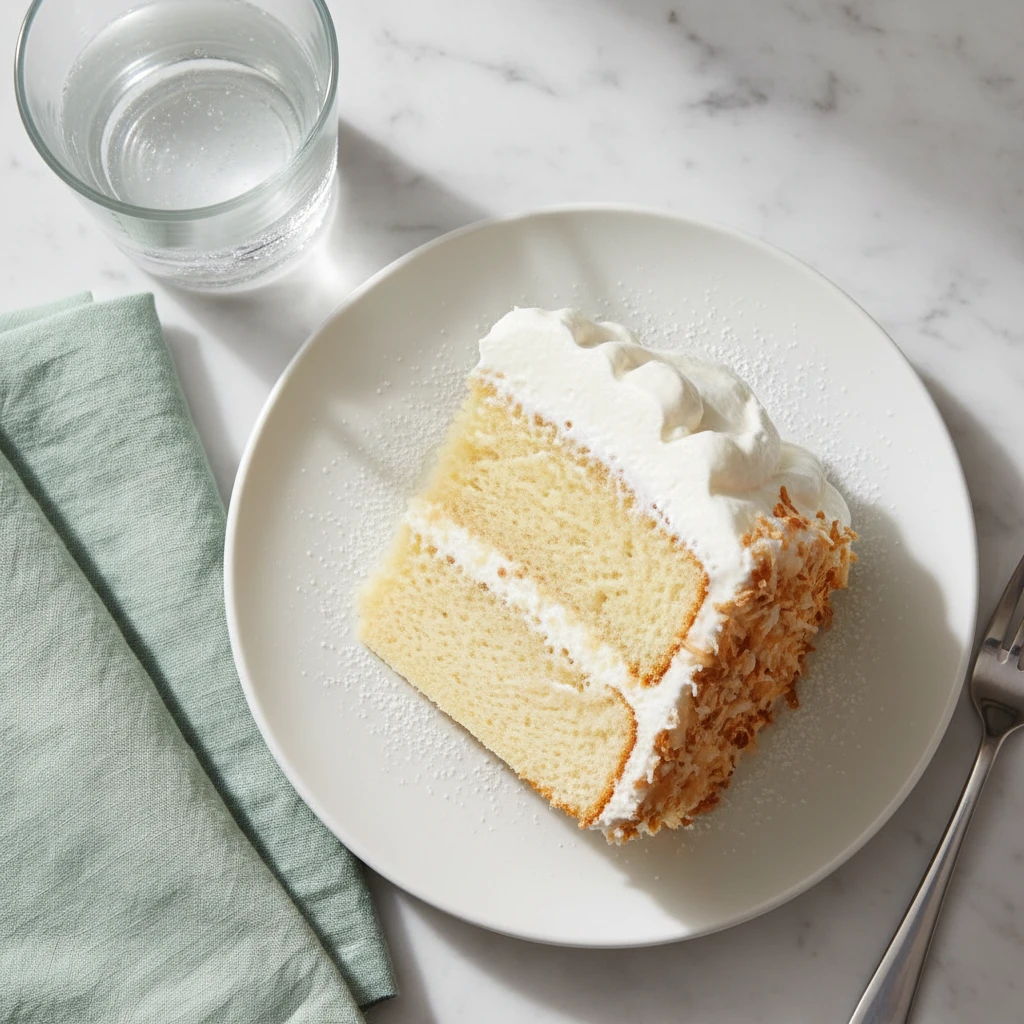
Luxurious Texture: The cream of coconut keeps the cake incredibly moist while the whipped cream frosting adds an airy, cloud-like contrast that melts on your tongue. It’s indulgent without feeling heavy.
Elegant Yet Simple: This cake looks sophisticated enough for weddings or formal events, yet the technique is straightforward enough for home bakers of any skill level. You don’t need fancy equipment or professional pastry experience.
Versatile for Any Occasion: Whether you’re hosting a summer garden party, celebrating a birthday, or bringing dessert to a potluck, cream of coconut cake fits seamlessly into any gathering.
Impressive Presentation: The coconut garnish on top provides beautiful texture and visual appeal that makes this cake Instagram-worthy without requiring advanced decorating skills.
 Save
SaveIngredients Notes
For the Cake
- All-purpose flour
- Baking powder
- Salt
- Unsalted butter, softened
- Granulated sugar
- Large eggs, room temperature
- Cream of coconut
- Sweetened shredded coconut
- Vanilla extract
- Coconut extract
- Butter, for greasing
- All-purpose flour, for dusting
For the Frosting
- Heavy whipping cream
- Powdered sugar
- Vanilla extract
- Cream of coconut
- Sweetened shredded coconut, for garnish
How to Make Cream of Coconut Cake
For the Cake
- Preheat oven to 350°F. Grease and flour two 9-inch round cake pans.
- Whisk together flour, baking powder, and salt in a bowl.
- Cream softened butter and sugar until light and fluffy, about 3 minutes.
- Add eggs one at a time, beating well after each addition.
- Alternate adding flour mixture and cream of coconut, starting and ending with flour mixture.
- Fold in shredded coconut, vanilla extract, and coconut extract gently.
- Divide batter evenly between prepared pans.
- Bake for 25–30 minutes until a toothpick inserted in the center comes out clean.
- Cool in pans for 15 minutes, then turn out onto wire racks to cool completely.
For the Frosting
- In a chilled bowl, whip heavy cream with powdered sugar, vanilla extract, and cream of coconut until stiff peaks form.
- Place one cake layer on a serving plate and spread frosting on top.
- Add the second layer and frost the top and sides with remaining frosting.
- Garnish with toasted or untoasted shredded coconut around the edges and top.
What You Must Know About Cream of Coconut Cake
Use Room-Temperature Eggs: Cold eggs don’t emulsify properly with butter and sugar, which can result in a curdled batter and a dense, tight crumb. Remove eggs from the refrigerator 30 minutes before baking.
Don’t Overmix the Batter: Overmixing develops gluten, creating a tough, rubbery cake. Mix only until ingredients are just combined. A few small streaks of flour are okay—stop mixing immediately once there are no large flour pockets visible.
Cool Cakes Completely Before Frosting: Warm cakes will melt the frosting. Always wait until cakes are completely cool to room temperature (1–2 hours) before applying frosting, or refrigerate them uncovered for 30 minutes to speed cooling.
Cream of Coconut vs. Coconut Milk: These are not interchangeable. Cream of coconut is sweetened and thick (found in the cocktail mixer section of grocery stores), while coconut milk is unsweetened and thinner. Using coconut milk instead will create an inferior cake and overly thin frosting.
Store Frosting Bowl in the Freezer: A chilled bowl and cold beaters help whipped cream frosting reach stiff peaks faster and more reliably. Pop your mixing bowl and beaters in the freezer for 10 minutes before whipping cream.
Helpful Tips: Toast the coconut garnish lightly under the broiler for 30–45 seconds to bring out deeper coconut flavor and add beautiful golden color, but watch carefully—coconut burns quickly. For a more elegant presentation, create a coconut border only around the edge of the cake rather than covering the entire top. Store any extra cream of coconut in an airtight container in the refrigerator and use within 3 days for best flavor in future recipes.
Variations and Substitutions
Chocolate Coconut Cake: Replace 0.25 cup of the all-purpose flour with unsweetened cocoa powder. Add 1 teaspoon of cocoa powder to the flour mixture. This creates a mocha-coconut flavor that’s unexpected and delicious.
Pineapple Coconut Layer: Reduce cream of coconut in the batter to 0.5 cup. Add 0.5 cup of drained crushed pineapple (pat dry with paper towels first). Fold in the pineapple with the shredded coconut for a tropical twist.
Coconut Cream Cheese Frosting: Replace the whipped cream frosting with 8 oz softened cream cheese, 0.5 cup softened butter, 2 cups powdered sugar, and 3 tablespoons cream of coconut, beaten until smooth. This creates a tangier, richer frosting that’s more stable in warm weather.
Lime Coconut Cake: Add 1 tablespoon of fresh lime zest and 2 tablespoons of fresh lime juice to the batter. Replace 0.25 cup of cream of coconut with pineapple juice for moisture. Zest a lime over the finished cake for garnish instead of just coconut.
Dairy-Free Version: Use dairy-free butter for greasing pans and in the batter, full-fat canned coconut milk instead of cream of coconut (use about 1 cup), and replace heavy whipping cream with chilled full-fat canned coconut milk that has been refrigerated overnight. Whip the coconut cream with a stand mixer for 3–4 minutes to achieve whipped texture.
Gluten-Free Option: Replace all-purpose flour with a 1:1 gluten-free flour blend that includes xanthan gum. Add 0.5 teaspoon of xanthan gum if your blend doesn’t include it. The cake may be slightly denser but will still be delicious.
Serving Suggestions for Cream of Coconut Cake
Classic Plating: Place a slice on a dessert plate and add a small dollop of fresh whipped cream on the side. Garnish with a single toasted coconut flake or a small edible flower for elegance.
Tropical Garnish: Serve alongside fresh pineapple chunks or mango slices. The bright fruit complements the coconut cake beautifully and adds visual interest to the plate.
Sauce Option: Drizzle a thin line of passion fruit or mango coulis around the plate for restaurant-style presentation and tropical flavor contrast.
Coffee Pairing: Serve slices with strong black coffee, cappuccino, or espresso. The coffee’s bitterness balances the cake’s richness perfectly.
Tropical Dessert Platter: Arrange slices of cream of coconut cake on a large platter alongside coconut macaroons, pineapple upside-down cake, or macadamia nut cookies for a tropical dessert spread.
Tea Service: Offer slices at afternoon tea with hot herbal tea, iced tea, or white wine. The cake’s delicate coconut flavor pairs well with subtle, aromatic beverages.
Individual Presentations: For gatherings, cut the cake into smaller portions and serve on small dessert forks with a light dusting of additional powdered sugar for an upscale, individual-serving presentation.
 Save
SaveStorage and Reheating
Room Temperature Storage: Cream of coconut cake can be stored at room temperature for up to 2 days, covered loosely with a cake dome or plastic wrap. The whipped cream frosting won’t harden like buttercream, so the cake remains sliceable.
Refrigerator Storage: For best quality, store the frosted cake in an airtight container or covered with plastic wrap in the refrigerator for up to 4 days. The frosting will firm up, making slices cleaner. Remove from the refrigerator 30 minutes before serving to allow the cake to return to room temperature for optimal flavor and texture.
Freezer Storage: Unfrosted cake layers can be wrapped individually in plastic wrap and aluminum foil, then frozen for up to 3 months. Thaw at room temperature for 2–3 hours before frosting. The frosted cake does not freeze well due to the whipped cream frosting, which becomes separated and watery when thawed. If you prefer to freeze a frosted cake, use the cream cheese frosting variation instead, which freezes better.
Reheating: Cream of coconut cake is best enjoyed cold or at room temperature and does not require reheating. If slices have been refrigerated, simply remove them 20–30 minutes before serving to allow them to warm naturally to room temperature, which restores the tender cake crumb and frosting flavor.
Individual Slices: Wrap individual slices in plastic wrap and store in an airtight container in the refrigerator for up to 3 days, or freeze for up to 1 month. Thaw at room temperature for 45 minutes to 1 hour before serving.
Frequently Asked Questions about Cream of Coconut Cake
Can I make this cake without coconut extract?
Yes, absolutely. Omit the coconut extract and simply increase the vanilla extract to 0.75 teaspoon in the cake batter. The cake will still have plenty of coconut flavor from the cream of coconut and shredded coconut. The vanilla extract simply enhances overall flavor balance.
What’s the difference between cream of coconut and coconut cream?
Cream of coconut (like Coco Lopez brand) is a sweet, thick product used primarily in cocktails and desserts. Coconut cream is unsweetened and thicker than coconut milk. For this recipe, you must use cream of coconut specifically for the sweetness and consistency. Using unsweetened coconut cream or milk will result in a flat-tasting cake and overly thin frosting.
Can I use fresh coconut instead of shredded?
You can use fresh shredded coconut, but the baking time may increase by 3–5 minutes because fresh coconut contains more moisture. Fresh coconut also has a different texture and less pronounced sweetness than sweetened shredded coconut. Start checking for doneness at 25 minutes with the toothpick test. Sweetened shredded coconut is recommended for consistency and flavor.
Why did my cake layers dome in the middle?
Doming occurs when the cake’s outer edges set faster than the center, causing the middle to rise above the edges. This is common and easily fixed: once cooled, level the domed tops with a serrated knife or cake leveler before frosting. To minimize doming in future bakes, place a baking strip (a wet cloth wrapped around the pan) around each cake pan before baking—this insulates the sides and promotes even baking.
Can I make this cake one day ahead?
Yes, this is actually recommended. Bake the unfrosted cake layers one day in advance, wrap them individually in plastic wrap and store at room temperature overnight. The next day, frost and serve. Alternatively, frost the cake one day ahead and refrigerate it covered for up to 4 days. Frosted cakes actually develop better texture and flavor after sitting overnight.
What should I do if my whipped cream frosting is too soft?
If your frosting is soft or begins to melt, immediately place the frosted cake in the refrigerator for 15–20 minutes. This will firm up the frosting sufficiently to continue decorating. Alternatively, you may have overwhipped the cream slightly, turning it grainy. If this occurs, discard it and start with fresh cold cream, being careful to stop whipping as soon as stiff peaks form. Never rewhip separated frosting.
Can I make this cake in a 9×13 rectangular pan?
Yes, you can use a 9×13 rectangular pan instead of two round pans. The baking time will increase to 35–40 minutes because the batter is shallower but covers more surface area. Let cool completely in the pan for 20 minutes before inverting. You’ll have one layer instead of two; frost the top and sides for a sheet cake presentation.
Nutrition Facts (Per Serving)
| Nutrient | Amount |
|---|---|
| Calories | 420 |
| Total Fat | 22g |
| Saturated Fat | 16g |
| Trans Fat | 0.5g |
| Cholesterol | 95mg |
| Sodium | 185mg |
| Total Carbohydrates | 48g |
| Dietary Fiber | 1g |
| Sugars | 35g |
| Protein | 4g |
| *Percent Daily Values are based on a 2,000 calorie diet |
Dietary Notes: This cake contains eggs, dairy, wheat, and coconut. It is not suitable for vegan, gluten-free (unless flour is substituted), or tree nut-free diets without modifications. The cream of coconut provides rich coconut flavor and contributes to the higher saturated fat content, which is typical of coconut-based desserts.
Cream of Coconut Cake
Ingredients
- 2 cups all-purpose flour
- 2 teaspoons baking powder
- 0.5 teaspoon salt
- 0.75 cup unsalted butter softened
- 1.5 cups granulated sugar
- 3 large eggs room temperature
- 1 cup cream of coconut
- 0.75 cup sweetened shredded coconut
- 0.5 teaspoon vanilla extract
- 0.25 teaspoon coconut extract
- 1 cup heavy whipping cream
- 3 tablespoons powdered sugar
- 0.25 teaspoon vanilla extract
- 1 tablespoon cream of coconut for frosting
- 0.5 cup sweetened shredded coconut for garnish
- 1 tablespoon butter for greasing
- 1 tablespoon all-purpose flour for dusting
Instructions
- Preheat oven to 350°F (175°C). Grease two 9-inch round cake pans with butter and dust lightly with flour, tapping out excess. This prevents sticking and ensures clean cake edges. Set pans aside on the counter.
- In a medium mixing bowl, whisk together 2 cups all-purpose flour, 2 teaspoons baking powder, and 0.5 teaspoon salt for 20 seconds. This aerates the flour and distributes leavening evenly. Set aside.
- In a large mixing bowl, add 0.75 cup softened unsalted butter (it should be soft enough to leave a fingerprint). Using an electric mixer on medium speed, beat the butter for 1 minute until creamy and pale yellow.
- Gradually add 1.5 cups granulated sugar to the butter, 0.25 cup at a time, beating for 1–2 minutes after each addition. Continue beating for a total of 3–4 minutes until the mixture is light, fluffy, and resembles pale mousse. This creaming process incorporates air bubbles for a tender crumb. Checkpoint: The mixture should be noticeably lighter in color and texture, almost doubling in volume.
- Add 3 large room-temperature eggs one at a time. After each egg, beat on medium speed for 30–45 seconds until fully combined before adding the next. Room-temperature eggs emulsify better and prevent a curdled batter. Checkpoint: The batter should look smooth and creamy, with no streaks of egg white or yellow yolk visible.
- Reduce mixer speed to low. Add 0.5 cup of the flour mixture and beat for 15–20 seconds until just combined (do not overmix or the cake will be tough).
- Add 0.5 cup cream of coconut slowly while mixing on low for 15–20 seconds. The batter will look slightly curdled—this is normal.
- Add the remaining 1.5 cups flour mixture in two additions, beating for 10–15 seconds after each, alternating with the remaining 0.5 cup cream of coconut. Start and end with the flour mixture. Mix only until just combined after each addition. Checkpoint: The batter should be smooth, thick, and uniform with no streaks of flour visible.
- Remove bowl from mixer. Using a silicone spatula, gently fold in 0.75 cup sweetened shredded coconut, 0.5 teaspoon vanilla extract, and 0.25 teaspoon coconut extract with 8–10 strokes until just incorporated. Do not overmix.
- Divide batter evenly between the two prepared pans, using an offset spatula or the back of a spoon to level the tops slightly. Pour about 1.5 cups into each pan.
- Place both pans in the preheated 350°F oven on the middle rack, leaving at least 2 inches between pans for heat circulation. Bake for 25–30 minutes.
- The cakes are done when the tops are light golden brown, a toothpick inserted into the center comes out clean with just a few moist crumbs, and the cakes pull slightly away from the sides of the pans. If they still jiggle when you gently shake the pan, bake for 2–3 more minutes. Checkpoint: Toothpick should not have raw batter—only crumbs or nothing at all.
- Remove pans from oven and let cool on a counter or wire rack for 15 minutes. The cakes will contract slightly and pull away from the edges, making removal easier.
- Run a thin knife around the inside edge of each pan to loosen the cake. Invert each pan onto a wire rack, tap gently on the bottom, and lift the pan away. The cakes will drop onto the rack.
- Allow cakes to cool completely to room temperature, about 1–2 hours. Do not frost until completely cool or the frosting will melt. Checkpoint: Touch the cake surface with your hand—it should feel room temperature, not warm.
- While cakes cool, make the frosting. Pour 1 cup heavy whipping cream into a chilled metal or glass mixing bowl. Using an electric mixer on medium-high speed, whip the cream for 1–2 minutes until soft peaks form (peaks that flop over when you lift the beaters).
- Continue whipping the cream for another 30–45 seconds while gradually sprinkling in 3 tablespoons powdered sugar, 0.25 teaspoon vanilla extract, and 1 tablespoon cream of coconut. Whip until stiff peaks form (peaks that stand upright). Do not overmix or you'll have butter. Checkpoint: Beaters lifted from frosting should show peaks that stand straight up without drooping.
- Place one completely cooled cake layer onto a serving plate or cake board. Using an offset spatula or butter knife, spread about 0.75 cup frosting on top of the first layer, leaving 0.5 inch from the edges.
- Carefully place the second cake layer on top, centering it over the frosted bottom layer. If the top is slightly domed, the frosting on the bottom layer will help stabilize it.
- Spread the remaining frosting over the top and around the sides of the assembled cake using an offset spatula. Apply frosting in smooth, even strokes. Chill the frosted cake for 15 minutes if the frosting becomes too soft to work with.
- Remove cake from refrigerator. Sprinkle 0.5 cup sweetened shredded coconut over the top and gently press around the sides of the cake where frosting is visible. Toast the coconut under the broiler for 30–45 seconds (watch carefully) for golden color, or leave untoasted for bright white garnish.
- Slice and serve immediately, using a sharp knife dipped in hot water and wiped clean between cuts for neat slices. Serve chilled or at room temperature.