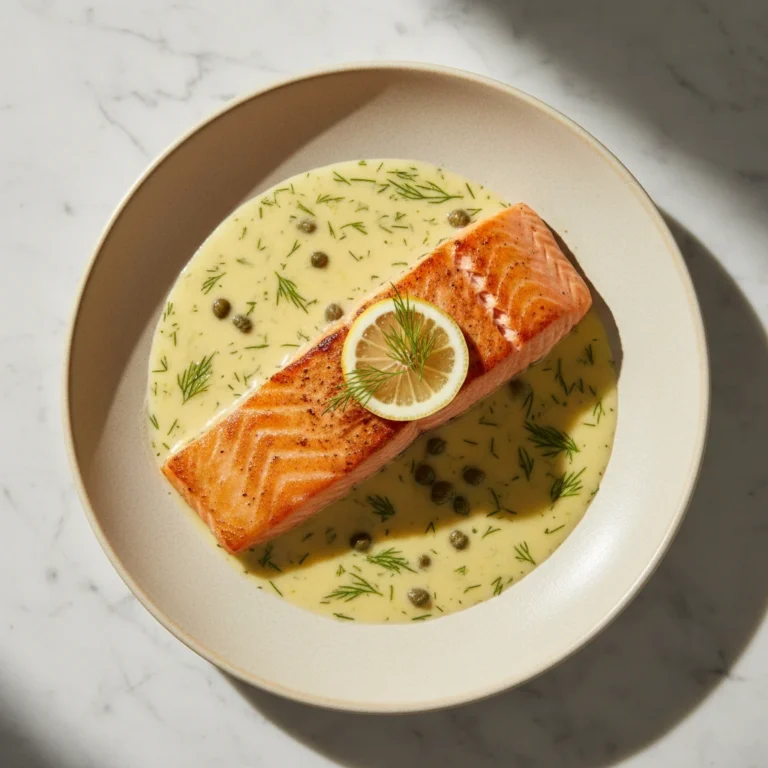
Elevate your salmon dinner with this restaurant-quality sauce for salmon that combines bright citrus, aromatic herbs, and velvety cream. This creamy dill and lemon sauce for salmon takes just 15 minutes to prepare and transforms simple baked or pan-seared salmon into an elegant, impressive meal. Perfect for weeknight dinners or special occasions, this versatile sauce balances tangy, savory, and buttery flavors that complement salmon’s rich texture beautifully.
Reasons to Try Creamy Dill and Lemon Sauce for Salmon
This sauce for salmon is a game-changer for home cooks looking to impress. Here’s why you’ll love it:
- Restaurant-Quality Taste: The combination of fresh dill, lemon juice, and Dijon mustard creates sophisticated flavors typically found in upscale seafood restaurants, but made easily at home.
- Perfectly Balanced Flavors: Bright citrus cuts through the richness of cream, while briny capers and aromatic dill add complexity without overwhelming the delicate salmon.
- Quick and Effortless: Ready in just 15 minutes, this sauce requires only one pan and basic techniques, making it accessible for beginner to intermediate cooks.
- Incredibly Versatile: Works beautifully with baked, pan-seared, grilled, or poached salmon, and even complements other white fish and vegetables.
- Elegant Presentation: A silky sauce pooled beneath salmon fillets instantly elevates any plate and makes weeknight dinners feel special.
- Make-Ahead Friendly: Can be prepared 2–3 hours ahead and gently reheated, making meal preparation stress-free for entertaining.
- Professional Flavor Profile: The interplay of sweet honey, tangy mustard, and fresh herbs creates a sophisticated sauce that tastes far more complicated than it actually is.
 Save
SaveIngredients Notes
- Butter
- Garlic cloves
- Heavy cream
- Chicken or vegetable broth
- Fresh lemon juice
- Fresh dill
- Dijon mustard
- Salt
- Black pepper
- White pepper
- Honey
- Capers
- Lemon zest
How to Make Creamy Dill and Lemon Sauce for Salmon
- Melt butter in a medium saucepan over medium heat and add minced garlic, stirring for about 1 minute until fragrant.
- Pour in broth and lemon juice, bringing to a simmer for 2 minutes to reduce slightly.
- Reduce heat to medium-low and slowly add heavy cream, stirring constantly to combine smoothly.
- Whisk in Dijon mustard, honey, salt, black pepper, and white pepper until fully incorporated.
- Stir in fresh dill and capers, tasting and adjusting seasonings as needed.
- Simmer gently for 2–3 minutes without boiling, until sauce thickens slightly.
- Remove from heat and stir in lemon zest just before serving.
What You Must Know About Creamy Dill and Lemon Sauce for Salmon
Critical Tips for Success:
- Never boil after adding cream: Once cream is added, keep the heat at medium-low. A rolling boil will cause the sauce to break or separate, resulting in a grainy, curdled texture. If this happens, remove from heat and whisk in a tablespoon of cold cream to rescue it.
- Use fresh dill when possible: Dried dill lacks the bright, aromatic quality that makes this sauce special. If you only have dried dill, use 1 teaspoon instead of 1 tablespoon fresh, as dried is more concentrated.
- Fresh lemon juice is essential: Bottled lemon juice has a different flavor profile and won’t give you the same bright, clean taste. Always use juice from a fresh lemon.
- Prep all ingredients before cooking: This sauce comes together fast, so you won’t have time to mince garlic or chop dill once you start. Mise en place (having everything prepped) ensures smooth, stress-free execution.
- Adjust seasoning at the end: Taste the sauce just before serving and adjust salt, pepper, or lemon juice to your preference. Flavors can vary based on broth saltiness and cream brand.
Helpful Tips
- Make it dairy-free: Replace heavy cream with full-fat coconut milk or a combination of olive oil and vegetable broth mixed with a slurry of cornstarch and water. The flavor will be lighter but still delicious.
- Prepare ahead: This sauce can be made 2–3 hours in advance and reheated gently over low heat with a splash of broth or cream to thin it if needed. This makes entertaining much easier.
- Use white wine as a substitute: Replace half the broth with 1/4 cup dry white wine for a more sophisticated, restaurant-style sauce.
- Save the drippings: If you pan-sear your salmon, use the flavorful pan drippings as part of your broth liquid for extra salmon flavor.
- Double the batch: This sauce freezes beautifully for up to 3 months in an airtight container. Thaw overnight and reheat gently on the stovetop with a splash of cream.
Variations and Substitutions
- Herb Variations: Swap dill for fresh tarragon, chervil, or parsley for different herbal notes. Tarragon creates a more French-inspired sauce with a subtle anise flavor. Use the same amount — about 1 tablespoon fresh herbs total.
- Spiced Version: Add 1/4 teaspoon smoked paprika and a pinch of cayenne pepper to the sauce for a warm, subtle heat that complements salmon’s richness.
- Mustard Variations: Replace Dijon mustard with whole grain mustard for a coarser texture and nuttier flavor, or use spicy brown mustard for extra depth.
- Caper-Free Version: If you don’t like capers, omit them entirely or replace with 1 tablespoon finely chopped pickled onions or cornichons for a different tangy element.
- Lighter Cream Version: Substitute heavy cream with half-and-half or Greek yogurt stirred in at the end for a lighter sauce with fewer calories. Do not boil if using yogurt — add it off heat and stir gently.
- Garlic-Forward Version: Increase minced garlic to 3–4 cloves for garlic lovers, or add 1/4 teaspoon garlic powder if you prefer a milder garlic presence.
- Cider or Balsamic Version: Replace lemon juice with 1 tablespoon apple cider vinegar or aged balsamic vinegar for a deeper, sweeter-sour profile that pairs beautifully with roasted salmon.
- Tomato Cream Sauce: Add 1/4 cup sun-dried tomato paste or 1/2 cup diced fresh tomatoes simmered in the broth for a salmon sauce with Mediterranean flair.
Serving Suggestions for Creamy Dill and Lemon Sauce for Salmon
- Classic Plating: Place a warm salmon fillet in the center of each plate and spoon 3–4 tablespoons sauce around the fillet, allowing it to pool elegantly on one side. Garnish with a small sprig of fresh dill and a thin lemon wheel perched on top of the salmon.
- Over Rice or Grains: Serve salmon and sauce over creamy risotto, wild rice pilaf, or quinoa. The sauce soaks into the grains beautifully, adding richness and flavor. Garnish with fresh dill and toasted lemon zest.
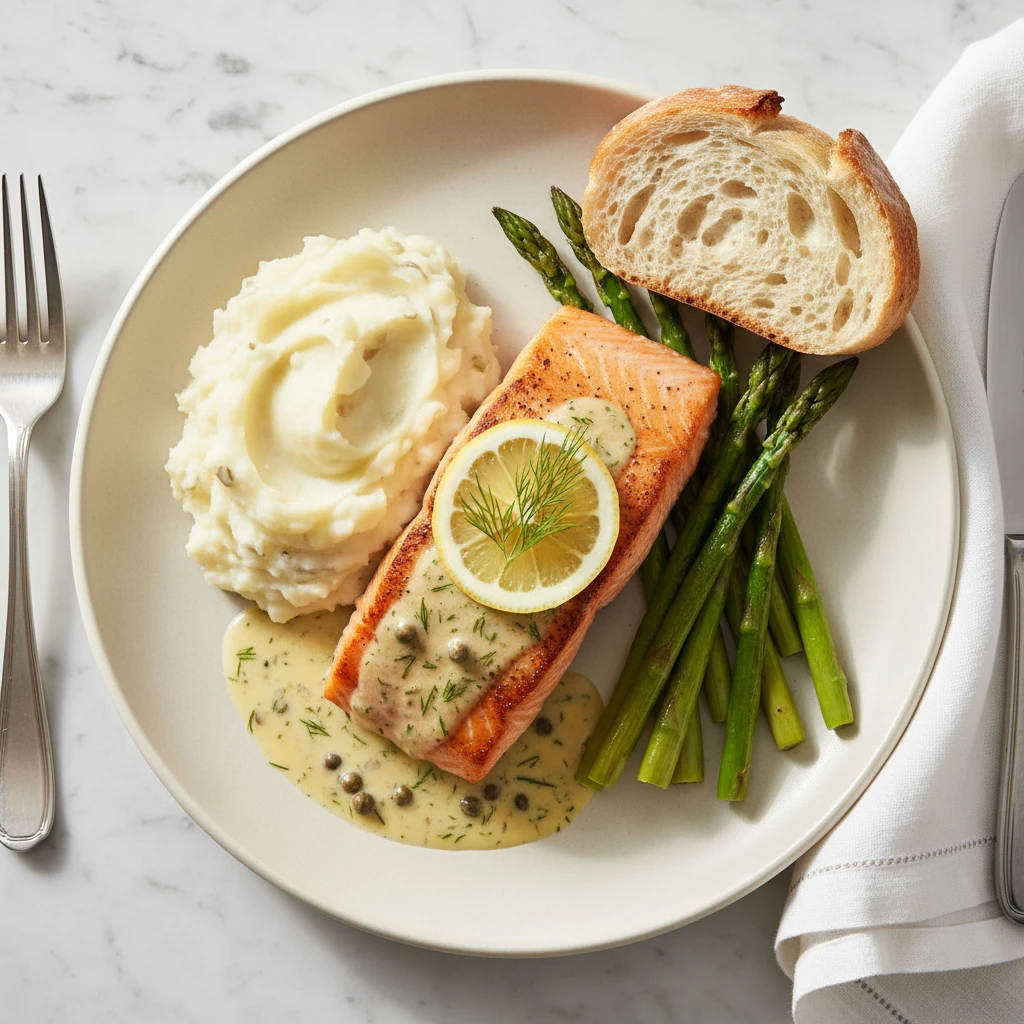
- Vegetable Pairings: Accompany with roasted asparagus, steamed broccoli, sautéed green beans, or roasted Brussels sprouts on the side. The bright sauce cuts through heavier vegetables perfectly.
- Pasta Combination: Toss the sauce with fresh pasta (fettuccine or pappardelle) and flaked cooked salmon for a luxurious one-pan meal. Add fresh spinach or peas if desired.
- Potato Sides: Serve salmon and sauce alongside creamed potatoes, mashed potatoes, or buttered new potatoes for comfort-food elegance.
- Bread Accompaniment: Provide crusty sourdough or garlic bread to soak up every drop of the delicious sauce.
- Light Summer Serving: Pair with a fresh arugula salad dressed with lemon vinaigrette and shaved Parmesan. The acidity of the salad balances the richness of the cream sauce.
- Appetizer Style: Serve small portions of the sauce in shallow bowls with pan-seared salmon bites or smoked salmon as an elegant dinner party starter.
- Garnish Upgrades: Top finished plates with crispy bacon bits, toasted pine nuts, or a sprinkle of fleur de sel for textural contrast.
 Save
SaveStorage and Reheating
Refrigerator Storage: Transfer leftover sauce to an airtight glass container and refrigerate for up to 3 days. To prevent a skin from forming, press plastic wrap directly onto the surface of the sauce before covering the container.
Freezer Storage: This sauce freezes exceptionally well for up to 3 months in a freezer-safe container or in ice cube trays (each cube is about 2 tablespoons). Freeze in ice cube trays, then pop out and store cubes in a freezer bag for easy portioning.
Thawing: Thaw frozen sauce overnight in the refrigerator or at room temperature for 1–2 hours before reheating.
Reheating on Stovetop: Pour sauce into a small saucepan and warm over low to medium-low heat for 3–5 minutes, stirring occasionally. If the sauce has thickened too much during storage, add 1–2 tablespoons broth or cream to reach desired consistency. Do not allow the sauce to boil. Heat until just steaming.
Reheating in Microwave: Transfer sauce to a microwave-safe bowl and heat in 30-second intervals, stirring between each interval, until warmed through (total time: 1–2 minutes depending on quantity). Stir well after heating to ensure even temperature.
Serving Leftover Sauce with Fresh Salmon: This sauce pairs beautifully with freshly cooked salmon, so consider making it ahead for busy weeknights. Simply cook your salmon as desired and reheat the sauce gently when ready to serve.
Storing with Cooked Salmon: If you have leftover salmon with sauce already on it, transfer to an airtight container and refrigerate for up to 2 days. Reheat gently in a 325°F oven for 8–10 minutes, covered with foil, to prevent the salmon from drying out.
Frequently Asked Questions about Creamy Dill and Lemon Sauce for Salmon
Can I make this sauce without heavy cream?
Yes. Replace heavy cream with an equal amount of half-and-half for a lighter sauce, or use full-fat coconut milk for a dairy-free version. You can also create a lighter sauce by using Greek yogurt — add it off the heat at the very end and stir gently without boiling, as boiling yogurt can cause it to separate. The texture will be slightly less rich but still delicious.
How long does this sauce take to make?
From start to finish, this sauce takes about 12–15 minutes. Once you’ve prepped your ingredients, the actual cooking time is only 10 minutes. This makes it perfect for weeknight dinners when you want something elegant but quick.
Can I use dried dill instead of fresh?
You can, but the flavor won’t be quite as bright or aromatic. If using dried dill, reduce the amount to 1 teaspoon instead of 1 tablespoon, as dried herbs are more concentrated. Add dried dill at the beginning when you cook the garlic, so it rehydrates and releases its flavors into the sauce.
What if my sauce breaks or looks curdled?
This typically happens if the heat is too high after the cream is added. Remove the saucepan from heat immediately and let it cool for 1 minute. Then, whisk in 1–2 tablespoons of cold heavy cream or broth very slowly while whisking constantly. This usually rescues the sauce. If it still looks grainy, strain it through a fine-mesh sieve and whisk in a tablespoon of butter off the heat.
Can I make this sauce ahead of time?
Absolutely. This sauce can be prepared 2–3 hours ahead and kept at room temperature covered, or refrigerated for up to 3 days. To reheat, place it in a saucepan over low heat and warm gently for 3–5 minutes, stirring occasionally. Add a splash of broth or cream if it has thickened too much during storage. Do not boil.
What type of broth should I use?
Either chicken broth or vegetable broth works beautifully. Use a good-quality broth — homemade is best, but low-sodium store-bought is fine. Avoid heavily salted broths as the sauce can become too salty. You can also use clam juice or fish stock for a more seafood-forward flavor, using the same amount.
How much sauce should I serve per person?
Plan for 3–4 tablespoons of sauce per salmon fillet. This recipe yields about 1.5 cups of sauce, which is enough for 4–6 salmon fillets depending on how generously you pour. You can drizzle it on the side, pool it under the fillet, or spoon it over the top.
Can this sauce be used for other fish or proteins?
Yes, this sauce is versatile. It pairs beautifully with halibut, cod, trout, and other white fish. It also works well with chicken breasts, shrimp, and even roasted vegetables like zucchini or mushrooms. The bright dill and lemon make it a naturally complementary sauce for most proteins.
Nutrition Facts (Per Serving)
| Nutrient | Amount |
| Calories | 245 kcal |
| Protein | 2g |
| Total Fat | 25g |
| Saturated Fat | 15g |
| Unsaturated Fat | 8g |
| Cholesterol | 82mg |
| Carbohydrates | 3g |
| Fiber | 0g |
| Sugars | 1g |
| Sodium | 385mg |
Note: Nutrition facts are based on the sauce only, per 1/4 cup serving. Values are approximate and may vary based on specific brands used. This does not include the salmon or any accompaniments.
Creamy Dill and Lemon Sauce for Salmon
Ingredients
- 3 tablespoons butter
- 2 cloves garlic minced
- 1 cup heavy cream
- 1/2 cup chicken or vegetable broth
- 2 tablespoons fresh lemon juice
- 1 tablespoon fresh dill chopped
- 1 teaspoon Dijon mustard
- 1/2 teaspoon salt
- 1/4 teaspoon black pepper
- 1/4 teaspoon white pepper
- 1/2 teaspoon honey
- 2 tablespoons capers drained and chopped
- Zest of 1 lemon
Instructions
- Gather and prepare ingredients: Measure out all ingredients before you start. Mince 2 cloves garlic finely. Chop fresh dill (about 1 tablespoon). Chop capers (about 2 tablespoons). Zest 1 lemon using a microplane or zester. Juice 1 lemon to get about 2 tablespoons fresh juice. Have your measuring spoons and cups ready. Time: 5 minutes.
- Melt butter and cook garlic: In a medium saucepan (8–10 inches wide), melt 3 tablespoons butter over medium heat. Heat should be medium — the butter will foam slightly but not brown. Once melted and foamy, add minced garlic immediately. Stir constantly with a wooden spoon or silicone spatula. Cook for 1–2 minutes until the garlic smells fragrant and slightly golden but not brown. Checkpoint: Your kitchen should smell of toasted garlic and the garlic should look pale golden, not dark.
- Add broth and lemon juice: Pour in 1/2 cup chicken or vegetable broth slowly, then add 2 tablespoons fresh lemon juice. Stir well to combine. Bring the mixture to a simmer over medium heat. You'll see small bubbles breaking the surface. Let it simmer gently for 2–3 minutes to reduce slightly and concentrate flavors. The liquid should reduce by about 1/4 cup. Time: 3 minutes.
- Add heavy cream: Reduce heat to medium-low — this step is important to prevent the cream from breaking. Slowly pour in 1 cup heavy cream while stirring constantly with your whisk or spoon. Stir in one direction continuously for about 1 minute. The sauce should start to look creamy and smooth, not separated. Checkpoint: The sauce should be smooth, homogeneous, and pale yellow. If you see any small lumps or separation, keep stirring gently.
- Whisk in seasonings: Add 1 teaspoon Dijon mustard, 1/2 teaspoon honey, 1/2 teaspoon salt, 1/4 teaspoon black pepper, and 1/4 teaspoon white pepper. Whisk vigorously for 1–2 minutes until everything is fully blended and the color is even throughout. The sauce should smell bright and tangy. Taste a tiny spoonful (let it cool slightly) — it should be creamy, slightly sharp from the mustard, and balanced between savory and faintly sweet.
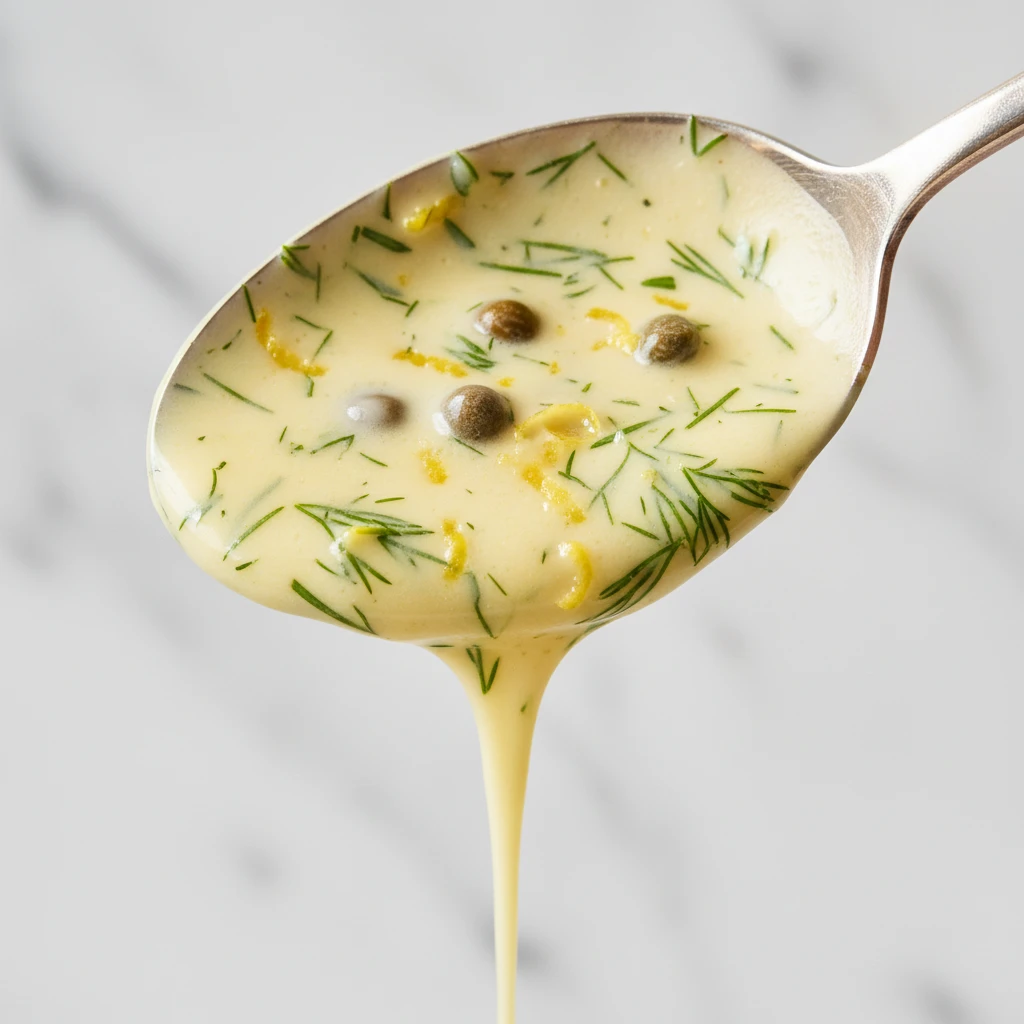
- Add fresh herbs and capers: Stir in 1 tablespoon chopped fresh dill and 2 tablespoons chopped capers. Stir gently for 30 seconds to distribute the herbs and capers evenly throughout the sauce. The dill will add a fresh green fleck and herbaceous aroma. Checkpoint: You should see small flecks of green dill and dark capers throughout the creamy sauce.
- Simmer and thicken: Keep the heat at medium-low and let the sauce simmer gently for 2–3 minutes. You should see a few small bubbles gently breaking the surface — not a rolling boil. Do NOT let it boil rapidly or the cream may separate. The sauce will thicken slightly as it simmers. Stir occasionally. After 3 minutes, the sauce should coat the back of a spoon lightly. Time: 3 minutes.
- Final seasoning and lemon zest: Remove the saucepan from heat immediately. Stir in the lemon zest (about 1 teaspoon) from your microplane. This adds a bright citrus flavor and beautiful color flecks. Taste again — adjust salt or lemon juice if needed. The sauce should taste balanced: creamy, bright, herbaceous, and savory. Time: 1 minute.
- Transfer and serve: Pour the sauce into a serving bowl or directly onto plates with cooked salmon fillets. The sauce should be pourable but thick enough to coat a spoon. Serve immediately while hot. If you need to hold it for up to 30 minutes, place a piece of plastic wrap directly on the surface to prevent a skin from forming, and keep it warm over very low heat or in a warm (not hot) spot. Time: 2 minutes.