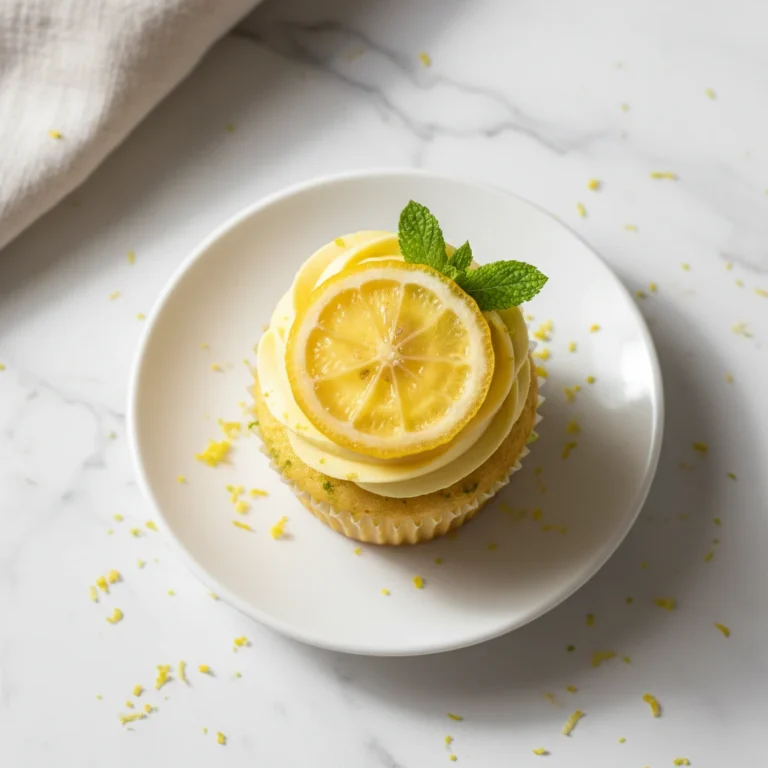
Lemon bar cupcakes combine the beloved tangy-sweet flavors of classic lemon bars with the convenient, individual-serving format of cupcakes. These delightful treats feature a moist, buttery vanilla cake infused with bright lemon zest, topped with a silky lemon curd filling and a zesty lemon buttercream frosting. Perfect for spring gatherings, afternoon tea, or whenever you crave the perfect balance of sweetness and citrus brightness, these cupcakes deliver all the nostalgic charm of the original dessert in every delicious bite.
Reasons to Try Lemon Bar Cupcakes
Bold Lemon Flavor: These cupcakes pack a triple punch of lemon with zest in the cake, lemon curd filling, and a bright lemon frosting. The result is an intensely citrusy treat that never feels overwhelming—just perfectly balanced and refreshing.
Best of Both Worlds: Lemon bar cupcakes bridge the gap between two beloved desserts. You get the convenience and elegance of cupcakes with the iconic tang and texture of traditional lemon bars, making them ideal for any occasion where you want something special.
Impressive Yet Simple: While they look bakery-worthy with their layered components and vibrant garnish, these cupcakes are straightforward to make at home. The lemon curd filling and frosting come together quickly, and assembly is intuitive.
Spring and Summer Ready: The fresh, citrus-forward flavor profile makes these perfect for warm-weather celebrations, garden parties, bridal showers, or Easter gatherings. They’re light enough for daytime desserts yet elegant enough for evening events.
Make-Ahead Friendly: You can bake the cupcakes days ahead and store them unfrosted, making them ideal for batch baking and entertaining. The frosting and filling can be prepared hours in advance, streamlining your presentation time.
 Save
SaveIngredients Notes
For the Cupcakes
- All-purpose flour
- Baking powder
- Salt
- Unsalted butter, softened
- Granulated sugar
- Large eggs
- Sour cream
- Fresh lemon juice
- Lemon zest
- Vanilla extract
For the Lemon Curd Filling
- Sweetened condensed milk
- Cornstarch
- Fresh lemon juice
- Lemon zest
For the Lemon Frosting
- Unsalted butter, softened
- Powdered sugar
- Fresh lemon juice
- Lemon zest for garnish
- Salt
How to Make Lemon Bar Cupcakes
For the Cupcakes
- Preheat oven to 350°F and line a muffin tin with cupcake liners.
- Whisk together flour, baking powder, and salt in a small bowl.
- Cream softened butter and sugar until light and fluffy (about 2–3 minutes).
- Beat in eggs one at a time, then add vanilla extract.
- Alternate adding the flour mixture and sour cream to the butter mixture, beginning and ending with flour.
- Stir in lemon juice and lemon zest until just combined.
- Divide batter evenly among cupcake liners, filling each about two-thirds full.
- Bake for 18–22 minutes until a toothpick inserted in the center comes out clean.
- Cool in the pan for 5 minutes, then transfer to a wire rack to cool completely.
For the Lemon Curd Filling
- Whisk together sweetened condensed milk and cornstarch in a small saucepan.
- Add lemon juice and lemon zest and stir until smooth.
- Cook over medium heat, stirring constantly, for 4–6 minutes until the mixture thickens and becomes glossy.
- Remove from heat and let cool slightly, then transfer to a piping bag or small bowl.
For the Frosting
- Beat softened butter until creamy (about 1 minute).
- Gradually add powdered sugar, beating until fluffy (2–3 minutes).
- Add lemon juice and lemon zest, beating until combined and airy.
- Add a pinch of salt and mix until smooth.
Assembly
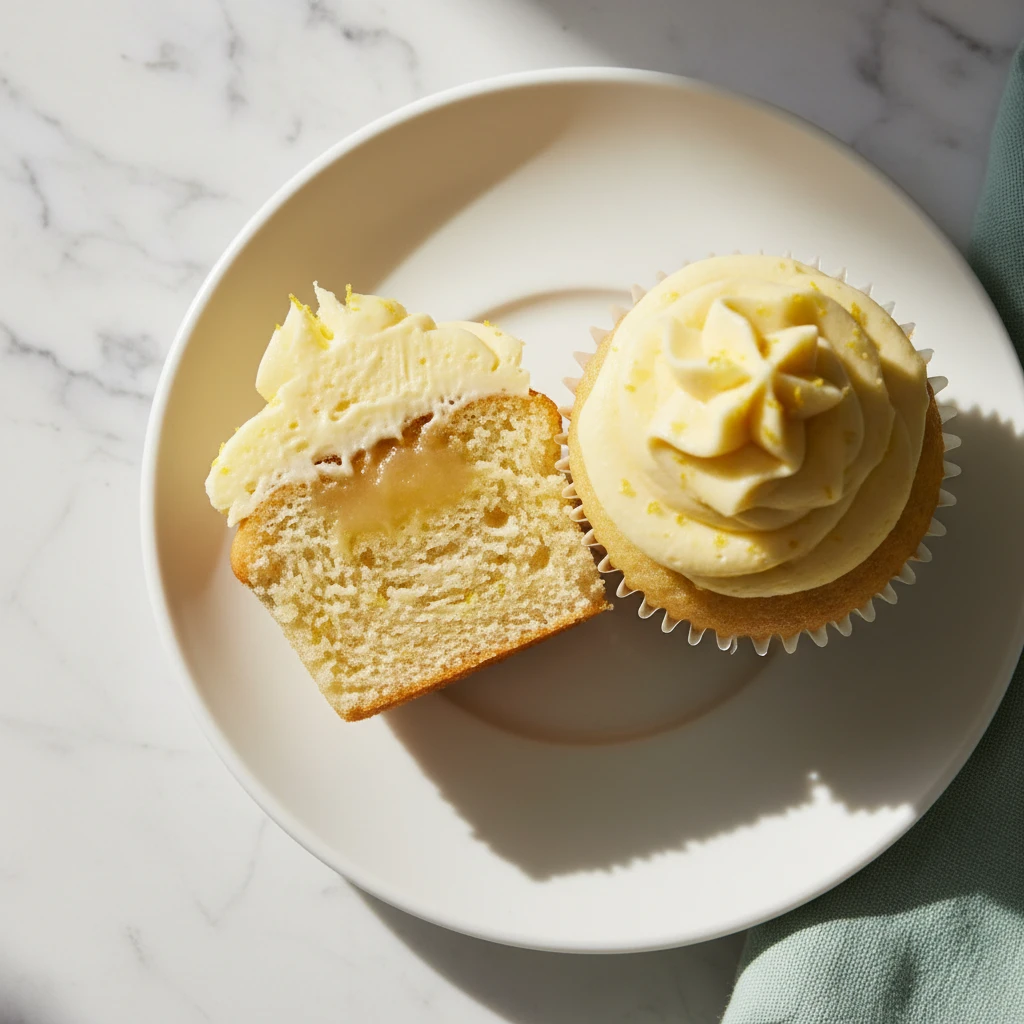
- Once cupcakes are completely cool, use a small paring knife or cupcake corer to remove a small circle from the top of each cupcake.
- Fill the cavity with lemon curd filling using a piping bag.
- Replace the cupcake top or pipe frosting directly over the filling.
- Top each cupcake with a generous dollop of lemon frosting and garnish with lemon zest or a thin lemon slice.
What You Must Know About Lemon Bar Cupcakes
Use Fresh Lemon Juice: Bottled lemon juice has a different flavor profile and may not set the curd properly. Always use fresh-squeezed lemon juice for the best, brightest taste and proper texture. Store-bought juice can taste flat or bitter in comparison.
Don’t Overmix the Batter: Overmixing develops gluten, which makes cupcakes dense and tough. When adding ingredients, mix only until no streaks of flour are visible. A slightly lumpy-looking batter is perfectly fine and will bake into tender cupcakes.
Cool Completely Before Frosting: Warm cupcakes will melt the frosting, causing it to slide off or look sloppy. Allow at least 1 hour cooling time (preferably longer in a cool environment). You can even bake these cupcakes a day ahead and frost them the next day—they’ll hold their shape beautifully.
The Lemon Curd Must Cool: Don’t attempt to fill warm curd into cupcakes or pipe it with warm frosting on top—they’ll run together. Cool the curd for at least 10–15 minutes before using. It will continue to thicken as it cools, making it easier to work with.
Lemon Zest Quality Matters: Use a microplane zester or the fine holes of a box grater to get thin, delicate zest without the bitter white pith. The white pith tastes extremely bitter and will ruin the flavor of your cupcakes, so avoid it entirely.
Helpful Tips
Make Ahead Strategy: Bake cupcakes up to 2 days ahead and store unfrosted in an airtight container at room temperature. Prepare the frosting and filling up to 8 hours ahead. This breaks the project into manageable steps and lets you focus on assembly the day of serving.
Achieve a Bakery Look: Pipe frosting using a star tip for a professional appearance. If you don’t have piping bags, a simple offset spatula creates a rustic, elegant look. The garnish of lemon zest or a thin candied lemon slice transforms these from homemade to café-quality.
Adjust Tartness to Your Preference: If you prefer sweeter cupcakes, reduce the lemon juice by 1 tablespoon in the cake and 1/2 tablespoon in the curd. If you love intense lemon, add an extra 1/2 tablespoon lemon juice to the frosting (you may need to compensate with a bit more powdered sugar to maintain consistency).
Stabilize Frosting for Hot Weather: If serving outdoors on a warm day, add 2 tablespoons of cream cheese to the frosting mixture—it stabilizes the texture and prevents slumping. The tangy cream cheese also complements the lemon beautifully.
Invest in Quality Butter: Use unsalted butter so you control the salt level and taste the pure butter flavor, which matters in delicate desserts like these. Cold butter pieces in your cupcake liners also help create an even crumb.
Variations and Substitutions
Gluten-Free Lemon Bar Cupcakes: Substitute the all-purpose flour with a 1:1 gluten-free baking flour blend. The batter may be slightly thicker; add 1–2 tablespoons of milk to reach the correct consistency. Bake for 20–24 minutes as gluten-free cakes bake slightly slower. The texture will be equally tender and moist.
Dairy-Free Version: Replace the butter with dairy-free butter, sour cream with non-dairy yogurt (coconut or cashew works well), and use coconut milk in place of sweetened condensed milk for the filling. The frosting can be made with dairy-free butter and coconut milk. The flavor and texture will be nearly identical.
Lemon Poppy Seed Cupcakes: Add 2 tablespoons of poppy seeds to the dry ingredients for a classic poppy seed-lemon combination. The seeds add subtle texture and visual interest. Skip this if you prefer a smoother cupcake.
Lemon Cream Cheese Frosting: Replace half the butter in the frosting with 4 ounces of softened cream cheese for a tangier, richer frosting. Reduce the lemon juice to 2 tablespoons. This creates a denser frosting with extra complexity.
Mini Lemon Bar Cupcakes: Use a mini muffin tin and reduce baking time to 12–15 minutes. These tiny versions are perfect for parties, tea service, or when you want single bites. Adjust filling and frosting quantities accordingly—you’ll get about 24 mini cupcakes.
Lemon Lime Cupcakes: Add 1/2 tablespoon lime zest and 2 tablespoons fresh lime juice to the cake batter, and split the lemon juice between lemon and lime in the filling and frosting for a tropical twist. The bright, complex citrus flavor is stunning for summer events.
Filled with Lemon Curd Only (No Cake Filling): For a less sweet version, skip the separate frosting and simply top each cupcake with a thick spoonful of cooled lemon curd after filling. Dust with powdered sugar or a tiny pinch of lemon zest. This creates a more refined, less sugary dessert.
Salted Lemon Frosting: Increase the salt in the frosting to 1/4 teaspoon and add 1/4 teaspoon fleur de sel as a garnish on top of each frosted cupcake. The salt enhances lemon brightness and creates an elevated sweet-salty balance inspired by salted lemon desserts.
Serving Suggestions for Lemon Bar Cupcakes
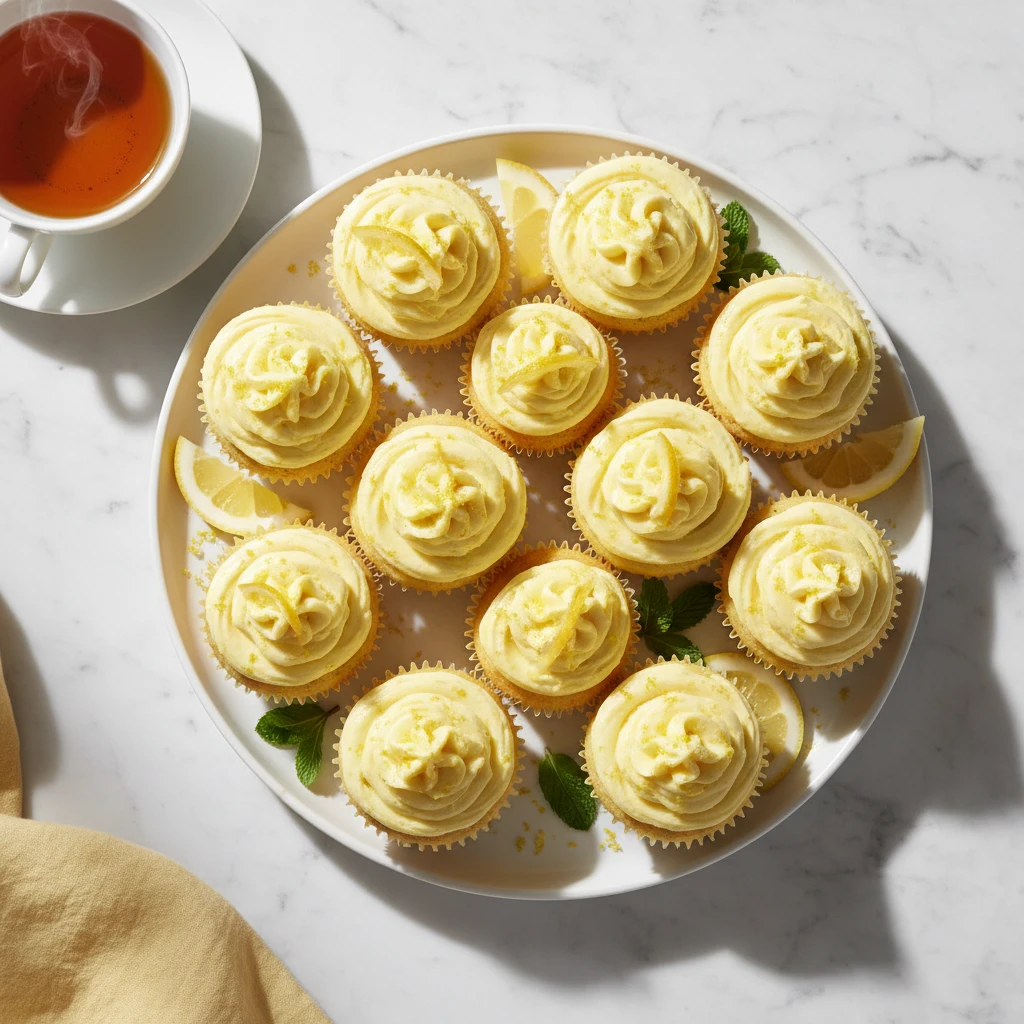
Elegant Tea Service: Serve these cupcakes on a tiered cake stand with fresh lemon slices, mint leaves, and doilies for a refined afternoon tea presentation. Pair with hot Earl Grey, jasmine tea, or cold lemonade for a coordinated citrus theme.
Garnish with Candied Lemon Slices: Top each frosted cupcake with a thin, translucent candied lemon slice for a gorgeous, jewel-like appearance. This adds visual drama and a subtle sweetness that complements the tartness beautifully.
Serve Slightly Chilled: Refrigerate the finished cupcakes for 20–30 minutes before serving. The frosting firms up and the flavors meld together beautifully. Slightly chilled cupcakes are easier to handle and taste more refined.
Spring and Easter Gatherings: Arrange on a white or pale yellow platter and surround with fresh spring flowers (non-toxic varieties like tulips or daffodils) for a seasonal presentation. These colors naturally complement the pale yellow of the frosting.
Individual Dessert Plating: Serve on small dessert plates with a delicate sprig of fresh mint or a thin lemon wheel on the side. Dust the plate with a tiny amount of powdered sugar for an upscale restaurant presentation.
Picnic or Garden Party: Pack in a secure cupcake container for outdoor events. Their individual size makes them perfect for standing and eating while mingling. The tartness provides refreshment on warm days.
As a Bridal or Baby Shower Dessert: These cupcakes fit perfectly into pastel or citrus-themed events. Serve alongside other light desserts like sugar cookies or macarons for a sophisticated dessert display.
Drizzle with Extra Lemon Curd: For an indulgent presentation, drizzle a small amount of extra lemon curd around the cupcake on the plate before serving. This creates visual interest and gives guests an option to enjoy extra filling.
Pair with Complementary Beverages: Serve with sparkling lemonade, prosecco, white wine (Sauvignon Blanc or Pinot Grigio), or even a light citrus vodka cocktail. The brightness of the cupcakes pairs beautifully with effervescent or crisp beverages.
 Save
SaveStorage and Reheating
Room Temperature Storage: Store unfrosted baked cupcakes in an airtight container at room temperature for up to 3 days. Once frosted, keep them in an airtight container at room temperature for up to 2 days. The frosting may soften slightly but will remain fresh-tasting.
Refrigerator Storage: Store frosted cupcakes in an airtight container in the refrigerator for up to 5 days. The cool temperature keeps the frosting firm and extends the freshness of the cupcakes. Remove from the refrigerator 15–20 minutes before serving to allow them to come to room temperature—they’ll taste and feel better than when cold.
Freezer Storage: Unfrosted cupcakes can be frozen in a freezer-safe container or zip-top bags for up to 3 months. Frosted cupcakes can also be frozen; place them in a single layer on a baking sheet and freeze for 2 hours before transferring to a freezer container to prevent frosting damage. Freeze for up to 2 months.
Thawing Frozen Cupcakes: Remove cupcakes from the freezer and let them thaw at room temperature in their container for 1–2 hours. This gentle thawing prevents condensation from pooling on the frosting. Never thaw in the refrigerator as this takes longer and can affect texture.
Reheating Tip: These cupcakes are best enjoyed at room temperature or slightly chilled—reheating is not recommended as it can dry them out and melt the frosting. If you prefer warm cupcakes, microwave an unfrosted, thawed cupcake for 10–15 seconds only, and add frosting afterward.
Lemon Curd Storage: Store any leftover lemon curd in an airtight container in the refrigerator for up to 7 days or freeze for up to 2 months. Use it for future cupcakes, layer it in yogurt, spread it on toast, or spoon it over pound cake.
Frosting Storage: Extra lemon frosting can be stored in an airtight container in the refrigerator for up to 5 days or frozen for up to 2 months. Re-whip it with a hand mixer for 30 seconds before using to restore the airy texture.
Frequently Asked Questions about Lemon Bar Cupcakes
Can I use bottled lemon juice instead of fresh?
While bottled lemon juice is convenient, it has a different flavor profile and may taste flat or slightly bitter in the cupcakes and frosting. More importantly, it has different pectin content, which can prevent the lemon curd filling from setting properly. Always use fresh-squeezed lemon juice for the best results. If you must use bottled, increase the cornstarch in the curd to 2 1/2 teaspoons to ensure it thickens.
Why did my lemon curd filling not thicken?
This typically happens if the filling didn’t cook long enough or the heat was too low. Ensure you cook the mixture on medium heat for a full 4–6 minutes, stirring constantly. The mixture should bubble gently around the edges. Also, bottled lemon juice has different pectin content than fresh, which can affect thickening. Alternatively, you may need an extra 1/2 teaspoon of cornstarch if your lemon juice is particularly weak or diluted.
Can I make these cupcakes without a cupcake corer?
Absolutely. A small paring knife or the edge of a small spoon works perfectly. Gently carve a small cavity (about 1 inch deep and 3/4 inch in diameter) into the top of each cooled cupcake. Be careful not to cut all the way through the bottom. The goal is creating a pocket to hold the lemon curd filling. Alternatively, you can skip filling entirely and simply frost with lemon buttercream for an easier version.
How do I prevent my frosting from becoming too soft in warm weather?
Use cold butter straight from the refrigerator when making the frosting. Keep the finished frosted cupcakes in a cool location or refrigerator until serving time. For outdoor events on hot days, add 2 tablespoons of softened cream cheese to the frosting—this stabilizes the texture and prevents slumping. Store in a shaded area and bring them out shortly before serving.
Can I make these cupcakes in advance for an event?
Yes, these cupcakes are excellent for advance preparation. Bake them up to 2 days ahead and store unfrosted in an airtight container at room temperature. Prepare the lemon curd filling and frosting up to 8 hours ahead, storing them separately in airtight containers in the refrigerator. Core and fill the cupcakes on the day of the event, then frost within a few hours of serving for the best appearance and texture.
Are these cupcakes very sour or are they well-balanced?
These cupcakes are well-balanced—they have bright lemon flavor without being overwhelmingly tart. The cake itself is sweet and buttery with lemon zest throughout. The filling is a sweet-tart lemon curd, and the frosting is primarily sweet with lemon juice adding brightness. If you prefer less tartness, reduce the lemon juice in each component by 1/2 tablespoon. If you love intense lemon flavor, add an extra 1/2 tablespoon of lemon juice to the frosting.
Can I substitute the sweetened condensed milk in the lemon curd filling?
The sweetened condensed milk adds body, richness, and sweetness to the curd. You can substitute it with 1/2 cup of regular whole milk plus 2 tablespoons of sugar, though the texture will be slightly thinner and the flavor less rich. Alternatively, use 1/2 cup of heavy cream instead, which creates a silkier, more luxurious filling. Avoid evaporated milk as it has a different flavor profile that may not work well with lemon.
How do I know when the cupcakes are done baking?
The most reliable test is the toothpick method. Insert a wooden toothpick into the center of a cupcake in the middle of the pan. It should come out with just a few moist crumbs clinging to it—not wet, but not completely clean either. The cupcake tops should be golden brown and spring back lightly when you gently touch them. Overbaking creates dry cupcakes, so it’s better to err slightly on the side of underbaking, especially since residual heat continues cooking them after removal from the oven.
Nutrition Facts
| Nutrient | Amount per Serving |
|---|---|
| Calories | 285 |
| Total Fat | 14g |
| Saturated Fat | 9g |
| Trans Fat | 0.5g |
| Cholesterol | 72mg |
| Sodium | 142mg |
| Total Carbohydrate | 42g |
| Dietary Fiber | 0g |
| Total Sugars | 35g |
| Protein | 3g |
| Vitamin C | 8mg (13% DV) |
Serving Size: 1 cupcake (with frosting and filling) | Servings per Recipe: 12
Note: These cupcakes are an indulgent dessert best enjoyed in moderation. The bright lemon provides a small amount of vitamin C. Nutrition information is estimated based on USDA data and may vary slightly based on specific ingredient brands and preparation methods.
Lemon Bar Cupcakes
Ingredients
- 1 3/4 cups all-purpose flour
- 1 1/2 teaspoons baking powder
- 1/4 teaspoon salt
- 1/2 cup unsalted butter softened
- 1 cup granulated sugar
- 2 large eggs
- 1/2 cup sour cream
- 1/4 cup fresh lemon juice
- 2 tablespoons lemon zest
- 1 teaspoon vanilla extract
- 1/2 cup sweetened condensed milk
- 2 tablespoons cornstarch
- 3 tablespoons fresh lemon juice for filling
- 1 tablespoon lemon zest for filling
- 1/2 cup unsalted butter for frosting
- 2 cups powdered sugar
- 3 tablespoons fresh lemon juice for frosting
- 1 tablespoon lemon zest for garnish
- Pinch of salt for frosting
Instructions
- Preheat and prepare: Set oven to 350°F. Line a standard 12-cup muffin tin with paper or silicone cupcake liners. This ensures the cupcakes won't stick and creates a neat presentation. Checkpoint: You're ready to move forward when the liners are secure in every cup.
- Mix dry ingredients: In a small bowl, whisk together 1 3/4 cups all-purpose flour, 1 1/2 teaspoons baking powder, and 1/4 teaspoon salt. Set aside. This combination aerates and seasons the flour evenly. Checkpoint: The mixture should look uniform with no lumps.
- Cream butter and sugar: In a large bowl using an electric mixer, beat 1/2 cup softened unsalted butter with 1 cup granulated sugar on medium-high speed for 2–3 minutes. The mixture should look pale, fluffy, and increased in volume by about one-third. This creaming process incorporates air, giving cupcakes a tender crumb. Checkpoint: The mixture should be light in color and fluffy—almost mousse-like.
- Add eggs one at a time: Add 2 large eggs one at a time, beating on medium speed for 30–45 seconds after each addition. Scrape down the sides of the bowl between eggs. Adding eggs gradually prevents the batter from curdling. Checkpoint: The batter should look smooth and creamy after each egg.
- Add vanilla: Beat in 1 teaspoon vanilla extract for 15–20 seconds on medium speed until fully combined. Checkpoint: Vanilla should be incorporated with no streaks visible.
- Alternate dry and wet ingredients: Add one-third of the flour mixture to the butter mixture, beat on low speed for 20–30 seconds just until combined (don't overmix). Then add half of the 1/2 cup sour cream, beat gently for 20 seconds. Repeat: one-third flour, remaining sour cream, remaining flour. Overmixing develops gluten, making cupcakes tough, so mix only until you see no streaks of flour. Checkpoint: The batter should be smooth, thick, and fall easily from a spoon.
- Add lemon juice and zest: Gently fold in 1/4 cup fresh lemon juice and 2 tablespoons lemon zest using a rubber spatula with a few broad sweeping motions—about 10–15 strokes total. Don't fully incorporate; a few streaks are okay. This preserves the tender crumb. Checkpoint: You should see flecks of lemon zest throughout the batter.
- Fill liners: Divide the batter evenly among 12 cupcake liners, filling each about two-thirds full. Use an ice cream scoop (about 2 tablespoons per cupcake) for consistent sizing and even baking. Checkpoint: All liners should be equally filled with no empty cups.
- Bake cupcakes: Place the muffin tin in the preheated 350°F oven on the center rack. Bake for 18–22 minutes until a wooden toothpick inserted in the center of a middle cupcake comes out with just a few moist crumbs (not wet, but not completely dry). The tops should be golden brown and spring back lightly when touched. Checkpoint: The toothpick test is your guide—don't overbake or cupcakes will be dry.
- Cool in pan: Remove the muffin tin from the oven and let cupcakes rest in the pan for exactly 5 minutes. This allows them to set slightly so they don't fall apart when removed. Don't skip this step. Checkpoint: Cupcakes should feel firm to the touch but still warm.
- Transfer to cooling rack: Gently turn the muffin tin on its side and carefully lift the cupcakes out onto a wire rack to cool for at least 1 hour until completely cool to the touch. Never frost warm cupcakes or the frosting will slide off. If you're in a warm kitchen, place the cooling rack in front of a fan or in a cooler room to speed cooling. Checkpoint: Cupcakes should be at room temperature with no warmth when you touch the sides.
- Make lemon curd filling: In a small saucepan, whisk together 1/2 cup sweetened condensed milk and 2 tablespoons cornstarch until smooth—no lumps. Add 3 tablespoons fresh lemon juice and 1 tablespoon lemon zest. Checkpoint: The mixture should be smooth and pale yellow.
- Cook lemon curd: Place the saucepan over medium heat (not high or the curd will curdle). Stir constantly with a rubber spatula, scraping the bottom and sides. Cook for 4–6 minutes until the mixture thickens noticeably—it should coat the back of a spoon and leave a clear trail when you run your finger through it. The mixture will continue to thicken as it cools. Remove from heat immediately; don't let it boil. Checkpoint: The curd should be glossy, thick, and pale yellow-gold in color.
- Cool lemon curd: Let the curd rest at room temperature for 10–15 minutes, stirring occasionally. Once slightly cooled, transfer to a piping bag fitted with a small round tip (or use a small spoon). Set aside. Checkpoint: The curd should be cool enough to handle but still spreadable.
- Make lemon frosting: In a medium bowl using an electric mixer, beat 1/2 cup softened unsalted butter on medium speed for 1 minute until creamy and pale. Checkpoint: Butter should look light and fluffy.
- Add powdered sugar: Gradually add 2 cups powdered sugar (sift it if lumpy) to the butter, 1/2 cup at a time, beating on medium speed for 30–45 seconds after each addition. Scrape down the sides of the bowl between additions. Checkpoint: The mixture should be fluffy, light, and pale yellow after all sugar is incorporated.
- Add lemon juice and zest to frosting: Add 3 tablespoons fresh lemon juice and 1 tablespoon lemon zest, beating on medium speed for 30–45 seconds until fully combined and fluffy. The frosting should be spreadable and airy, not runny. Checkpoint: Frosting should hold stiff peaks when you lift the mixer beater.
- Add salt to frosting: Beat in a small pinch of salt (about 1/8 teaspoon) for 10–15 seconds. Salt enhances the lemon flavor and balances sweetness. Checkpoint: No grittiness should be visible; frosting should be smooth and vibrant yellow.
- Core the cupcakes: Once cupcakes are completely cool, use a small paring knife or a cupcake corer (a small cylindrical tool) to carefully remove a small cone or circle from the top center of each cupcake, about 1 inch deep and 3/4 inch in diameter. Be careful not to cut all the way through the bottom. You should have a small cavity to fill. Checkpoint: Each cupcake should have a clean, shallow cavity without cracks.
- Fill with lemon curd: Using the piping bag or a small spoon, carefully fill the cavity in each cupcake with the lemon curd filling. Fill until just below the rim—don't overfill or it will ooze out when frosted. Checkpoint: Each cupcake should have visible yellow filling in its center.
- Frost the cupcakes: Transfer the lemon frosting to a piping bag fitted with a decorative tip (star tip recommended for visual appeal) or use an offset spatula for a rustic look. Pipe or spread a generous dome of frosting on top of each cupcake, covering the filled center. Use an ice cream scoop (about 2 tablespoons frosting per cupcake) to ensure consistency. Checkpoint: Each cupcake should be completely covered with frosting with no cake visible.
- Garnish: While frosting is still slightly soft, top each cupcake with a sprinkle of fresh lemon zest or a very thin lemon wheel slice. This adds visual appeal and a pop of fresh citrus flavor. Checkpoint: All cupcakes should be garnished uniformly.
- Final chill (optional but recommended): Refrigerate the finished cupcakes for 15–20 minutes before serving. This allows the frosting to firm up and makes them easier to handle and eat. The cupcakes will taste even better when slightly chilled. Checkpoint: Frosting should feel firm to the touch but still yield slightly when pressed.