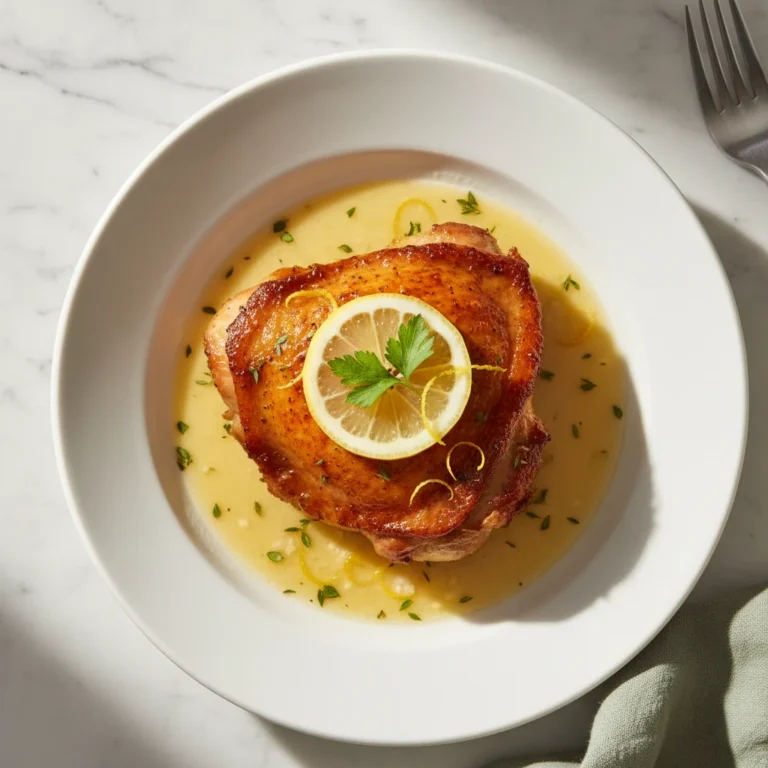
Lemon chicken thighs are a vibrant, flavorful weeknight dinner that combines juicy, tender chicken with a bright citrus pan sauce. This Mediterranean-inspired dish celebrates the natural richness of bone-in thighs while the fresh lemon and garlic create a light, sophisticated flavor profile. Perfect for both casual family meals and impressive entertaining, lemon chicken thighs deliver restaurant-quality results with minimal effort. The beauty of this recipe lies in its simplicity: pan-seared chicken is paired with a silky lemon butter sauce that’s ready in under 45 minutes.
Reasons to Try Lemon Chicken Thighs
Lemon chicken thighs stand out for several compelling reasons:
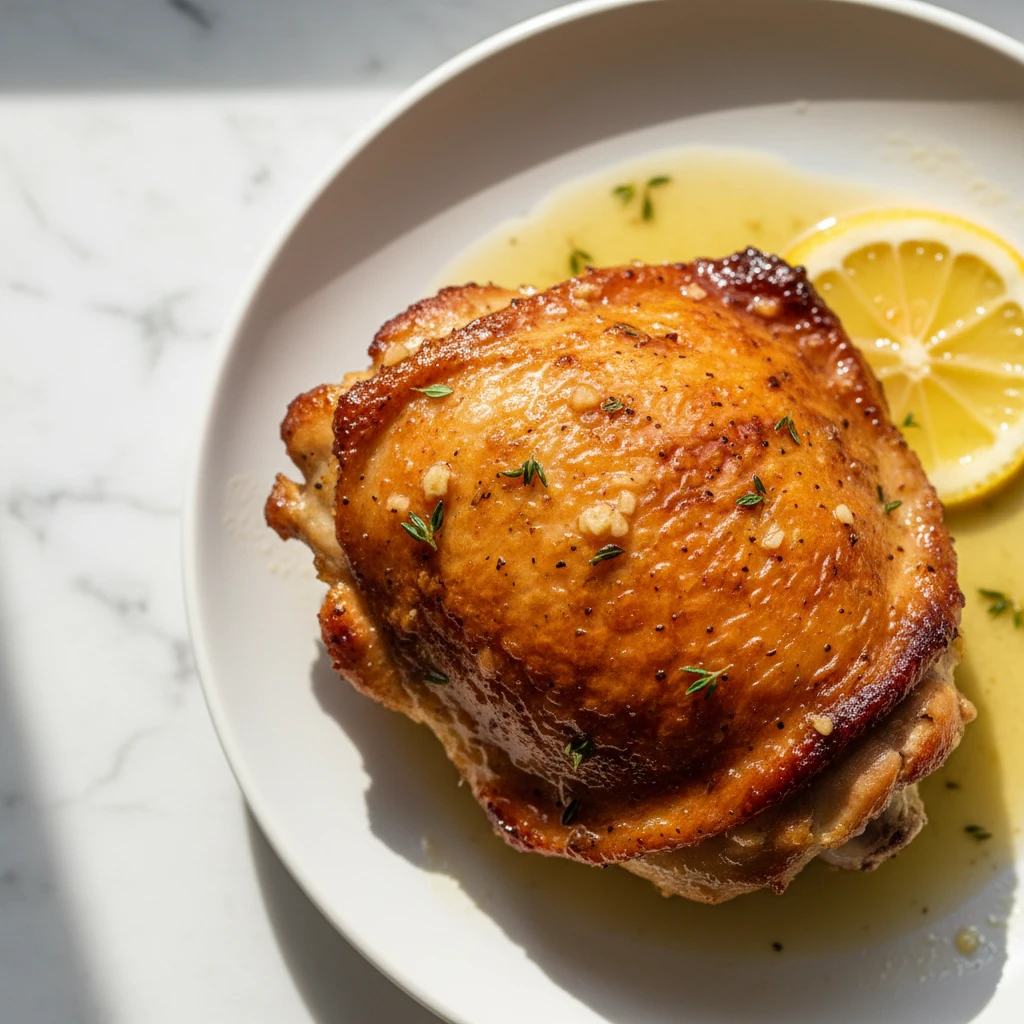
- Impossibly Juicy Meat: Chicken thighs are naturally more forgiving than breasts. Their higher fat content keeps the meat tender and succulent, even if slightly overcooked. The skin crisps beautifully in the pan, delivering textural contrast.
- Bright, Fresh Flavor: The combination of fresh lemon juice, zest, and thyme creates a sophisticated citrus profile that feels light yet deeply satisfying. The acidity cuts through the richness of the chicken skin without overwhelming the palate.
- One-Pan Simplicity: Everything cooks in a single skillet. There’s minimal cleanup, and the flavorful drippings form the foundation for a silky pan sauce.
- Budget-Friendly: Chicken thighs are among the most affordable poultry cuts, making this dish perfect for feeding a family without breaking the bank.
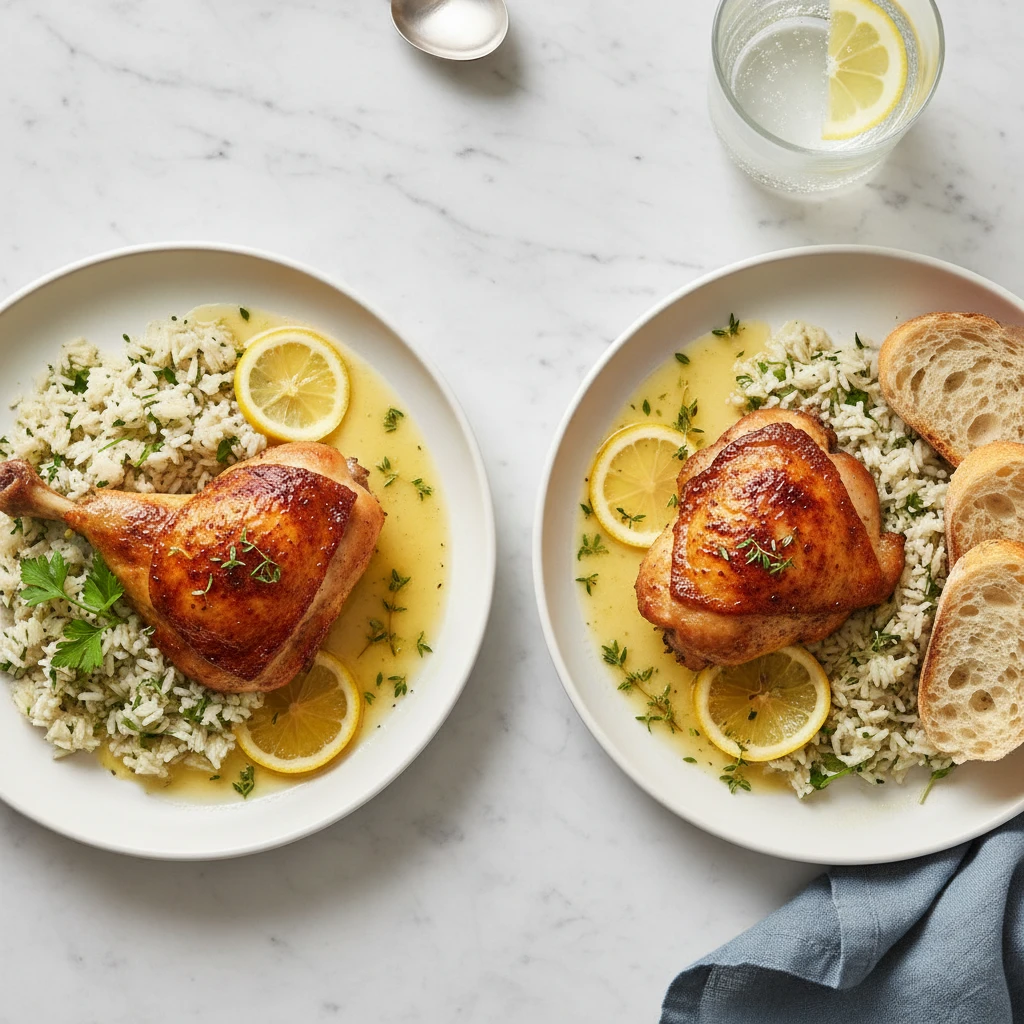
- Versatile Weeknight Staple: Serve it over rice, pasta, roasted vegetables, or crusty bread. It works equally well for casual Tuesday dinners or entertaining weekend guests.
- Restaurant-Quality Results: The technique of searing skin-on chicken and finishing with a pan sauce is classic for a reason—it delivers professional-looking, delicious results every time.
 Save
SaveIngredients Notes
- Bone-in, skin-on chicken thighs
- Olive oil
- Kosher salt
- Black pepper
- Garlic powder
- Dried oregano
- Fresh garlic cloves
- Chicken broth
- Fresh lemon juice
- Lemon zest
- Butter
- Fresh thyme
- Cornstarch
- Water
- Dry white wine (optional)
- Fresh parsley for garnish
How to Make Lemon Chicken Thighs
- Pat chicken thighs dry and season generously with kosher salt, black pepper, garlic powder, and dried oregano on both sides.
- Heat olive oil in a large skillet over medium-high heat until shimmering (about 2 minutes).
- Place chicken thighs skin-side down in the hot oil and sear for 6–8 minutes without moving them, until the skin is golden and crispy.
- Flip the chicken and sear the other side for 4–5 minutes until lightly golden.
- Transfer chicken to a plate and set aside.
- Reduce heat to medium and add minced garlic to the skillet, stirring for 30 seconds until fragrant.
- Pour in lemon juice, chicken broth, and white wine (if using), scraping up any browned bits from the bottom of the skillet.
- Add lemon zest and fresh thyme to the pan.
- Return chicken thighs to the skillet, skin-side up, nestling them into the sauce.
- Simmer for 12–15 minutes until the internal temperature reaches 165°F at the thickest part of the thigh.
- In a small bowl, whisk cornstarch with water until smooth, then stir into the sauce to thicken slightly (about 1–2 minutes).
- Stir in butter until the sauce is silky and glossy.
- Garnish with fresh parsley and serve immediately.
What You Must Know About Lemon Chicken Thighs
Bone-in, skin-on matters: This recipe specifically calls for bone-in, skin-on thighs because they deliver superior flavor and texture. The bone adds depth to the sauce, and the skin renders fat that crisps beautifully and keeps the meat incredibly moist. Boneless, skinless thighs will produce dry results.
Dry the chicken first: Moisture is the enemy of crispy skin. Pat thighs completely dry with paper towels before seasoning. This single step makes a dramatic difference in the final texture.
Don’t skip the searing step: The golden-brown crust on the skin creates flavor through the Maillard reaction and looks impressive. This isn’t optional—it’s essential to the dish.
Use fresh lemon juice: Bottled lemon juice lacks the brightness and complexity of fresh-squeezed juice. The difference is noticeable in the final sauce. One medium lemon yields about 2–3 tablespoons juice.
Temperature is your friend: A meat thermometer eliminates guesswork. Insert it into the thickest part of the thigh without touching bone. 165°F is the safe internal temperature for chicken.
White wine is optional but recommended: It adds subtle depth and helps balance the acidity of the lemon. If you don’t have it, simply increase the chicken broth by 1/4 cup.
Don’t overcrowd the pan: If your skillet is too small, the chicken will steam rather than sear. Use a 12-inch skillet or work in batches if necessary.
Cornstarch vs. flour: Cornstarch thickens without adding flour flavor, creating a silky sauce. Whisk it thoroughly with cold water before adding to prevent lumps.
Variations and Substitutions
- Garlic-Herb Version: Increase minced garlic to 6 cloves and add 1 tablespoon fresh rosemary (in addition to thyme) for a more herbaceous, Tuscan-inspired profile. Reduce lemon juice to 1/4 cup if desired.
- Capers and Olives: Add 1/4 cup Kalamata olives and 2 tablespoons drained capers to the sauce during the simmer. This creates a briny, Mediterranean complexity that pairs beautifully with lemon.
- Creamy Lemon Version: After thickening the sauce with cornstarch, stir in 1/4 cup heavy cream or crème fraîche for a luxurious, velvety finish. Perfect for special occasions.
- Artichoke Hearts: Add 1 can (14 ounces) artichoke hearts, drained and halved, to the skillet during the simmer. They absorb the lemon sauce beautifully and add textural interest.
- Sun-Dried Tomato: Stir in 1/4 cup sun-dried tomatoes (oil-packed, chopped) to add sweetness and depth. This works especially well with the thyme and lemon.
- Lemon-Butter Chicken (No Thickening): Skip the cornstarch altogether and finish with 3–4 tablespoons cold butter to create a silky pan sauce without any starch. The sauce will be lighter and more delicate.
- Chicken Breast Substitution: Use 6 boneless, skinless chicken breasts instead of thighs. Reduce searing time to 4 minutes per side and simmer for 8–10 minutes only. Note: Breasts will be less forgiving and may dry out more easily; don’t exceed 165°F internal temperature.
- Greek Yogurt Finish: Instead of butter, whisk 1/4 cup Greek yogurt into the warm (not hot) sauce at the end. It adds tang and creaminess without dairy richness. Stir gently and don’t boil.
Serving Suggestions for Lemon Chicken Thighs
- Over Creamy Risotto: Serve atop a bed of lemon risotto or saffron risotto to soak up the silky pan sauce. The starch balances the brightness of the sauce perfectly.
- With Roasted Root Vegetables: Pair with roasted carrots, parsnips, and fingerling potatoes. Drizzle vegetables with the pan sauce for cohesive flavor throughout the plate.
- Over Pasta: Toss fresh fettuccine or linguine with the pan sauce (minus the chicken), then top with sliced chicken thighs. Add grated Parmesan and fresh basil.
- With Crusty Bread: Serve alongside thick slices of grilled sourdough or focaccia for soaking up every drop of sauce. This is the simplest, most satisfying presentation.
- Over Polenta: Creamy polenta provides a neutral canvas for the bright lemon sauce. Top with chicken thighs and garnish with fresh thyme.
- With Herbed Couscous: Light and fluffy couscous mixed with fresh herbs, toasted pine nuts, and dried cranberries complements the lemon chicken without competing for attention.
- Green Salad Accompaniment: A simple arugula or mixed greens salad with a light lemon vinaigrette serves as a fresh, palate-cleansing side. The acidity mirrors the chicken’s bright profile.
- Presentation Tip: Place a chicken thigh skin-side up on the plate, spoon sauce around it, and garnish with a thin lemon slice, fresh thyme sprig, and chopped parsley. A sprinkle of lemon zest adds visual appeal and aroma.
 Save
SaveStorage and Reheating
Refrigerator Storage: Store leftover lemon chicken thighs in an airtight container in the refrigerator for up to 3 days. The sauce will thicken as it cools due to the gelatinous quality of chicken skin and bone collagen, which is normal and desirable.
Freezing: This dish freezes well for up to 3 months. Transfer cooled chicken and sauce to a freezer-safe container or zip-top bag, removing as much air as possible. Thaw overnight in the refrigerator before reheating.
Reheating on the Stovetop: Transfer chicken and sauce to a skillet over medium-low heat. Cover and warm gently for 8–10 minutes, stirring occasionally, until heated through. Add a splash of chicken broth or water if the sauce has thickened excessively. Do not boil, as this can toughen the chicken.
Reheating in the Oven: Preheat oven to 350°F. Place chicken and sauce in a baking dish, cover with foil, and bake for 15–20 minutes until warmed through. This method is gentler and prevents the sauce from reducing too much.
Reheating in the Microwave: Not recommended, as skin will lose its crispness. If time-pressed, transfer to a microwave-safe dish, cover loosely, and microwave in 2-minute intervals until warmed, stirring between intervals.
Make-Ahead Tip: This dish actually improves overnight as the flavors deepen and meld. Cook it the day before, refrigerate, and simply reheat when ready to serve.
Frequently Asked Questions about Lemon Chicken Thighs
Can I use chicken breasts instead of thighs?
Yes, but with caution. Boneless, skinless chicken breasts will cook faster (8–10 minutes instead of 12–15) and are more prone to drying out. Use a meat thermometer and pull the pan from heat as soon as the internal temperature reaches 165°F. For best results, use bone-in, skin-on chicken breasts, which offer better flavor and moisture retention than boneless varieties.
What if I don’t have fresh lemon juice?
Fresh juice is strongly recommended for the brightest flavor, but bottled juice can work in a pinch. However, you may need to reduce it to 1/3 cup because bottled juice can taste more acidic and harsh. Start with 1/3 cup and taste the sauce before serving, adjusting as needed. Fresh-squeezed juice always delivers superior results.
How do I make the skin extra crispy?
Pat the thighs completely dry before seasoning, then sear skin-side down in very hot oil (medium-high heat) for 6–8 minutes without moving them. Resist the urge to peek or move the chicken—this disrupts the crust formation. If your oil isn’t hot enough (it should shimmer and move freely), the skin will steam rather than crisp. For extra crispiness after searing, briefly finish under a hot broiler for 1–2 minutes once the chicken has finished cooking in the sauce.
Can I cook this in a Dutch oven or on the stovetop only?
Yes, this recipe is entirely stovetop-based. You only need a large skillet (12-inch minimum). If you prefer, you can transfer the seared chicken and sauce to a Dutch oven or baking dish and finish cooking in a 375°F oven for 15–18 minutes instead of simmering on the stovetop. This method is equally effective and allows you to free up your stove.
What’s the best way to thicken the sauce?
This recipe uses cornstarch slurry (cornstarch mixed with cold water), which creates a silky, glossy sauce without cloudiness. Whisk it thoroughly to prevent lumps before adding to the pan. Alternatively, you can simmer the sauce uncovered for 5–8 minutes to reduce and thicken naturally without thickening agents, though the result will be thinner and less luxurious. Avoid adding flour, as it can make the sauce cloudy or pasty.
How much lemon flavor should the dish have?
The lemon should be bright and noticeable but not overwhelming or mouth-puckering. The sauce should taste balanced between lemon, savory chicken, and rich butter. If you find it too tart, add a touch of honey or sugar (1 teaspoon at a time) to balance the acidity. If you find it too subtle, add more lemon zest (which provides aroma and oil without extra liquid) or a squeeze of fresh juice at the end.
Can I make this ahead of time?
Absolutely. Cook the entire dish, allow it to cool to room temperature, and refrigerate in an airtight container for up to 3 days. The flavors actually improve overnight as they meld. Reheat gently on the stovetop over medium-low heat, covered, until warmed through (8–10 minutes). You can also freeze it for up to 3 months. Thaw overnight in the refrigerator before reheating.
What wine pairs best with lemon chicken thighs?
A crisp, dry white wine works best: Sauvignon Blanc, Pinot Grigio, or Vermentino all complement the bright lemon and rich chicken beautifully. Avoid oaky Chardonnay, which can overpower the delicate lemon sauce. Pour the same wine you use in the recipe for a cohesive flavor experience at the table.
Nutrition Facts (Per Serving)
| Nutrient | Per Serving | Daily Value |
|---|---|---|
| Calories | 385 | 19% |
| Total Fat | 24g | 31% |
| Saturated Fat | 8g | 40% |
| Unsaturated Fat | 14g | — |
| Cholesterol | 142mg | 47% |
| Sodium | 420mg | 18% |
| Total Carbohydrates | 3g | 1% |
| Dietary Fiber | 0g | 0% |
| Sugars | 0g | — |
| Protein | 42g | 84% |
| Vitamin C | 8mg | 13% |
| Iron | 1.8mg | 10% |
| Calcium | 32mg | 2% |
Note: Nutritional values are approximate and calculated per serving (1 of 6 servings). Values may vary based on specific brands and exact ingredient quantities used. This analysis excludes optional garnishes and serving accompaniments like rice, pasta, or bread.
Lemon Chicken Thighs
Ingredients
- 6 bone-in skin-on chicken thighs (about 2 pounds)
- 3 tablespoons olive oil
- 1 teaspoon kosher salt
- 1/2 teaspoon black pepper
- 1/2 teaspoon garlic powder
- 1/2 teaspoon dried oregano
- 4 cloves garlic minced
- 1 cup chicken broth
- 1/2 cup fresh lemon juice about 3 lemons
- 2 tablespoons lemon zest
- 2 tablespoons butter
- 1 tablespoon fresh thyme
- 1 tablespoon cornstarch
- 2 tablespoons water
- 1/4 cup dry white wine optional
- Fresh parsley for garnish
Instructions
- Pat dry: Use paper towels to pat all 6 chicken thighs completely dry. Moisture prevents crispy skin, so don't skip this step (takes 1 minute). Season both sides generously with kosher salt, black pepper, garlic powder, and dried oregano.
- Heat oil: Pour 3 tablespoons olive oil into a large skillet (12 inches or bigger). Turn heat to medium-high and wait for the oil to shimmer and move freely when you tilt the pan, about 2–3 minutes. It should be hot but not smoking. Checkpoint: Oil is ready when a drop of water briefly dances on the surface.
- Sear skin-side down: Carefully place all 6 chicken thighs skin-side down in the hot oil. Do not move them for 6–8 minutes. Listen for a gentle sizzle; if it sounds angry/loud, lower heat slightly. The skin should turn deep golden brown and feel crispy when you gently touch the edge. Checkpoint: Skin should be mahogany brown and pull away easily from the pan.
- Flip and sear: Using tongs, flip each thigh carefully. Sear the underside for 4–5 minutes over medium-high heat until light golden. You're not looking for dark color on this side—just light browning. Checkpoint: The second side should be pale golden, not white.
- Remove chicken: Transfer all thighs to a clean plate using tongs. Leave all the brown bits and oil in the skillet—this is flavor.
- Add garlic: Lower heat to medium. Add 4 minced garlic cloves to the skillet. Stir constantly for 30 seconds to 1 minute until the garlic is fragrant but not brown. If it starts to brown, immediately add liquid to stop the cooking. Checkpoint: You should smell strong garlic aroma; garlic pieces should be light golden, not dark.
- Deglaze the pan: Pour in 1/2 cup fresh lemon juice and 1 cup chicken broth. If using wine, add 1/4 cup dry white wine now. Use a wooden spoon to scrape the bottom of the skillet, loosening all the brown crusty bits stuck to the bottom. Stir for 1–2 minutes until the liquid is uniform and no brown bits remain stuck to the pan. Checkpoint: You should see no stuck-on brown pieces at the bottom—the pan should look clean and glossy.
- Add aromatics: Stir in 2 tablespoons lemon zest and 1 tablespoon fresh thyme leaves (or 1 teaspoon dried thyme). Stir for 30 seconds.
- Return chicken: Carefully place all 6 thighs back into the skillet skin-side up. They should be mostly submerged in the sauce, with skin still peeking above the liquid.
- Simmer covered: Reduce heat to medium-low. Cover the skillet with a lid or foil. Simmer gently for 12–15 minutes. The sauce should bubble very gently at the edges, not aggressively boil. At 12 minutes, check the thickest part of one thigh with a meat thermometer inserted into the meat (not touching bone). It should read 165°F. Checkpoint: The sauce should have reduced slightly (looks less liquidy than when you started), and chicken should reach 165°F internally.
- Thicken the sauce: In a small bowl, whisk together 1 tablespoon cornstarch and 2 tablespoons water until smooth (no lumps). Remove the skillet from heat and pour the cornstarch slurry into the sauce while stirring constantly. Return to medium heat and simmer for 1–2 minutes, stirring gently, until the sauce thickens slightly and coats the back of a spoon. Checkpoint: The sauce should coat a spoon; if you run your finger across the spoon back, it should leave a brief trail.
- Finish with butter: Remove from heat. Add 2 tablespoons cold butter, cut into small pieces, and stir gently until completely melted and incorporated. The sauce should look glossy and silky. Checkpoint: Sauce should be smooth, shiny, and coat the chicken without pooling excessively at the bottom.
- Garnish and serve: Transfer chicken thighs to serving plates, spooning sauce over each piece. Sprinkle fresh parsley on top. Serve immediately with rice, pasta, or crusty bread.