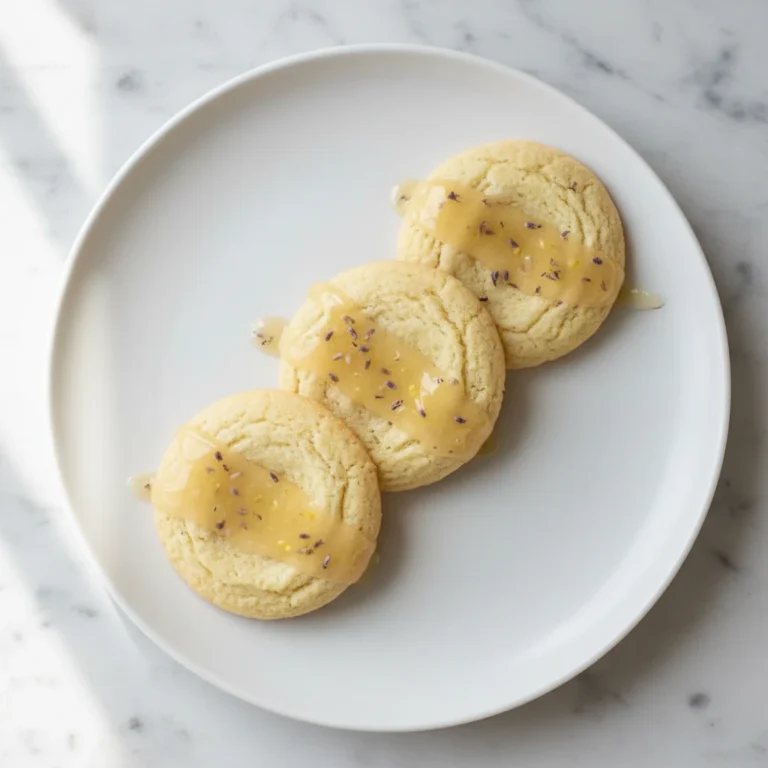
Reasons to Try Lemon Lavender Cookies
Unique flavor combination: The pairing of fresh lemon zest and food-grade lavender creates a sophisticated, garden-fresh taste that stands out from ordinary butter cookies. The lavender adds an unexpected floral complexity that enhances rather than overpowers the bright citrus.
Elegant presentation: With their delicate glazed finish and subtle color variation, these cookies look impressive on a dessert plate or gift box. They’re perfect for special occasions, bridal showers, or any event where you want to serve something a little more refined.
Simple but impressive: Despite their gourmet flavor profile, the recipe uses straightforward techniques that any home baker can master. No special equipment, no complicated steps—just quality ingredients and careful attention to detail.
Naturally aromatic: The combination of fresh lemon juice and zest with dried lavender creates a naturally fragrant cookie that fills your kitchen with a wonderful aroma while baking. This sensory experience elevates the entire baking process.
Perfectly portioned: These cookies strike an ideal balance between indulgence and restraint. They’re satisfying enough to feel like a real treat, but light enough that you can enjoy more than one without guilt.
 Save
SaveIngredients Notes
- All-purpose flour
- Baking powder
- Salt
- Unsalted butter, softened to room temperature
- Granulated sugar
- Light brown sugar
- Large egg
- Fresh lemon juice
- Fresh lemon zest
- Dried culinary lavender buds, finely crushed
- Vanilla extract
- Powdered sugar for glaze
- Fresh lemon juice for glaze
- Dried culinary lavender buds for glaze
How to Make Lemon Lavender Cookies
- Preheat your oven to 350°F and line baking sheets with parchment paper.
- Whisk together flour, baking powder, and salt in a medium bowl.
- In a large bowl, cream softened butter with both sugars until light and fluffy, about 2 to 3 minutes.
- Beat in the egg, then add lemon juice, lemon zest, crushed lavender, and vanilla extract. Mix until well combined.
- Gradually add the dry ingredients to the wet mixture, stirring until just combined. Do not overmix.
- Drop rounded tablespoons of dough onto prepared baking sheets, spacing them about 2 inches apart.
- Bake for 11 to 13 minutes until the edges are light golden but the centers still look slightly soft.
- Let cookies cool on the baking sheet for 5 minutes, then transfer to a wire rack to cool completely.
- While cookies cool, prepare the glaze by whisking powdered sugar with lemon juice until smooth, then stir in finely crushed lavender.
- Drizzle or brush the glaze onto cooled cookies and let it set for 15 minutes before serving.
What You Must Know About Lemon Lavender Cookies
Use culinary lavender only: This is essential. Ornamental or garden lavender may contain pesticides and is not safe to eat. Purchase dried culinary lavender from specialty baking shops, health food stores, or reputable online retailers. Check the label to confirm it is food-grade.
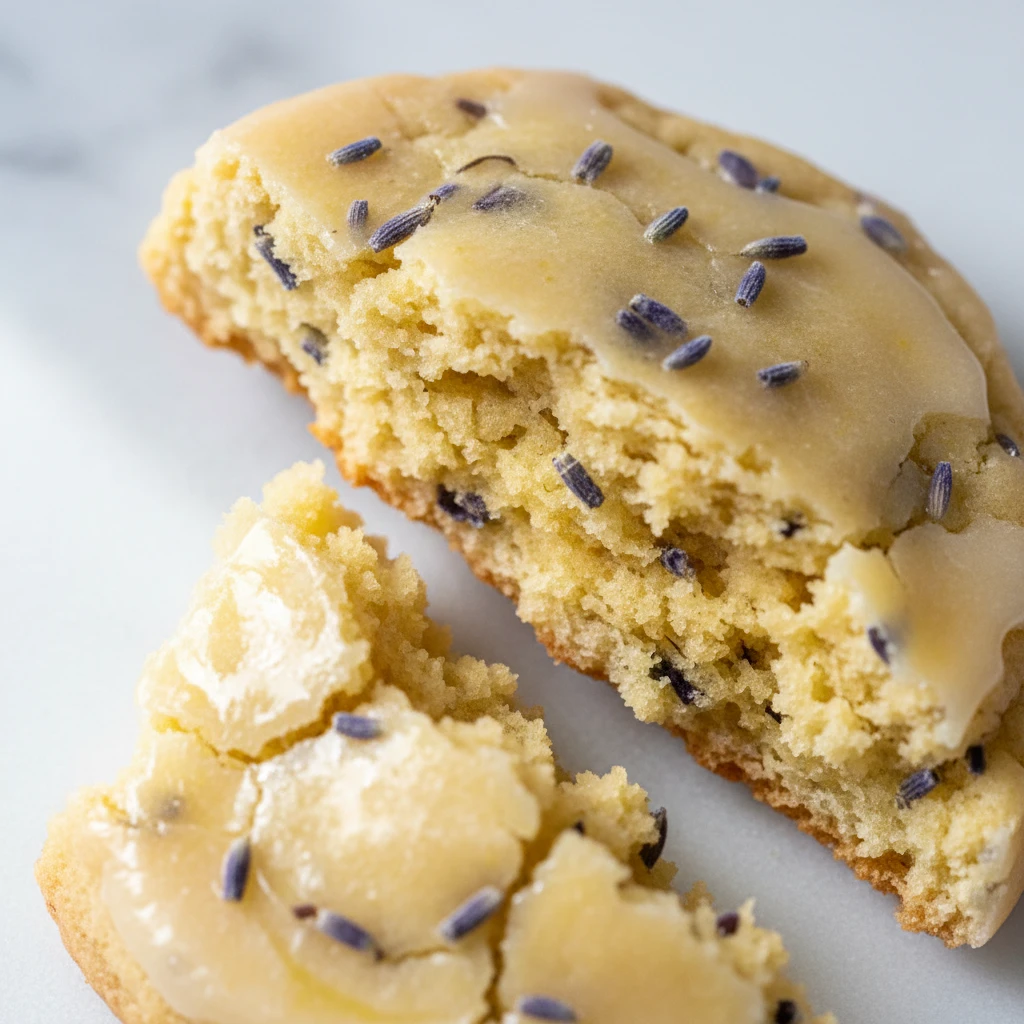
Crush the lavender finely: Whole lavender buds can create an unpleasant gritty texture in your cookies. Use a spice grinder, mortar and pestle, or even a clean coffee grinder to crush the dried buds into a fine powder before adding to your dough. This distributes the flavor more evenly and creates a smoother mouthfeel.
Don’t overbake: The key to tender cookies is removing them from the oven while the centers still look slightly soft. They continue cooking on the hot pan, so don’t wait for them to look completely set in the oven or they will become hard and dry.
Use fresh lemon juice: Bottled lemon juice contains preservatives and won’t provide the same bright, fresh flavor. Fresh-squeezed lemon juice is noticeably superior in both taste and aroma. One medium lemon yields about 2 to 3 tablespoons of juice.
Zest before juicing: Always zest your lemon before cutting it to juice. Use a microplane grater to get fine zest particles rather than thick strips, which can create an unpleasant texture.
Room temperature butter is crucial: Butter that is too cold won’t cream properly, and butter that is too warm will create a greasy dough. You want butter that yields easily to pressure from your finger but still holds its shape. Leave it on the counter for about 30 to 45 minutes depending on your kitchen temperature.
Helpful tip — Make ahead: You can prepare the cookie dough up to 3 days in advance and store it in an airtight container in the refrigerator. This actually improves the flavor as the ingredients meld together. Scoop and bake directly from the chilled dough, adding 1 to 2 minutes to the baking time.
Helpful tip — Double batch: This recipe doubles easily if you’re baking for a large gathering. Simply multiply all ingredients by two and proceed with the same technique. You may need to bake in batches.
Variations and Substitutions
Meyer Lemon Version: Substitute regular lemon juice and zest with Meyer lemon juice and zest. Meyer lemons are sweeter and slightly less acidic, creating a more delicate, nuanced flavor. Use the same quantities.
Honey Lavender Glaze: Replace the powdered sugar glaze with a honey-based version. Whisk together 1/4 cup honey, 2 tablespoons fresh lemon juice, and 1/2 teaspoon crushed lavender. This creates a more luxurious, silky glaze with a richer flavor.
Lavender-Only (No Lemon): For a more traditional lavender cookie, reduce the lemon juice to 1 tablespoon and omit the lemon zest. Increase the crushed lavender to 2 teaspoons. This creates a more floral-forward cookie, perfect for those who prefer subtler citrus notes.
Almond Flour Addition: Replace 1/2 cup of all-purpose flour with finely ground almond flour. This adds subtle nuttiness and creates a slightly more tender crumb. The cookies will be a touch more delicate.
Cream Cheese Frosting: Instead of the simple glaze, use a cream cheese frosting. Beat together 4 ounces softened cream cheese, 2 tablespoons softened butter, 1 cup powdered sugar, 1 tablespoon lemon juice, and 1/2 teaspoon crushed lavender until smooth. Spread or pipe onto cooled cookies.
Gluten-Free Version: Substitute all-purpose flour with a high-quality 1:1 gluten-free flour blend. The cookies will have a slightly denser crumb but will remain delicious and tender.
Brown Butter Enhancement: Brown 1 cup butter before creaming it with the sugars. This adds a subtle nutty depth that complements the lemon and lavender beautifully. Let the browned butter cool to room temperature before using.
Serving Suggestions for Lemon Lavender Cookies
Afternoon Tea Service: Arrange these cookies on a tiered cake stand with fresh berries, small tea sandwiches, and pastries. The delicate lemon-lavender flavor pairs beautifully with white tea, chamomile, or a light Earl Grey. Garnish cookies with a tiny sprig of fresh lavender for an extra elegant touch.
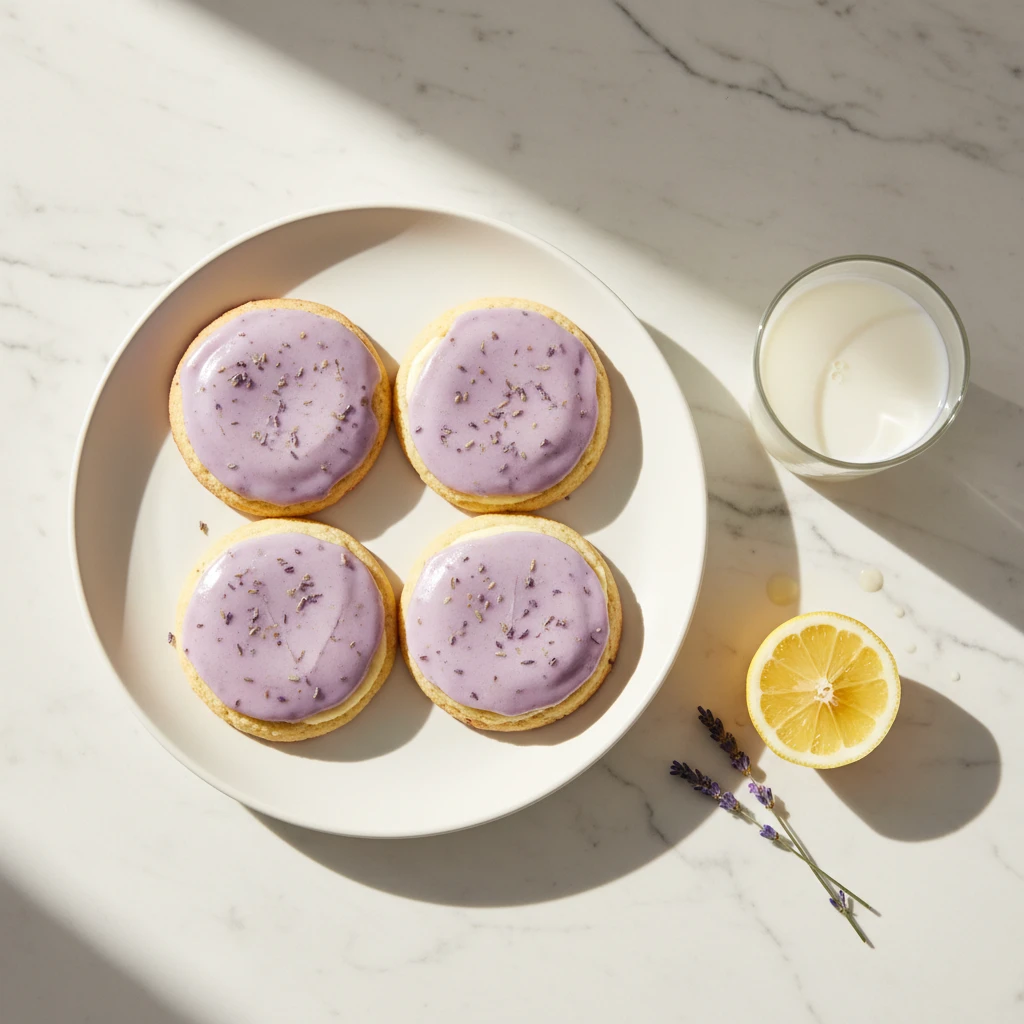
Simple Presentation on White Plates: Place two or three cookies on a white ceramic plate and dust with a light sprinkle of powdered sugar or finely crushed dried lavender. Add a small dollop of whipped mascarpone or crème fraîche on the side for richness and visual interest.
Gift Box Arrangement: Layer cookies between parchment paper in a decorative box lined with tissue paper. Include a handwritten flavor note or recipe card. Tie with a delicate ribbon in lavender, white, or pale yellow for a cohesive gift.
Bridal Shower or Baby Shower Treat: These cookies fit perfectly into spring and garden-themed celebrations. Arrange them on a white or cream-colored platter surrounded by fresh lemon slices, edible flowers, and sprigs of fresh herbs like rosemary or thyme.
Garden Party Dessert: Set out a simple dessert table with these cookies as the centerpiece, paired with lemonade, sparkling water with fresh lemon, or a light dessert wine. The garden flavors of lemon and lavender create a naturally cohesive tablescape.
Companion Pairings: Serve alongside vanilla ice cream for a simple yet elegant dessert, or pair with a light custard or lemon curd for extra indulgence. These cookies also work beautifully crumbled and layered in a parfait with whipped cream and fresh berries.
 Save
SaveStorage and Reheating
Room Temperature Storage: Place completely cooled, glazed cookies in an airtight container at room temperature. They will stay fresh and maintain their tender texture for up to 5 days. Keep them in a single layer or separate layers with parchment paper to prevent sticking.
Refrigerator Storage: If your kitchen is particularly warm or humid, store cookies in an airtight container in the refrigerator for up to 7 days. The cookies will firm up slightly when chilled but will soften at room temperature. Allow them to sit out for 15 minutes before serving for the best texture.
Freezer Storage: Unglazed baked cookies can be frozen in an airtight freezer-safe container for up to 3 months. Allow them to thaw at room temperature for 1 hour before glazing and serving. Alternatively, freeze the baked, glazed cookies for up to 2 months. They will thaw in about 1 to 2 hours at room temperature.
Freezing Dough: Cookie dough can be scooped onto a baking sheet, frozen until solid (about 2 hours), then transferred to a freezer bag for up to 3 months. Bake frozen dough directly from the freezer, adding 2 to 3 minutes to the baking time.
Reheating (Optional): If your cookies have become slightly stale, warm them in a 300°F oven for 3 to 5 minutes to restore a softer, fresher texture. Do not overheat or the glaze may melt. Allow them to cool for a minute before eating.
Frequently Asked Questions about Lemon Lavender Cookies
Where can I buy culinary lavender for baking?
Culinary lavender is available at specialty baking supply stores, health food stores, and online retailers like Williams Sonoma, Sur La Table, Amazon, or Etsy. Always verify the label says “food-grade” or “culinary” lavender. Mountain Rose Herbs and Penzey’s Spices are reliable online sources. Do not use ornamental garden lavender, which may have been treated with pesticides and is unsafe to eat.
Can I use dried herbs instead of fresh lemon zest?
Dried lemon zest is not a good substitute for fresh zest in this recipe. Fresh zest provides bright, vibrant flavor and aromatic oils that dried zest cannot replicate. If fresh lemons are unavailable, use bottled fresh lemon juice in a pinch, but still try to find fresh lemons for the zest. The zest is essential to this recipe’s flavor profile.
My lavender flavor is too strong. What went wrong?
This usually means you added too much lavender or used lavender that wasn’t crushed finely enough. Whole or coarsely crushed lavender buds create an overpowering floral taste. Crush your lavender into a fine powder and reduce the amount to 1 teaspoon in the dough. You can also reduce the glaze lavender to 1/4 teaspoon. Start conservatively and increase to taste in future batches.
Can I substitute almond extract for vanilla extract?
Yes, almond extract works beautifully in this recipe. Use the same amount (1/2 teaspoon) as the vanilla. Almond extract adds a subtle warm note that complements the floral and citrus flavors nicely. Some bakers even use a combination of both vanilla and almond extract for extra depth.
How do I know when the cookies are done baking?
The edges should be light golden brown and set to the touch, but the centers should still look slightly soft and underbaked. The cookies will firm up as they cool on the pan. If you wait until they look completely set in the oven, they will become hard and dry. This is the most common baking mistake with this recipe.
Can I make these cookies without the glaze?
Yes, these cookies are delicious unglazed. The lemon and lavender flavors shine through without any topping. However, the glaze adds a subtle sweetness and beautiful visual appeal. If you skip the glaze, consider dusting the warm cookies lightly with powdered sugar for presentation.
Are these cookies suitable for a vegan diet?
The standard recipe contains butter and an egg, so it is not vegan. However, you can make a vegan version by substituting the egg with a flax egg (1 tablespoon ground flaxseed mixed with 3 tablespoons water, left to sit for 5 minutes) and using plant-based butter. The texture will be slightly different but still delicious.
What is the shelf life of these cookies if I plan to gift them?
These cookies stay fresh in an airtight container for up to 5 days at room temperature. For gift-giving, bake them no more than 2 to 3 days ahead of gifting. Package them in a decorative box with parchment paper between layers. Include a note suggesting the recipient eat them within 5 days for best flavor and texture.
Nutrition Facts (Per Serving)
| Nutrient | Amount per Cookie |
|---|---|
| Calories | 145 |
| Total Fat | 8.2g |
| Saturated Fat | 5.1g |
| Trans Fat | 0.3g |
| Cholesterol | 22mg |
| Sodium | 118mg |
| Total Carbohydrate | 19.4g |
| Dietary Fiber | 0.2g |
| Sugars | 14.8g |
| Protein | 1.8g |
| Vitamin C | 2% DV |
*Nutrition facts are estimated based on standard USDA ingredient data. Actual values may vary based on specific brands used and preparation methods. This recipe yields approximately 24 cookies.
Lemon Lavender Cookies
Ingredients
- 2 1/4 cups all-purpose flour
- 1 teaspoon baking powder
- 1/2 teaspoon salt
- 1 cup unsalted butter softened
- 3/4 cup granulated sugar
- 1/4 cup light brown sugar
- 1 large egg
- 2 tablespoons fresh lemon juice
- 2 tablespoons lemon zest
- 1 1/2 teaspoons dried culinary lavender buds finely crushed
- 1/2 teaspoon vanilla extract
- 3/4 cup powdered sugar
- 3 tablespoons fresh lemon juice for glaze
- 1/2 teaspoon dried culinary lavender buds for glaze
Instructions
- Prep the oven and pans: Preheat your oven to 350°F. Line two baking sheets with parchment paper. This prevents sticking and ensures even browning. Checkpoint: Your oven should reach temperature in 10–15 minutes and your pans are ready.
- Combine dry ingredients: In a medium mixing bowl, whisk together 2 1/4 cups all-purpose flour, 1 teaspoon baking powder, and 1/2 teaspoon salt. Whisk for about 30 seconds until evenly distributed. Set aside. Checkpoint: You should not see any lumps of baking powder or salt.
- Cream butter and sugars: In a large bowl, add 1 cup softened unsalted butter, 3/4 cup granulated sugar, and 1/4 cup light brown sugar. Using an electric mixer on medium speed, beat for 2–3 minutes until the mixture is pale, fluffy, and increased in volume. Stop and scrape down the bowl halfway through. Checkpoint: The mixture should look light and airy, not dense or grainy.
- Add egg and flavorings: Add 1 large egg to the butter mixture and beat on medium speed for 1 minute until fully incorporated. Add 2 tablespoons fresh lemon juice, 2 tablespoons lemon zest, 1 1/2 teaspoons finely crushed dried culinary lavender, and 1/2 teaspoon vanilla extract. Beat for 1–2 minutes until everything is evenly combined and the mixture is light yellow. Checkpoint: The dough should smell strongly of lemon and lavender, with no visible streaks of unmixed ingredients.
- Mix in dry ingredients: Reduce mixer speed to low. Add the dry ingredient mixture to the wet ingredients in two additions, mixing just until combined after each addition (about 30 seconds per addition). Do not overmix—stop as soon as you no longer see dry flour. Checkpoint: The dough should be soft, uniform in color, and hold together when gently squeezed, with no visible flour streaks.
- Scoop dough: Using a rounded tablespoon or small cookie scoop, drop dough portions onto your prepared baking sheets, spacing them about 2 inches apart. You should have about 24 cookies. Gently flatten each mound slightly with the bottom of a glass or your fingertip. Checkpoint: All portions should be roughly the same size for even baking.
- Bake cookies: Place baking sheets in your preheated 350°F oven on the middle rack. Bake for 11–13 minutes until the edges turn light golden brown but the very centers still look slightly underbaked and soft to the touch. Do not overbake. Checkpoint: The edges should be set and pale gold; the centers should jiggle slightly when you gently shake the pan.
- Cool on pan: Remove baking sheets from the oven and let cookies rest on the hot pan for exactly 5 minutes. They will continue to cook gently from residual heat. After 5 minutes, use a spatula to transfer cookies to a wire cooling rack. Checkpoint: Cookies should be firm enough to move without breaking.
- Cool completely: Leave cookies on the rack undisturbed for 15–20 minutes until completely cool to the touch. Checkpoint: Cookies should feel firm and crisp on the outside.
- Prepare glaze: While cookies cool, in a small bowl whisk together 3/4 cup powdered sugar and 3 tablespoons fresh lemon juice until you have a smooth, pourable glaze (no lumps). Stir in 1/2 teaspoon finely crushed dried culinary lavender buds. Mix for 30 seconds until evenly distributed. The glaze should be the consistency of thin yogurt. Checkpoint: The glaze should drip slowly from a spoon and show tiny lavender specks throughout.
- Glaze cookies: Using a small spoon or pastry brush, drizzle or brush glaze generously onto the top of each cooled cookie. Work in small batches so the glaze doesn't set too quickly. Checkpoint: Each cookie should have a light, even coating of glaze.
- Set glaze: Place glazed cookies on a clean wire rack or parchment paper and let the glaze set undisturbed for 15–20 minutes at room temperature until it feels dry to the touch and no longer sticky. Checkpoint: The glaze should feel firm and no longer tacky when you gently touch it.