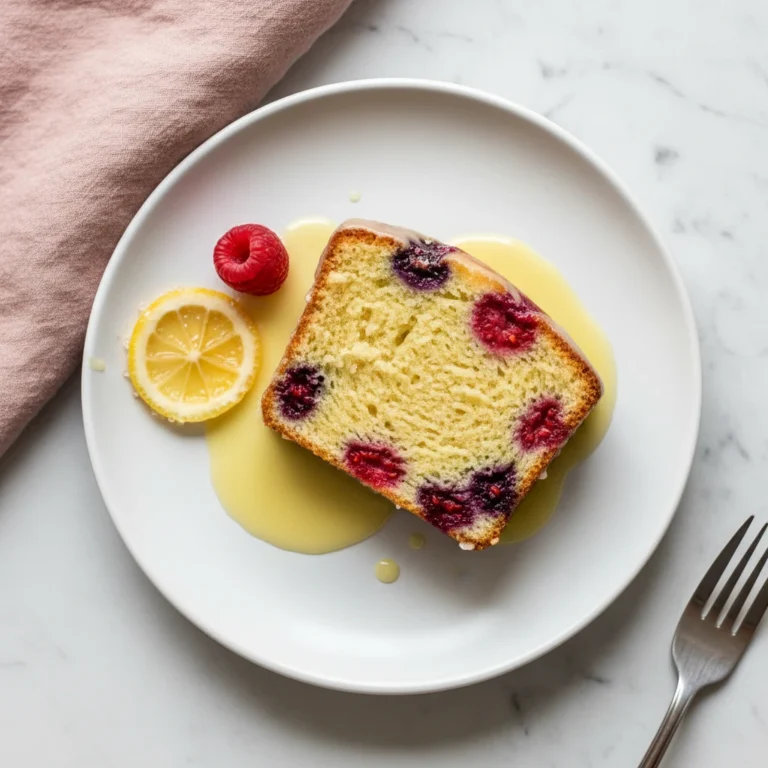
A lemon-raspberry pound cake is a sophisticated yet simple dessert that combines bright citrus flavor with tart, juicy berries. This buttery, tender cake strikes the perfect balance between indulgence and freshness, making it ideal for brunch gatherings, afternoon tea, or elegant dinner parties. The dense crumb of a traditional pound cake holds the delicate flavors beautifully, while the tartness of raspberries and zesty lemon cuts through the richness. Whether served plain or with a silky glaze, this cake delivers comfort and elegance in every slice.
Reasons to Try Lemon-Raspberry Pound Cake
- Bright, Balanced Flavors: The combination of fresh lemon zest and juice with tart raspberries creates a sophisticated flavor profile that’s neither too sweet nor too sour. It’s refreshing without being cloying.
- Buttery, Dense Crumb: Pound cake’s signature texture comes from equal parts butter and sugar, creating a moist, tender interior that’s more luxurious than typical cakes. It stays fresh for days when stored properly.
- Versatile Occasion Cake: Perfect for brunch, afternoon tea, dessert platters, or even as an elegant gift. It impresses without requiring advanced baking skills or exotic ingredients.
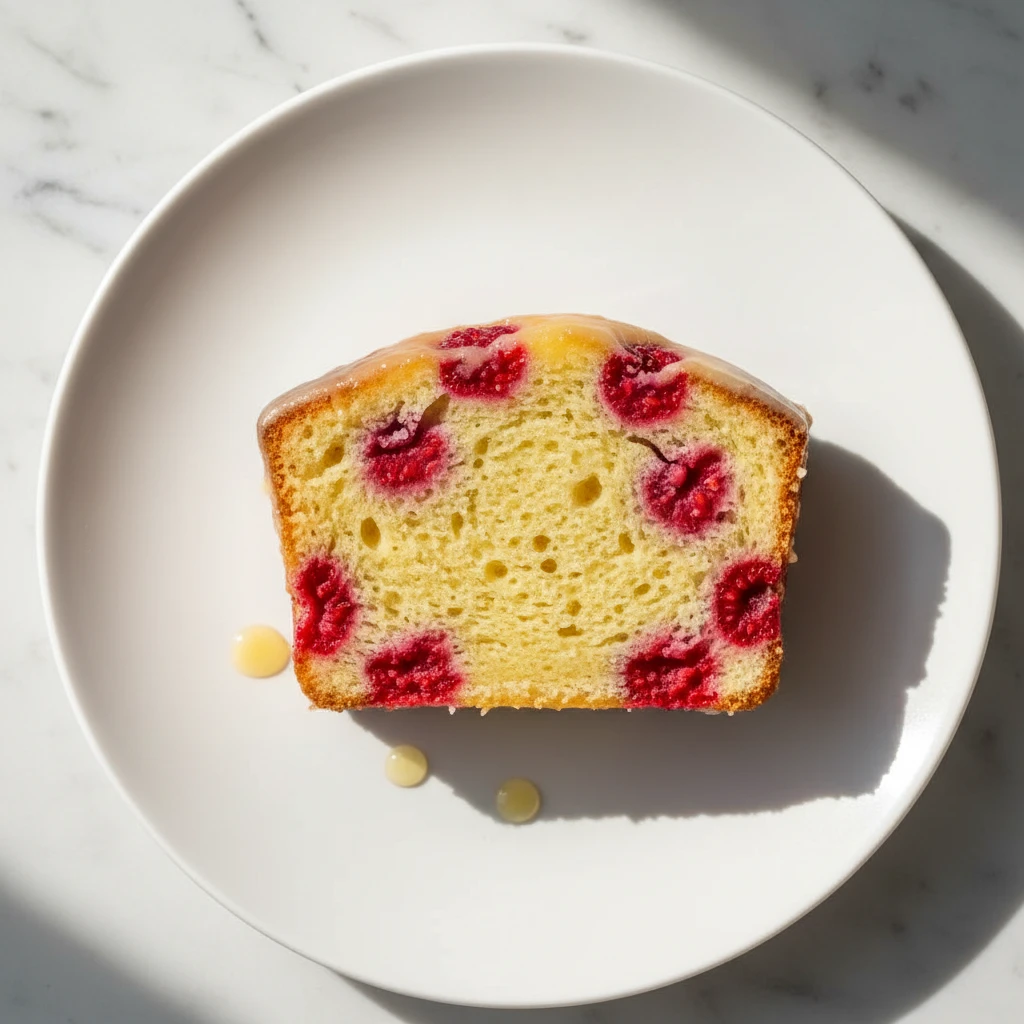
- Beautiful Presentation: The jewel-like raspberries nestled throughout the golden cake create a naturally stunning appearance, especially when finished with a simple lemon glaze.
- Make-Ahead Friendly: This cake actually improves after a day or two as flavors meld and the crumb becomes even more tender, making it perfect for advance preparation.
- Natural Ingredients: Built on simple pantry staples and fresh citrus, this cake contains no mystery ingredients or artificial flavors, just real butter, eggs, and fresh fruit.
 Save
SaveIngredients Notes
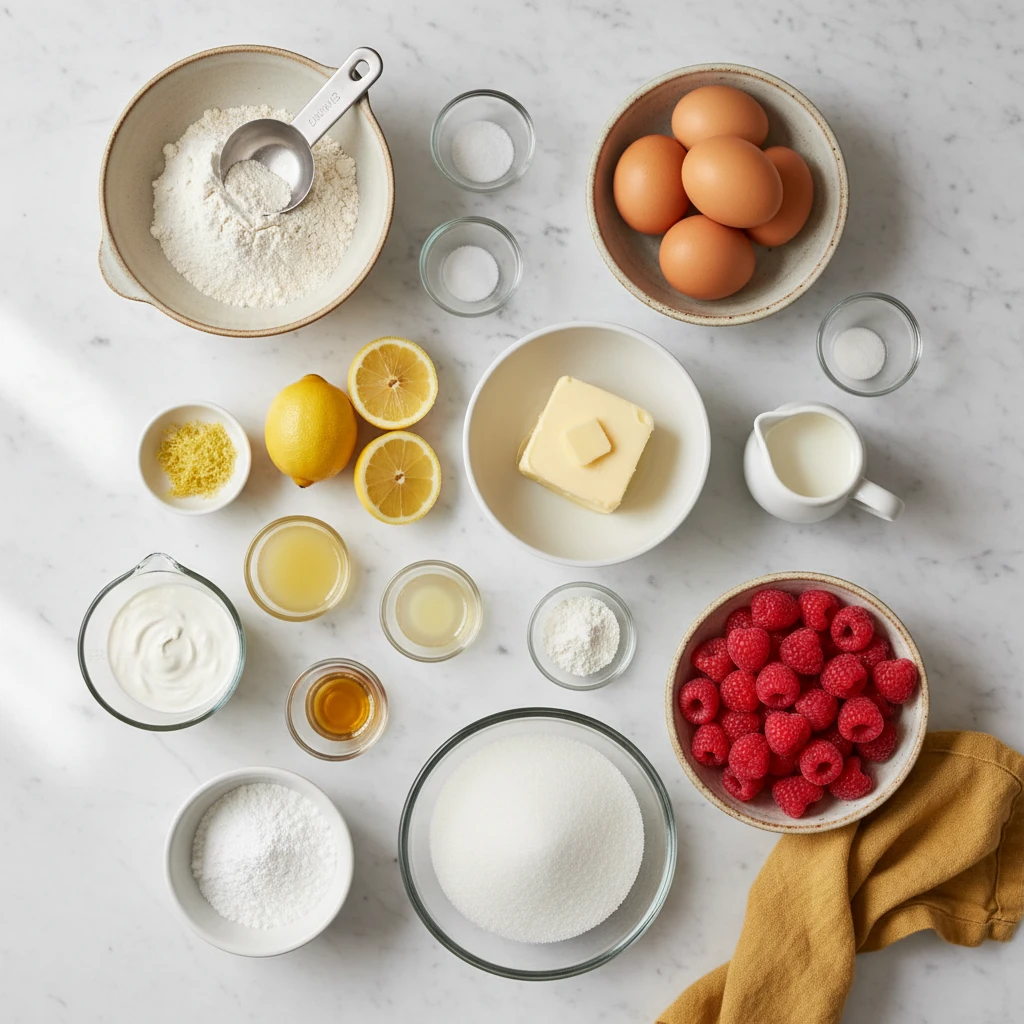
- All-purpose flour – provides structure; don’t substitute with cake flour, which would make the crumb too tender for pound cake
- Baking powder – just a small amount helps the cake rise slightly without making it fluffy; it remains dense
- Salt – enhances all the flavors without adding a salty taste
- Unsalted butter – use real butter at room temperature for proper creaming; salted butter will throw off the flavor balance
- Granulated sugar – creams with butter to create a light, airy base
- Large eggs – must be room temperature to emulsify properly with the butter and prevent curdling
- Sour cream – adds moisture and tang; don’t substitute with yogurt, which is too thin
- Fresh lemon juice – always use freshly squeezed, never bottled, for the best bright flavor
- Lemon zest – the yellow part only; avoid white pith, which is bitter
- Vanilla extract – complements the citrus without competing
- Fresh raspberries – use fresh, not frozen, as they hold their shape better during baking; coat lightly with flour to prevent sinking to the bottom
- Powdered sugar – creates a silky, smooth glaze
- Milk – helps achieve the perfect consistency for the glaze
 Save
SaveHow to Make Lemon-Raspberry Pound Cake
- Preheat oven to 325°F. Prepare a standard loaf pan or 9-inch round cake pan by greasing and flouring or using parchment paper.
- In a small bowl, whisk together flour, baking powder, and salt. Set aside.
- In a large bowl, cream softened butter and granulated sugar together until light and fluffy, about 3–4 minutes. Scrape down the bowl frequently.
- Add eggs one at a time, beating well after each addition. Add vanilla extract and lemon zest, then mix until combined.
- Alternate adding the flour mixture and sour cream, beginning and ending with flour. Mix until just combined after each addition.
- Fold in lemon juice gently by hand until just combined—do not overmix.
- In a small bowl, toss raspberries with 2 tablespoons flour to coat, then gently fold them into the batter.
- Pour batter into prepared pan and smooth the top.
- Bake for 45–55 minutes, until a toothpick inserted in the center comes out with just a few moist crumbs. The top should be golden brown.
- Cool in the pan for 15 minutes, then turn out onto a wire rack to cool completely.
- Whisk powdered sugar, 2 tablespoons lemon juice, and milk to make a thin glaze. Drizzle over cooled cake.
What You Must Know About Lemon-Raspberry Pound Cake
- Room Temperature Ingredients Are Essential: Butter, eggs, and sour cream must be at room temperature for proper emulsification. Cold ingredients won’t blend smoothly and will result in a dense, heavy crumb. Remove eggs from the refrigerator 30 minutes before starting.
- Don’t Overmix: Pound cake relies on creaming butter and sugar for its tender crumb. However, once you add flour, mix on low speed only until just combined. Overmixing develops gluten and creates a tough cake. When folding in raspberries, use a gentle hand—5 to 8 folds is usually enough.
- Lower Oven Temperature Is Intentional: Unlike most cakes baked at 350°F, pound cake bakes at 325°F to ensure the inside cooks through before the outside burns. Use an oven thermometer to verify your oven’s accuracy, as this is crucial for success.
- Test for Doneness Properly: A toothpick test works best for pound cake. Insert it in the center (away from any raspberry), and it should come out with just a few moist crumbs, not wet batter. Overbaking by just 5 minutes will dry it out.
- Use Fresh Raspberries: Frozen raspberries release too much moisture during baking and will leak juice into the batter, creating a soggy interior. Fresh raspberries hold their structure much better.
- Coat Berries with Flour: This step is non-negotiable. Without the flour coating, raspberries sink to the bottom of the pan during baking. The flour creates friction that keeps them suspended.
- Always Use Freshly Squeezed Lemon Juice: Bottled lemon juice tastes flat and chemical. Fresh juice is brighter and makes a noticeable difference in flavor. One lemon typically yields 2–3 tablespoons of juice.
- Level the Batter Before Baking: An uneven top will bake unevenly. Smooth the surface with a spatula before placing in the oven to ensure even rise and browning.
- Cool Completely Before Glazing: If you glaze a warm cake, the glaze will melt and run off. Patience here makes the difference between a professional-looking cake and a messy one.
- This Cake Improves with Time: Pound cake tastes better on day two or three as flavors meld and the crumb becomes even more tender. Store it properly, and you can actually make it in advance for entertaining.
Variations and Substitutions
- Blueberry-Lemon Pound Cake: Replace raspberries with fresh blueberries in equal quantity. Blueberries are sturdier and won’t break down as easily, making this variation even more forgiving.
- Lemon-Blackberry Pound Cake: Use fresh blackberries instead of raspberries for a darker, slightly less tart version. The texture and baking time remain the same.
- Lime-Coconut Twist: Substitute lime zest and juice for lemon, and reduce raspberries to 1 cup. Add 1/3 cup shredded unsweetened coconut to the batter. Use lime juice in the glaze instead of lemon.
- Glazed vs. Unglazed: This cake is delicious without any glaze. For a simpler version, simply dust the cooled cake with powdered sugar, or serve it plain with whipped cream and fresh berries.
- Lemon-Raspberry Layer Cake: Double the recipe and bake in two round pans at 325°F for 35–40 minutes. Cool, then sandwich with whipped cream or buttercream between layers.
- Lemon-Raspberry Loaf with Poppy Seeds: Add 2 tablespoons poppy seeds to the dry ingredients for extra texture and subtle nutty flavor. This is a traditional variation that adds visual interest.
- Make It Dairy-Free: Replace sour cream with non-dairy Greek yogurt or coconut cream, and use dairy-free butter. The results will be slightly less tangy but still delicious.
- Reduce Sugar Version: For a less sweet cake, reduce granulated sugar to 1 1/4 cups. The cake will still be tender and sweet from the fruit, and the lemon flavor will be more pronounced.
Serving Suggestions for Lemon-Raspberry Pound Cake
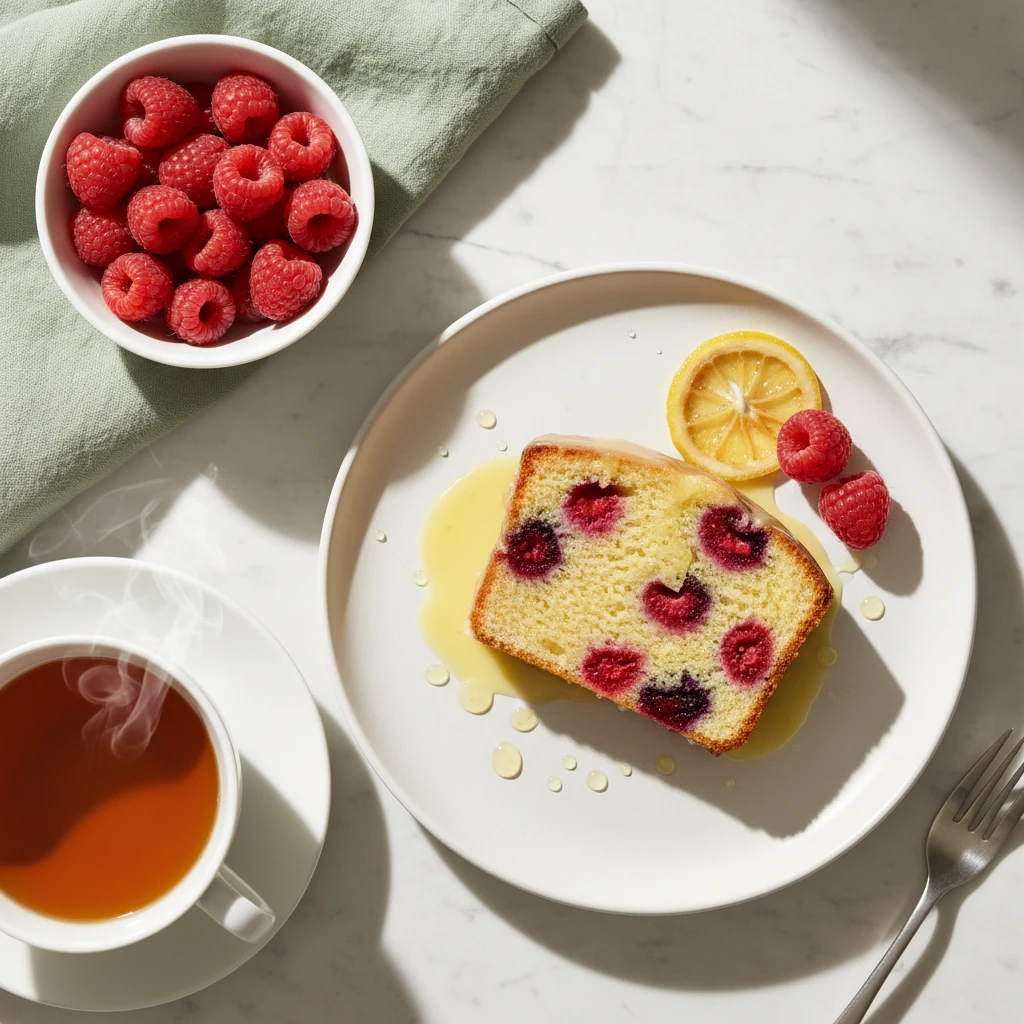
- Classic Afternoon Tea Service: Slice the cake into neat 1-inch-thick pieces and serve on fine china plates with a side of lemon curd, clotted cream, and fresh raspberries. A cup of Earl Grey tea or chamomile is the perfect pairing.
- Elegant Dessert Plating: Plate individual slices on a white or slate plate. Garnish with a quenelle of whipped cream infused with lemon zest, a few fresh raspberries, and a delicate candied lemon slice. A tiny sprig of fresh mint adds a professional touch.
- Simple Home Gathering: Dust the entire cake with powdered sugar (using a sieve for an even coat), then set it on a cake stand in the center of the dessert table. Guests can help themselves, and the cake looks beautiful without fussy plating.
- Brunch Centerpiece: Slice and serve alongside fresh fruit, berries, pastries, and coffee. The bright lemon flavor pairs beautifully with both sweet and savory brunch items.
- Dessert Buffet Option: Cut into bite-sized squares and arrange on a platter with other petit fours. The individual servings make it easy for guests to enjoy without feeling overwhelmed.
- With Crème Fraîche: Serve thick slices with a generous dollop of crème fraîche (or sour cream) on the side. The tangy dairy complements the lemon and raspberry perfectly.
- Light Dinner Dessert: After a rich meal, serve a modest slice with a small scoop of lemon sorbet or vanilla bean ice cream. The acidity of the sorbet cleanses the palate beautifully.
- Gift-Wrapped Individual Slices: Once cooled and sliced, wrap individual pieces in parchment paper and tie with twine for an elegant homemade gift. Perfect for neighbors or friends.
 Save
SaveStorage and Reheating
- Room Temperature Storage (1–2 Days): Wrap the cooled, glazed cake tightly in plastic wrap or place it in an airtight container. Keep it at room temperature away from direct sunlight or heat. The cake will actually taste even better on day two as flavors meld.
- Refrigerator Storage (Up to 1 Week): If you need to store longer, wrap the cake tightly in plastic wrap, then place in an airtight container or resealable bag. Store in the refrigerator. Cold cake may taste slightly denser, so allow it to come to room temperature for 30 minutes before serving for the best texture and flavor.
- Freezer Storage (Up to 3 Months): For longer storage, wrap the cooled, un-glazed cake in plastic wrap, then in aluminum foil. Place in a freezer bag, label with the date, and freeze. Thaw at room temperature for 2–3 hours before serving. If you prefer to glaze it, do so after thawing.
- Reheating Individual Slices (Optional): Cold or room temperature slices are delicious as-is. However, if you prefer warm cake, wrap a slice loosely in foil and warm in a 275°F oven for 8–10 minutes until just warmed through. Avoid microwaving, as it dries out pound cake.
- Freezing Unglazed Cake: For best results, freeze the cake before glazing. This preserves its texture perfectly. Thaw, then glaze with fresh lemon glaze just before serving.
- Individual Slice Freezing: You can also wrap individual slices in plastic wrap and freeze them separately for up to 3 months. Thaw a single slice at room temperature for 1–2 hours when you want a quick dessert.
Frequently Asked Questions about Lemon-Raspberry Pound Cake
Can I use frozen raspberries instead of fresh?
Fresh raspberries are strongly recommended because frozen berries release too much moisture during baking, making the cake soggy and potentially causing the berries to disintegrate. If you must use frozen, thaw them completely, drain excess liquid, pat dry with paper towels, and coat generously with flour. Even so, the texture won’t be quite as good as with fresh berries.
What if I don’t have sour cream?
You can substitute Greek yogurt (plain, full-fat) in equal quantity. Avoid regular yogurt, as it’s too thin and won’t provide the same richness. Buttermilk can also work as a substitute (use 1/4 cup plus 1 tablespoon), though it’s slightly thinner than sour cream, so the cake may be marginally less moist.
Why is my pound cake dense and heavy instead of tender?
Dense pound cake usually results from either: (1) ingredients that weren’t at room temperature when mixed, (2) overmixing after flour was added (which develops gluten), or (3) baking too long. Always ensure butter, eggs, and sour cream are room temperature, mix on low speed once you add flour, and use the toothpick test to check doneness at 45 minutes.
Can I make this as a layer cake?
Yes! Double the entire recipe and bake in two greased 9-inch round pans at 325°F for 35–40 minutes instead of 45–55 minutes. Cool in pans for 15 minutes, then turn out onto racks. Once completely cool, sandwich the layers with whipped cream, cream cheese frosting, or buttercream. The same glaze can be drizzled over the top.
How far in advance can I make this cake?
Pound cake can be made up to 3 days ahead and stored tightly wrapped at room temperature or in the refrigerator. It actually tastes better after 24 hours as flavors develop. You can also freeze the un-glazed cake for up to 3 months. Thaw at room temperature, then glaze with fresh lemon glaze just before serving for the best presentation.
What’s the best way to get clean slices?
Use a long serrated bread knife (like one for cutting bread). Dip the knife in very hot water and wipe it dry with a clean kitchen towel between each cut. This prevents the glaze and cake from sticking to the knife and ensures neat, clean slices without dragging or crumbling.
Can I substitute lemon extract for fresh lemon juice and zest?
While you can add lemon extract for extra lemon flavor, you cannot replace fresh lemon juice and zest with extract alone. Extract provides aroma but lacks the moisture from juice and the texture from zest. Always use fresh juice and zest for authentic flavor. Lemon extract can be a supplementary addition (1/4 teaspoon), but not a replacement.
Is there a way to make this gluten-free?
Yes, you can substitute all-purpose flour with a 1:1 gluten-free all-purpose flour blend (like Bob’s Red Mill or King Arthur). However, gluten-free baked goods can be drier, so reduce baking time by 3–5 minutes and check with a toothpick starting at 40 minutes. The resulting cake may be slightly crumbier but will still taste delicious. Use the same quantity (2 cups) of gluten-free flour.
Nutrition Facts (Per Serving)
| Nutrient | Amount per Serving |
|---|---|
| Calories | 385 |
| Total Fat | 18g |
| Saturated Fat | 11g |
| Trans Fat | 0g |
| Cholesterol | 82mg |
| Sodium | 245mg |
| Total Carbohydrates | 52g |
| Dietary Fiber | 1g |
| Total Sugars | 38g |
| Protein | 4g |
Based on 8 servings per cake. Nutritional values are approximate and may vary based on specific ingredients used. This cake is rich and indulgent; portion sizes are typically 1/8 of the cake. Contains eggs, dairy, and gluten.

Lemon-Raspberry Pound Cake
Ingredients
- 2 cups all-purpose flour
- 1/2 teaspoon baking powder
- 1/2 teaspoon salt
- 1 cup unsalted butter softened
- 1 1/2 cups granulated sugar
- 4 large eggs room temperature
- 1/2 cup sour cream room temperature
- 1/4 cup fresh lemon juice
- 2 tablespoons lemon zest
- 1 teaspoon vanilla extract
- 1 1/2 cups fresh raspberries
- 2 tablespoons all-purpose flour for coating berries
- 1/2 cup powdered sugar
- 2 tablespoons fresh lemon juice for glaze
- 1 tablespoon milk
Instructions
- Preheat oven to 325°F for 10 minutes. Grease the inside of a loaf pan with butter or nonstick spray, then dust with flour and tap out excess. (Alternatively, line with parchment paper for easier removal.) This prevents sticking and creates an even crust.
- In a small mixing bowl, combine 2 cups all-purpose flour, 1/2 teaspoon baking powder, and 1/2 teaspoon salt. Whisk together for 30 seconds until combined. Set aside on the counter.
- In a large mixing bowl, place 1 cup softened unsalted butter (it should be soft enough to dent with your finger but not greasy). Add 1 1/2 cups granulated sugar. Using an electric mixer on medium speed, beat for 3–4 minutes, scraping the bowl halfway through. The mixture should look pale, fluffy, and light—like thick frosting. Checkpoint: You should see ribbons of mixture fall from the beaters when you lift them.
- Crack the first egg into a small cup, then add it to the butter mixture. Beat on medium for 30 seconds until fully combined. Repeat with the remaining 3 eggs, one at a time, beating 30 seconds after each addition. If the mixture looks curdled (lumpy), it's okay—it will smooth out.
- Add 1 teaspoon vanilla extract and 2 tablespoons lemon zest to the bowl. Beat on medium for 30 seconds until the zest is evenly distributed and the mixture is light yellow.
- Turn the mixer to low speed. Add 1/3 of the flour mixture and mix for 20 seconds until just barely combined. Scrape down the bowl.
- Add 1/2 of the 1/2 cup sour cream (about 1/4 cup) and mix on low for 15 seconds. Scrape down the bowl again.
- Add another 1/3 of the flour mixture and mix on low for 20 seconds. Scrape the bowl.
- Add the remaining 1/4 cup sour cream and mix on low for 15 seconds.
- Add the final 1/3 of the flour mixture and mix on low for 20 seconds until just combined. Do not overmix. Checkpoint: The batter should be thick, creamy, and no streaks of flour should be visible.
- Turn the mixer off. Pour in 1/4 cup fresh lemon juice slowly while stirring by hand with a spatula for 10 seconds until just combined. The batter may look slightly curdled, but this is normal.
- In a separate small bowl, place 1 1/2 cups fresh raspberries and sprinkle with 2 tablespoons all-purpose flour. Gently toss with a fork for 15 seconds, coating each berry lightly. This prevents them from sinking to the bottom of the cake.
- Using a spatula, gently fold the floured raspberries into the batter with 5–8 slow, careful folding motions. Mix just until the berries are evenly distributed. A few streaks are fine—do not overmix, or the berries will break down and turn the batter purple.
- Pour the batter into the prepared loaf pan, filling it about 3/4 full. Gently tap the pan on the counter 2–3 times to release air bubbles. Using a spatula or the back of a spoon, smooth the top into an even layer.
- Place the pan in the preheated 325°F oven on the middle rack. Bake for 45–55 minutes. At 45 minutes, insert a wooden toothpick into the center of the cake. If it comes out with only a few moist crumbs (no wet batter), the cake is done. If it comes out wet, bake for another 3–5 minutes and check again. The top should be deep golden brown, and the cake should smell strongly of lemon.
- Remove from the oven and place on a heat-safe surface. Let the cake cool in the pan for exactly 15 minutes. This allows it to set slightly without cooling completely.
- Turn the pan upside down onto a wire cooling rack. Gently tap the bottom of the pan and lift away. If it doesn't release, run a thin butter knife around the inside edge and try again. The cake should slide out smoothly. Let cool completely, about 1 hour, on the wire rack. The bottom should no longer feel warm to the touch.
- Once completely cool, make the glaze: In a small bowl, whisk together 1/2 cup powdered sugar, 2 tablespoons fresh lemon juice, and 1 tablespoon milk for 20 seconds until smooth and pourable (like thin pancake batter). If too thick, add 1/2 teaspoon milk at a time. If too thin, add 1/2 teaspoon powdered sugar.
- Place the cooled cake on a serving plate. Drizzle the glaze evenly over the top using a fork or whisk, allowing it to drip down the sides. Let the glaze set for 10 minutes at room temperature before slicing.
- To slice, use a long serrated bread knife. Dip the knife in hot water and wipe dry between each cut for clean slices.