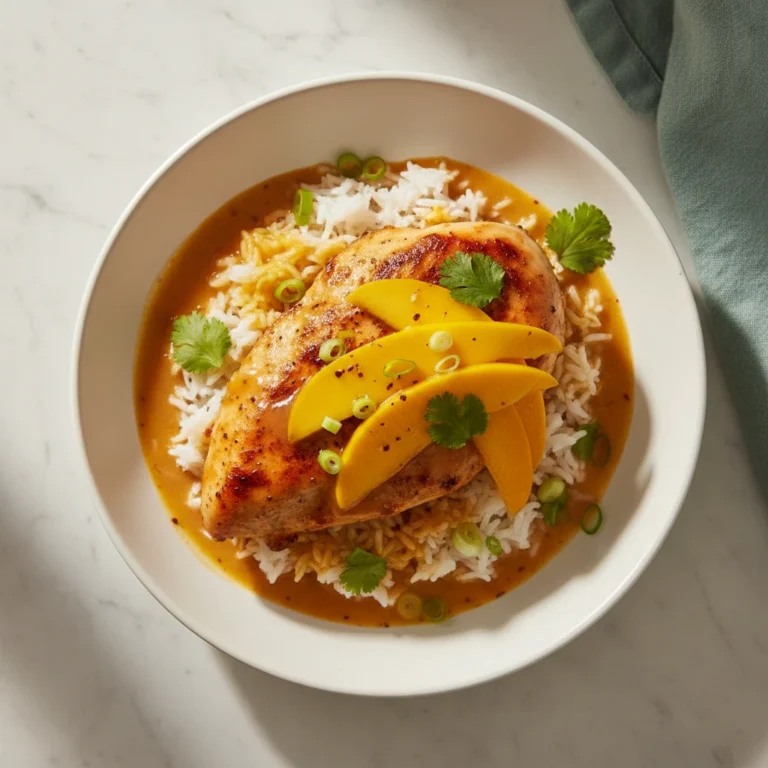
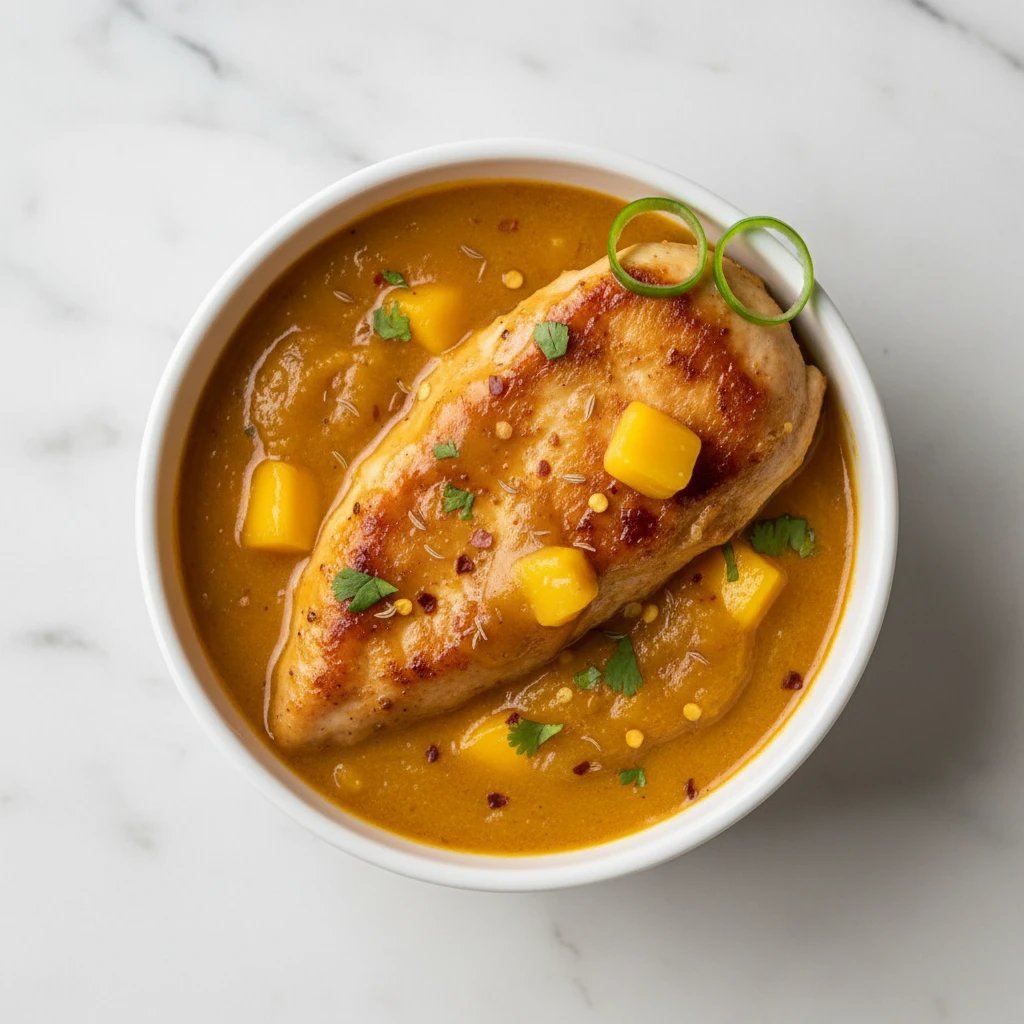
Mango chicken is a vibrant, tropical-inspired dish that perfectly balances sweet fruit with savory poultry and warm spices. This one-pan wonder features tender chicken breasts bathed in a silky mango sauce infused with coconut milk, lime, and aromatic spices like cumin and ginger. Whether you’re seeking a weeknight dinner that feels restaurant-quality or a show-stopping meal for entertaining, mango chicken delivers impressive flavor with minimal effort. It’s naturally gluten-free, full of fresh ingredients, and ready in under 45 minutes.
Reasons to Try Mango Chicken
Tropical Flavor Profile: The sweet, juicy mango pairs beautifully with warm cumin and turmeric, creating a complex, balanced sauce that tastes far more intricate than the ingredient list suggests. The hint of coconut milk adds richness without heaviness.
Quick and Elegant: This dish comes together in one pan in under 45 minutes, making it perfect for busy weeknight dinners that still feel special enough for guests. No complicated techniques or long marinating times required.
Naturally Healthy: Packed with lean protein, fresh fruit vitamins, and aromatic spices that boost metabolism, mango chicken is a nutritious choice that doesn’t compromise on taste or satisfaction.
Versatile and Adaptable: Serve it over rice, quinoa, or cauliflower rice. Pair it with vegetables, naan bread, or alongside a fresh salad. The mango sauce complements multiple cuisines and dietary preferences.
Restaurant-Quality at Home: This dish rivals the quality of high-end fusion restaurants, but you’ll make it in your own kitchen with everyday ingredients. The result is juicy, flavorful chicken in a silky mango-spiced sauce that impresses every time.
 Save
SaveIngredients Notes
- Boneless skinless chicken breasts (1.5 pounds)
- Fresh mango puree or canned mango puree (2 cups fresh or 1 cup canned)
- Olive oil (3 tablespoons)
- Medium red onion (1)
- Garlic cloves (4)
- Fresh ginger (1 tablespoon, minced)
- Jalapeño pepper (1)
- Chicken broth (1 cup)
- Coconut milk (2 tablespoons)
- Lime juice (2 tablespoons)
- Honey (1 tablespoon)
- Ground cumin (1 teaspoon)
- Turmeric powder (0.5 teaspoon)
- Red chili flakes (0.5 teaspoon)
- Salt and black pepper to taste
- Fresh cilantro (0.25 cup)
- Sliced green onions (2 tablespoons)
- Ripe mango for garnish (1)
How to Make Mango Chicken
- Heat olive oil in a large skillet over medium-high heat. Season chicken breasts with salt and pepper, then sear them for 5 minutes on each side until lightly golden. Remove and set aside.
- In the same skillet, sauté minced garlic, ginger, diced red onion, and sliced jalapeño for 2–3 minutes until fragrant.
- Stir in ground cumin and turmeric, toasting the spices for 30 seconds.
- Add mango puree, chicken broth, honey, and lime juice. Stir to combine.
- Return chicken to the skillet, nestling it into the sauce. Reduce heat to medium-low and simmer for 15–18 minutes until chicken reaches 165°F internally.
- Stir in coconut milk and red chili flakes. Simmer for an additional 2–3 minutes.
- Taste and adjust seasonings with salt and pepper. Garnish with fresh cilantro, green onions, and fresh mango slices before serving.
What You Must Know About Mango Chicken
Chicken Breast Thickness Matters: For even cooking, pound your chicken breasts to an even 0.75-inch thickness before cooking. Thicker breasts will take longer to cook through, risking overdone edges and underdone centers. If you use bone-in chicken thighs or drumsticks instead, increase the simmering time to 22–25 minutes and verify internal temperature reaches 175°F.
Mango Puree Quality: If using fresh mangoes, select ripe but slightly firm fruit (they should yield slightly to pressure). Overripe mangoes create watery, thin sauce; underripe ones are stringy and bitter. If fresh mangoes are unavailable or expensive, high-quality frozen mango puree is an excellent substitute—it’s picked at peak ripeness and frozen immediately. Avoid canned mango in heavy syrup, as it adds unwanted sweetness and texture.
Coconut Milk vs. Cream of Coconut: Use full-fat unsweetened coconut milk (the canned variety from the Asian section). Do not confuse this with cream of coconut or coconut cream, which are sweetened products designed for beverages and desserts. The small amount of coconut milk adds subtle richness without making the dish heavy.
Don’t Skip the Sear: Searing the chicken first creates a golden crust that locks in juices and adds deep, savory flavor. This step takes only 10 minutes but dramatically improves the final dish’s quality. Don’t rush it or skimp on it.
Lime Juice Timing: Always add lime juice after the sauce is cooked, never before. Heat can break down the delicate citrus flavor, leaving it harsh or flat. If the sauce is too sweet at the end, lime juice is your best corrective tool.
Heat Level Control: The red chili flakes add gentle warmth, not intense heat. Start with 0.25 teaspoon if you’re sensitive to spice, then taste and add more. You can always increase heat, but you cannot remove it once it’s in the sauce.
Helpful Tips: For a quicker weeknight version, use rotisserie chicken (shred it and stir into the finished sauce with the coconut milk—it will heat through in 2 minutes). To make this dish ahead, prepare the sauce completely and refrigerate it separately from the chicken. Reheat gently and add fresh chicken when serving for best texture. Freeze the sauce alone (not with cooked chicken) for up to 3 months; thaw overnight in the refrigerator and reheat over low heat.
Variations and Substitutions
Mango Shrimp: Substitute 1.5 pounds large shrimp for chicken. Sear shrimp for 2 minutes per side until just pink, then remove. Proceed with the sauce. Return shrimp to the skillet in the final 2 minutes of cooking—shrimp cooks much faster than chicken and becomes rubbery if overcooked.
Vegetarian Tofu Option: Replace chicken with 1.5 pounds extra-firm tofu, pressed and cubed. Skip the searing step and add tofu directly to the sauce after it’s simmering. Cook for 8–10 minutes. The tofu absorbs the mango sauce beautifully.
Coconut Milk Reduction: For a creamier sauce without dairy, increase coconut milk to 0.5 cup. This creates a more indulgent, curry-like consistency. Be aware the dish will be richer and less bright-tasting.
Tropical Fruit Mix: Replace 1 cup of mango puree with 0.5 cup pineapple juice and 0.5 cup fresh peach puree. The tropical blend adds complexity and subtle stone fruit notes.
Spice Boost: Add 1 teaspoon curry powder or garam masala along with the cumin for a more assertive spice profile. This works especially well if serving over rice.
Mango Chicken Tacos: Shred the cooked chicken and serve in corn or flour tortillas with the mango sauce, avocado, purple cabbage slaw, and cilantro. It transforms into a fun, casual meal.
Chutney-Style Topping: Reduce the sauce by simmering uncovered for 5 minutes after cooking is complete. The result is a thick, jam-like mango chutney perfect spooned over rice or alongside grilled naan.
Serving Suggestions for Mango Chicken
Over Jasmine Rice: Serve mango chicken over fluffy jasmine rice to soak up the silky sauce. The delicate floral notes of jasmine rice complement the tropical mango beautifully. Drizzle any extra sauce from the skillet over the rice.
Quinoa Bowl: For a protein-rich, gluten-free option, serve over cooked quinoa. Top with the mango chicken, a handful of fresh spinach or arugula, diced cucumber, and extra cilantro. Drizzle lime juice over the bowl.
Alongside Naan Bread: Serve with warm, buttered naan or pita bread on the side for scooping up sauce and accompanying the chicken. The bread becomes a vehicle for the delicious sauce.
With Cauliflower Rice: For a lower-carb option, serve over cauliflower rice. The delicate grain absorbs the mango sauce while keeping the meal light and vegetable-forward.
As a Taco or Wrap: Shred the cooked chicken and serve in corn tortillas or wraps with avocado, shredded cabbage, fresh cilantro, and a dollop of mango sauce. Add crumbled queso fresco if desired.
On a Grain Salad: Serve chilled mango chicken over a bed of farro or barley salad with diced cucumber, cherry tomatoes, and fresh herbs for a refreshing lunch.
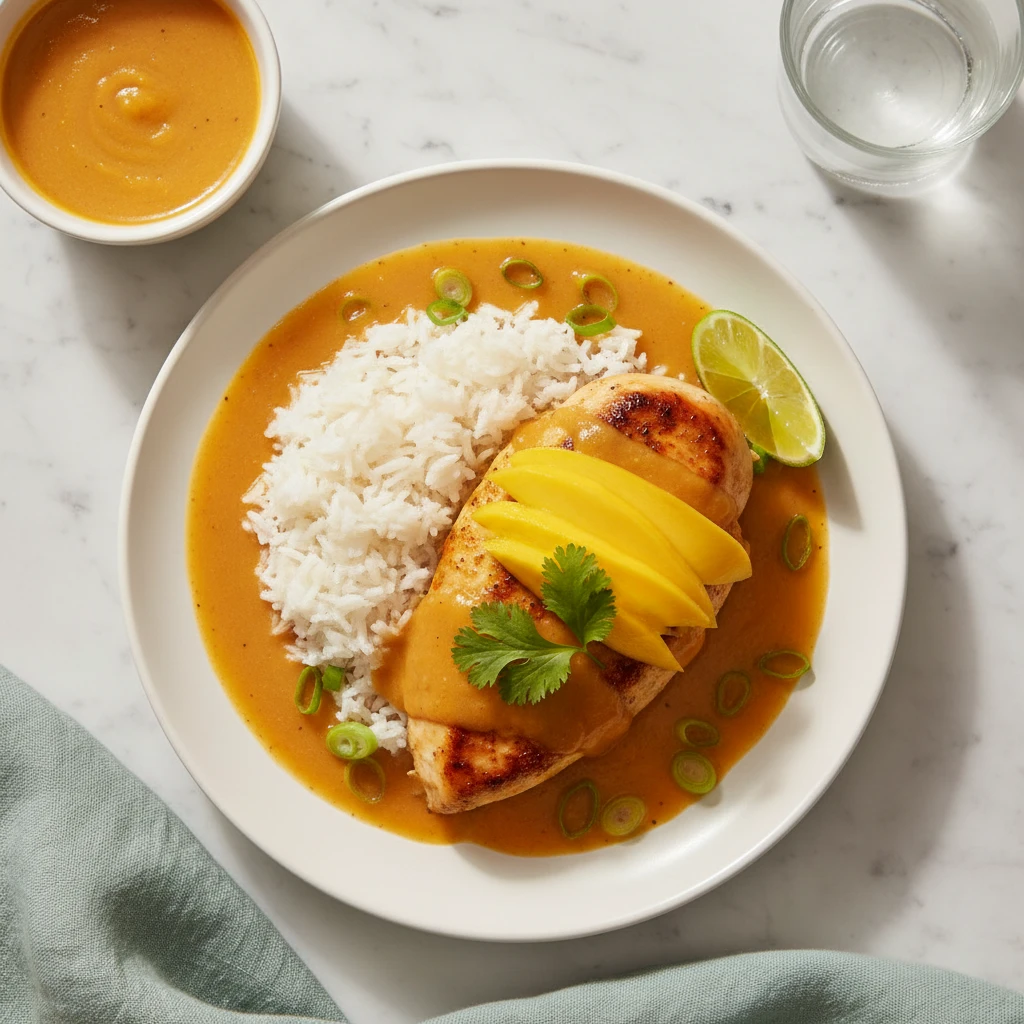
Plating Presentation: For a restaurant-style presentation, place a mound of rice in the center of a plate. Lean the chicken breast against the rice at an angle. Spoon mango sauce around and over the chicken. Garnish with a cilantro sprig, thinly sliced fresh mango, and a sprinkle of green onions. A light dusting of paprika adds visual pop.
Simple Side Vegetables: Serve with roasted or steamed vegetables such as broccoli, green beans, or asparagus. The fresh, mild flavors balance the richness of the mango sauce.
 Save
SaveStorage and Reheating
Refrigerator Storage: Store leftover mango chicken in an airtight container in the refrigerator for up to 3 days. Keep the chicken and sauce together; the sauce helps keep the chicken moist. The sauce may thicken as it cools due to the natural pectin in mango; this is normal.
Freezing: Mango chicken freezes well for up to 2 months. Freeze in airtight freezer-safe containers or heavy-duty freezer bags, removing as much air as possible. For best results, freeze the chicken and sauce together. Label with the date so you can track storage time.
Thawing: Thaw frozen mango chicken overnight in the refrigerator. Do not thaw at room temperature, as this allows harmful bacteria to grow.
Reheating on the Stovetop: Transfer thawed mango chicken to a skillet and warm over medium-low heat, stirring gently, for 6–8 minutes until heated through. Add a splash of chicken broth if the sauce has thickened too much. The chicken will remain tender and the sauce silky.
Reheating in the Microwave: Transfer to a microwave-safe bowl and cover loosely (don’t seal with plastic wrap, as steam can create hot spots). Microwave on 50% power for 3–4 minutes, stirring halfway through. Check that it’s heated to 165°F before eating.
Reheating in the Oven: Transfer to an oven-safe dish, cover with foil, and warm at 350°F for 12–15 minutes until heated through. This method is gentle and prevents the sauce from reducing too much.
Making It Ahead: Prepare the mango sauce up to 2 days in advance and store separately from the chicken in the refrigerator. Sear and cook the chicken on serving day, then add the pre-made sauce to finish. This is perfect for entertaining.
Frequently Asked Questions about Mango Chicken
Can I use frozen mango instead of fresh?
Yes, absolutely. Frozen mango or frozen mango puree works beautifully in this recipe. In fact, frozen mango is often riper and more flavorful than fresh fruit available year-round in many areas. Thaw it completely and drain excess liquid before adding to the skillet. If using frozen mango chunks, blend them into a smooth puree first for the best sauce consistency.
What if I don’t have coconut milk?
You can substitute heavy cream, sour cream, or Greek yogurt for coconut milk. Use 2 tablespoons of any of these. Heavy cream will create a richer sauce; sour cream will add tanginess; Greek yogurt will make it slightly thick but very creamy. Add the dairy product in the final 2 minutes of cooking off heat, stirring gently, to prevent curdling. The sauce won’t taste tropical, but it will still be delicious.
How do I know when the chicken is fully cooked?
Use an instant-read meat thermometer inserted into the thickest part of a chicken breast without touching bone. It should read exactly 165°F. You can also cut into the thickest part and check that no pink remains and juices run clear. Never rely on color alone, as some chickens may remain slightly pink even when fully cooked.
Can I make this dish with chicken thighs instead of breasts?
Yes. Boneless, skinless chicken thighs are actually wonderful in this recipe because they’re more forgiving and stay juicy even if slightly overcooked. Use 2 pounds of thighs, sear them for 6 minutes per side, and increase the simmering time to 20–25 minutes until the internal temperature reaches 175°F. Thighs have more fat, so you may want to skim excess fat from the sauce surface before serving.
Is this dish gluten-free?
Yes, mango chicken is naturally gluten-free as long as you use gluten-free chicken broth (most are, but check the label). All other ingredients—mango, spices, coconut milk, and chicken—are naturally gluten-free. If serving with rice, naan, or wraps, make sure those items are also gluten-free.
Can I double this recipe for a dinner party?
Yes, this recipe doubles easily. Use 3 pounds chicken breasts, double all sauce ingredients, and cook in a very large skillet (14-inch) or use two 12-inch skillets. The searing time remains the same, but the simmering time may increase slightly to 18–20 minutes for all the chicken to cook through. Ensure the thermometer reads 165°F for each piece.
What’s the best way to cut fresh mango for a garnish?
Stand the mango upright. Using a sharp knife, cut down on either side of the large flat pit, creating two large cheeks and a thin side with the pit. Score the flesh in a crosshatch pattern without cutting through the skin. Turn the skin inside out gently; the cubes will pop forward. Use a spoon to scoop them into thin slices, or simply serve the cubed presentation as-is. Alternatively, use a vegetable peeler to create thin mango ribbons for a more elegant garnish.
Nutrition Facts (Per Serving)
Nutrition Facts (Per Serving)
| Nutrient | Per Serving (1 chicken breast + sauce) |
|---|---|
| Calories | 285 |
| Protein | 32g |
| Carbohydrates | 24g |
| Dietary Fiber | 1.5g |
| Sugar | 16g |
| Total Fat | 8g |
| Saturated Fat | 1.5g |
| Cholesterol | 85mg |
| Sodium | 380mg |
| Potassium | 520mg |
| Vitamin A | 45% DV |
| Vitamin C | 35% DV |
Dietary Notes: This recipe is naturally gluten-free, dairy-free, and paleo-friendly. It’s high in protein and contains important nutrients from fresh mango including vitamin C, folate, and antioxidants. The dish is relatively moderate in calories while still being satisfying due to its protein content. The sugar content comes primarily from the natural sugars in fresh mango; if concerned, use less mango puree or balance the plate with a lower-sugar side like cauliflower rice or green vegetables.
Mango Chicken
Ingredients
- 1.5 pounds boneless skinless chicken breasts
- 2 cups fresh mango puree or 1 cup canned mango puree
- 3 tablespoons olive oil
- 1 medium red onion
- 4 cloves garlic
- 1 tablespoon fresh ginger
- 1 jalapeño pepper
- 1 cup chicken broth
- 2 tablespoons coconut milk
- 2 tablespoons lime juice
- 1 tablespoon honey
- 1 teaspoon ground cumin
- 0.5 teaspoon turmeric powder
- 0.5 teaspoon red chili flakes
- Salt and black pepper to taste
- 0.25 cup fresh cilantro
- 2 tablespoons sliced green onions
- 1 ripe mango for garnish
Instructions
- Pat 1.5 pounds boneless skinless chicken breasts dry with paper towels. Season both sides generously with salt and black pepper. Let sit for 2 minutes so seasoning adheres.
- Heat 3 tablespoons olive oil in a large skillet (12-inch preferred) over medium-high heat for 1–2 minutes until shimmering. Oil is ready when a pinch of flour sizzles immediately.
- Carefully place chicken breasts in hot oil. Do not move them for 5–6 minutes. The bottom should be golden brown and release easily when you lift gently with tongs. Flip and cook the second side for 4–5 minutes until lightly golden. Checkpoint: Both sides should have a light golden crust; internal temperature will be around 145°F at this point (not fully cooked yet).
- Transfer seared chicken to a clean plate. Do not wash the skillet.
- In the same skillet with residual oil over medium heat, add 0.5 cup diced red onion, 4 minced garlic cloves, 1 tablespoon minced fresh ginger, and 0.5 sliced jalapeño (seeds removed for less heat). Stir constantly for 2–3 minutes until mixture is very fragrant and onion begins to soften. You should smell the ginger and garlic clearly.
- Add 1 teaspoon ground cumin and 0.5 teaspoon turmeric powder to the aromatics. Stir constantly for exactly 30 seconds. This toasts the spices and removes any raw flavor. The skillet will smell warm and earthy.
- Pour in 2 cups fresh mango puree (or blend 2–3 ripe mangoes until smooth) and 1 cup chicken broth. Use a wooden spoon to scrape up any browned bits stuck to the skillet bottom—this adds deep flavor. Stir in 1 tablespoon honey and 2 tablespoons fresh lime juice. Mix until completely combined.
- Return seared chicken to the skillet, nestling it into the sauce so it's partially submerged. Reduce heat to medium-low and cover with a lid or foil. Simmer undisturbed for 14–16 minutes.
- Check doneness: Use an instant-read meat thermometer in the thickest part of a chicken breast. It should read exactly 165°F. If below 165°F, cover and simmer 2–3 minutes longer, then check again. Checkpoint: Chicken should be white throughout (no pink), and juices should run clear when pierced with a fork.
- Remove lid. Stir in 2 tablespoons coconut milk and 0.5 teaspoon red chili flakes. Stir gently for 1 minute. Taste the sauce with a clean spoon.
- Adjust seasoning: Add more salt if bland, more lime juice if too sweet, more chili flakes if you want more heat. Simmer uncovered for 2 minutes to meld new seasonings.
- Transfer chicken to serving plates. Spoon mango sauce generously over each breast.
- Garnish each portion with 1 tablespoon fresh cilantro leaves, 0.5 tablespoon sliced green onions, and 2–3 thin slices of fresh ripe mango arranged on top. Serve immediately while sauce is still warm and silky.
- Troubleshooting Tips:If chicken is tough: You may have cooked it too long at too high a temperature. Next time, keep the heat at medium-low once chicken returns to the skillet. The gentle simmer keeps it tender.
- If sauce is too thin: Mix 1 tablespoon cornstarch with 2 tablespoons cold water. Stir this slurry into the simmering sauce and cook for 1 minute until thickened.
- If sauce is too thick: Whisk in 2–3 tablespoons additional chicken broth or water until you reach desired consistency.
- If mango flavor is too strong: Balance it with more lime juice (acid cuts sweetness) or a pinch more salt (salt suppresses perceived sweetness).
- If the mango puree has lumps: Strain it through a fine-mesh sieve before adding to the skillet for a perfectly smooth sauce.