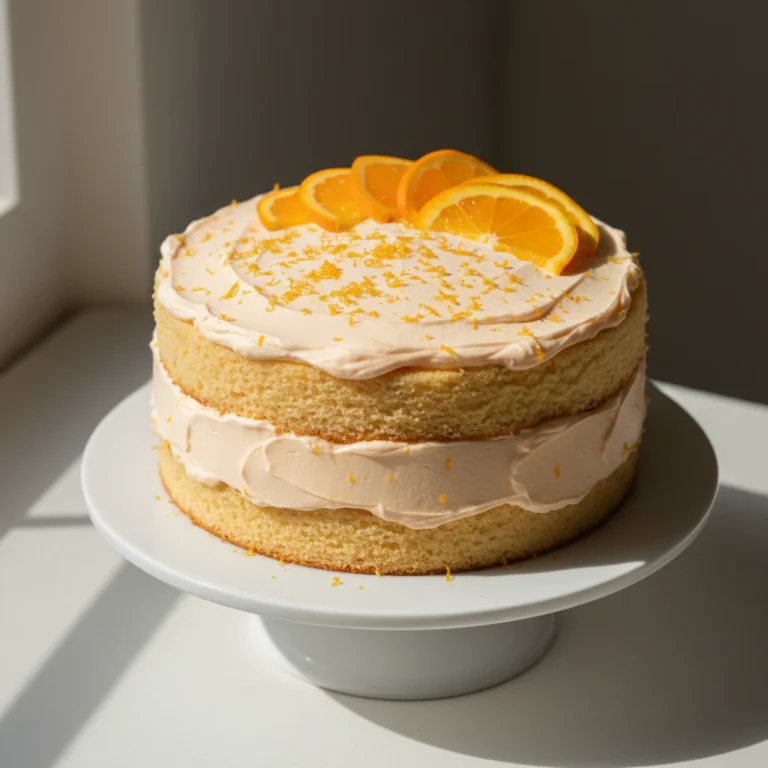
Orange creamsicle cake brings back childhood nostalgia with its bright citrus flavor and creamy vanilla frosting combination. This two-layer beauty captures the essence of the classic frozen treat, transforming it into an elegant dessert perfect for any occasion. With moist orange cake paired with a silky orange-infused cream cheese frosting, every bite delivers a refreshing burst of flavor that feels both familiar and sophisticated. Whether you’re baking for a special celebration or simply craving something sweet, this cake delivers impressive results with straightforward techniques.
Reasons to Try Orange Creamsicle Cake
This showstopping cake combines the best of both worlds: vibrant citrus brightness and luxurious creaminess. Here’s why you’ll love it:
- Nostalgic Flavor Profile: It perfectly recreates the beloved creamsicle taste that adults and children adore, making it an instant crowd-pleaser at any gathering.
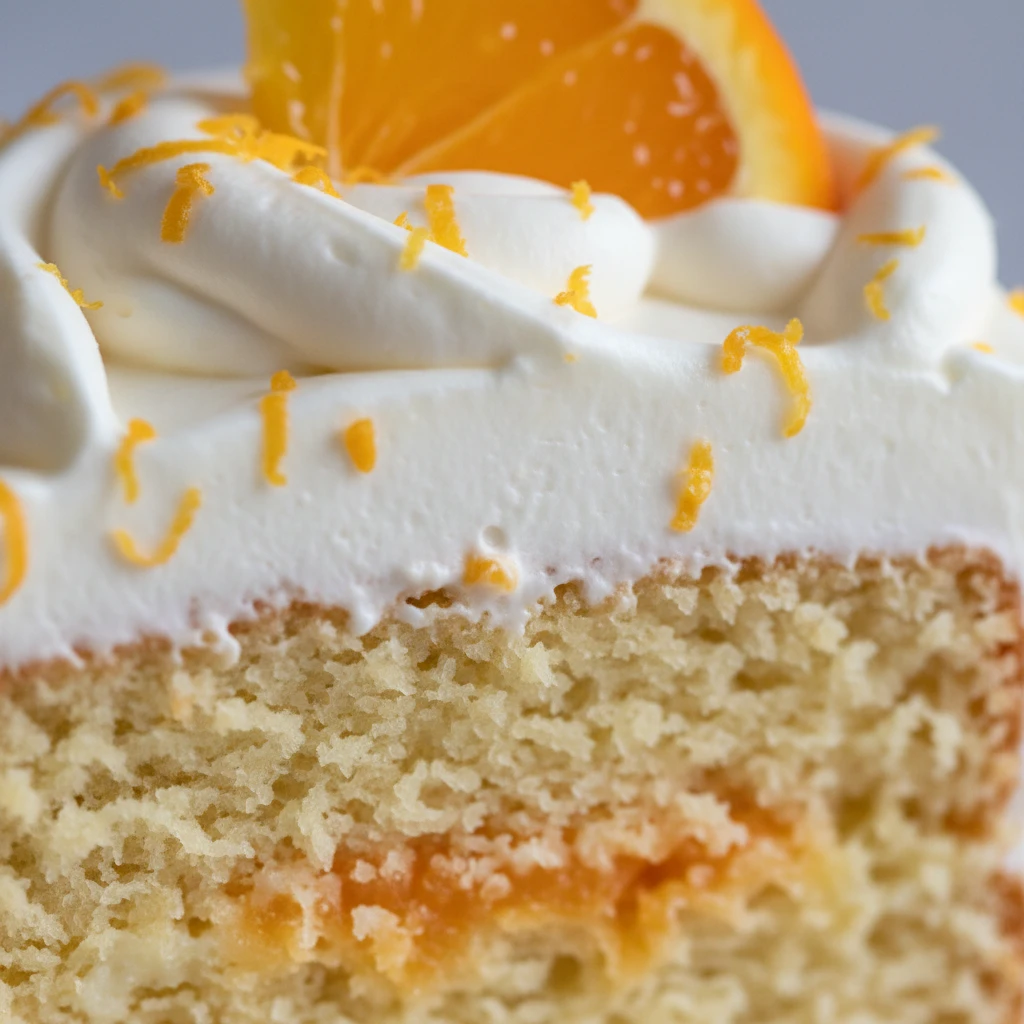
- Moist and Tender Crumb: The combination of sour cream and fresh orange juice keeps the cake incredibly soft and tender, preventing the common problem of dry citrus cakes.
- Elegant Presentation: With its pale orange cake layers and cream-colored frosting, it looks sophisticated and Instagram-worthy without requiring advanced decorating skills.
- Perfect Balance of Flavors: The cake isn’t overly tart—the orange zest and juice work harmoniously with vanilla and butter to create a well-rounded, dessert-perfect flavor.
- Customizable Intensity: You control the citrus punch by adjusting orange juice or using orange liqueur in the frosting for an adult twist.
- Great for Any Season: The bright, refreshing nature makes it perfect for spring and summer celebrations, yet rich enough to enjoy year-round.
 Save
SaveIngredients Notes
For the Orange Cake
- All-purpose flour
- Baking powder
- Baking soda
- Salt
- Unsalted butter, softened
- Granulated sugar
- Eggs, room temperature
- Sour cream, room temperature
- Fresh orange juice
- Orange zest
- Vanilla extract
For the Cream Cheese Frosting
- Heavy whipping cream
- Cream cheese, softened
- Powdered sugar
- Vanilla extract
- Orange liqueur or additional orange juice
- Orange zest for garnish
- Fresh orange slices for garnish
How to Make Orange Creamsicle Cake
For the Orange Cake
- Preheat oven to 350°F and prepare two 9-inch round cake pans with butter, flour, and parchment paper rounds.
- Whisk together flour, baking powder, baking soda, and salt in a medium bowl.
- Cream softened butter and sugar together until light and fluffy, about 3 minutes.
- Add eggs one at a time, beating well after each addition.
- Alternate adding the flour mixture and sour cream, beginning and ending with flour. Mix in orange juice, zest, and vanilla until combined.
- Divide batter evenly between prepared pans and smooth the tops.
- Bake for 25-30 minutes until a toothpick inserted in the center comes out clean.
- Cool in pans for 15 minutes, then turn out onto wire racks to cool completely.
For the Cream Cheese Frosting
- Beat heavy cream until stiff peaks form, then transfer to a separate bowl.
- In another bowl, beat softened cream cheese with powdered sugar and vanilla until smooth.
- Fold the whipped cream into the cream cheese mixture gently in two additions.
- Fold in orange liqueur or additional juice until well combined.
Assembly
- Place one cake layer on a serving plate and spread a thin layer of frosting on top.
- Add the second cake layer and frost the top and sides with remaining frosting.
- Garnish with fresh orange zest and orange slices as desired.
What You Must Know About Orange Creamsicle Cake
Room Temperature Ingredients Are Critical: Eggs and sour cream must be at room temperature. Cold ingredients won’t blend smoothly with the butter, resulting in a lumpy batter and potential curdling. Remove them from the refrigerator at least 1 hour before baking.
Orange Juice Intensity: Fresh orange juice works best—not concentrate or bottled juice with added preservatives. If your juice is extremely acidic or weak, the cake’s flavor may suffer. Taste your juice before adding to ensure it’s bright and fresh.
Avoid Overmixing the Frosting: Once you fold whipped cream into the cream cheese mixture, stop mixing immediately. Overmixing deflates the whipped cream and results in a dense, flat frosting instead of the light, fluffy texture that defines this dessert.
The Frosting is Delicate: This whipped cream frosting is not as stable as traditional buttercream. It must be refrigerated and used on the same day it’s made. Don’t leave the finished cake at room temperature for extended periods, or the frosting will begin to weep and separate.
Helpful Tips
Getting Smooth Cake Layers: For perfectly level cake layers, use cake strips (fabric strips that wrap around the pans during baking) to prevent doming. If you don’t have them, cut parchment paper strips about 2 inches wide and wet them, then wrap around the outside of each pan before baking.
Orange Zest Hack: Use a microplane grater for the finest, fluffiest zest. Regular box graters produce thicker, less fragrant pieces. Zest only the orange part of the peel—the white pith underneath is bitter.
Make It Ahead Partially: Bake and cool the cake layers 1 day ahead, wrapped in plastic wrap at room temperature. Make the frosting and assemble no more than 4 hours before serving. This spreads out the work and ensures the frosting is at its best.
Flavor Boost: Add 1/4 teaspoon orange extract (not oil) to the cake batter for extra citrus intensity without adding moisture.
Crumb Coating: Apply a thin frosting layer first (crumb coat), then refrigerate for 20 minutes before final frosting. This prevents cake crumbs from getting into the final layer.
Variations and Substitutions
Orange Liqueur Option: For an adult version, replace 2 tablespoons orange juice in the frosting with Grand Marnier, Cointreau, or any orange liqueur. This adds sophistication without overwhelming the flavor.
Vanilla Bean Frosting: Skip the orange liqueur and instead add seeds from 1 vanilla bean pod to the cream cheese mixture for a more classic creamsicle flavor.
Buttercream Alternative: If you prefer a more stable frosting, substitute the cream cheese frosting with a traditional orange buttercream made with 1 cup softened butter, 3 cups powdered sugar, 2 tablespoons fresh orange juice, and 1 tablespoon orange zest.
Cake Flavor Variations: Replace half the orange juice with blood orange juice for a deeper color and slightly different flavor profile. Or add 1/2 teaspoon almond extract to the batter for a subtle nod to creamsicle’s vanilla component.
Individual Cake Cups: Divide batter among muffin tins and bake for 14-16 minutes to make individual cakes. Frost and serve in cupcake liners for an elegant single-serve option.
Non-Dairy Version: Replace sour cream with Greek yogurt and use dairy-free cream cheese and heavy cream alternatives. The result will be slightly less rich but still delicious.
Triple Layer Cake: For a taller cake, divide the batter among three 8-inch pans and bake for 22-25 minutes. You’ll need to make 1.5 times the frosting recipe.
Serving Suggestions for Orange Creamsicle Cake
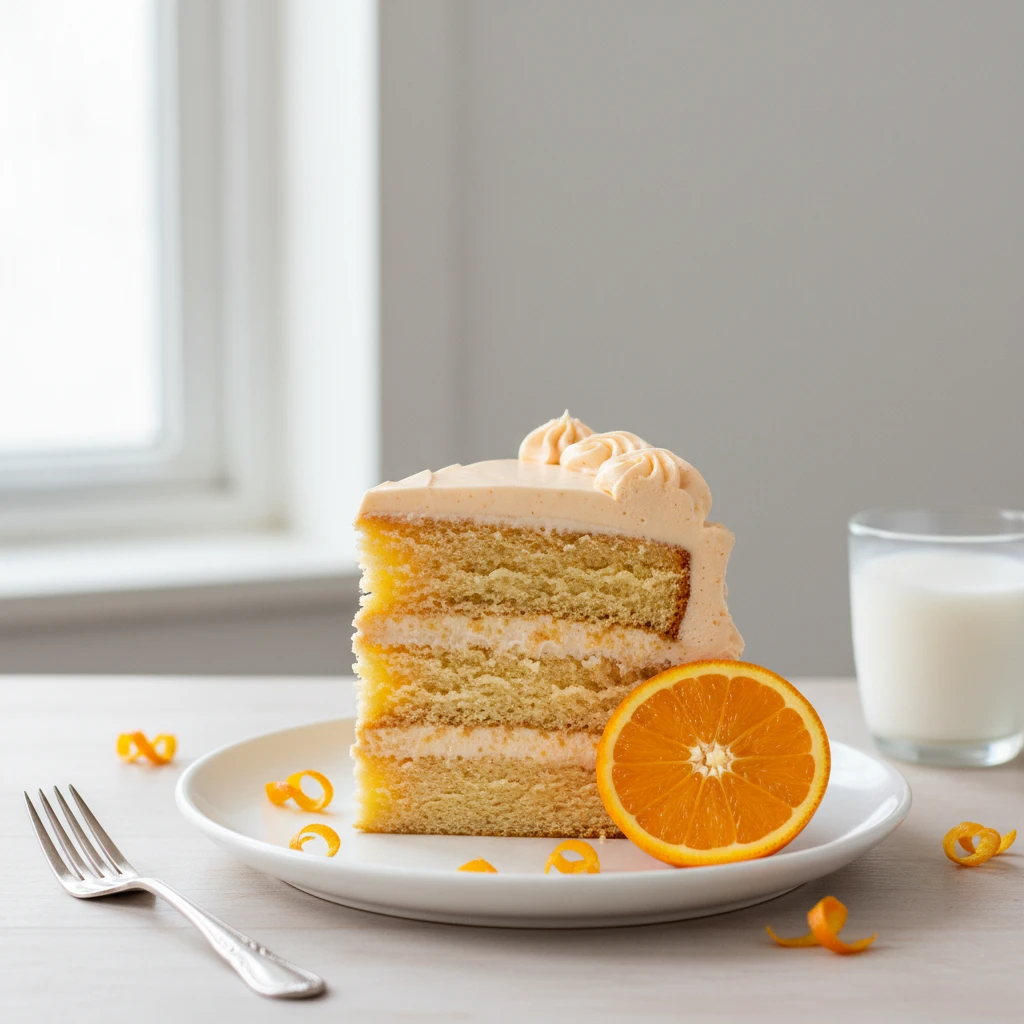
Classic Presentation: Serve chilled slices on white or pale blue plates. Top each slice with a thin wheel of candied orange peel or a fresh orange segment. A small dollop of additional whipped cream on the side complements the cake beautifully.
Elegant Plating: Dust the plate with a light sprinkle of finely grated orange zest before placing the slice. Add a few small mint leaves for a pop of fresh color and a hint of herbaceous balance to the sweet citrus.
Scoop and Serve: Serve generous scoops of the cake with a side of vanilla ice cream or frozen yogurt. The cold creaminess mirrors the original creamsicle treat and adds textural contrast.
Brunch Setting: This cake works beautifully as a brunch dessert. Serve slices with fresh berries, pastry crumbs, or a champagne-infused syrup drizzled on the plate for a sophisticated morning presentation.
Party Plating: For gatherings, arrange multiple slices on a large white platter, garnish with fresh orange slices and zest, and allow guests to serve themselves. This makes for an impressive display.
Complementary Beverages: Pair with sparkling water with orange slices, fresh orange juice, herbal tea, or a light white wine like Sauvignon Blanc. Avoid heavy red wines, which clash with the bright citrus.
Add Texture: Consider serving with a small crispy cookie, shortbread, or candied orange peel on the side for textural contrast to the soft, creamy cake.
 Save
SaveStorage and Reheating
Refrigerator Storage: Store the finished cake covered with plastic wrap or in an airtight container in the refrigerator for up to 3 days. The cream cheese frosting must be kept cold to maintain its structure. Do not leave the cake at room temperature for more than 2 hours.
Freezing Cake Layers: Unfrosted, cooled cake layers can be wrapped individually in plastic wrap and frozen for up to 1 month. Thaw at room temperature for 2-3 hours before frosting and assembling.
Freezing Frosted Cake: A fully frosted and assembled cake can be frozen for up to 2 weeks. Wrap the entire cake in plastic wrap, then place in an airtight container. Thaw in the refrigerator overnight before serving.
Not Recommended for Room Temperature Storage: Due to the cream cheese frosting, this cake should never be left unrefrigerated for extended periods. The frosting will become unstable and may separate or weep.
Slicing Tip: For clean slices, dip a sharp serrated knife in hot water and wipe dry between each cut. The warm blade melts through the frosting without dragging.
Individual Portions: Wrap individual slices tightly in plastic wrap and freeze for up to 2 weeks. Thaw in the refrigerator for 30-60 minutes before eating.
Frequently Asked Questions about Orange Creamsicle Cake
Can I make this cake without orange liqueur?
Absolutely! Orange liqueur is optional and adds only subtle flavor. Simply omit it and replace it with an equal amount of fresh orange juice in the frosting. The cake will taste equally delicious without any alcohol.
What’s the best way to store this cake since the frosting is cream cheese-based?
This cake must be refrigerated due to the cream cheese frosting. Store it covered with plastic wrap in the refrigerator for up to 3 days. Unlike buttercream cakes, it should never sit at room temperature for more than 2 hours, or the frosting will begin to weep and separate.
Can I substitute the sour cream with Greek yogurt or regular yogurt?
Yes! Greek yogurt works well as a 1:1 substitute for sour cream. It will make the cake slightly less tangy and a bit more tender. Plain regular yogurt can also work, though the texture may be slightly different. Avoid flavored yogurts, which will add unwanted sweetness.
How can I make sure my cake layers are level so they stack evenly?
Use cake strips (fabric strips that wrap around pans) to prevent dome formation during baking. Alternatively, after the cakes cool, use a serrated bread knife to carefully trim any domed tops level. Place the cake on a turntable, position the knife parallel to the top, and gently saw off the dome. This takes practice, so start slowly.
My frosting seems too thin and won’t hold its shape. What should I do?
This happens when cream cheese is too warm or whipped cream was over-beaten. Try chilling the frosting for 15-20 minutes in the refrigerator to firm it up. If the issue persists, start over with cold cream cheese straight from the refrigerator and stop beating the whipped cream the moment stiff peaks form—not a second longer.
Can I use bottled orange juice instead of fresh?
Fresh-squeezed is always best, but high-quality bottled orange juice can work in a pinch. Avoid juice with added preservatives or from concentrate if possible, as these can muddy the bright flavor. Do not use orange juice from a carton that has been open for several days, as the flavor deteriorates.
Is this cake suitable for making ahead for a special event?
Yes, partially! Bake the cake layers 1 day ahead and store them wrapped in plastic wrap at room temperature. Make the frosting no more than 8 hours before assembling. Assemble the final cake 4-6 hours before serving and keep it refrigerated. Do not assemble more than 6 hours ahead, as the frosting may begin to separate.
What if I want to make a larger cake with more servings?
This recipe makes one two-layer 9-inch cake (8-10 servings). To make a three-layer cake, divide the batter among three 8-inch pans and bake for 22-25 minutes. You’ll need to make 1.5 times the frosting recipe. Alternatively, make two complete cakes side by side for a big celebration.
Nutrition Facts (Per Serving)
| Nutrient | Amount |
|---|---|
| Calories | 385 kcal |
| Total Fat | 18g |
| Saturated Fat | 11g |
| Cholesterol | 92mg |
| Sodium | 245mg |
| Total Carbohydrates | 52g |
| Dietary Fiber | 0g |
| Sugars | 38g |
| Protein | 4g |
*Percent Daily Values are based on a 2,000 calorie diet. Your daily values may be higher or lower depending on your calorie needs. Nutrition facts are approximate and calculated using standard USDA ingredients and typical serving sizes.
Orange Creamsicle Cake
Ingredients
- 2 1/4 cups all-purpose flour
- 2 1/2 teaspoons baking powder
- 1/2 teaspoon baking soda
- 1/2 teaspoon salt
- 3/4 cup unsalted butter softened
- 1 1/2 cups granulated sugar
- 3 large eggs room temperature
- 1 cup sour cream room temperature
- 1/2 cup fresh orange juice
- 2 tablespoons orange zest
- 1 teaspoon vanilla extract
- 2 cups heavy whipping cream
- 8 ounces cream cheese softened
- 1/2 cup powdered sugar
- 1 teaspoon vanilla extract
- 2 tablespoons orange liqueur or additional orange juice
- 1 tablespoon orange zest for garnish
- Fresh orange slices for garnish
Instructions
- Prepare pans: Preheat your oven to 350°F. Butter two 9-inch round cake pans thoroughly, dust with flour, and place a parchment paper round in the bottom of each. This prevents sticking. Set pans aside.
- Mix dry ingredients: In a medium mixing bowl, whisk together 2 1/4 cups all-purpose flour, 2 1/2 teaspoons baking powder, 1/2 teaspoon baking soda, and 1/2 teaspoon salt. Set aside. Checkpoint: You should see an even, pale mixture with no lumps.
- Cream butter and sugar: In a large mixing bowl, beat 3/4 cup softened unsalted butter and 1 1/2 cups granulated sugar together on medium speed for 3 minutes until the mixture looks pale, fluffy, and resembles frosting. Checkpoint: The mixture should have increased in volume by about half and look creamy, not grainy.
- Add eggs: Add 3 room-temperature eggs one at a time to the butter mixture, beating well after each egg is added (about 30 seconds per egg). The mixture should be smooth and creamy after each addition. Checkpoint: All eggs should be fully incorporated with no streaks of egg white visible.
- Alternate wet and dry ingredients: Working in batches, add one-third of the flour mixture to the butter mixture, beating on low speed for about 30 seconds until just combined. Then add half of the sour cream (1/2 cup), beat for 30 seconds. Repeat: another third of flour, remaining sour cream, final third of flour. Do not overmix. Checkpoint: The batter should be smooth and thick, with no visible streaks of flour.
- Add citrus and vanilla: Pour in 1/2 cup fresh orange juice slowly while beating on low speed (about 30 seconds). Add 2 tablespoons orange zest and 1 teaspoon vanilla extract, mixing until just combined. The batter will be slightly thinner than before. Checkpoint: The batter should be smooth, slightly pourable, and smell strongly of orange.
- Fill pans: Divide the batter evenly between the two prepared pans (about 2 cups per pan). Use an offset spatula to smooth the tops so they're level. This helps the cakes bake evenly.
- Bake cakes: Place pans on the middle oven rack and bake for 25-30 minutes. The cakes are done when a toothpick inserted in the center comes out clean or with just a few crumbs, and the edges pull slightly away from the pan sides. The tops should spring back when lightly touched. Checkpoint: A toothpick inserted in the thickest part should not have wet batter on it.
- Cool in pans: Remove pans from oven and let cool at room temperature for 15 minutes. You should see the cakes pull away from the pan edges.
- Turn out cakes: Run a thin knife around the edges of each pan. Place a wire cooling rack on top of a pan and carefully flip it over so the cake falls onto the rack. Remove the pan and parchment paper. Repeat with the second cake. Let both layers cool completely at room temperature, about 1 hour. Checkpoint: Cakes should be cool to the touch before frosting.
- Prepare heavy cream: Pour 2 cups heavy whipping cream into a large mixing bowl and beat on high speed for 2-3 minutes until stiff peaks form. The cream should look fluffy and hold its shape. Transfer to a separate bowl and refrigerate. Checkpoint: Peaks should stand up straight when you lift the beaters.
- Beat cream cheese: In a large clean bowl, beat 8 ounces softened cream cheese (should be room temperature for smooth mixing) with 1/2 cup powdered sugar on medium speed for 1-2 minutes until smooth and fluffy. Do not overmix. Checkpoint: Mixture should be creamy with no lumps of cream cheese visible.
- Add vanilla and orange liqueur: Add 1 teaspoon vanilla extract and 2 tablespoons orange liqueur (or additional orange juice) to the cream cheese mixture. Beat on low speed for 30 seconds until smooth. Checkpoint: The frosting should be thin enough to fold but still hold some structure.
- Fold in whipped cream: Gently fold the whipped cream into the cream cheese mixture in two additions using a rubber spatula. Fold slowly and carefully to keep the frosting light and fluffy. Fold until just combined—do not overmix or the frosting will deflate. Checkpoint: The frosting should look light, fluffy, and pale orange-tinted, without streaks of white cream visible.
- Assemble cake: Place one cooled cake layer on a flat serving plate or cake board. Using an offset spatula, spread a layer of frosting about 1/4 inch thick on top. Checkpoint: The frosting should cover the entire top layer evenly.
- Stack second layer: Carefully place the second cake layer on top of the frosting. If the layers are slightly uneven, use frosting to level them.
- Frost sides and top: Spread frosting over the top and sides of the cake in a smooth, even layer (this is called a crumb coat). You may use all remaining frosting. Work slowly and let the spatula do the work. Checkpoint: The entire cake should be covered with a thin, even layer of frosting.
- Garnish: Top the cake with 1 tablespoon fresh orange zest and arrange fresh orange slices around the top for decoration. You can also add a light dusting of zest around the sides if desired.
- Chill and serve: Refrigerate the finished cake for at least 30 minutes (or up to 4 hours) before serving. This firms up the frosting and makes slicing cleaner. Remove from the refrigerator 10 minutes before serving for the best texture and flavor.