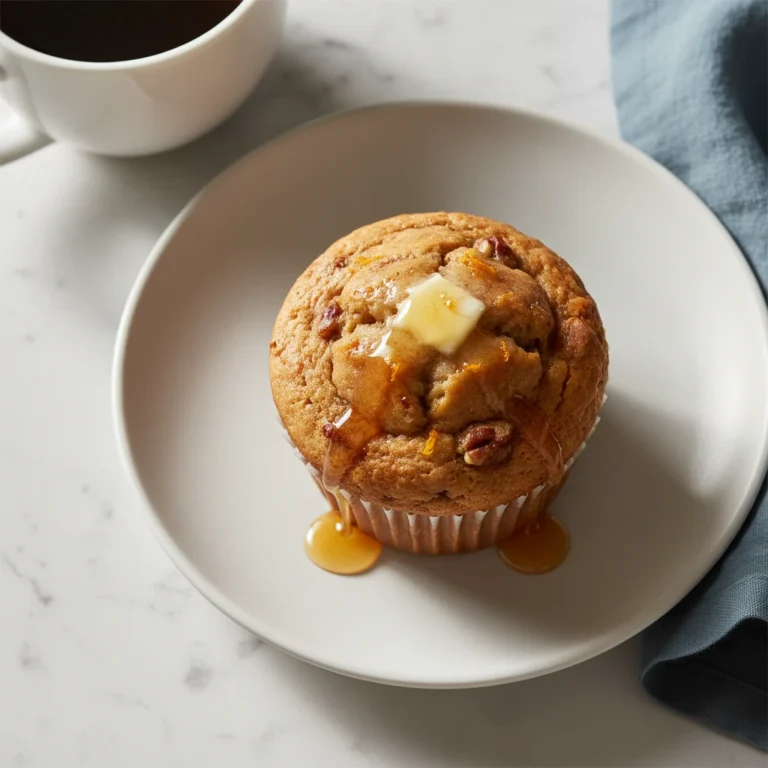
Orange pecan muffins are a delightful breakfast treat that combines bright citrus flavor with the rich, buttery crunch of toasted pecans. These tender, moist muffins strike the perfect balance between wholesome ingredients and indulgent taste, making them ideal for weekday mornings or weekend brunch gatherings. With natural sweetness from orange juice and zest, plus the nutty depth of pecans, these muffins deliver sophisticated flavor that tastes far more complex than the simple ingredients suggest.
Reasons to Try Orange Pecan Muffins
Bright, naturally sweet citrus flavor: Fresh orange zest and juice infuse these muffins with authentic citrus brightness without any artificial flavoring. The natural acidity balances the sweetness perfectly, creating a refreshing breakfast option that feels both indulgent and nutritious.
Tender, moist crumb texture: Greek yogurt keeps the muffin interior incredibly soft and moist while providing extra protein. Unlike dry store-bought muffins, these stay tender for days and don’t require additional frosting or toppings to enjoy.
Nutty depth from pecans: Roughly chopped pecans add satisfying crunch and earthy richness. Pecans contain heart-healthy fats and antioxidants, making these muffins a more nutritious choice than typical bakery versions.
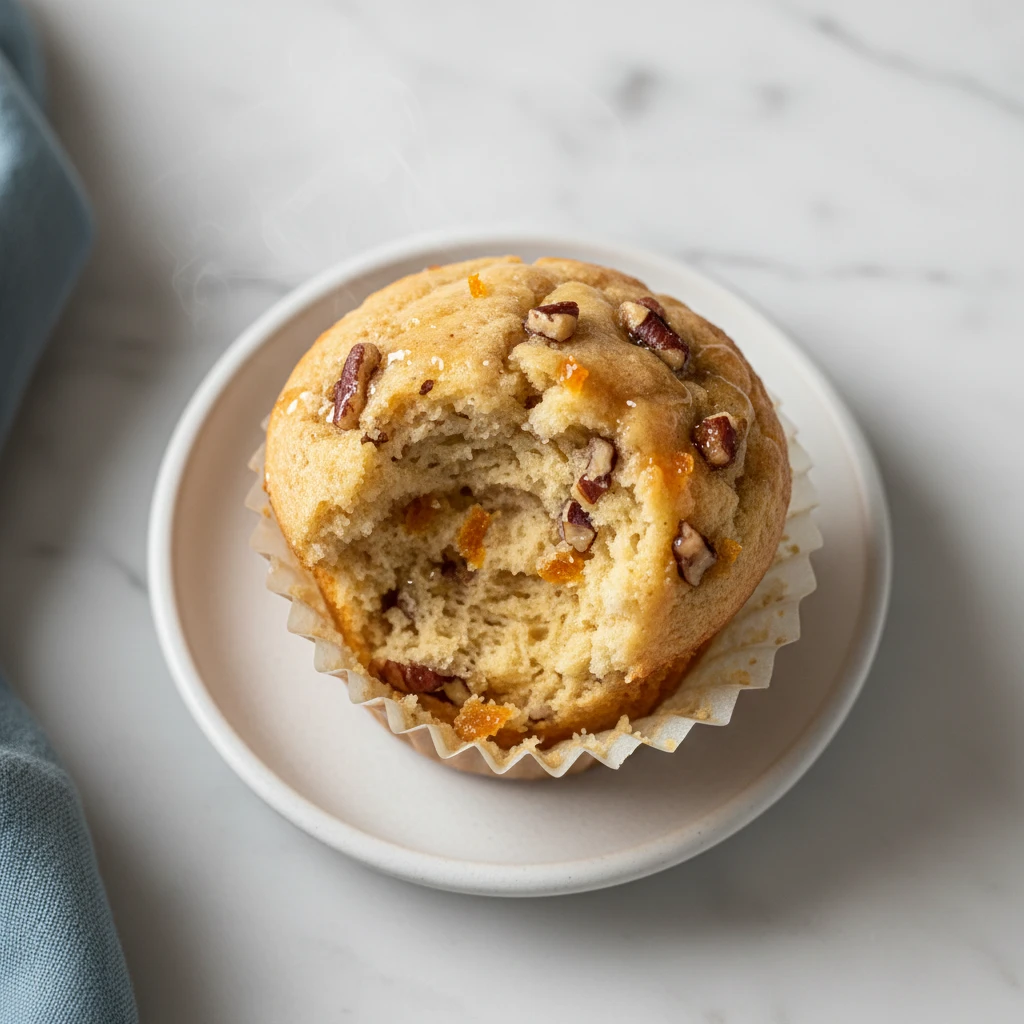
Candied orange peel surprise: Chewy bits of candied orange peel provide concentrated citrus flavor bursts and beautiful visual texture throughout each bite, elevating these muffins beyond basic recipes.
Quick and easy to prepare: Using the simple one-bowl mixing method, these muffins come together in under 15 minutes of prep work. Perfect for busy mornings or when you need a homemade treat without fuss.
Impressive yet approachable: The flavor profile feels bakery-quality and sophisticated, yet the recipe requires no special skills or equipment. Great for beginners and seasoned bakers alike.
 Save
SaveIngredients Notes
- All-purpose flour provides structure and tender crumb
- Baking powder and baking soda work together for proper rise
- Salt enhances all flavors and controls sweetness
- Granulated and brown sugar create moisture and depth
- Unsalted butter allows you to control total salt and provides richness
- Eggs bind ingredients and add structure
- Greek yogurt replaces some liquid fat while adding protein and moisture
- Orange zest provides intense, fresh citrus flavor without bitterness
- Fresh orange juice adds natural sweetness and moisture
- Vanilla extract rounds out and deepens all flavors
- Pecan pieces add crunch, richness, and antioxidants
- Candied orange peel offers chewy texture and concentrated citrus taste
- Honey adds subtle floral sweetness and moisture
How to Make Orange Pecan Muffins
- Preheat oven to 375°F and prepare a 12-cup muffin tin with paper liners or light butter coating.
- Whisk together flour, baking powder, baking soda, and salt in a large mixing bowl.
- In another bowl, cream softened butter with both sugars until light and fluffy, about 2 minutes.
- Beat in eggs one at a time, then add vanilla extract and mix until fully combined.
- Stir in orange zest and candied orange peel, then alternate adding Greek yogurt and orange juice to the wet mixture.
- Gently fold the wet ingredients into the dry ingredients with a spatula until just combined. Do not overmix.
- Fold in pecan pieces until evenly distributed throughout the batter.
- Divide batter evenly among muffin cups, filling each about three-quarters full.
- Sprinkle a small pinch of additional orange zest and a few pecan pieces on top of each muffin.
- Drizzle each muffin with a tiny amount of honey using a small spoon.
- Bake for 22 to 26 minutes until a toothpick inserted in the center comes out clean or with a few moist crumbs attached.
- Cool in the muffin tin for 10 minutes, then transfer to a wire rack to cool completely.
What You Must Know About Orange Pecan Muffins
Use fresh citrus: The bright, fresh orange flavor is essential to these muffins’ appeal. Always use fresh-squeezed orange juice and freshly zested orange peel. Bottled juice tastes flat and oxidized, and pre-zested citrus loses its volatile oils quickly. If you must use bottled juice, add 1 tablespoon of orange extract to compensate.
Don’t overmix the batter: This is the most critical step. Overmixing activates gluten in the flour, making the muffins tough, dense, and rubbery. Fold the wet and dry ingredients together just until you see no streaks of dry flour—lumps in the batter are perfectly fine and will smooth out during baking. Aim for about 15 to 20 gentle folds using a spatula.
Room temperature eggs matter: Eggs that are too cold won’t blend smoothly into the butter mixture, potentially causing curdling. Remove eggs from the refrigerator 30 minutes before baking, or place them in warm water for 5 minutes.
Fill muffin cups evenly: If you overfill some cups and underfill others, they’ll bake unevenly. Some will be done while others are still wet inside. Use an ice cream scoop or divide the batter in stages to ensure consistency. Each cup should be about three-quarters full.
Check doneness correctly: A toothpick inserted in the center should come out clean or with just 1 to 2 moist crumbs clinging to it. A completely wet toothpick means they need more time. Some moisture is okay—it keeps muffins tender. A few crumbs are better than overbaked, dry muffins.
Greek yogurt adds protein and moisture: Using full-fat Greek yogurt keeps the muffins incredibly moist and adds protein. Don’t substitute with regular yogurt, which is thinner and may result in a different texture. Avoid non-fat Greek yogurt, which can make muffins dry.
Toast pecans lightly if desired: For deeper, richer pecan flavor, lightly toast the pecan pieces in a 300°F oven for 5 to 7 minutes, stirring halfway through, then cool completely before adding to the batter. This step is optional but recommended for pecan lovers.
Candied orange peel is non-negotiable: This ingredient adds both visual appeal and concentrated citrus flavor. You can find it in the baking aisle or dried fruit section of most grocery stores. Don’t skip it—the regular orange zest alone won’t give you those chewy, flavorful bursts.
The muffins firm up as they cool: Straight from the oven, muffins are tender and delicate. Let them cool in the pan for 10 minutes so they firm up and set before removing. This prevents them from crumbling or breaking apart when you lift them out.
Variations and Substitutions
Lemon Pecan Muffins: Replace the orange zest and orange juice with lemon zest and fresh lemon juice in equal amounts. Skip the candied orange peel or replace it with candied lemon peel. This creates a brighter, more tart muffin with similar structure.
Orange Walnut Muffins: Substitute walnuts for pecans using the same amount. Walnuts have a slightly more earthy, peppery flavor that pairs beautifully with orange. Toast the walnuts lightly first for best results.
Gluten-Free Orange Pecan Muffins: Replace all-purpose flour with a 1:1 gluten-free flour blend. You may need to add 0.25 teaspoon of xanthan gum if your blend doesn’t already contain it (check the package). Bake time may increase slightly—check at 24 minutes and add 2 to 3 minutes if needed.
Orange Blueberry Pecan Muffins: Keep all ingredients the same but add 1 cup fresh or frozen blueberries when you fold in the pecans. If using frozen berries, don’t thaw them—add them directly to the batter so they don’t bleed color.
Dairy-Free Orange Pecan Muffins: Replace the Greek yogurt with dairy-free yogurt (coconut or oat-based works well). Use dairy-free butter instead of regular butter. Use vegan eggs (2 tablespoons aquafaba or a commercial egg replacer) instead of regular eggs. The texture may be slightly different, but the result will be satisfactory.
Orange Pecan Muffins with Cranberry: Add 0.75 cup dried cranberries along with the pecans. The tart cranberries complement the sweet orange beautifully and add chewy texture.
Orange Pecan Streusel-Topped Muffins: Before baking, make a simple streusel topping: combine 0.25 cup rolled oats, 0.25 cup flour, 0.25 cup brown sugar, 3 tablespoons cold butter (diced), and 0.25 cup chopped pecans. Sprinkle this mixture on top of each muffin before baking instead of just the honey and zest.
Vegan Orange Pecan Muffins: Use dairy-free yogurt, dairy-free butter, and 2 tablespoons aquafaba (liquid from a can of chickpeas) per egg. Replace honey with maple syrup. The result is fully plant-based while maintaining moisture and structure.
Serving Suggestions for Orange Pecan Muffins
Classic breakfast pairing: Serve warm orange pecan muffins with a fresh cup of coffee or tea. The citrus and nuts complement both black coffee and herbal teas like chamomile or Earl Grey. Add a small pat of unsalted butter on the side for spreading on the warm muffin.
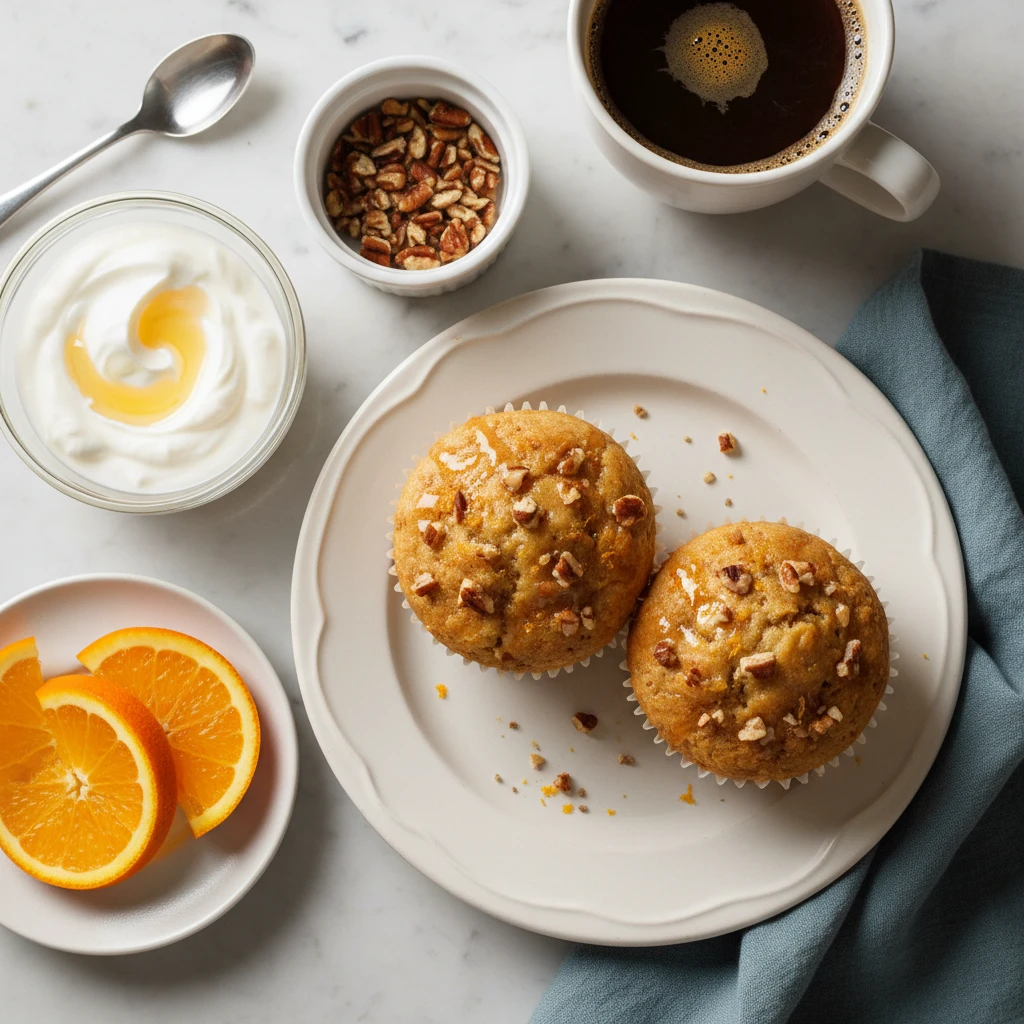
Brunch spread: Arrange muffins on a tiered cake stand alongside fresh citrus fruits (orange slices, grapefruit), Greek yogurt, granola, and honey. This creates an inviting, visually appealing brunch display.
Lunchbox addition: Pack muffins in a container for school or work lunches. They hold up well and taste great at room temperature. Include a napkin and a small container of honey for dipping if desired.
Breakfast with fruit: Serve muffins with fresh berries on the side—blueberries, raspberries, and strawberries all contrast beautifully with the warm orange and pecan flavors. A small spoon of Greek yogurt alongside works well too.
Afternoon tea treat: Serve sliced muffins (cut horizontally) with hot tea in the afternoon. No frosting needed—the muffins are perfect as-is, but a very thin spread of honey butter on each slice is lovely.
Muffin breakfast bowls: Crumble a room-temperature muffin into a bowl of Greek yogurt or cottage cheese along with granola and honey. The muffin pieces add texture while creating a quick, protein-packed breakfast.
Plated dessert style: For a more elegant presentation, serve a warm muffin on a small plate with a dollop of honey-sweetened whipped cream, a drizzle of honey, and a small sprig of fresh mint. A light dusting of powdered sugar adds a bakery-quality touch.
Gifting presentation: Place muffins in a pretty box lined with parchment paper or a small basket wrapped in cellophane tied with a bow. Include a handwritten tag noting that they’re homemade. This makes an excellent gift for friends, neighbors, or coworkers.
 Save
SaveStorage and Reheating
Room temperature storage: Store cooled muffins in an airtight container at room temperature for up to 3 days. Keep them in a single layer or separated by parchment paper to prevent them from squashing each other. The muffins will stay tender and moist due to the Greek yogurt.
Refrigerator storage: Place cooled muffins in an airtight container and refrigerate for up to 5 days. Refrigeration doesn’t dry them out as quickly as room temperature storage, so this is a good option if you bake a full batch and don’t plan to eat them all within 3 days.
Freezer storage: Freeze cooled muffins in a freezer-safe container or freezer bag for up to 3 months. Wrap each muffin individually in parchment paper before placing in the container to prevent freezer burn and make them easy to grab one at a time. Label the container with the baking date.
Thawing frozen muffins: Remove a frozen muffin from the freezer and let it sit at room temperature for 30 to 45 minutes until completely thawed. Alternatively, wrap the frozen muffin in a damp paper towel and microwave it for 30 to 40 seconds until warm. The moist paper towel prevents it from drying out during microwaving.
Reheating room temperature muffins: If muffins have been stored at room temperature and you’d like to eat them warm, wrap one or more in a damp paper towel and microwave for 20 to 30 seconds. Alternatively, place them in a 300°F oven for 8 to 10 minutes, wrapped loosely in foil to prevent the tops from browning too much. The damp paper towel method is quicker but less even; the oven method is more thorough.
Do not refrigerate paper liners: If muffins are still in paper liners, remove them before storing to prevent the paper from absorbing moisture and causing the muffins to stick. Once removed from the liners, they store perfectly in containers.
Staling prevention: To keep muffins as fresh as possible, store them with an apple slice or a small piece of bread in the container. These items have high moisture content and will release it into the container, keeping muffins tender longer. Replace the apple or bread piece if it becomes too dry.
Frequently Asked Questions about Orange Pecan Muffins
Can I make orange pecan muffins without Greek yogurt?
You can substitute Greek yogurt with regular sour cream (use the same amount) or plain regular yogurt (use 1.25 cups to account for its thinner consistency). You could also use 0.5 cup Greek yogurt plus 0.5 cup buttermilk. However, Greek yogurt’s protein content contributes to the muffins’ tender texture, so substitutions may result in a slightly different crumb. The muffins will still turn out well, just with slightly less protein and structure.
How do I get more orange flavor in these muffins?
Use the zest from 3 oranges instead of 2 (you’ll have about 3 tablespoons of zest). You can also add 1 tablespoon of orange extract to the wet mixture for concentrated flavor. Make sure you’re using fresh-squeezed orange juice, not bottled, as fresh juice has much brighter flavor. Additionally, ensure your candied orange peel is fresh and flavorful—old candied peel loses its taste over time.
Why did my muffins turn out dense and heavy?
The most common cause is overmixing the batter. When you mix the dry and wet ingredients together, stir only until you see no streaks of dry flour—lumps are completely fine. Overmixing activates the gluten in the flour, making muffins tough and dense. Another cause could be old baking powder or baking soda (check the expiration date), or filling the muffin cups too full, which causes them to bake unevenly and create a sunken center.
Can I make these muffins ahead of time?
Yes, absolutely. You can prepare the batter up to 4 hours ahead of time and store it in a covered bowl in the refrigerator. When ready to bake, let the batter sit at room temperature for 5 to 10 minutes, then fill the muffin cups and bake as directed (bake time may increase by 1 to 2 minutes since the batter starts cold). You can also bake the muffins a day or two ahead and store them in an airtight container at room temperature or in the refrigerator.
What’s the best way to zest an orange without a zester?
If you don’t have a microplane zester, use a regular box grater—the smallest, finest holes work best. Alternatively, use a vegetable peeler to peel off the thin colored layer of skin (avoiding the white pith), then finely chop it with a knife. You can also grate the orange on a fine grater, which removes the colored zest while leaving the white pith behind. The goal is to get only the colored, fragrant outer layer, not the bitter white pith underneath.
Can I substitute the pecans with other nuts?
Yes, walnuts, almonds, or hazelnuts work well using the same amount. Macadamia nuts are also delicious and create a more luxurious muffin. If using harder nuts like almonds or hazelnuts, chop them slightly smaller so they distribute evenly throughout the batter. Avoid peanuts, as they have a stronger flavor that can overpower the delicate orange taste. Toast your chosen nuts lightly before adding them for deeper, richer flavor.
Do I need to use candied orange peel, or can I skip it?
Candied orange peel adds both flavor and texture, but if you cannot find it or prefer not to use it, you can skip it. However, you’ll lose those concentrated citrus flavor bursts and the attractive visible texture. To compensate, increase the orange zest to 3 tablespoons and add 1 tablespoon of orange extract. The muffins will still taste good but will be slightly less flavorful than the original recipe.
Nutrition Facts (Per Serving)
| Nutrient | Per Serving |
|---|---|
| Calories | 285 |
| Total Fat | 14g |
| Saturated Fat | 5g |
| Cholesterol | 42mg |
| Sodium | 185mg |
| Total Carbohydrates | 38g |
| Dietary Fiber | 2g |
| Sugars | 24g |
| Protein | 6g |
Dietary Notes: Orange pecan muffins provide a good source of protein from Greek yogurt and eggs, making them more satisfying than typical bakery muffins. The pecans contribute heart-healthy monounsaturated fats and antioxidants. Fresh orange provides vitamin C and fiber. These muffins are naturally sweetened without artificial ingredients but are moderate in sugar, making them a better choice than frosted bakery muffins. Each muffin (approximately 85g) serves as a complete breakfast or substantial snack.
Orange Pecan Muffins
Ingredients
- 2 cups all-purpose flour
- 1.5 teaspoons baking powder
- 0.5 teaspoon baking soda
- 0.5 teaspoon salt
- 0.75 cup granulated sugar
- 0.5 cup light brown sugar
- 0.5 cup unsalted butter softened
- 2 large eggs
- 1 cup plain Greek yogurt
- Zest of 2 medium oranges
- 0.5 cup fresh orange juice
- 1 teaspoon vanilla extract
- 1 cup pecan pieces roughly chopped
- 0.25 cup candied orange peel chopped
- 2 tablespoons honey
- 1 tablespoon orange zest for topping
Instructions
- Prep your oven and pans: Preheat your oven to 375°F for 10 minutes. While it heats, line a 12-cup muffin tin with paper liners or lightly coat the cups with butter or cooking spray. This prevents sticking and makes removal easier. Checkpoint: Your oven rack should be in the middle position and your pan is ready when you're ready to add batter.
- Mix dry ingredients: In a large mixing bowl, whisk together 2 cups all-purpose flour, 1.5 teaspoons baking powder, 0.5 teaspoon baking soda, and 0.5 teaspoon salt. Whisk for 30 seconds until evenly combined and no streaks of flour remain. Checkpoint: All dry ingredients are fully combined and evenly distributed.
- Cream butter and sugars: In a separate medium bowl, add 0.5 cup softened unsalted butter (should be soft enough to leave a dent when pressed with your finger), 0.75 cup granulated sugar, and 0.5 cup light brown sugar. Using an electric mixer on medium speed, beat for 2 to 3 minutes until the mixture turns pale yellow, light, and fluffy. You should see visible air bubbles and the texture should look almost like frosting. Checkpoint: The mixture is ready when it's noticeably lighter in color and doubles slightly in volume.
- Add eggs one at a time: Add 1 egg to the butter mixture and beat on medium speed for 30 seconds until fully combined and no yellow streaks show. Add the second egg and beat for another 30 seconds. The mixture should be smooth and creamy. Checkpoint: No visible egg streaks remain and the mixture looks uniform.
- Add vanilla and orange zest: Add 1 teaspoon vanilla extract and the zest from 2 medium oranges (you should have about 2 tablespoons of bright orange zest). Beat for 30 seconds on medium speed. The mixture will look flecked with orange zest. Checkpoint: Vanilla is incorporated and you can see orange zest flecks throughout.
- Add candied orange peel: Stir in 0.25 cup chopped candied orange peel by hand using a wooden spoon or sturdy spatula. Fold it in gently for about 10 seconds until pieces are scattered throughout. Checkpoint: Candied peel is evenly distributed and no clumps remain.
- Alternate wet ingredients carefully: You'll now add the Greek yogurt and orange juice alternately to prevent the mixture from becoming lumpy. This step takes about 1 minute total. Add half of 1 cup Greek yogurt (0.5 cup) and stir on low speed or by hand for 15 seconds until barely combined. Then add half of 0.5 cup fresh orange juice (0.25 cup) and stir for another 15 seconds. Add the remaining yogurt and stir for 15 seconds. Finally, add the remaining orange juice and stir for 15 seconds. The mixture should look smooth and thick but pour-able. Checkpoint: No visible yogurt streaks remain and the batter is creamy and smooth.
- Fold in the dry mixture: Pour the wet mixture into the bowl with the dry ingredients. Using a rubber spatula, gently fold them together by cutting down through the center, across the bottom, and up the side of the bowl. Repeat this motion, rotating the bowl as you go, for about 30 to 40 seconds. Stop as soon as you see no dry flour streaks—this usually takes 15 to 20 folds. Do NOT overmix or you'll have tough, dense muffins. The batter should look lumpy and slightly rough. Checkpoint: No visible dry flour streaks remain, but the batter still looks slightly lumpy and you can see flour streaks if you look closely (this is okay). Do not stir until completely smooth.
- Add pecans: Gently fold in 1 cup roughly chopped pecan pieces using the same folding method for about 20 seconds. Pecans should be scattered throughout but not clumped in one area. Checkpoint: Pecans are evenly distributed throughout the batter and no pockets of only batter or only pecans remain.
- Fill muffin cups: Using an ice cream scoop or spoon, divide the batter evenly among the 12 muffin cups. Each cup should be about three-quarters full (if you fill them too full, they'll overflow as they rise). You can distribute the batter by filling each cup one-quarter full, then going around again for another quarter, then a final quarter—this ensures even distribution. This step takes about 2 minutes. Checkpoint: All cups have the same amount of batter and none are more than three-quarters full.
- Add toppings: Sprinkle a tiny pinch (about 0.25 teaspoon) of additional orange zest onto each muffin top. Then place 5 to 7 pecan pieces on each muffin, pressing them down slightly so they stick to the batter. Finally, use a tiny spoon to drizzle about 0.5 teaspoon of honey onto each muffin top. This takes about 1 minute total. Checkpoint: Each muffin has visible orange zest, pecan pieces, and a light honey drizzle on top.
- Bake the muffins: Place the muffin tin in your preheated 375°F oven on the middle rack. Set a timer for 22 minutes. Bake for 22 to 26 minutes total. You'll know they're done when a toothpick inserted into the center of the largest muffin comes out clean or with only 1 to 2 moist crumbs attached (a few wet crumbs are okay, but if wet batter clings, they need more time). The tops should be golden brown with a slight dome shape. The muffins should smell intensely of orange and pecans. Checkpoint: Toothpick test passes (clean or mostly clean) and tops are golden brown.
- Cool in pan: Remove the muffin tin from the oven (use oven mitts—the tin is very hot) and place it on a heat-safe surface or cooling rack. Let the muffins sit in the tin for exactly 10 minutes. During this time, they'll firm up and be easier to remove without falling apart. Checkpoint: Muffins are cool enough to touch but still warm, and they've set enough to hold their shape.
- Remove from pan: Using your fingertips or a small offset spatula, gently remove each muffin from its cup by lifting from the sides and wiggling slightly if needed. Place each muffin on a wire cooling rack. Cooling racks allow air to circulate underneath, preventing the bottoms from becoming soggy. Let cool for another 15 to 20 minutes on the rack. Checkpoint: All muffins have been removed from the pan without crumbling and are resting on the cooling rack.
- Final cooling: Allow the muffins to cool on the rack for 15 to 20 minutes until just barely warm or completely cooled to room temperature. This is important because the interiors continue to cook slightly during cooling (called carryover cooking), so cooling allows the structure to set completely. Once cooled, they're ready to eat immediately or store for later. Checkpoint: Muffins are cool to the touch and have a set, firm structure.