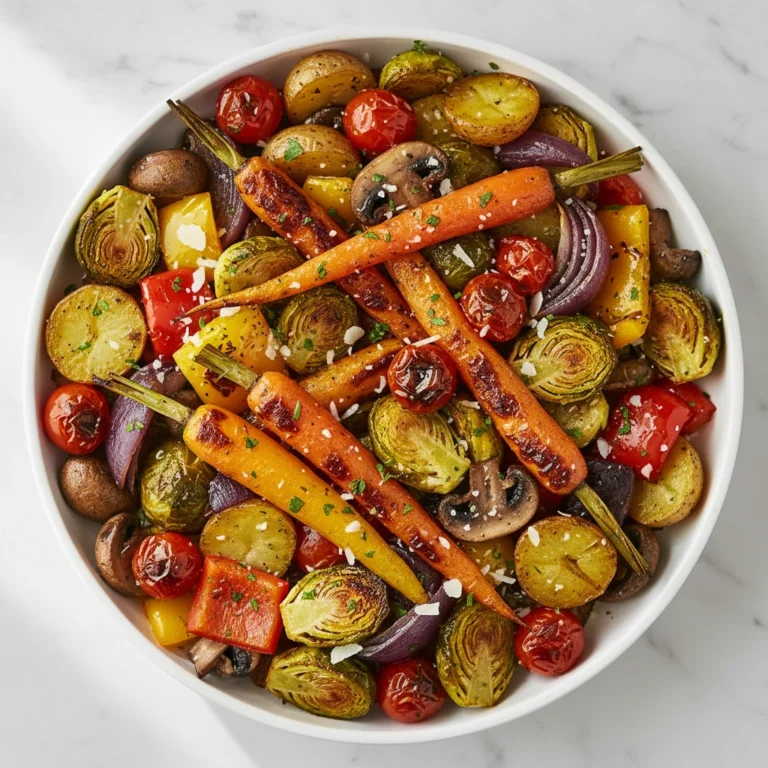
A roasted vegetable medley is the ultimate one-pan side dish that transforms humble vegetables into caramelized, tender-crisp perfection. This colorful medley combines seasonal produce with aromatic herbs and a drizzle of balsamic vinegar to create a naturally vegetarian dish bursting with nutrition and flavor. Perfect for weeknight dinners or holiday gatherings, this recipe delivers impressive results with minimal effort.
Reasons to Try Roasted Vegetable Medley
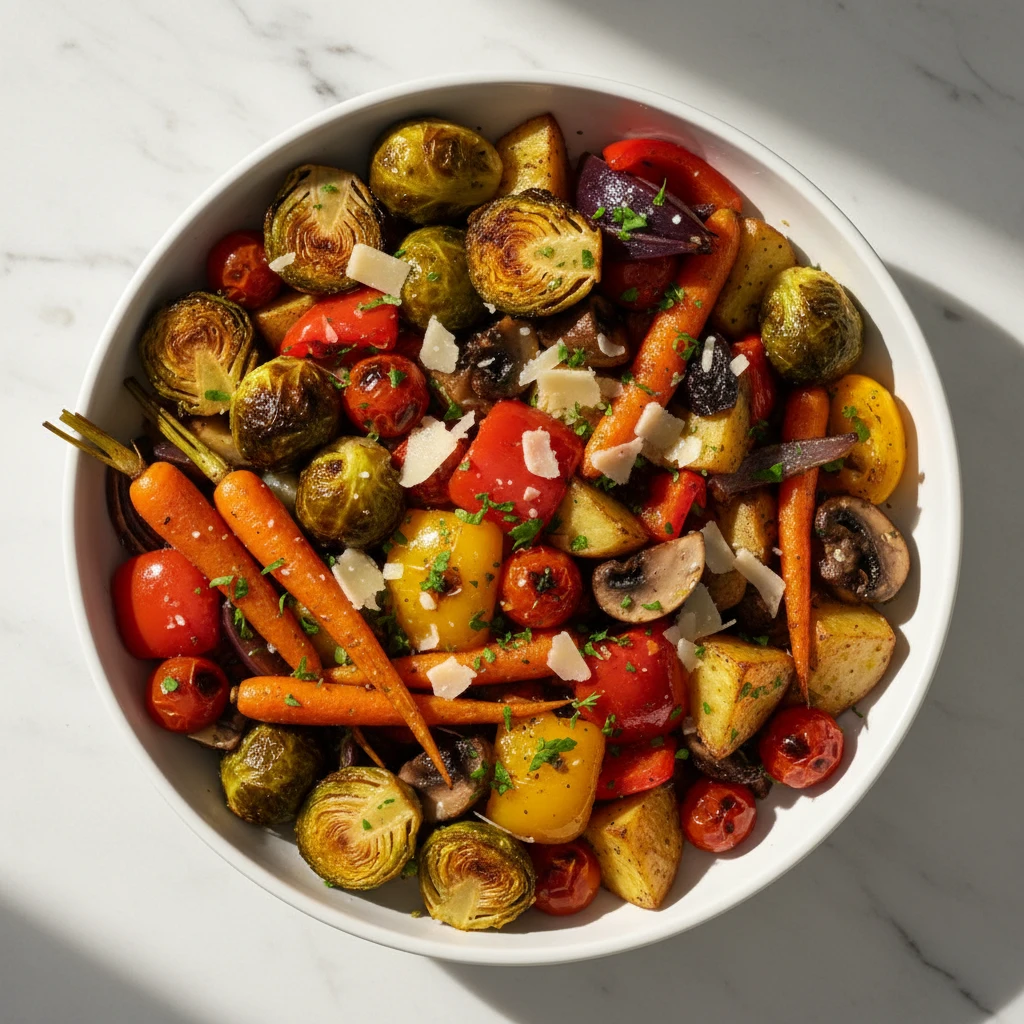
Naturally Colorful and Vibrant: The mix of carrots, Brussels sprouts, bell peppers, tomatoes, and mushrooms creates a stunning rainbow of colors that looks as good as it tastes. Each vegetable brings its own unique flavor profile and texture to the plate.
Easy One-Pan Cooking: Everything roasts together on a single sheet pan, meaning minimal prep and cleanup. Simply toss with olive oil and seasonings, then let the oven do the work while you attend to other tasks.
Naturally Vegetarian and Vegan-Friendly: This side dish is completely plant-based and works for any dietary preference. The Parmesan can be omitted or replaced with nutritional yeast for a vegan version.
Packed with Nutrients: Roasted vegetables retain most of their vitamins and minerals, especially when cooked at high heat. You’re getting fiber, antioxidants, and essential nutrients in every bite.
Caramelized Edges and Deep Flavor: High-heat roasting creates crispy, golden-brown edges while keeping the insides tender. The natural sugars in the vegetables caramelize, intensifying their sweetness and creating complex flavor.
Incredibly Versatile: Serve alongside roasted chicken, fish, steak, or enjoy as a main course over grains. Leftovers can be tossed into salads, grain bowls, or pasta dishes throughout the week.
 Save
SaveIngredients Notes
- Baby carrots, halved lengthwise
- Brussels sprouts, halved
- Baby potatoes, quartered
- Cherry tomatoes
- Red bell pepper, cut into chunks
- Yellow bell pepper, cut into chunks
- Red onion, cut into wedges
- Mushrooms, halved
- Garlic, minced
- Extra-virgin olive oil
- Dried Italian herbs
- Dried thyme
- Garlic powder
- Smoked paprika
- Salt
- Black pepper
- Balsamic vinegar
- Fresh parsley, chopped
- Grated Parmesan cheese
How to Make Roasted Vegetable Medley
- Preheat oven to 425°F and line a large sheet pan with parchment paper or lightly oil it.
- Cut all vegetables into similar-sized pieces, keeping potatoes smallest since they take longest to cook.
- Add all prepared vegetables to a large mixing bowl.
- Drizzle with olive oil and sprinkle with Italian herbs, thyme, garlic powder, smoked paprika, salt, and pepper.
- Toss everything together until vegetables are evenly coated with oil and seasonings.
- Spread vegetables in a single layer on the prepared sheet pan, with the cut sides facing down when possible.
- Roast for 25–30 minutes, stirring halfway through, until vegetables are tender and edges are golden brown.
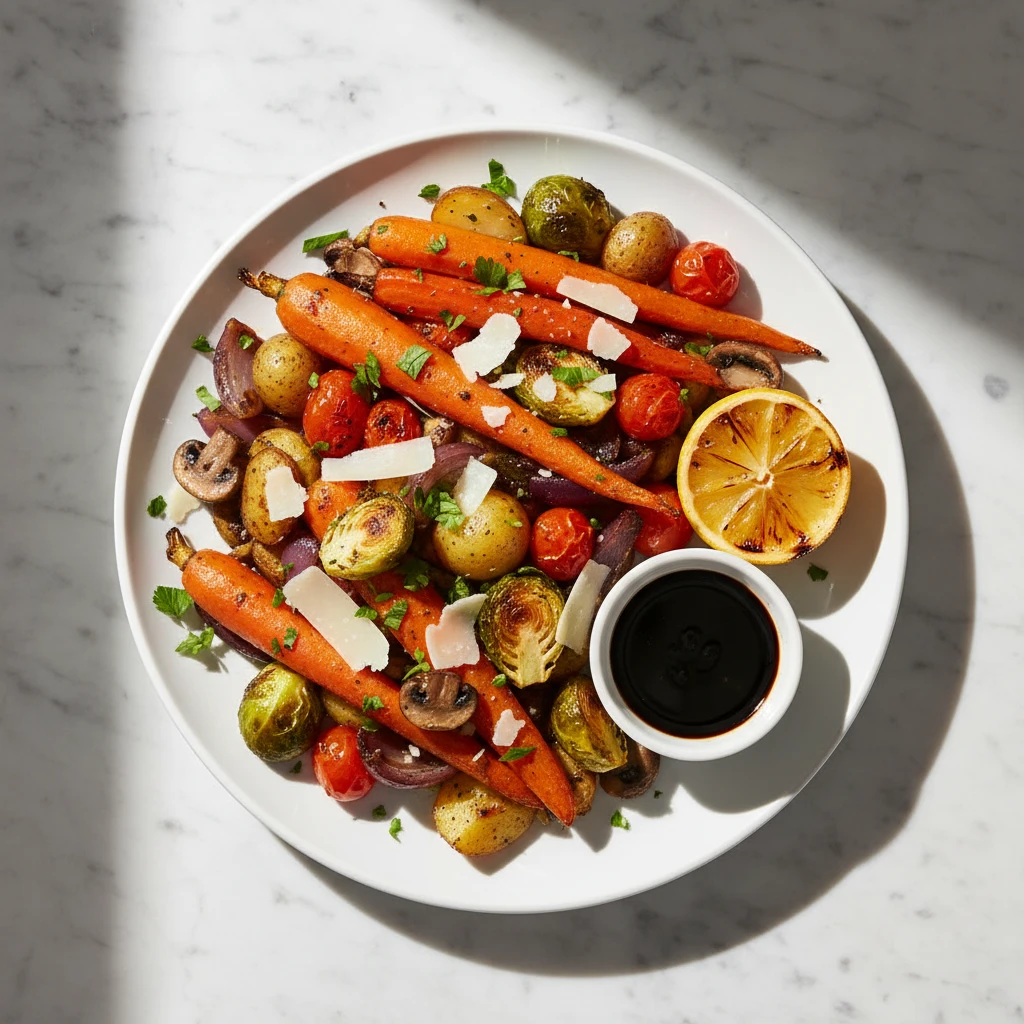
- Remove from oven and drizzle with balsamic vinegar.
- Toss gently to coat, then transfer to a serving dish.
- Garnish with fresh parsley and Parmesan cheese before serving.
What You Must Know About Roasted Vegetable Medley
Cut Vegetables to Similar Sizes: This is the most important tip for even cooking. If some pieces are much larger than others, smaller ones will overcook while larger ones remain raw. Aim for pieces roughly 1 to 1.5 inches in size.
Don’t Overcrowd the Pan: Vegetables need space to roast, not steam. If they’re packed tightly together, they’ll release moisture and won’t develop those gorgeous caramelized edges. Use two sheet pans if necessary.
Use High Heat: A 425°F oven is essential for creating caramelization and browning the vegetable exteriors. Lower temperatures will result in soft, steamed vegetables without the desirable texture.
Stir Halfway Through: Even if you arrange cut-sides down initially, stirring at the midpoint ensures all sides get exposure to direct heat and brown evenly.
Potatoes Cook Slower: Baby potatoes are the slowest ingredient here. Cut them smaller than other vegetables, or if using regular potatoes, consider par-boiling them for 5 minutes before roasting to ensure they finish at the same time as everything else.
Pat Vegetables Dry: Any excess moisture on vegetables prevents proper browning and caramelization. After washing, pat them dry with paper towels before tossing with oil.
Season at the End Too: Taste the roasted vegetables and add extra salt or pepper if needed. High heat cooking can sometimes mute seasonings, so a final seasoning adjustment often improves flavor.
Helpful Tips:
Make it Spicy: Add 0.25 to 0.5 teaspoon red pepper flakes or cayenne pepper to the oil mixture for a kick of heat that complements the natural sweetness of roasted vegetables.
Add Nuts for Crunch: After roasting, toss in 0.25 cup toasted pine nuts, sliced almonds, or walnuts for added texture and richness.
Drizzle with Tahini: Instead of or in addition to balsamic vinegar, drizzle with a mixture of tahini, lemon juice, and a touch of water for a creamy, tangy finish.
Prepare Ahead: Cut vegetables and store in an airtight container in the refrigerator for up to 2 days. Mix the oil and seasonings together separately. Combine just before roasting for maximum freshness.
Variations and Substitutions
Seasonal Vegetable Swaps: Use whatever vegetables are in season. Spring options include asparagus, new potatoes, and snap peas. Summer brings zucchini, summer squash, and green beans. Fall is perfect for root vegetables like beets, turnips, and parsnips. Winter works well with cauliflower, broccoli, and cabbage wedges.
Protein Additions: While delicious as-is, add roasted chickpeas (tossed with the same spices), cubed tofu, or crumbled tempeh for a heartier main dish.
Mediterranean Version: Replace Italian herbs with oregano, add Kalamata olives, sun-dried tomatoes, and finish with crumbled feta cheese and a squeeze of fresh lemon juice instead of balsamic vinegar.
Asian-Inspired: Use sesame oil instead of olive oil, add ginger and soy sauce to the seasonings, top with sesame seeds and sliced green onions, and drizzle with rice vinegar instead of balsamic.
Herb-Forward Version: Increase fresh herbs by adding fresh basil, oregano, or thyme directly to the vegetables before roasting, or use fresh herb blends in place of dried.
Balsamic-Free Option: Use red wine vinegar, apple cider vinegar, or even fresh lemon juice for a brighter finish if you prefer not to use balsamic.
Vegan Version: Omit Parmesan cheese entirely, or replace with nutritional yeast for a similar savory flavor without any animal products.
Lower-Carb Variation: Reduce or omit potatoes and increase low-carb vegetables like Brussels sprouts, cauliflower, mushrooms, and bell peppers.
Serving Suggestions for Roasted Vegetable Medley
Alongside Roasted Proteins: Serve with roasted chicken breast, herb-roasted salmon, or grilled steak. The vegetables’ natural umami and slight acidity complement grilled or roasted meats beautifully.
Over Grains: Create a satisfying grain bowl by spooning roasted vegetables over quinoa, farro, wild rice, or brown rice. Add a drizzle of tahini sauce or olive oil for extra richness.
With Creamy Dips: Serve as an appetizer with hummus, ranch dip, or a yogurt-based dipping sauce for entertaining.
Mixed Into Pasta: Toss warm roasted vegetables into cooked pasta with olive oil, garlic, and fresh herbs for a simple pasta primavera.
In Grain Bowls: Layer with cooked grains, leafy greens, and a protein for customizable Buddha bowls or Mediterranean plates.
Salad Topper: Serve warm or at room temperature over mixed greens, adding nuts and a vinaigrette for a hearty roasted vegetable salad.
Sandwich or Wrap Filling: Cool the roasted vegetables and use them as a filling for sandwiches, wraps, or pita pockets with fresh greens and hummus.
Garnish Ideas: Fresh herbs like parsley, basil, or cilantro add color and freshness. Toasted nuts, seeds (pumpkin, sunflower, sesame), crumbled cheese, or a squeeze of fresh lemon brighten the dish.
Temperature Serving: Serve hot straight from the oven for maximum caramelization and tenderness, or allow to cool to room temperature for a lighter, refreshing version perfect for warm days or packed lunches.
 Save
SaveStorage and Reheating
Refrigerator Storage: Store cooled roasted vegetables in an airtight container in the refrigerator for up to 4 days. They’ll stay fresh and can be eaten cold, at room temperature, or reheated.
Freezer Storage: Roasted vegetables freeze well for up to 3 months. Place cooled vegetables in a freezer-safe container or freezer bag, removing as much air as possible to prevent freezer burn. Label with the date.
Reheating Methods: For best results, reheat in a 375°F oven for 8–10 minutes until warmed through, which helps restore some of the crispy texture. Alternatively, reheat in a skillet over medium heat for 5–7 minutes, stirring occasionally. Microwave reheating is fastest (2–3 minutes on high) but may result in softer vegetables.
Serving Leftovers: Cold or room-temperature roasted vegetables are excellent in grain bowls, salads, pasta dishes, sandwiches, or eaten straight from the container as a snack. They pair well with hummus, ranch dip, or any sauce you enjoy.
Prevent Sogginess: If you added balsamic vinegar before storing, the vegetables may absorb extra moisture. For longer storage, add the vinegar just before serving rather than immediately after roasting.
Frequently Asked Questions about Roasted Vegetable Medley
Can I prepare the vegetables ahead of time?
Yes, you can cut vegetables several hours or even a day ahead. Store them in an airtight container in the refrigerator. However, avoid tossing with oil and seasonings until just before roasting, as this can cause the vegetables to release moisture and become less likely to caramelize. You can mix the oil and seasonings separately and combine everything just before placing in the oven.
What temperature and time should I use?
Roast at 425°F for 25–30 minutes total, stirring halfway through at the 15-minute mark. The exact time depends on your oven and how finely you cut the vegetables. Vegetables are done when they’re fork-tender and the edges are golden brown or slightly caramelized. If your oven runs cool, add 5 minutes; if it runs hot, check at 20 minutes.
Can I make this recipe vegan?
Absolutely! The recipe is already plant-based except for the Parmesan cheese topping. Simply omit the Parmesan entirely, or replace it with 0.25 cup nutritional yeast, which adds a similar savory, cheesy flavor without any animal products.
What if I don’t have all these vegetables?
Use any vegetables you have on hand! Good options include broccoli, cauliflower, zucchini, yellow squash, green beans, asparagus, beets, turnips, parsnips, and fennel. Aim for about 8–9 cups total of cut vegetables. The cooking time may vary slightly depending on the vegetables’ density and size, so adjust accordingly.
How do I prevent the vegetables from steaming instead of roasting?
The key is not overcrowding the pan and ensuring vegetables have space between them. Use a large sheet pan (18×13 inches minimum) and arrange vegetables in mostly a single layer. If needed, use two pans. Also, make sure your oven is fully preheated to 425°F before adding vegetables, and use high heat to promote browning rather than steaming.
Can I add this to a salad?
Yes! Roasted vegetables make an excellent warm or room-temperature salad. Toss them with fresh greens, add nuts or seeds, and dress with a simple vinaigrette or your favorite dressing. They’re especially good in grain salads with quinoa, farro, or wild rice.
Why aren’t my vegetables browning properly?
Several factors can prevent proper browning: overcrowding the pan, vegetables cut too large, oven temperature too low, or vegetables too wet. Ensure vegetables are patted dry, cut into similar small pieces, spread in a single layer with space between them, and use an oven thermometer to verify you’re at 425°F.
Can I roast these vegetables at a lower temperature for a longer time?
You can, but the results will be different. Lower temperatures (375°F) will take longer (40–50 minutes) and won’t develop the same caramelized, crispy edges that make this dish special. High heat is recommended for optimal texture and flavor. If you must use lower heat, increase cooking time and accept softer, less browned vegetables.
Nutrition Facts (Per Serving)
| Nutrient | Amount Per Serving |
|---|---|
| Calories | 245 kcal |
| Total Fat | 14g |
| Saturated Fat | 2.5g |
| Monounsaturated Fat | 9g |
| Cholesterol | 2mg |
| Sodium | 285mg |
| Total Carbohydrates | 28g |
| Dietary Fiber | 6g |
| Sugars | 9g |
| Protein | 8g |
| Vitamin A | 185% DV |
| Vitamin C | 95% DV |
| Potassium | 680mg (14% DV) |
| Iron | 2.5mg (14% DV) |
| Calcium | 125mg (10% DV) |
Percent Daily Values (DV) are based on a 2,000 calorie diet. Your daily values may be higher or lower depending on your calorie needs. This nutritional information is an estimate and may vary based on specific ingredient brands and preparation methods used.
Roasted Vegetable Medley
Ingredients
- 2 cups baby carrots halved lengthwise
- 2 cups Brussels sprouts halved
- 1.5 cups baby potatoes quartered
- 1.5 cups cherry tomatoes
- 1 red bell pepper cut into 1-inch chunks
- 1 yellow bell pepper cut into 1-inch chunks
- 1 red onion cut into 1-inch wedges
- 8 ounces mushrooms halved
- 4 cloves garlic minced
- 5 tablespoons extra-virgin olive oil
- 2 teaspoons dried Italian herbs
- 1 teaspoon dried thyme
- 1 teaspoon garlic powder
- 0.5 teaspoon smoked paprika
- Salt to taste
- Black pepper to taste
- 2 tablespoons balsamic vinegar
- 1 tablespoon fresh parsley chopped
- 0.25 cup grated Parmesan cheese
Instructions
- Preheat your oven to 425°F for 10 minutes while you prepare the vegetables. Line a large sheet pan (about 18x13 inches) with parchment paper or lightly brush it with oil.
- Wash all vegetables thoroughly. Cut baby carrots in half lengthwise, halve Brussels sprouts, quarter baby potatoes into roughly 1-inch pieces, leave cherry tomatoes whole, cut bell peppers into 1-inch chunks, cut red onion into 1-inch wedges, and halve mushrooms. Aim for similar sizes so everything cooks evenly — about 2–5 minutes total cutting time.
- Checkpoint: You are ready to move on when all vegetables are cut into similar sizes.
- Place all cut vegetables in a large mixing bowl. Add 5 tablespoons olive oil, 2 teaspoons Italian herbs, 1 teaspoon thyme, 1 teaspoon garlic powder, 0.5 teaspoon smoked paprika, and salt and black pepper to taste — about 0.5 teaspoon each to start.
- Using a large spoon or your hands, toss everything together for 1–2 minutes until all vegetables are evenly coated with oil and seasonings look distributed throughout. Every piece should glisten slightly.
- Checkpoint: You are ready to move on when all vegetables appear evenly coated with oil and seasonings are no longer clumpy.
- Spread the coated vegetables in a single layer on your prepared sheet pan. Try to place larger pieces like Brussels sprouts and potatoes cut-side down first, as this helps them caramelize. Don't crowd the pan — if needed, use two pans. Vegetables should be in mostly one layer with minimal overlap.
- Place the sheet pan on the middle oven rack and roast at 425°F for 15 minutes without stirring. After 15 minutes, use a large spoon to stir and flip the vegetables so they brown evenly on all sides — about 1–2 minutes.
- Return to oven and roast for another 10–15 minutes until vegetables are fork-tender inside and edges are deeply golden brown (some caramelized spots are perfect). The Brussels sprouts and potatoes should be the doneness indicator — they're done when a fork pierces them easily.
- Checkpoint: You are ready to move on when vegetables are tender and have golden-brown or lightly caramelized edges.
- Remove the sheet pan from the oven and immediately drizzle 2 tablespoons balsamic vinegar evenly over all vegetables — about 5 seconds. Toss gently with a spoon for 1 minute, letting the vinegar coat everything and sizzle slightly from the residual heat.
- Transfer vegetables to a serving dish or platter using a spatula. Sprinkle 1 tablespoon chopped fresh parsley and 0.25 cup grated Parmesan cheese over the top. Serve immediately while still warm.
- Troubleshooting Tips:If vegetables aren't browning enough at the 15-minute mark, they may be too crowded or cut too large — spread them further apart for remaining cook time.
- If potatoes are still hard after 25 minutes, cut them into smaller pieces next time or start them 5 minutes before adding other vegetables.
- If edges are burning but centers are soft, lower oven temperature to 400°F and add 5 minutes cooking time.
- If vegetables are too watery, pat them dry with paper towels before tossing with oil — excess moisture prevents caramelization.
- If balsamic vinegar makes vegetables soggy, add it just before serving rather than mixing it in early.