
There’s something undeniably magical about a slice of simple lemon pie. This classic dessert combines a buttery crust with a silky, tangy filling that practically melts on your tongue. The beauty of this recipe lies in its simplicity—no elaborate techniques or hard-to-find ingredients required. With just basic pantry staples and fresh lemon juice, you can create a showstopping pie that tastes like it came from a professional bakery. Perfect for summer gatherings, holiday tables, or whenever you crave a bright, refreshing dessert.
Reasons to Try Simple Lemon Pie
This simple lemon pie is a timeless dessert that deserves a permanent spot in your baking rotation. Here’s why you’ll love it:
- Bright, Tangy Flavor: The zesty lemon filling delivers a perfect balance of sweet and sour, never overwhelming your palate. Each bite feels fresh and light.
- Creamy, Silky Texture: Unlike thick, custard-heavy pies, this filling is smooth and cloud-like, almost custard-like as it bakes. It has an elegant, restaurant-quality consistency.
- Minimal Ingredients: You won’t need exotic ingredients or specialized equipment. Everything in your pantry will work perfectly for this recipe.
- Quick to Prepare: With no need for pre-baking or complex steps, you can have this pie in the oven in under 20 minutes of active work.
- Impressive Presentation: Despite its simplicity, this pie looks elegant and professional—perfect for impressing guests or family.
- Versatile Serving: Serve it warm, chilled, with whipped cream, or dusted with powdered sugar. It works for any occasion.
- Budget-Friendly: Lemons are affordable year-round, making this an economical yet luxurious-tasting dessert.
 Save
SaveIngredients Notes
- Pre-made pie crust: Use quality frozen or fresh crust from the bakery section for best results. Homemade all-butter crust also works beautifully.
- All-purpose flour: Acts as a thickener for the filling without making it heavy or starchy.
- Granulated sugar: Balances the tartness of lemon juice. Don’t reduce this amount or the pie will be too sour.
- Eggs: They give structure and richness to the custard-like filling. Use room-temperature eggs for best mixing.
- Fresh lemon juice: Bottled juice works in a pinch, but freshly squeezed juice delivers superior bright flavor. Roll lemons before cutting to release more juice.
- Lemon zest: The outermost yellow portion of the peel. Avoid the bitter white pith underneath. A microplane grater gives the finest zest.
- Melted butter: Adds richness and helps create a silky, luxurious texture. Unsalted butter lets you control the salt level.
- Salt: Enhances the lemon flavor and balances sweetness. Use fine sea salt or table salt.
- Whole milk: Creates a smooth filling. If using evaporated milk, reduce amount to 3/4 cup for denser texture.
- Powdered sugar: Optional garnish that adds visual elegance and a touch of sweetness to each slice.
How to Make Simple Lemon Pie
- Preheat your oven to 350°F. Place the pie crust in a 9-inch pie pan, fluting the edges if desired.
- In a large mixing bowl, whisk together flour, sugar, eggs, lemon juice, lemon zest, melted butter, and salt until smooth and well combined.
- Stir in the milk slowly until the filling is completely smooth with no lumps.
- Pour the filling directly into the unbaked pie crust. Do not pre-bake.
- Bake for 40-45 minutes until the filling is set around the edges but still slightly jiggly in the center when gently shaken.
- Remove from the oven and allow to cool to room temperature on a wire rack (about 1 hour).
- Refrigerate for at least 2 hours before serving. The filling will continue to set as it cools.
- Before serving, dust the top lightly with powdered sugar if desired.
What You Must Know About Simple Lemon Pie
The Most Critical Tip: Do not pre-bake the crust. This pie is meant to bake entirely from scratch—the filling actually thickens as it bakes and would not set properly on a pre-baked crust. Many home bakers make this mistake, resulting in a runny pie.
Doneness is Not a Fully Firm Center: Unlike other custard pies, this filling should have a slight jiggle in the very center when you remove it from the oven. This is correct. As it cools and chills, it will set completely. If you bake until the center is totally firm, the pie will be overcooked and rubbery.
Fresh Lemon Juice is Non-Negotiable: Bottled lemon juice contains preservatives that dull the bright citrus flavor. Fresh squeezed juice makes a noticeable difference. One medium lemon yields about 2-3 tablespoons of juice.
Measure Ingredients Precisely: This is a custard-based filling where ratios matter. Too much milk and the filling won’t set; too little and it will be heavy and dense. Use a kitchen scale for best results, or measure flour and sugar by spooning into measuring cups and leveling off.
Temperature Control: Room-temperature eggs incorporate better into the filling and bake more evenly. Cold eggs can create texture problems. If using eggs straight from the refrigerator, place them in a bowl of warm water for 5 minutes before cracking.
Pie Crust Matters: A quality crust prevents sogginess and provides a professional appearance. If using a homemade crust, dock (prick with a fork) the bottom to prevent it from puffing up.
Helpful Tips
Zesting Technique: Zest the lemon before cutting it in half to juice. Use a microplane grater held at a 45-degree angle, moving it downward over the lemon. This gives fluffy zest without the bitter white pith.
Juice Extraction: Roll lemons firmly on your counter before cutting—this breaks down the internal membranes and releases more juice. For maximum juice, bring lemons to room temperature.
Smoothing the Filling: If you notice lumps after adding the milk, don’t panic. Pour the entire filling through a fine-mesh sieve into a clean bowl. This removes any cooked egg pieces and lumps in seconds.
Prevent Crust Browning: If the crust edges are browning too quickly, cover them with aluminum foil rings or pie shields during baking. This is especially important if your oven runs hot.
Serving Variations: Serve cold with fresh whipped cream, a dollop of crème fraîche, or a scoop of vanilla ice cream. For a fancy presentation, top with candied lemon slices or fresh berries.
Make Ahead: This pie improves after 24 hours as flavors meld. Bake it the day before serving for best results.
Variations and Substitutions
Key Lime Pie: Replace lemon juice with fresh key lime juice and lemon zest with lime zest. Use the same quantities. Key lime pie will be slightly sweeter and more tropical in flavor.
Lemon Meringue Topping: After the pie has cooled completely, top with homemade or store-bought meringue. Return to a 350°F oven for 10-12 minutes until the meringue is golden brown and set.
Graham Cracker Crust: Replace the pie crust with a homemade graham cracker crust (1.5 cups crushed graham crackers, 6 tablespoons melted butter, 3 tablespoons sugar, pinch of salt mixed together and pressed into a pie pan). Pre-bake at 350°F for 8 minutes, then add filling and bake as directed.
Honey Lemon Pie: Replace 1/4 cup of the granulated sugar with honey. This adds a subtle floral sweetness and reduces tartness slightly. Whisk the honey in with the butter.
Dairy-Free Version: Substitute the milk with unsweetened almond milk or coconut milk. The filling will be slightly less rich but still delicious. Add 2 tablespoons cornstarch to the flour for better setting.
Orange Pie: Use fresh orange juice and orange zest instead of lemon. This creates a sweeter, less tart pie. Reduce the sugar to 3/4 cup since orange juice is naturally sweeter.
Lemon Custard Pie: Reduce the flour to 1/2 cup and add 2 tablespoons cornstarch. This creates a thinner custard texture. Increase milk to 1.5 cups for a creamier filling.
Lower Sugar Version: Reduce sugar to 3/4 cup and add 1/4 teaspoon of vanilla extract. Use a sugar substitute like erythritol (measure 1:1 with sugar) if desired, though the pie will be noticeably more tart.
Serving Suggestions for Simple Lemon Pie
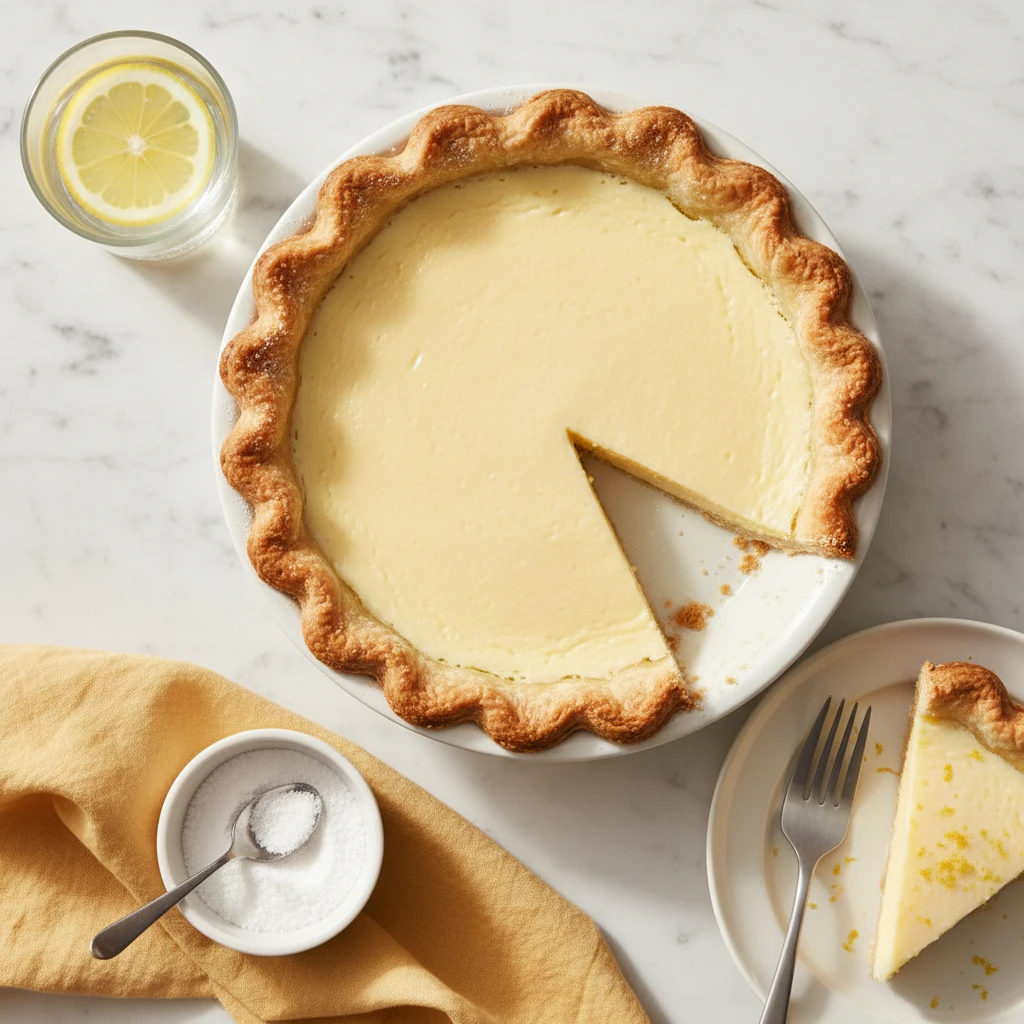
Classic Presentation: Dust the top of the whole pie with powdered sugar just before serving. Cut into 8 equal wedges using a sharp, wet knife wiped between cuts. Serve chilled on white porcelain plates for maximum visual appeal.
With Whipped Cream: Top each slice with a generous dollop of freshly whipped cream. Garnish with a thin lemon wheel or a pinch of lemon zest. The cool, airy cream contrasts beautifully with the creamy-custard filling.
With Fresh Berries: Arrange fresh raspberries, blueberries, or strawberries around each slice. The tartness of berries complements the lemon flavor perfectly and adds color and texture.
With Crème Fraîche: Dollop tart crème fraîche on the side of each slice. This adds elegance and a slight tang that enhances the lemon flavor without overwhelming it.
With Vanilla Ice Cream: Serve warm pie (cooled just enough to handle) alongside a scoop of premium vanilla ice cream. The heat-cold contrast creates a luxurious eating experience, and the ice cream melts into the custard beautifully.
Candied Lemon Topping: Make thin candied lemon slices as a garnish. Toss 1 lemon (sliced thin) with 1 cup sugar and 1 cup water; simmer 45 minutes until translucent. Dry on parchment paper. Arrange on top of each slice for an elegant presentation.
Tea Pairing: Serve with hot Earl Grey or chamomile tea for an afternoon gathering. The botanical notes of the tea complement the bright lemon flavor.
Summer Dessert Spread: Serve alongside lemon bars, lemon cookies, or lemon pound cake for a coordinated lemon-themed dessert table.
Plating for Dinner Parties: Use an offset spatula to transfer each slice to the plate. Dust a ring of powdered sugar around the plate edge. Add fresh mint leaves for color. Serve on the coldest plate available—this keeps the filling at its ideal texture.
 Save
SaveStorage and Reheating
Refrigerator Storage: Store the pie covered with plastic wrap or aluminum foil in the refrigerator for up to 3 days. The filling will continue to firm up and flavors will meld, making day 2 or 3 even better than day 1. Avoid uncovering the pie repeatedly, as this can dry out the surface.
Freezer Storage: This pie freezes beautifully for up to 1 month. Wrap the entire cooled pie tightly in plastic wrap, then place in an airtight freezer container or wrap again with aluminum foil to prevent freezer burn. Label with the date.
Thawing Frozen Pie: Transfer the pie from the freezer to the refrigerator and thaw for 8-12 hours (or overnight). Do not thaw at room temperature, as condensation can make the crust soggy and create texture issues.
Individual Slice Storage: Cut leftover pie into slices and wrap each slice individually in plastic wrap, then place in an airtight container or zip-top bag. Slices stay fresh for 3 days and thaw quickly (about 15 minutes at room temperature).
Serving Temperature: Serve the pie cold directly from the refrigerator. The custard filling has the best, silkiest texture when chilled. If you prefer it slightly warmer, remove from the refrigerator 10-15 minutes before serving.
Refreshing Stored Pie: If the pie has been stored for several days and the surface looks a bit dry, dust lightly with powdered sugar and add a dollop of whipped cream before serving. This restores the visual appeal.
Crust Sogginess Prevention: Always cover the pie when storing. Uncovered pie absorbs moisture from the air and the crust becomes soft. If this happens, the pie is still safe and delicious to eat—the texture is just different.
Frequently Asked Questions about Simple Lemon Pie
Why didn’t my pie set after chilling?
An unset pie usually indicates too much milk in the filling or oven temperature that was too low. Measure the milk carefully using a liquid measuring cup filled to the 1-cup mark. Verify your oven temperature with an oven thermometer (many home ovens run 25-50°F off). If baking a second pie, add the milk in smaller increments and bake at a verified 350°F. Also ensure you baked for the full 40-45 minutes and the filling reached the correct doneness.
Can I use bottled lemon juice instead of fresh?
Bottled lemon juice will work, but the pie will lack the bright, fresh lemon flavor that makes this dessert special. Bottled juice contains preservatives and lacks the aromatic oils found in fresh lemons. If you must use bottled juice, use the freshly-squeezed variety from the refrigerated section, not the shelf-stable kind. Ideally, squeeze 3-4 fresh lemons for the best results.
The center of my pie is still jiggly after 45 minutes. Should I bake longer?
A slight jiggle in the center is actually correct—this is what should happen. The filling firms up completely as it cools and chills. However, if the entire pie is very jiggly (more than 1-2 inches in the center), bake for another 3-5 minutes. The filling should be set and firm about 2 inches around the outer edge of the pie, with just a small jiggly center. If you overbake, the pie becomes rubbery and loses its silky custard texture.
My pie crust cracked during baking. Did I ruin it?
A small crack in the pie crust during baking is completely normal and won’t affect the taste of the pie. The filling bakes into a smooth, creamy interior. Small cracks become less visible once you dust the pie with powdered sugar before serving. To prevent cracks in the future, ensure your pie crust is fully thawed before using, and avoid overfilling the pan (fill to about 1/4 inch from the rim).
Can I make this pie without a pre-made crust?
Yes, absolutely. You can make a homemade pie crust from scratch (flour, butter, salt, ice water) or use a store-bought unbaked crust from the bakery section. You can also use a graham cracker crust for a different flavor profile. Do not pre-bake any crust—the filling bakes from scratch and needs the crust raw for proper texture development. Homemade all-butter crusts create the most elegant, flaky result.
How many lemons do I need to get 1/2 cup of juice?
You’ll need approximately 3-4 medium lemons to yield 1/2 cup of fresh lemon juice. One medium lemon typically produces 2-3 tablespoons of juice. Before juicing, roll the lemons firmly on the counter with your palm—this breaks down internal membranes and yields more juice. Room-temperature lemons also produce more juice than cold ones, so remove them from the refrigerator 30 minutes before juicing if possible.
Can I reduce the sugar to make it less sweet?
The recipe uses 1 cup sugar to balance the tartness of the lemon juice and eggs. If you reduce sugar below 3/4 cup, the pie will taste noticeably sour and may not have the right flavor balance. The best approach is to keep the sugar as written. However, if you prefer less sweetness, serve with tart accompaniments like crème fraîche or plain whipped cream instead of sweetened whipped cream. Alternatively, use honey in place of 1/4 cup sugar for a different sweetness profile.
Can I prepare the filling the day before and bake it later?
It’s not ideal to prepare the filling more than 2-3 hours ahead. The eggs can break down if the filling sits too long before baking, potentially resulting in a curdled or separated texture. If you must prepare ahead, make the filling up to 3 hours before baking, cover it with plastic wrap, and refrigerate. Bring it back to room temperature for 30 minutes before pouring into the crust and baking. Alternatively, prepare all individual ingredients and measure them out, then mix just before baking.
Nutrition Facts (Per Serving)
| Nutrient | Amount per Serving | Daily Value |
| Calories | 285 | 14% |
| Total Fat | 12g | 15% |
| Saturated Fat | 7g | 35% |
| Trans Fat | 0g | 0% |
| Cholesterol | 95mg | 32% |
| Sodium | 180mg | 8% |
| Total Carbohydrates | 44g | 15% |
| Dietary Fiber | 0g | 0% |
| Total Sugars | 38g | 76% |
| Protein | 4g | 8% |
| Vitamin C | 8mg | 13% |
| Calcium | 65mg | 5% |
| Iron | 1.2mg | 7% |
Dietary Notes: This pie is vegetarian and free of major allergens when using standard ingredients, though it contains eggs and dairy. Contains wheat from the flour and pie crust. One serving is 1/8 of the pie (approximately 1 standard slice). Nutritional values are estimates based on standard USDA ingredient databases. Actual nutrition may vary based on specific brands and preparation method. Values do not include optional powdered sugar garnish.

Simple Lemon Pie
Ingredients
- 1 pre-made 9-inch pie crust or homemade
- 1 cup all-purpose flour
- 1 cup granulated sugar
- 4 large eggs
- 1/2 cup fresh lemon juice
- 2 tablespoons lemon zest
- 1/2 cup melted butter
- 1/4 teaspoon salt
- 1 cup whole milk
- 2 tablespoons powdered sugar for topping
Instructions
- Preheat your oven to 350°F (175°C). This takes about 10-15 minutes. Place the oven rack in the middle position. Remove your pie crust from the refrigerator if frozen and place it in a 9-inch pie pan. The crust should be fully thawed or it may crack during baking.
- In a large mixing bowl, combine 1 cup all-purpose flour and 1 cup granulated sugar. Whisk these dry ingredients together for about 1 minute until fully mixed with no lumps. Checkpoint: The mixture should look like fine sand.
- Crack 4 large eggs directly into the flour-sugar mixture. Whisk vigorously for 2-3 minutes until the eggs are completely broken up and incorporated. The mixture should look pale and slightly foamy.
- Add 1/2 cup fresh lemon juice (about 3-4 lemons) and 2 tablespoons lemon zest to the egg mixture. Whisk for 1-2 minutes until well combined. The filling will be bright yellow and fragrant.
- Pour in 1/2 cup melted butter slowly while whisking constantly for about 1 minute. Add 1/4 teaspoon salt and whisk for another 30 seconds. Checkpoint: The mixture should be smooth, homogenous, and have no visible lumps.
- Gradually add 1 cup whole milk to the filling, whisking slowly and steadily for 2-3 minutes until the filling is completely smooth and creamy. If you add the milk too quickly, lumps may form—if this happens, strain the filling through a fine-mesh sieve into a bowl and proceed.
- Pour the entire filling mixture slowly and carefully into the unbaked pie crust, filling it to about 1/4 inch from the top. Do not pre-bake the crust. If filling spills over, use a paper towel to wipe the crust edges.
- Carefully transfer the pie to the preheated 350°F oven on the middle rack. Bake for 40-45 minutes. The filling should be set and firm around the outer 2 inches of the pie, but the center (about a 2-inch circle in the middle) should still jiggle slightly when you gently shake the pan—this is exactly what you want. The surface should not brown or crack. Checkpoint: Insert a toothpick about 1 inch from the center; it should come out nearly clean or with just a few moist crumbs clinging to it.
- Remove the pie from the oven using oven mitts. The filling will look custard-like and glossy. Place it on a wire cooling rack and allow it to sit at room temperature for 1 hour until it stops steaming. Do not move it around during this time.
- Once cooled to room temperature, carefully transfer the pie to the refrigerator and chill for at least 2-3 hours (or overnight). As the pie chills, the filling will continue to set and firm up into a beautiful custard-like texture. Checkpoint: The pie is ready to serve when chilled and the filling no longer jiggles when the pan is gently shaken.
- When ready to serve, remove the pie from the refrigerator and let it sit at room temperature for 5-10 minutes for easier slicing. Use a sharp, wet knife to cut clean slices, wiping the blade between each cut. If desired, dust each slice lightly with powdered sugar just before serving.
- Store covered in the refrigerator (see Storage section for details). The pie stays fresh for up to 3 days.