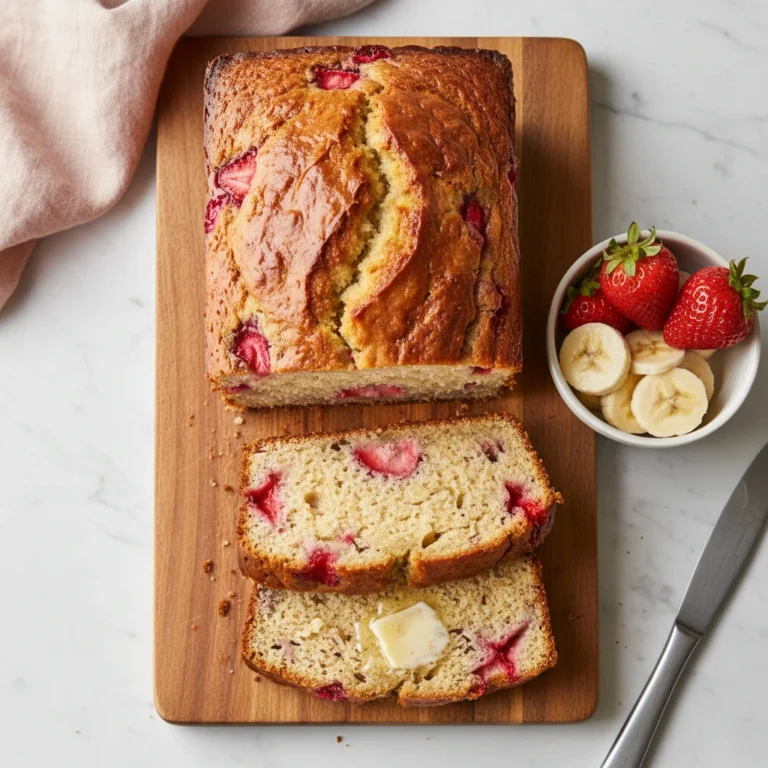
Strawberry banana bread combines two classic breakfast favorites into one moist, flavorful loaf that’s perfect for any time of day. This fruit-forward quick bread features the natural sweetness of ripe bananas balanced with tart, juicy strawberries and warm spices. Whether you’re looking for an easy weeknight dessert, a memorable brunch contribution, or a thoughtful homemade gift, this recipe delivers tender crumb and vibrant fruity flavor in every slice.
Reasons to Try Strawberry Banana Bread
This recipe stands out for several compelling reasons:
- Double Fruit Flavor: The combination of bananas and strawberries creates a naturally sweet, complex taste that appeals to both fruit lovers and those who want a lighter dessert alternative.
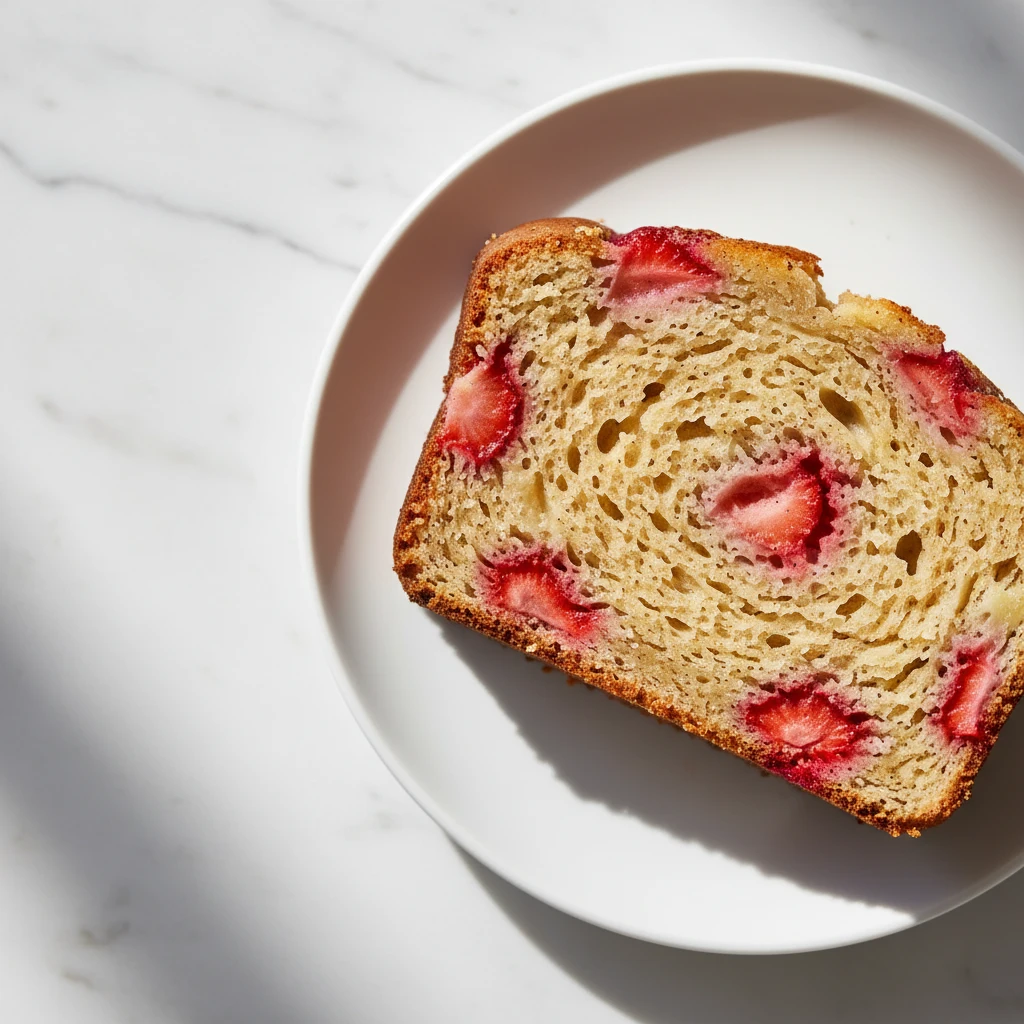
- Moist and Tender Crumb: Greek yogurt adds moisture and tang while keeping the bread supremely soft. The loaf stays fresh longer than traditional banana bread.
- Naturally Sweetened: The fruit provides the majority of the sweetness, reducing the need for excessive sugar while keeping calories reasonable.
- Warm Spice Notes: Cinnamon and nutmeg complement the fruit beautifully, adding depth and autumn-inspired warmth that elevates this beyond basic banana bread.
- Quick and Easy: No yeast, no fancy techniques—just mix, pour, and bake. Ready in under an hour from start to finish.
- Versatile: Perfect for breakfast with coffee, an afternoon snack, a light dessert, or a potluck-friendly contribution. Works equally well for casual gatherings or special occasions.
 Save
SaveIngredients Notes
- All-purpose flour provides structure and the classic loaf texture
- Baking soda is the leavening agent that creates a tender crumb (do not substitute with baking powder)
- Salt enhances all flavors and prevents the bread from tasting flat
- Ground cinnamon and nutmeg add warmth without overpowering the fruit
- Unsalted butter allows you to control the salt content and ensures a clean butter flavor
- Granulated sugar dissolves easily and creates even sweetness throughout
- Large eggs bind the ingredients and add structure to the loaf
- Vanilla extract enhances overall flavor complexity
- Ripe bananas (with yellow skin and brown spots) are key—they’re sweeter and easier to mash than underripe ones
- Fresh strawberries provide bright flavor and natural tartness; frozen berries can work but may release more liquid
- Greek yogurt replaces some butter and adds protein, moisture, and a subtle tang that balances sweetness
- Fresh lemon juice brightens the strawberry flavor and prevents the bread from tasting too sweet
How to Make Strawberry Banana Bread
- Preheat oven to 350°F. Grease and flour a 9-by-5-inch loaf pan, or line it with parchment paper.
- In a small bowl, whisk together flour, baking soda, salt, cinnamon, and nutmeg. Set aside.
- In a large bowl, cream together softened butter and sugar until light and fluffy, about 2 minutes.
- Add eggs one at a time, beating well after each addition. Stir in vanilla extract.
- Add mashed bananas and lemon juice to the butter mixture; stir until combined.
- Fold in Greek yogurt until no streaks remain.
- Add the dry ingredients to the wet ingredients and fold gently until just combined. Do not overmix.
- Gently fold chopped strawberries into the batter, being careful not to crush them.
- Pour batter into prepared loaf pan and smooth the top.
- Bake for 55 to 65 minutes, until a toothpick inserted in the center comes out clean or with just a few moist crumbs.
- Cool in pan for 10 minutes, then turn out onto a wire rack to cool completely before slicing.
What You Must Know About Strawberry Banana Bread
Banana ripeness is critical: Use bananas with brown spots on the peel—they’re sweeter and easier to mash than yellow ones. If your bananas are too green, the bread will lack flavor and density. If they’re completely black, they’ll make the bread overly sweet, though they still work in a pinch.
Do not overmix: Overmixing the batter develops gluten, which creates a tough, dense loaf instead of a tender, moist one. Fold the dry ingredients in gently until just combined—small lumps are perfectly fine. Stop as soon as you don’t see dry flour streaks.
Room temperature eggs matter: Cold eggs don’t incorporate smoothly into the batter and can result in a curdled-looking mixture. Remove eggs from the fridge 15 minutes before baking.
Fresh strawberries release moisture: Chop them just before adding to the batter, and pat them dry with paper towels to reduce excess moisture. This prevents wet pockets or soggy bottom sections.
Oven temperature accuracy: If your loaf is browning too quickly on top but remains wet inside, your oven likely runs hot. Use an oven thermometer to verify the actual temperature, and adjust accordingly. Tent with foil if the top browns too fast.
Cooling is essential: Slicing the bread while still warm will cause crumbling. Wait at least 30 to 45 minutes for the crumb to fully set. A serrated bread knife and gentle sawing motion (not pressing) will yield clean slices.
Helpful Tips
Make it ahead: Baked loaves wrapped tightly in plastic wrap will keep at room temperature for 3 days and can be frozen for up to 3 months. Thaw at room temperature for 2 to 3 hours before serving.
Customize the spice: If you prefer less spice, reduce cinnamon to 1/4 teaspoon and omit the nutmeg entirely. If you love spice, add 1/8 teaspoon ground ginger or cloves.
Add texture: Fold in 1/2 cup chopped walnuts or pecans along with the strawberries for a crunchy element. Toast them lightly first for enhanced flavor.
Double the recipe: You can easily double this recipe and bake two loaves simultaneously (or back-to-back). Use two prepared loaf pans and rotate them halfway through baking for even browning.
Use a toothpick test: Always use the toothpick test to check doneness rather than relying solely on time. Every oven is different, and a toothpick is the most reliable indicator of a fully baked loaf.
Variations and Substitutions
Berry Swaps: Substitute or combine strawberries with raspberries, blueberries, blackberries, or diced peaches. Keep the total berry amount to 1 cup. Tart berries like raspberries pair especially well with the bananas and spices.
Yogurt Alternative: Greek yogurt can be replaced with sour cream, plain regular yogurt, or buttermilk (use the same 1/2 cup amount). Each will add subtle flavor differences—sour cream is more tangy, buttermilk is slightly sharper, and regular yogurt is milder.
Dairy-Free Version: Replace the butter with coconut oil (use the same 1/2 cup amount) and substitute the Greek yogurt with coconut yogurt or unsweetened applesauce (use 1/2 cup). The bread will be slightly less rich but still moist and delicious.
Nut Addition: Fold in 1/2 cup chopped toasted walnuts, pecans, or almonds along with the strawberries. This adds protein, healthy fats, and a pleasant crunch.
White Chocolate Chips: Add 1/2 cup white chocolate chips folded in with the strawberries. They complement the fruit beautifully without overpowering the flavors.
Reduced Sugar Version: Decrease the sugar to 1/2 cup and use very ripe bananas (completely spotted). The natural fruit sugars will compensate. The bread will be slightly less sweet but still tender.
Spice Variations: Add 1/8 teaspoon ground ginger, cardamom, or cloves for extra warmth. Or add 1/2 teaspoon almond extract along with the vanilla for subtle nuttiness.
Whole Wheat Option: Replace up to half the all-purpose flour with whole wheat flour for added fiber and nuttiness. The bread will be slightly denser and earthier.
Serving Suggestions for Strawberry Banana Bread
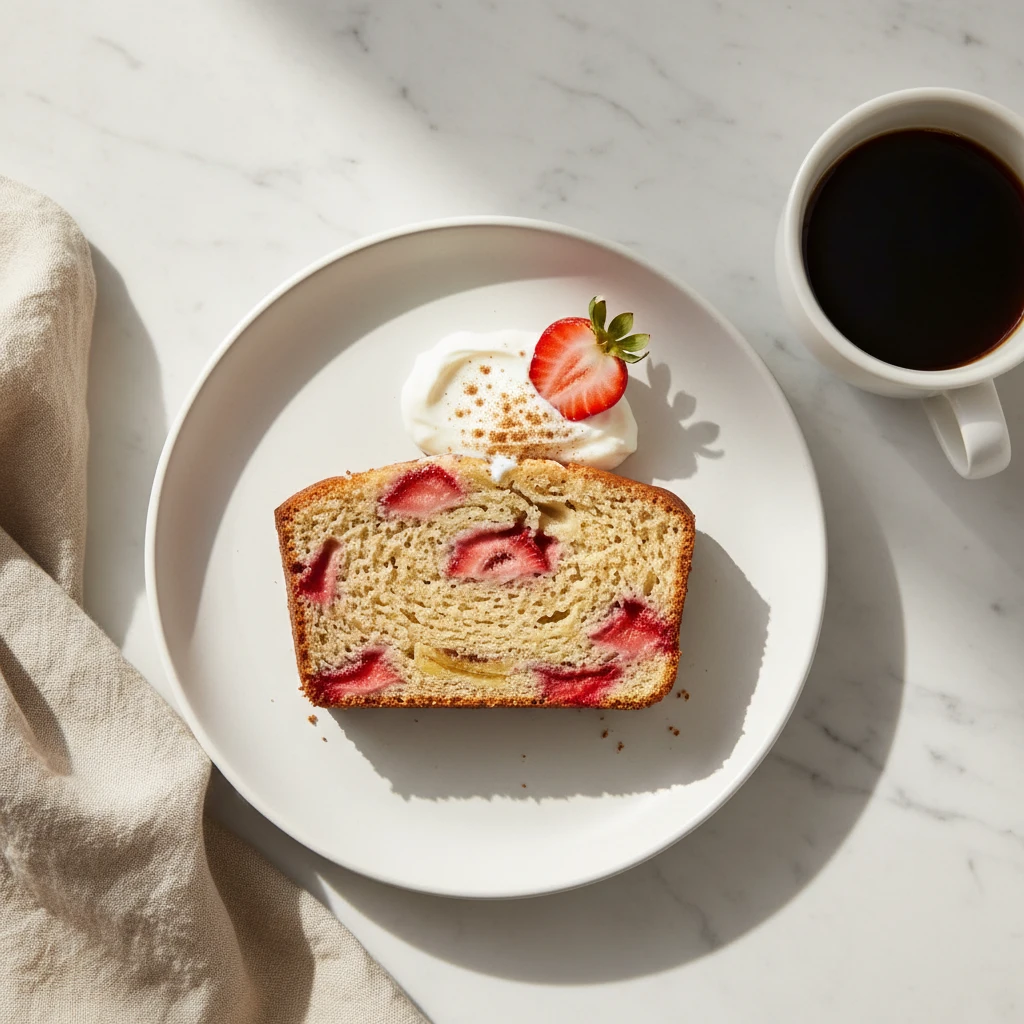
Breakfast or Brunch: Serve warm slices with a generous dollop of Greek yogurt and a drizzle of honey. Pair with fresh berries and a cup of strong coffee or herbal tea.
Dessert with a Light Touch: Top individual slices with a small scoop of vanilla ice cream or whipped cream, and garnish with a fresh strawberry. This transforms the bread into an elegant, portion-controlled dessert.
Afternoon Snack: Spread a slice lightly with cream cheese or almond butter for added protein and richness. Serve with a glass of cold milk or a smoothie.
Gift-Worthy Plating: Wrap a warm loaf in parchment paper and twine for a beautiful homemade gift. Include a small note with storage instructions. Sliced and arranged on a board with the loaf partially unwrapped creates an impressive presentation.
Plated Dessert: Toast a slice, top with a small dollop of mascarpone and a sprinkle of fresh lemon zest, then add a few fresh strawberries and a light drizzle of balsamic glaze for a sophisticated dessert plate.
Breakfast Plate: Arrange a slice alongside scrambled eggs, fresh fruit, and a side of crispy bacon or sausage for a complete brunch.
Picnic or Travel-Friendly: Wrap slices individually in plastic wrap or place in small containers for lunch boxes, picnics, or road trips. The bread travels well and tastes great at room temperature.
 Save
SaveStorage and Reheating
Room Temperature Storage: Store the cooled loaf, unsliced or sliced, in an airtight container or wrapped tightly in plastic wrap at room temperature for up to 3 days. Store on the counter, not in a warm spot or direct sunlight.
Refrigerator Storage: For extended freshness, store wrapped loaves in the refrigerator for up to 5 days. Cold temperatures slow mold growth, but the bread may dry out slightly. Ensure the wrap is airtight to prevent this.
Freezer Storage: Wrap the completely cooled loaf tightly in plastic wrap, then place in a freezer bag or airtight container. Label with the date. Freeze for up to 3 months. Sliced loaves also freeze well—freeze them on a baking sheet first, then transfer to a freezer bag to prevent sticking.
Thawing: Thaw frozen loaves at room temperature for 2 to 3 hours, still wrapped. Do not unwrap until fully thawed to prevent condensation on the surface. Sliced pieces can be thawed individually in about 30 minutes.
Reheating: To warm slices, wrap them in aluminum foil and heat in a 300°F oven for 10 to 12 minutes until warm throughout. Alternatively, toast slices in a toaster or toaster oven for 1 to 2 minutes for a slightly crisped exterior and warm interior. Microwaving is not recommended as it dries out the bread, but a 10-second microwave warm-up followed by a quick toast is acceptable in a pinch.
Avoid Staling: The Greek yogurt in this recipe helps keep it moist longer than traditional banana bread. To extend freshness, store in the coolest, driest part of your kitchen and ensure wrapping is truly airtight. Once sliced, store cut-side down on plastic wrap to minimize exposed surface area.
Frequently Asked Questions about Strawberry Banana Bread
Can I use frozen strawberries instead of fresh?
Yes, but thaw them completely and pat them dry with paper towels before chopping. Frozen strawberries release more liquid than fresh ones, which can make the bread wetter or create soggy pockets. If using frozen, consider reducing the Greek yogurt to 1/4 cup to account for the extra moisture.
Can I make this recipe without Greek yogurt?
Yes. Replace the 1/2 cup Greek yogurt with 1/2 cup sour cream, plain regular yogurt, or buttermilk. Each has a slightly different flavor impact but will yield a similarly moist bread. You could also use 1/4 cup sour cream plus 1/4 cup milk as a substitute.
Why is my bread dense and gummy?
Dense, gummy bread is usually caused by overmixing the batter (which develops gluten) or underbaking. Fold the dry ingredients in gently until just combined, and bake the full 55 to 65 minutes. A toothpick should come out clean or with just a few moist crumbs. Also ensure your bananas are ripe and your baking soda is fresh.
Can I make this recipe gluten-free?
Yes. Use a 1-to-1 gluten-free all-purpose flour blend in place of regular all-purpose flour. Some blends may absorb more liquid, so start with the recipe as written and add an extra 1 to 2 tablespoons of yogurt or milk if the batter seems too thick. The result will be slightly denser but still delicious.
How can I prevent the strawberries from sinking to the bottom?
Toss the chopped strawberries in a tablespoon of the measured flour before folding them in—this coats them and helps them float throughout the batter. Also, add them as the very last step and fold them in gently but thoroughly to distribute evenly. Freeze the loaf briefly after pouring the batter but before baking (just 5 to 10 minutes) to set the batter slightly.
Can I substitute another fruit for bananas?
Bananas provide both moisture and sweetness that are crucial to this recipe’s success. However, you could use 3/4 cup applesauce plus 1/2 cup mashed ripe pear as an alternative, though the flavor profile will be quite different. The bread will be slightly less rich and require a few extra minutes of baking time.
What is the best way to slice the bread without it crumbling?
Use a serrated bread knife (like a tomato knife) and a gentle sawing motion rather than pressing down. Allow the bread to cool completely at room temperature (at least 30 to 45 minutes) before slicing—slicing warm bread causes crumbling. Wipe the blade clean between cuts for neater slices.

Strawberry Banana Bread
Ingredients
- 2 cups all-purpose flour
- 1 teaspoon baking soda
- 1/2 teaspoon salt
- 1/2 teaspoon ground cinnamon
- 1/4 teaspoon ground nutmeg
- 1/2 cup unsalted butter softened
- 3/4 cup granulated sugar
- 2 large eggs room temperature
- 1 teaspoon vanilla extract
- 3 ripe bananas mashed
- 1 cup fresh strawberries chopped
- 1/2 cup Greek yogurt plain
- 2 tablespoons fresh lemon juice
Instructions
- Preheat your oven to 350°F (175°C). This takes about 10 minutes. While it heats, grease a 9-by-5-inch loaf pan with butter or cooking spray, then dust lightly with flour. Tap out any excess flour. You can also line the pan with parchment paper for easier removal.
- In a small bowl, whisk together 2 cups all-purpose flour, 1 teaspoon baking soda, 1/2 teaspoon salt, 1/2 teaspoon ground cinnamon, and 1/4 teaspoon ground nutmeg. Whisk for about 30 seconds until evenly combined. Set this bowl aside. Checkpoint: Your dry ingredients are fully combined and lump-free.
- In a large mixing bowl, add 1/2 cup softened unsalted butter (should be soft enough to dent with your finger but not melting). Add 3/4 cup granulated sugar to the butter. Using an electric mixer on medium speed or a wooden spoon, beat for 2 to 3 minutes until the mixture is light, fluffy, and pale yellow. This step is important—it incorporates air into the batter. Checkpoint: The butter and sugar mixture looks like pale, fluffy frosting.
- Add 2 large eggs (at room temperature) to the butter mixture, one at a time. After adding the first egg, beat for about 30 seconds until fully combined, then add the second egg and beat again for 30 seconds. The mixture should look creamy and slightly curdled, which is normal. Stir in 1 teaspoon vanilla extract and mix for 10 seconds. Checkpoint: No streaks of egg white are visible.
- Mash 3 ripe bananas (they should have brown spots on the skin) in a small bowl with a fork until mostly smooth—a few small lumps are fine. You should have about 1 to 1.25 cups. Add the mashed bananas and 2 tablespoons fresh lemon juice to the butter mixture. Stir with a wooden spoon or spatula for about 1 minute until the bananas are evenly mixed throughout. The batter will look slightly lumpy. Checkpoint: The banana is distributed evenly and the lemon juice is incorporated.
- Add 1/2 cup plain Greek yogurt to the batter. Fold it in gently using a rubber spatula by scraping the bottom of the bowl, folding the mixture over itself, and rotating the bowl a quarter turn. Continue folding for 30 to 45 seconds until no white streaks of yogurt remain. Do not stir aggressively or use an electric mixer—overmixing develops gluten and makes the bread tough. Checkpoint: The yogurt is fully incorporated with no visible white streaks.
- Sprinkle the flour mixture over the batter in two additions. After the first addition, fold gently for 30 seconds until just barely combined. Add the second half of the flour mixture and fold for another 30 to 45 seconds until the dry ingredients disappear. The batter should look thick and slightly lumpy—this is correct. Stop folding as soon as you don't see dry flour. Overmixing at this stage will result in a tough loaf. Checkpoint: No dry flour streaks are visible, and the batter is thick.
- Chop 1 cup fresh strawberries into small, bite-sized pieces (about 1/2 to 3/4 inch). Gently fold the strawberry pieces into the batter using just 10 to 15 folds with your spatula, being as gentle as possible to avoid crushing the berries. The batter will be thick and fold-resistant, which is expected. Checkpoint: The strawberries are distributed throughout without being crushed.
- Pour the entire batter into your prepared loaf pan. Use a spatula to gently spread it to the corners and smooth the top, creating an even surface. The pan should be about 2/3 full. Checkpoint: The batter fills the pan evenly with no air pockets visible on top.
- Place the loaf pan in your preheated 350°F oven on the center rack. Set a timer for 55 minutes. Bake for 55 to 65 minutes total. The bread is done when the top is deep golden brown (almost caramel-colored) and a wooden toothpick or thin knife inserted into the very center comes out clean or with just 1 to 2 tiny moist crumbs clinging to it. If the top is browning too quickly but the center is still jiggly, tent the pan loosely with aluminum foil for the remaining baking time. Checkpoint: The top is dark golden brown and a toothpick inserted in the center comes out clean or nearly clean.
- Remove the loaf pan from the oven using oven mitts and place it on a heat-safe surface or wire cooling rack. Let the bread cool in the pan for exactly 10 minutes. This resting time allows the crumb to set and makes removal easier. Checkpoint: The bread has cooled enough that you can safely touch the edges of the pan.
- After 10 minutes, run a thin knife or small spatula around the edges of the loaf to loosen it from the pan. This prevents sticking. Place a wire cooling rack upside down over the top of the loaf pan, then flip both the pan and rack together so the bread falls onto the rack. Gently lift the pan away. If the bread doesn't release, tap the bottom of the pan gently and try again. Checkpoint: The bread is out of the pan and resting on the cooling rack.
- Allow the bread to cool on the rack at room temperature for at least 30 to 45 minutes before slicing. This final cooling sets the structure and makes clean slicing possible. Slice with a serrated bread knife using a gentle sawing motion, not a pressing motion. Checkpoint: The bread is completely cool and slices cleanly without crumbling.