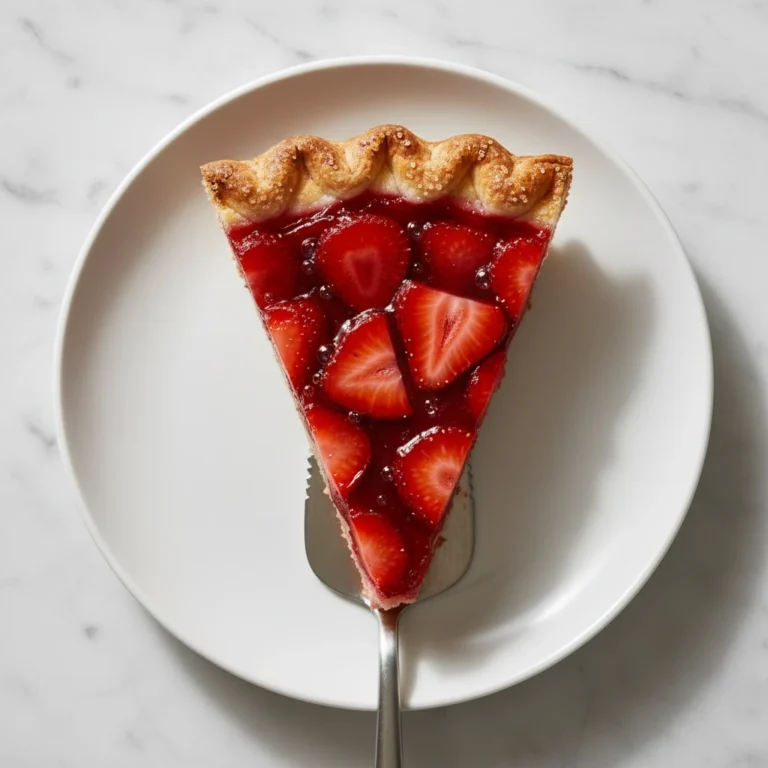
There’s nothing quite like a slice of homemade strawberry pie on a warm summer day. This classic dessert features a buttery, flaky pie crust filled with plump, juicy strawberries tossed in a glossy, naturally thickened filling that’s not overly sweet. The combination of fresh fruit and tender crust makes this pie a timeless favorite for picnics, potlucks, and family dinners. Whether you’re a seasoned baker or tackling pie for the first time, this straightforward recipe delivers bakery-quality results.
Reasons to Try Strawberry Pie
Peak Strawberry Flavor: This pie celebrates fresh strawberries at their best, using minimal cooking to preserve their bright, natural sweetness and juicy texture. The filling gently thickens around the fruit rather than turning it into jam.
Homemade Pie Crust: The buttery, flaky crust is made from scratch with just a few basic ingredients. The contrast between the tender crust and soft filling is what makes homemade pie so superior to store-bought versions.
Not Too Sweet: Unlike many commercial pies, this version balances the natural tartness of fresh strawberries with just enough sugar. The filling relies on the fruit’s own juices rather than drowning in syrup.
Impressive Yet Approachable: Strawberry pie looks elegant and tastes sophisticated, but the recipe is beginner-friendly. There’s no blind-baking or complex techniques—just good ingredients and straightforward steps.
Summer-Ready Dessert: Perfect for warm weather entertaining, this pie can be made a day ahead and served at room temperature. It’s the ideal finale to a casual barbecue or elegant garden party.
 Save
SaveIngredients Notes
For the Crust
- All-purpose flour
- Salt
- Sugar
- Unsalted butter, cold and cubed
- Ice water
For the Filling
- Fresh strawberries, hulled
- Sugar
- Cornstarch
- Tapioca starch
- Fresh lemon juice
- Vanilla extract
- Salt
- Unsalted butter
For Assembly
- Egg yolk
- Water
- Coarse sugar for topping
How to Make Strawberry Pie
For the Crust
- Mix flour, salt, and sugar in a large bowl.
- Cut cold butter into small cubes and add to the flour mixture. Work the butter into the flour using a pastry cutter or your fingertips until the mixture resembles coarse breadcrumbs with pea-sized pieces of butter visible.
- Add ice water one tablespoon at a time, tossing gently with a fork until the dough just begins to come together. Do not overwork.
- Shape the dough into a disk, wrap in plastic, and refrigerate for at least 1 hour.
- Roll out the chilled dough between two sheets of parchment paper to fit a 9-inch pie dish. Transfer to the dish and trim edges, leaving a 1-inch overhang. Chill while preparing the filling.
For the Filling
- Halve the strawberries and place in a large bowl.
- In a small bowl, whisk together sugar, cornstarch, tapioca starch, lemon juice, vanilla, and salt.
- Pour the mixture over the strawberries and gently fold to combine. Let sit for 10 minutes to allow juices to release.
- Transfer the strawberry mixture to the chilled pie crust and dot with butter.
For Assembly and Baking
- Preheat oven to 375°F.
- Fold the crust overhang inward and crimp the edges with a fork or your fingers to seal.
- Whisk egg yolk with water and brush over the crust. Sprinkle with coarse sugar.
- Place pie on a baking sheet and bake for 50 to 60 minutes, until the crust is deep golden brown and filling bubbles slightly at the edges.
- Cool on a wire rack for at least 3 hours before slicing to allow the filling to set.
What You Must Know About Strawberry Pie
Don’t Rush the Cooling: This is the most critical step. The filling must cool for at least 3 hours at room temperature to set properly. The cornstarch and tapioca starch need time to absorb the fruit juices and create a stable filling. Slicing too early will result in a runny pie. Patience here is non-negotiable.
Use Fresh, Ripe Strawberries: The quality of your berries directly impacts the pie. Choose bright red, fragrant strawberries that are ripe but still firm (not mushy). Avoid berries that feel soft or have mold. If strawberries are very large, cut them into quarters instead of halves to ensure even cooking and a better texture in each slice.
Keep Ingredients Cold: Cold butter and ice water are essential for a flaky crust. Warm ingredients create a dense, tough crust. If your kitchen is hot, chill your mixing bowl and even place the flour in the freezer for 10 minutes before starting. Work quickly once you begin mixing.
The Double-Starch Method: This recipe uses both cornstarch and tapioca starch. Cornstarch thickens quickly and creates a clear filling, while tapioca starch adds body and a subtle glossy appearance. Together, they create a filling that’s neither runny nor gluey. Don’t substitute with flour, which will create an opaque, starchy filling.
Lemon Juice is Essential: Fresh lemon juice brightens the strawberry flavor and prevents the filling from tasting one-dimensional. It also helps preserve the natural color of the berries. Use real lemon juice, not bottled.
Avoid Over-Mixing the Dough: When combining the dough, use a light hand. Overworking the dough develops gluten, which makes the crust tough and dense. You want visible pea-sized pieces of butter to remain—these create the flaky layers. If you’re unsure, err on the side of under-mixing.
Monitor the Crust Browning: All ovens are different. If your crust browns faster than expected, tent it with foil after 30 to 35 minutes to prevent burning while the filling finishes cooking. The crust should be a rich golden brown, not pale or burnt.
Helpful Tips
Make the Crust Ahead: You can make the dough up to 2 days in advance. After shaping into a disk and wrapping in plastic, store it in the refrigerator. You can also freeze the dough for up to 1 month. Thaw overnight in the refrigerator before rolling.
Pre-Chill the Pie Dish: For an extra flaky crust, place your pie dish in the freezer for 15 minutes before adding the filling. A cold dish helps the crust set faster.
Serve with Whipped Cream: A dollop of freshly whipped cream or vanilla ice cream is the perfect complement. The cool creaminess balances the warm, juicy filling.
Use a Pie Shield: If you don’t have foil, a pie crust shield (a metal or silicone ring that fits over the edge) prevents the crust from browning too quickly and looks more professional.
Berry Substitute Options: While strawberries are traditional, you can make this pie with raspberries, blackberries, or a combination of mixed berries. Adjust the sugar slightly based on the tartness of your fruit.
Variations and Substitutions
All-Berry Pie: Replace some of the strawberries with raspberries or blackberries. Use about 3 pounds strawberries and 1 pound mixed berries. The tartness of raspberries and blackberries complements the sweetness of strawberries beautifully.
Strawberry-Rhubarb Pie: Add 1 pound of fresh rhubarb, diced into 1/2-inch pieces, to the filling. Increase the sugar to 1.25 cups because rhubarb is very tart. The result is a more complex, slightly tangy filling.
No-Bake Strawberry Pie: If you don’t have an oven or prefer a no-bake version, use a pre-made graham cracker crust. Prepare the strawberry filling as directed and let it cool in the refrigerator for 2 hours. Pour the filling into the crust and chill for 4 hours before serving. The texture will be less structured, more like a compote, but still delicious.
Almond Crust: For a nutty variation, replace 1/2 cup of all-purpose flour with finely ground almonds. Follow the same crust-making method. This creates a more tender crust with subtle almond flavor that doesn’t compete with the strawberries.
Custard Filling Version: For a richer pie, create a thin pastry cream layer before adding the strawberries. Mix 1/2 cup heavy cream with 2 tablespoons sugar and 1 tablespoon cornstarch. Heat gently until thickened, then spread over the crust before adding the strawberry filling. This adds creaminess and prevents a soggy bottom crust.
Glaze Variation: After the pie cools, brush the top berries with an apricot jam glaze (warm 1/2 cup apricot jam with 1 tablespoon water, strain, and brush over berries). This adds shine and extra fruity flavor.
Substitute Corn Starch with Potato Starch: If you don’t have tapioca starch, you can use potato starch instead. Use 3 tablespoons cornstarch and 2 tablespoons potato starch. The filling will be equally glossy and clear.
Whole Wheat Crust: For a nuttier flavor and added fiber, replace 1 cup all-purpose flour with 1 cup whole wheat flour. The crust will be slightly denser but still flaky and more rustic.
Serving Suggestions for Strawberry Pie
Classic Pairing with Whipped Cream: Top each slice with a generous dollop of freshly whipped cream (1 cup heavy cream whipped with 2 tablespoons powdered sugar and 1/2 teaspoon vanilla extract). The cool, airy cream contrasts beautifully with the warm, juicy filling.
Vanilla Ice Cream: Serve warm pie with a scoop of quality vanilla ice cream. As the ice cream melts into the warm filling, it creates an indulgent sauce that elevates the dessert.
Mascarpone Cream: Mix 1 cup mascarpone cheese with 2 tablespoons powdered sugar and 1 tablespoon vanilla extract. Serve this alongside the pie for a more sophisticated, Italian-inspired dessert.
Mint Garnish: Top each slice with a fresh mint leaf or sprig. The cool mint flavor echoes the summer freshness of the strawberries and adds a pop of color.
Dust with Powdered Sugar: Just before serving, dust the entire pie (or individual slices) with powdered sugar for an elegant, refined presentation.
Balsamic Reduction Drizzle: For an unexpected gourmet touch, drizzle a balsamic reduction (balsamic vinegar reduced in a saucepan until thick and syrupy) around the plate. The slight tang of balsamic complements strawberry’s natural acidity.
Served Chilled: For a lighter, refreshing option, refrigerate the pie for up to 2 hours before serving. Chilled pie has a different character—more like a fruit tart—and is perfect for warm summer days.
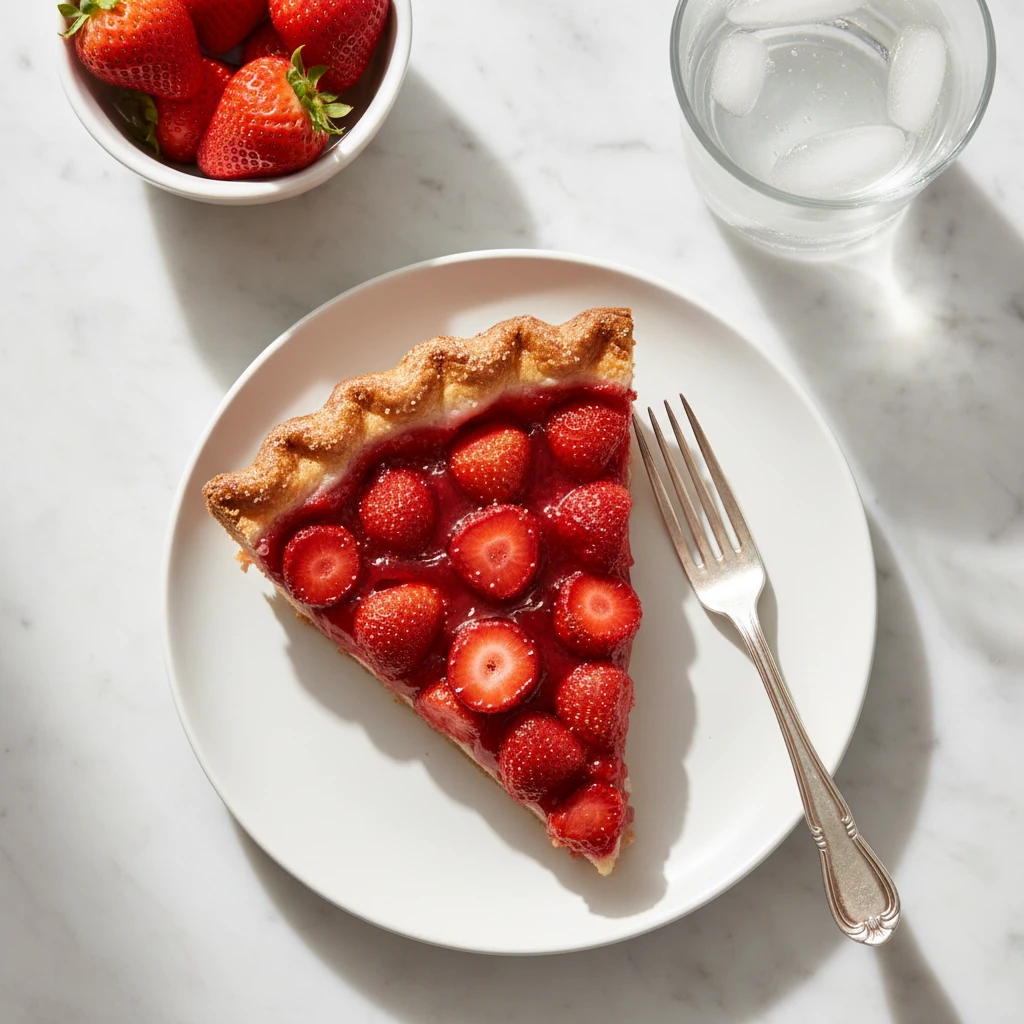
Plating Suggestion: Use a cake server or pie knife warmed in hot water (and wiped dry) to create clean slices. Plate each slice on a white or light-colored plate to showcase the jewel-toned berries. Serve at room temperature for maximum flavor, with any desired garnish on the side.
 Save
SaveStorage and Reheating
Refrigerator Storage: Cover the cooled pie loosely with plastic wrap or aluminum foil and store in the refrigerator for up to 3 days. The crust will soften slightly as it absorbs moisture from the filling, but the pie will still taste delicious. Allow the pie to come to room temperature (about 30 minutes) before serving for the best flavor and crust texture.
Freezer Storage: Strawberry pie freezes well for up to 1 month. Wrap the cooled pie tightly in plastic wrap, then aluminum foil. Thaw at room temperature for 4 to 5 hours, or overnight in the refrigerator. The crust will retain its flakiness better if thawed in the refrigerator. Do not refreeze after thawing.
Individual Slice Storage: Store leftover slices in an airtight container in the refrigerator for up to 3 days. This prevents the crust from absorbing odors from the fridge.
Reheating: Strawberry pie is best served at room temperature or chilled and does not require reheating. If you prefer warm pie, you can place a slice in a 300°F oven for 8 to 10 minutes until warmed through. However, the crust will not re-crisp as it’s already been baked, so reheating is optional and mainly for temperature preference.
Make-Ahead Option: You can prepare the pie completely up to 1 day in advance. Store it covered in the refrigerator and bring to room temperature before serving. This is ideal for entertaining, as it eliminates last-minute baking stress.
Frequently Asked Questions about Strawberry Pie
Can I use frozen strawberries instead of fresh?
Frozen strawberries can be used, but they release significantly more liquid than fresh berries, resulting in a runnier filling. If using frozen, thaw them completely, drain excess liquid through a fine-mesh strainer, and reduce the berries by about 1 pound to account for lost juice. Fresh berries are recommended for the best texture and flavor.
How do I prevent a soggy pie crust?
A soggy bottom crust is usually caused by excess moisture. To prevent this: (1) Use the double-starch method in this recipe (cornstarch plus tapioca starch), (2) don’t skip chilling the crust, (3) bake the pie on the lower oven rack so the bottom crust bakes thoroughly, and (4) allow the pie to cool completely before slicing, which gives the filling time to set and reabsorb its juices.
Can I make a crumb or graham cracker topping instead of a crust?
Yes! Skip the traditional crust and press a mixture of graham cracker crumbs, melted butter, and sugar into a pie dish to create a base. Bake at 350°F for 8 minutes to set, then add the strawberry filling and bake for 25 to 30 minutes (less time since there’s no top crust). This creates a more casual, open-faced strawberry tart.
What’s the difference between cornstarch and tapioca starch?
Cornstarch thickens quickly and creates a clear, glossy filling. Tapioca starch creates a gel-like consistency and adds body without making the filling cloudy or starchy-tasting. Using both together gives the best result: a clear, glossy, stable filling that’s not rubbery or overly thick. If you only have cornstarch, use 4 to 5 tablespoons total.
How do I know when the pie is fully baked?
The pie is done when the crust is a deep golden brown (not pale) and the filling bubbles visibly at the edges where it meets the crust. You may see berry juice oozing slightly around the edge. The internal filling temperature should be around 200°F if you have a meat thermometer. This ensures the starch is fully activated and the filling will set properly.
Can I make a double-crust strawberry pie?
Yes, though it’s less common. Double the crust recipe and prepare two crusts. After filling the pie with strawberries, place the top crust over the filling and crimp the edges to seal. Cut vents in the top crust to allow steam to escape. Bake at 375°F for 60 to 70 minutes until both crusts are golden and filling bubbles through the vents. This version is more traditional pie-like but slightly less pretty than the open-top version.
Can I reduce the sugar in this recipe?
You can reduce it slightly (to 3/4 cup) if you prefer a less sweet pie, but keep in mind that sugar also helps the filling thicken and binds with the starch. Reducing it too much (below 3/4 cup) may result in a thinner filling. Taste a raw strawberry first; if they’re already quite sweet, 3/4 cup sugar is appropriate. If tart, use the full 1 cup.
Nutrition Facts (Per Serving)
| Nutrient | Per Serving (1/6 pie) |
|---|---|
| Calories | 385 kcal |
| Total Fat | 18g (28% DV) |
| Saturated Fat | 11g (55% DV) |
| Trans Fat | 0.5g |
| Cholesterol | 45mg (15% DV) |
| Sodium | 280mg (12% DV) |
| Total Carbohydrate | 52g (17% DV) |
| Dietary Fiber | 2g (8% DV) |
| Sugars | 34g |
| Protein | 4g (8% DV) |
| Vitamin C | 35mg (58% DV) |
| Potassium | 180mg (5% DV) |
Percent Daily Values (DV) are based on a 2,000 calorie diet. Your daily values may be higher or lower depending on your calorie needs. These values are estimates and may vary based on specific ingredient brands and preparation methods.
Strawberry Pie
Ingredients
- 2 cups all-purpose flour
- 1 teaspoon salt
- 1 tablespoon sugar
- 1 cup unsalted butter cold and cubed
- 6 to 8 tablespoons ice water
- 4 pounds fresh strawberries hulled
- 1 cup sugar
- 3 tablespoons cornstarch
- 2 tablespoons tapioca starch
- 1 tablespoon fresh lemon juice
- 1 teaspoon vanilla extract
- Pinch of salt
- 2 tablespoons unsalted butter
- 1 egg yolk
- 1 tablespoon water
- 1 tablespoon coarse sugar for topping
Instructions
- Prepare the pie crust dough: In a large mixing bowl, combine 2 cups all-purpose flour, 1 teaspoon salt, and 1 tablespoon sugar. This is your dry base and should take 1 minute to mix together. Checkpoint: You should see no lumps of salt or sugar; everything should be evenly distributed.
- Cut in the cold butter: Cut 1 cup cold unsalted butter into small cubes (about the size of peas). Add the butter to the flour mixture. Using a pastry cutter, two forks, or your fingertips, work the butter into the flour for 3 to 5 minutes until the mixture resembles coarse breadcrumbs or oats. You want to see pea-sized pieces of butter throughout; do NOT blend it into a smooth paste. Checkpoint: When you squeeze a handful of the mixture, it should hold together briefly, then crumble apart, showing visible butter bits.
- Add ice water gradually: Sprinkle 6 tablespoons of ice water over the flour mixture, 1 tablespoon at a time. After each addition, use a fork to gently toss the mixture. Stop adding water once the dough just barely comes together and holds when pressed, around 6 to 8 tablespoons total. This should take 2 to 3 minutes. Do NOT knead or overwork the dough. Checkpoint: The dough should feel slightly moist and crumbly, not wet or smooth. When you squeeze it, it should barely hold shape.
- Chill the dough: Shape the dough gently into a flat disk (about 1 inch thick), wrap it tightly in plastic wrap, and place it in the refrigerator for at least 60 minutes. You can refrigerate up to 2 hours. This chilling step is essential; it makes the dough easier to roll and creates flakier layers. If your kitchen is warm, chill for the full 2 hours. Checkpoint: The dough should be very cold and firm to the touch when you remove it.
- Roll out the crust: Remove the dough from the refrigerator and let it sit at room temperature for 5 minutes to soften slightly. Place the dough between two sheets of parchment paper. Using a rolling pin, gently roll the dough from the center outward, rotating the parchment as needed, until the dough is about 11 inches in diameter and 1/8 inch thick. This should take 3 to 4 minutes. Checkpoint: The dough should be thin and even, and you should be able to see the parchment through it in spots.
- Transfer to pie dish: Peel off the top sheet of parchment. Using the bottom parchment as a guide, carefully flip the dough over a 9-inch pie dish, centering it over the dish. Gently press the dough into the bottom and sides of the dish, working out any air pockets with your fingers. Trim the overhang to 1 inch, then fold this overhang inward and crimp the edge using a fork or your thumb and forefinger to create a decorative seal. This should take 3 to 5 minutes. Checkpoint: The crust should fit snugly in the dish with no tears, and the edge should be evenly crimped.
- Chill the crust again: Place the pie dish in the refrigerator while you prepare the filling. Chill for 15 to 20 minutes.
- Prepare the strawberries: Rinse 4 pounds of fresh strawberries under cold water and pat dry. Hull each strawberry (remove the green stem and white core). Cut the berries in half lengthwise. You should have about 10 to 12 cups of halved strawberries. This should take 8 to 10 minutes. Checkpoint: All berries should be roughly the same size for even cooking.
- Mix the filling: In a small bowl, whisk together 1 cup sugar, 3 tablespoons cornstarch, 2 tablespoons tapioca starch, 1 tablespoon fresh lemon juice, 1 teaspoon vanilla extract, and a pinch of salt. The combination of cornstarch and tapioca starch creates a clear, glossy filling that thickens gently without turning the filling opaque or rubbery. This should take 1 to 2 minutes. Checkpoint: The mixture should be smooth with no lumps of starch visible.
- Combine berries with filling: Place the halved strawberries in a large bowl. Pour the sugar and starch mixture over the berries and gently fold together using a rubber spatula for 1 to 2 minutes. Be gentle to avoid crushing the berries, but make sure every berry is coated. Let the mixture sit undisturbed for 10 minutes. During this time, the sugar will draw out the berry juices and create a glossy filling. Checkpoint: You should see visible liquid accumulating in the bottom of the bowl, and the mixture should look glossy.
- Preheat the oven: While the filling sits, preheat your oven to 375°F. Place an oven rack in the lower-middle position. Baking the pie on the lower rack helps the crust bottom bake through completely and prevents a soggy crust. If your oven has a convection setting, use it for more even browning, but keep the temperature at 375°F. This should take 10 to 15 minutes.
- Transfer filling to crust: Remove the chilled pie crust from the refrigerator. Carefully pour the strawberry filling into the crust, including all the accumulated juices. Spread the berries evenly. Dot the top with 2 tablespoons of unsalted butter cut into small pats. The butter will add richness and help create a more cohesive filling. This should take 2 to 3 minutes. Checkpoint: The filling should mound slightly above the crust edge; there should be visible juice in the filling.
- Prepare egg wash: In a small bowl, whisk together 1 egg yolk with 1 tablespoon of water until smooth. This egg wash will give the crust a beautiful golden-brown shine and help the sugar stick. This takes less than 1 minute.
- Brush crust and add sugar: Using a pastry brush or clean kitchen brush, carefully brush the crimped edge of the pie crust with the egg wash, avoiding the filling. Immediately sprinkle 1 tablespoon of coarse sugar (or regular granulated sugar) over the egg-washed edge. This creates a sparkly, slightly crunchy texture on the crust. This takes 1 to 2 minutes. Checkpoint: The crust edge should be evenly coated with egg wash and sugar granules should adhere to it.
- Place pie on baking sheet: Set the pie dish on a large baking sheet (this catches any drips). This is important because the filling may bubble over during baking. Transfer the baking sheet to the preheated oven on the lower-middle rack.
- Bake the pie: Bake for 50 to 60 minutes until the crust is deep golden brown and the filling bubbles slightly at the edges (you'll see it oozing around the crust edge). If the crust begins to brown too quickly (after 30 to 35 minutes), tent it loosely with aluminum foil to prevent burning, but allow steam to escape. The pie is done when the crust is a rich golden color and the filling is visibly bubbling. Checkpoint: The crust should be deep golden (not pale), and you should see berry juices bubbling at the crust edge.
- Cool completely: Remove the pie from the oven and place it on a wire cooling rack. Do not slice yet. The filling must cool and set completely, which takes 3 to 4 hours at room temperature. As it cools, the starches continue to absorb the fruit juices, creating a sliceable texture. If you slice too early, the pie will be runny. You can also refrigerate the pie for up to 2 hours to speed up the cooling process, but allow it to come back to room temperature before serving. Checkpoint: When you gently shake the pie, the filling should jiggle only slightly, not slosh. When you insert a knife into the filling, it should move with slight resistance, not be liquid.
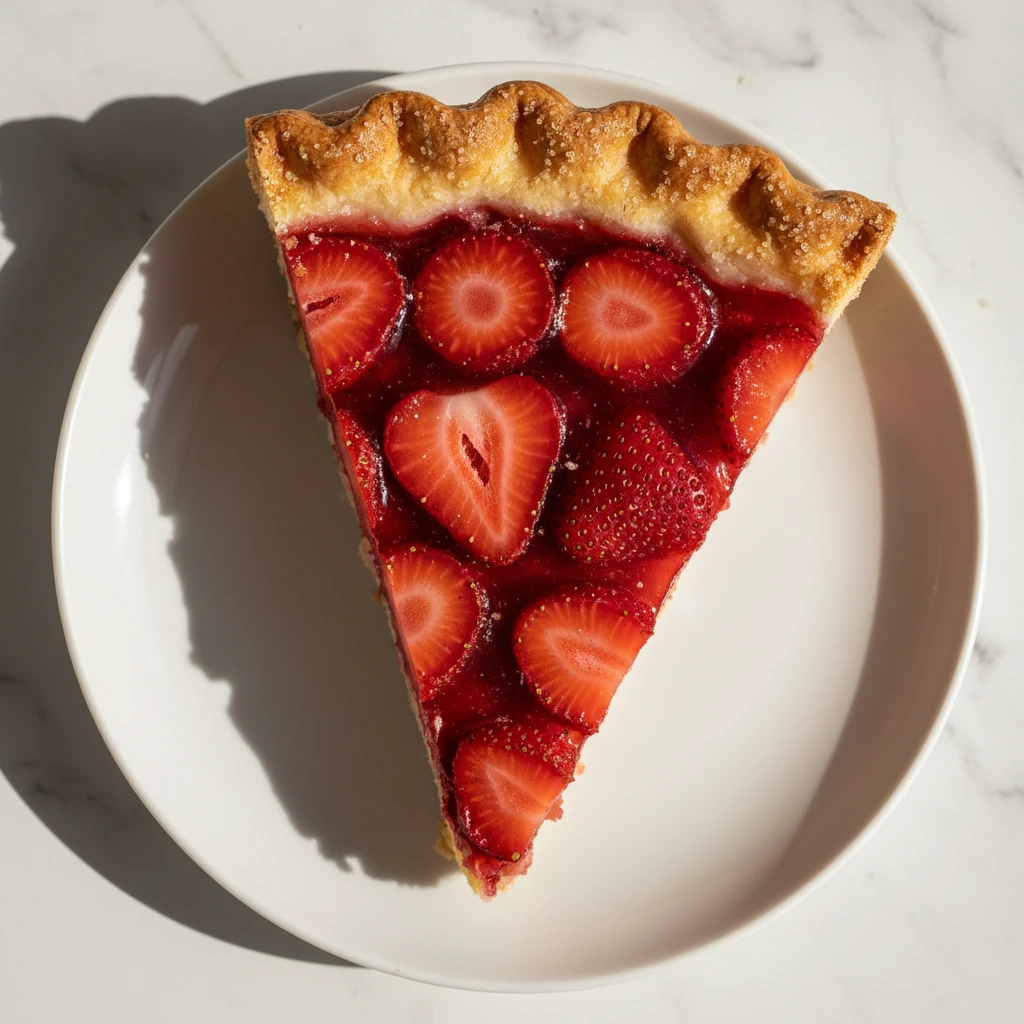
- Slice and serve: Using a sharp, long knife dipped in hot water and wiped dry between cuts, slice the pie into 6 to 8 wedges. Wipe the blade between each cut for clean slices. Serve at room temperature or slightly chilled. Each slice should hold its shape and show a glossy, jewel-toned filling studded with strawberry halves.