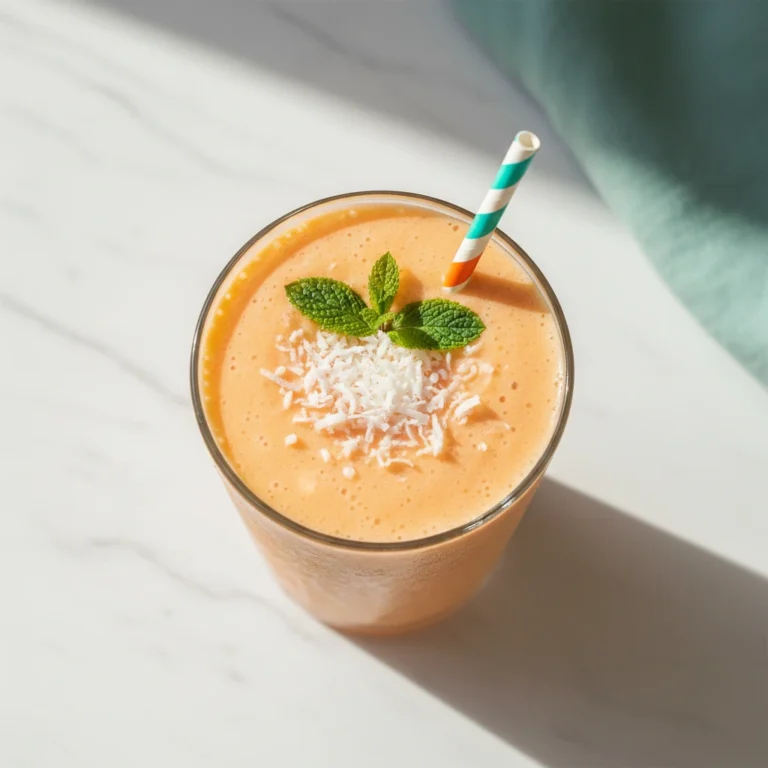
There’s nothing quite like starting your day with a refreshing glass of tropical paradise. A tropical smoothie brings together the vibrant flavors of sun-ripened fruits and creamy coconut milk to create a drink that feels like a mini vacation in a glass. Packed with natural sweetness from mango, pineapple, and banana, combined with protein-rich yogurt and a hint of warm spices, this smoothie is both delicious and nutritious. Whether you’re looking for a quick breakfast, post-workout recovery drink, or a cooling afternoon treat, this recipe delivers bright flavors and lasting energy.
Reasons to Try Tropical Smoothie
- Bursting with Fresh Fruit Flavor: This smoothie combines three of the most beloved tropical fruits—pineapple, mango, and banana—creating a naturally sweet and complex flavor profile that tastes indulgent yet guilt-free.
- Quick and Easy Breakfast: Ready in under 5 minutes, this smoothie is perfect for busy mornings when you want something nutritious without the fuss of cooking.
- Packed with Nutrients: Greek yogurt provides protein and probiotics, while fresh fruits deliver vitamins, minerals, and dietary fiber. The coconut milk adds healthy fats and a creamy texture.
- Naturally Sweetened: With just a touch of honey and the natural sugars from ripe fruit, you get genuine sweetness without refined sugar overload.
- Versatile and Customizable: This base recipe adapts easily—add spinach for greens, swap coconut milk for almond milk, or include protein powder for an extra boost.
- Immune-Boosting Ingredients: Turmeric and orange juice add anti-inflammatory compounds and vitamin C, making this smoothie a wellness powerhouse.
- Tropical Escape at Home: The combination of flavors instantly transports you to a warm beach destination, making even a hectic day feel more pleasant.
 Save
SaveIngredients Notes
- Fresh pineapple chunks: Use ripe, fragrant pineapple for best flavor. Frozen works well too and adds extra chill.
- Ripe mango: Choose a mango that yields slightly to pressure. Frozen mango is convenient and maintains excellent flavor.
- Fresh banana: Use bananas that are ripe but not overripe (slight brown speckles are perfect). Frozen sliced banana works great.
- Greek yogurt: Provides creaminess, protein, and a subtle tang. Use plain, unsweetened Greek yogurt.
- Coconut milk: Use full-fat canned coconut milk for richness, or lite coconut milk for fewer calories.
- Orange juice: Freshly squeezed is ideal, but store-bought works. No added sugar or from-concentrate preferred.
- Ice cubes: Essential for achieving the perfect frosty, thick texture.
- Raw honey: Adds subtle floral sweetness. Agave nectar or maple syrup are good substitutes.
- Vanilla extract: Enhances fruit flavors and adds depth. Use pure vanilla, not imitation if possible.
- Turmeric powder: Adds a warm, earthy note and anti-inflammatory properties. Use sparingly—a pinch is enough.
- Fresh mint: Optional garnish that adds visual appeal and a refreshing herbal note.
- Shredded coconut: For topping, choose unsweetened or lightly sweetened based on preference.
How to Make Tropical Smoothie
- Add pineapple chunks, mango cubes, and sliced banana to a high-powered blender.
- Pour in Greek yogurt, coconut milk, and orange juice.
- Add honey, vanilla extract, and turmeric powder.
- Fill blender with ice cubes.
- Blend on high speed for 60–90 seconds until completely smooth and creamy, with no visible fruit chunks.
- Pour into tall glasses, dividing evenly.
- Top with shredded coconut and fresh mint leaves.
- Serve immediately while cold and frothy.
What You Must Know About Tropical Smoothie
Fruit Ripeness Matters: The quality of your smoothie depends heavily on fruit ripeness. Unripe mango will taste starchy and bitter; overripe fruit ferments quickly and tastes alcoholic. Choose fruits that smell fragrant and yield slightly to gentle pressure. If your fruits aren’t ripe enough, add an extra 1/2 tablespoon of honey.
Frozen vs. Fresh Fruit: Frozen fruit actually makes a thicker, icier smoothie than fresh fruit because it contains less water and doesn’t add excess liquid as it thaws. If using fresh fruit, increase the ice by 3–4 cubes or reduce the coconut milk slightly.
Blender Power Matters: A high-powered blender (such as Vitamix or Ninja) will create a completely smooth, silky texture. Standard blenders may leave tiny fruit particles or yogurt lumps. If using a standard blender, blend longer (up to 2 minutes) and strain through a fine-mesh sieve if you prefer an ultra-smooth consistency.
Turmeric Warning: Turmeric is powerful and can easily overpower a smoothie. Use the exact pinch called for—no more. Too much will taste bitter and earthy. If you’re sensitive to the flavor, omit it entirely; the smoothie is delicious without it.
Yogurt Selection: Greek yogurt is thicker and more protein-rich than regular yogurt. If substituting regular yogurt, use 3/4 cup instead of 1/2 cup to maintain the creamy texture. Avoid flavored yogurts, which introduce unwanted sweetness and flavors.
Coconut Milk Separation: Canned coconut milk naturally separates, with thick cream at the top and watery liquid at the bottom. For a richer smoothie, scoop the cream from the top of the can first. For a lighter smoothie, use the watery bottom portion or shake the can to combine. Both work; just know the difference.
Orange Juice Fresh vs. Store-Bought: Freshly squeezed orange juice provides the brightest, most complex flavor. Store-bought juice works but often tastes more muted. Never use orange juice “from concentrate” as it adds a processed taste. If squeezing fresh, you’ll need about 2 large oranges to yield 1/3 cup juice.
Serve Immediately: A smoothie is best enjoyed within 5 minutes of blending. As it sits, the ice melts, diluting the smoothie and making it watery. If you must prepare ahead, refrigerate in an airtight container for up to 4 hours, and re-blend or shake vigorously before serving to restore the texture.
Helpful Tips
Prep Ahead for Busy Mornings: Create smoothie prep packs by portioning pineapple, mango, and banana into freezer bags. Label with the date. In the morning, blend the frozen fruit pack with yogurt, coconut milk, and juice. This cuts prep time to under 2 minutes.
Make It Protein-Packed: Add 1 scoop vanilla protein powder or 2 tablespoons almond butter for a more filling smoothie that keeps you satisfied longer. These additions work seamlessly with the tropical flavor profile.
Adjust Sweetness Naturally: If you prefer less honey, use extra-ripe banana and mango, which are naturally sweeter. If you need more sweetness, add honey slowly—taste after each addition, as it’s easier to add than remove.
Create a Smoothie Bar: Set out toppings like shredded coconut, granola, chia seeds, and fresh mint so family members can customize their own smoothies.
Use Citrus Zest for Extra Flavor: Add 1/4 teaspoon finely grated orange or lime zest before blending for a brighter, more sophisticated flavor without extra sweetness.
Variations and Substitutions
- Tropical Green Smoothie: Add 1 cup fresh spinach or kale before blending. The mild fruit flavors mask the greens, and you add a nutrient boost. Spinach is milder than kale, so start with spinach if you’re unsure.
- Coconut Cream Dream: Replace Greek yogurt with 1/2 cup coconut cream (the thick top layer from canned coconut milk) for an even richer, more indulgent smoothie.
- Tropical Protein Smoothie: Add 1 scoop vanilla protein powder and reduce honey to 1 teaspoon. The powder adds protein without altering the tropical flavor.
- Almond Butter Base: Add 2 tablespoons almond butter or peanut butter for creaminess and protein. Blend it with the liquid first to break it up, then add fruit.
- Pineapple-Passion Fruit: Replace mango with 1/2 cup fresh passion fruit pulp or 1/3 cup passion fruit juice concentrate for a tangier, more exotic flavor.
- Coconut Milk Swap: Use almond milk, oat milk, or cashew milk instead of coconut milk. Almond milk makes it lighter and nuttier; oat milk adds creaminess and mild oat flavor; cashew milk creates a silky texture.
- Dairy-Free Version: Replace Greek yogurt with 1/2 cup coconut yogurt or cashew cream for a completely plant-based smoothie with the same creamy texture.
- Breakfast Powerhouse: Add 2 tablespoons rolled oats and 1 tablespoon raw almonds (blend until smooth). The oats add fiber and keep you fuller longer.
- Tropical Citrus Burst: Add 1/4 cup fresh lime juice instead of orange juice for a sharper, more citrus-forward flavor. Lime pairs beautifully with mango and pineapple.
- Spiced Tropical Smoothie: Add 1/4 teaspoon ground ginger and a pinch of cinnamon for warm spice notes that complement the tropical fruit.
- Pineapple-Focused: Increase pineapple to 1.5 cups and reduce mango to 3/4 cup if you prefer a more tart, pineapple-forward smoothie. Pineapple is assertive, so it stands out when you use more.
- Extra Creamy (No Yogurt): Replace Greek yogurt with 1/4 cup raw cashews (soaked in hot water for 15 minutes, then drained) and 1/4 cup coconut cream for a luxurious, creamy texture.
Serving Suggestions for Tropical Smoothie
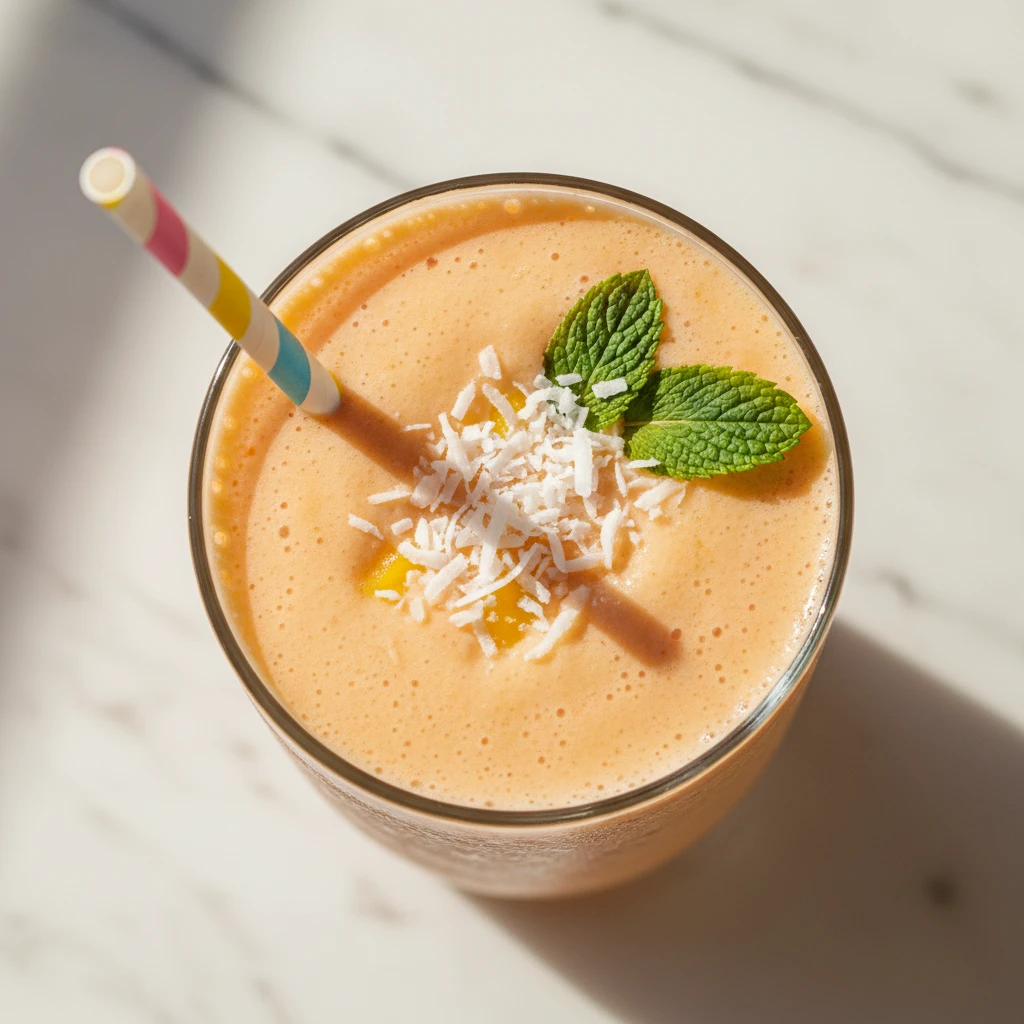
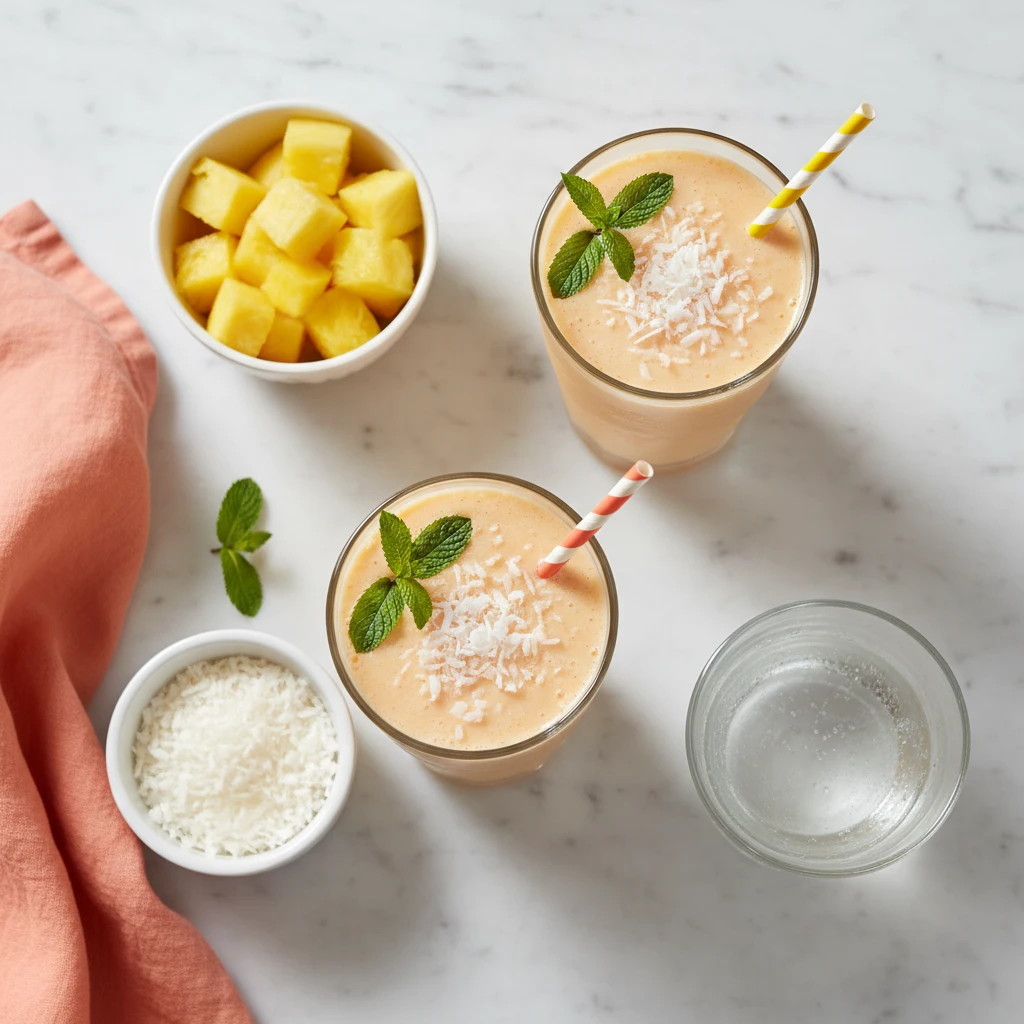
- Classic Smoothie Glass Presentation: Pour into a tall, clear glass to showcase the beautiful peachy-orange color of the blended fruit. Top with shredded coconut and a sprig of fresh mint. Add a colorful biodegradable straw for a fun tropical touch. This is ideal for breakfast or a mid-afternoon refresher.
- Smoothie Bowl Base: Pour the smoothie into a wide, shallow bowl and top with granola, fresh berries, shredded coconut, sliced kiwi, and a drizzle of honey. This creates a more substantial, Instagram-worthy meal that’s perfect for weekend brunch.
- Breakfast Pairing: Serve alongside buttered toast, coconut bread, or banana bread for a complete breakfast. The smoothie’s natural sweetness and creaminess pairs beautifully with slightly salty, toasted elements.
- Poolside Summer Refresher: Serve in chilled glasses over ice with a paper umbrella for a fun, resort-style presentation. Perfect for summer entertaining or casual outdoor gatherings.
- Post-Workout Recovery: Serve immediately after exercise when muscles need protein and carbohydrates. The Greek yogurt provides protein; the fruit provides quick-digesting carbs.
- Tropical Sunrise Presentation: Layer the smoothie with different colored fruit layers visible through a clear glass by pouring slowly. This creates a visually stunning effect that feels special even on a weekday morning.
- Smoothie Popsicles: Pour the smoothie into popsicle molds and freeze for 6 hours. Perfect for kids or a fun summertime frozen treat. Adults love these too.
- Companion Beverages: Serve alongside coconut water, fresh lime water, or herbal iced tea for a complete tropical beverage spread at brunch or entertaining.
- Garnish Extensions: Beyond mint and coconut, try topping with toasted macadamia nuts, edible flowers, a thin pineapple wedge on the rim, or a sprinkle of lime zest for visual sophistication.
- Temperature Tip: Chill glasses in the freezer for 10 minutes before pouring to keep the smoothie colder longer and enhance the refreshing sensation on first sip.
 Save
SaveStorage and Reheating
Refrigerator Storage: If you need to prepare ahead, pour the blended smoothie into an airtight glass jar or container and refrigerate for up to 4 hours. The smoothie will separate slightly, with liquid settling at the bottom and fruit at the top. Before serving, shake the jar vigorously or give it a quick blend with an immersion blender to restore the creamy texture. Do not refrigerate beyond 4 hours, as the fruit will begin to oxidize and turn brown, developing an off-flavor.
Freezer Storage (Component Method): Store your prepared fruit components (pineapple chunks, mango cubes, banana slices) in separate freezer bags for up to 3 months. Label each bag with the date and contents. On busy mornings, combine frozen fruit directly with yogurt, coconut milk, and juice for a fresh smoothie in minutes. This method is actually ideal since frozen fruit creates the perfect thick, icy texture.
Freezer Storage (Prepared Smoothie): You can freeze a fully blended smoothie in an airtight container or freezer bags for up to 2 weeks. Thaw overnight in the refrigerator or at room temperature for 30 minutes. The texture will be icy rather than smooth, so blend again briefly with an immersion blender or in the blender with 2–3 tablespoons additional coconut milk to restore creaminess. Note: freezing changes the texture; the smoothie becomes more like a slushie.
Freezer Popsicles: Pour the smoothie into popsicle molds and freeze for 6 hours or overnight. Pop out and store in a freezer bag for up to 1 month. These last-minute treats are perfect for kids or hot days.
Not Recommended to Reheat: Do not attempt to heat this smoothie. It’s a cold beverage meant to be enjoyed chilled. Heating will destroy the fresh fruit flavor and yogurt probiotics.
Yogurt and Probiotics: Fresh Greek yogurt contains live active cultures (probiotics) that provide digestive benefits. When you freeze a smoothie, freezing doesn’t kill the cultures, but the longer it sits frozen, the fewer active cultures remain viable. For maximum probiotic benefits, consume within 2–3 days of preparation.
Frequently Asked Questions about Tropical Smoothie
Can I use frozen fruit instead of fresh?
Yes, absolutely! Frozen pineapple, mango, and banana actually make an excellent smoothie. Frozen fruit creates a thicker, icier texture and you can skip some or all of the ice cubes. Frozen fruit is often more economical and available year-round. Just thaw slightly (5 minutes at room temperature) if your blender struggles with rock-hard frozen chunks, or add the liquid first to help circulation.
Is this smoothie suitable for people with dairy allergies?
The traditional recipe contains Greek yogurt and potentially uses dairy-based ingredients. To make it dairy-free, substitute the Greek yogurt with coconut yogurt, cashew cream, or silken tofu in equal amounts. Use coconut milk or another plant-based milk. The smoothie will be equally creamy and delicious. Always check that all your ingredients are certified dairy-free if you have a severe allergy.
Can I make this smoothie without a high-powered blender?
A standard blender will work, but the result may not be as smooth. Blend longer (up to 2 minutes) and expect some tiny fruit particles or yogurt lumps. If you prefer an ultra-smooth consistency, strain the smoothie through a fine-mesh sieve after blending. Alternatively, use frozen fruit, which breaks down more easily in standard blenders than fresh fruit.
What does turmeric add to the smoothie?
Turmeric adds anti-inflammatory compounds and a subtle warm, earthy undertone. Use only a pinch (about 1/8 teaspoon) or it will overpower the smoothie and taste bitter. The turmeric is optional—you can omit it entirely and the smoothie will still be delicious. If you enjoy the flavor, turmeric is a nutritious addition with proven health benefits.
How can I make this smoothie less sweet?
Reduce or eliminate the honey—ripe fruit provides plenty of natural sweetness. Add fresh lemon or lime juice (1 teaspoon) to provide tartness that balances sweetness. Choose less-ripe mango and banana, which have less natural sugar. Add a pinch of salt (just 1/16 teaspoon)—salt enhances fruit flavors and makes the smoothie taste fresher without additional sweetness.
Can I prepare a smoothie the night before?
Yes, but with caveats. Blend and refrigerate in an airtight jar for up to 4 hours. The smoothie will separate, so shake vigorously or re-blend with an immersion blender before drinking. Beyond 4 hours, the fruit oxidizes and turns brown, developing off-flavors. For best results, prepare your frozen fruit components ahead and blend fresh each morning.
What’s the best way to ripen a mango for this smoothie?
Place unripe mango in a paper bag with a banana (which releases ethylene gas that speeds ripening) at room temperature for 1–2 days. Check daily by squeezing gently—ripe mango yields slightly to pressure and smells fragrant near the stem. Avoid microwaving or forcing ripeness; natural ripening develops better flavor. You can also buy pre-ripe mango at the market if you’re short on time.
Nutrition Facts (Per Serving)
| Nutrient | Per Serving | % Daily Value |
|---|---|---|
| Calories | 245 | 12% |
| Total Fat | 8g | 12% |
| Saturated Fat | 6g | 30% |
| Trans Fat | 0g | — |
| Cholesterol | 5mg | 2% |
| Sodium | 35mg | 2% |
| Total Carbohydrate | 42g | 14% |
| Dietary Fiber | 3g | 12% |
| Sugars | 32g | — |
| Protein | 8g | 16% |
| Vitamin C | 85mg | 142% |
| Vitamin A | 1450 IU | 29% |
| Potassium | 520mg | 15% |
| Calcium | 180mg | 18% |
| Iron | 0.5mg | 3% |
Dietary Notes: This tropical smoothie is naturally dairy-free adaptable (substitute coconut yogurt), gluten-free, and vegan-friendly (use plant-based yogurt). The smoothie is high in vitamin C for immune support and provides quick-digesting carbohydrates ideal for post-workout recovery. Sugars are primarily from natural fruit sources. The fat content is from coconut milk, which provides medium-chain triglycerides (MCTs). This recipe serves approximately 3–4 people depending on portion size.
Tropical Smoothie
Ingredients
- 1 cup fresh pineapple chunks
- 1 ripe mango peeled and cubed
- 1 cup fresh banana sliced
- 1/2 cup Greek yogurt
- 1/2 cup coconut milk
- 1/3 cup orange juice freshly squeezed
- 1/2 cup ice cubes
- 1 tablespoon raw honey
- 1/2 teaspoon vanilla extract
- Pinch of turmeric powder
- Fresh mint leaves for garnish
- Shredded coconut for topping
Instructions
- Gather all ingredients and place a high-powered blender on your counter. Ensure the blender jar is clean and dry. Checkpoint: You are ready when your blender is ready to use and all ingredients are within arm's reach.
- Add 1 cup fresh pineapple chunks (or frozen) to the blender first. The order doesn't significantly affect the result, but fruits at the bottom help distribute better. This takes less than 1 minute.
- Add 1 cubed ripe mango (about 1 cup) to the blender. Look for a mango that smells fragrant and yields slightly to thumb pressure—this indicates ripeness and maximum flavor.
- Add 1 cup sliced fresh banana (or frozen banana slices). Frozen banana adds extra thickness and chill to the smoothie, while fresh banana provides a lighter texture.
- Pour 1/2 cup Greek yogurt into the blender. Use plain, unsweetened yogurt to avoid adding unwanted flavors. The yogurt provides creaminess and 10–15 grams of protein per serving.
- Pour 1/2 cup coconut milk (from a can) into the blender. Stir the can first—fat naturally separates and settles at the top. Full-fat coconut milk creates a richer, more luxurious texture than lite milk.
- Squeeze and pour 1/3 cup fresh orange juice into the blender. If using store-bought juice, choose 100% juice with no added sugar. The juice adds citrus brightness and vitamin C.
- Add 1 tablespoon raw honey to sweeten. Drizzle it down the side of the blender jar so it coats the walls, which helps distribute it evenly during blending.
- Add 1/2 teaspoon vanilla extract. Vanilla is optional but recommended—it enhances the fruit flavors and adds subtle depth without tasting vanilla-forward.
- Add a pinch (about 1/8 teaspoon) of turmeric powder. This is important: use very little turmeric or it will overpower the smoothie with an earthy, bitter taste. Turmeric adds anti-inflammatory compounds and a warm undertone.
- Add 1/2 cup ice cubes (about 6–8 cubes) to the blender. Ice achieves two things: it makes the smoothie thick and frosty, and it chills everything instantly so you don't need pre-chilled ingredients.
- Place the blender lid on securely and check that it's tight. Position the blender on a stable, flat surface before blending—never hold it.
- Start the blender on the lowest setting for 5 seconds to break up the largest fruit pieces. This prevents the motor from working too hard at the start.
- Increase the blender speed to high and blend for 60–90 seconds total. Stop and listen: when you hear a smooth, continuous whirring sound and the mixture looks uniform and creamy (no visible chunks of fruit or yogurt), it's done. Over-blending can create a thin, watery smoothie.
- Checkpoint: You are ready to serve when the smoothie is completely smooth, creamy, and there are no visible chunks or separation. It should be thick enough to coat the back of a spoon but pourable.
- Turn off the blender and carefully remove the lid, opening it away from your face to avoid steam.
- Pour the smoothie evenly into 2 tall glasses (if serving 2) or 3–4 shorter glasses (if serving 3–4). Pour slowly and steadily to avoid spillage. The smoothie should be frothy on top from aeration during blending.
- Immediately top each glass with 1 tablespoon shredded coconut. Use unsweetened coconut if you prefer less sugar, or lightly sweetened coconut for extra tropical flavor.
- Garnish with 2–3 fresh mint leaves placed on top or tucked into the side of the glass. Mint adds visual appeal and a refreshing herbal note.
- Add a colorful straw (optional) and serve immediately. The smoothie is best consumed within 5–10 minutes of blending while it's cold and frothy. If it sits longer, the ice will melt and thin out the consistency.
- If you're making this ahead, blend and refrigerate in a covered jar for up to 4 hours, but blend briefly with an immersion blender or shake vigorously before serving to restore texture.