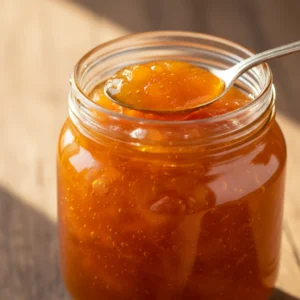
Apricot Jam Recipe
Make homemade apricot jam with just 3 ingredients. Simple recipe for smooth or chunky jam, with fridge and canning storage options. Step-by-step guide.
Ingredients
- 4 pounds fresh apricots pitted and halved
- 4 cups granulated sugar
- ¼ cup lemon juice
Instructions
- Prepare the apricots: Wash 4 pounds of fresh apricots under cool water. Cut each apricot in half lengthwise and remove the pit by twisting gently or using a small knife. You can peel the skins off using a vegetable peeler or blanch-and-ice-bath method if you prefer smooth jam, or leave them on for rustic texture. (Prep time: 20–30 minutes.)
- Combine ingredients: Place a large, heavy-bottomed pot (at least 8-quart capacity) on your counter. Add the 4 pounds of halved apricots, 4 cups of granulated sugar, and ¼ cup of fresh lemon juice into the pot. Stir gently to combine. (Combine time: 5 minutes.)
- Optional maceration: Let the mixture sit at room temperature for 30 minutes to 1 hour. The sugar will draw out the apricot juices, creating a syrup base. This step improves texture but is optional if you're short on time. (Wait time: 30–60 minutes.)
- Heat to boiling: Place the pot over medium-high heat. Stir frequently, every 2–3 minutes, scraping the bottom and sides to ensure sugar dissolves evenly and doesn't scorch. Watch for steam rising and the mixture to bubble at the edges first. Continue stirring for 8–12 minutes until the entire mixture reaches a rolling boil. Checkpoint: The mixture should bubble vigorously across the entire surface when you stir.
- Simmer and thicken: Once boiling, reduce the heat to medium or medium-low to maintain a steady, gentle boil. The jam should bubble actively but not violently splash. Stir occasionally (every 2–3 minutes) and use a potato masher or sturdy wooden spoon to crush the softening apricots against the side of the pot. Aim for a chunky texture initially; you can always mash more if desired. Cook for 25–30 minutes total. The mixture will darken from bright orange to deep amber and thicken noticeably. Checkpoint: The jam should slow down when you draw a spoon through it, leaving a brief trail before closing.
- Perform the set test: After 25 minutes, remove the pot from heat. Place a small clean saucer or plate in the freezer for 1 minute. Spoon about ½ teaspoon of hot jam onto the chilled plate. Return it to the freezer for exactly 1 minute. Remove and gently push the jam with your finger. If it wrinkles and doesn't immediately flow back together, the jam has reached the gel stage and is ready. If it's still too runny, return the pot to the heat, simmer for another 2–3 minutes, and test again. Checkpoint: Jam should wrinkle when pushed and hold its shape on the cold plate.
- Skim the foam: Remove the pot from heat. Using a clean spoon or skimmer, gently remove any white or tan foam that has collected on the jam's surface. This foam is harmless but skimming it creates a clearer, more polished final product. (Skimming time: 2–3 minutes.)
- Prepare jars (for fridge storage): For jam you'll refrigerate, use clean glass jars (no need for sterilization). Carefully ladle the hot jam into jars, leaving about ¼ inch of headspace at the top. Wipe the rims clean with a damp cloth. Place lids on top but do not tighten sealed. Let the jars cool to room temperature on the counter (about 2–3 hours), then refrigerate. Checkpoint: Jars should be filled but not overflowing, with ¼ inch clear space below the rim.
- Prepare jars (for shelf-stable canning): If you want to process the jam for long-term pantry storage, use sterilized mason jars. Sterilize by running them through a hot dishwasher cycle or boiling them in water for 10 minutes before use. While the jam finishes cooking, fill a large pot with water and bring it to a rolling boil. Carefully ladle hot jam into hot, sterilized jars, leaving exactly ¼ inch headspace. Wipe rims with a clean, damp cloth to remove any jam residue. Place sterilized lids on jars and screw bands finger-tight (snug but not forced). (Jar prep time: 10–15 minutes.)
- Process in water bath (canning only): Using a jar lifter, carefully lower each filled jar into the pot of boiling water, ensuring jars are covered by at least 1 inch of water. Return the water to a rolling boil, then maintain the boil for 10 minutes (standard processing time at sea level; add 1 minute for every 1,000 feet above sea level). Checkpoint: Water should boil vigorously; jars should not tip or touch the pot bottom.
- Cool and store: Using a jar lifter, carefully remove jars from the boiling water bath and place them upright on a clean towel or rack. Do not move or tilt them. Leave them undisturbed as they cool to room temperature (4–24 hours). You may hear a popping sound as lids seal — this is normal and good. Once cool, check that lids have sealed by pressing the center; sealed lids should not flex. Store sealed jars in a cool, dark pantry for up to 1 year. Refrigerate any jars that don't seal within 24 hours and use within 3 weeks. For fridge jam (non-canned), simply refrigerate cooled jars for up to 3 weeks. (Cooling time: several hours to overnight.)