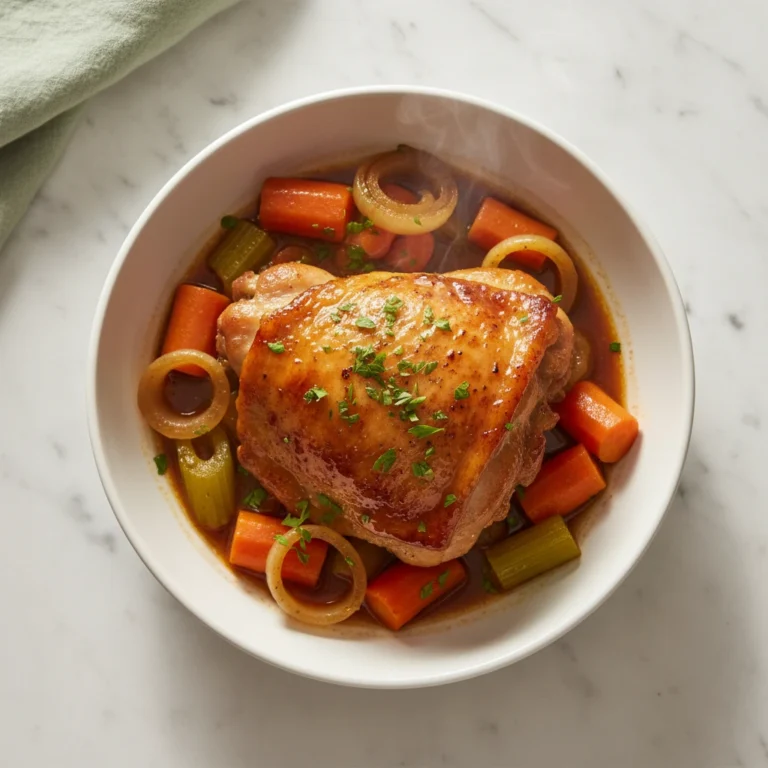
Braised chicken thighs are a rustic, deeply flavorful one-pot meal that transforms simple ingredients into restaurant-quality comfort food. Dark meat becomes incredibly tender and succulent when slow-cooked in a savory broth infused with aromatics, herbs, and vegetables. This classic technique locks in moisture and allows flavors to meld beautifully, creating a rich, savory sauce that’s perfect for spooning over crusty bread or rice.
Reasons to Try Braised Chicken Thighs
Forgiving and Foolproof: Chicken thighs are nearly impossible to dry out. Their high fat content keeps the meat juicy and tender, even if you braise them a bit longer than planned. Unlike breasts, thighs thrive on low-and-slow cooking.
Deep, Complex Flavor: Braising creates a rich, umami-forward sauce by rendering the skin and marrying chicken juices with wine, broth, and aromatic vegetables. Each bite carries layers of flavor that simple roasting cannot achieve.
One-Pot Convenience: Everything cooks in a single Dutch oven or heavy-bottomed pot—proteins, vegetables, and sauce all develop together. Minimal cleanup and maximum comfort.
Budget-Friendly Elegance: Chicken thighs are affordable, yet the braising technique elevates them to special-dinner status. You get restaurant-quality results without the price tag.
Infinitely Customizable: The base method welcomes endless variations—swap white wine for red, add mushrooms or potatoes, use different herbs. Build your signature version once you master the core technique.
Perfect for Meal Prep: Braised chicken thighs taste even better the next day when flavors deepen. Make a batch for weeknight dinners or easy entertaining.
 Save
SaveIngredients Notes
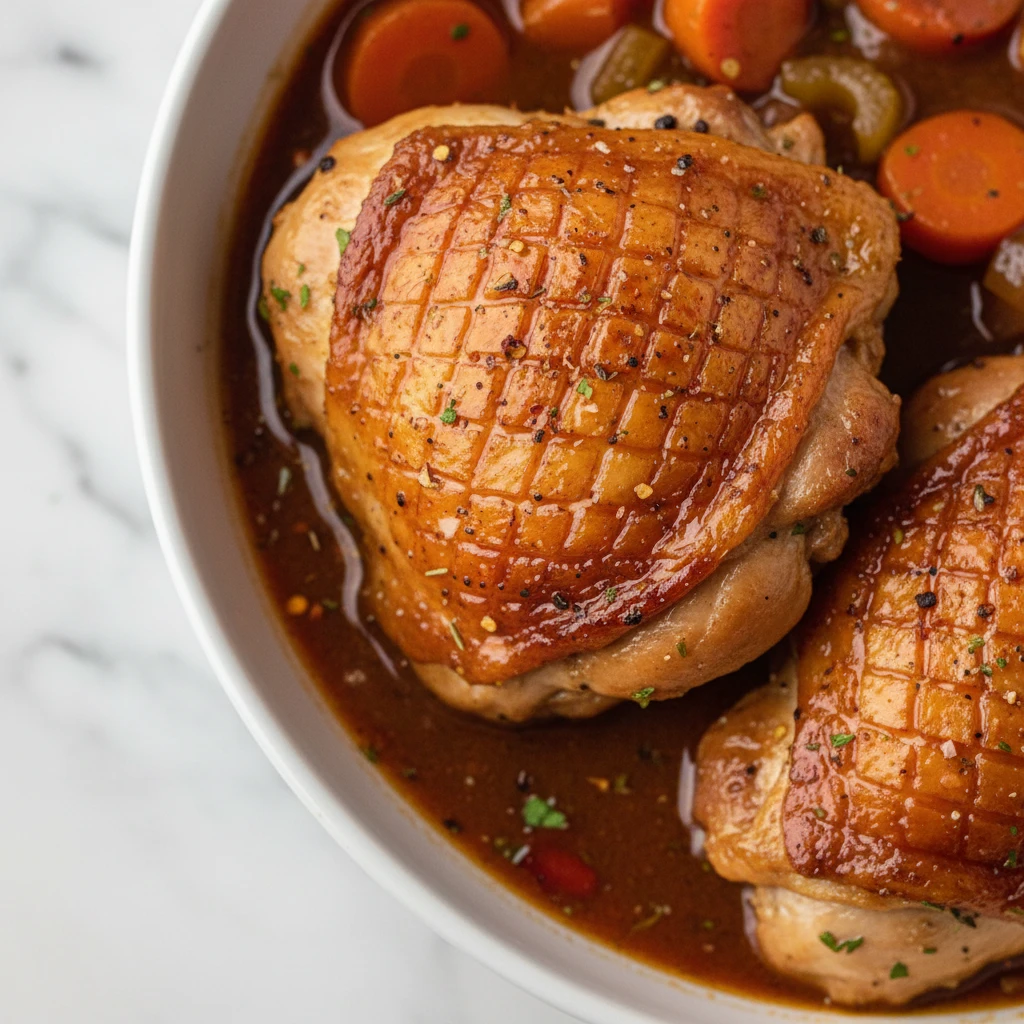
- Chicken thighs: Use bone-in, skin-on thighs for maximum flavor and natural collagen that enriches the braising liquid. Pat them dry before searing to achieve golden, crispy skin.
- Olive oil: Essential for searing the chicken and building flavor. Use a mid-range quality oil; extra virgin is not necessary for high-heat cooking.
- Aromatics (onion, garlic, carrots, celery): These form the classic mirepoix base, creating the foundation of the braising liquid. Do not skip or substitute en masse; they provide structure and depth.
- Chicken broth: Low-sodium broth prevents oversalting. You control the seasoning, not the store.
- Dry white wine: Adds acidity and complexity. Sauvignon Blanc or Pinot Grigio work beautifully. If you prefer not to use wine, substitute with additional broth and a splash of apple cider vinegar.
- Tomato paste: A small amount adds depth and subtle sweetness without making the dish taste tomatoey. Sauté it briefly to develop its flavor.
- Bay leaves, thyme, rosemary: Classic French braising herbs. Use fresh if available, but dried work perfectly. Do not skip dried herbs—they are essential for authentic flavor.
- Red pepper flakes: A pinch adds subtle warmth and complexity. Adjust to your heat preference.
- Lemon juice: Brightens the finished sauce and balances richness. Add after cooking to preserve its fresh, sharp quality.
- Cornstarch slurry: Thickens the braising liquid to sauce consistency without a flour-based roux. This keeps the dish gluten-free friendly.
How to Make Braised Chicken Thighs
- Pat chicken thighs dry with paper towels. Season generously with kosher salt and black pepper on both sides.
- Heat olive oil in a large Dutch oven or heavy pot over medium-high heat until shimmering.
- Sear chicken thighs skin-side down for 4–5 minutes until golden and crispy. Transfer to a plate; set aside.
- Sear remaining chicken, skin-side up, for 2–3 minutes. Transfer all chicken to the plate.
- Pour off all but 1 tablespoon of fat from the pot. Add sliced onion, minced garlic, carrots, and celery. Sauté for 3–4 minutes until softened.
- Stir in tomato paste and cook for 1 minute, stirring constantly to coat vegetables.
- Deglaze the pot with white wine, scraping up browned bits. Simmer for 1 minute.
- Add chicken broth, bay leaves, dried thyme, dried rosemary, and red pepper flakes. Return chicken thighs to the pot, nestling them among the vegetables.
- Bring to a simmer, then reduce heat to low. Cover and braise for 45–50 minutes until chicken is fork-tender and sauce has reduced slightly.
- Remove from heat. Stir in fresh lemon juice. Mix cornstarch and cold water to form a slurry, then stir into the sauce to thicken if desired.
- Taste and adjust seasoning with additional salt and pepper. Garnish with fresh parsley and serve.
What You Must Know About Braised Chicken Thighs
Pat the Chicken Completely Dry: This is non-negotiable. Any surface moisture prevents the skin from crisping and creates steam instead of a sear. Spend 30 seconds thoroughly patting each thigh with paper towels. Wet skin equals soggy skin, and you will miss the golden, rendered texture that makes braised chicken special.
Do Not Skip the Searing Step: Searing builds the foundational flavors through the Maillard reaction—the browning process that creates complex, savory, meaty depth. Rushing this step or skipping it entirely results in pale, one-dimensional chicken. Invest the 15 minutes of searing time. It is the difference between good and exceptional.
Use Bone-In, Skin-On Thighs Only: Skinless or boneless thighs do not braise as well. The skin renders and enriches the sauce; the bones add gelatin and body to the braising liquid. The result is silky, deeply flavored sauce. Boneless thighs will be dry and stringy by comparison.
Low and Slow in the Oven: A 325°F oven is cooler than you might expect, but this temperature prevents the exterior from toughening while the interior cooks. Higher temperatures risk dry chicken. Trust the method—low heat over time is the secret to tender, succulent meat.
Do Not Overbraise: 45–50 minutes is ideal. Beyond 55 minutes, the meat becomes mushy and loses its appeal. Set a timer and check for fork-tenderness at exactly 45 minutes. Once done, remove from heat. Overcooking cannot be reversed.
Fresh Lemon Juice at the End: Adding lemon juice at the very end, after cooking, preserves its fresh, sharp quality. If you add it at the beginning, the acid cooks off and becomes muted. The final brightness of lemon balances the richness of the braised meat and sauce—it is essential, not optional.
Helpful Tips
Make It Ahead: Braised chicken thighs taste better the next day or even two days later as flavors meld and intensify. Cool completely, then store in an airtight container in the refrigerator. Reheat gently on the stovetop over medium-low heat, covered, until warmed through (about 10 minutes). This also makes weeknight entertaining effortless.
Render Extra Fat for Cooking: If your thighs release a lot of fat during searing, do not discard it. Let it cool, strain through cheesecloth, and store in the refrigerator. This rendered chicken fat (schmaltz) is liquid gold for roasting potatoes or vegetables—it adds incredible flavor.
Build a Deeper Sauce: For a more concentrated, silky sauce, remove the cooked chicken to a serving platter, then simmer the braising liquid uncovered on the stovetop for 5–10 minutes to reduce and concentrate flavors. Strain if you prefer a sauce without vegetable pieces, or leave vegetables in for rustic texture.
Pair with Sides Strategically: Serve braised chicken thighs with foods that soak up the sauce—creamy mashed potatoes, buttered egg noodles, polenta, or crusty bread. These absorb and showcase the hard-earned sauce, making every element matter.
Adjust Herbs to Your Preference: The recipe calls for dried thyme and rosemary, which are hearty and aromatic. If you dislike one, swap it for dried oregano, marjoram, or Italian seasoning in equal measure. If using fresh herbs, add them in the last 5 minutes of cooking to preserve their delicate flavor.
Variations and Substitutions
Red Wine Braised Chicken: Replace white wine with 1/2 cup full-bodied red wine (Burgundy or Côtes du Rhône work beautifully). The resulting sauce becomes deeper, richer, and slightly more tannic. Add 4–5 pearl onions and 8 ounces mushrooms (cremini or baby bella, halved) to the pot alongside the aromatics for a more robust dish. This version pairs wonderfully with egg noodles or mashed potatoes.
Mediterranean Braised Chicken: Replace dried thyme and rosemary with 1 teaspoon dried oregano and 1/2 teaspoon dried basil. Add 1/2 cup pitted green or Kalamata olives, 1/4 cup sun-dried tomatoes (chopped), and a pinch of saffron threads to the braising liquid. Use chicken broth in place of wine for a lighter, brighter profile. This variation is bright, herbaceous, and perfect with crusty bread.
Asian-Inspired Braised Chicken: Replace white wine with 1/2 cup rice vinegar or sake. Substitute tomato paste with 2 tablespoons soy sauce and 1 tablespoon mirin (sweet rice wine). Replace dried thyme and rosemary with 2 thin slices fresh ginger and 1 teaspoon sesame oil. Add 2 tablespoons hoisin sauce and 1 teaspoon Sriracha for depth and mild heat. Serve over steamed jasmine rice or with stir-fried bok choy.
Creamy Braised Chicken: After the chicken finishes braising and before adding lemon juice, stir in 1/2 cup heavy cream or Greek yogurt (add yogurt slowly, off heat, to avoid curdling). The sauce becomes luxurious and silky. This version works beautifully with egg noodles, buttered rice, or creamed spinach.
Root Vegetable Braised Chicken: Keep the French herb profile but replace carrots and celery with 1 pound fingerling potatoes (halved lengthwise), 8 ounces parsnips (cut into 2-inch pieces), and 4 ounces pearl onions (peeled). These heartier vegetables absorb the braising liquid and become tender, creating a one-pot meal with no sides needed.
No-Wine Version: If you prefer not to use alcohol, replace the 1/2 cup white wine with an additional 1/2 cup chicken broth plus 1 tablespoon apple cider vinegar or white vinegar. The acid balances the dish similarly to wine. The final sauce will be slightly thinner but still deeply flavored.
Ingredient Substitutions: Chicken breasts can be substituted, though they require shorter braising (25–30 minutes) to prevent drying out. Use them only if thighs are unavailable. Pork shoulder or beef chuck work beautifully with the same method, extending the braise to 60–75 minutes. Fresh herbs can replace dried in equal measure (so 1 teaspoon dried = 1 tablespoon fresh), but add them in the final 5 minutes of cooking to preserve their delicate flavor.
Serving Suggestions for Braised Chicken Thighs
Over Creamy Mashed Potatoes: Spoon the chicken thighs and vegetables onto a bed of buttery, creamy mashed potatoes. The starch absorbs the rich braising sauce, and every bite becomes comfort incarnate. Garnish with fresh parsley and a crack of black pepper. This is the classic, never-fail pairing.
Alongside Buttered Egg Noodles: Toss wide egg noodles with butter and fresh parsley, then arrange braised chicken thighs on top. Spoon the sauce generously over everything. The noodles’ texture catches and holds the sauce beautifully, creating a dish reminiscent of coq au vin.
On a Bed of Creamed Spinach: Wilt fresh spinach with garlic and cream (or sauté in butter until soft), then plate the braised chicken thighs directly on the spinach. The tender dark leafy greens complement the rich sauce and add elegant visual contrast. This is lighter and more sophisticated than potato-based sides.
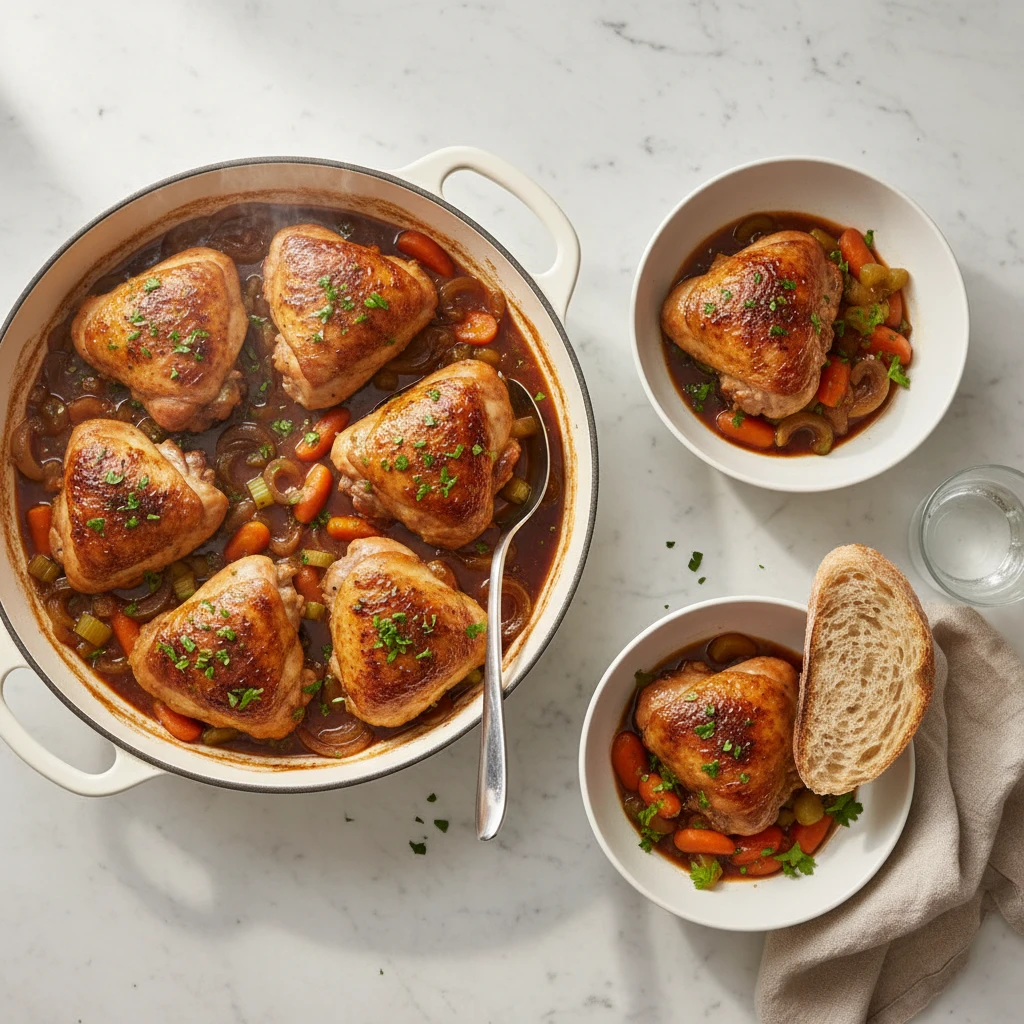
With Crusty Bread for Soaking: Serve braised chicken thighs in a shallow bowl with their full braising sauce and a thick slice of sourdough or rustic bread on the side for dunking. This is unpretentious, delicious, and captures the soul of home cooking. Let guests soak bread directly in the sauce.
Alongside Roasted Root Vegetables: While the chicken braises, roast halved Brussels sprouts, carrots, and parsnips with olive oil, salt, and pepper at 400°F for 25–30 minutes until caramelized. Serve the braised chicken alongside these vegetables, allowing the two cooking methods to showcase different textures and flavors on one plate.
In a Shallow Bowl with Extra Sauce: Ladle braised chicken thighs into shallow bowls or plates, surrounding them with their vegetables and sauce. Garnish with fresh parsley and a small squeeze of lemon. This rustic plating celebrates the sauce as much as the chicken, inviting guests to enjoy every drop. Serve family-style, or plate individually for a more formal presentation.
As a Sandwich Filling: Shred the cooked chicken meat from the bones, discard skin and bones, and mix the shredded meat with the reduced braising sauce. Pile onto toasted bread rolls for a composed sandwich. Unexpected and delicious as a next-day use.
 Save
SaveStorage and Reheating
Refrigerator Storage: Braised chicken thighs keep exceptionally well. Allow the dish to cool completely (about 45 minutes), then transfer to an airtight container. Store in the refrigerator for up to 4 days. The flavors actually improve as the braising liquid is reabsorbed into the meat, making day-two or day-three leftover superior to the day-one meal.
Freezer Storage: For longer storage, freeze in an airtight freezer-safe container or heavy-duty freezer bag (removing as much air as possible before sealing) for up to 3 months. The chicken and sauce freeze beautifully and do not degrade. Thaw overnight in the refrigerator before reheating.
Reheating on the Stovetop: This is the best method for preserving the chicken’s texture and sauce integrity. Place the braised chicken thighs (still in their sauce) in a heavy-bottomed pot over medium-low heat. Cover and gently warm for 10–15 minutes, stirring occasionally, until the sauce reaches a gentle simmer and the chicken is heated through (internal temperature should reach 165°F). Do not allow the sauce to boil vigorously or the chicken may become tough. Add a splash of water or broth if the sauce seems too thick or concentrated.
Reheating in the Oven: Preheat the oven to 325°F (the same temperature used for braising). Transfer the braised chicken thighs to a covered baking dish and warm for 15–20 minutes until heated through. This method is ideal if you are already using the oven for other dishes.
Microwave Reheating (Not Recommended): While the microwave is fastest (3–5 minutes on 50% power, stirring halfway), it can unevenly heat the chicken and toughen the meat. Use only if absolutely necessary, and stir frequently.
Make-Ahead Tip: Braised chicken thighs are ideal for make-ahead entertaining. Prepare up to 3 days in advance, store in the refrigerator, and simply reheat gently on the stovetop the day of serving. This approach eliminates last-minute stress and actually improves the finished dish.
Frequently Asked Questions about Braised Chicken Thighs
Can I use boneless, skinless chicken thighs instead of bone-in, skin-on?
Technically yes, but it is not recommended. Boneless, skinless thighs lack the bone collagen that enriches the braising liquid and the skin fat that renders and flavors the sauce. The result is a drier, less flavorful dish. If you must use boneless thighs, reduce the braising time to 30–35 minutes and monitor closely to prevent drying. The best outcome uses bone-in, skin-on thighs as written in the recipe.
What if I do not have white wine? Can I skip it entirely?
Yes. Replace the 1/2 cup white wine with an additional 1/2 cup low-sodium chicken broth plus 1 tablespoon apple cider vinegar or white vinegar. The acid from the vinegar provides the brightness and complexity that wine contributes. The dish will be slightly less nuanced but still deeply satisfying. Alternatively, use 1/2 cup dry vermouth, which is lower in alcohol but retains wine-like flavor.
How do I know when the chicken is done braising?
Fork-tenderness is the primary indicator. Pierce the thickest part of the thigh (near the thigh-drumstick joint) with a fork. If it slides through with no resistance and the meat feels soft, the chicken is done. Additionally, use an instant-read meat thermometer to confirm the internal temperature reaches 165°F (74°C). Begin checking at 45 minutes; most thighs finish by 50 minutes. Do not braise beyond 55 minutes or the meat becomes mushy.
Can I make this recipe using a slow cooker instead of the oven?
Yes, with modifications. Sear the chicken in a separate Dutch oven as described (this step is essential and cannot be skipped). Transfer seared chicken to a slow cooker, add all remaining ingredients (no wine reduction needed), and cook on LOW for 6–7 hours or HIGH for 3–4 hours. The result will be slightly more muted in flavor (because the braising liquid is not reduced), but still delicious. Add lemon juice and fresh parsley at the end as directed.
Is this recipe naturally gluten-free?
Yes. The recipe contains no gluten-containing ingredients. However, if you use store-bought chicken broth, verify it is labeled gluten-free, as some brands contain hidden gluten. All fresh ingredients (chicken, vegetables, herbs, lemon) are naturally gluten-free. If thickening the sauce with a cornstarch slurry, use only cornstarch (which is gluten-free) and avoid flour-based roux.
Can I double this recipe for a larger crowd?
Absolutely. Double all ingredients and use two Dutch ovens or one very large pot (at least 7–8 quarts). Sear the chicken in batches so it fits comfortably without crowding. The braising time remains 45–50 minutes. A larger volume of liquid may take slightly longer to reduce, so simmer an extra 5 minutes if the sauce seems thin. Doubling is seamless and scales beautifully.
What should I serve alongside braised chicken thighs?
Braised chicken thighs pair wonderfully with starch-based sides that absorb the sauce: creamy mashed potatoes, buttered egg noodles, polenta, risotto, or crusty bread. Alternatively, serve with roasted vegetables (Brussels sprouts, carrots, parsnips), creamed spinach, or a simple green salad for contrast. The key is choosing sides that either absorb or balance the rich, savory sauce.
Nutrition Facts (Per Serving)
| Nutrient | Per Serving |
|---|---|
| Calories | 385 kcal |
| Protein | 38 g |
| Total Fat | 18 g |
| Saturated Fat | 5 g |
| Cholesterol | 130 mg |
| Carbohydrates | 12 g |
| Dietary Fiber | 2 g |
| Net Carbs | 10 g |
| Sugars | 5 g |
| Sodium | 650 mg |
| Potassium | 520 mg |
| Iron | 2.0 mg |
| Vitamin C | 8 mg |
Nutritional information is estimated based on USDA data and standard ingredient calculations. Actual values may vary depending on specific brands and ingredient variations used. This analysis assumes the recipe yields 6 servings as stated. The cornstarch slurry thickening is not included in the calculation; if used, the sauce will be slightly thicker but calorie impact is negligible.
Braised Chicken Thighs
Ingredients
- 6 bone-in skin-on chicken thighs (about 2 pounds)
- 2 teaspoons kosher salt
- 1 teaspoon black pepper
- 2 tablespoons olive oil
- 1 large yellow onion sliced into thick rings
- 4 cloves garlic minced
- 2 medium carrots cut into 2-inch pieces
- 3 celery stalks cut into 2-inch pieces
- 1 cup low-sodium chicken broth
- 1/2 cup dry white wine
- 2 tablespoons tomato paste
- 2 bay leaves
- 1 teaspoon dried thyme
- 1 teaspoon dried rosemary
- 1/4 teaspoon red pepper flakes
- 2 tablespoons fresh lemon juice
- 1 tablespoon cornstarch
- 2 tablespoons cold water
- 2 tablespoons fresh parsley chopped
Instructions
- Preheat your oven to 325°F (165°C). This low, gentle heat is essential for braising—it allows the chicken to cook through evenly without toughening the exterior.
- Remove chicken thighs from the refrigerator 15 minutes before cooking. Pat completely dry with paper towels on both sides. Moisture prevents proper browning and crispy skin. Season generously with 1 teaspoon kosher salt and 1/2 teaspoon black pepper on all sides, including skin and underside. The seasoning should coat the entire surface.
- Place a large Dutch oven (5–6 quart capacity) or heavy-bottomed pot over medium-high heat. Add 2 tablespoons olive oil and let it heat for 1–2 minutes until the oil shimmers and a drop of water immediately sizzles and evaporates. This indicates the oil is hot enough for searing.
- Carefully place 3 chicken thighs skin-side down in the hot oil. They should sizzle immediately. Do not move them for 4–5 minutes—this allows the skin to render, crisp, and turn deep golden brown. You should smell toasted chicken aromas and hear gentle crackling. Do not attempt to turn early; patience is crucial.
- After 4–5 minutes, using kitchen tongs, flip the 3 thighs skin-side up and sear the other side for 2–3 minutes. The underside should show light golden-brown color. Transfer these 3 thighs to a clean plate. Checkpoint: Chicken skin should be deep golden and feel crispy when gently pressed.
- Repeat Step 4–5 with the remaining 3 chicken thighs. Sear skin-side down for 4–5 minutes until golden, flip, and sear the other side for 2–3 minutes. Transfer to the plate with the first batch. Do not crowd the pot—working in batches ensures each thigh gets proper browning.
- Carefully pour off most of the rendered fat from the pot, leaving approximately 1 tablespoon behind. This residual fat carries tremendous flavor. Tilt the pot and use a ladle or spoon to remove excess fat, but leave the browned bits (called fond) stuck to the bottom—these are pure flavor.
- Add 1 large yellow onion (sliced into thick rings about 1/2-inch wide), 4 minced garlic cloves, 2 medium carrots (cut into 2-inch diagonal pieces), and 3 celery stalks (cut into 2-inch pieces) to the pot. Stir constantly with a wooden spoon for 3–4 minutes. The vegetables should soften slightly and the garlic should become fragrant but not brown. You should smell sweet onion and caramelizing garlic aromas.
- Add 2 tablespoons tomato paste directly to the vegetables. Stir thoroughly for exactly 1 minute, coating all vegetables. Tomato paste should darken slightly and become fragrant—this process, called blooming, intensifies its umami flavor. Do not skip this step or rush it.
- Pour 1/2 cup dry white wine into the pot, scraping the bottom with a wooden spoon to release all the caramelized fond stuck to the surface. This fond dissolves into the liquid and becomes part of your sauce. Simmer for 1–2 minutes; the alcohol smell should fade and the liquid should reduce very slightly.
- Add 1 cup low-sodium chicken broth, 2 bay leaves, 1 teaspoon dried thyme, 1 teaspoon dried rosemary, and 1/4 teaspoon red pepper flakes to the pot. Stir to combine. The liquid should have a warm herbal aroma.
- Return all 6 seared chicken thighs to the pot, nestling them skin-side up among the vegetables. The liquid should come about halfway up the sides of the chicken—not fully submerging them. This is braising, not boiling. If liquid seems too shallow (less than 1 inch), add 1/4 cup more broth.
- Bring the liquid to a gentle simmer over medium heat. You should see small, occasional bubbles breaking the surface—about 2–3 per second. Once simmering, immediately cover the pot with its lid (or use parchment paper under the lid to trap more steam).
- Transfer the covered pot to the preheated 325°F oven. Braising in the oven provides even, gentle heat from all sides. Set a timer for 45 minutes.
- At the 45-minute mark, carefully open the lid (watch for steam). The chicken should be fork-tender—a fork should pierce the meat easily with no resistance. The internal temperature at the thickest part should reach 165°F (74°C) using an instant-read thermometer. If not yet fork-tender, return to the oven for 5 more minutes and check again. The sauce should have reduced by about 1/4 and smell rich, savory, and deeply aromatic. Checkpoint: Chicken is ready when completely tender and the sauce coats a spoon.
- Remove the pot from the oven using an oven mitt. Carefully lift off the lid (very hot steam will escape). Let the pot sit on the stovetop for 2 minutes to cool slightly. Remove and discard the bay leaves by fishing them out with a spoon or tongs.
- Stir in 2 tablespoons fresh lemon juice to brighten and balance the richness of the sauce. Taste the sauce by spooning a small amount into a clean spoon and letting it cool briefly. Adjust seasoning with additional kosher salt and black pepper as needed—remember, the chicken has already been salted, so add sparingly.
- Optional thickening: If you prefer a thicker, more sauce-like consistency (rather than a thin, brothy sauce), make a cornstarch slurry by whisking 1 tablespoon cornstarch with 2 tablespoons cold water until completely smooth. Stir this slurry into the simmering sauce and cook for 1–2 minutes, stirring constantly, until the sauce thickens and becomes glossy. You should see the sauce coat the back of a spoon. If you prefer the thinner broth as-is, skip this step.
- Ladle the braised chicken thighs and vegetables into shallow bowls or onto dinner plates. Spoon the warm sauce over each serving. Garnish each plate with approximately 1/2 teaspoon of fresh chopped parsley for color and fresh flavor. Serve immediately while hot.