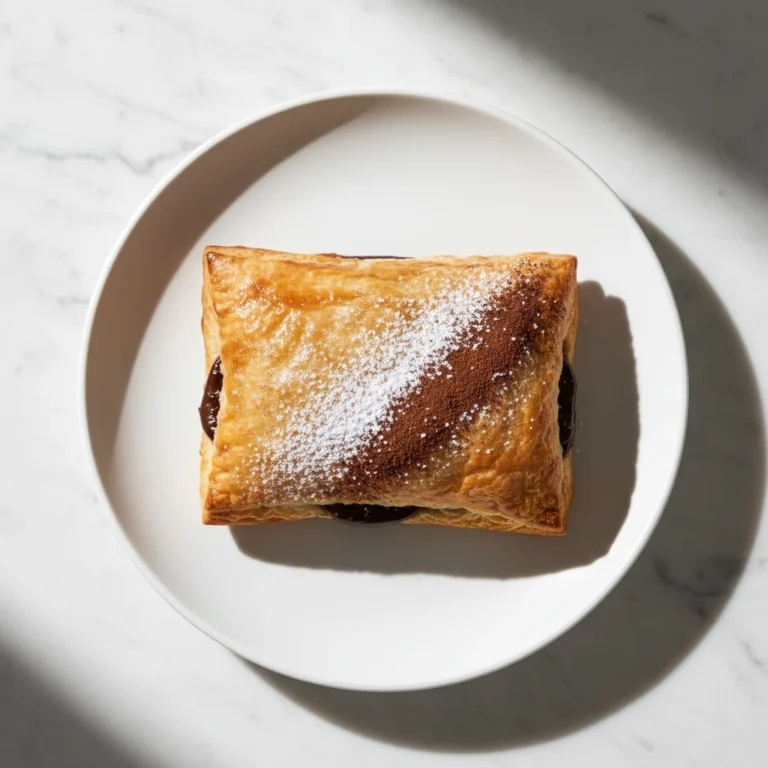
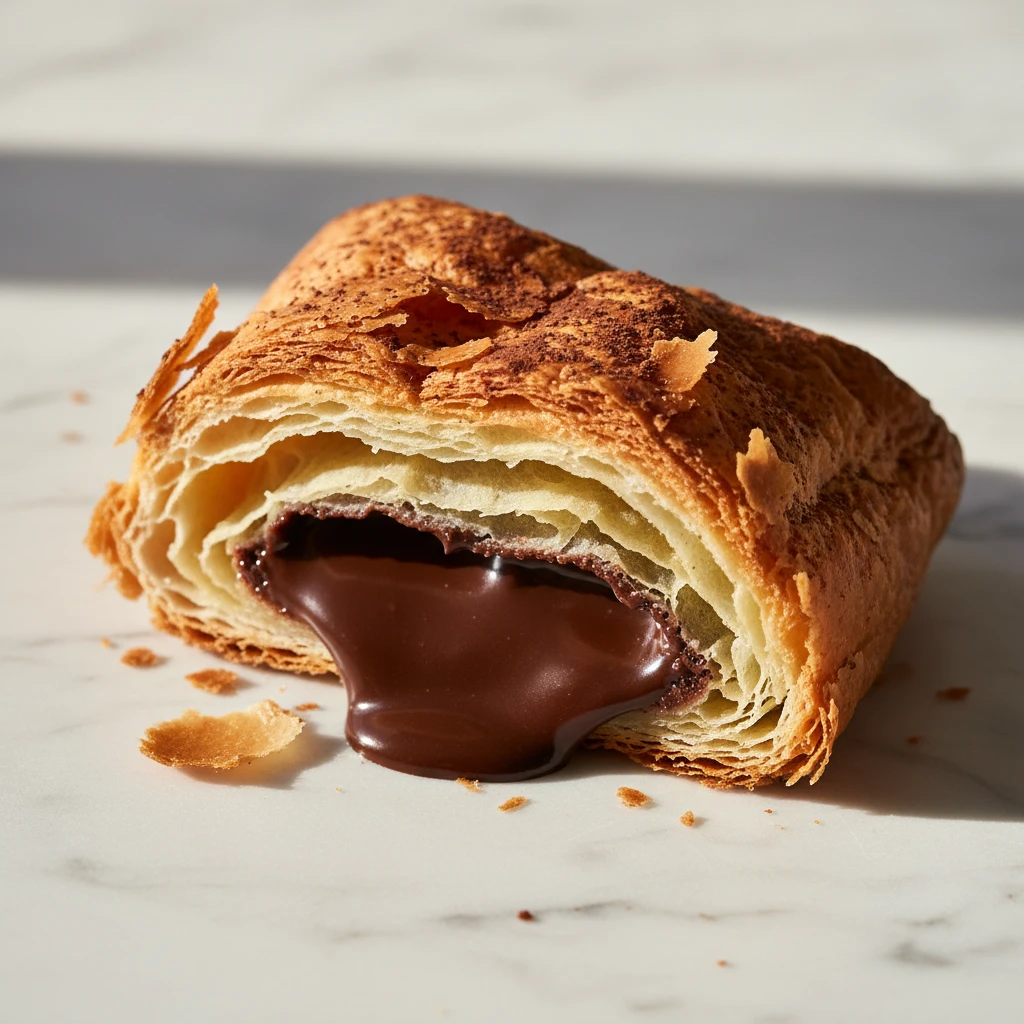
Chocolate puff pastry is a show-stopping dessert that combines buttery, flaky layers with rich, melting chocolate. This elegant yet simple treat requires minimal ingredients and no advanced baking skills, making it perfect for impressing guests or satisfying a chocolate craving. The contrast between the crispy pastry exterior and the gooey chocolate center creates an irresistible texture that keeps people coming back for more.
Reasons to Try Chocolate Puff Pastry
Effortless Elegance: Using store-bought puff pastry means you skip the tedious lamination process while still delivering restaurant-quality results. This dessert looks far more complicated than it actually is, making it ideal for impressing dinner guests without spending hours in the kitchen.
Rich Chocolate Flavor: Combining semi-sweet and dark chocolate creates a sophisticated flavor profile with depth and complexity. The chocolate isn’t overly sweet, and the balance of cocoa intensity appeals to serious chocolate lovers.
Perfect Texture Contrast: The appeal of this dessert lies in its textural variety—crispy, golden-brown pastry shatters when bitten, revealing a smooth, melted chocolate center. This contrast is what makes every bite memorable.
Versatile and Customizable: Whether you serve it as an elegant finish to a dinner party, pack it for a special picnic, or enjoy it as an afternoon treat with coffee, chocolate puff pastry adapts to any occasion. You can also experiment with different chocolate types or add fillings like nuts, fruit, or liqueurs.
Quick Preparation: From thawing the pastry to plating, this dessert takes less than 30 minutes total. It’s perfect for last-minute entertaining or when you need something indulgent fast.
 Save
SaveIngredients Notes
- Frozen puff pastry sheets (2 sheets, thawed according to package directions)
- Semi-sweet chocolate, chopped (8 ounces)
- Dark chocolate, chopped (4 ounces)
- Butter (3 tablespoons)
- Heavy cream (2 tablespoons)
- Vanilla extract (1 teaspoon)
- Egg (1 large)
- Water (1 tablespoon)
- Powdered sugar (2 tablespoons)
- Cocoa powder (1 tablespoon)
- Sea salt (pinch)
How to Make Chocolate Puff Pastry
- Preheat your oven to 400°F and line two baking sheets with parchment paper.
- Thaw the puff pastry sheets at room temperature for 20 minutes until they’re pliable but still cold.
- In a small saucepan, combine the semi-sweet chocolate, dark chocolate, butter, and heavy cream over low heat, stirring constantly until smooth and glossy.
- Remove the chocolate mixture from heat and stir in the vanilla extract and sea salt.
- Gently unfold the thawed puff pastry sheets and cut each into 4 equal rectangles, creating 8 total pieces.
- Place 4 pastry rectangles on the prepared baking sheets.
- Spoon approximately 2 tablespoons of the chocolate mixture onto the center of each pastry rectangle, leaving a half-inch border around all edges.
- Place the remaining 4 pastry rectangles on top to create sandwiches, then press the edges gently with a fork to seal.
- Whisk the egg with 1 tablespoon of water to create an egg wash, then brush the top of each pastry generously.
- Bake for 15-18 minutes until the pastry is golden brown and puffed.
- Cool on the baking sheet for 5 minutes, then transfer to a wire rack.
- Once cooled slightly, dust with powdered sugar and cocoa powder using a fine-mesh sieve.
What You Must Know About Chocolate Puff Pastry
Keep Pastry Cold: Puff pastry depends on cold butter layers to create flaky, puffy results. Work quickly after thawing and handle the pastry as little as possible with your warm hands. If it becomes too soft while you’re working, pop it back in the freezer for 5-10 minutes.
Seal the Edges Properly: The fork-sealed border isn’t just decorative—it prevents the chocolate from leaking out during baking and keeps the two layers adhered. Press firmly but gently enough that you don’t crush the pastry completely.
Chocolate Temperature Matters: If you add warm chocolate directly to cold pastry, it can partially melt the pastry layers. Always let the chocolate filling cool for 5 minutes before assembling. Similarly, don’t overheat the chocolate when melting—keep the heat at low to medium-low.
Don’t Skip the Egg Wash: This step is critical for achieving the golden-brown, glossy finish. It also helps the pastry puff evenly. Brush generously on the top surface but avoid the sealed edges.
Timing is Everything: Bake at 400°F for 15-18 minutes. Too short, and the pastry won’t crisp; too long, and it’ll be dry and over-browned. Watch carefully after 12 minutes.
Use Both Chocolates: Combining semi-sweet and dark chocolate balances sweetness with deep cocoa flavor. If you only have one type, use it exclusively, but the blend creates superior complexity.
Helpful Tip—Make Ahead: Assemble the pastries (through the egg wash step) up to 4 hours in advance, cover loosely with plastic wrap, and refrigerate. Bake directly from the cold refrigerator, adding 2-3 extra minutes to the bake time. This is ideal for entertaining.
Helpful Tip—Enhance the Filling: For extra sophistication, add 1/2 teaspoon of espresso powder, a pinch of cayenne, or 1 tablespoon of liqueur (like Grand Marnier or Kahlúa) to the chocolate mixture for subtle depth.
Variations and Substitutions
White Chocolate Version: Replace the semi-sweet and dark chocolate with 10-12 ounces of white chocolate, chopped. Add 1/2 teaspoon of cardamom or a few drops of almond extract for warmth. Bake at the same temperature and time.
Chocolate-Hazelnut Swirl: Reduce the chocolate filling to 8 ounces total and swirl in 3 tablespoons of Nutella or homemade hazelnut spread for a luxurious twist.
Mint Chocolate: Prepare the chocolate filling as directed, then stir in 1/4 teaspoon of peppermint extract and 1/4 teaspoon of matcha powder (optional, for color) for a festive mint-chocolate flavor.
Chocolate-Fruit Filling: Add 1/4 cup of finely chopped strawberries, raspberries, or dried cherries to the chocolate mixture just before assembling for brightness and textural contrast.
Chocolate-Almond Butter: Mix 2 tablespoons of almond butter into the chocolate filling for nuttiness and richness. You can also substitute other nut butters like hazelnut or cashew.
Individual Tartlets: Cut each thawed pastry sheet into 6 smaller rectangles instead of 4. Adjust the chocolate filling amount to 1.5 tablespoons per pastry and reduce bake time to 12-14 minutes.
Open-Face Style: Skip the top pastry layer and bake the chocolate-topped rectangles for 12-15 minutes, creating an open-face dessert pizza. Dust with powdered sugar and serve with fresh berries or whipped cream.
Dairy-Free Adaptation: Use dairy-free butter and heavy cream (like coconut cream) in the chocolate filling. The pastry itself is usually dairy-free, but check your brand.
Serving Suggestions for Chocolate Puff Pastry
Classic Elegance: Serve the pastries warm or at room temperature on individual white or cream-colored plates. Dust with additional powdered sugar and cocoa powder just before plating for freshness. Add a single fresh raspberry or mint leaf for a pop of color.
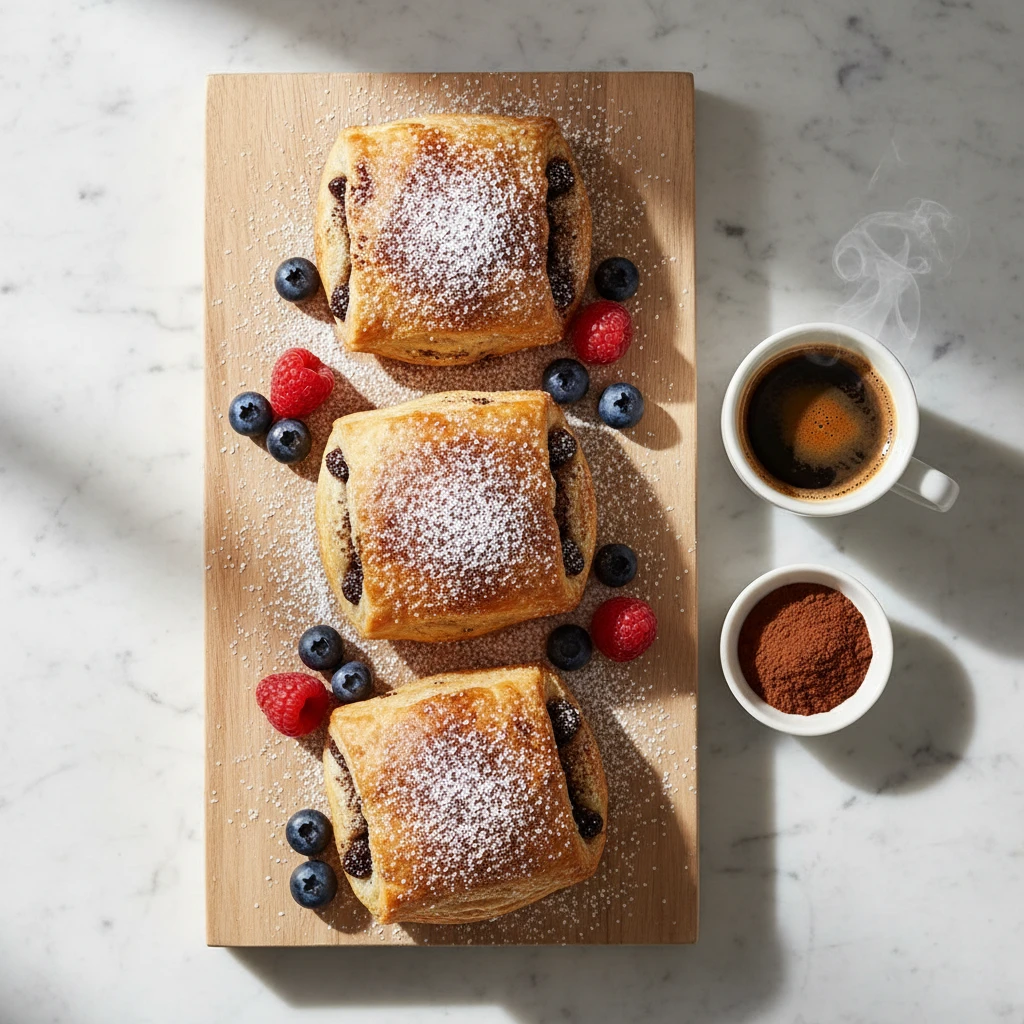
Café Style: Plate one pastry alongside a small cappuccino or espresso for the ultimate chocolate-coffee pairing. The warmth of the beverage complements the cool, crispy pastry beautifully.
Fruit Accompaniment: Serve with fresh berries (raspberries, strawberries, or blueberries) on the side or scattered around the pastry. The tartness of fruit balances the richness of the chocolate.
Ice Cream Sandwich: While still warm from the oven, carefully place a small scoop of vanilla, dark chocolate, or salted caramel ice cream between two pastries or on top of one, creating an indulgent warm-cold contrast.
Dessert Platter: Arrange several chocolate puff pastries on a wooden board or tiered stand, alternating with fresh fruit, macarons, or petit fours for an impressive dessert spread at dinner parties.
Whipped Cream Topping: Serve with a dollop of unsweetened whipped cream or crème fraîche on the side. A drizzle of chocolate sauce or caramel sauce adds another layer of decadence.
Dusted Presentation: Generously dust with both powdered sugar and cocoa powder as described in the recipe, then add a light sprinkle of fleur de sel for a gourmet touch that highlights the chocolate’s complexity.
 Save
SaveStorage and Reheating
Same-Day Storage: These pastries are best enjoyed fresh and warm, ideally within 2 hours of baking. If you need to store them for a few hours, place them in an airtight container at room temperature. The pastry will soften slightly but remain delicious.
Refrigerator Storage: Store leftover pastries in an airtight container in the refrigerator for up to 2 days. The pastry texture will soften more than room-temperature storage, but the chocolate filling will stay fresh.
Freezer Storage: You can freeze baked pastries in an airtight, freezer-safe container for up to 3 weeks. For best results, freeze them in a single layer on a baking sheet for 2 hours first, then transfer to the container to prevent sticking.
Reheating from Room Temperature: If the pastries have cooled completely and you want to restore some crispness, preheat your oven to 350°F and warm them for 5-7 minutes until the exterior is crispy again and the chocolate is warm. Do not use the microwave, which will make the pastry soggy.
Reheating from the Refrigerator: Remove the pastries from the refrigerator and let them sit at room temperature for 15 minutes, then reheat in a 350°F oven for 7-10 minutes until warmed through and the pastry is crispy.
Reheating from the Freezer: Thaw the pastries in the refrigerator overnight, then warm in a 350°F oven for 8-10 minutes until the pastry is crispy and the chocolate is warm throughout.
Make-Ahead Assembly: If you’re entertaining, assemble and refrigerate the unbaked pastries (through the egg wash step) for up to 4 hours before baking. Bake directly from the cold state, adding 2-3 extra minutes to the bake time. This is an excellent strategy for stress-free entertaining.
Frequently Asked Questions about Chocolate Puff Pastry
Can I use homemade puff pastry instead of frozen?
Yes, absolutely. If you prefer to make your own puff pastry, you’ll need about 1 pound of dough. Follow your favorite puff pastry recipe, chill thoroughly, then proceed with cutting and filling as directed. Homemade pastry often yields even more impressive puffing and flakiness. Just ensure it’s very cold before assembling.
What’s the best way to prevent the chocolate from leaking out during baking?
Leave at least a half-inch border of pastry without filling around all edges, and seal the borders firmly (but gently) with a fork. Also ensure the chocolate filling has cooled for at least 5 minutes before assembly—warm chocolate can compromise the seal. If filling does leak slightly, it’s actually quite delicious and adds to the rustic charm.
Can I make these pastries gluten-free?
Yes, if you can find gluten-free puff pastry sheets (brands like Simple Mills and Udi’s make them), use them exactly as you would regular pastry. The filling is naturally gluten-free, so the final pastries will be completely gluten-free. Check the pastry package to confirm no cross-contamination occurred during manufacturing if this is a concern.
How far in advance can I prepare these for a dinner party?
You can assemble the unbaked pastries up to 4 hours in advance, cover them loosely with plastic wrap, and refrigerate. This is actually recommended because the cold pastry will puff even better in the oven. Bake them just before serving (they take only 15-18 minutes), and guests will enjoy them warm from the oven.
What should I do if the pastry puffs unevenly?
Uneven puffing usually happens if the egg wash wasn’t applied evenly or if the baking sheet wasn’t level. For future batches, ensure even egg wash coverage and use an oven thermometer to verify your oven temperature is accurate. If this occurs during baking, you can tent the over-puffed areas loosely with foil for the last few minutes.
Can I add nuts or other mix-ins to the chocolate filling?
Yes. Finely chopped toasted almonds, hazelnuts, or pistachios (about 1/4 cup) work beautifully mixed into the chocolate filling. Add them after removing the filling from heat and before it cools. Sea salt flakes also add a sophisticated touch and complement the chocolate wonderfully.
Is it okay to use milk chocolate instead of semi-sweet?
You can, though the result will be sweeter and less complex. If using only milk chocolate, reduce the amount to 10 ounces and omit or reduce the dark chocolate, or replace the dark chocolate with an additional 2 ounces of milk chocolate. For the most balanced flavor, stick with the semi-sweet and dark combination.
Why did my pastry turn out dense instead of flaky?
This usually happens if the pastry thawed too long or was handled too much with warm hands, if the filling was spread too thick, or if the oven temperature was too low. Ensure the pastry stays cold until it hits the oven, work quickly, use no more than 2 tablespoons of filling, and verify your oven temperature with a thermometer.
Chocolate Puff Pastry
Ingredients
- 1 pound frozen puff pastry sheets 2 sheets
- 8 ounces semi-sweet chocolate chopped
- 4 ounces dark chocolate chopped
- 3 tablespoons butter
- 2 tablespoons heavy cream
- 1 teaspoon vanilla extract
- 1 egg
- 1 tablespoon water
- 2 tablespoons powdered sugar
- 1 tablespoon cocoa powder
- Pinch of sea salt
Instructions
- Preheat your oven to 400°F. Line two large baking sheets with parchment paper. This takes 10 minutes total.
- Remove the two puff pastry sheets from the freezer and place them on the counter. Let them thaw at room temperature for exactly 20 minutes until they're soft and foldable but still very cold to the touch. Checkpoint: You are ready when the pastry bends without cracking.
- While the pastry thaws, prepare the chocolate filling. Chop 8 ounces of semi-sweet chocolate and 4 ounces of dark chocolate into small, uniform pieces (about the size of peas).
- Add 3 tablespoons of butter to a small saucepan and place over low heat. Medium-low heat is important—if too hot, the chocolate will seize and become grainy (about 30 seconds for the butter to melt).
- Once the butter is melted and foamy, immediately add the chopped chocolate. Stir constantly with a silicone spatula for 2-3 minutes until completely smooth and glossy. The mixture should look like liquid silk with no visible chocolate chunks.
- Remove the pan from heat. Add 2 tablespoons of heavy cream and 1 teaspoon of vanilla extract, then stir for 30 seconds until fully combined. Add a pinch of sea salt and mix once more. The filling should be thick enough to hold its shape but spreadable. Let it cool for 5 minutes on the counter—this prevents it from melting the cold pastry.
- Carefully unfold the first thawed puff pastry sheet on a clean, dry work surface. Do not tear it. Gently cut it into 4 equal rectangles using a sharp knife in 2-3 smooth strokes (don't saw back and forth, which crushes the layers). You now have 4 rectangles. Repeat with the second sheet for 8 total rectangles. Place 4 rectangles on the prepared baking sheets, spacing them 2 inches apart.
- Spoon exactly 2 tablespoons of the cooled chocolate filling onto the center of each of the 4 pastry rectangles on the baking sheets. Use the back of the spoon to spread it gently into a thin, even layer, leaving a clean half-inch border all around the edges—this border must stay clear so the edges can puff and seal properly.
- Take the remaining 4 pastry rectangles and place one directly on top of each chocolate-filled rectangle, pressing down very gently with your fingertips. Do not press hard or you'll crush all the air layers.
- Using the tines of a fork, gently press around the entire border (about half an inch from the edge) to seal the two pastry sheets together and create a decorative pattern. This also ensures they don't separate during baking. Be gentle—you're crimping, not mashing.
- In a small bowl, crack 1 large egg and whisk it with 1 tablespoon of water for exactly 30 seconds until light and frothy. This is your egg wash. Using a pastry brush, brush the top surface of each pastry generously with the egg wash. This creates the golden-brown shine and helps the pastry puff evenly. Do not brush the edges where they're sealed, or they may slip apart.
- Place both baking sheets in the preheated 400°F oven on the middle rack. Set a timer for exactly 15 minutes. At 12 minutes, peek through the oven window—the pastries should be starting to puff and turn light golden.
- Bake for a total of 15-18 minutes. The pastries are done when they are deep golden brown on top (like a caramel color, not pale), puffed up noticeably, and feel slightly firm to a gentle touch. The bottom should be crispy when you lift one slightly with a spatula.
- Remove both baking sheets from the oven. Let the pastries cool on the baking sheets for exactly 5 minutes—this allows the interior to set without cooling too much. Checkpoint: You are ready when the pastries are still slightly warm but hold their shape firmly.
- Using a wide spatula, carefully transfer each pastry to a wire cooling rack. Let them cool for another 10-15 minutes until they are warm or room temperature (they will continue to firm up).
- Once cooled, place 2 tablespoons of powdered sugar in a fine-mesh sieve. Hold the sieve about 6 inches above the pastries and tap gently to dust each one evenly with a light snow of powdered sugar.
- Rinse out the sieve (or use a clean one) and add 1 tablespoon of cocoa powder. Tap gently to dust each pastry with cocoa powder on top of the powdered sugar. This creates a beautiful two-tone finish.
- Serve immediately or within 1 hour while the pastry is still crispy. If stored longer, the pastry will soften but will still taste delicious.