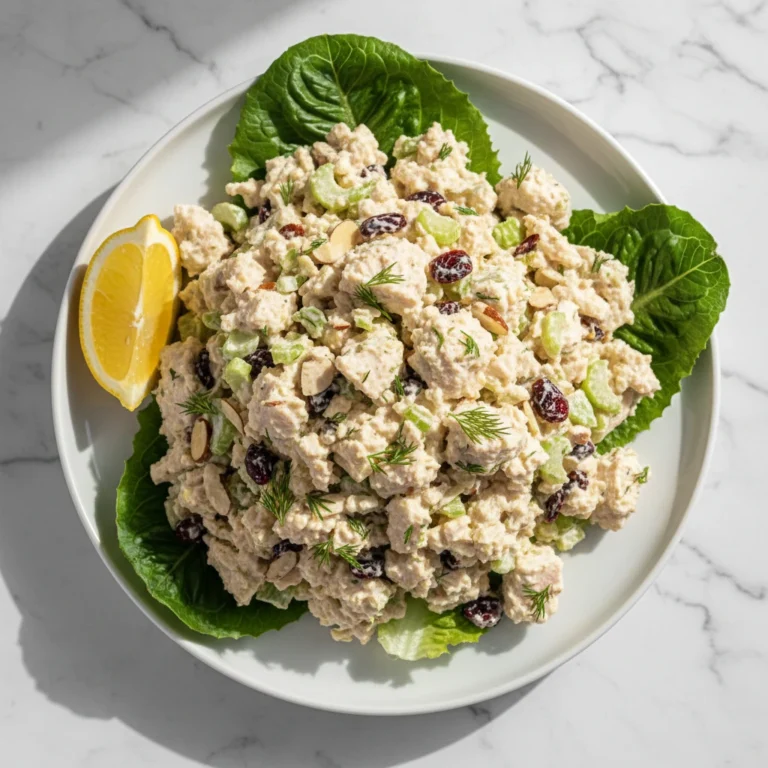
A lighter twist on the classic chicken salad, cottage cheese chicken salad combines tender diced chicken with creamy cottage cheese, crisp vegetables, and fresh herbs for a protein-packed meal that’s both satisfying and refreshingly light. This modern take replaces traditional mayonnaise with a blend of cottage cheese and Greek yogurt, creating a tangy, nutritious base that delivers bold flavor without heaviness. Perfect for meal prep, lunch boxes, or a quick dinner, this salad works beautifully on crackers, bread, or fresh greens.
Reasons to Try Cottage Cheese Chicken Salad
This cottage cheese chicken salad stands out for several compelling reasons:
- High in Protein: With both chicken and cottage cheese, this salad delivers 25+ grams of protein per serving, making it ideal for muscle recovery and satiety.
- Lower in Fat: By replacing mayonnaise with cottage cheese and Greek yogurt, you reduce unhealthy fats while maintaining creamy texture and rich flavor.
- Tangy and Fresh: The combination of lemon juice, fresh dill, and Dijon mustard creates a bright, sophisticated flavor profile that feels lighter than traditional recipes.
- Versatile: Serve it on lettuce cups, whole grain bread, crackers, or mixed into greens. It’s equally comfortable as a side dish or standalone meal.
- Easy Meal Prep: This salad keeps well for 3–4 days in the refrigerator, making it perfect for advance preparation and busy weeknights.
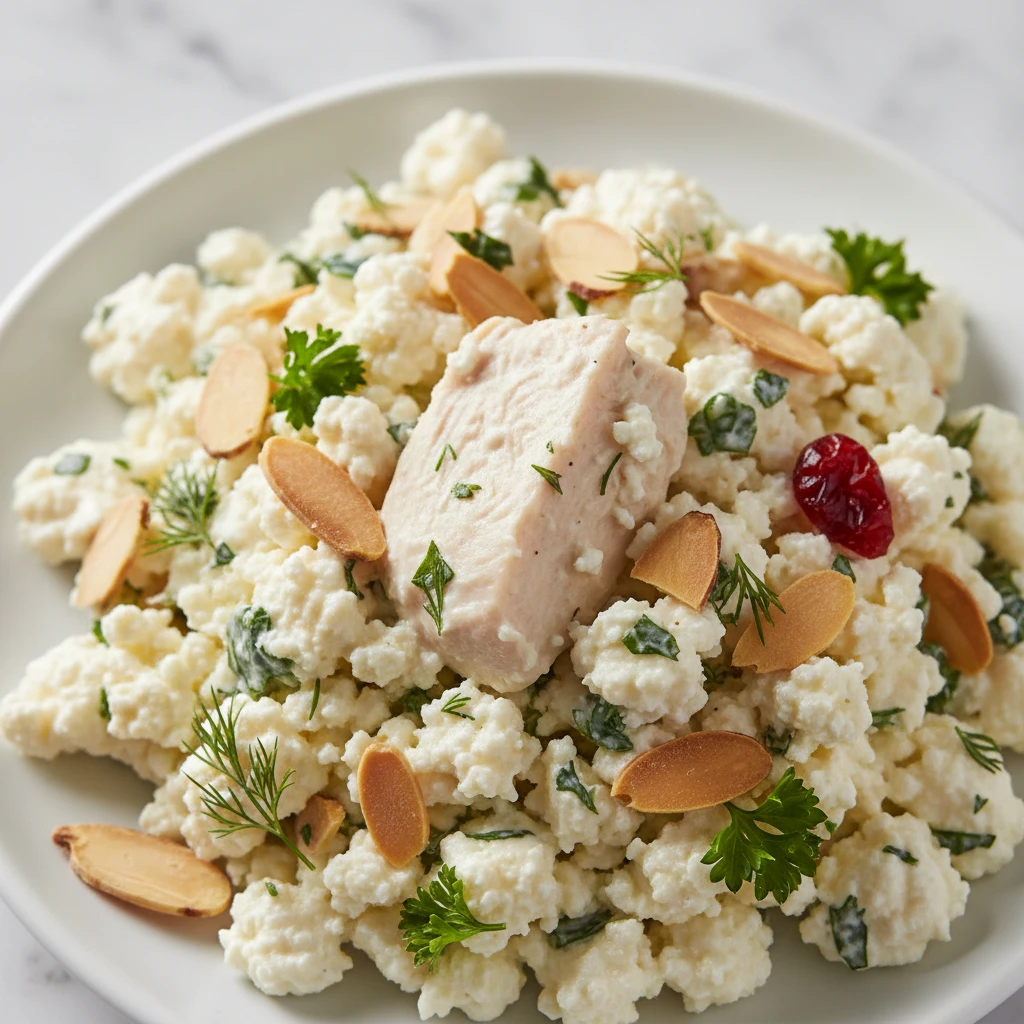
- Crunchy Texture: Toasted almonds and fresh celery provide satisfying crunch that contrasts beautifully with the creamy cottage cheese base.
- Nutrient-Dense: Packed with vitamins from fresh herbs and vegetables, plus the probiotic benefits of cottage cheese for digestive health.
 Save
SaveIngredients Notes
- Cooked chicken breast, diced
- Small curd cottage cheese
- Diced celery
- Diced red onion
- Diced cucumber
- Dried cranberries
- Sliced almonds, toasted
- Fresh dill, chopped
- Fresh parsley, chopped
- Greek yogurt
- Fresh lemon juice
- Dijon mustard
- Salt
- Black pepper
- Garlic powder
- Lettuce leaves for serving
- Lemon wedge for garnish
How to Make Cottage Cheese Chicken Salad
- Combine cottage cheese, Greek yogurt, lemon juice, and Dijon mustard in a large bowl. Stir until smooth and well blended.
- Add diced chicken, celery, red onion, and cucumber to the mixture. Fold gently to combine without breaking up the chicken.
- Stir in dried cranberries, fresh dill, parsley, salt, pepper, and garlic powder.
- Fold in toasted almonds just before serving to maintain crunch.
- Taste and adjust seasonings as needed. Chill until ready to serve.
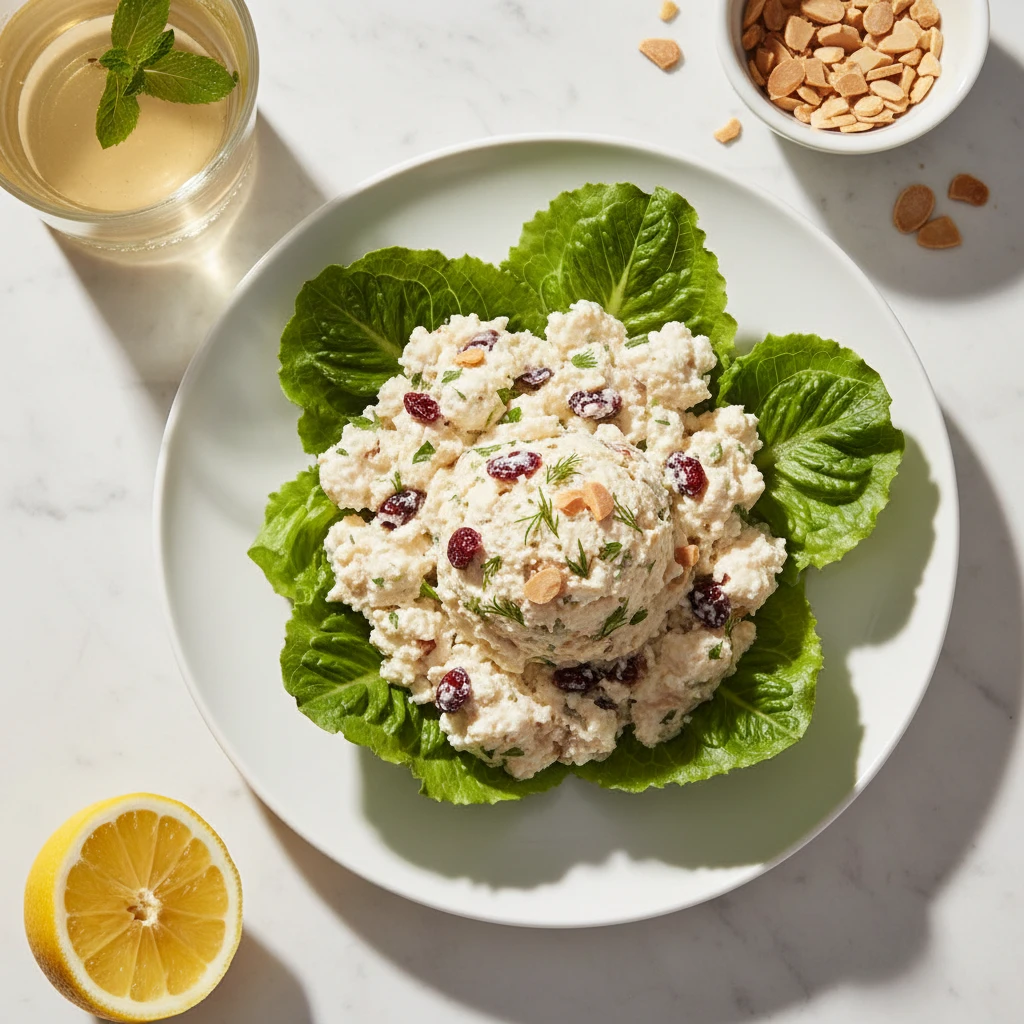
- Serve on lettuce leaves, whole grain bread, or crackers. Garnish with a lemon wedge and extra fresh herbs.
What You Must Know About Cottage Cheese Chicken Salad
Cottage Cheese Quality Matters: Use small-curd cottage cheese for the smoothest, most pleasant texture. Avoid large-curd varieties, which can feel grainy and lumpy when mixed with chicken. Always check the expiration date and store it in the coldest part of your refrigerator.
Chicken Preparation: Use already-cooked chicken (rotisserie chicken works beautifully) to save time. If cooking your own, poach chicken breasts in simmering water with a pinch of salt for 12–15 minutes until the internal temperature reaches 165°F, then cool before dicing. Avoid overcooked, dry chicken—it will make the salad taste less fresh.
Do Not Skip Toasting the Almonds: Toasting brings out the natural nutty flavor and prevents them from becoming soft and bland. Even 8–10 minutes in the oven at 350°F makes a significant difference. Add them at the very last moment before serving to keep them crispy.
Lemon Juice is Essential: Fresh lemon juice (not bottled) brightens the entire salad and balances the richness of the cottage cheese. Without it, the salad tastes flat and one-dimensional.
Make-Ahead Tip: This salad actually improves after a few hours in the refrigerator as the flavors meld. Prepare it in the morning for lunch or the night before for next-day meals. However, add the almonds only when you’re ready to eat to maintain their crunch.
Flavor Layers: The Dijon mustard is not meant to taste strong—it adds subtle depth and complements the fresh dill. Don’t skip it, even if you think you don’t like mustard.
Vegetable Cut Size: Dice all vegetables to roughly the same size (about 0.25-inch pieces) so they blend evenly into the salad and create a consistent texture in each bite.
Variations and Substitutions
- Herb Variations: Replace dill and parsley with fresh tarragon and chives for a French-inspired version, or use cilantro and mint for a light, fresh Asian-influenced twist.
- Fruit Substitutions: Swap dried cranberries for dried apricots, diced fresh apple, or dried blueberries for different flavor profiles and sweetness levels.
- Nut Alternatives: Use toasted walnuts, pecans, sunflower seeds, or pumpkin seeds instead of almonds. Each adds a distinct flavor and texture.
- Vegetable Add-Ins: Include diced bell peppers, shredded carrots, steamed broccoli florets, or fresh radishes for extra crunch and color variation.
- Protein Swap: This recipe works equally well with cooked turkey, rotisserie duck, or even canned tuna (drained) for different flavor profiles.
- Creamy Base Adjustment: For a lighter version, use all Greek yogurt and eliminate cottage cheese. For richer flavor, add 1 tablespoon of mayo mixed in. For a tangier salad, increase Greek yogurt and reduce cottage cheese.
- Grain Bowl Version: Mix this salad with cooked quinoa, farro, or brown rice to create a heartier grain bowl with additional texture and fiber.
- Spicy Kick: Add 0.25 teaspoon cayenne pepper, diced jalapeño, or a dash of hot sauce to the base for heat and complexity.
- Mediterranean Style: Include diced cucumber, kalamata olives, sun-dried tomatoes, and fresh oregano. Use lemon juice and olive oil in the base instead of mustard.
Serving Suggestions for Cottage Cheese Chicken Salad
- On Fresh Greens: Serve generous scoops over a bed of mixed greens, spinach, or arugula with a light drizzle of extra lemon juice or vinaigrette for a complete salad.
- On Whole Grain Bread: Spread on toasted whole wheat, sourdough, or sprouted bread for a satisfying sandwich. Add fresh tomato slices or lettuce for extra crunch.
- In Lettuce Wraps: Scoop the salad into large butter lettuce or romaine leaves for a low-carb, gluten-free option that’s perfect as a light lunch or appetizer.
- On Crackers: Top whole grain crackers, vegetable crisps, or gluten-free crackers with a spoonful of salad for elegant appetizers or snacks.
- Stuffed Avocado Halves: Pit ripe avocado halves and fill each with a generous scoop of chicken salad for a creamy, nutrient-dense meal.
- With Fresh Fruit: Serve alongside a side of grapes, berries, or sliced melon for a refreshing, well-balanced plate.
- In Tomato Shells: Hollow out ripe beefsteak tomatoes and fill with the salad for a rustic, beautiful presentation.
- With Vegetable Sticks: Offer the salad with celery sticks, bell pepper strips, cucumber rounds, or carrot sticks for dipping, turning it into a snack-style appetizer.
- Pita Pocket: Stuff whole wheat pita pockets with the salad and add sliced cucumber, sprouts, or additional fresh herbs for a portable meal.
- Garnish Ideas: Top each serving with fresh microgreens, a sprinkle of toasted seeds, crispy bacon bits, a drizzle of reduced balsamic vinegar, or edible flowers for elevated presentation.
 Save
SaveStorage and Reheating
Refrigerator Storage: Place the cottage cheese chicken salad in an airtight glass or plastic container. It will keep for 3–4 days in the refrigerator at 40°F or below. The salad is best eaten within the first 2 days while vegetables remain crisp and flavors are brightest.
Do Not Freeze: This salad does not freeze well. The cottage cheese, Greek yogurt, and fresh vegetables will separate and become watery when thawed, resulting in an unpleasant texture.
Texture Maintenance: If you notice the salad has released liquid after storage, simply drain it or add a spoonful of fresh Greek yogurt to restore creaminess before serving. This is completely normal.
Component Storage (If Preparing Ahead): You can prepare the base (cottage cheese, Greek yogurt, lemon juice, mustard, and herbs) up to 2 days in advance in a separate container. Cook and dice the chicken the day before. Store almonds separately in an airtight container and add them only at serving time to keep them crispy.
Serving Cold: This salad is served cold and does not require reheating. Simply remove from the refrigerator 10 minutes before serving to allow it to reach cool (but not ice-cold) temperature, which enhances flavor perception.
Travel-Friendly: Pack the salad in a container with an ice pack for lunches on the go. It will stay fresh and safe to eat for up to 4 hours without refrigeration in a cooler.
Frequently Asked Questions about Cottage Cheese Chicken Salad
Can I make this salad without Greek yogurt?
Yes, but the texture will be thicker. Increase the cottage cheese to 1.75 cups and add 1 tablespoon of milk or fresh lemon juice to reach the desired consistency. Alternatively, use 2 tablespoons of sour cream or mayonnaise instead of Greek yogurt. The result will be richer and less tangy.
How do I prevent the almonds from getting soggy?
Always toast the almonds fresh and add them to the salad only 5–10 minutes before serving or eating. Better yet, toast extra almonds and sprinkle them on top of each individual serving rather than mixing them into the entire batch. Store toasted almonds separately in an airtight container at room temperature.
Can I use canned chicken instead of fresh or rotisserie chicken?
Yes, canned chicken works in a pinch. Use about 2 (5-ounce) cans, drained and flaked. The flavor will be slightly more metallic and less fresh than rotisserie or poached chicken, but it’s convenient for quick meals. Pat the chicken dry before adding to remove excess brine.
What’s the difference between using mayo and cottage cheese as the base?
Cottage cheese is higher in protein, lower in fat, and has a distinctly tangy flavor compared to creamy, neutral mayo. This version feels lighter and more refreshing. Cottage cheese also contains probiotics for digestive health. If you prefer a traditional mayo-based version, use 0.5 cup mayo in place of the cottage cheese and Greek yogurt mixture, but you’ll lose the protein and probiotic benefits.
Is this salad keto or low-carb friendly?
Yes, with modifications. This recipe as written has about 8–10 grams of carbs per serving due to the dried cranberries. To make it lower-carb (under 5 grams), omit the cranberries and increase the almonds or add diced olives. Everything else in the recipe is naturally low-carb. Check the carb count of your specific cottage cheese brand, as they vary.
Can I make a double batch for meal prep?
Absolutely. This recipe doubles easily, and the salad keeps for 3–4 days when stored in an airtight container in the refrigerator. However, add the almonds only when you’re ready to eat each portion to maintain crunch. Prepare the base and vegetables the day before, then combine the morning you plan to eat for maximum freshness.
What if my cottage cheese is too watery or lumpy?
For watery cottage cheese, line a fine-mesh strainer with cheesecloth and drain the cottage cheese for 30 minutes before using. For lumpy cottage cheese, blend it with the Greek yogurt and lemon juice using an immersion blender or food processor for 30–45 seconds to create a smooth base before mixing with other ingredients.
Nutrition Facts (Per Serving)
| Nutrient | Per Serving |
|---|---|
| Calories | 245 |
| Protein | 32g |
| Fat | 8g |
| Saturated Fat | 2g |
| Carbohydrates | 9g |
| Dietary Fiber | 1g |
| Sugar | 5g |
| Sodium | 480mg |
| Cholesterol | 85mg |
| Calcium | 120mg |
*Nutrition facts are estimated per serving (based on 4 servings). Values may vary based on specific brands and ingredient variations. This salad is naturally high in protein and lower in calories than traditional mayo-based versions, making it ideal for weight management and muscle maintenance. The cottage cheese provides probiotics for digestive health.
Cottage Cheese Chicken Salad
Ingredients
- 2 cups cooked chicken breast diced
- 1.5 cups cottage cheese small curd
- 0.5 cup diced celery
- 0.25 cup diced red onion
- 0.33 cup diced cucumber
- 0.25 cup dried cranberries
- 0.25 cup sliced almonds toasted
- 2 tablespoons fresh dill chopped
- 1 tablespoon fresh parsley chopped
- 2 tablespoons Greek yogurt
- 1 tablespoon fresh lemon juice
- 0.5 teaspoon Dijon mustard
- 0.5 teaspoon salt
- 0.25 teaspoon black pepper
- 0.25 teaspoon garlic powder
- Lettuce leaves for serving
- Lemon wedge for garnish
Instructions
- Preheat oven to 350°F if toasting almonds yourself. Spread raw almonds on a baking sheet and toast for 8–10 minutes until fragrant and light golden, stirring halfway through. Remove and cool completely before slicing. Checkpoint: Almonds should smell toasted and look light golden brown.
- If using rotisserie chicken, shred or dice the meat into bite-sized pieces (about 1/2-inch cubes). You should have 2 cups. Set aside. Checkpoint: Chicken pieces should be uniform in size for even distribution in the salad.
- In a large mixing bowl, combine 1.5 cups small curd cottage cheese, 2 tablespoons Greek yogurt, 1 tablespoon fresh lemon juice, and 0.5 teaspoon Dijon mustard. Whisk or stir for 1–2 minutes until the mixture is smooth and creamy with no lumps. Checkpoint: The base should look like a thick, creamy dressing with no visible cottage cheese curds.
- Add the diced chicken to the cottage cheese mixture. Gently fold together using a rubber spatula for 2–3 minutes, being careful not to crush the chicken pieces. Checkpoint: Chicken should be evenly coated but still in distinct pieces.
- Add 0.5 cup diced celery, 0.25 cup diced red onion, and 0.33 cup diced cucumber to the bowl. Fold gently for 1–2 minutes until vegetables are distributed throughout. Checkpoint: You should see vegetable pieces throughout, with no pockets of just dressing.
- Stir in 0.25 cup dried cranberries, 2 tablespoons fresh dill (chopped), and 1 tablespoon fresh parsley (chopped). Mix gently for 1 minute. Checkpoint: Fresh herbs should be visible throughout, giving the salad flecks of green.
- Season the salad with 0.5 teaspoon salt, 0.25 teaspoon black pepper, and 0.25 teaspoon garlic powder. Stir gently to combine for 1 minute. Taste with a spoon. Checkpoint: The salad should taste tangy (from the lemon and cottage cheese), savory (from the mustard and garlic), and well-seasoned without being salty.
- If adding almonds, fold in 0.25 cup sliced toasted almonds gently just before serving, or add them individually to each serving bowl to keep them maximally crunchy. Do this step only 5 minutes before eating. Checkpoint: Almonds should feel crispy on the outside and distributed throughout.
- Cover the salad with plastic wrap and refrigerate for at least 15 minutes (or up to 4 days) to allow flavors to meld. Checkpoint: The cold salad should taste more flavorful and cohesive than when freshly made.
- When ready to serve, line a plate or bowl with fresh lettuce leaves (romaine, butter lettuce, or spinach). Scoop the salad onto the lettuce (about 1 to 1.5 cups per serving). Garnish with a fresh lemon wedge on the side and a sprinkle of extra fresh dill on top. Serve immediately. Checkpoint: The finished dish should look colorful with green lettuce, creamy salad, and visible cranberries and herbs.