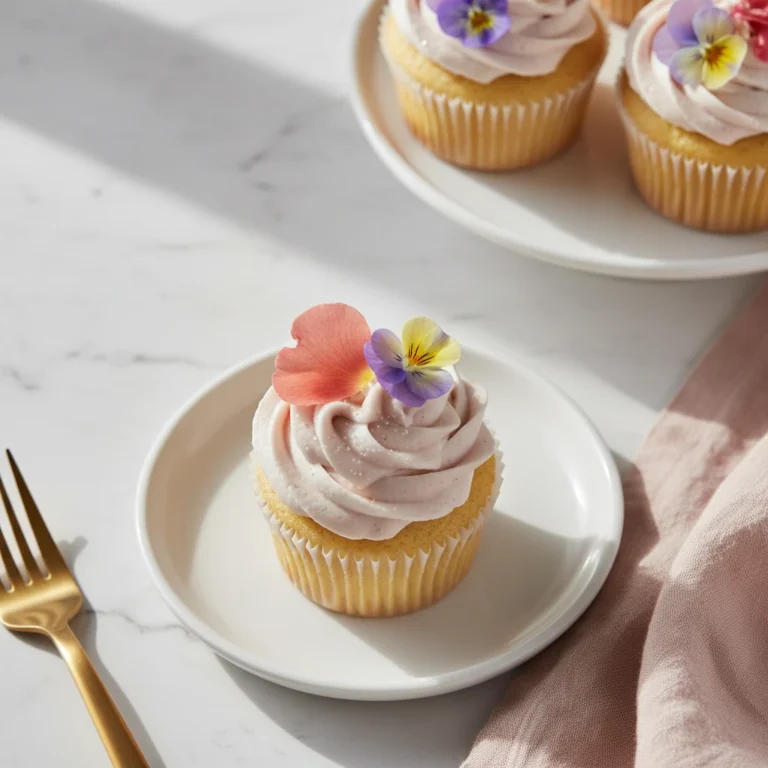
Floral cupcakes are a delicate, sophisticated treat that brings the beauty of a garden to your dessert table. These tender, fragrant cakes combine the subtle earthiness of culinary lavender with bright lemon notes, all topped with a silky rose water buttercream. Perfect for spring celebrations, weddings, or any occasion that calls for something special and memorable, these cupcakes deliver both visual elegance and refined flavor.
Reasons to Try Floral Cupcakes
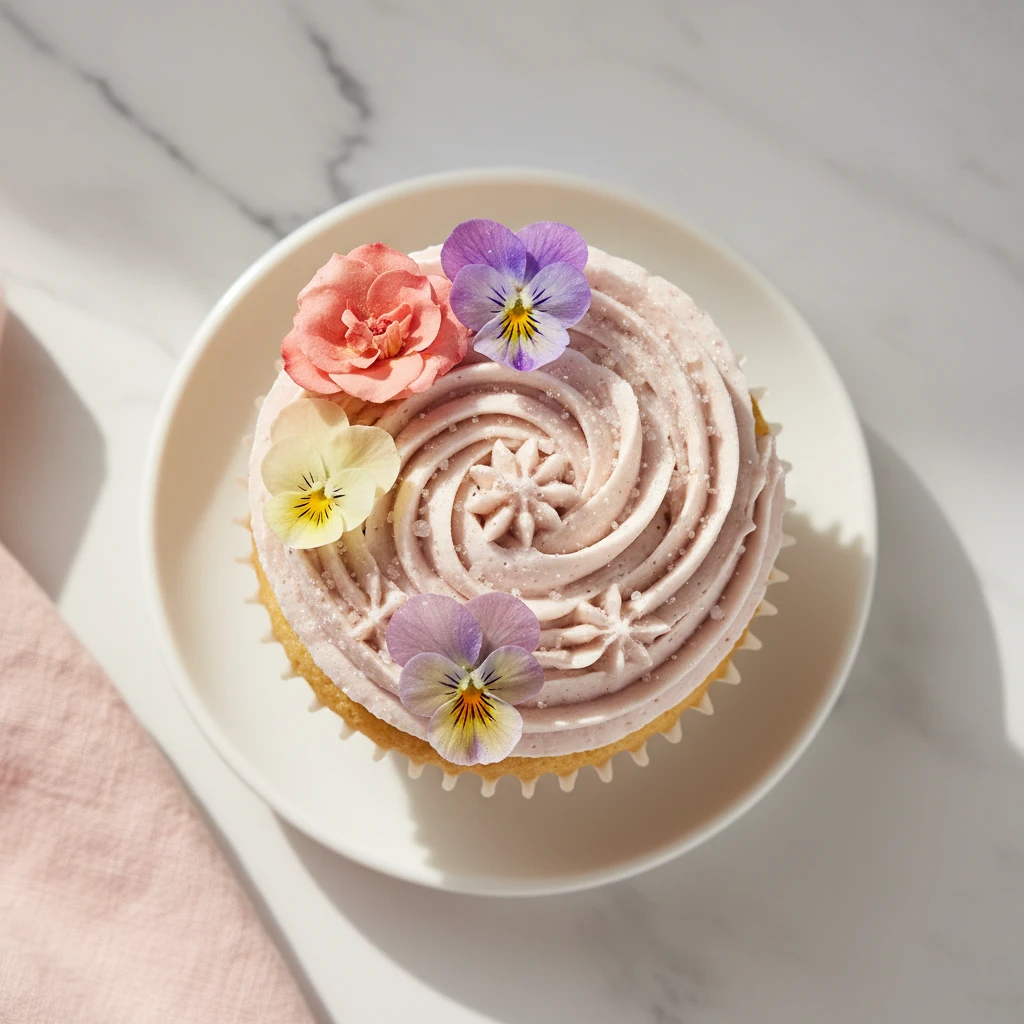
Elegant Visual Appeal: Topped with delicate edible flowers and shimmering pearl dust, these cupcakes are Instagram-worthy and make a stunning impression on any dessert display. Each one looks like a tiny edible garden.
Sophisticated Flavor Profile: The combination of lavender, lemon, and rose water creates a complex, grown-up taste that feels luxurious without being overly sweet. These flavors work in perfect harmony.
Naturally Fragrant: The culinary flowers infuse the cupcakes with an authentic floral aroma that makes your kitchen smell like a flower shop. This sensory experience is part of the magic.
Perfect for Special Occasions: Whether you’re hosting a bridal shower, garden party, Mother’s Day celebration, or intimate dinner party, floral cupcakes instantly elevate your event and show thoughtful attention to detail.
Surprisingly Approachable: Despite their fancy appearance, these cupcakes use straightforward baking techniques. The base is a classic vanilla-style cake, making it achievable for bakers of all skill levels.
Versatile Decorating Canvas: You can customize the look with different edible flowers, adjust the floral intensity to your taste, and pair them with various presentation styles.
 Save
SaveIngredients Notes
For the Cupcakes
- All-purpose flour
- Baking powder
- Baking soda
- Salt
- Unsalted butter, softened
- Granulated sugar
- Large eggs
- Sour cream
- Whole milk
- Fresh lemon juice
- Culinary lavender buds, finely ground
- Vanilla extract
- Almond extract
For the Frosting
- Unsalted butter, softened
- Powdered sugar
- Heavy cream
- Fresh lemon juice
- Vanilla extract
- Culinary rose water
For Decoration
- Edible flower petals (rose petals, violets, pansies)
- Edible pearl dust or shimmer dust
How to Make Floral Cupcakes
For the Cupcakes
- Preheat oven to 350°F and line two 12-cup muffin tins with cupcake liners.
- Whisk together flour, baking powder, baking soda, salt, and ground lavender in a bowl.
- Cream softened butter and sugar until light and fluffy, about 3–4 minutes.
- Add eggs one at a time, beating well after each addition.
- Add vanilla and almond extracts and mix until combined.
- Combine sour cream, milk, and lemon juice in a separate bowl.
- Alternate adding the dry mixture and wet mixture to the butter mixture, beginning and ending with dry ingredients. Mix until just combined.
- Divide batter evenly among prepared cupcake liners, filling each about two-thirds full.
- Bake for 18–22 minutes until a toothpick inserted into the center comes out clean or with a few moist crumbs.
- Cool in pans for 10 minutes, then turn out onto wire racks to cool completely.
For the Frosting
- Beat softened butter for 2–3 minutes until pale and creamy.
- Gradually add powdered sugar, beating on low speed to avoid clouds of sugar.
- Add heavy cream, lemon juice, vanilla extract, and rose water.
- Beat on medium-high speed for 2–3 minutes until light, fluffy, and spreadable.
Assembly
- Pipe or spread frosting generously onto each cooled cupcake.
- Gently press edible flower petals onto the frosting while it is still soft.
- Dust lightly with edible pearl or shimmer dust for a delicate sparkle.
- Refrigerate for at least 30 minutes before serving to set the frosting.
What You Must Know About Floral Cupcakes
Use Culinary-Grade Flowers Only: This is critical for food safety. Edible flowers sold in grocery stores or specialty baking shops are grown without pesticides and are safe to eat. Never use florist flowers or flowers from unknown sources, as they may have been treated with chemicals.
Ground Lavender vs. Whole Buds: Finely grind culinary lavender buds before measuring so they distribute evenly throughout the batter. Whole buds can feel gritty and unpleasant. A coffee grinder or spice grinder works perfectly for this.
Rose Water Potency: Culinary rose water is highly concentrated. Use only 1/4 teaspoon in the frosting; more will overpower the other flavors and make the frosting taste soapy.
Cream Room-Temperature Ingredients: Butter should be soft enough to leave a fingerprint when pressed, but not melting. Eggs should also be at room temperature for better emulsification and a lighter, fluffier crumb.
Don’t Overmix the Batter: Overmixing develops gluten, which makes cupcakes tough and dense. Mix the batter until just combined; small lumps are acceptable and will disappear during baking.
Lemon Juice is Essential: The acidity balances the sweetness and brightens the floral flavors. Use fresh-squeezed lemon juice, not bottled, for the best taste.
Timing Matters for Decoration: Add edible flowers while frosting is still soft so they adhere properly. If frosting sets too much, use a tiny drop of frosting on the flower back as an adhesive.
Helpful Tips: For easier frosting, use a piping bag with a closed-star tip to create elegant swirls. If you don’t have edible flowers on hand, you can garnish with candied lemon peel, fresh mint leaves, or simply dust with shimmer dust for a minimalist look. Make these cupcakes no more than one day ahead; cover with plastic wrap in an airtight container to prevent them from drying out. They taste best served at room temperature or slightly chilled.
Variations and Substitutions
Lavender-Honey Version: Replace the sour cream with 1/2 cup Greek yogurt and add 2 tablespoons of honey to the batter for a subtle honey flavor that complements lavender beautifully. Reduce granulated sugar to 3/4 cup.
Rose and Cardamom Cupcakes: Omit the lavender and lemon juice from the cupcake batter. Instead, add 1/2 teaspoon ground cardamom, 1/2 teaspoon rose water to the batter (in addition to the vanilla), and replace lemon juice in the wet mixture with 3 tablespoons of whole milk. The cardamom adds a spiced warmth that pairs beautifully with rose.
Violet and Blackberry: Use 1/2 teaspoon dried violet powder (finely ground) instead of lavender. Fold 1/2 cup fresh or frozen blackberries gently into the batter just before filling the liners. Keep the lemon juice in the recipe to balance the tartness of the berries.
Floral Citrus Blend: Use 1/2 tablespoon ground lavender plus 1/2 tablespoon finely grated fresh lemon zest mixed into the dry ingredients. Add 2 tablespoons of orange juice to the wet mixture along with the lemon juice for a more complex citrus note.
Gluten-Free Version: Replace all-purpose flour with a 1:1 gluten-free all-purpose baking flour blend. The rest of the recipe remains the same; gluten-free flour absorbs moisture slightly differently, so check cupcakes at 16–18 minutes instead of 18–22.
Vegan Version: Replace butter with vegan butter (measure for measure), eggs with 2 tablespoons of unsweetened applesauce plus 1 teaspoon of cornstarch per egg (so 4 tablespoons applesauce plus 2 teaspoons cornstarch total), and sour cream with non-dairy sour cream or full-fat coconut milk. Use vegan cream for the frosting.
Almond Flour Addition: For a more delicate, tender crumb, replace 1/4 cup of all-purpose flour with 1/4 cup finely ground almond flour. This adds a subtle nuttiness that complements the floral flavors.
Serving Suggestions for Floral Cupcakes
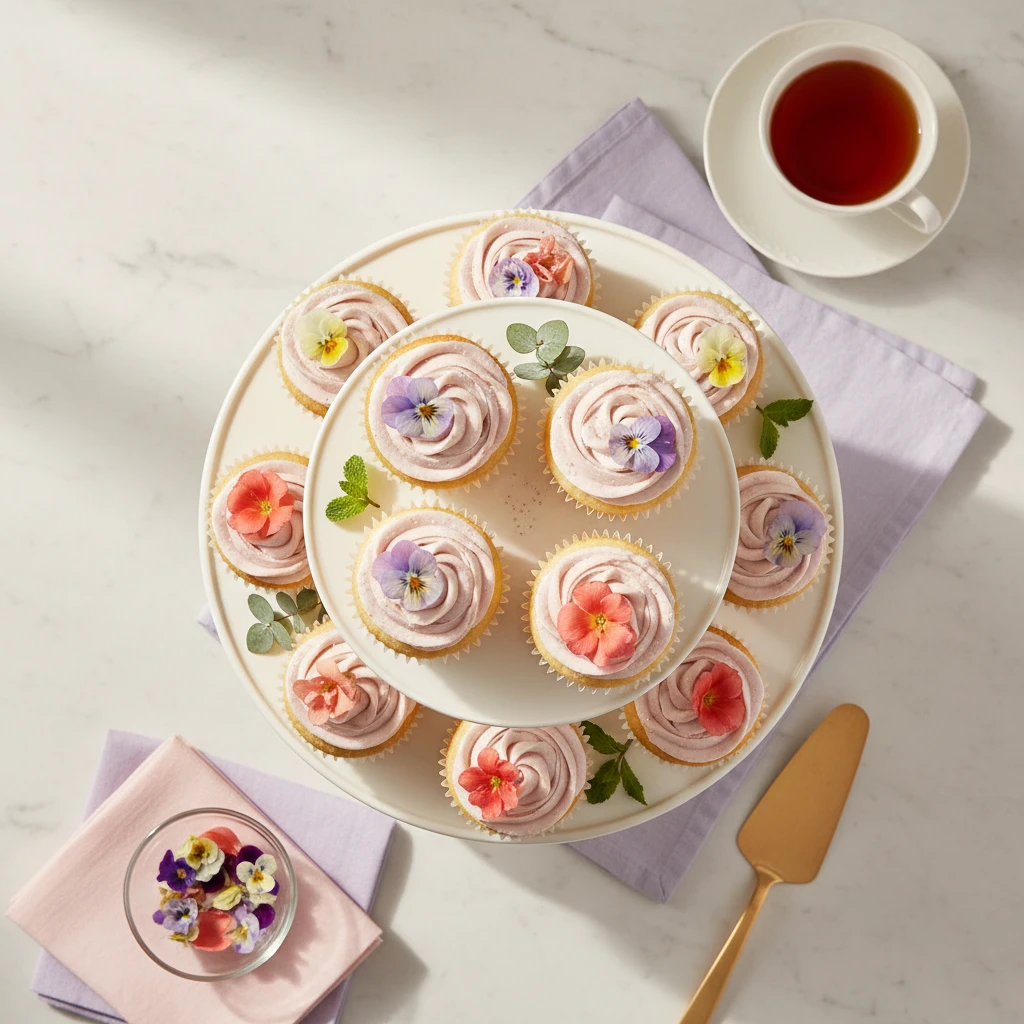
Garden Party Presentation: Arrange the cupcakes on a three-tiered cake stand or wooden board surrounded by fresh flowers (non-edible, for decoration only) and greenery. The contrast between the delicate cupcakes and natural elements creates an Instagram-worthy display.
Plating for Elegant Events: Serve each cupcake on a small white or pastel-colored dessert plate with a dusting of edible pearl dust around the base and a small sprig of fresh mint or a candied lemon slice for garnish.
Afternoon Tea Companion: Pair these cupcakes with a delicate oolong tea, chamomile tea, or Earl Grey. The floral notes in the cupcakes beautifully complement these teas.
Bridal or Baby Shower Favorite: Arrange on a decorated table with matching napkins, small forks, and a calling card explaining the floral flavors. Their refined appearance makes them feel special without being pretentious.
Mix-and-Match Presentation: Create a dessert board with these cupcakes alongside fresh berries, macarons, and candied flower petals. The variety of textures and colors creates visual interest.
Individual Gifts: Package each cupcake in a clear cellophane bag tied with silk ribbon and a small gift tag. These make thoughtful, elegant favors for weddings, bridal showers, or special celebrations.
Coffee Break Treat: Serve at room temperature with a strong coffee or cappuccino; the bitterness of the coffee balances the sweetness and delicate floral flavors beautifully.
 Save
SaveStorage and Reheating
Room Temperature Storage: Store unfrosted cooled cupcakes in an airtight container at room temperature for up to 2 days. Place parchment paper between layers to prevent frosting transfer if they have already been frosted.
Frosted Cupcake Storage: Store frosted cupcakes in an airtight container in the refrigerator for up to 4 days. The cool temperature prevents the frosting from melting and helps preserve the edible flowers. Remove from the refrigerator 15–20 minutes before serving to bring them to room temperature, which brings out the best flavor.
Freezing Unfrosted Cupcakes: Unfrosted cupcakes can be frozen in a freezer-safe airtight container for up to 3 months. Thaw at room temperature for about 1 hour before frosting.
Freezing Frosted Cupcakes: Fully frosted and decorated cupcakes can be frozen for up to 2 months. Freeze them unwrapped on a baking sheet for 2–3 hours until solid, then transfer to a freezer-safe container with layers separated by parchment. Thaw in the refrigerator for 4–6 hours or at room temperature for 1–2 hours before serving. Note: Edible flowers may lose some visual appeal when frozen.
Do Not Microwave: Never reheat these cupcakes in the microwave, as this will make them rubbery and dry. Instead, let them come to room temperature naturally (about 30–45 minutes).
Frequently Asked Questions about Floral Cupcakes
What edible flowers are safe to use on these cupcakes?
Culinary-grade edible flowers that are safe to use include rose petals, violets, pansies, lavender buds, cornflowers, nasturtiums, and calendula petals. Always purchase from specialty baking shops or reputable online suppliers that specifically label flowers as culinary-grade and pesticide-free. Never use florist flowers or flowers from unknown sources, as they may have been treated with toxic chemicals.
Can I make these cupcakes without culinary lavender?
Yes, you can omit the ground lavender and instead use 1/2 teaspoon of culinary dried rose petals finely ground, or simply rely on the lemon and almond extract for floral notes. Alternatively, increase the vanilla extract to 1 1/2 teaspoons and add 1/4 teaspoon of almond extract for a more classic flavor. The cupcakes will still be delicious, though less distinctly floral.
What can I substitute for rose water in the frosting?
If you don’t have rose water, you can omit it and add 1/2 teaspoon of vanilla extract instead, or use 1/4 teaspoon of almond extract for a subtle nod to floral flavors. You can also infuse the frosting with 1 tablespoon of finely chopped fresh lavender buds steeped in the heavy cream for 10 minutes, then strained before using. The frosting will taste delicious but may be less subtly floral.
How do I grind lavender buds finely?
Use a dedicated spice grinder or clean coffee grinder to pulverize dried culinary lavender buds until they resemble fine powder. Grind in short 5–10 second pulses, checking frequently to avoid over-grinding into a paste. If you don’t have a grinder, you can use a mortar and pestle, pressing and grinding the buds for 2–3 minutes until powdery. Sifting the ground lavender through a fine-mesh strainer will catch any larger pieces.
Can I make these cupcakes ahead of time for an event?
Yes, you can bake the unfrosted cupcakes up to 2 days ahead and store them in an airtight container at room temperature. Frost and decorate them on the day of the event or up to 4 hours before serving and refrigerate. For best flavor and freshness, avoid frosting more than 8 hours in advance. If you need to prepare further ahead, freeze unfrosted cupcakes for up to 3 months; thaw at room temperature before frosting.
Why does my frosting taste soapy?
A soapy taste in frosting is almost always caused by using too much rose water. Culinary rose water is highly concentrated, and a little goes a long way. Use only 1/4 teaspoon as directed in the recipe. If you’ve added too much, discard that batch and start fresh. In the future, remember that more is not better with floral extracts and waters.
Can I use artificial floral flavoring instead of culinary lavender and rose water?
Artificial floral flavorings are not recommended, as they often taste artificial and chemical. They lack the subtle, nuanced flavor of real culinary lavender and rose water. If you want authentic floral flavor, invest in culinary-grade lavender buds and genuine rose water from specialty baking shops. The quality difference is significant and worth the investment.
Are these cupcakes suitable for people with nut allergies?
The base recipe contains almond extract, which is flavoring derived from almonds and does contain traces of tree nuts (almonds). If you need to serve someone with a tree nut allergy, omit the 1/2 teaspoon almond extract and replace it with an additional 1/2 teaspoon vanilla extract. The recipe will still taste delicious. However, always verify that your culinary lavender and rose water are processed in nut-free facilities to avoid cross-contamination.
Nutrition Facts (Per Serving)
| Nutrient | Per Serving |
|---|---|
| Calories | 285 |
| Total Fat | 14g |
| Saturated Fat | 9g |
| Cholesterol | 50mg |
| Sodium | 195mg |
| Total Carbohydrates | 40g |
| Dietary Fiber | 0g |
| Sugars | 32g |
| Protein | 3g |
Note: These values are estimates based on standard ingredient databases and assume one cupcake per serving from a batch of 24. Actual nutritional content may vary depending on specific brands and preparation methods. These cupcakes are a treat best enjoyed in moderation as part of a balanced diet. The sour cream and eggs provide some protein, while the lemon juice and lavender add antioxidants, though the primary macronutrient is sugar.
Floral Cupcakes
Ingredients
- 1 3/4 cups all-purpose flour
- 1 1/2 teaspoons baking powder
- 1/2 teaspoon baking soda
- 1/4 teaspoon salt
- 1/2 cup unsalted butter softened
- 1 cup granulated sugar
- 2 large eggs
- 1/2 cup sour cream
- 1/4 cup whole milk
- 2 tablespoons fresh lemon juice
- 1 tablespoon culinary lavender buds finely ground
- 1 teaspoon vanilla extract
- 1/2 teaspoon almond extract
- 3/4 cup unsalted butter softened (for frosting)
- 3 cups powdered sugar
- 2 tablespoons heavy cream
- 1 tablespoon fresh lemon juice for frosting
- 1/2 teaspoon vanilla extract for frosting
- 1/4 teaspoon culinary rose water
- Edible flower petals for garnish rose petals, violets, pansies
- Edible pearl dust or shimmer dust for decoration
Instructions
- Prep the pan: Preheat oven to 350°F (175°C) for 10–15 minutes. Line two 12-cup muffin tins with paper liners. The oven should be fully preheated and steady at temperature.
- Mix dry ingredients: In a medium bowl, whisk together 1 3/4 cups all-purpose flour, 1 1/2 teaspoons baking powder, 1/2 teaspoon baking soda, 1/4 teaspoon salt, and 1 tablespoon finely ground culinary lavender buds. Whisk for 30 seconds until evenly combined. Checkpoint: You should see flecks of lavender throughout the flour mixture with no clumps.
- Cream butter and sugar: In a large bowl, add 1/2 cup softened unsalted butter (cut into chunks for faster mixing) and 1 cup granulated sugar. Using an electric mixer on medium speed, beat for 3–4 minutes until the mixture is pale, fluffy, and resembles wet sand. It should look much lighter in color than when you started. Checkpoint: The mixture should be noticeably lighter and airier; scrape down the sides of the bowl with a spatula.
- Add eggs one at a time: Crack 2 large eggs into a small bowl. Add the first egg to the butter mixture and beat on medium speed for 45 seconds until fully combined and no streaks of yellow remain. Repeat with the second egg. The mixture will look slightly curdled at first but will come together. Checkpoint: After both eggs are added, the batter should be smooth with no visible egg streaks.
- Add extracts: Pour in 1 teaspoon vanilla extract and 1/2 teaspoon almond extract. Beat on medium speed for 15–20 seconds until combined. The almond extract adds a subtle depth that enhances the floral notes.
- Prepare wet mixture: In a separate small bowl, whisk together 1/2 cup sour cream, 1/4 cup whole milk, and 2 tablespoons fresh lemon juice. Stir for 10 seconds until the sour cream is smooth and no lumps remain. The mixture will be thinner than sour cream alone. Checkpoint: The mixture should be smooth, pourable, and pale.
- Combine wet and dry in alternating steps: Add one-third of the dry flour mixture to the butter-egg mixture. Beat on low speed for 10–15 seconds until just barely combined; a few streaks of flour are fine. Then add half of the wet sour cream mixture and beat on low speed for 10–15 seconds. Add another one-third of the dry mixture, beat briefly. Add the remaining wet mixture, beat briefly. Finally, add the last one-third of dry mixture and beat for 15–20 seconds until just combined. Do not overmix; lumps in the batter are normal and will result in more tender cupcakes. Checkpoint: The batter should be smooth, thick, and pourable with minimal flour streaks. Scrape down the bowl with a spatula to ensure no pockets of dry ingredients remain at the bottom.
- Fill liners: Using an ice cream scoop or a 1/4 cup measuring cup, divide the batter evenly among the 24 prepared cupcake liners, filling each about two-thirds full. If using a scoop, level the top of each scoop before releasing into the liner. Uneven filling will result in inconsistent cupcake heights. Checkpoint: All liners should have roughly the same amount of batter; the batter should not reach the top of the liner.
- Bake cupcakes: Place both muffin tins in the preheated 350°F (175°C) oven on the center rack (if using two racks, place one on the middle rack and one slightly higher, swapping halfway through). Bake for 18–22 minutes. The cupcakes are done when a toothpick inserted into the center of one comes out clean or with just a few moist crumbs; the tops should spring back when lightly touched. The edges should look set but the tops should still be tender-looking. Checkpoint: The cupcakes should be pale golden on top, the toothpick should come out nearly clean, and they should smell fragrant and slightly sweet with a hint of lavender.
- Cool in pan: Remove both muffin tins from the oven and set on a cool wire rack or trivet for 10 minutes. Do not remove the cupcakes yet; they are still too fragile. The residual heat will finish cooking the interior. Checkpoint: The cupcakes should be cool enough to handle but still warm to the touch.
- Remove from pan: Working carefully, remove each cupcake from the muffin tin by gently pressing the bottom of the liner upward while supporting the cupcake with your other hand. Place on a wire cooling rack in a single layer. Let cool to room temperature, about 30–45 minutes. Do not frost until completely cooled or the frosting will melt and slide off. Checkpoint: The cupcakes should feel cool to the touch with no warmth remaining.
- Prepare frosting base: In a clean large mixing bowl, add 3/4 cup softened unsalted butter (cut into tablespoon-sized chunks). Using an electric mixer on medium speed, beat for 2–3 minutes until the butter is pale, creamy, and almost doubled in volume. Stop and scrape down the sides frequently. The butter should look light and fluffy, almost mousse-like. Checkpoint: The butter should be pale yellow, fluffy, and increased in volume; no small chunks should remain.
- Add powdered sugar gradually: Reduce mixer speed to low. Slowly add 3 cups sifted powdered sugar (sifting prevents lumps) in three additions, beating on low speed after each addition for 10–15 seconds. Add 2 tablespoons heavy cream, 1 tablespoon fresh lemon juice, 1/2 teaspoon vanilla extract, and 1/4 teaspoon culinary rose water. Beat on low speed for 15–20 seconds to combine. Checkpoint: Stop the mixer and scrape down the bowl after adding sugar. The mixture should still look thick and slightly grainy.
- Whip frosting to fluffy consistency: Increase mixer speed to medium-high and beat the frosting for 2–3 minutes, scraping down the sides halfway through. The frosting will transform from thick and grainy to light, fluffy, and spreadable. It should look pale and airy. Checkpoint: The frosting should be pale pink-white, fluffy, and hold peaks when the beaters are lifted; it should be smooth and easy to spread or pipe.
- Frost the cupcakes: Using a piping bag fitted with a large closed-star tip (or a simple butter knife for a more rustic look), pipe or spread frosting onto each cooled cupcake in a generous mound or swirl. Work quickly but gently; if the frosting gets too soft, refrigerate it for 10–15 minutes. Each cupcake should have about 2–3 tablespoons of frosting. Checkpoint: The frosting should look smooth and peaked; the cupcake liners should be mostly hidden under the frosting.
- Add fresh edible flowers: While the frosting is still soft (within 5–10 minutes of frosting), gently press 2–3 edible flower petals (rose petals, violets, or pansies) into the center of each frosted cupcake. Press gently so the petals adhere to the frosting but do not sink deep into it. Choose flowers that are pesticide-free and specifically culinary-grade. Checkpoint: The petals should be partially embedded in the frosting and arranged in an attractive, natural-looking way.
- Add shimmer dust: Using a small, fine pastry brush or dusting brush, very lightly brush or dust the top of each cupcake with edible pearl dust or shimmer dust. Use a light hand—a little goes a long way. The dust should create a delicate sparkle without coating the entire cupcake. Checkpoint: The cupcakes should have a subtle, elegant shimmer; the flowers should still be clearly visible.
- Chill before serving: Transfer the frosted and decorated cupcakes to a serving platter or storage container and refrigerate for at least 30 minutes before serving. This allows the frosting to set firmly and makes the cupcakes easier to handle and serve. Checkpoint: The frosting should be firm to the touch but not rock-hard; the cupcakes should feel cold but not frozen.