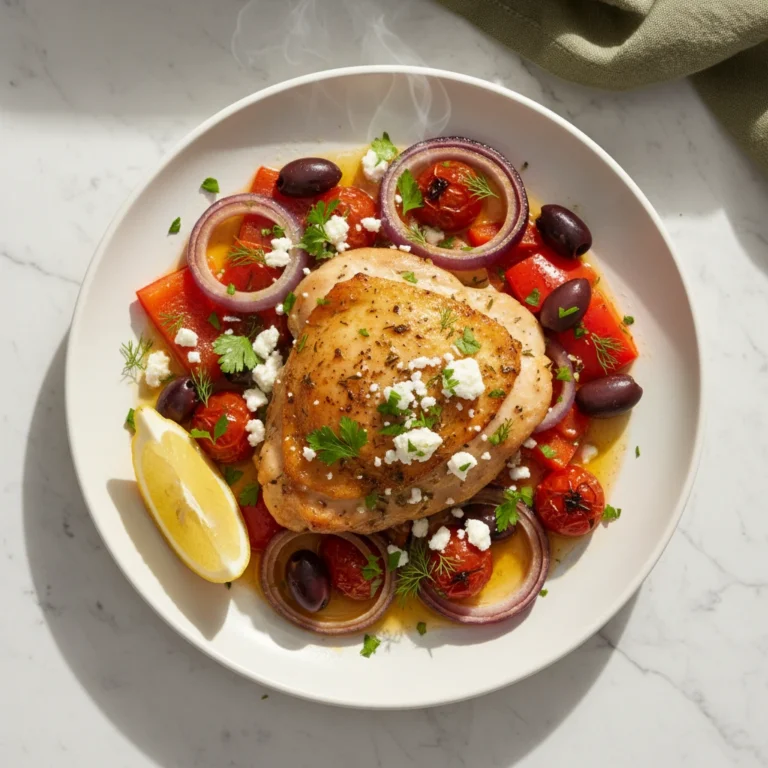
Greek chicken thighs are a Mediterranean-inspired dish that delivers incredible flavor with minimal fuss. Succulent thighs marinated in garlic, oregano, and lemon create a foundation for tender, juicy meat that pairs beautifully with roasted vegetables and tangy feta. This one-pan wonder brings authentic Greek tradition to your weeknight dinner table while satisfying both comfort food cravings and healthy eating goals.
Reasons to Try Greek Chicken Thighs
Greek chicken thighs stand out as a superior choice for busy home cooks and flavor enthusiasts alike. Here’s why this dish deserves a permanent spot in your rotation:
- Juicy, Forgiving Meat: Chicken thighs contain more fat than breast meat, making them nearly impossible to overcook. They stay moist and tender even if cooking runs a few minutes long, perfect for less experienced cooks.
- Bold Mediterranean Flavors: The combination of garlic, oregano, lemon, and olives creates an authentic Greek taste profile that feels restaurant-quality but comes together on a weeknight.
- One-Pan Convenience: Everything cooks together in a single dish—chicken, vegetables, and sauce—minimizing cleanup while allowing flavors to meld beautifully.
- Budget-Friendly Protein: Chicken thighs cost less than breast meat while delivering superior taste and texture, making this an economical meal option.
- Make-Ahead Friendly: The marinade works overnight, and leftovers reheat beautifully, making meal prep effortless.
- Naturally Gluten-Free: With no breading or flour-based components, this dish suits various dietary needs without sacrificing flavor.
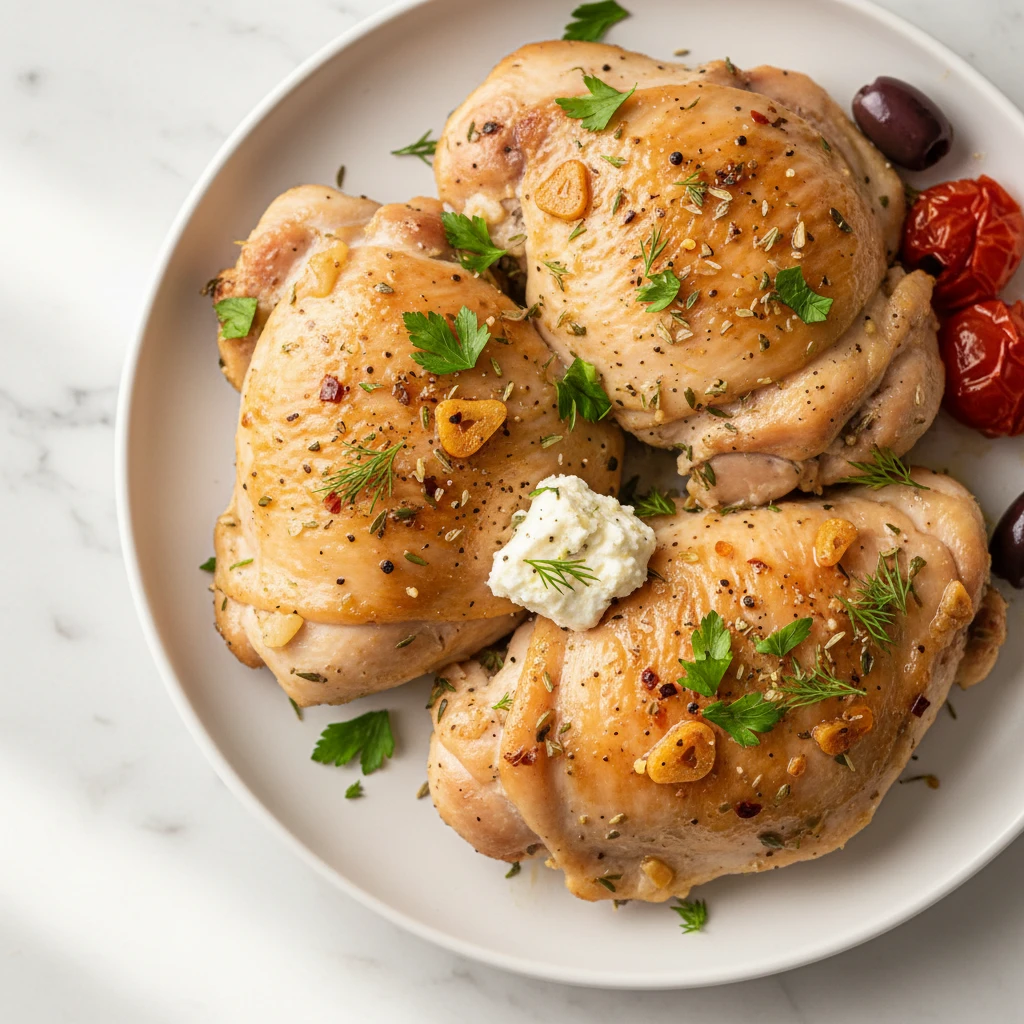 Save
SaveIngredients Notes
- Boneless, skinless chicken thighs – look for thighs that are roughly the same thickness for even cooking
- Extra virgin olive oil – use quality oil for better flavor in the marinade
- Red wine vinegar – the acidity brightens the dish; white wine vinegar works in a pinch
- Fresh garlic cloves – minced fresh garlic is essential; jarred won’t deliver the same punch
- Dried oregano – the signature Greek herb; don’t substitute with Italian seasoning
- Dried thyme – adds earthiness to the marinade
- Paprika – use sweet paprika for color and mild flavor
- Red pepper flakes – adjust to your heat preference
- Lemon – fresh lemon quarters add brightness throughout cooking
- Red onion – its natural sweetness complements the savory marinade
- Red bell peppers – they roast beautifully and stay slightly firm
- Cherry tomatoes – burst during cooking, creating a light sauce
- Kalamata olives – briny, fruity olives essential to authentic Greek flavor
- Feta cheese – crumbled fresh feta adds tangy creaminess at the end
- Fresh herbs – parsley and dill brighten the finished dish
- Chicken broth – keeps everything moist during cooking
How to Make Greek Chicken Thighs
- Combine olive oil, red wine vinegar, minced garlic, oregano, thyme, paprika, red pepper flakes, salt, and pepper in a large bowl to create the marinade.
- Add chicken thighs to the marinade, tossing to coat all sides evenly. Cover and refrigerate for at least 2 hours, or ideally overnight.
- Remove chicken from refrigerator 30 minutes before cooking to bring to room temperature.
- Preheat oven to 400°F.
- Transfer marinated chicken thighs to a large roasting pan or cast-iron skillet, arranging in a single layer.
- Arrange lemon quarters, red onion rings, bell peppers, and cherry tomatoes around the chicken.
- Scatter Kalamata olives over the vegetables and pour chicken broth into the pan (not over the chicken).
- Roast uncovered for 35-40 minutes, until chicken is cooked through and vegetables are tender.
- Remove from oven and let rest for 5 minutes.
- Top with crumbled feta cheese, fresh parsley, and dill before serving.
What You Must Know About Greek Chicken Thighs
Understanding a few key points will ensure your Greek chicken thighs turn out perfectly every time:
- Marinating Time Matters: While 2 hours is the minimum, overnight marinating (8–12 hours) develops deeper flavor and more tender meat. The acid in the vinegar gently tenderizes the thighs while the oil and herbs infuse throughout.
- Room Temperature is Critical: Always remove marinated chicken from the refrigerator 30 minutes before cooking. Cold chicken placed directly in a hot oven will have a longer cooking time and may cook unevenly, with the outside drying before the inside cooks through.
- Use a Meat Thermometer: The safest way to confirm doneness is an instant-read thermometer reaching 165°F in the thickest part of the thigh. This eliminates guesswork and prevents both undercooking and overcooking.
- Don’t Skip the Resting Period: The 5-minute rest after roasting allows carryover cooking to finish and lets juices redistribute throughout the meat, resulting in juicier chicken.
- Vegetable Timing: If using vegetables with different cooking times (like carrots or potatoes), add denser vegetables to the pan first and softer ones (like tomatoes) halfway through roasting.
- Broth Level: The chicken broth should cover the bottom of the pan by about 1/4 inch. Too much liquid creates more steam and less browning; too little risks drying out the bottom vegetables. Adjust based on your specific pan size.
- Feta Timing: Add feta cheese after roasting when the pan has cooled slightly. This prevents it from breaking down or becoming overly oily from the pan’s heat.
- Make-Ahead Strategy: Prepare the marinade and add chicken up to 24 hours ahead. Roast directly from the refrigerator if needed (add 5–10 minutes to cooking time). Leftovers keep for 3–4 days and reheat beautifully at 350°F for 15 minutes covered with foil.
Variations and Substitutions
- Bone-In, Skin-On Variation: Use bone-in, skin-on chicken thighs instead of boneless. These require slightly longer cooking (45–50 minutes) but deliver superior flavor and crispier skin. Follow all other steps identically.
- Lemon Oregano Version: Increase fresh lemon juice to 1/2 cup (replacing some vinegar) and add 2 tablespoons fresh oregano instead of dried. Add fresh herbs in the last 5 minutes of cooking for brighter, more delicate flavor.
- Heartier Vegetable Mix: Add 2 cups cubed potatoes or baby potatoes (par-boil for 10 minutes first), 2 cups baby carrots, or 1 cup diced zucchini alongside standard vegetables. Adjust liquid to 1.5 cups broth to accommodate additional vegetables.
- Spicy Greek Version: Increase red pepper flakes to 1 teaspoon and add 1/2 teaspoon cayenne pepper to the marinade for heat lovers. Drizzle finished dish with hot honey for extra complexity.
- Artichoke and Spinach Variation: Replace half the bell peppers with 1.5 cups canned artichoke hearts (drained) and add 2 cups fresh spinach in the last 2 minutes of cooking. The spinach wilts from residual heat.
- Sun-Dried Tomato Version: Replace cherry tomatoes with 1 cup sun-dried tomatoes packed in oil (drained, then chopped). Add 1/4 cup sun-dried tomato oil to the marinade for concentrated Mediterranean flavor.
- Green Olive Swap: Use 1 cup green Castelvetrano olives instead of Kalamata for a milder, buttery flavor profile.
- Feta Substitution: Use crumbled goat cheese or thick Greek yogurt drizzled on top for a tangier finish, or omit cheese entirely for a lighter version.
- Herb Variations: Fresh basil (1/4 cup, added at the end), fresh mint (2 tablespoons), or additional dill (total 2 tablespoons) can replace or supplement parsley for different flavor notes.
- Gluten-Free and Dairy-Free Version: The base recipe is naturally gluten-free. For dairy-free, omit feta and add a squeeze of extra lemon juice and a drizzle of tahini at the end instead.
Serving Suggestions for Greek Chicken Thighs
- With Fluffy Rice: Serve over creamy white rice, orzo pasta, or farro to soak up the pan juices. The mild grains provide perfect balance to bold Mediterranean flavors.
- Alongside Greek Salad: Plate chicken over a fresh salad of mixed greens, cucumber, red onion, and additional Kalamata olives dressed with lemon vinaigrette.
- With Pita Bread: Shred or chunk the chicken and serve in warm pita pockets with tzatziki sauce, fresh herbs, and the roasted vegetables for an elevated sandwich.
- Over Cauliflower Rice: For a lower-carb option, serve over cauliflower rice with extra lemon juice and fresh herbs to maintain the fresh Mediterranean feel.
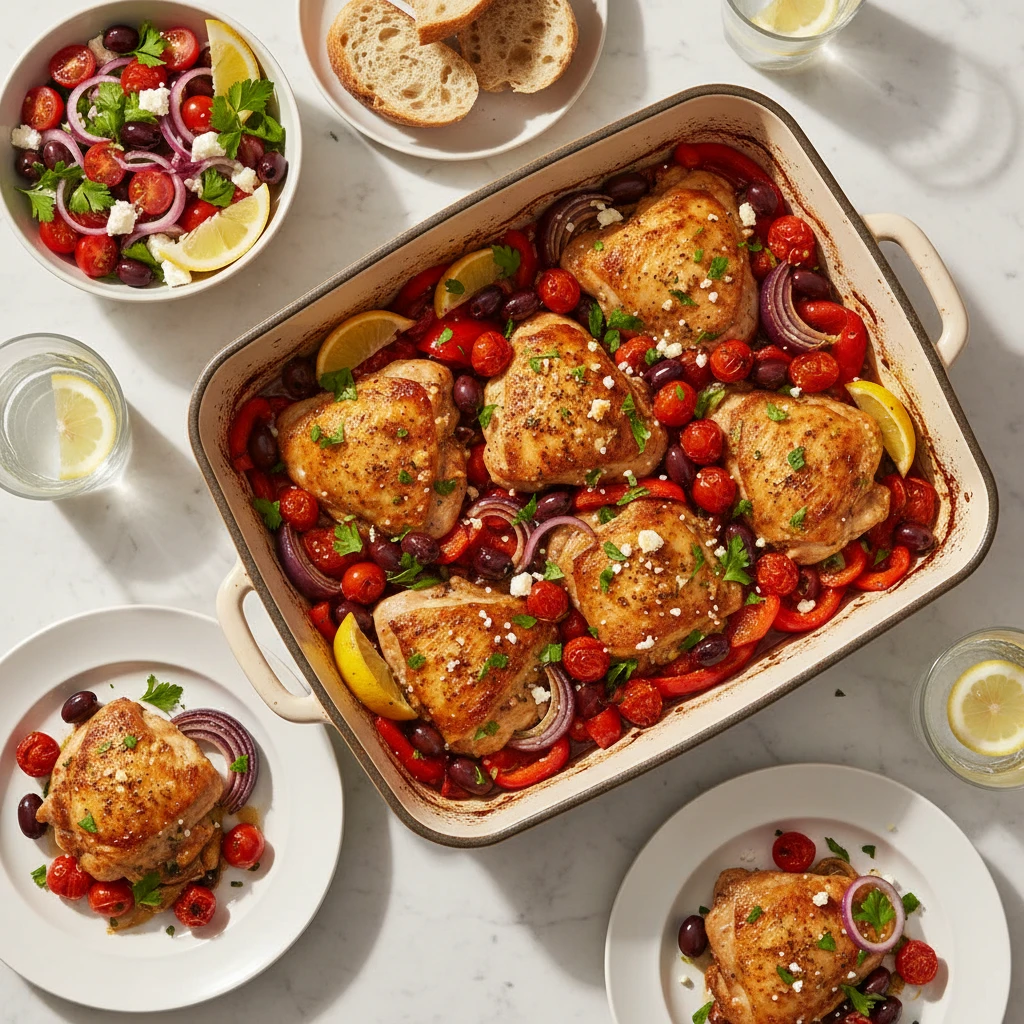
- As a Sheet Pan Dinner: Present the entire roasted pan at the table family-style, allowing guests to serve themselves directly, creating a casual yet elegant presentation.
- With Crusty Bread: Serve alongside thick slices of toasted crusty bread or focaccia for dipping in the pan juices.
- Garnish with Fresh Herbs: Top with additional fresh dill, parsley, or a light sprinkle of sumac for color and brightness.
- Drizzle with Extra Virgin Olive Oil: A final drizzle of premium olive oil and a squeeze of fresh lemon juice at serving time adds luxurious finishing touches.
- With Roasted Garlic Potatoes: Serve alongside cubed potatoes tossed in olive oil and roasted alongside the chicken for a complete one-pan Mediterranean meal.
 Save
SaveStorage and Reheating
Refrigerator Storage: Let any leftover Greek chicken thighs cool to room temperature (about 20 minutes), then transfer to an airtight container. Store in the refrigerator for up to 4 days. The chicken and vegetables maintain excellent texture and flavor during this time.
Freezing: For longer storage, place cooled chicken and vegetables in a freezer-safe container or heavy-duty zip-top bag, removing as much air as possible. Freeze for up to 3 months. The pan juices may separate when thawed, but the dish reheats beautifully.
Reheating in the Oven: Preheat oven to 350°F. Transfer chicken and vegetables to a baking dish, cover with foil, and bake for 15–20 minutes until heated through. This method preserves texture better than stovetop reheating.
Stovetop Reheating: Place chicken and vegetables in a skillet over medium heat, covering with a lid. Heat for 8–10 minutes, stirring occasionally, until warmed through. Add a splash of chicken broth or olive oil if the mixture seems dry.
Microwave Reheating: While convenient, microwaving can dry out the chicken slightly. If using a microwave, cover the dish loosely and reheat in 1-minute intervals at 50% power, checking frequently. A 2-person portion typically takes 2–3 minutes.
Make-Ahead Tip: The marinade can be prepared up to 2 days ahead in the refrigerator. Add chicken 2–4 hours before cooking for best results, though overnight marinating is ideal.
Frequently Asked Questions about Greek Chicken Thighs
Can I use chicken breasts instead of thighs?
While chicken breasts can be substituted, they are not recommended for this recipe. Breasts contain less fat and can dry out during roasting, whereas thighs stay juicy and tender. If you must use breasts, reduce cooking time to 25–30 minutes and monitor closely with a meat thermometer to avoid overcooking.
How long should I marinate the chicken?
Minimum marinating time is 2 hours, but overnight (8–12 hours) is ideal for maximum flavor development. You can marinate for up to 24 hours without issues. The longer the chicken sits in the acidic marinade, the more tender and flavorful it becomes.
Can I prepare this recipe ahead of time?
Yes! Marinate the chicken overnight in the refrigerator. In the morning, transfer the marinated chicken to your roasting pan, cover with plastic wrap or foil, and refrigerate until ready to cook. Remove from the fridge 30 minutes before roasting and bake as directed, adding 5 minutes to the cooking time if starting from cold.
What if I don’t have fresh lemon?
You can use bottled lemon juice in a pinch—use 3 tablespoons of bottled juice. However, fresh lemon provides superior flavor and brightness. Alternatively, substitute with fresh lime juice for a slightly different but equally delicious Mediterranean twist.
Is Greek chicken thighs gluten-free?
Yes, this recipe is naturally gluten-free. All ingredients contain no wheat, barley, or rye. Just verify that your chicken broth is certified gluten-free, as some commercial broths may contain hidden gluten.
Can I cook this on the stovetop instead of in the oven?
You can start the chicken on the stovetop in a large skillet over medium-high heat for 5 minutes per side to develop color, then transfer to the oven to finish cooking. This creates more browning but requires one extra step. Pure stovetop cooking at lower heat takes 25–30 minutes, but you won’t achieve the same caramelized vegetable texture.
How do I know when the chicken is fully cooked?
Use an instant-read meat thermometer and insert it into the thickest part of the largest thigh without touching bone. The internal temperature should reach 165°F (74°C). Alternatively, pierce the thickest part with a fork—juices should run clear with no pink remaining.
What should I serve with Greek chicken thighs?
Pair with fluffy rice, orzo pasta, farro, cauliflower rice for lower-carb, or crusty bread for soaking up pan juices. A fresh Greek salad, roasted potatoes, or sautéed spinach complement the dish beautifully. Tzatziki sauce is an excellent condiment on the side.
Nutrition Facts (Per Serving)
| Nutrient | Per Serving |
|---|---|
| Calories | 385 |
| Total Fat | 18g |
| Saturated Fat | 5g |
| Cholesterol | 145mg |
| Sodium | 680mg |
| Total Carbohydrates | 12g |
| Dietary Fiber | 2g |
| Sugars | 5g |
| Protein | 42g |
| Calcium | 125mg (10% DV) |
| Iron | 2.1mg (12% DV) |
Per serving based on 6 servings. Nutritional values are approximate and may vary based on specific ingredient brands used. Values calculated without any side dishes or accompaniments.
Greek Chicken Thighs
Ingredients
- 8 boneless skinless chicken thighs
- 1/4 cup extra virgin olive oil
- 3 tablespoons red wine vinegar
- 6 cloves garlic minced
- 2 teaspoons dried oregano
- 1 teaspoon dried thyme
- 1 teaspoon paprika
- 1/2 teaspoon red pepper flakes
- 1 teaspoon salt
- 1/2 teaspoon black pepper
- 1 lemon cut into quarters
- 1 red onion cut into thick rings
- 2 red bell peppers cut into chunks
- 2 cups cherry tomatoes
- 1 cup Kalamata olives pitted
- 1/2 cup crumbled feta cheese
- 2 tablespoons fresh parsley chopped
- 1 tablespoon fresh dill chopped
- 1 cup chicken broth
Instructions
- In a large bowl, whisk together 1/4 cup extra virgin olive oil, 3 tablespoons red wine vinegar, 6 minced garlic cloves, 2 teaspoons dried oregano, 1 teaspoon dried thyme, 1 teaspoon paprika, 1/2 teaspoon red pepper flakes, 1 teaspoon salt, and 1/2 teaspoon black pepper. Mix for about 1 minute until well combined. Checkpoint: The marinade should be fragrant and well-blended with no streaks of oil remaining.
- Pat dry 8 boneless, skinless chicken thighs with paper towels—this helps the marinade stick better. Approximately 30 seconds per thigh.
- Place dried chicken thighs into the marinade bowl and toss with tongs or clean hands until all surfaces are coated, about 2 minutes. Checkpoint: Every piece of chicken should be glistening with marinade.
- Cover the bowl with plastic wrap or transfer to a large zip-top bag. Refrigerate for at least 2 hours, or preferably 8–12 hours overnight. If using a longer overnight marinade in a cold kitchen, the thighs will still be tender and flavorful.
- Remove marinated chicken from the refrigerator 30 minutes before cooking—this brings it to room temperature and ensures even cooking. Leave on the counter uncovered.
- Preheat your oven to 400°F and position the oven rack in the center. This takes about 10–12 minutes. Checkpoint: Your oven should be fully preheated before chicken enters.
- Transfer all marinated chicken thighs to a large roasting pan (13 x 9 inches) or 12-inch cast-iron skillet, reserving any excess marinade in the bowl. Arrange thighs skin-side up (if using skin-on) or flat in a single layer without overlapping. Approximately 2 minutes to arrange.
- Cut 1 lemon into quarters and arrange around the chicken thighs. Cut 1 red onion into thick rings and scatter throughout the pan. Cut 2 red bell peppers into 1-inch chunks and distribute evenly. This arrangement takes about 3 minutes.
- Add 2 cups cherry tomatoes and 1 cup pitted Kalamata olives to the pan, scattering them among the chicken and vegetables. Pour 1 cup chicken broth slowly into the bottom of the pan around (not directly over) the chicken—this keeps the chicken moist without steaming it. Approximately 2 minutes to add liquid and vegetables.
- Transfer the roasting pan to the preheated 400°F oven on the center rack. Roast uncovered for 35–40 minutes. At the 20-minute mark, stir the vegetables gently (leaving chicken undisturbed) to ensure even cooking. Checkpoint: Chicken is done when an instant-read thermometer inserted into the thickest part of a thigh reaches 165°F, or when juices run clear when pierced with a fork. Thighs should be golden-brown on top.
- Remove the roasting pan from the oven and let the chicken rest in the pan for 5 minutes. This allows juices to redistribute, keeping meat tender. Do not cover.
- Sprinkle 1/2 cup crumbled feta cheese, 2 tablespoons fresh chopped parsley, and 1 tablespoon fresh chopped dill evenly over the chicken and vegetables. Approximately 1 minute.
- Serve immediately from the pan or transfer to a large serving platter, spooning pan juices and vegetables over chicken. Garnish with additional fresh herbs if desired.
- Troubleshooting:If chicken thighs are uneven in thickness, place thicker ones toward the hotter part of the oven and thinner ones toward the center or back.
- If vegetables aren't tender after 40 minutes, remove chicken to a plate, continue roasting vegetables for 5 more minutes, then return chicken.
- If pan juices are too thin, transfer chicken to a serving plate, set roasting pan on stovetop over medium-high heat, and simmer liquid for 3–5 minutes to concentrate flavors before drizzling over chicken.
- If chicken looks dry when sliced, it may have been overcooked; thighs are forgiving, but 40 minutes at 400°F is the upper limit. Next time, check temperature at 33 minutes.
- If feta cheese gets too hot and oily, add it just before serving rather than during the last minute of cooking.