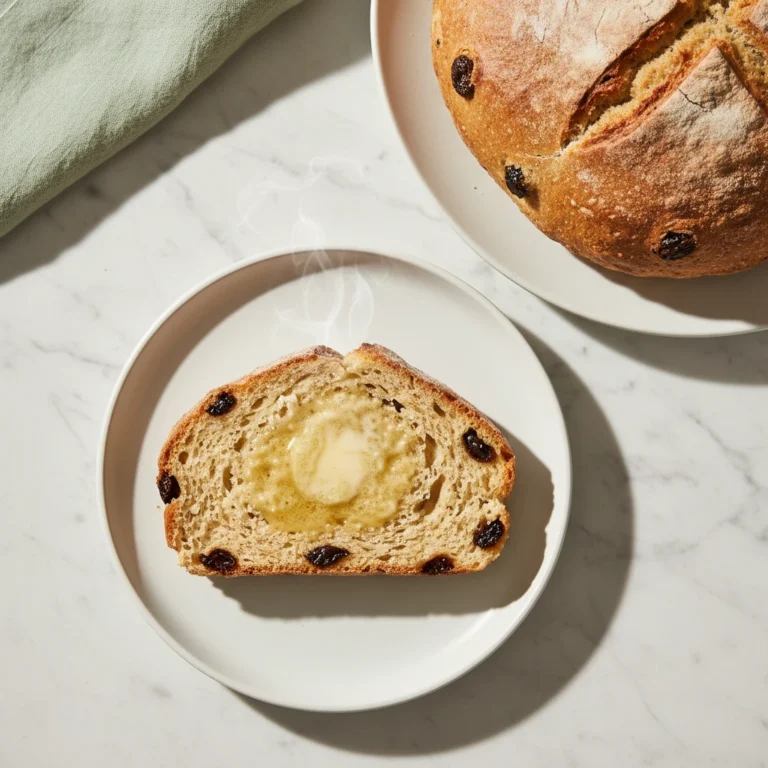
Irish Soda Bread is a beloved classic that brings the warmth of Irish tradition straight to your kitchen. Unlike yeasted breads, this quick bread relies on baking soda and buttermilk to create a tender, slightly sweet crumb studded with plump raisins. Perfect for breakfast, afternoon tea, or alongside a hearty stew, this rustic loaf is simple to make yet impressive enough to share with family and friends. With its golden-brown crust and comforting flavor, Irish Soda Bread is a timeless favorite that never goes out of style.
Reasons to Try Irish Soda Bread
Quick and Easy: No yeast means no rising time. You can have warm bread on the table in just over an hour from start to finish—perfect for busy weekdays or last-minute gatherings.
Tender, Moist Crumb: The buttermilk and melted butter create a luxuriously soft texture that’s neither dense nor dry. Every bite melts gently on your tongue, making it irresistible.
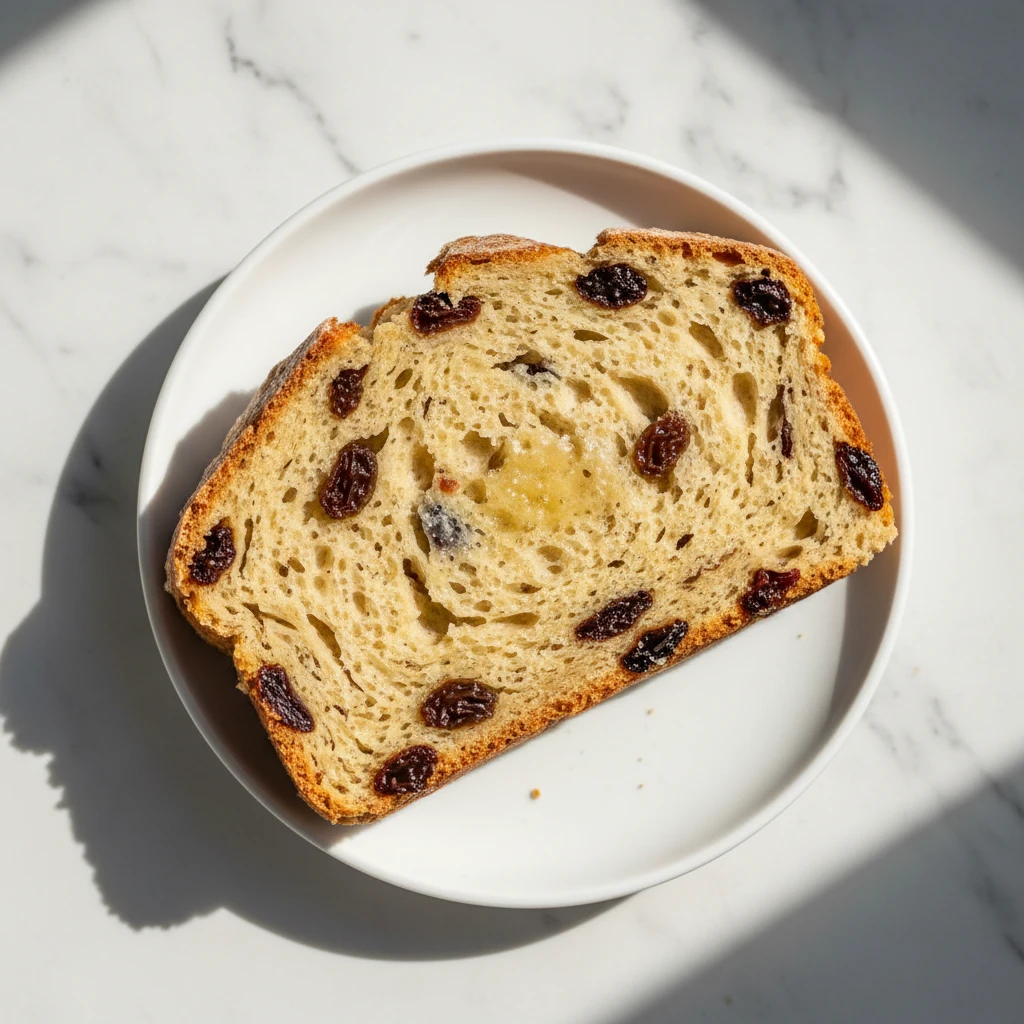
Sweet Raisin Pockets: Plump, juicy raisins soaked in warm water add bursts of natural sweetness and chewy texture throughout the bread, making each slice a little treasure hunt.
Authentic Irish Tradition: This bread carries centuries of history. Originally born from necessity using simple pantry staples, it’s evolved into a cherished comfort food that connects us to Irish heritage and family tables around the world.
Versatile and Forgiving: Whether served warm with butter and jam, crumbled into a bread pudding, or toasted for breakfast, Irish Soda Bread adapts beautifully to any occasion. The recipe is also very forgiving for beginner bakers.
 Save
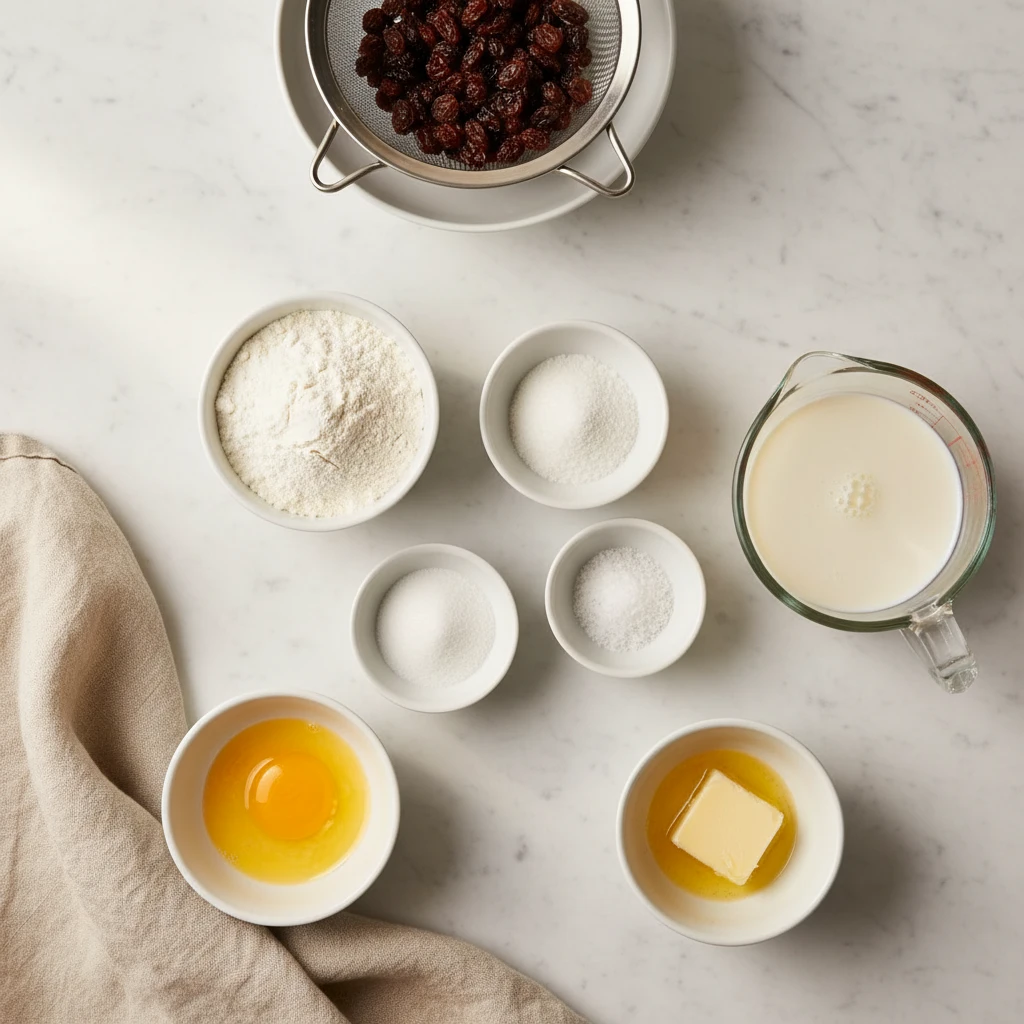
SaveIngredients Notes
- Flour (all-purpose works best for structure)
- Sugar (adds subtle sweetness and helps with browning)
- Baking soda (the leavening agent that reacts with buttermilk)
- Baking powder (extra lift and reliability)
- Salt (enhances flavor and controls the chemical reaction)
- Egg (binds the dough and adds richness)
- Butter (melted for moisture and tenderness)
- Raisins (soaked in warm water first to plump them up)
- Buttermilk (provides the acidic component that activates the baking soda)
 Save
SaveHow to Make Irish Soda Bread
- Preheat your oven to 350°F (175°C). Grease a cast iron skillet or round baking pan with butter or cooking spray.
- In a large bowl, whisk together the flour, sugar, baking soda, baking powder, and salt until evenly combined.
- In another bowl, beat the egg, then stir in the melted butter and buttermilk until mixed.
- Pour the wet ingredients into the dry ingredients and fold together gently until just combined. Do not overmix; the dough should be slightly rough.
- Drain the raisins that have been soaking in warm water and fold them into the dough.
- Transfer the dough to the prepared skillet and smooth the top lightly.
- Place the skillet on the middle oven rack and bake for 50 to 60 minutes, until the top is golden brown and a skewer inserted into the center comes out clean.
- Remove from the oven and let cool in the skillet for 10 minutes before turning out onto a wire rack.
What You Must Know About Irish Soda Bread
Buttermilk is Essential: This is not a substitution—buttermilk’s acidity is critical for activating the baking soda and creating the bread’s tender crumb. If you don’t have buttermilk, make a substitute by adding 1 tablespoon of lemon juice or white vinegar to 1 cup of regular milk and letting it sit for 5 minutes.
Don’t Overmix the Dough: This is the most common mistake. Mix just until the flour is incorporated. Overmixing develops gluten, which makes the bread tough and dense instead of tender and crumbly.
Soak Your Raisins: Soaking the raisins in warm water for 10–15 minutes plumps them up, making them juicy and tender rather than hard and shriveled. This step is worth the extra few minutes.
Use Fresh Baking Soda and Powder: These leavening agents lose potency over time. If your ingredients are more than 6 months old (for baking powder) or 1 year old (for baking soda), replace them. Old leavening means your bread won’t rise properly.
Cast Iron Skillet is Ideal: While a round cake pan works, a cast iron skillet distributes heat evenly and creates a beautiful, evenly browned crust. If using a different pan, you may need to adjust baking time by a few minutes.
Helpful Tips
Measure Flour Correctly: Spoon flour into your measuring cup and level it off with a knife rather than scooping directly from the bag. This prevents compacting too much flour into the recipe.
Keep Ingredients Cold: Before mixing, you can chill your bowl and measuring cups briefly. This helps prevent the dough from warming up, which can cause it to toughen.
Make a Cross on Top: For extra authenticity, use a sharp knife to score a shallow cross on the top of the dough before baking. This is traditional and also helps steam escape evenly, promoting better browning.
Warm Bread Tastes Better: Serve the bread warm (30–60 minutes after cooling slightly) with a generous dollop of butter. The warmth makes the bread even more tender and allows the butter to melt beautifully into every slice.
Variations and Substitutions
Brown Raisins vs. Golden: Golden raisins offer a lighter, slightly more delicate sweetness, while brown raisins provide a deeper, more traditional molasses-like flavor. Use whichever you prefer or have on hand.
Dried Cranberries or Currants: Swap the raisins for dried cranberries for a tartness that balances the sweetness, or use currants for a more refined, subtle fruit flavor. Soak them the same way before adding.
Add Caraway Seeds: For an authentic Irish twist, add 1–2 teaspoons of caraway seeds to the dry ingredients. This brings a subtle, slightly spicy note traditional to some regional Irish recipes.
Whole Wheat Variation: Replace up to 1 cup of all-purpose flour with whole wheat flour for added nutrition and nuttiness. This will make the bread slightly denser but heartier.
No-Sugar Version: Reduce the sugar to 1/2 cup for a less sweet bread that’s more savory. The bread will brown more slowly, so watch it carefully and may need an extra 5–10 minutes.
Molasses Addition: Add 2 tablespoons of molasses along with the wet ingredients for deeper color, richer flavor, and extra moisture. This darkens the crust beautifully and adds complexity.
Herb-Infused Version: Stir 1–2 teaspoons of dried Irish herbs (such as thyme or sage) into the dry ingredients for a savory loaf perfect alongside soups and stews.
Serving Suggestions for Irish Soda Bread
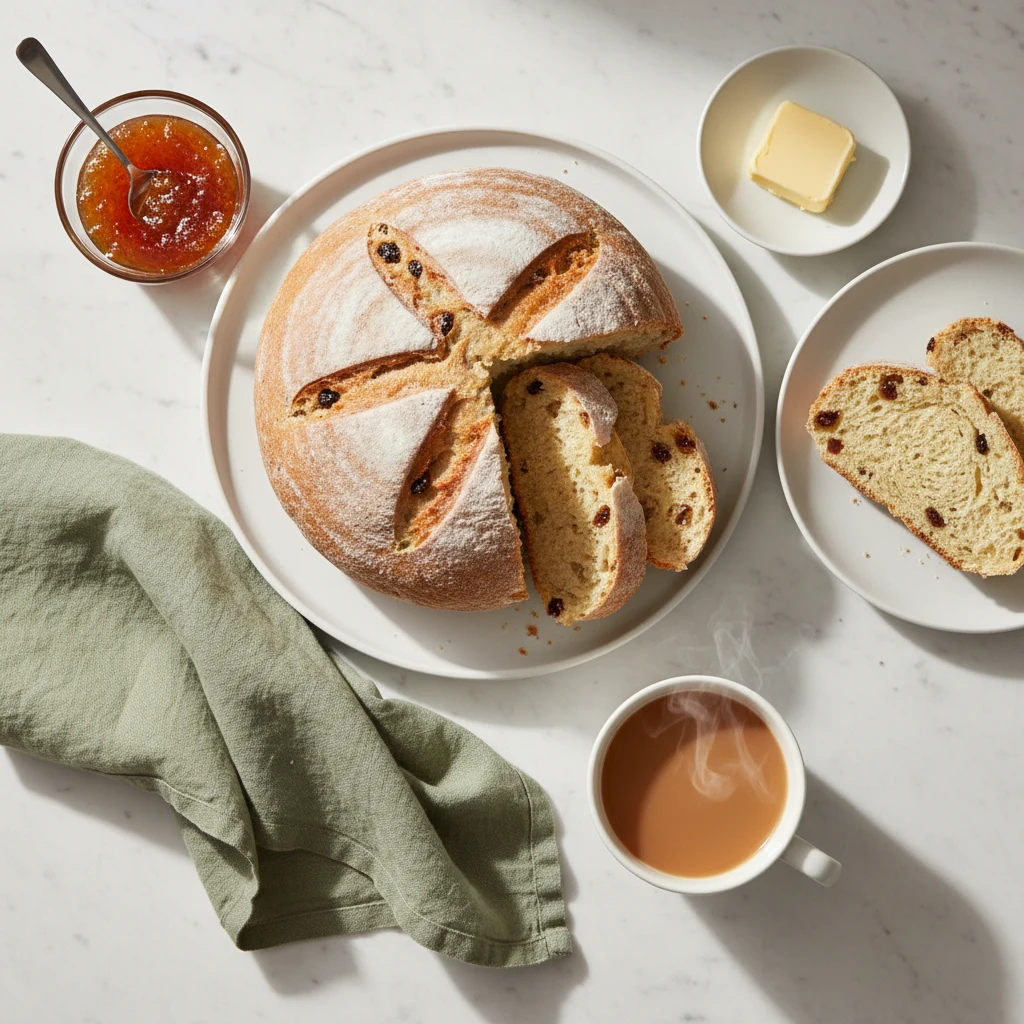
Classic with Butter and Jam: Slice the warm bread thickly and top with softened Irish butter and your favorite jam or marmalade. The warmth melts the butter perfectly, and the jam’s tartness complements the bread’s sweetness beautifully.
Traditional Tea Time: Serve alongside a pot of hot Irish tea, with the bread cut into thin slices and spread with whipped honey butter. Add a small plate of Irish cheese and smoked salmon for an elegant presentation.
Breakfast Companion: Toast thick slices and serve with scrambled eggs, crispy bacon, and a poached egg on top for a hearty Irish breakfast.
Alongside Soups and Stews: Serve warm, unbuttered slices with traditional Irish coddle, beef stew, or creamy chowder. The bread soaks up the broth beautifully and grounds a complete meal.
Bread Pudding Canvas: Cube leftover bread and transform it into a decadent Irish bread pudding with whiskey custard and caramel sauce.
Breakfast Toast: Day-old slices toast exceptionally well, staying tender inside while getting crispy on the outside. Top with avocado, poached eggs, or Irish butter and honey.
Garnish and Presentation: Dust the finished loaf with a light sprinkle of coarse sea salt and serve it whole on a wooden board for a rustic, inviting presentation. Tear into it at the table for that warm, homemade appeal.
 Save
SaveStorage and Reheating
Room Temperature Storage: Wrap the completely cooled bread tightly in plastic wrap or aluminum foil and store it on the counter for up to 2 days. Keep it away from direct sunlight and heat sources. The bread will gradually become denser as it ages, which is normal.
Refrigerator Storage: For longer storage, wrap the cooled bread in plastic wrap, then place it in an airtight container or resealable bag. Refrigerate for up to 1 week. Cold temperatures slow the staling process significantly.
Freezer Storage: Wrap the cooled bread in plastic wrap, then in foil or a freezer bag, removing as much air as possible. Label with the date and freeze for up to 3 months. The bread thaws best when left at room temperature for 2–3 hours.
Slicing Before Storage: For convenience, slice the bread before freezing. Place parchment paper between slices so you can grab individual pieces as needed. This is perfect for quick toast.
Reheating on the Counter: The best way to reheat is to let frozen or refrigerated bread thaw at room temperature for 2–3 hours, which restores the original texture beautifully.
Reheating in the Oven: Preheat your oven to 350°F (175°C). Wrap the bread in foil and warm it for 10–15 minutes if it’s at room temperature, or 20–25 minutes if it’s cold from the refrigerator or freezer. This method revives the tender crumb without drying it out.
Toasting Individual Slices: Day-old or frozen slices toast beautifully in a toaster or toaster oven at medium setting for 3–5 minutes. Toast brings out the bread’s natural sweetness and creates a pleasant contrast between a crispy exterior and soft interior.
Frequently Asked Questions about Irish Soda Bread
Can I make Irish Soda Bread without buttermilk?
Yes! If you don’t have buttermilk, you can make a substitute by adding 1 tablespoon of lemon juice or white vinegar to 1 cup of regular milk and letting it sit for 5 minutes at room temperature. This replicates buttermilk’s acidity and works just as well. Stir it well before using.
Why is my Irish Soda Bread dense and heavy?
The most common cause is overmixing the dough. Mix just until the flour is barely incorporated—the dough should look shaggy and rough, not smooth. Overmixing develops gluten, making the bread tough. Also check that your baking soda and baking powder are fresh, as old leavening agents won’t create enough rise.
Can I use a different type of pan instead of cast iron?
Absolutely! You can use a round cake pan, loaf pan, or even a Dutch oven. Cast iron is ideal because it distributes heat evenly, but any oven-safe pan works. You may need to adjust baking time slightly (usually ±5 minutes) depending on the pan’s thickness and material. Dark pans may cause the bread to brown faster, so watch it carefully.
How do I know when the bread is done baking?
The bread is done when the top is golden brown and a wooden skewer or toothpick inserted into the center comes out clean or with just a few crumbs clinging to it. The internal temperature should reach 200–205°F (93–96°C) when measured with an instant-read thermometer. If the top is browning too quickly, loosely tent it with foil and continue baking.
Can I add different dried fruits instead of raisins?
Definitely! Dried cranberries, currants, chopped dried apricots, or dried blueberries all work beautifully. Soak them in warm water for 10–15 minutes first to plump them up and soften them, then drain well before adding to the dough. The total amount of dried fruit should remain about the same (roughly 1 cup soaked).
What’s the difference between Irish Soda Bread and regular bread?
Irish Soda Bread uses baking soda and buttermilk as leavening agents instead of yeast. This means no rising time is needed, so you can make the entire loaf in about 1 hour. The result is a tender, crumbly bread with a slightly sweet, dense crumb rather than the airy, chewy texture of yeasted bread. It’s quick, simple, and perfect for busy days.
Can I make the dough ahead and bake it later?
It’s not ideal because the chemical reaction between the baking soda and buttermilk begins immediately when mixed. If you must wait, prepare the dough and bake within 15–20 minutes for best results. You can, however, measure out all your dry ingredients ahead of time in a bowl, cover it, and mix with the wet ingredients when ready to bake.
Nutrition Facts (Per Serving)
| Nutrient | Amount |
|---|---|
| Calories | 420 |
| Total Fat | 12g |
| Saturated Fat | 7g |
| Cholesterol | 45mg |
| Sodium | 320mg |
| Total Carbohydrates | 72g |
| Dietary Fiber | 2g |
| Sugars | 18g |
| Protein | 8g |
Note: Nutritional values are estimates based on USDA data and ingredient measurements. Actual values may vary depending on specific brands and preparation methods. This serving size represents the entire loaf as prepared.
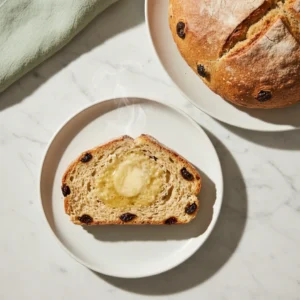
Irish Soda Bread
Ingredients
- flour
- sugar
- baking soda
- baking powder
- salt
- egg
- butter
- raisins
- buttermilk
Instructions
- Preheat your oven to 350°F (175°C). Grease a cast iron skillet or round baking pan with butter, making sure to coat the bottom and sides well. This prevents sticking. Checkpoint: Your pan should look shiny and evenly coated with no dry spots.
- In a large mixing bowl, measure out 4 cups of all-purpose flour. Add 1 cup sugar, 1 teaspoon baking soda, 1 teaspoon baking powder, and 1 teaspoon salt to the flour. Whisk everything together for 1–2 minutes until the dry ingredients are evenly mixed and no lumps of baking soda remain. Checkpoint: The mixture should look like slightly sweet flour with no visible clumps.
- In a separate medium bowl, crack 1 egg and beat it with a fork for 30 seconds until the yolk and white are blended. Pour in 1/2 cup melted butter and 2 cups buttermilk. Stir with a spoon or whisk for 30 seconds until combined. The mixture will look slightly curdled—this is normal and expected. Checkpoint: All ingredients should be mixed together, even if the appearance looks uneven.
- Pour the wet mixture into the bowl with the dry ingredients. Using a wooden spoon or silicone spatula, fold the wet and dry ingredients together gently for 1–2 minutes, stirring just until no visible dry flour remains. Be careful not to overmix; the dough should look slightly lumpy and shaggy, not smooth. Checkpoint: You should see no streaks of dry flour, but the dough will look rough and rustic.
- Prepare your raisins: if they have been soaking in warm water for 10–15 minutes, drain them well using a fine mesh strainer. Fold the drained raisins into the dough by gently stirring for 30 seconds until they are evenly distributed. Checkpoint: The raisins should be scattered throughout and not all clumped in one area.
- Carefully transfer the dough to the prepared cast iron skillet. Use a spatula to gently press the dough so it fills the pan evenly. Lightly smooth the top surface with your fingertips or a damp rubber spatula. The top does not need to be perfectly smooth. Checkpoint: The dough should fill the skillet and look rustic, not polished.
- Place the skillet on the middle rack of your preheated 350°F oven. Bake for 50–60 minutes. The bread is done when the top is golden brown and a wooden skewer or toothpick inserted into the center comes out clean or with just a few crumbs. If the top browns too quickly before 50 minutes, you can loosely tent it with foil. Checkpoint: The top should be a deep golden-brown color, and the skewer should not have wet batter clinging to it.
- Remove the skillet from the oven using oven mitts. Let the bread cool in the skillet for 10 minutes. You will hear the bread settle and may see steam. This resting time allows the structure to set. Checkpoint: The bread should feel firm to the touch and should not jiggle when you gently shake the pan.
- After 10 minutes, carefully turn the bread out onto a wire cooling rack by placing the rack over the skillet, holding both together, and flipping. If using parchment paper under the bread, it should come out easily. Let cool for at least 30–45 minutes before slicing. The bread will continue to firm up as it cools. Checkpoint: The bread should feel set and only slightly warm to the touch before slicing.
- Once cooled to room temperature, slice with a serrated bread knife using a gentle sawing motion. Serve warm or at room temperature with butter and jam, or alongside soups and stews.