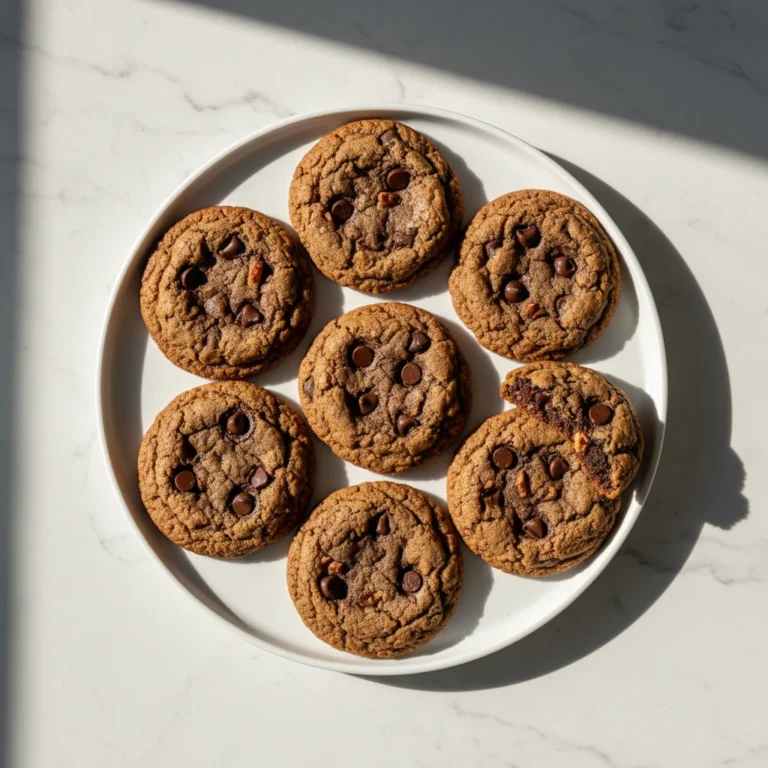
Keto cookies are a game-changer for anyone following a low-carb or ketogenic lifestyle. These indulgent treats deliver rich chocolate flavor and satisfying texture without refined sugar or wheat flour. Made with almond flour and sweetened with erythritol, they’re packed with healthy fats and contain minimal net carbs, making them the perfect guilt-free dessert. Whether you’re new to keto or a seasoned enthusiast, these cookies prove that you don’t have to sacrifice delicious baking on a low-carb diet.
Reasons to Try Keto Cookies
Keto-Friendly & Low-Carb: These cookies contain only 2–3 grams of net carbs per serving, making them ideal for maintaining ketosis and blood sugar stability without derailing your diet.
Naturally Sweetened: Erythritol provides sweetness without aftertaste or blood sugar spikes, unlike artificial sweeteners. It’s a sugar alcohol that doesn’t impact ketone production.
Rich Chocolate Flavor: Combining cocoa powder and sugar-free chocolate chips creates a deeply satisfying, authentic chocolate experience that doesn’t taste ‘diet’ or artificial.
Nutrient-Dense: Almond flour adds protein, healthy fats, and fiber, supporting satiety and providing sustained energy. Nuts add crunch and additional micronutrients.
Quick & Easy: No complex techniques required. These cookies come together in under 15 minutes of prep, then bake in just 12 minutes—perfect for busy weekdays or last-minute dessert cravings.
Versatile Base: The recipe adapts easily to different mix-ins: peanut butter swirls, macadamia nuts, or white chocolate chips create endless variations while staying keto.
 Save
SaveIngredients Notes
- Almond flour: Use fine, blanched almond flour for best texture. Coarse or unblanched versions can create a grittier cookie.
- Butter: Softened room-temperature butter creams better and creates lighter cookies. Don’t use melted butter or coconut oil as they’ll change the texture significantly.
- Erythritol: This is the best sugar-free sweetener for keto cookies because it crystallizes similarly to sugar and has minimal cooling effect. Monk fruit or a blend of erythritol and monk fruit also work well.
- Egg: Acts as a binder and adds structure. Room-temperature eggs mix more smoothly into the butter.
- Baking soda: Essential for lift and browning. Don’t skip it or cookies will be dense and pale.
- Cocoa powder: Use unsweetened, high-quality cocoa powder. Dutch-processed cocoa creates deeper flavor but both work.
- Sugar-free chocolate chips: Look for brands sweetened with erythritol or stevia. Regular chocolate chips contain too much sugar for keto.
- Sea salt: Enhances chocolate flavor and balances sweetness. Regular salt works, but sea salt adds subtle mineral notes.
How to Make Keto Cookies
- Preheat oven to 325°F and line a baking sheet with parchment paper.
- In a medium bowl, whisk together almond flour, cocoa powder, baking soda, and sea salt.
- In a large bowl, cream softened butter and erythritol together until light and fluffy, about 2–3 minutes.
- Beat in the egg and vanilla extract until fully combined, scraping down the bowl as needed.
- Gradually fold the dry ingredients into the wet ingredients until just combined—do not overmix.
- Fold in sugar-free chocolate chips and nuts if using.
- Drop rounded tablespoons of dough onto the prepared baking sheet, spacing them about 2 inches apart.
- Bake for 11–13 minutes until the edges are slightly firm but the centers still look slightly underdone.
- Allow cookies to cool on the baking sheet for 5 minutes, then transfer to a wire rack to cool completely.
What You Must Know About Keto Cookies
Temperature Matters: Softened butter is critical for proper creaming and texture. If your butter is too cold, the dough will be dense and hard to mix. If too warm, cookies will spread excessively and become too thin. Aim for butter that’s soft enough to leave a slight indent when poked with your finger.
Don’t Overmix: Almond flour-based doughs are delicate. Overmixing develops the tiny amount of gluten in almond flour and creates tough, dense cookies. Once you add dry ingredients, fold gently—stop mixing as soon as streaks disappear.
Erythritol Sensitivity: Some people experience digestive sensitivity to erythritol (gas, bloating, or laxative effects) when consumed in large amounts. Start with a small portion and see how your body responds. If sensitivity occurs, substitute with monk fruit sweetener or a 1:1 blend of erythritol and monk fruit, which is often easier to digest.
Oven Temperature: Standard ovens vary by 15–25°F from their displayed temperature. If your cookies consistently burn or spread too much, your oven may run hot. Use an oven thermometer to verify actual temperature.
Net Carbs vs. Total Carbs: These cookies have about 5 grams total carbs but only 2–3 grams of net carbs per serving (total carbs minus fiber). Most keto dieters count net carbs, but always verify based on your personal macros.
Helpful Tips: For chewier cookies, remove them at 11 minutes and cool completely on the baking sheet before moving to a rack. For crispier edges, bake the full 13 minutes. Double the batch and freeze extras in an airtight container for up to 3 months—they thaw at room temperature in 30 minutes. If you prefer softer cookies, store them in an airtight container with a small piece of bread for 24 hours (it releases moisture and softens the cookies while keeping them from molding).
Variations and Substitutions
Peanut Butter Swirl Cookies: Add 2 tablespoons natural peanut butter to the batter after beating in the egg. Swirl an additional teaspoon of peanut butter into the center of each dough ball before baking for a marbled effect.
Salted Caramel Keto Cookies: Replace cocoa powder with 1/2 cup almond flour (increase total to 2.5 cups), skip chocolate chips, and add 1/4 teaspoon sea salt to the dry mix. Drizzle each baked cookie with caramel sauce sweetened with erythritol, then sprinkle with fleur de sel.
Macadamia Nut White Chocolate: Substitute sugar-free white chocolate chips for dark chocolate chips, and use chopped macadamia nuts instead of pecans. Add 1/2 teaspoon macadamia nut butter for extra depth.
Double Chocolate Chunk Cookies: Increase cocoa powder to 2/3 cup and reduce almond flour to 1.75 cups. Add both sugar-free dark chocolate chips and unsweetened chocolate chunks for intense chocolate flavor and texture contrast.
Mint Chocolate Keto Cookies: Add 1/2 teaspoon peppermint extract and a pinch of xanthan gum (1/8 teaspoon) to the batter. Use mint-flavored sugar-free chocolate chips if available, or stir in finely chopped sugar-free peppermint bark.
Almond Flour Substitution: Coconut flour can replace up to 1/2 cup of almond flour (use only 1/4 cup and add 1 extra egg to prevent dryness), but this creates a more cake-like texture. Sunflower seed flour is a nut-free option but requires a small amount of xanthan gum for binding.
Sweetener Swap: Monk fruit (at a 1:1 ratio), stevia (reduce to 1/4 cup since it’s sweeter), or a 50/50 blend of erythritol and monk fruit work well. Avoid sugar alcohols like maltitol or xylitol, which have higher glycemic impact.
Serving Suggestions for Keto Cookies
Classic Coffee Pairing: Serve cookies warm or at room temperature alongside black coffee, espresso, or a keto-friendly butter coffee for a satisfying, fat-focused breakfast treat.
Dessert Platter: Arrange cookies on a wooden board with cheese, nuts, and fresh berries for an elegant low-carb dessert board that impresses guests without breaking ketosis.
Ice Cream Sandwich: Sandwich sugar-free vanilla ice cream or keto cheesecake ice cream between two cooled cookies for an indulgent yet keto-compliant dessert.
Dipped in Dark Chocolate: Melt sugar-free dark chocolate and dip the edge of each cookie, then place on parchment to set. This adds richness and creates an impressive presentation.
Afternoon Snack Box: Pack 2–3 cookies in a container with a handful of almonds and a string cheese for a balanced, portable snack that sustains energy between meals.
Gift-Ready Packaging: Layer cookies in a clear cellophane bag or mason jar with a homemade label listing ingredients and carb count. Keto enthusiasts make perfect recipients for these thoughtful, macro-friendly treats.
 Save
SaveStorage and Reheating
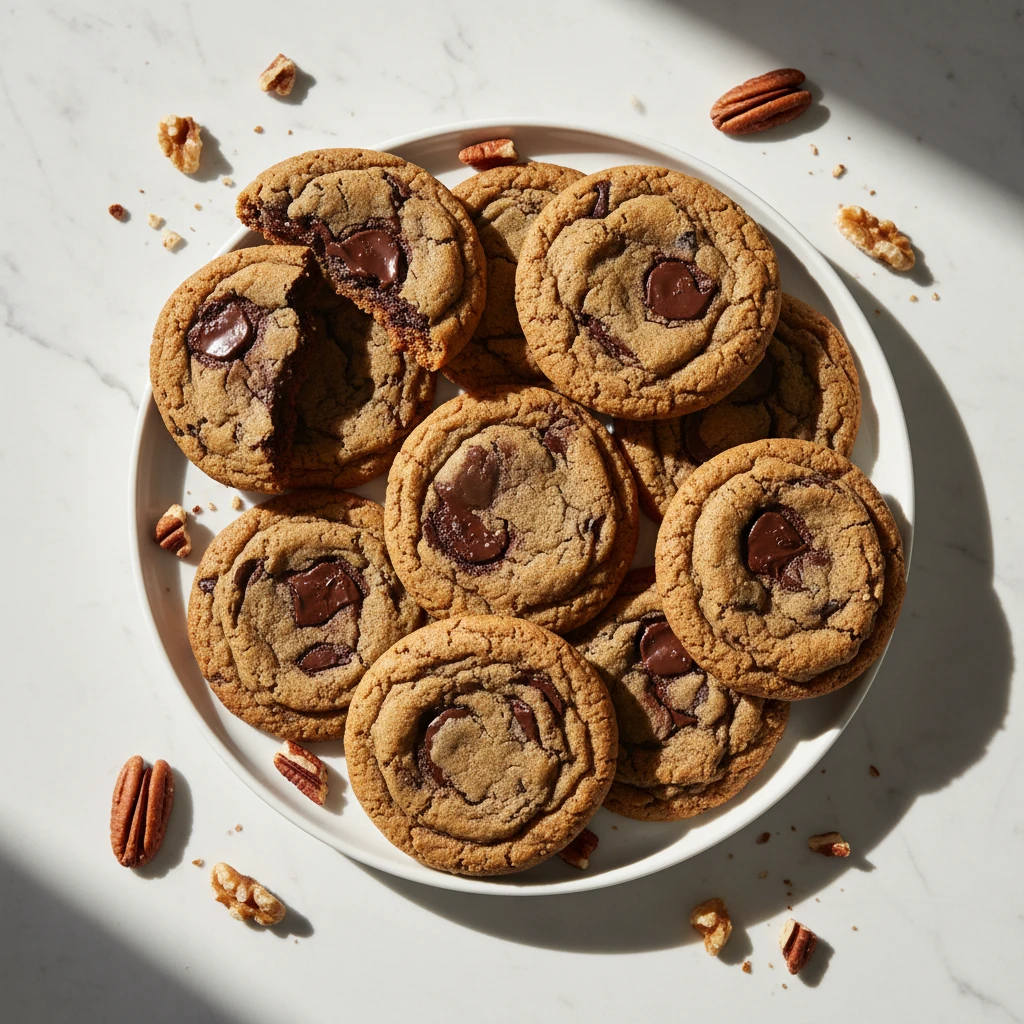
Room Temperature Storage: Keep baked cookies in an airtight container or glass jar at room temperature for up to 5 days. They maintain their texture and flavor best this way. Avoid humid environments, which can soften cookies more quickly.
Refrigerator Storage: For extended shelf life, store in an airtight container in the refrigerator for up to 1 week. Cold storage slows oxidation and keeps fats fresher longer. Allow cookies to come to room temperature for 15 minutes before eating to restore the ideal texture.
Freezer Storage: Freeze baked cookies in a single layer on a parchment-lined baking sheet for 2 hours, then transfer to a freezer-safe bag or container for up to 3 months. Label with the date. Thaw at room temperature for 30–45 minutes before serving—no reheating needed.
Freezing Dough: Unbaked cookie dough can be frozen in balls on a parchment-lined baking sheet, then transferred to a freezer bag for up to 1 month. Bake directly from frozen, adding 2–3 minutes to the baking time.
Reheating: To restore softness and warmth, place cookies on a parchment-lined baking sheet and warm in a 300°F oven for 5–7 minutes. Avoid the microwave, which can make them rubbery. Alternatively, wrap a cookie in a damp paper towel and microwave for 15–20 seconds for a quick warm-up.
Frequently Asked Questions about Keto Cookies
Are keto cookies really carb-free?
No, keto cookies are not entirely carb-free, but they’re very low in net carbs. Each cookie contains about 5 grams of total carbs, with 2–3 grams of fiber, leaving only 2–3 grams of net carbs per cookie. This is calculated by subtracting fiber from total carbs, which is the metric most keto dieters use to track macros. While not zero-carb, they’re low enough to fit into most ketogenic diets without affecting ketosis when consumed in moderation.
Can I use regular flour and sugar instead of keto ingredients?
Yes, but the recipe will no longer be keto-friendly. If you want to make these cookies with traditional ingredients, substitute 2 cups almond flour with 2 cups all-purpose flour, and replace erythritol with 1/3 cup granulated sugar. The texture will be slightly different—more cakey and less dense. Bake time remains the same. Keep in mind that this version will contain about 15 grams of net carbs per cookie, making it unsuitable for ketogenic diets.
Why do my keto cookies taste bitter?
Bitter taste usually comes from one of three sources: too much cocoa powder, burning during baking, or over-stirring that develops bitterness in almond flour. Ensure you’re using ½ cup cocoa powder (not more), remove cookies at 11 minutes if centers are still underdone, and fold ingredients gently rather than vigorously mixing. Additionally, some erythritol brands have a slight cooling or bitter aftertaste. If this is an issue, blend erythritol with monk fruit (50/50) for a cleaner sweetness.
Can I make these cookies nut-free?
Yes, though the texture will differ slightly. Replace almond flour with sunflower seed flour (use the same 2-cup measurement) or coconut flour (reduce to 1/2 cup and add 1 extra egg for binding). Sunflower seed flour produces the closest texture match to traditional cookies. Skip the walnut or pecan add-ins, or replace them with chia seeds, flax seeds, or seeds of your choice. The baking time and temperature remain the same.
How much erythritol should I use if I don’t like very sweet desserts?
Start with ¼ cup erythritol for a less sweet cookie. You can also increase the cocoa powder to ⅔ cup to add richness without extra sweetness. Taste a small piece of raw dough (it’s safe because there’s no raw egg—the egg is mixed thoroughly with other ingredients) to gauge sweetness before baking. Adjust in ½-tablespoon increments in future batches until you reach your preferred sweetness level.
Can I use butter substitutes like coconut oil or ghee?
Ghee works well as a 1:1 substitute for butter and produces nearly identical results. Coconut oil also works at a 1:1 ratio, but cookies may spread more and have a slight coconut flavor (which pairs nicely with chocolate). Avoid butter-flavored oils or margarine, which contain water or emulsifiers that affect texture. If using a liquid oil like MCT, the dough may be too soft—refrigerate for 30 minutes before baking.
Do these cookies contain gluten?
Almond flour is naturally gluten-free, making this recipe safe for those with celiac disease or gluten sensitivity. However, always verify that your baking soda, cocoa powder, and chocolate chips are certified gluten-free, as cross-contamination can occur during manufacturing. Most major brands are gluten-free, but checking labels is essential for those with severe sensitivities.
Nutrition Facts (Per Serving)
| Nutrient | Per Serving (1 cookie) |
|---|---|
| Calories | 145 |
| Total Fat | 13g |
| Saturated Fat | 5g |
| Protein | 4g |
| Total Carbohydrates | 5g |
| Dietary Fiber | 3g |
| Net Carbs | 2g |
| Sugar Alcohol (Erythritol) | 3g |
| Sodium | 95mg |
Note: Nutritional values are estimated based on USDA data and standard ingredient measurements. Values assume 14 cookies per batch. Net carbs are calculated by subtracting fiber and half of sugar alcohol (erythritol) from total carbs, as many keto dieters do not count these carbs toward their daily macros.
Keto Cookies
Ingredients
- 2 cups almond flour
- 1/2 cup unsalted butter softened
- 1/3 cup erythritol sweetener
- 1 large egg
- 1 teaspoon vanilla extract
- 1/2 teaspoon baking soda
- 1/4 teaspoon sea salt
- 1/2 cup unsweetened cocoa powder
- 1/3 cup dark chocolate chips sugar-free
- 1/4 cup chopped pecans or walnuts optional
Instructions
- Preheat oven to 325°F. Line a baking sheet with parchment paper. Allow 10 minutes for preheating. The oven should reach a steady 325°F with no fluctuations.
- In a medium bowl, whisk together 2 cups almond flour, 1/2 cup unsweetened cocoa powder, 1/2 teaspoon baking soda, and 1/4 teaspoon sea salt. Whisk for 30 seconds until evenly combined and no cocoa clumps remain. Checkpoint: You should see a uniform brown mixture with no streaks of white from the almond flour.
- In a separate large bowl, add 1/2 cup softened unsalted butter and 1/3 cup erythritol sweetener. Using an electric mixer on medium speed, beat together for 2–3 minutes until the mixture looks pale, fluffy, and increased in volume. It should resemble wet sand at first, then become creamy. Checkpoint: The mixture should have visible air bubbles and be noticeably lighter in color than before.
- Add 1 large room-temperature egg to the butter mixture. Beat on medium speed for 1 minute until fully incorporated and no streaks of yellow remain.
- Add 1 teaspoon vanilla extract to the mixture. Beat for another 30 seconds until combined.
- Pour the dry ingredients into the wet ingredients. Using a spatula, fold gently until just combined—do not use the electric mixer at this step. Fold 10–15 times until no streaks of dry ingredients remain. Checkpoint: The dough should be thick and hold together when pinched, with no visible dry pockets of flour or cocoa.
- Fold in 1/3 cup sugar-free dark chocolate chips and 1/4 cup chopped pecans or walnuts (if using). Fold 5 more times until evenly distributed. The dough is now ready to scoop.
- Using a 1-tablespoon cookie scoop or rounded tablespoon, drop dough onto the prepared parchment-lined baking sheet. Space each scoop about 2 inches apart—cookies will spread slightly during baking. You should have 12–14 cookies.
- Place the baking sheet on the middle rack of the preheated 325°F oven. Bake for 11–13 minutes. At 11 minutes, the edges should look set and slightly darker than the center, while the very center should still look soft and slightly underdone. At 13 minutes, cookies will be fully set but still fudgy inside. Checkpoint: Edges should be firm when gently pressed with a spatula; centers should give slightly. Cookies will harden as they cool.
- Remove the baking sheet from the oven and place on a heat-safe counter or trivet. Allow cookies to rest on the hot baking sheet for 5 minutes. This firms up the structure without cooling them completely.
- Using a thin spatula, transfer cookies to a wire cooling rack. They will continue to firm up as they cool. Allow 15–20 minutes of cooling before eating. The final texture will be chewy inside with slightly crispy edges.
- Once completely cooled (about 20–30 minutes), store in an airtight container at room temperature for up to 5 days.