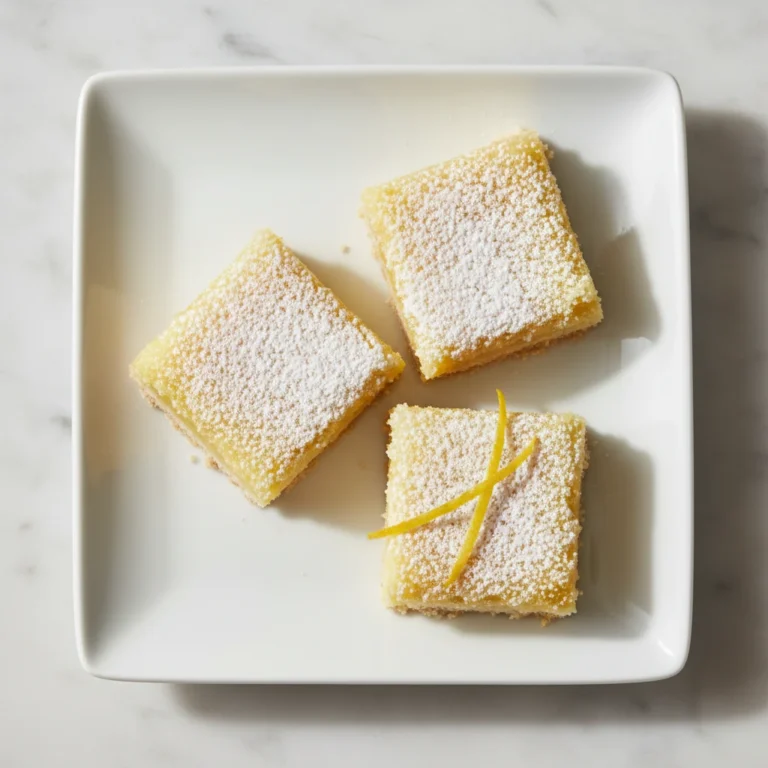
Bright, tart, and utterly irresistible, lemon bars are the perfect balance of buttery shortbread base and creamy, zesty filling. These classic treats deliver a burst of citrus flavor in every bite, making them ideal for potlucks, picnics, or simply satisfying a sweet craving. With their sunshine-yellow color and melt-in-your-mouth texture, lemon bars are a timeless dessert that never goes out of style.
Reasons to Try Lemon Bars
Bright and Refreshing Flavor Profile
The combination of tart lemon juice and zest creates an incredibly refreshing filling that cuts through sweetness beautifully. Unlike heavier desserts, these bars feel light and invigorating, perfect for warm weather or after a rich meal.
Simple Two-Component Design
With just a buttery crust and a straightforward custard-like filling, lemon bars are surprisingly easy to execute. No layering, no intricate piping—just mix, bake, and dust with powdered sugar.
Versatile and Make-Ahead Friendly
These bars hold up beautifully for several days, making them excellent for entertaining. You can bake them a day in advance, store them in an airtight container, and serve them at room temperature or chilled.
Elegant Yet Approachable
Lemon bars look sophisticated and impressive on a dessert table, yet they require no special equipment or advanced baking skills. They’re perfect for both casual gatherings and formal occasions.
Naturally Vibrant and Photo-Worthy
The golden-yellow color and dusting of powdered sugar make these bars visually stunning—they’re naturally Instagram-ready without any artificial coloring or fancy decoration.
 Save
SaveIngredients Notes
For the Shortbread Crust
- All-purpose flour
- Granulated sugar
- Salt
- Unsalted butter, softened
For the Lemon Filling
- Large eggs
- Granulated sugar
- All-purpose flour
- Baking powder
- Fresh lemon juice
- Lemon zest
- Powdered sugar for dusting
How to Make Lemon Bars
For the Shortbread Crust
- Preheat oven to 350°F. Line a 9×13 inch baking pan with parchment paper.
- Mix flour, sugar, and salt in a bowl.
- Cut softened butter into the flour mixture until it resembles coarse crumbs.
- Press the mixture firmly into the prepared pan to form an even layer.
- Bake for 12-15 minutes until the crust is light golden and set.
For the Lemon Filling
- While the crust bakes, whisk together eggs and sugar until pale and thick.
- Stir in lemon juice and zest.
- In a separate bowl, whisk together flour and baking powder.
- Fold the dry ingredients into the lemon mixture until just combined.
- Pour the filling over the hot crust immediately after removing it from the oven.
- Bake for 18-22 minutes until the filling is set but still slightly jiggly in the very center.
- Cool completely on a wire rack, then refrigerate for at least 2 hours before cutting.
- Dust generously with powdered sugar before serving.
What You Must Know About Lemon Bars
Use Fresh Lemon Juice, Never Bottled
Bottled lemon juice is acidic and lacks the bright, natural flavor of fresh lemons. It can also make the filling taste flat or slightly chemical. Always juice fresh lemons—you’ll need about 3-4 medium lemons for 0.5 cup of juice. Strain the juice through a fine-mesh sieve to remove pulp and seeds.
The Crust Must Still Be Hot When You Add the Filling
Pouring the lemon mixture onto a hot crust helps it set properly and prevents a separation layer from forming between the crust and filling. If the crust has cooled, it won’t integrate with the filling as well, and you may end up with a watery texture.
Don’t Over-Bake the Filling
This is the most common mistake. The center should jiggle slightly when you shake the pan—it will continue to set as it cools. Over-baking creates a rubbery, dense filling instead of a creamy, custardy texture. Use an oven thermometer to verify your oven temperature for accuracy.
Refrigerate Before Cutting
Warm lemon bars are difficult to cut cleanly and will crumble. Chill for at least 2 hours (preferably overnight) so the filling firms up enough to slice with clean edges.
Dust with Powdered Sugar Just Before Serving
Powdered sugar applied too far in advance will dissolve or clump if there’s any moisture on the surface. Add it in the final few minutes before serving for the best presentation.
Helpful Tips
For extra-bright lemon flavor, add 1 additional tablespoon of lemon zest to the filling (for a total of 3 tablespoons). Use a microplane zester to avoid getting large, bitter white pith. If you’re sensitive to tartness, you can reduce the lemon juice to 0.25 cup and add 0.25 cup of whole milk for a creamier, slightly less acidic filling. For a more indulgent version, top each bar with a small dollop of whipped cream or crème fraîche before serving.
Variations and Substitutions
Lime Bars
Substitute the lemon juice and zest with fresh lime juice and lime zest in equal amounts. Reduce the sugar in the filling to 1.25 cups if using very acidic limes. The result is a tropical twist with a slightly more complex flavor.
Blueberry Lemon Bars
Sprinkle 1 cup fresh or frozen blueberries over the hot crust before pouring the lemon filling. The berries will sink into the filling slightly and add bursts of flavor and color. Increase baking time by 2-3 minutes.
Lavender Lemon Bars
Reduce the lemon zest to 1 tablespoon and add 1 teaspoon dried culinary lavender buds (finely crushed) to the filling. This adds a subtle floral note that pairs beautifully with lemon. Strain the lavender through a fine sieve when adding it to keep pieces from appearing in the final bars.
Coconut Crust
Replace 0.5 cup of the flour in the crust with 0.5 cup shredded unsweetened coconut. This adds a subtle tropical flavor and interesting texture that complements the lemon filling perfectly.
Almond Flour Crust
Replace 0.5 cup of the all-purpose flour in the crust with 0.5 cup almond flour. This creates a nuttier, slightly grainier crust and is great for those looking for a gluten-free alternative (use certified gluten-free all-purpose flour for the remaining 1.5 cups).
Greek Yogurt Filling
For a tangier, more protein-rich filling, replace 0.25 cup of the lemon juice with 0.25 cup plain Greek yogurt. This creates a slightly denser, creamier bar with more tartness.
Lemon Poppy Seed Bars
Add 2 tablespoons poppy seeds to the filling, stirring them in just before pouring. This adds texture and visual interest, and poppy seeds’ subtle nuttiness complements lemon beautifully.
Serving Suggestions for Lemon Bars
Classic Presentation
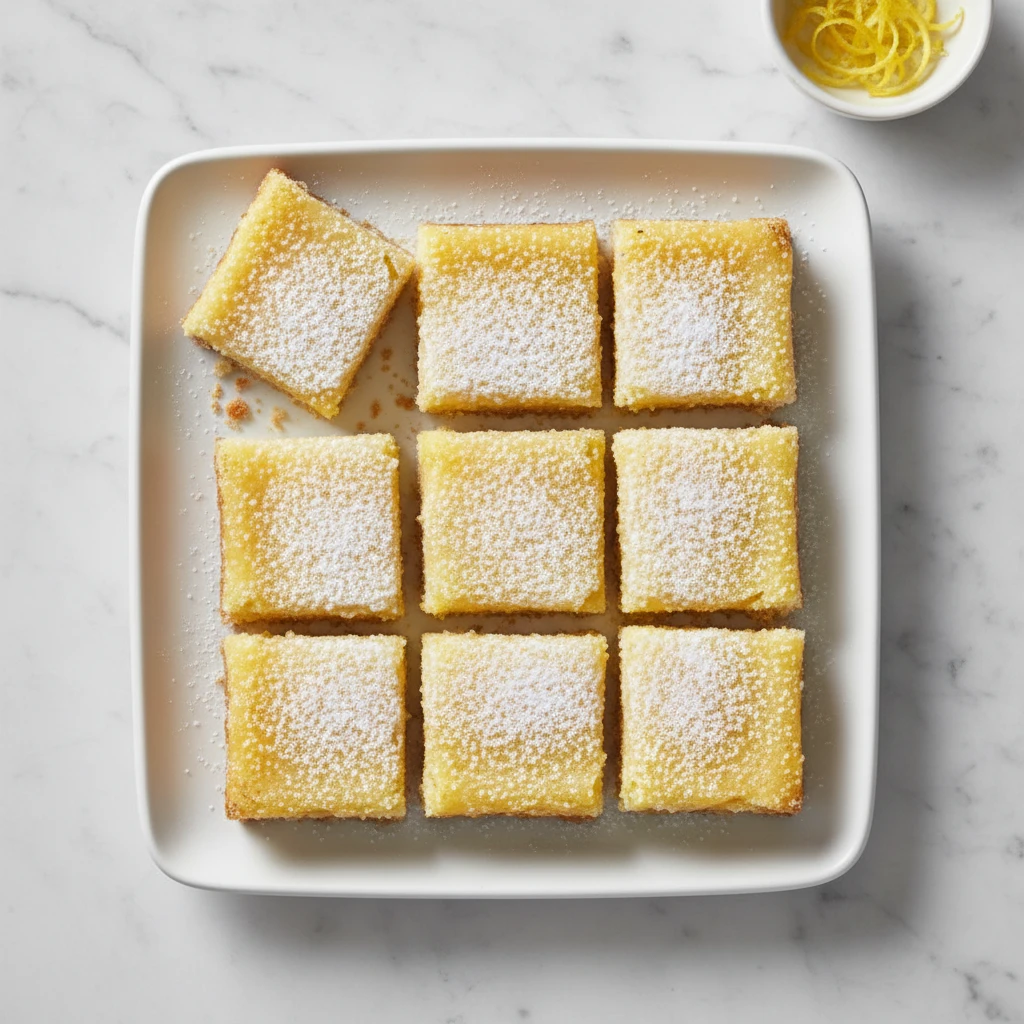
Cut into 2-inch squares, dust generously with powdered sugar, and arrange on a white ceramic plate or marble board. The bright yellow filling and white powdered sugar create a striking visual contrast that looks elegant and appetizing.
With Whipped Cream or Crème Fraîche
Top each bar with a small dollop of freshly whipped cream or tangy crème fraîche just before serving. The cool, creamy topping balances the tartness of the lemon filling beautifully. Garnish with a thin strip of lemon zest for visual appeal.
Afternoon Tea Service
Serve smaller 1-inch squares on delicate dessert plates alongside Earl Grey or chamomile tea. The lemon bars pair perfectly with tea and feel sophisticated for an afternoon gathering.
Summer Picnic Style
Pack individual bars wrapped in parchment paper for easy, mess-free serving at outdoor gatherings. They’re sturdy enough to travel well and taste great at room temperature.
With Fresh Berries
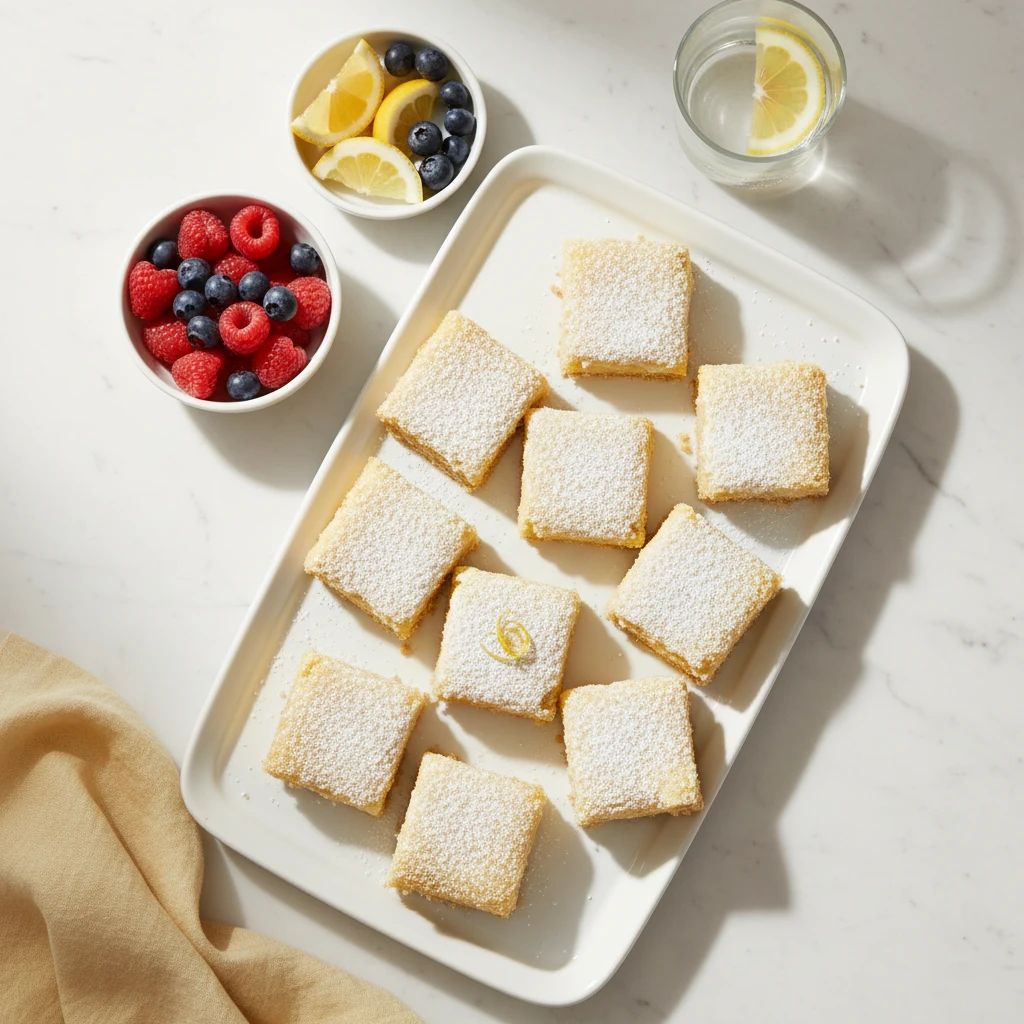
Serve bars alongside fresh raspberries, blueberries, or strawberries. The tartness of the lemon bars complements the natural sweetness of berries perfectly, and the bright colors look gorgeous together on a platter.
Dessert Platter Variety
Cut into smaller 1.5-inch squares and arrange on a mixed dessert platter with chocolate chip cookies, macarons, or brownies. The lemon bars provide a bright, refreshing contrast to richer chocolate desserts.
Chilled and Served Cold
For warm weather serving, chill the bars and dust with powdered sugar just before serving. Serve them ice-cold—they’re incredibly refreshing on a hot day and feel almost like a frozen treat.
Gift Presentation
Stack bars in a decorative box lined with parchment paper, seal with a ribbon, and dust with powdered sugar just before gifting. Lemon bars make an elegant homemade gift that looks and tastes impressive.
 Save
SaveStorage and Reheating
Room Temperature Storage
Store lemon bars in an airtight container at room temperature for up to 2 days. Layer bars with parchment paper between each row to prevent sticking. The filling will firm up slightly but remain creamy and delicious.
Refrigerator Storage
For longer freshness (up to 4-5 days), store in an airtight container in the refrigerator. Cold bars are actually easier to eat cleanly and have a slightly creamier, more custard-like texture that many people prefer. Let them sit at room temperature for 10-15 minutes before serving for the best flavor.
Freezer Storage
Lemon bars freeze beautifully for up to 2 months. Store them in a single layer in a freezer-safe container or wrap individually in plastic wrap, then place in a freezer-safe bag. Freeze without powdered sugar topping. Dust with powdered sugar after thawing. Thaw at room temperature for 2-3 hours or in the refrigerator overnight before serving.
Important: Don’t Reheat
These bars are best served cold or at room temperature and do not require reheating. The filling is not designed to be warmed and may become overly soft or separating if heated. Remove from storage and let them come to your desired temperature naturally.
Powdered Sugar Application
Apply powdered sugar topping only after the bars have been stored and just before serving. The sugar will clump or dissolve if applied to bars that have been refrigerated or have any surface moisture. Use a fine-mesh sieve for even, thin coverage.
Frequently Asked Questions about Lemon Bars
Can I make lemon bars ahead of time?
Yes, lemon bars are excellent for advance preparation. Bake them up to 2 days ahead and store in an airtight container at room temperature, or up to 5 days in the refrigerator. You can also freeze them for up to 2 months (wrap individually without powdered sugar). Dust with powdered sugar just before serving for the best presentation.
Why is my lemon bar filling runny after baking?
A runny filling is usually caused by one of three issues: (1) Over-adding lemon juice—measure carefully and strain it to remove pulp, (2) Under-baking—the center should jiggle only slightly when you shake the pan, and (3) Oven temperature being too low—use an oven thermometer to verify it’s actually 350°F. The bars will continue to set as they cool, so always chill completely before cutting.
Can I use bottled lemon juice instead of fresh?
While bottled lemon juice is convenient, it lacks the bright, natural flavor of fresh lemon juice and often tastes acidic or slightly chemical. For the best taste and results, always use freshly squeezed lemon juice strained through a fine-mesh sieve. Fresh juice also helps you achieve the proper filling texture more reliably.
What’s the difference between lemon bars and lemon squares?
These terms are used interchangeably and refer to the same dessert. “Lemon squares” typically refers to the square or rectangular cut shape, while “lemon bars” refers to the bar-like form. Both have the same buttery crust and creamy lemon filling.
Can I make lemon bars gluten-free?
Yes. Replace the all-purpose flour in both the crust and filling with a 1:1 gluten-free all-purpose flour blend. The texture will be slightly different—often a bit more delicate—but the bars will be delicious. Make sure your baking powder is also gluten-free. Some gluten-free blends contain xanthan gum, which can affect texture, so test your specific brand first.
How many lemons do I need to make lemon bars?
You’ll need approximately 3-4 medium fresh lemons to yield 0.5 cup of juice. Juice the lemons first, then measure the strained juice. You’ll also need to zest 2-3 lemons for the filling. Choose lemons that feel heavy for their size, as they typically contain more juice.
Why do my bars stick to the parchment paper?
This usually happens when you cut the bars before they’re completely cooled or fully chilled. Always allow the bars to cool completely at room temperature (at least 1 hour) and then refrigerate for at least 2 hours before cutting. Use the parchment overhang to lift the entire sheet out of the pan onto a cutting board, then slice with a sharp knife dipped in hot water.
Can I double this recipe?
Yes, you can easily double the recipe. Use a 9×13 inch pan (doubled amount will fit), or use two 9×9 inch pans. Keep the baking times the same—the thickness of the bars won’t change much, so 12-15 minutes for the crust and 18-22 minutes for the filling should still work. If using 9×9 pans, check doneness a minute or two earlier as they may bake slightly faster.
Nutrition Facts (Per Serving)
| Nutrient | Per Serving |
|---|---|
| Calories | 245 |
| Total Fat | 13g |
| Saturated Fat | 8g |
| Cholesterol | 72mg |
| Sodium | 82mg |
| Total Carbohydrates | 35g |
| Dietary Fiber | 0g |
| Sugars | 27g |
| Protein | 2g |
| Vitamin C | 8% DV |
Dietary Notes: One serving equals one 2-inch bar (16 bars total per pan). These bars are vegetarian and contain eggs and dairy. They are not naturally gluten-free but can be made gluten-free with appropriate flour substitutions. Each bar provides a good source of simple carbohydrates and butter fat, making them a rich, indulgent dessert best enjoyed in moderation.
Lemon Bars
Ingredients
- 2 cups all-purpose flour
- 0.5 cup granulated sugar
- 0.25 teaspoon salt
- 1 cup unsalted butter softened
- 4 large eggs
- 1.5 cups granulated sugar
- 3 tablespoons all-purpose flour
- 0.5 teaspoon baking powder
- 0.5 cup fresh lemon juice
- 2 tablespoons lemon zest
- 2 tablespoons powdered sugar for dusting
Instructions
- Preheat oven to 350°F. Line a 9x13 inch baking pan with parchment paper, letting excess hang over the sides for easy removal. Tap the pan gently to ensure parchment sits flat.
- In a medium bowl, whisk together 2 cups flour, 0.5 cup granulated sugar, and 0.25 teaspoon salt until evenly combined. This should take about 1 minute and look like fine sand with no lumps.
- Add 1 cup softened butter (cut into small cubes, about the size of peas) to the flour mixture. Using your fingertips, rub the butter and flour together until the mixture resembles coarse breadcrumbs with pea-sized pieces of butter still visible. This takes 3-4 minutes.
- Transfer the mixture to the prepared pan and press it firmly and evenly into the bottom using the bottom of a measuring cup or your hands. The crust should be compact but not overly dense, and should reach all corners. This takes about 2 minutes.
- Bake the crust for 12-15 minutes at 350°F. The crust is ready when it's light golden brown around the edges and the surface looks dry and matte. Do not over-bake—it should still be pale in the center. Checkpoint: The crust should look set but still slightly soft.
- While the crust bakes, crack 4 large eggs into a medium bowl. Add 1.5 cups granulated sugar. Whisk vigorously for 2-3 minutes until the mixture is pale yellow, thick, and falls in ribbons from the whisk. This is important for a light, fluffy filling.
- Add 0.5 cup fresh lemon juice (about 3-4 lemons, squeezed and strained to remove pulp) to the egg mixture. Stir gently but thoroughly for about 1 minute until completely combined. The mixture should be smooth and uniform in color.
- Stir in 2 tablespoons lemon zest, folding it in gently with a rubber spatula. Use a microplane or fine grater for the zest so no large pieces remain. This takes about 1 minute.
- In a small bowl, whisk together 3 tablespoons flour and 0.5 teaspoon baking powder for about 30 seconds, breaking up any lumps. This prevents the filling from being too dense.
- Add the dry flour mixture to the lemon mixture. Using a rubber spatula, fold gently until just combined—fold about 8-10 times until no dry streaks remain. Do not over-mix, as this can make the filling dense. This takes about 1 minute.
- Remove the hot crust from the oven. Immediately pour the lemon filling over the hot crust, spreading it evenly to the edges with a spatula. The filling should reach all corners and be about 0.5 inch thick. Do this quickly so the filling sets evenly. Checkpoint: The filling should be smooth and level across the pan.
- Bake the bars for 18-22 minutes at 350°F. The filling is done when the edges are set and pale golden, but the very center (about a 2-inch square) still jiggles slightly when you gently shake the pan. The surface should look matte and dry, not wet or glossy. Do not over-bake, or the filling will be rubbery.
- Remove the pan from the oven and place it on a wire cooling rack. Let the bars cool to room temperature—this takes about 1 hour. The filling will continue to set as it cools.
- Once cooled, transfer the pan to the refrigerator and chill for at least 2 hours. Cold bars are easier to cut cleanly. You can chill overnight for best results.
- Using the parchment paper overhang, lift the entire bar out of the pan onto a cutting board. Using a sharp knife dipped in hot water and wiped dry between cuts, slice into 16-20 squares. The knife should glide through cleanly, leaving sharp edges.
- Place each bar on a serving plate or platter. Dust generously with 2 tablespoons powdered sugar just before serving, using a fine-mesh sieve for even coverage. The sugar will cling to any moisture on the surface, creating a beautiful finish.
- Serve at room temperature or chilled. Lemon bars are best enjoyed within 1-2 hours of dusting for optimal texture, though they stay fresh for up to 4 days when stored in an airtight container.