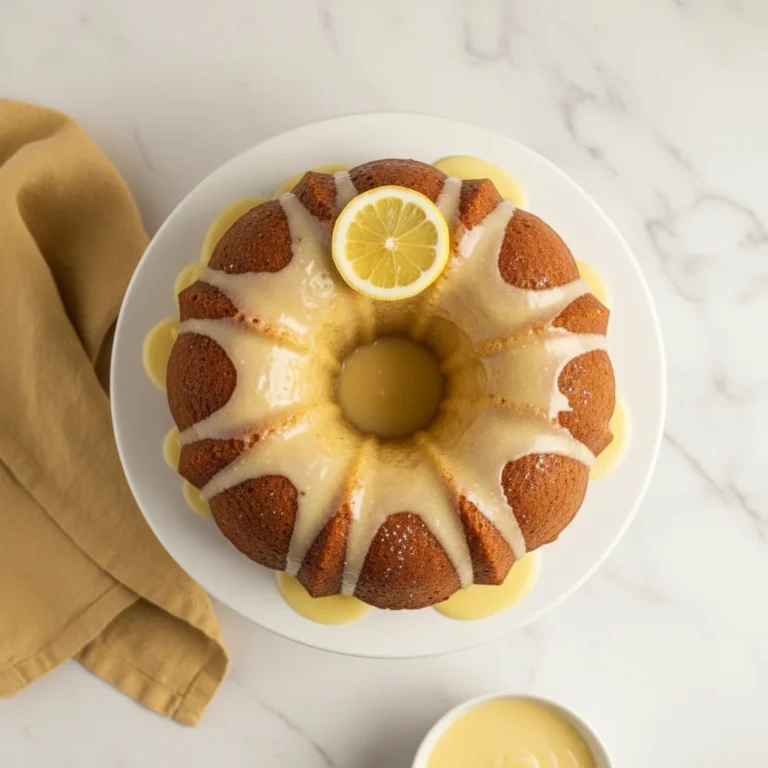
There’s something timeless and elegant about a lemon Bundt cake that makes it perfect for any occasion. This bright, citrus-forward dessert combines tender crumb, subtle tartness, and a delicate glaze that transforms a simple cake into an impressive showpiece. Whether you’re baking for a gathering or treating yourself to afternoon tea, this lemon Bundt cake delivers restaurant-quality results in your home kitchen.
Reasons to Try Lemon Bundt Cake
Bright, Refreshing Flavor: Fresh lemon juice and zest infuse every bite with natural citrus brightness. The tartness balances the sweetness perfectly, creating a cake that doesn’t feel heavy or cloying.
Stunning Presentation: The Bundt pan creates an elegant ring-shaped cake with a beautiful ridged exterior. A simple glaze pools in the center, making it look bakery-worthy without extra effort.
Moist and Tender Crumb: Sour cream keeps the cake supremely moist while adding subtle tang that enhances the lemon flavor. The result is a cake that stays fresh for days.
Versatile and Crowd-Pleasing: This cake works for spring brunches, summer picnics, holiday gatherings, or everyday indulgence. It pairs beautifully with tea, coffee, or a glass of prosecco.
Easy to Make: Simple cream-and-mix method with no special techniques required. Even novice bakers can achieve impressive results with this straightforward recipe.
 Save
SaveIngredients Notes
- All-purpose flour
- Baking powder
- Baking soda
- Salt
- Unsalted butter, softened
- Granulated sugar
- Large eggs
- Sour cream
- Fresh lemon juice
- Lemon zest
- Vanilla extract
- Powdered sugar
- Water
 Save
SaveHow to Make Lemon Bundt Cake
- Preheat oven to 350°F and grease the Bundt pan thoroughly with butter or nonstick spray.
- Whisk together flour, baking powder, baking soda, and salt in a bowl.
- Cream softened butter and sugar together until light and fluffy, about 3 minutes.
- Add eggs one at a time, beating well after each addition.
- Add lemon zest and vanilla extract, then mix until combined.
- Alternate adding dry ingredients and sour cream mixture, beginning and ending with dry ingredients. Fold in lemon juice gently.
- Pour batter into prepared Bundt pan and smooth the top.
- Bake for 40–50 minutes until a toothpick inserted near the center comes out clean or with just a few moist crumbs.
- Cool in the pan for 15 minutes, then turn out onto a wire rack to cool completely.
- Whisk powdered sugar, lemon juice, and water to make a thin glaze and drizzle over cooled cake.
What You Must Know About Lemon Bundt Cake
Use Fresh Lemon Juice: Bottled lemon juice lacks the brightness and complexity of fresh. Squeeze 2–3 lemons to get enough juice, and taste it—it should be bright and tart, not dull.
Zest Before Juicing: Zest the lemons before cutting them in half to juice. It’s much easier to zest a whole lemon than to zest a halved one.
Room Temperature Butter Is Essential: Softened butter (about 65–70°F) creams properly with sugar to incorporate air, creating a tender crumb. Cold butter won’t mix well; overly soft or melted butter will produce a dense cake.
Don’t Overmix the Batter: Once you’ve combined the dry and wet ingredients, stop mixing. Overmixing develops gluten, which toughens the cake. It should look smooth but not overworked.
Grease the Bundt Pan Thoroughly: Every ridge and crevice must be coated or the cake will stick. Use butter or a specialty Bundt spray. Even one spot missed will cause sticking.
Check Oven Temperature: Bundt cakes are prone to browning too quickly on top before the inside bakes through. If your cake is browning too fast, tent it loosely with foil during the last 10 minutes of baking.
Cool Completely Before Glazing: Warm cake will cause the glaze to run off or become too thin. Wait at least 1 hour—or chill it if you’re in a hurry.
Helpful Tip — Make It Ahead: This cake actually improves after a day as the lemon flavor matures. Bake it the day before, wrap it tightly in plastic wrap, and glaze it the morning you serve it.
Helpful Tip — Upgrade the Glaze: For extra elegance, add 1/2 teaspoon of pure almond extract or a pinch of cardamom to the glaze for subtle complexity.
Variations and Substitutions
Lemon Poppy Seed Bundt Cake: Fold 3 tablespoons of poppy seeds into the batter just before pouring into the pan. This adds pleasant texture and nuttiness.
Lemon Blueberry Bundt Cake: Toss 1 cup of fresh or frozen blueberries in 1 tablespoon of flour (to prevent sinking) and fold gently into the batter after combining all ingredients. If using frozen berries, do not thaw them first.
Lemon Raspberry Bundt Cake: Follow the blueberry variation but use 3/4 cup fresh raspberries. Raspberries are more delicate, so fold them in very gently at the very end.
Lavender Lemon Bundt Cake: Add 1/2 teaspoon of culinary-grade dried lavender (crushed) to the dry ingredients. This pairs beautifully with lemon and adds a subtle floral note.
Dairy-Free Version: Replace sour cream with dairy-free Greek yogurt and use dairy-free butter. The texture may be slightly different but still moist.
Oil-Based Variation: Replace the softened butter with 3/4 cup neutral oil (like canola or vegetable oil). Mix the oil with sugar before adding eggs. The cake will be slightly more moist and tender.
Glaze Alternatives: Instead of a simple lemon glaze, make a cream cheese glaze by beating 4 oz softened cream cheese with 1/2 cup powdered sugar and 1 tablespoon lemon juice, or drizzle with a thin lemon curd for extra tartness.
Meyer Lemon Version: If you can find Meyer lemons, use them instead of regular lemons. They’re sweeter and less acidic, creating a slightly mellower flavor that’s still distinctly lemon.
Serving Suggestions for Lemon Bundt Cake
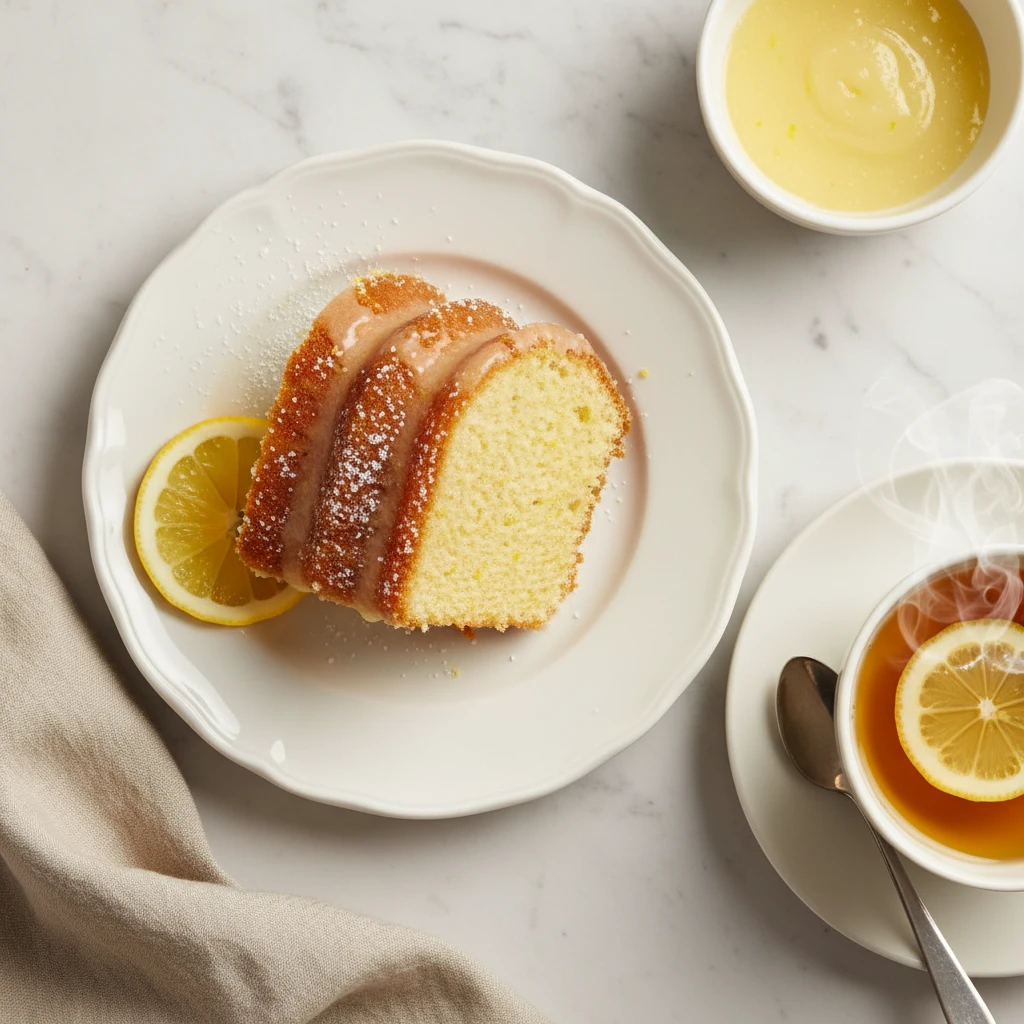
Classic Afternoon Tea Service: Slice the cake into generous wedges and serve on small plates with a doily. Pair with hot Earl Grey or English breakfast tea, and add a small dollop of whipped cream or crème fraîche on the side if desired.
Brunch Centerpiece: Place the whole glazed cake on a cake stand or pedestal in the center of the brunch table. Guests can admire its beauty before you slice it. Serve alongside fresh berries, smoked salmon, and croissants.
Garnish with Fresh Elements: Top each slice with a thin lemon wheel (candied or fresh), a small mint leaf, or a light dusting of powdered sugar for visual appeal.
Summer Entertaining: Serve at room temperature outdoors with sparkling lemonade or prosecco. The bright lemon flavor pairs perfectly with warm weather and outdoor gatherings.
Dessert with Fresh Fruit: Arrange slices on a plate and add a scoop of vanilla gelato or a small handful of fresh raspberries on the side for color contrast and complementary flavors.
Light Finish to Dinner: Serve small slices after a rich or heavy meal. The bright acidity of the lemon cleanses the palate and feels refreshing without being overly heavy.
Gift-Worthy Presentation: Once cooled and glazed, wrap the cake in clear cellophane with a simple ribbon. The beautiful ridged exterior of the Bundt shape is impressive enough without decoration, making it perfect for bringing to a friend or family member.
 Save
SaveStorage and Reheating
Room Temperature Storage: Keep the finished cake covered loosely with plastic wrap or under a cake dome on the counter for up to 3 days. The cake will stay moist and fresh due to the sour cream.
Refrigerator Storage: For longer storage, wrap the entire cake (glazed or unglazed) tightly in plastic wrap, then place in an airtight container. Store in the refrigerator for up to 5 days. The cold intensifies the lemon flavor slightly.
Freezer Storage: Wrap the cooled, unglazed cake tightly in plastic wrap, then aluminum foil. Freeze for up to 3 months. The glaze can be applied after thawing. Thaw at room temperature for 2–3 hours before serving.
Freezing Individual Slices: Once glazed and cooled completely, wrap individual slices in plastic wrap and freeze for up to 2 months. Thaw at room temperature for 1–2 hours before serving.
Reheating: This cake is best enjoyed at room temperature or slightly chilled and does not require reheating. If you prefer it warm, wrap a slice loosely in foil and warm in a 300°F oven for 8–10 minutes, just until the interior is barely warmed through.
Refreshing Stale Cake: If the cake dries out slightly, wrap it tightly and microwave for 15–20 seconds to restore moisture, or serve it with a dollop of whipped cream or crème fraîche on the side.
Frequently Asked Questions about Lemon Bundt Cake
Can I use bottled lemon juice instead of fresh?
Bottled lemon juice will work in a pinch, but fresh lemon juice is strongly recommended. Fresh juice has a bright, vibrant flavor that bottled juice lacks. If you must use bottled, use about 20% less since it can taste more acidic and one-dimensional. Avoid reconstituted bottled juice—go for the refrigerated version if you can’t use fresh.
Why did my cake sink in the middle?
A sunken center usually means one of three things: the oven temperature was too high and the outside cooked faster than the inside, the cake was underbaked and collapsed upon cooling, or there was too much leavening. Verify your oven temperature with an oven thermometer and check for doneness starting at 38 minutes. Also ensure you’re not over-measuring baking powder or baking soda.
Can I make this cake without a Bundt pan?
Yes! Use a 9-inch round cake pan or 8×4-inch loaf pan. Line it with parchment paper for easy removal. The baking time will be similar—check for doneness at 40 minutes for a round pan or 45 minutes for a loaf pan. The cake won’t have the dramatic ridged appearance, but the taste and texture will be identical.
Can I add lemon extract to intensify the flavor?
You can add up to 1/4 teaspoon of pure lemon extract along with the fresh lemon juice and zest, but use it sparingly. Lemon extract is very concentrated and can taste artificial if overdone. Fresh lemon juice and zest should provide enough flavor on their own—extract is optional.
How do I prevent the cake from sticking to the Bundt pan?
Thorough greasing is key. Use melted butter or a specialty Bundt cake spray designed to coat every ridge. If you use butter, use your fingers or a pastry brush to make sure every groove is coated. Additionally, let the cake cool for exactly 15 minutes before turning it out—not longer, as it will stick more firmly; not shorter, as it won’t hold its shape. Run a thin knife around both edges before inverting.
Can I double this recipe?
Yes, you can double the recipe using two 10-inch Bundt pans. Bake both pans on the middle and lower-middle racks, rotating halfway through. The total baking time will remain similar (40–50 minutes), but start checking at 38 minutes. All other steps remain the same, including cooling and glazing times.
What if I don’t have sour cream?
You can substitute with Greek yogurt (same amount) or regular plain yogurt, though the cake may be slightly less tangy. You can also make a sour cream substitute by adding 1 tablespoon of lemon juice or white vinegar to 1/2 cup of whole milk and letting it sit for 5 minutes until curdled. Use this mixture in place of the sour cream. The cake will still turn out well with any of these options.
How far in advance can I bake this cake?
You can bake the cake up to 2 days ahead. Wrap it tightly (unglazed or glazed) in plastic wrap and store at room temperature or in the refrigerator. Glaze it fresh the day you plan to serve it for the best appearance, or glaze it immediately after baking if you prefer. The flavors actually develop and improve after a day, making this a great make-ahead dessert.
Nutrition Facts (Per Serving)
| Nutrient | Amount per Serving |
|---|---|
| Calories | 285 kcal |
| Total Fat | 14g |
| Saturated Fat | 8.5g |
| Cholesterol | 62mg |
| Sodium | 198mg |
| Total Carbohydrates | 39g |
| Dietary Fiber | 0.3g |
| Sugars | 29g |
| Protein | 3.2g |
Dietary Notes: This cake contains eggs, dairy, and gluten. It is not suitable for vegan, dairy-free, or gluten-free diets without significant substitutions. The recipe yields approximately 10–12 slices depending on portion size. Nutritional information is calculated for one slice of 10 total slices.
Lemon Bundt Cake
Ingredients
- 2 cups all-purpose flour
- 1/2 teaspoon baking powder
- 1/4 teaspoon baking soda
- 1/2 teaspoon salt
- 3/4 cup unsalted butter softened
- 1 1/2 cups granulated sugar
- 3 large eggs
- 1/2 cup sour cream
- 1/4 cup fresh lemon juice
- 2 tablespoons lemon zest
- 1/2 teaspoon vanilla extract
- 1/3 cup powdered sugar
- 2 tablespoons fresh lemon juice for glaze
- 1 tablespoon water
Instructions
- Preheat oven to 350°F (175°C). Take 10 minutes. Grease a 10-inch Bundt pan generously with butter or nonstick cooking spray, making sure to coat all the ridges. Use your fingers or a pastry brush to reach into every groove so the cake releases cleanly.
- In a medium bowl, whisk together 2 cups all-purpose flour, 1/2 teaspoon baking powder, 1/4 teaspoon baking soda, and 1/2 teaspoon salt. Mix until evenly combined. Set aside. Checkpoint: You are ready to move on when the dry ingredients are well mixed with no lumps.
- In a large bowl, add 3/4 cup softened unsalted butter and 1 1/2 cups granulated sugar. Using an electric mixer on medium speed, beat for 3–4 minutes until the mixture is pale yellow, fluffy, and light in texture. Scrape down the bowl halfway through. Checkpoint: You are ready to move on when the butter-sugar mixture resembles fluffy whipped cream and has increased in volume.
- Add 3 large eggs one at a time to the butter mixture, beating on medium speed for 30 seconds after each egg. This takes about 2 minutes total. Scrape down the bowl after adding each egg to ensure even mixing.
- Add 2 tablespoons lemon zest and 1/2 teaspoon vanilla extract to the egg mixture. Beat on medium speed for 30 seconds until combined and the zest is evenly distributed throughout. Checkpoint: You are ready to move on when the mixture is smooth and the lemon zest is visible throughout.
- In a small bowl, combine 1/2 cup sour cream and 1/4 cup fresh lemon juice. Stir together gently until smooth.
- Now add the dry ingredients and sour cream mixture to the egg mixture in three stages: Start by adding 1/3 of the dry mixture (flour mixture) on low speed for 30 seconds and mix until just barely combined. Stop the mixer. Add half of the sour cream mixture, mix for 30 seconds on low speed until just combined. Add another 1/3 of the dry mixture, mix for 30 seconds until just combined. Add the remaining sour cream mixture, mix for 30 seconds until just combined. Finish by adding the final 1/3 of dry mixture and mix for 30 seconds on low speed until smooth. Do not overmix—stop as soon as everything is combined. Checkpoint: You are ready to move on when the batter is smooth, creamy, and pale yellow with no visible dry flour streaks.
- Pour the batter into your prepared Bundt pan. Use a rubber spatula to spread it evenly and smooth the top. Make sure batter reaches into all the ridges of the pan. Takes about 1 minute.
- Place the Bundt pan on the middle rack of the preheated 350°F oven. Bake for 40–50 minutes. The cake is done when a wooden toothpick inserted into the thickest part of the cake (avoid the bottom ridge) comes out clean or with just 1–2 moist crumbs clinging to it. The top should be golden brown and spring back when lightly touched. Checkpoint: You are ready to move on when the toothpick test shows doneness and the cake is golden brown on top.
- Remove the cake from the oven and let it cool in the pan for exactly 15 minutes at room temperature. This allows the cake to set slightly but remain warm enough to release cleanly. After 15 minutes, run a thin knife around the outer and inner edges of the Bundt pan to loosen the cake.
- Place a wire cooling rack upside down on top of the Bundt pan. Hold both the pan and rack firmly and flip them together in one quick motion so the cake falls onto the rack. Gently lift off the pan. If the cake sticks, tap the bottom of the pan gently or use a thin knife to help release it. Let the cake cool completely on the wire rack for at least 1 hour at room temperature before glazing.
- While the cake cools, prepare the glaze. In a small bowl, whisk together 1/3 cup powdered sugar, 2 tablespoons fresh lemon juice, and 1 tablespoon water. Whisk for about 1 minute until smooth and pourable but thick enough to coat a spoon. The glaze should flow slowly, not run off immediately. Checkpoint: You are ready to move on when the glaze is smooth, creamy, and pourable.
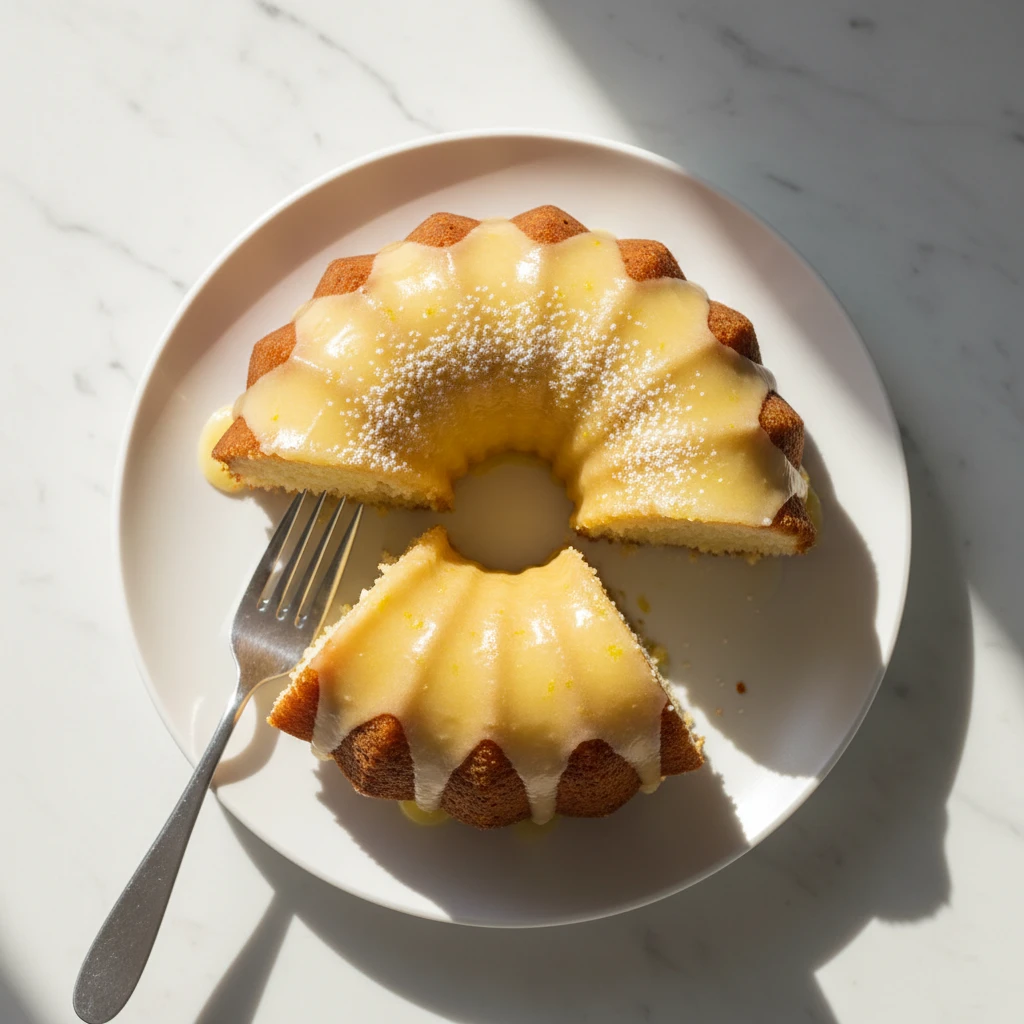
- Once the cake is completely cool, drizzle the glaze over the top, allowing it to pool in the center and drip down the sides. Let the glaze set for 15–20 minutes at room temperature before serving.
- Troubleshooting:
- • If the cake doesn't release from the pan, let it cool for 20 minutes instead of 15, then run a thinner knife around the edges. If still stuck, place the pan in a 200°F oven for 2 minutes to warm the pan slightly, then try again.
- • If the cake is dry, you may have overbaked it. Check your oven temperature with an oven thermometer—ovens often run hot. Next time, start checking at 38 minutes.
- • If the cake is sunken in the middle, the oven temperature may have been too high at the start, causing the outside to cook faster than the inside. Verify your oven temperature.
- • If the glaze is too thick and won't drizzle, add water one teaspoon at a time until it reaches the right consistency.
- • If the glaze is too thin and runs off the cake, whisk in more powdered sugar one tablespoon at a time until thicker.