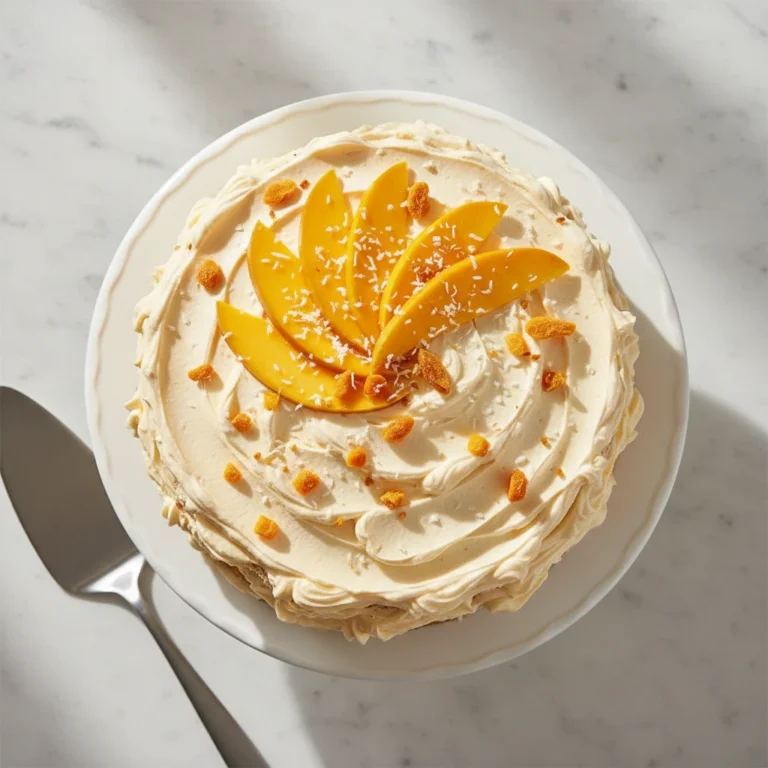
There’s nothing quite like the tropical sweetness of mango cake, a delicate sponge infused with the rich, fruity flavor of fresh mangoes and topped with a silky frosting. This elegant dessert brings sunshine to any table, combining tender crumb with layers of vibrant mango goodness. Whether you’re celebrating a special occasion or simply craving something extraordinary, this recipe delivers restaurant-quality results with accessible home-cooking techniques.
Reasons to Try Mango Cake
Tropical Elegance: The mango cake captures the essence of tropical fruit in every bite. Fresh mango puree infuses the cake layers with authentic flavor that tastes nothing like artificial extracts, while the soft cardamom undertone adds sophistication and warmth.
Tender, Moist Crumb: Greek yogurt keeps the cake incredibly moist without making it dense. Combined with fresh mango puree, you get a cake that stays soft for days and never tastes dry—a significant advantage over traditional vanilla cakes.
Versatile Occasion Cake: Perfect for summer celebrations, tropical-themed events, or any time you want to impress. The elegant presentation with fresh mango garnish makes it feel special enough for birthdays or dinner parties, yet simple enough for weeknight indulgence.
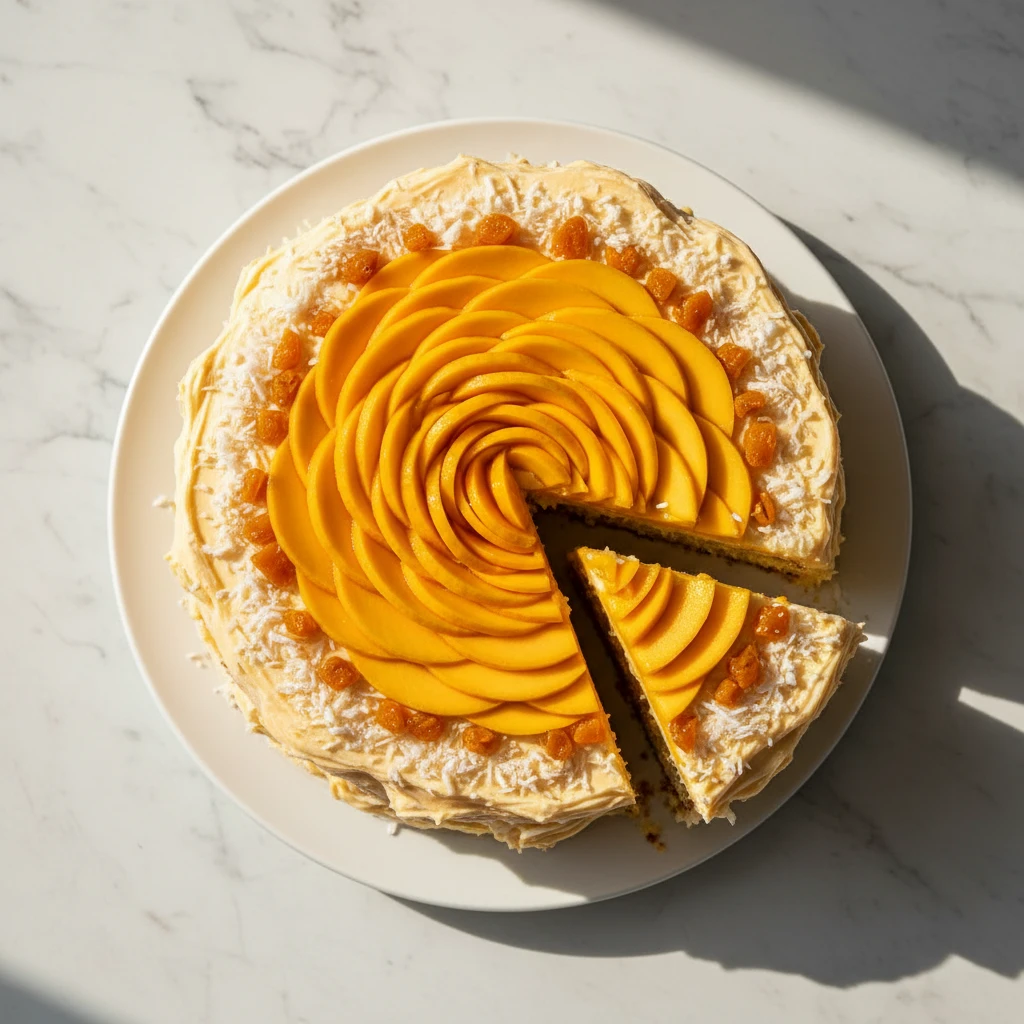
Naturally Beautiful: The golden-yellow crumb and vibrant frosting create a naturally stunning appearance that requires minimal decoration to look professional. Fresh mango slices and coconut garnish add visual appeal without fussy techniques.
Balanced Sweetness: Unlike overly sweet desserts, this cake achieves perfect balance. Fresh fruit and yogurt prevent sugar overload, while lemon juice brightens the mango flavor—making it feel lighter and more refreshing than traditional cakes.
 Save
SaveIngredients Notes
For the Cake
- All-purpose flour
- Baking powder
- Baking soda
- Salt
- Unsalted butter, softened
- Granulated sugar
- Large eggs, room temperature
- Fresh mango puree
- Plain Greek yogurt
- Vanilla extract
- Cardamom powder
- Fresh lemon juice
- Diced fresh mango
For the Mango Frosting
- Heavy whipping cream
- Powdered sugar
- Mango puree
- Vanilla extract
For Garnish
- Fresh mango slices
- Dried mango pieces
- Shredded coconut
How to Make Mango Cake
For the Cake
- Preheat oven to 350°F and prepare two 8-inch round cake pans with parchment paper and cooking spray.
- Whisk together flour, baking powder, baking soda, salt, and cardamom in a medium bowl.
- Cream softened butter and sugar until light and fluffy, about 3-4 minutes.
- Add eggs one at a time, mixing well after each addition.
- Combine mango puree, Greek yogurt, vanilla, and lemon juice in another bowl.
- Alternate adding dry ingredients and mango mixture to the butter mixture, beginning and ending with dry ingredients. Mix until just combined.
- Fold in diced fresh mango gently.
- Divide batter evenly between prepared pans and smooth the tops.
- Bake for 28-32 minutes until a toothpick inserted in the center comes out clean.
- Cool in pans for 10 minutes, then turn out onto wire racks to cool completely.
For the Frosting
- Chill a mixing bowl and beaters in the freezer for 10 minutes.
- Pour cold heavy cream into the chilled bowl and whip on medium-high speed for 1-2 minutes until soft peaks form.
- Add powdered sugar, mango puree, and vanilla extract, continuing to whip until stiff peaks form.
- Spread frosting between cake layers and over the top and sides of the cooled cake.
- Garnish with fresh mango slices, dried mango pieces, and shredded coconut.
What You Must Know About Mango Cake
Mango Selection is Critical: Use ripe but firm mangoes for puree—overripe mangoes taste fermented and mushy. The best mangoes yield slightly to gentle pressure and smell sweet at the stem. One large mango yields about 1 cup puree. If fresh mangoes are not in season, high-quality frozen mango puree (thawed) works perfectly; avoid canned puree, which often contains added sugar and lacks fresh flavor.
Room Temperature Ingredients Matter: Cold eggs and yogurt won’t blend smoothly into the butter, resulting in a grainy, lumpy cake. Set all ingredients on the counter for 30 minutes before baking. This simple step is the difference between a tender, even crumb and a dense, coarse texture.
Don’t Skip the Greek Yogurt: It’s not optional; it creates the signature moist, tender crumb. Regular yogurt or sour cream works in a pinch but may make the cake slightly wetter. Never substitute with cream cheese—it changes the chemistry entirely.
Cardamom Enhances, Not Overwhelms: Just 0.5 teaspoon is enough to add sophisticated warmth without making the cake taste spiced. More cardamom will overpower the mango. If cardamom isn’t available, skip it—don’t substitute with other spices like nutmeg or cinnamon, which fight with mango’s tropical character.
Fresh Mango Puree vs. Diced Mango: Puree goes into the batter for moisture and flavor; diced mango adds texture and identity. Both are important. The diced pieces will settle slightly as the cake bakes, creating little pockets of fruity surprise.
Frosting Stability Tips: Make the frosting no more than 2 hours before serving—whipped cream frosting can break down or weep if left too long at room temperature. If you need to make it earlier, cover and refrigerate for up to 6 hours, then rewhip gently with a few strokes before applying. The mango puree adds a lovely color but also moisture; don’t use more than 0.25 cup or the frosting will be too soft.
Critical Baking Window: This cake is best served the same day it’s made or within 24 hours. The frosting can soften in warm kitchens, so keep it cool. The cake itself stays fresh for 2–3 days when properly stored.
Helpful Tip—Simple Presentation: You don’t need fancy piping skills. A simple offset spatula and smooth, even strokes create a rustic-elegant look. The natural pale yellow frosting and bright mango garnish do most of the visual work.
Helpful Tip—Flavor Boost: If your mango puree tastes mild, add 1–2 teaspoons of lemon juice to the batter to brighten and intensify the mango flavor. This doesn’t make the cake sour—it enhances the tropical fruit character.
Variations and Substitutions
Mango Lassi Cake: Infuse the frosting with 1–2 tablespoons of sweetened condensed milk and a pinch of cardamom for an Indian-inspired lassi flavor. Keep the mango puree at 0.25 cup to maintain consistency.
Coconut-Mango Cake: Substitute 0.5 cup of all-purpose flour with unsweetened shredded coconut and add 0.5 teaspoon of coconut extract to the batter. Use coconut whipped cream (canned coconut cream) for part of the frosting for deeper tropical flavor.
Vegan Mango Cake: Replace eggs with 3 large flax eggs (3 tablespoons ground flaxseed mixed with 9 tablespoons water, set for 15 minutes), use dairy-free butter and unsweetened plant-based yogurt, and make a frosting with coconut cream instead of whipped cream. The bake time may increase by 2–3 minutes.
Individual Mango Cakes: Divide batter into a standard 12-cup muffin tin lined with paper liners. Bake at 350°F for 16–18 minutes until a toothpick comes out clean. Top with dollops of frosting and mango garnish for elegant single-serving desserts.
Mango Cheesecake Cake: Spread a thin layer of softened cream cheese between the two cake layers before frosting, and swirl 2–3 tablespoons of cream cheese into the mango frosting for tangy complexity.
Almond Flour Addition: Replace 0.5 cup of all-purpose flour with almond flour for a slightly denser, more moist crumb with subtle nuttiness. This works especially well if you want a gluten-free version (use gluten-free all-purpose flour for the remaining 1.5 cups).
Ingredient Substitutions:
- Butter: Use clarified butter or coconut oil for a different flavor profile (coconut oil adds tropical notes).
- Lemon Juice: Substitute with lime juice for a more tropical twist, or skip entirely if you prefer pure mango sweetness.
- Greek Yogurt: Use sour cream (same amount) or regular yogurt, though the latter may make the batter slightly wetter.
- Fresh Mango Garnish: Use passion fruit, papaya, or pineapple slices if mangoes are unavailable; the cake pairs beautifully with any tropical fruit.
Serving Suggestions for Mango Cake
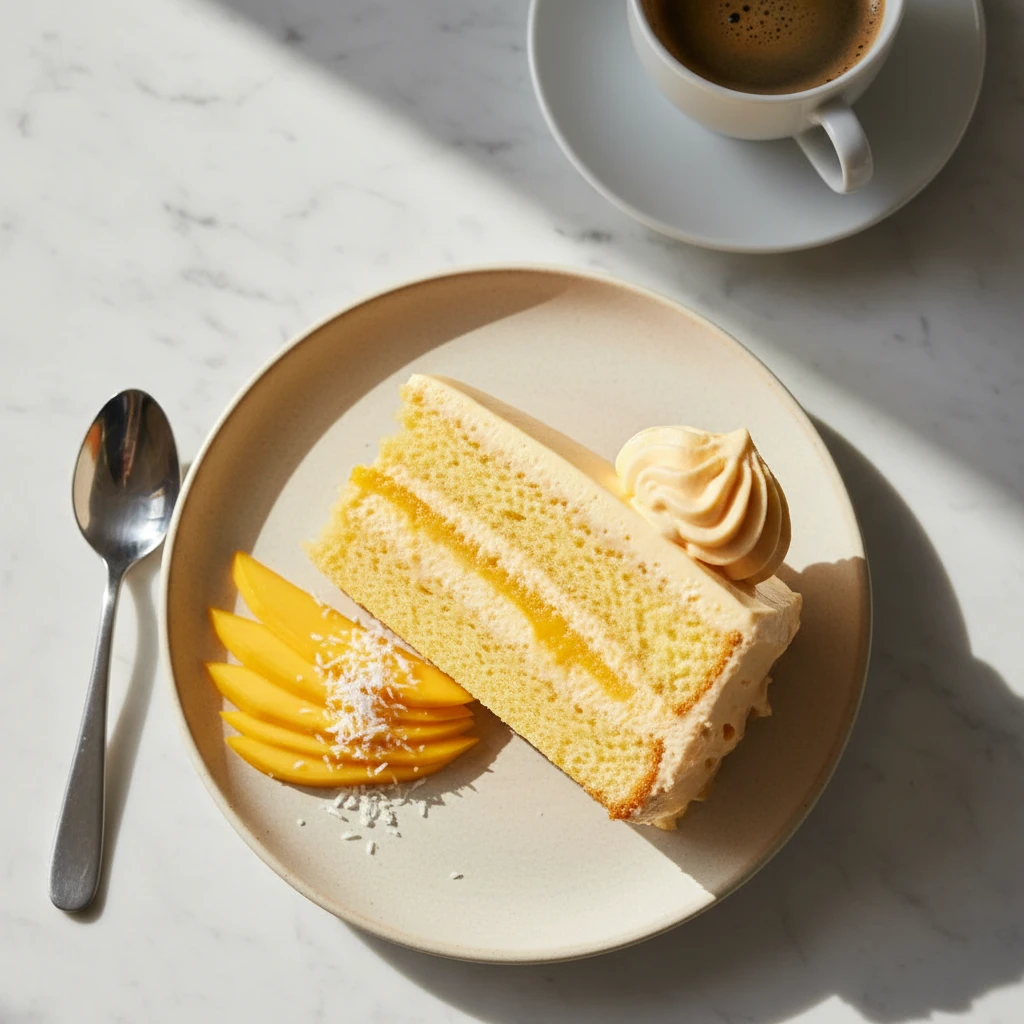
Classic Plating: Slice the cake with a sharp knife dipped in hot water and wiped clean between cuts for pristine edges. Place a slice on a white or cream plate to showcase the golden crumb and vibrant frosting. The fresh mango slices and coconut garnish on top naturally draw the eye.
Accompaniments: Serve with a dollop of additional whipped cream or a scoop of vanilla or mango ice cream on the side. A drizzle of honey or mango coulis adds visual appeal and extra tropical flavor. This is especially lovely for special occasions.
Fresh Fruit Plate: Create a tropical fruit plate by arranging the cake slice with fresh mango cubes, sliced passion fruit, and thin coconut wafers around it. This presentation is perfect for summer entertaining or brunch celebrations.
Beverage Pairings: Serve with iced tea, particularly passion fruit or peach tea, for a refreshing contrast. Mango lassi (Indian yogurt drink) is an authentic pairing. For a more elegant occasion, pair with champagne or a light prosecco—the fruit flavors complement each other beautifully.
Casual Serving: For everyday enjoyment, a simple slice with coffee or tea is perfect. The cake’s tropical character makes it feel like a mini vacation in dessert form, ideal for weekday indulgence.
Special Occasion Touch: For birthdays or celebrations, garnish the entire cake with edible flowers like orchids or tropical marigolds between the mango slices for an extra-special presentation. Add a personalized topper or candles for festive occasions.
Picnic-Friendly: Pack individual slices in clear containers with parchment between layers. The mango frosting and whipped cream topping travel well and stay fresh for up to 4 hours in a cooler, making this perfect for outdoor gatherings.
 Save
SaveStorage and Reheating
Room Temperature Storage: Keep the frosted cake on the counter, loosely covered with a cake dome or large bowl (not plastic wrap, which traps condensation), for up to 8 hours in a cool kitchen. Avoid direct sunlight or heat sources, which will soften the frosting.
Refrigerated Storage: Place the frosted cake in an airtight container or cover with plastic wrap and refrigerate for up to 3 days. The frosting will firm up in the cold, and the cake will be slightly more stable for slicing. Allow the cake to sit at room temperature for 15–20 minutes before serving for the best flavor and texture.
Unfrosted Cake Storage: If you’ve baked the cake layers but not yet frosted them, wrap each cooled layer tightly in plastic wrap and refrigerate for up to 2 days, or freeze for up to 3 months. Thaw frozen layers at room temperature for 1 hour before frosting.
Freezing Frosted Cake: For longer storage, freeze the entire frosted cake for up to 1 month. Wrap it tightly in plastic wrap, then place in an airtight container. Thaw in the refrigerator overnight before serving. The frosting may look slightly weepy after thawing—this is normal. Let it sit at room temperature for 30 minutes before serving, and the appearance will improve.
Individual Slice Storage: Wrap leftover slices individually in plastic wrap and refrigerate for up to 3 days. Slices can also be frozen for up to 1 month; thaw in the refrigerator for 4–6 hours.
Reheating Guidelines: This cake is best enjoyed chilled or at room temperature and does not require reheating. If you prefer a slice slightly warmed (which can enhance the mango flavor), remove it from the refrigerator and let it sit at room temperature for 20–30 minutes, or microwave a slice uncovered for 10–15 seconds at 50% power. Do not overheat, or the frosting will melt excessively.
Frequently Asked Questions about Mango Cake
Can I use canned mango puree instead of fresh?
Yes, canned mango puree works, but quality varies by brand. Look for pure mango puree with no added sugar or syrup. Drain canned puree through cheesecloth for 30 minutes to remove excess liquid, which can make the batter too wet. Frozen mango puree (thawed and drained) is an excellent alternative to fresh and delivers consistent flavor.
How do I make mango puree from scratch?
Peel and pit 3–4 ripe mangoes, cut the flesh into chunks, and blend in a food processor or blender until completely smooth. Strain through a fine-mesh sieve to remove any fibrous bits. One large mango yields approximately 1 cup of puree. Store homemade puree in an airtight container in the refrigerator for up to 4 days, or freeze for up to 3 months.
What if I don’t have Greek yogurt?
Regular plain yogurt works as a substitute in the same amount, though it may make the batter slightly wetter. Sour cream (use 0.5 cup instead of 0.5 cup yogurt) is another good option and adds slight tanginess. Avoid sweetened yogurts or fruit yogurts, which will throw off the recipe’s sugar balance and flavor profile.
Can I make this cake without cardamom?
Yes, the cake is delicious without cardamom. Simply omit it—the fresh mango flavor will shine on its own. Do not substitute with other spices like cinnamon or nutmeg, as they compete with the tropical character. If you want to add warmth, consider a tiny pinch of ginger powder (0.125 teaspoon) instead.
How do I prevent the frosting from getting too soft?
Keep all frosting ingredients (bowl, beaters, cream) very cold before whipping. Work quickly once you start whipping, and refrigerate the frosted cake for at least 1 hour before serving in warm weather. If the frosting becomes too soft, refrigerate it for 10 minutes and rewhip gently. The mango puree adds moisture, so don’t use more than the recipe calls for.
Can I make this cake ahead for a party?
Yes. Bake the cake layers 2–3 days ahead and store them wrapped in the refrigerator or freeze them for up to 1 month. Thaw frozen layers at room temperature for 1 hour. Make the frosting no more than 2 hours before serving for the best texture, or refrigerate it for up to 6 hours and rewhip gently before frosting the cake. Assemble the cake no more than 8 hours before serving.
Is this cake gluten-free?
The recipe as written is not gluten-free because it uses all-purpose wheat flour. To make it gluten-free, substitute with a 1:1 gluten-free all-purpose flour blend that includes xanthan gum. The bake time may increase by 1–2 minutes. All other ingredients are naturally gluten-free unless stated otherwise on the label.
Nutrition Facts (Per Serving)
Nutrition Facts (Per Serving)
| Nutrient | Per Serving | % Daily Value |
| Calories | 385 kcal | 19% |
| Total Fat | 20g | 26% |
| Saturated Fat | 13g | 65% |
| Trans Fat | 0.5g | — |
| Cholesterol | 95mg | 32% |
| Sodium | 150mg | 7% |
| Total Carbohydrate | 48g | 16% |
| Dietary Fiber | 1g | 4% |
| Total Sugars | 35g | — |
| Protein | 4g | 8% |
Nutritional values are estimated per serving (1/6 of the whole cake). Values are based on standard USDA ingredient data and may vary depending on specific brands and preparation methods. This cake is a dessert and should be enjoyed in moderation as part of a balanced diet.
Mango Cake
Ingredients
- 2 cups all-purpose flour
- 1 teaspoon baking powder
- 0.5 teaspoon baking soda
- 0.25 teaspoon salt
- 0.75 cup unsalted butter softened
- 1 cup granulated sugar
- 3 large eggs room temperature
- 1 cup fresh mango puree
- 0.5 cup plain Greek yogurt
- 2 teaspoons vanilla extract
- 0.5 teaspoon cardamom powder
- 1 tablespoon fresh lemon juice
- 0.5 cup diced fresh mango
- 1.5 cups heavy whipping cream
- 0.5 cup powdered sugar
- 0.25 cup mango puree for frosting
- 1 teaspoon vanilla extract for frosting
- Fresh mango slices for garnish
- Dried mango pieces for garnish
- Shredded coconut for garnish
Instructions
- Prep: Preheat oven to 350°F. Line two 8-inch round cake pans with parchment paper, then spray with cooking spray. Ensure all ingredients, especially eggs and yogurt, are at room temperature (about 70–75°F) for the best cake texture. This takes 20–30 minutes if you set them out now.
- Mix dry ingredients: In a medium bowl, whisk together 2 cups all-purpose flour, 1 teaspoon baking powder, 0.5 teaspoon baking soda, 0.25 teaspoon salt, and 0.5 teaspoon cardamom powder. Set aside. Checkpoint: Dry mix should be light and evenly blended with no lumps.
- Cream butter and sugar: In a large mixing bowl, beat 0.75 cup softened unsalted butter with 1 cup granulated sugar on medium-high speed for 3–4 minutes, scraping bowl halfway through. The mixture should look pale, fluffy, and almost doubled in volume. Checkpoint: Mixture should be light cream-colored and hold its shape when you lift the beaters.
- Add eggs: Add 3 large room-temperature eggs one at a time, beating on medium speed for 30–45 seconds after each egg. Scrape the bowl between additions. The mixture may look slightly curdled—this is normal and will smooth out when you add the wet ingredients. Checkpoint: Eggs should be fully incorporated with no visible whites or yellows; mixture should be creamy.
- Mix wet ingredients: In a separate bowl, combine 1 cup fresh mango puree, 0.5 cup plain Greek yogurt, 2 teaspoons vanilla extract, and 1 tablespoon fresh lemon juice. Whisk until smooth. Checkpoint: Mixture should be uniform in color with no yogurt streaks.
- Alternate wet and dry: On medium speed, add one-third of the flour mixture to the butter mixture, beat for 20–30 seconds. Add half of the mango mixture, beat for 20 seconds. Repeat: one-third flour, remaining mango mixture, beat 20 seconds. Finish with remaining flour. Do not overmix—stop as soon as you see no dry streaks (about 1–2 minutes total). Checkpoint: Batter should be smooth and thick with no visible dry flour; it should fall off a spoon slowly, not run.
- Fold in fresh mango: Gently fold in 0.5 cup diced fresh mango using a spatula with 10–15 strokes. Do not overmix. Checkpoint: Mango pieces should be evenly distributed but not crushed; batter should still look smooth.
- Divide batter: Divide the batter evenly between the two prepared pans. Use an offset spatula to smooth the top of each layer so it bakes evenly. Checkpoint: Both pans should have equal amounts of batter; the surface should be level.
- Bake: Place pans on the middle oven rack. Bake at 350°F for 28–32 minutes. The cakes are done when a toothpick inserted in the center comes out clean or with just a few moist crumbs (not wet batter), and the tops spring back lightly when touched. The edges should pull slightly away from the sides of the pan. Checkpoint: Cakes should be golden-brown on top, smell fragrant, and feel springy to a light touch.
- Cool in pans: Remove from oven and let cool in the pans for exactly 10 minutes on a wire rack. This allows the cake to set enough to remove without breaking but stays warm enough to turn out easily. Checkpoint: Cakes should feel firm enough to turn out but still warm to the touch.
- Turn out cakes: Run a thin knife around the edges of each cake to loosen it. Place a wire rack over each pan, flip upside down, and gently tap the bottom of the pan. The cake should release cleanly. If stuck, let cool 2 more minutes and try again. Let cakes cool completely on the racks for 45–60 minutes at room temperature (or 20–30 minutes in a cool kitchen). Checkpoint: Cakes should be completely cool to the touch before frosting; they should feel light and springy.
- Chill bowl for frosting: While cakes cool, place a metal mixing bowl and the beaters of an electric mixer in the freezer for 10 minutes. This ensures the frosting will whip properly and hold its shape. Checkpoint: Bowl and beaters should be very cold to the touch.
- Whip cream: Pour 1.5 cups of cold heavy whipping cream into the chilled bowl. Using chilled beaters, whip on medium-high speed for 1–2 minutes until soft peaks form—this means peaks curl over when you lift the beaters. Checkpoint: Cream should be fluffy and doubled in volume; peaks should just barely hold their shape.
- Add frosting ingredients: With the mixer still running on medium speed, add 0.5 cup powdered sugar, 0.25 cup mango puree, and 1 teaspoon vanilla extract. Continue whipping for 1–2 minutes more, scraping the bowl once, until stiff peaks form—peaks should stand straight up without curling. Do not overmix or the frosting will turn grainy. Checkpoint: Frosting should be thick, spreadable, and hold its shape; it should look pale yellow or peachy from the mango.
- Assemble cake: Place the first cooled cake layer on a serving plate or cake board. Using an offset spatula or knife, spread about 0.75 cup of frosting evenly over the top, leaving a 0.5-inch border from the edge. Place the second cake layer on top, pressing gently. Checkpoint: Layers should sit evenly with no gaps or sliding.
- Frost outside: Spread the remaining frosting over the top and sides of the cake with an offset spatula or knife. Use smooth, even strokes; don't worry about perfection—rustic swirls look beautiful. Let frosting set for 15–20 minutes at room temperature. Checkpoint: All surfaces should be covered with a thin, even layer of frosting; frosting should feel slightly firm to the touch.
- Garnish: Top with fresh mango slices arranged in a pattern, dried mango pieces, and 2–3 tablespoons of shredded coconut scattered over the top. Serve immediately or refrigerate until ready to serve. Checkpoint: Cake should look tropical and inviting with garnish showing vibrant colors.