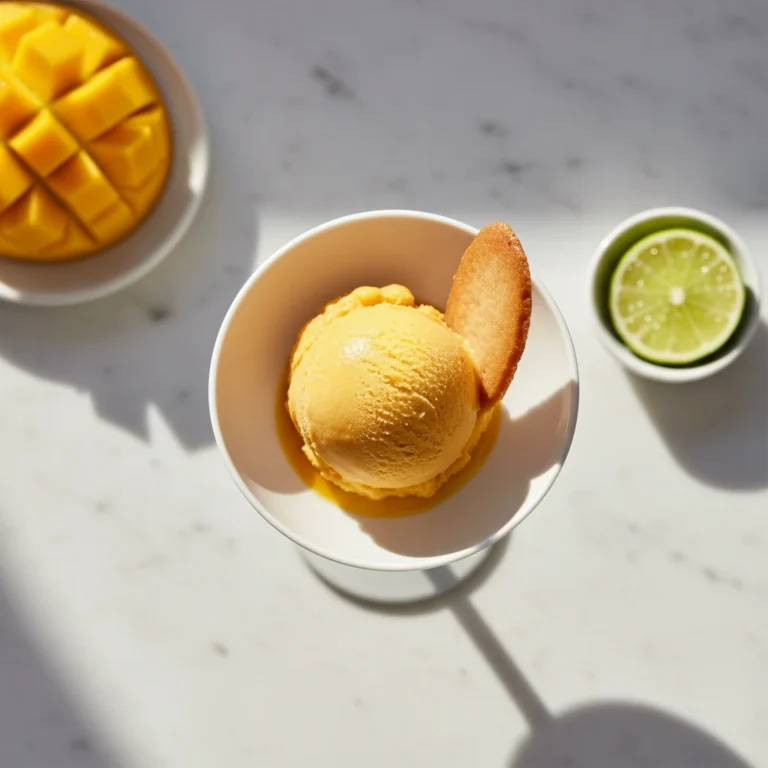
Mango sorbet is a refreshing, dairy-free frozen dessert that captures the vibrant sweetness of ripe mangoes in every spoonful. This naturally vegan treat combines fresh mango puree with a delicate sugar syrup and bright citrus notes, creating a silky-smooth texture without cream or eggs. Perfect for hot summer days or as a palate cleanser after a rich meal, mango sorbet is elegantly simple yet impressively sophisticated. Whether served in a chilled glass or as an elegant quenelle, this frozen delicacy brings tropical flavor to your table with minimal effort.
Reasons to Try Mango Sorbet
Pure Tropical Flavor: Made with fresh mango puree, this sorbet delivers authentic, concentrated mango taste without artificial additives. The natural sweetness of ripe mangoes shines through beautifully.
Dairy-Free and Vegan: Perfect for those with lactose intolerance or following a vegan lifestyle. Sorbet relies on fruit, sugar, and water for its luxurious texture, making it inclusive and wholesome.
Light and Refreshing: Unlike creamy ice cream, sorbet offers a bright, cleansing quality that feels sophisticated on the palate. It’s ideal as a palate cleanser between courses or a guilt-free summer dessert.
Simple Ingredients: With just a handful of quality ingredients, you control exactly what goes into your frozen dessert. No mystery additives or stabilizers required for excellent results.
Restaurant-Quality at Home: Creating sorbet at home rivals any gelato shop or fine-dining establishment. The smooth, professional texture achieved with proper technique impresses guests effortlessly.
Naturally Gluten-Free: Sorbet is inherently gluten-free, making it safe for those with celiac disease or gluten sensitivity. Serve with confidence at any dietary-restricted gathering.
 Save
SaveIngredients Notes
- Fresh mango puree – Use ripe, fragrant mangoes (Alphonso, Ataulfo, or Kent varieties work beautifully). Peel, pit, and blend until completely smooth. Avoid canned puree if possible; fresh delivers superior flavor and texture.
- Granulated sugar – Standard white sugar works perfectly. This sweetens the sorbet and helps create the desired texture by lowering the freezing point.
- Water – Use filtered water for the best taste. This creates the simple syrup base that balances sweetness and intensity.
- Fresh lime juice – Essential for brightening the mango flavor and adding complexity. Freshly squeezed lime juice is far superior to bottled varieties.
- Fresh lemon juice – Adds additional citrus notes and prevents the sorbet from tasting one-dimensional. A small amount provides depth.
- Salt – A tiny pinch enhances the mango flavor without making the sorbet taste salty. It’s a secret ingredient that boosts perception of sweetness.
- Corn syrup or glucose syrup – This prevents large ice crystals from forming, creating a silky texture. It reduces the freezing point slightly, making scooping easier.
- Vodka or neutral spirit – Optional but recommended. Alcohol prevents ice crystal formation and improves the smooth, creamy mouthfeel without adding flavor.
How to Make Mango Sorbet
- Prepare fresh mango puree by peeling and pitting ripe mangoes, then blending until completely smooth. Strain through a fine-mesh sieve if desired for extra refinement.
- In a saucepan, combine water and granulated sugar. Heat over medium heat, stirring occasionally, until sugar dissolves completely. Let cool to room temperature.
- In a large bowl, whisk together mango puree, cooled sugar syrup, lime juice, lemon juice, salt, corn syrup, and vodka (if using) until well combined.
- Chill the mixture in the refrigerator for at least 2 hours, or until completely cold.
- Pour the chilled mixture into an ice cream maker and churn according to manufacturer’s instructions, typically 20–25 minutes, until it reaches a soft-serve consistency.
- Transfer to a freezer-safe container and freeze for at least 4 hours, or until firm enough to scoop.
- Serve immediately or scoop into chilled glasses and serve within minutes for the best texture.
What You Must Know About Mango Sorbet
Mango Selection is Critical: The quality of your sorbet depends entirely on the mangoes you choose. Select ripe mangoes that yield slightly to gentle pressure and emit a sweet, fragrant aroma. Avoid hard, green mangoes or overripe ones that are mushy. Alphonso, Ataulfo, and Kent varieties produce the best sorbet with rich flavor and smooth texture. If you cannot find perfectly ripe mangoes, they will not deliver the concentrated, intense mango flavor that makes sorbet exceptional.
Freshly Squeezed Citrus is Non-Negotiable: Bottled lemon and lime juices contain preservatives that impart bitter, chemical flavors to your finished sorbet. Always squeeze fresh citrus immediately before combining ingredients. The brightness and balance this adds is what transforms mango sorbet from ordinary to restaurant-quality.
The Syrup Must Be Completely Cold: Combining warm sugar syrup with cold mango puree creates an uneven base that churns poorly, resulting in grainy texture. Make the syrup ahead and allow it to cool fully before mixing. If short on time, chill it in the freezer for 15–20 minutes before combining.
Glucose Syrup is Your Secret Weapon: This ingredient prevents large ice crystals from forming, creating the silky, smooth texture that distinguishes professional sorbet from homemade ice. Don’t skip it. Corn syrup works well as a substitute if glucose syrup is unavailable.
Vodka Prevents Iciness (Optional): If you have an ice cream maker, sorbet churns beautifully without alcohol. However, if using the freezer method or prefer extra smoothness, the small amount of vodka significantly improves texture without adding flavor. It lowers the freezing point, preventing hard, icy results.
Proper Churning Creates Professional Texture: Most home ice cream makers require 20–25 minutes of churning. Underchumning leaves the sorbet grainy; overchurning can actually make it harder to freeze properly. Watch for the soft-serve stage—the ideal consistency for transferring to the freezer.
Chill Everything: A cold ice cream maker bowl, cold sorbet base, and cold serving glasses ensure the best texture and presentation. Most ice cream makers require the bowl to be frozen for 24 hours before use.
Helpful Tips: For an even smoother result, pass the mango puree through a fine-mesh sieve to remove any fibers. For deeper color and flavor, add 1 tablespoon of mango nectar or passion fruit juice to the base. To scoop easily without melting, warm your ice cream scoop under hot water and wipe dry between each scoop. For a palate cleanser at a dinner party, serve tiny scoops in frozen shot glasses. Store uncovered sorbet under plastic wrap directly on the surface to prevent ice crystals from forming on top during storage.
Variations and Substitutions
Mango-Passion Fruit Sorbet: Replace 1/2 cup of mango puree with passion fruit puree for a more exotic, tangy flavor profile. Reduce lime juice by 2 tablespoons since passion fruit is already quite acidic.
Mango-Coconut Sorbet: Substitute 1/4 cup of water in the simple syrup with coconut milk or coconut water. This adds subtle tropical richness without overwhelming the mango flavor.
Spiced Mango Sorbet: Add 1/4 teaspoon ground cardamom and a tiny pinch of cayenne pepper to the sorbet base. These warm spices complement mango beautifully and add sophisticated complexity.
Honey-Sweetened Mango Sorbet: Replace 1/2 cup of granulated sugar with honey. This produces a slightly softer, more luxurious texture and adds subtle floral notes.
Mango-Mint Sorbet: Add 2 tablespoons of finely chopped fresh mint leaves to the sorbet base before churning. Strain if desired before serving for a cleaner presentation. The mint adds refreshing herbal brightness.
Lower-Sugar Mango Sorbet: For a less sweet version, reduce granulated sugar to 3/4 cup and add 2 tablespoons of erythritol or stevia. Note that this will produce a slightly softer texture; compensate by adding an extra tablespoon of vodka.
Mango-Lime Sorbet (More Citrus-Forward): Increase lime juice to 1/2 cup and reduce lemon juice to 1 tablespoon. This produces a more pronounced citrus bite that some prefer.
Alcohol-Free Sorbet: Omit the vodka entirely and increase corn syrup to 3 tablespoons. This works well but will produce slightly less smooth texture; freeze for 6–8 hours instead of 4 to allow proper hardening.
Serving Suggestions for Mango Sorbet
Classic Presentation: Serve sorbet in chilled coupe glasses or bowls, topped with a thin cookie or tuile and a delicate edible flower like candied violet or pansy. This creates an elegant, restaurant-quality presentation.
Tropical Fruit Medley: Arrange a quenelle of mango sorbet beside fresh raspberries, blueberries, and thinly sliced kiwi on a chilled plate. Drizzle lightly with passion fruit coulis or mango juice reduction.
Palate Cleanser: Serve small scoops in frozen shot glasses or espresso cups as a palate cleanser between courses at a multi-course dinner. This cleanses the palate of rich, savory flavors and prepares it for the next course.
Dessert Float: Place a generous scoop of mango sorbet in a chilled champagne flute and pour prosecco or sparkling wine over it for an elegant, effervescent dessert.
With Grilled Fruit: Serve alongside grilled pineapple, grilled mango slices, or caramelized peaches for a warm-and-cold textural contrast that’s sophisticated and impressive.
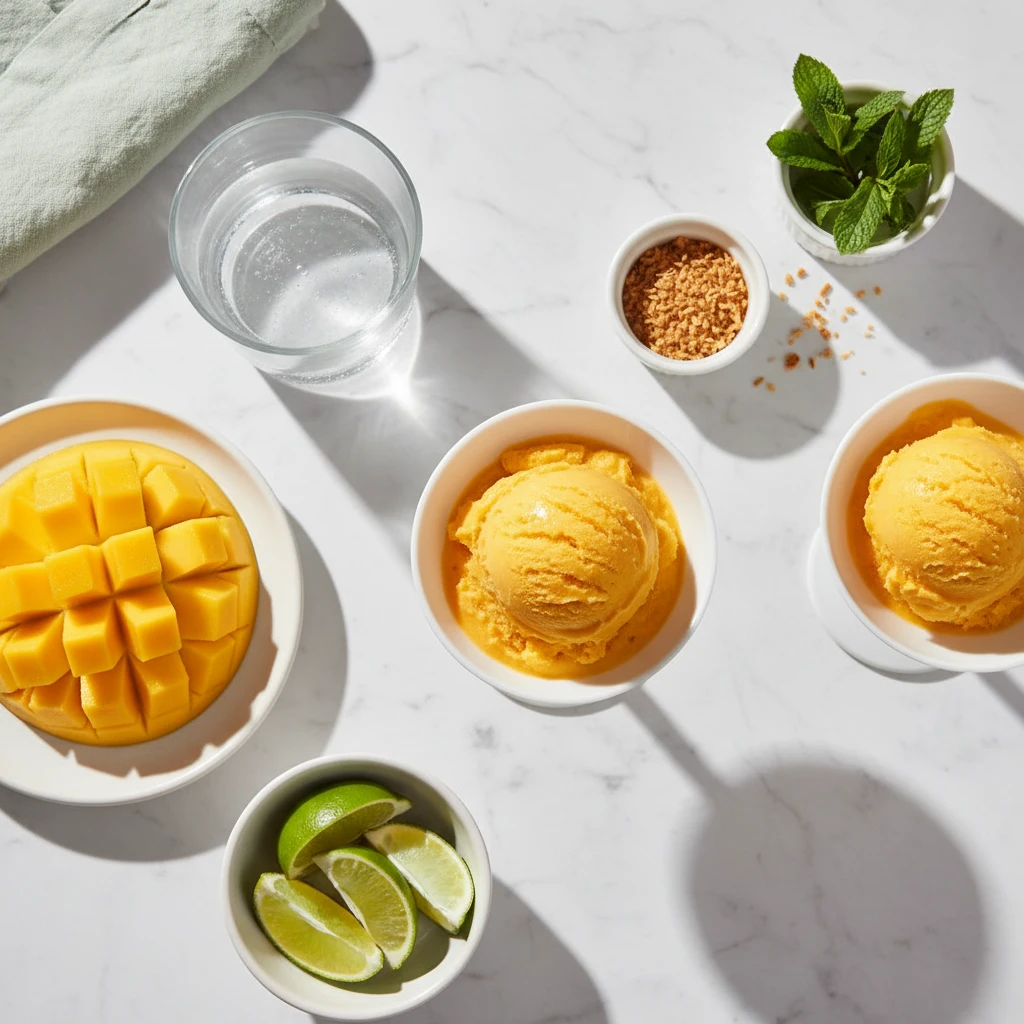
Minty Fresh: Top sorbet with a small sprig of fresh mint and a sprinkle of lime zest. The mint garnish adds color and aromatic freshness.
Coconut Crunch: Sprinkle toasted coconut flakes over the sorbet for textural contrast and complementary tropical flavor.
Summer Afternoon Treat: Serve in hollowed-out fresh mango halves (after the sorbet has been prepared from the flesh) for a whimsical, Instagram-worthy presentation that impresses casual guests.
 Save
SaveStorage and Reheating
Short-Term Storage (Up to 1 Week): Store finished sorbet in an airtight freezer-safe container. Cover the surface directly with plastic wrap or parchment paper to prevent ice crystals from forming on top. Mango sorbet keeps well in the freezer for up to 7 days with this method, maintaining good texture and flavor.
Long-Term Storage (1–2 Months): Properly covered and frozen sorbet keeps for up to 2 months, though quality gradually decreases as ice crystals develop over time. For best results, consume within the first 3 weeks for optimal smoothness and vibrant flavor.
Preventing Ice Crystals: Always press plastic wrap directly onto the surface of the sorbet to minimize air exposure. Ice crystals form when the sorbet is repeatedly thawed and refrozen; avoid opening the container frequently and returning it to the freezer.
Sorbet Base Storage: If you’ve prepared the sorbet base but haven’t churned it yet, it keeps refrigerated for up to 3 days. This is convenient if you want to make the base ahead and churn just before serving.
Scooping Tips: Remove sorbet from the freezer 2–3 minutes before serving. This allows it to soften slightly for easier scooping without melting. Warm your ice cream scoop under hot water and wipe dry between each scoop to prevent sticking and create clean portions.
Softening if Frozen Solid: If the sorbet has become very hard, let it sit at room temperature for 5–10 minutes until it reaches the desired softness. Alternatively, let it sit in the refrigerator for 15–20 minutes for gentler softening that maintains its integrity.
Frequently Asked Questions about Mango Sorbet
Do I need an ice cream maker to make mango sorbet?
While an ice cream maker produces the best, smoothest results, you can make sorbet without one using the freezer method. Pour the chilled sorbet base into a shallow freezer-safe container and freeze for 1 hour. Remove and stir vigorously with a fork, breaking up any ice crystals. Repeat every 30 minutes for 3-4 hours until you reach a slushy consistency. The texture won’t be quite as smooth as churned sorbet, but it will still be delicious. Adding an extra tablespoon of vodka helps prevent large ice crystals when using this method.
Can I use canned or frozen mango puree instead of fresh?
While fresh mango puree delivers the best flavor and texture, canned puree works in a pinch. Use unsweetened canned mango puree, not mango nectar which contains added sugar. You may need to reduce the granulated sugar in the recipe by 2-3 tablespoons since canned puree sometimes contains added sweetener. Frozen mango chunks can also work; thaw completely, blend until smooth, and strain through a fine-mesh sieve to remove excess liquid.
What’s the difference between sorbet and sherbet?
Sorbet is dairy-free and made only from fruit puree, sugar, water, and sometimes alcohol or egg white for smoothness. Sherbet contains a small amount of dairy (milk or cream) and sometimes egg white, giving it a slightly creamier texture than sorbet. Granita is another frozen dessert that’s chunkier and less smooth, made by freezing and stirring less frequently than sorbet. All three are refreshing frozen treats, but sorbet is the dairy-free option.
Why does my sorbet taste icy or grainy instead of smooth?
Grainy sorbet typically results from one of these issues: (1) The sorbet base wasn’t cold enough before churning—always chill for at least 2 hours; (2) Insufficient glucose syrup or corn syrup—these prevent ice crystals from forming; (3) Under-churning—continue churning for the full 20-25 minutes; (4) The sorbet wasn’t frozen long enough—give it at least 4 hours to set properly. Adding an extra tablespoon of vodka next time also helps create a smoother texture.
How do I know if my mangoes are ripe enough?
Ripe mangoes yield slightly to gentle pressure (like an avocado) and emit a sweet, fragrant aroma from the stem end. Avoid hard, green mangoes or those that are mushy and overly soft. The best mangoes for sorbet are those that are fragrant, sweet, and have a slight give when squeezed. Color varies by variety, so don’t rely solely on color. If your mangoes aren’t quite ripe, place them in a paper bag at room temperature for 1-2 days to ripen before using.
Can I make mango sorbet sugar-free or with a sugar substitute?
Yes, you can use erythritol, stevia, or monk fruit sweetener in place of granulated sugar. Use a 1:1 conversion ratio if your sweetener matches regular sugar’s sweetness level. Note that sugar-free sorbet may have a slightly different texture and may not freeze quite as firmly; compensate by adding an extra 1-2 tablespoons of vodka or corn syrup. Some people detect a slight aftertaste from certain sweeteners, so taste your base before churning and adjust as needed.
Nutrition Facts (Per Serving)
Nutrition Facts (Per Serving)
| Nutrient | Per Serving (approx. 1 cup) |
|---|---|
| Calories | 156 |
| Total Fat | 0.4 g |
| Saturated Fat | 0.1 g |
| Cholesterol | 0 mg |
| Sodium | 45 mg |
| Total Carbohydrate | 40.2 g |
| Dietary Fiber | 1.2 g |
| Sugars | 37.8 g |
| Protein | 0.7 g |
| Vitamin A | 31% DV |
| Vitamin C | 28% DV |
| Potassium | 287 mg |
Dietary Notes: Mango sorbet is naturally dairy-free, vegan, and gluten-free. It’s an excellent choice for those with lactose intolerance or following plant-based diets. The sorbet provides natural carbohydrates, antioxidants from mango, and vitamins A and C. Because it’s sweetened with sugar, portion control is recommended as part of a balanced diet. Values are based on the standard recipe using 8 servings.
Mango Sorbet
Ingredients
- 4 cups fresh mango puree about 6-8 ripe mangoes
- 1 cup granulated sugar
- 1 cup water
- 1/4 cup fresh lime juice
- 2 tablespoons fresh lemon juice
- 1/4 teaspoon salt
- 2 tablespoons corn syrup or glucose syrup
- 1 tablespoon vodka or neutral spirit optional, prevents icy texture
Instructions
- Prep the mangoes (10 minutes): Select 6–8 ripe, fragrant mangoes. Hold each mango upright and carefully slice down each side close to the large flat pit, making two cheek pieces per mango. Score the flesh in a crosshatch pattern without cutting through the skin, then invert and scoop the cubes into a blender. Cut any remaining flesh from around the pit. Blend all mango pieces until completely smooth, about 2–3 minutes. Checkpoint: You should have approximately 4 cups of silky mango puree with no fibrous chunks visible.
- Make the simple syrup (5 minutes active, 30 minutes cooling): In a medium saucepan, combine 1 cup water and 1 cup granulated sugar. Place over medium heat and stir occasionally for 3–5 minutes until the sugar dissolves completely and the mixture is clear. You should hear no grittiness when stirring. Remove from heat and allow to cool at room temperature for 30 minutes. Checkpoint: The syrup should be cool to the touch (around 70°F) before mixing with the mango.
- Combine all sorbet ingredients (5 minutes): In a large mixing bowl, pour the cooled mango puree. Add the completely cooled sugar syrup, 1/4 cup fresh lime juice (about 2 limes), 2 tablespoons fresh lemon juice, 1/4 teaspoon salt, 2 tablespoons corn syrup, and 1 tablespoon vodka (if using). Whisk vigorously for 1–2 minutes until everything is evenly incorporated and the mixture is uniform in color. Checkpoint: There should be no streaks of unmixed ingredients; the mixture should be one consistent golden-orange color.
- Chill the mixture (2 hours minimum): Pour the sorbet base into a glass or plastic container and cover with a lid or plastic wrap. Place in the refrigerator for at least 2 hours. If your kitchen is warm or you have time, chilling overnight (up to 12 hours) produces even better results. Checkpoint: The mixture should be ice-cold (approximately 38°F or colder) before churning.
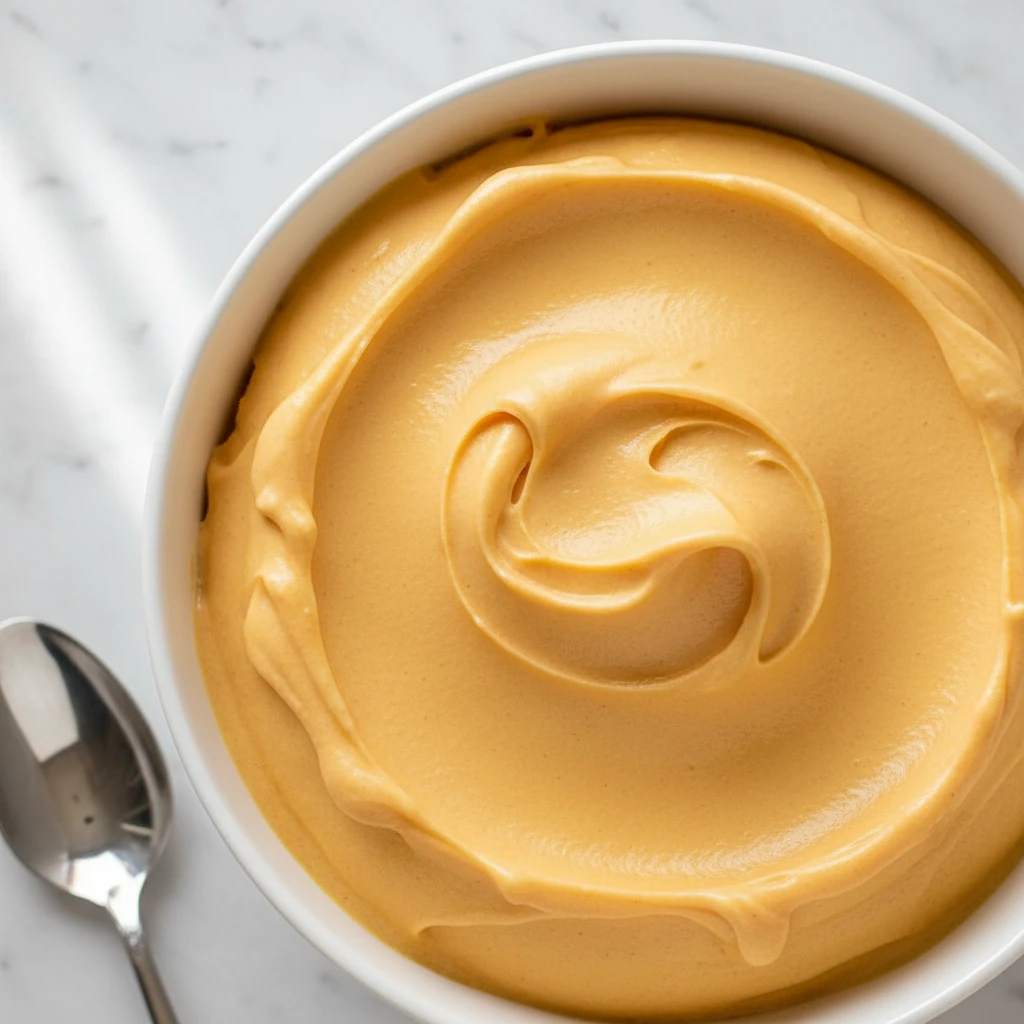
- Churn in an ice cream maker (20–25 minutes): Remove the sorbet base from the refrigerator and pour into your ice cream maker (following your machine's specific instructions). Turn on the machine and let it churn. After about 10 minutes, the mixture will begin to thicken. Continue churning until it reaches a soft-serve consistency, typically 20–25 minutes total. The sorbet should be pale golden, smooth, and hold soft peaks when a spoon is lifted. Checkpoint: The sorbet should be thick enough that a spoon drawn through it leaves a visible trail that doesn't immediately close.
- First freeze (4–6 hours): Transfer the soft sorbet to a freezer-safe airtight container, smoothing the top gently. Cover tightly with a lid or plastic wrap. Place in the freezer for at least 4 hours. This hardens it to scoopable consistency. If freezing overnight or longer, place parchment paper directly on the surface to prevent ice crystals from forming on top. Checkpoint: The sorbet should be firm but scoopable; a test scoop should come away cleanly without shattering or requiring excessive pressure.
- Serve (2–3 minutes): Remove the sorbet from the freezer 2–3 minutes before serving. Using a warm, dry ice cream scoop (dip it in hot water and wipe between scoops), portion the sorbet into chilled glasses or serving bowls. Serve immediately while still frozen. If the sorbet has become too hard, let it sit at room temperature for 3–5 minutes before scooping.
- Troubleshooting checkpoint: If your sorbet is grainy or has large ice crystals, this indicates insufficient churning time, churning too slowly, or inadequate glucose syrup. If it won't freeze solid after 6 hours, the mixture may be too high in sugar; next time reduce sugar slightly or add an extra tablespoon of vodka.