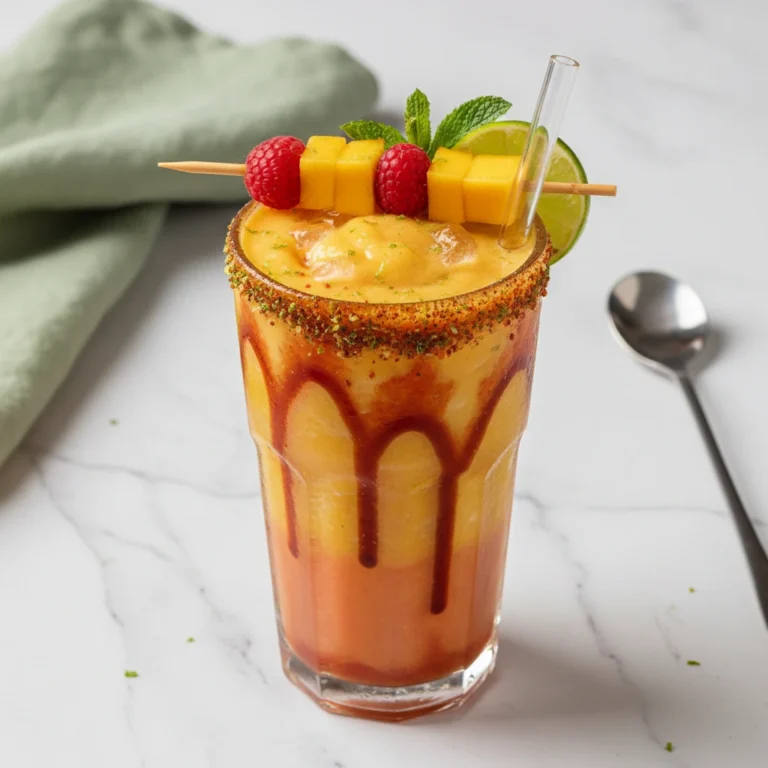
Mangonada is a vibrant Mexican street drink that captures the essence of summer in every sip. This refreshing beverage blends smooth mango with zesty citrus, tangy chamoy, and a distinctive chili-lime kick that creates an unforgettable flavor experience. Perfect for hot days, celebrations, or whenever you crave something fruity yet adventurous, mangonada offers a delicious balance of sweet, sour, spicy, and savory notes. It’s easy to make at home and guaranteed to impress your guests.
Reasons to Try Mangonada
A Festival of Flavors: Unlike ordinary smoothies or juices, mangonada delivers a complex taste profile. The natural sweetness of fresh mango is enhanced by the umami depth of chamoy sauce, the tartness of lime and tamarind, and the smoky heat of tajín seasoning. Each sip keeps your palate engaged and intrigued.
Authentically Mexican: This drink is beloved across Mexico and throughout Latin American communities. It represents centuries of culinary tradition, combining indigenous ingredients like mango and tamarind with colonial influences. Drinking mangonada connects you to rich cultural heritage.
Customizable and Fun: Mangonada is incredibly versatile. You can adjust the spice level, sweetness, or fruit ratios to suit your preferences. Serve it as a frozen dessert, a refreshing cocktail base, or a non-alcoholic party punch. The visual appeal with its vivid colors and dramatic garnishes makes it perfect for entertaining.
Nutrient-Dense: Fresh mango provides vitamins A and C, dietary fiber, and antioxidants. Lime juice aids digestion and adds immunity-boosting properties. Unlike sugary commercial drinks, homemade mangonada lets you control the sweetness and maximize nutritional value.
Quick and Easy: Despite its sophisticated flavor profile, mangonada comes together in just 10 minutes. No cooking required—only blending and mixing. It’s perfect for spontaneous entertaining or cooling down on a hot afternoon.
 Save
SaveIngredients Notes
- Ripe mangoes: Choose mangoes that yield slightly to gentle pressure and emit a sweet fragrance. Firm or slightly underripe mangoes won’t provide enough juice or sweetness. Ataulfo or Champagne varieties work beautifully.
- Fresh mango juice: Bottled or freshly pressed mango juice adds intensity to the drink without adding extra mangoes. You can make your own by blending extra mango flesh with water and straining through a fine mesh.
- Fresh lime juice: Always use freshly squeezed lime juice for brightness and authenticity. Bottled lime juice lacks the crisp, fresh quality that makes mangonada special.
- Tajín seasoning: This iconic Mexican blend of dried chiles, lime, and salt is essential. If unavailable, you can substitute with a mixture of chili powder, lime zest, and sea salt.
- Chamoy sauce: This sweet-spicy-tangy condiment made from pickled fruit is the secret ingredient that elevates mangonada. Look for it in the international aisle of most grocery stores or online.
- Tamarind paste: Tamarind adds authentic sour-fruity complexity. It’s sold concentrated in small containers and brings depth that lime alone cannot achieve.
- Honey or agave: Use to balance the tartness and heat. Agave dissolves more smoothly in cold drinks than honey.
- Ice: Crushed ice works better than large cubes, as it blends more smoothly and chills the drink faster.
How to Make Mangonada
- Prepare the mangoes by peeling, pitting, and roughly chopping the flesh into chunks. Reserve some attractive pieces for garnish.
- Add the chopped mango to a blender along with fresh mango juice, fresh lime juice, honey, chamoy sauce, and tamarind paste.
- Blend on high speed for 60–90 seconds until completely smooth and creamy.
- Strain the mixture through a fine-mesh sieve if you prefer a smoother texture, or leave it thick and chunky for extra body.
- Pour the mango base into a large pitcher and stir in the tajín seasoning and grated ginger if using. Taste and adjust sweetness or spice as needed.
- Pour the mixture into serving glasses filled halfway with crushed ice.
- Top each glass with additional crushed ice to fill three-quarters full.
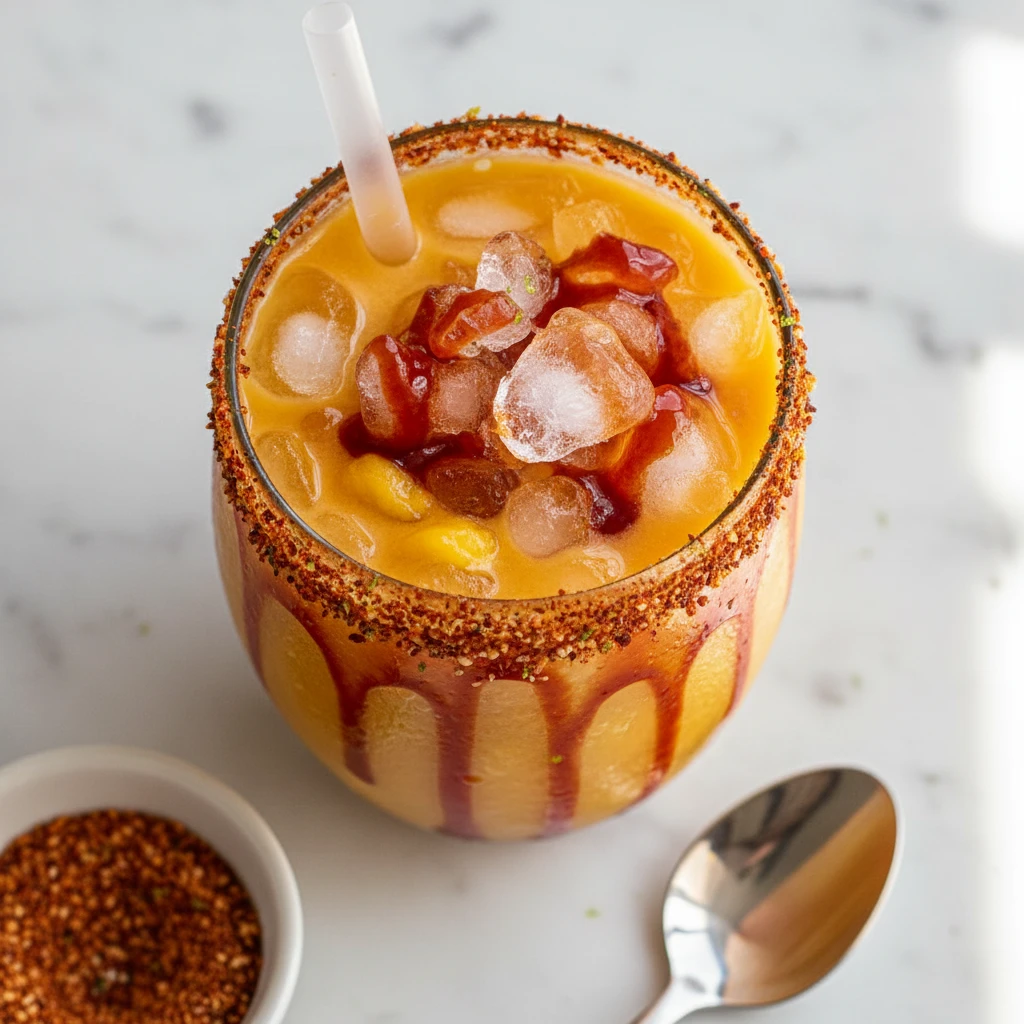
- Drizzle a swirl of chamoy sauce around the inside of each glass for visual appeal and extra flavor.
- Rim the top of each glass with tajín seasoning by wetting the rim with lime juice and dipping it into the seasoning mix.
- Garnish with fresh mint leaves, mango chunks on skewers, and fresh berries.
- Stir well before drinking and serve immediately with a spoon for the thicker base and a straw.
What You Must Know About Mangonada
Freshness is Non-Negotiable: The quality of your mangonada depends almost entirely on fresh, ripe mango. Mealy or underripe mangoes will produce a flat, uninspiring drink. Buy mangoes 1–2 days before serving and store them at room temperature. They’re ready when they smell fragrant and yield slightly to pressure (not mushy). If you must use less-than-perfect mangoes, add 1–2 tablespoons of honey to compensate for lacking natural sweetness.
Tajín and Chamoy are Non-Negotiable: These ingredients define mangonada and are not easily replaced. While you can make substitutes in a pinch, commercial tajín and chamoy sauce found in most grocery stores are inexpensive and authentic. Trying to create these from scratch typically results in a less satisfying drink. Hunt for them in the international or Hispanic foods section.
Timing Matters: Mangonada is best consumed immediately after assembly. The ice melts within 15–20 minutes, diluting the concentrated mango base. For parties, prepare the mango base up to 4 hours ahead and refrigerate it in a sealed pitcher. Add ice and assemble individual drinks only minutes before serving. Do not make the entire batch and let it sit, as separation and flavor degradation will occur.
Texture is Intentional: Unlike smooth juices, mangonada has a thick, slightly chunky consistency more akin to a smoothie or slush. This thickness is traditional and desirable—it slows consumption, lets flavors linger, and provides satiation. Do not over-blend or strain if you prefer this traditional texture. Some people enjoy sipping it with a spoon as much as a straw.
Helpful Tips: For a larger batch (8 servings), double all ingredients and blend in two batches rather than overloading your blender, which can result in uneven mixing. For a frozen popsicle version, pour the mango base into popsicle molds after blending, insert sticks, and freeze for 6 hours. For an alcoholic version, add 2 ounces of white rum, tequila, or mezcal per drink just before serving. Pre-chill glasses in the freezer for 15 minutes before serving to keep the drink colder longer. If making for a crowd, set up a self-serve garnish station with mango chunks, tajín, fresh mint, and chamoy sauce so guests can customize their own glasses.
Variations and Substitutions
Mango-Pineapple Mangonada: Replace 1 cup of mango with 1 cup fresh pineapple chunks. Blend together and proceed as directed. The pineapple adds tropical brightness and pairs beautifully with the chili-lime flavors.
Frozen Mango Sorbet Version: Prepare the mango base as directed, but blend in an additional 3 cups of crushed ice or ice cubes directly into the blender before pouring. Blend on high for 2–3 minutes until slushy and thick. Serve immediately without additional ice—this creates a refreshing sorbet-like consistency.
Mango Lassi Twist: Add 1 cup plain Greek yogurt or regular yogurt to the blender with the mango mixture. Blend until creamy and smooth. Reduce ice to 1 cup. This creates a thicker, more probiotic-rich version that’s more filling and dessert-like.
Spicy Kick Version: Add 1 fresh Thai red chili (seeds removed for less heat, or keep seeds for maximum spice), 1/2 teaspoon cayenne pepper, or 1 tablespoon fresh jalapeño slices to the blender. This intensifies the heat and creates a more savory profile. Use less tajín if adding fresh chiles.
Coconut Mangonada: Replace 1/2 cup of the mango juice with full-fat coconut milk or coconut cream. This adds tropical richness and creaminess while muting some of the acidity. Perfect for those who find the original too tart.
Ingredient Substitutions: If chamoy sauce is unavailable, substitute with 3 tablespoons of pickled mango or pickled plum sauce mixed with 1 tablespoon honey and 1 tablespoon lime juice. If tamarind paste is unavailable, use 2 tablespoons of tamarind concentrate or 1 tablespoon of lime juice plus an extra tablespoon of honey to approximate the sweet-sour profile. If tajín is unavailable, combine 2 tablespoons chili powder, 2 tablespoons sea salt, and 1 tablespoon lime zest and use to rim glasses.
Make It Alcohol-Free for Kids: Follow the recipe exactly as written. All ingredients are naturally free of alcohol. Simply serve in child-friendly portions (4–6 ounces per child) in sippy cups or with supervision when using straws.
Serving Suggestions for Mangonada
Traditional Street Vendor Style: Serve in a clear plastic cup (16 ounces) with a wide plastic straw and a long spoon. Garnish with a single mango chunk skewer leaning against the rim. This is the iconic presentation seen on Mexican streets and at markets.
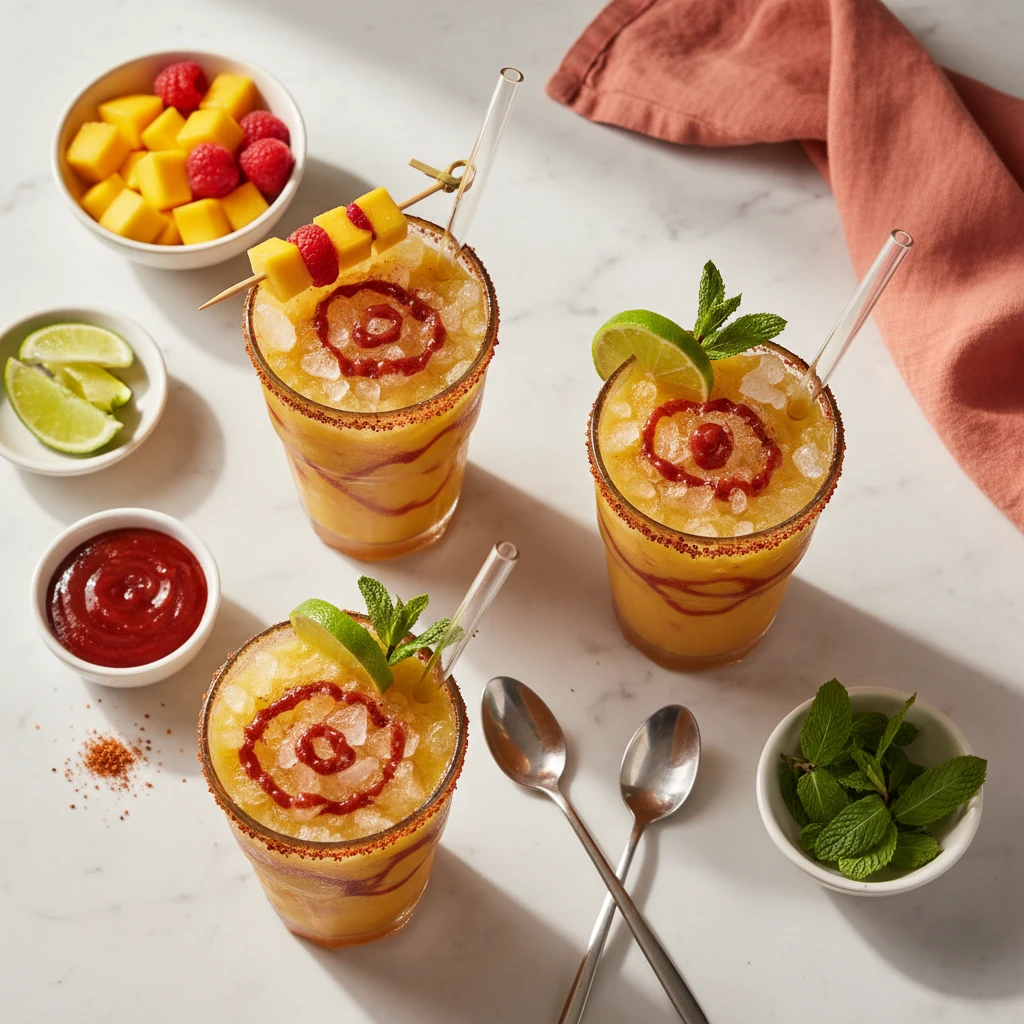
Elegant Entertaining: Serve in clear glass tumblers (12–14 ounces) with a frosted or rimmed edge. Use thin, elegant metal straws or glass straws. Garnish with a mango chunk on a cocktail pick, fresh raspberries, a delicate mint sprig, and a thin lime wheel balanced on the rim. Present on a wooden board with small napkins.
Party Punch Bowl: Prepare the mango base in a large bowl. Surround it with a ring of crushed ice mixed with tajín seasoning for visual appeal. Place small ladles and provide serving glasses with pre-rimmed edges. Let guests help themselves, adding their own ice and garnishes from a nearby station featuring mango chunks, mint, berries, and extra chamoy sauce.
Poolside or Picnic Service: Pour the mango base into a large insulated dispenser (like a beverage cooler with a tap). Serve alongside a separate cooler filled with ice. Guests can pour their own, add ice, and garnish. This keeps the base fresh for 2–3 hours in warm weather.
Dessert Pairing: Serve mangonada alongside traditional Mexican desserts like churros, tres leches cake, or flan. The bright, citrusy, spicy notes complement rich, sweet desserts beautifully and provide palate-cleansing contrast.
Brunch or Breakfast Treat: Serve in a smaller 8-ounce portion as a refreshing morning beverage alongside breakfast pastries, chilaquiles, or huevos rancheros. The fresh fruit and natural sugars energize the day without excessive caffeine.
Garnish Your Own Bar: Set out small bowls of fresh toppings for guests to customize: additional tajín seasoning, chamoy sauce in a squeeze bottle, fresh mint, mango chunks, raspberries, lime wheels, and coconut flakes. Allow guests to add their preferred garnishes and adjust spice levels to taste.
 Save
SaveStorage and Reheating
Prepared Mango Base Storage: The blended mango base (before ice is added) keeps refrigerated in an airtight pitcher or container for up to 3 days. Store it on a middle shelf where temperatures are most consistent. The color may darken slightly and separation may occur, but this does not affect safety or quality. Simply stir well before serving.
Assembled Mangonada: Once assembled with ice, mangonada should be consumed within 15–20 minutes for optimal flavor and texture. The ice rapidly melts, diluting the concentrate. Do not store assembled drinks in the refrigerator as they become watery and unappetizing.
Frozen Popsicle Version Storage: Mango popsicles keep frozen in an airtight container or wrapped individually in parchment paper for up to 1 month. To remove from molds, let sit at room temperature for 2–3 minutes, then gently twist and pull the stick. Store in the freezer and consume within 4 weeks for best flavor.
Leftover Fresh Mango Chunks: Store prepared mango chunks in an airtight container in the refrigerator for up to 3 days. Consume raw or blend into other smoothies, yogurt parfaits, or desserts.
Reheating (Not Recommended): Mangonada is exclusively a cold beverage. Heating it destroys the vibrant fresh fruit flavor and the appealing icy texture that defines the drink. If you have leftover mango base that has warmed to room temperature, simply re-chill it in the refrigerator or add fresh ice and re-blend if it has separated.
Frequently Asked Questions about Mangonada
What if I can’t find fresh mangoes?
High-quality frozen mango chunks work well as a substitute. Thaw them completely before blending, and use them at a 1:1 ratio for fresh mangoes. Frozen mangoes are often picked at peak ripeness and frozen immediately, preserving nutrients and flavor. The texture will be slightly less firm but the final drink will still taste delicious. You may need to add 1–2 tablespoons of honey since frozen mangoes sometimes taste less sweet than fresh ones.
Can I make mangonada ahead of time?
Yes, prepare the mango base (blended mixture before adding ice) up to 4 hours in advance. Refrigerate it in a sealed pitcher. Add ice and assemble individual servings only minutes before serving to prevent the ice from melting too quickly and diluting the drink. For parties, this approach allows you to focus on garnishing and serving rather than last-minute blending. The base may separate slightly during storage, but stirring well before serving recombines it.
Where can I buy tajín seasoning and chamoy sauce?
Both ingredients are widely available in the international or Hispanic foods aisle of most supermarkets. Look near taco shells, tortillas, and Latin American spices. They’re also sold online through Amazon, specialty grocery sites, and Mexican food retailers. Tajín costs approximately 3–5 dollars per container and chamoy sauce is typically 4–7 dollars per bottle. These pantry staples last several months when stored in a cool, dry place, making them excellent one-time investments for multiple mangonada batches.
Is mangonada gluten-free?
Yes, traditional mangonada is naturally gluten-free. All ingredients (mango, lime, tajín, chamoy sauce, tamarind, honey, and agave) are free of gluten. However, if using a commercial tajín blend, verify the label to confirm no cross-contamination occurred during manufacturing. Most major brands are certified gluten-free, but this varies by product and manufacturer.
Can I make mangonada with artificial sweetener instead of honey or agave?
Yes, you can substitute equal amounts of agave or honey with stevia, erythritol, or monk fruit sweetener. Liquid sweeteners work better than powders for blending smoothly into the drink. Adjust the quantity to taste, as artificial sweeteners vary in intensity. This modification works well for those managing sugar intake, though some people detect a slight aftertaste. Start with half the recommended amount and add more as needed.
What is the best way to store leftover chamoy sauce and tajín?
Both chamoy sauce and tajín seasoning should be stored in airtight containers in a cool, dry pantry away from direct sunlight. Tajín lasts 1–2 years when stored properly. Chamoy sauce, once opened, should be refrigerated and lasts 6–8 months. Always use a clean spoon when scooping from the jar to prevent bacterial contamination. If chamoy sauce develops mold or an off-smell, discard it immediately.
Can mangonada be made into a cocktail?
Absolutely. Add 2 ounces of white rum, tequila, or mezcal to each individual serving, or 8 ounces per pitcher for batch preparation. Mix the alcohol in just before serving to avoid dilution. Mezcal pairs especially well with the spicy, smoky aspects of tajín. The drink transforms into a sophisticated tropical cocktail perfect for adult gatherings. Always indicate clearly when alcohol has been added if serving a mixed crowd.
Nutrition Facts (Per Serving)
| Nutrient | Amount per Serving | % Daily Value |
|---|---|---|
| Calories | 180 | 9% |
| Total Fat | 0.5g | 1% |
| Saturated Fat | 0.1g | 0% |
| Cholesterol | 0mg | 0% |
| Sodium | 280mg | 12% |
| Total Carbohydrates | 44g | 15% |
| Dietary Fiber | 2.5g | 10% |
| Sugars | 38g | — |
| Protein | 1g | 2% |
| Vitamin A | 1200 IU | 24% |
| Vitamin C | 35mg | 58% |
| Potassium | 245mg | 7% |
| Iron | 0.3mg | 2% |
Dietary Notes: Mangonada is naturally vegan, vegetarian, and dairy-free. It provides excellent vitamin C for immune support and vitamin A for eye health. The natural fruit sugars provide quick energy, making it an ideal post-workout or afternoon refreshment. Sodium content comes primarily from tajín seasoning; reduce tajín if limiting sodium intake. The drink contains no added artificial colors, flavors, or preservatives when made with whole ingredients.
Mangonada
Ingredients
- 4 large ripe mangoes peeled and pitted
- 1 cup fresh mango juice
- 1/2 cup fresh lime juice
- 1/4 cup tajín seasoning or chili-lime powder
- 1/4 cup honey or agave nectar
- 1/4 cup chamoy sauce
- 2 tablespoons tamarind paste
- 2 cups ice cubes
- 1/2 cup fresh raspberries or strawberries
- 2 tablespoons grated fresh ginger optional
- Salt to taste
- Chamoy sauce for drizzling
- Tajín seasoning for rimming
- Fresh mint leaves for garnish
- Mango chunks for skewers
Instructions
- Prep the mangoes (5 minutes): Carefully hold a ripe mango with one hand and use a sharp knife to cut from the stem end down the side, slicing around the large flat pit. Repeat on the other side to create two large halves. Score the flesh in a crosshatch pattern without cutting through the skin, then scoop the cubed mango into a bowl. Squeeze any remaining flesh from the pit or skin. You should have roughly 3 cups of mango chunks. Checkpoint: You have all mango pieces ready and no pit fragments in your chunks.
- Prepare the blender (2 minutes): Gather your blender and ensure it's clean and dry. Add 2 cups of the fresh mango chunks to the blender jar first.
- Add liquids and flavor bases (3 minutes): Pour 1 cup fresh mango juice into the blender. Add 1/2 cup freshly squeezed lime juice—roll your limes on the counter first to release more juice. Add 1/4 cup chamoy sauce (this should be thick and pourable; if too thick, thin with 1 tablespoon water). Add 2 tablespoons tamarind paste and 1/4 cup honey or agave nectar. Checkpoint: All liquids are in the blender and honey is not clumped on the bottom.
- Blend until smooth (60–90 seconds): Cover the blender and start on low speed for 10 seconds to combine, then increase to high speed. Blend until the mixture is completely smooth with no visible mango chunks and reaches a creamy, thick beverage consistency. If your blender struggles, stop and stir from the bottom with a spoon, then resume blending. Checkpoint: The mixture is uniform in color and has a smooth, pudding-like consistency.
- Strain the mixture (optional, 3 minutes): For a silkier texture, pour the blended mixture through a fine-mesh sieve into a large pitcher, pressing gently with the back of a spoon to extract all liquid. If you prefer thicker, more textured mangonada, skip this step and pour directly into the pitcher.
- Add seasoning (2 minutes): Pour the strained or unfiltered mixture into a large pitcher. Add 1/4 cup tajín seasoning and 2 tablespoons freshly grated ginger (if using; scrape the skin with a spoon to reveal fresh ginger, then grate on a microplane or box grater). Stir well with a long spoon or whisk for 30 seconds. Taste a small spoonful—it should taste fruity, tangy, salty, and subtly spicy. Add more tajín if you want more heat, or more agave if too salty. Checkpoint: The mixture tastes balanced with no single flavor overwhelming the others.
- Prepare serving glasses (5 minutes): While the mango base cools slightly, prepare 4 serving glasses. Fill each glass halfway (about 6 ounces) with crushed ice—if you don't have crushed ice, place regular ice cubes in a sturdy freezer bag, wrap in a kitchen towel, and crush with a hammer. Pour the crushed ice into each glass.
- Prepare the tajín rim (3 minutes): Pour 1/4 cup tajín seasoning into a small shallow plate or saucer. Cut a lime wedge and rub it around the upper outer rim of each glass to moisten the rim. Hold each glass upside down (rim facing down) and dip the rim into the tajín, rotating to coat evenly. Set the rimmed glasses upright.
- Add mango base to glasses (2 minutes): Stir the mango mixture well to ensure all tajín and ginger are evenly distributed. Carefully pour the mango base into each prepared glass, filling to about 3/4 full (leave room for garnish and expansion). The drink should have a thick, smoothie-like consistency. Checkpoint: All glasses are filled evenly and the liquid covers the ice.
- Drizzle chamoy sauce (2 minutes): Using a spoon, drizzle 1–2 tablespoons of chamoy sauce around the inside rim of each glass in a decorative spiral pattern. Let it run down the sides toward the bottom. This adds flavor layers and visual drama.
- Add ice to the top (1 minute): Add more crushed ice to fill each glass to the rim, packing it gently so it holds during drinking.
- Garnish (3 minutes): Prepare your garnish station. Thread 3–4 fresh mango chunks onto small wooden or metal skewers. Place a skewer across the top rim of each glass. Tuck 2–3 fresh mint leaves next to the skewer. Scatter 3–5 fresh raspberries or strawberries on top of the ice. Add a lime wheel on the rim if desired. Checkpoint: Each glass looks visually appealing and garnishes are secure and fresh-looking.
- Stir and serve immediately (1 minute): Insert a long spoon into each glass so guests can stir the drink and break up the thicker base. Provide a reusable straw (wide straw works best to sip through the thicker texture). Serve immediately while the drink is cold and ice is still intact. Checkpoint: Drink is ice-cold, colors are vibrant, and the spoon reaches the bottom of the glass easily.