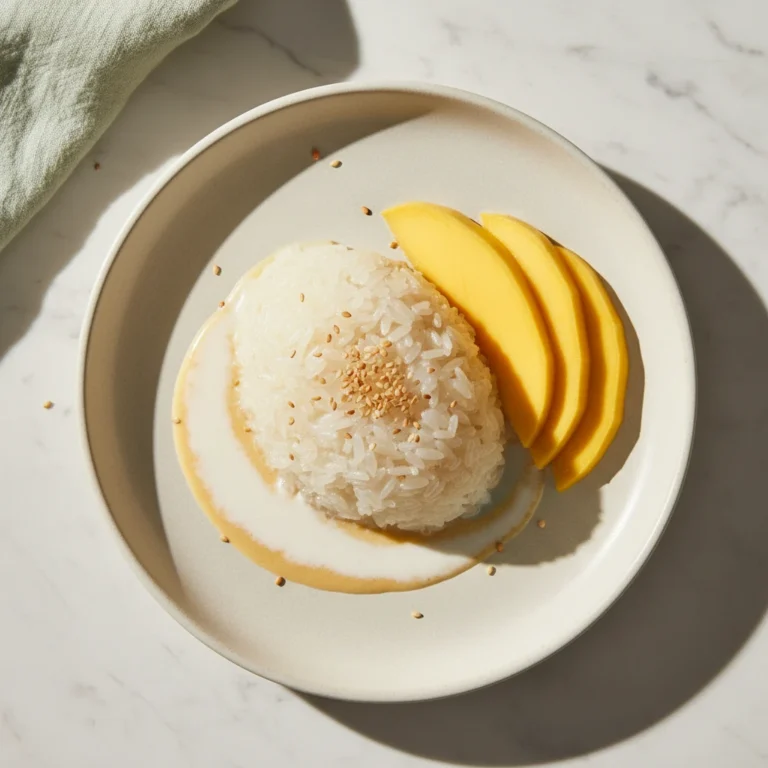
Mango sticky rice is a beloved Thai dessert that combines creamy coconut-infused glutinous rice with sweet, juicy mango slices. This elegant yet simple treat delivers a perfect balance of tropical flavors and contrasting textures—chewy rice against soft fruit. Whether enjoyed at a Thai restaurant or homemade, this iconic dessert captures the essence of Southeast Asian cuisine with its harmonious blend of sweetness, creaminess, and natural fruit goodness.
Reasons to Try Mango Sticky Rice
Authentic Thai Dessert Experience: This iconic dish is the hallmark of Thai cuisine, offering a genuine taste of Southeast Asia in your own kitchen. Its simplicity belies the sophisticated flavor profile that makes it a restaurant favorite.
Perfect Balance of Flavors: The creamy coconut-infused rice pairs beautifully with the natural sweetness and tartness of ripe mango. Each bite delivers a harmonious blend that feels both indulgent and refreshing.
Stunning Presentation: Mango sticky rice is inherently photogenic and elegant. The golden mango slices arranged alongside fluffy white rice create a visually appealing dessert that impresses guests without requiring advanced plating skills.
Naturally Gluten-Free: Made primarily from rice and coconut milk, this dessert is naturally gluten-free, making it a perfect option for those with dietary restrictions.
Quick to Make: Despite its sophisticated appearance, mango sticky rice comes together in under 45 minutes with minimal active cooking time. The rice can be prepared ahead, making it ideal for entertaining.
Tropical and Refreshing: Unlike heavy Western desserts, mango sticky rice is light, naturally sweet, and perfect for warm weather. It satisfies cravings without feeling overly indulgent.
 Save
SaveIngredients Notes
- Sweet sticky rice (glutinous rice) — Look for bags labeled ‘sticky rice,’ ‘sweet rice,’ or ‘glutinous rice’ in the Asian section of your grocery store. Regular long-grain rice will not work.
- Coconut milk — Use full-fat canned coconut milk (not light). Shake well before opening, as the cream separates during storage.
- Sugar — White granulated sugar works best for dissolving smoothly into the warm rice.
- Salt — Enhances the coconut flavor and balances sweetness.
- Ripe mangoes — Choose mangoes that yield slightly to gentle pressure and smell fragrant. Varieties like Ataulfo, Nam Doc Mai, or Kent work beautifully.
- Sesame seeds — Toasted sesame seeds add a nutty flavor and visual texture. Toast them in a dry pan for 2–3 minutes until fragrant.
- Tapioca pearls — Optional garnish that adds a chewy texture element and visual interest. Not traditional but popular in modern variations.
How to Make Mango Sticky Rice
- Rinse the sticky rice under cold water until the water runs mostly clear to reduce excess starch. Drain well.
- Combine rinsed rice with 1.5 cups water in a pot. Bring to a boil, then reduce heat to low, cover, and simmer for 15 minutes until water is absorbed and rice is tender.
- While rice cooks, heat 1.5 cups coconut milk in a separate saucepan over medium heat (do not boil). Add 0.75 cup sugar and 0.5 teaspoon salt, stirring until dissolved. Remove from heat.
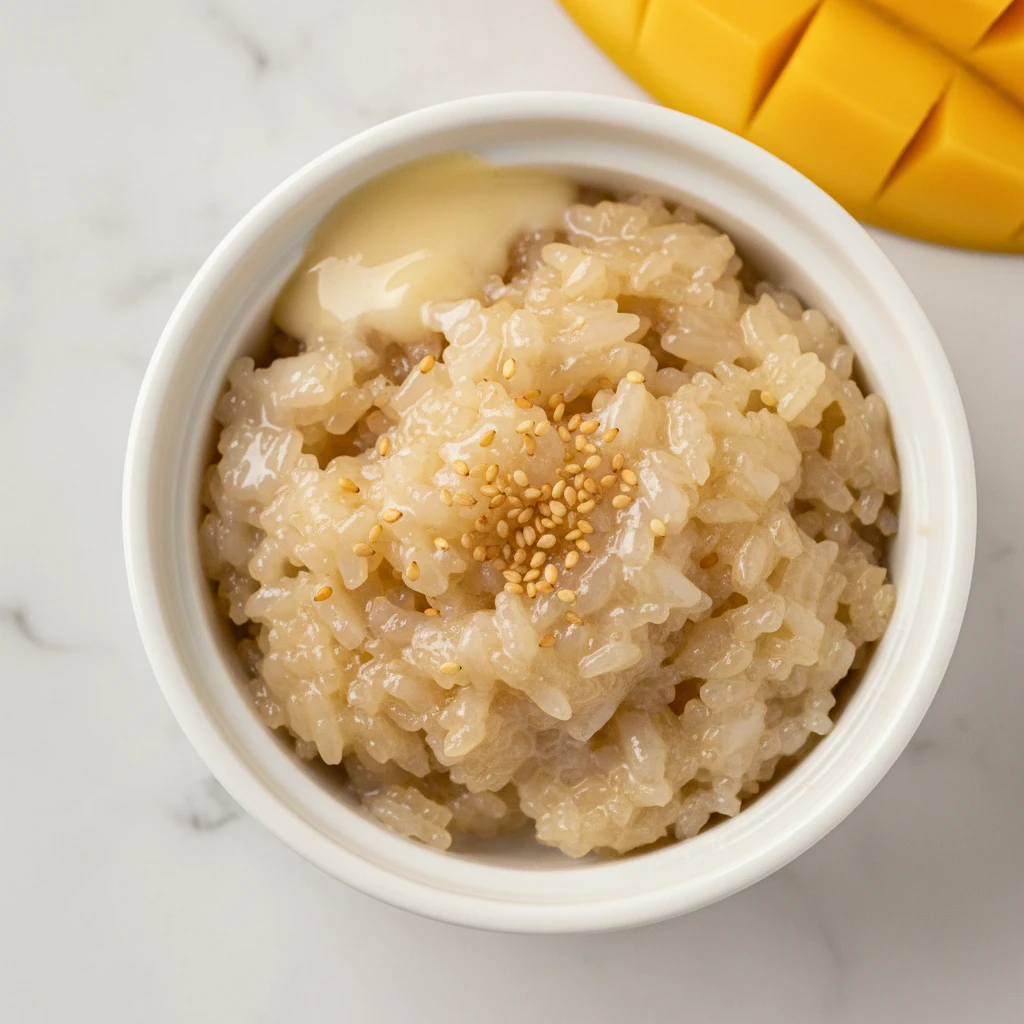
- Transfer the cooked rice to a bowl and pour the warm coconut mixture over it. Stir gently to combine, then cover and let sit for 20 minutes to absorb the coconut flavor.
- While rice rests, prepare the mangoes. Slice each mango on either side of the large central pit, then carefully peel away the skin and slice the flesh into even strips.
- Divide the coconut sticky rice among serving plates, arranging it in a mound or oval shape. Arrange mango slices alongside or fanned over the rice.
- Drizzle any remaining warm coconut cream over the rice, sprinkle with toasted sesame seeds, and serve immediately at room temperature.
What You Must Know About Mango Sticky Rice
Mango Ripeness is Critical: The success of this dish hinges entirely on using perfectly ripe mangoes. An underripe mango will be hard, flavorless, and stringy. An overripe mango will be mushy and fermented-tasting. Choose mangoes that are fragrant, yield slightly to gentle palm pressure, and have a golden or reddish undertone depending on the variety. If good mangoes are unavailable, wait to make this dish rather than substitute with unripe fruit.
Do Not Skip the Rice Resting Step: The 20-minute resting period allows the rice to fully absorb the coconut cream and achieve its signature tender, custard-like texture. Skipping or rushing this step results in rice that feels grainy or refuses to absorb the coconut mixture properly.
Use Full-Fat Coconut Milk: Light or reduced-fat coconut milk will not deliver the rich, creamy flavor this dish requires. Always use canned full-fat coconut milk, and shake the can well before opening to incorporate the separated cream.
Sticky Rice is Not Sushi Rice: These are two different products. Sticky rice (glutinous rice or sweet rice) has a higher starch content and becomes very creamy when cooked. Sushi rice is seasoned short-grain rice with a different texture. Buy the correct product from the Asian foods section of your grocery store.
Timing Matters for Assembly: Mango sticky rice is best served at room temperature within 1–2 hours of assembly. If prepared too far ahead, the rice can dry out and the mango can oxidize or weep liquid. The rice can be cooked and rested earlier in the day, then assembled just before serving.
Water Quality Affects Rice Cooking: If your tap water is very hard or mineral-heavy, the rice may not cook evenly or become sticky enough. If this happens, try using filtered or bottled water for cooking the rice.
Helpful Tips
Make Extra Coconut Cream: Prepare an additional small batch of coconut cream (heat 0.5 cup coconut milk with 2 tablespoons sugar and a pinch of salt) separately. Use this for drizzling over the finished dish—it makes the presentation more luxurious and ensures every spoonful has coconut flavor.
Toast Your Own Sesame Seeds: Store-bought toasted sesame seeds can be stale or rancid. Toasting raw seeds fresh takes only 2–3 minutes and dramatically improves flavor and aroma. Keep raw sesame seeds in the freezer for maximum freshness.
Slice Mangoes at the Last Minute: Cut mangoes as close to serving time as possible to prevent oxidation, browning, or the flesh from drying out. If you must slice ahead, arrange slices on a plate, cover loosely with plastic wrap, and refrigerate for up to 4 hours.
Leftover Rice Repurposing: If you have extra coconut sticky rice, press it into a parchment-lined square pan, chill, cut into squares, and pan-fry until golden for a crispy-outside, creamy-inside snack. Or serve extra rice with fresh fruit, a drizzle of honey, and whipped coconut cream for a simple rice pudding dessert.
Variations and Substitutions
Mango Sticky Rice with Palm Sugar: Replace white granulated sugar with palm sugar (jaggery or gula jawa) for a more authentic Thai flavor. Palm sugar adds a subtle caramel and molasses note. Use the same amount (0.75 cup, loosely packed) and ensure it fully dissolves when heating with the coconut milk. This variation is closer to what you’d find in Thailand.
Pandan Sticky Rice: Substitute mango with pandan-flavored sticky rice for a different take. Add 2 teaspoons pandan extract or 4–5 pandan leaves (simmered in the water before cooking rice, then removed) to create the signature green color and floral vanilla-like flavor. Serve with fresh fruit like strawberries or dragon fruit instead of mango.
Mixed Fruit Sticky Rice: If mangoes are unavailable or you want variety, top the sticky rice with other fruits: fresh strawberries, sliced peaches, fresh lychees, or dragon fruit. The coconut rice pairs beautifully with almost any tropical or stone fruit. Adjust sweetness accordingly based on the fruit’s natural sugar content.
Durian Sticky Rice (Advanced): For adventurous eaters, substitute mango with fresh durian flesh. This creates an intensely aromatic and creamy dessert beloved in Southeast Asia. Start with a small amount if you’re unfamiliar with durian’s pungent flavor. Not for beginners!
Vegan Sticky Rice: This recipe is already vegan-friendly since it uses only plant-based ingredients. However, ensure your coconut milk is not blended with any dairy additives. Use organic or premium brands for best results.
Brown Sugar Sticky Rice: Replace white sugar with light brown sugar for a slightly deeper, molasses-forward flavor. Use the same amount. This creates a warmer, more caramel-toned finished dish.
Sticky Rice with Coconut Custard Drizzle: Make a richer coconut custard by whisking 2 egg yolks with 0.25 cup sugar and 0.75 cup coconut milk, then gently heating while stirring until it reaches 160°F and thickens slightly (about 5 minutes). Drizzle this silky custard over the rice instead of plain coconut cream for extra richness. (Note: this version contains eggs and is not vegan.)
Sticky Rice with Crispy Rice Topping: After arranging the rice and mango, top with a handful of crispy fried onions or crispy rice cereal for textural contrast. This adds a crunchy element that plays off the creamy rice.
Serving Suggestions for Mango Sticky Rice
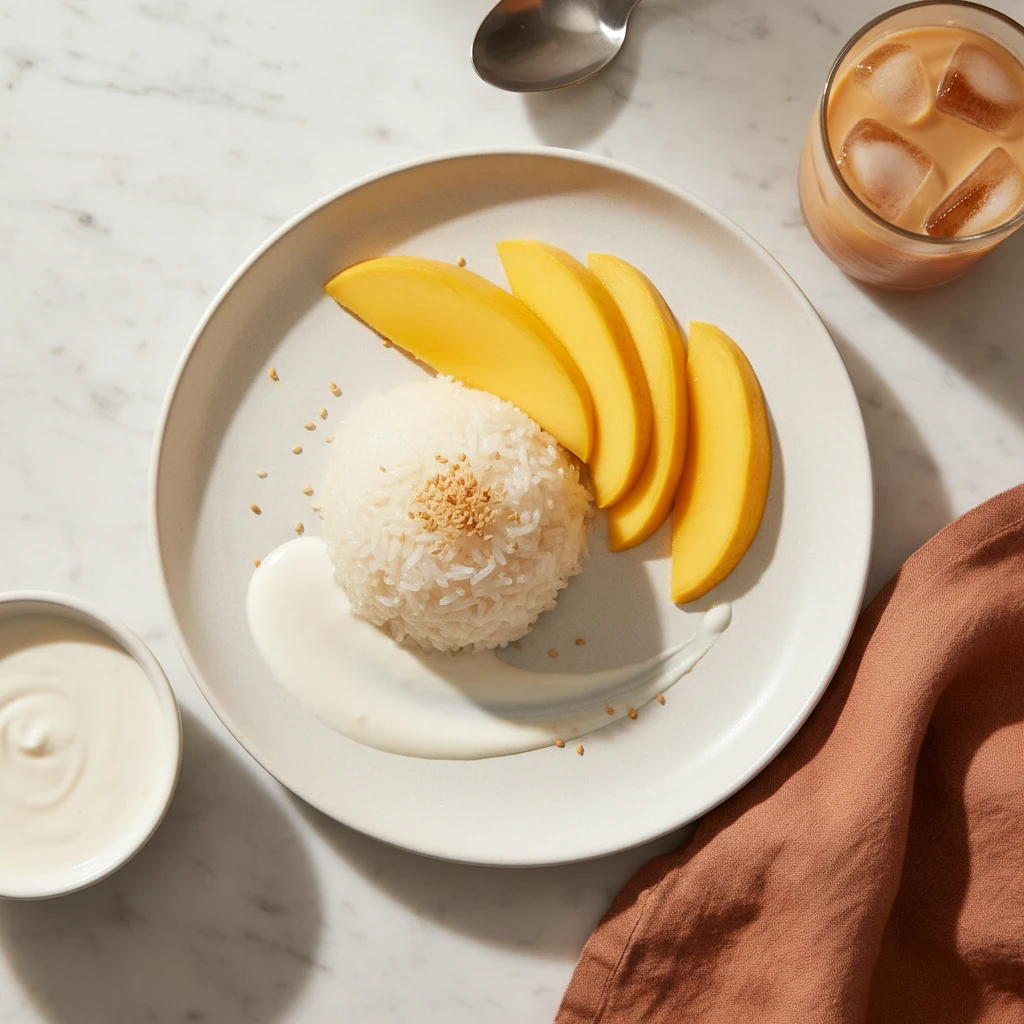
The Classic Thai Presentation: Arrange a neat mound of coconut sticky rice on the center of a white or light-colored plate. Fan fresh mango slices in an overlapping pattern alongside or slightly on top of the rice. Drizzle warm coconut cream around the plate’s edges, creating a glossy frame. Sprinkle toasted sesame seeds over the rice for color and texture. Serve at room temperature—cold rice loses its silky texture.
Rustic Bowl Presentation: Place sticky rice in a shallow bowl and top with fresh mango slices. Pour warm coconut cream over everything, creating a luxurious sauce. Sprinkle sesame seeds and a few fresh mint leaves for brightness. This casual presentation is perfect for family gatherings or less formal settings.
Plated Elegance with Garnish: Create a more refined presentation by shaping rice into a quenelle (oval scoop) and setting it off-center on a white plate. Arrange 5–6 thin mango slices in an overlapping line nearby. Dot the plate with drops of coconut cream and a sprinkle of sesame seeds. Add optional garnishes: a small mint sprig, edible flowers (orchids, pansy), or a light sprinkle of lime zest for visual pop.
Dessert Buffet Style: Set out a platter with a mound of sticky rice in the center, surrounded by fanned mango slices. Place small bowls of toasted sesame seeds, extra coconut cream, and candied ginger nearby. Let guests assemble their own plates—interactive and fun for parties.
Pairing with Thai Beverages: Serve mango sticky rice with Thai iced tea (cha yen) for an iconic combination. The creamy, slightly sweet tea complements the tropical dessert perfectly. Alternatively, pair with fresh lime water, Thai iced coffee (kafae yen), or a light jasmine tea.
Mini Individual Cups: For elegant entertaining, layer sticky rice and mango slices in clear glass cups or bowls in alternating patterns. Drizzle coconut cream in thin ribbons. Top with sesame seeds. This presentation is striking, easy to eat with a spoon, and looks professional.
Tropical Dessert Platter: Create a composed dessert board with mango sticky rice as the star, surrounded by other Thai treats: coconut macaroons, crispy spring rolls with sweet sauce, or fresh sticky mango pudding cubes. Add fresh lime wedges, candied ginger strips, and crispy rice crackers for texture variety.
 Save
SaveStorage and Reheating
Storing Leftover Components Separately: The rice and mango should be stored separately to maintain texture and freshness. Leftover coconut sticky rice keeps in an airtight container in the refrigerator for up to 3 days. Fresh mango slices should be stored in a separate sealed container for up to 2 days (they oxidize and dry out if exposed to air longer). Store any leftover coconut cream in a sealed jar in the refrigerator for up to 5 days.
Reheating the Rice: Cold sticky rice becomes stiff and loses its signature creamy texture. To restore it, gently reheat in the microwave: place rice in a microwave-safe bowl, add 1–2 tablespoons of fresh coconut milk or water, cover loosely with a damp paper towel, and microwave in 30-second intervals (total 1–2 minutes) until warm and creamy, stirring between intervals. Alternatively, warm the rice in a small pot over low heat with a splash of coconut milk, stirring frequently for 3–5 minutes until it reaches serving temperature.
Do Not Refrigerate Before Serving: If you’ve assembled the complete dish (rice, mango, and toppings together), eat it within 1–2 hours. The rice will harden in the refrigerator, and the mango can become soggy or discolored. If you must refrigerate, keep components separate and assemble fresh just before eating.
Freezing Not Recommended: Freezing mango sticky rice is not recommended. The rice becomes grainy and unappetizing, and mango loses quality when frozen and thawed. Fresh preparation is always best for this delicate dessert.
Long-Term Storage of Uncooked Rice: Dry sticky rice keeps in an airtight container in a cool, dark pantry for up to 2 years. Store in the original bag or a sealed glass jar. Keep sesame seeds in the freezer for maximum freshness and to prevent rancidity.
Frequently Asked Questions about Mango Sticky Rice
Can I make mango sticky rice without coconut milk?
Not authentically. Coconut milk is essential to the dish’s signature creamy flavor and texture. However, if you have a severe coconut allergy, you could try a heavy cream and whole milk mixture (1 cup heavy cream + 0.5 cup whole milk) heated with sugar and salt, though the result will not be traditional and will lose the tropical coconut essence that defines this dessert.
What type of mango is best for this dish?
Nam Doc Mai, Ataulfo (honey mango), Kent, and Keitt mangoes are ideal. These varieties are naturally sweet, creamy, and have a golden color that looks beautiful when served. Avoid large green mangoes, which tend to be more fibrous and less sweet. Choose mangoes that smell fragrant at the stem and yield slightly to palm pressure.
Can I prepare this dessert ahead of time?
Yes, with some planning. Cook and rest the sticky rice earlier in the day, then cover and leave at room temperature (or refrigerate separately). Prepare and slice the mangoes up to 4 hours ahead, covering them loosely on a plate in the refrigerator. Assemble the dish no more than 1–2 hours before serving to maintain the rice’s texture and mango’s freshness.
Why is my sticky rice not creamy enough?
The rice likely didn’t absorb enough coconut cream, or it cooled too quickly. Ensure you use the warm coconut mixture immediately after cooking the rice, and let it rest for the full 20 minutes covered. If it’s still too dry, gently stir in 2–3 tablespoons of warm coconut milk mixed with a pinch of sugar until it reaches the desired consistency.
Can I use frozen mango instead of fresh?
Frozen mango can work in a pinch, but fresh is vastly superior. Frozen mango loses texture and becomes mushy when thawed, and it won’t have the bright, natural sweetness or visual appeal of fresh fruit. If you must use frozen, thaw it gently in the refrigerator and drain excess liquid before using. The presentation and taste will not be as impressive as with fresh mango.
How do I know when the rice is cooked properly?
Properly cooked sticky rice should be completely tender, with no hard center or crunch when you bite a grain. All the cooking water should be absorbed—you should see small steam holes on the surface of the rice. The grains will stick together but should not be mushy or falling apart. If there’s still water in the pot, cover and cook for another 2–3 minutes.
Is mango sticky rice gluten-free?
Yes, mango sticky rice is naturally gluten-free. Sticky rice contains no gluten, coconut milk is naturally gluten-free, and fresh mango and sesame seeds are all naturally gluten-free. Always verify that your canned coconut milk and any other packaged ingredients have no gluten additives if you have celiac disease or severe gluten sensitivity.
What should I do if my mangoes are not ripe yet?
Place unripe mangoes in a brown paper bag at room temperature and check daily. Mangoes typically ripen in 1–3 days depending on their starting firmness. Do not refrigerate until ripe—cold slows ripening. Once fragrant and yielding slightly to pressure, refrigerate until ready to use. If you’re short on time and have no ripe mangoes, consider postponing this dessert rather than using underripe fruit, as it will significantly diminish the final result.
Nutrition Facts (Per Serving)
Nutrition Facts (Per Serving)
| Nutrient | Amount per Serving |
|---|---|
| Calories | 285 kcal |
| Total Carbohydrates | 52 g |
| Dietary Fiber | 2 g |
| Total Sugars | 40 g |
| Protein | 3 g |
| Total Fat | 8 g |
| Saturated Fat | 7 g |
| Cholesterol | 0 mg |
| Sodium | 95 mg |
| Vitamin A | 68 mcg (8% DV) |
| Vitamin C | 21 mg (35% DV) |
| Potassium | 198 mg (6% DV) |
| Calcium | 28 mg (2% DV) |
* Percent Daily Values (DV) are based on a 2,000 calorie diet. Individual needs may vary.
Dietary Notes: Mango sticky rice is naturally vegan (made from plant-based ingredients only). It is high in natural sugars and carbohydrates, making it best enjoyed as an occasional dessert. The majority of fat comes from coconut milk (primarily medium-chain triglycerides). One serving provides a moderate amount of vitamin C and fiber from the mango. The dish is gluten-free and suitable for those with celiac disease.
Mango Sticky Rice
Ingredients
- 1.5 cups sweet sticky rice glutinous rice
- 1.5 cups coconut milk
- 0.75 cup sugar
- 0.5 teaspoon salt
- 1.5 cups water
- 3 ripe mangoes medium-sized
- 2 tablespoons sesame seeds toasted
- 1 tablespoon tapioca pearls or small tapioca balls optional garnish
Instructions
- Measure 1.5 cups sticky rice (glutinous rice) into a strainer and rinse under cold running water for 30–45 seconds, stirring gently with your fingers until the water runs mostly clear. This removes excess starch. Drain thoroughly and set aside.
- Place the rinsed rice in a medium pot and add 1.5 cups cold water. Bring to a boil over high heat (about 3–5 minutes), watching until large bubbles break the surface.
- Once boiling, reduce heat to the lowest setting, stir the rice once, cover with a tight-fitting lid, and simmer for exactly 15 minutes. Do not peek or stir. The rice is done when all water is absorbed and you see small steam holes on the surface.
- Checkpoint: You are ready to move on when the rice is tender to the bite and no water remains in the pot.
- While the rice cooks, pour 1.5 cups full-fat coconut milk into a separate medium saucepan (shake the can well first—the cream separates). Heat over medium heat, stirring occasionally, for 2–3 minutes until steaming but not boiling.
- Add 0.75 cup white granulated sugar and 0.5 teaspoon salt to the warm coconut milk. Stir constantly for 1–2 minutes until both dissolve completely. The mixture should be smooth and slightly thick. Taste a tiny spoonful—it should taste sweetly coconut-forward.
- Remove the coconut mixture from heat and set aside. It should still be warm.
- Checkpoint: You are ready to move on when the sugar and salt have completely dissolved and the mixture is smooth with no granules.
- Immediately after the rice finishes cooking, transfer it to a large mixing bowl (do not rinse the pot). Pour the warm coconut mixture over the hot rice slowly while stirring gently with a rubber spatula or wooden spoon. Use a folding motion to combine, being careful not to crush the rice grains (about 1–2 minutes of gentle stirring).
- Cover the bowl tightly with a lid or plastic wrap and let rest undisturbed at room temperature for exactly 20 minutes. During this time, the rice will absorb the coconut cream and become extra tender and flavorful.
- Checkpoint: You are ready to move on when the rice is completely cooled to room temperature, is no longer shiny with excess liquid, and smells strongly of coconut.
- While the rice rests, prepare the mangoes. Hold one mango upright on a cutting board. Using a sharp knife, slice lengthwise on one side of the large flat pit, about 0.5 inch away from the center line. You should feel the blade slide past the pit.
- Turn the mango around and slice the other side the same way. You now have two halves and the pit in the middle (discard the pit or save for snacking).
- Hold each mango half skin-side down in your palm. Using a small sharp knife, carefully cut the flesh into thin, even strips (about 0.25 inch thick), cutting down to the skin but not through it. You can also peel the skin away with a vegetable peeler and slice the flesh on a cutting board—whichever is easier for you.
- Gently push the back of the skin to turn the mango half inside out, making the strips pop upward (or simply peel and arrange manually). Slice these strips free from the skin and set aside on a plate. Repeat with remaining mangoes. You should have about 9–12 slices per mango.
- Toast 2 tablespoons sesame seeds in a small dry skillet over medium heat for 2–3 minutes, stirring constantly. The seeds should smell nutty and turn light golden brown. Do not walk away—they burn quickly. Transfer to a small bowl and let cool.
- Checkpoint: You are ready to move on when the sesame seeds are light golden and fragrant.
- Divide the rested coconut sticky rice among 4 serving plates or bowls. You can shape it into a neat oval mound using the back of a spoon, or simply scoop it naturally.
- Arrange the mango slices in an overlapping fan or line pattern alongside or on top of each rice mound. The mangoes should be the star of the plate visually.
- Carefully spoon or drizzle any remaining warm or room-temperature coconut cream (from the bowl, or make extra by gently heating a few tablespoons of coconut milk with a pinch of sugar) over the rice and around the mango. You should see a glossy coconut puddle on the plate.
- Sprinkle 0.5 tablespoon of the toasted sesame seeds over each plate, focusing on the rice. Add optional tapioca pearls if using.
- Serve immediately at room temperature. The dish tastes best within 1–2 hours of assembly, while the rice is still tender and the mango is fresh and juicy.
- Troubleshooting Tips:If the rice is too dry or stiff after resting, the coconut mixture was too cool. Reheat 2–3 tablespoons of coconut milk with a pinch of sugar and gently stir it into the rice until it reaches the right creamy consistency.
- If the rice is too wet and soupy, you likely used too much coconut milk or didn't let it rest long enough. Cover and refrigerate for 10 minutes—it will firm up as it cools further.
- If the mango is not ripe enough and tastes hard or bland, choose a different fruit. A ripe mango should yield slightly to palm pressure and smell fragrant near the stem. Underripe mango will ruin the dish.
- If sesame seeds are bitter, you toasted them too long. Use fresh seeds and toast for only 2–3 minutes on medium heat, stirring constantly.
- If the rice cracks or breaks apart easily when stirring, it was cooked too long or at too high a temperature. Use the lowest heat setting and time it exactly at 15 minutes.