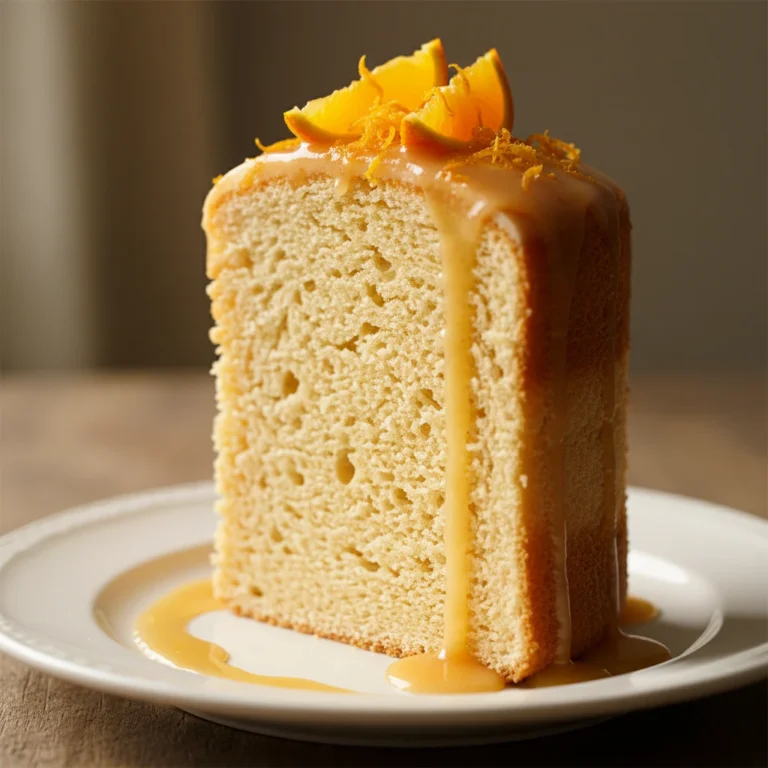
An orange chiffon cake is a light, airy masterpiece that combines the delicate texture of a classic chiffon with bright, citrus flavors. This elegant dessert features a fluffy crumb that practically melts in your mouth, infused with fresh orange juice and zest. Perfect for celebrations or a special family dinner, this cake proves that homemade desserts can be both impressive and surprisingly manageable for any home baker.
Reasons to Try Orange Chiffon Cake
Exceptionally Light and Airy Texture: The whipped egg whites create a cloud-like crumb that’s far less dense than traditional cakes. Unlike heavy butter cakes, each bite dissolves on your tongue with a delicate, almost pillowy softness.
Naturally Bright Citrus Flavor: Fresh orange juice and zest provide authentic, vibrant flavor without artificial ingredients. The citrus notes are balanced—not overly acidic or cloying—making it refreshing and sophisticated.
Fewer Eggs Than You’d Expect: While the ingredient list includes many eggs, chiffon cakes are surprisingly economical. The separation technique stretches a modest number of eggs into an impressively large cake.
Perfect for Warm Weather: Its light nature makes it ideal for spring and summer gatherings. Serve it chilled for an extra-special treat that won’t leave you feeling overstuffed.
Impressive Yet Achievable: Chiffon cakes have a reputation for being difficult, but with proper technique and attention to detail, home bakers consistently achieve bakery-quality results. The reward far outweighs the modest effort.
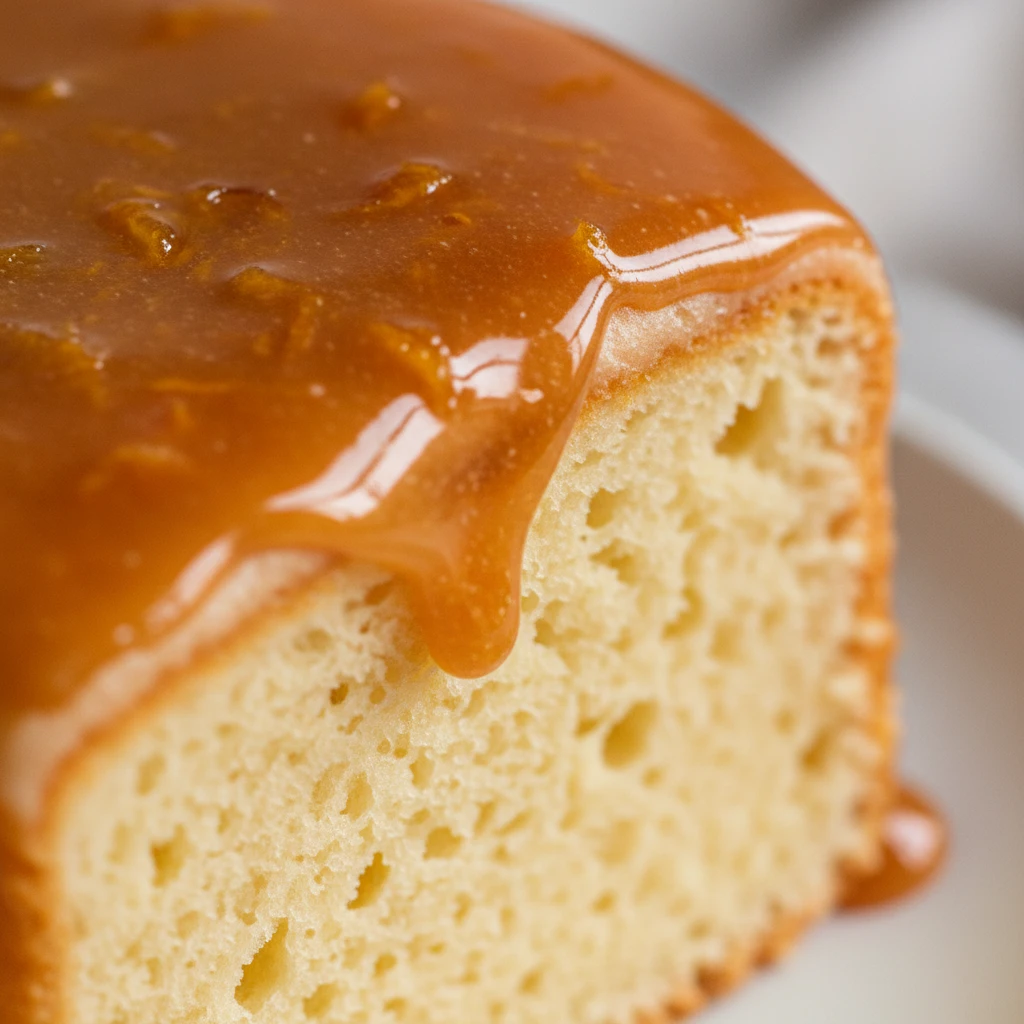
Pairs Well with Simple Glazes: The delicate crumb works beautifully with a light orange glaze, fresh whipped cream, or simply dusted with powdered sugar. It’s a canvas for your creativity.
 Save
SaveIngredients Notes
For the Cake
- Cake flour (not all-purpose flour—it has less protein, resulting in a tender crumb)
- Granulated sugar
- Baking powder
- Salt
- Fresh orange juice (not concentrate; freshly squeezed is best)
- Vegetable oil (neutral oil, not butter—oil creates a moister crumb)
- Large egg yolks
- Orange zest (use a microplane for fine texture)
- Vanilla extract
- Large egg whites (room temperature is critical)
- Cream of tartar (stabilizes the egg white foam)
For the Orange Glaze
- Powdered sugar
- Fresh orange juice
- Butter, softened
- Orange zest for garnish
- Fresh orange slices for garnish
How to Make Orange Chiffon Cake
- Preheat oven to 325°F. Do not grease a 10-inch tube pan—the cake needs to climb the sides as it rises.
- Sift together cake flour, 1 cup of the sugar, baking powder, and salt into a large bowl.
- Make a well in the center and add orange juice, oil, egg yolks, orange zest, and vanilla. Beat until smooth, about 2 minutes.
- In a separate bowl, beat the 8 egg whites with cream of tartar until foamy, then gradually add the remaining 0.5 cup sugar, beating until stiff peaks form and the mixture is glossy.
- Gently fold the egg white mixture into the yolk mixture in three additions, being careful not to deflate the whites.
- Pour into the ungreased tube pan and smooth the top.
- Bake for 50–60 minutes, until golden and a toothpick inserted in the center comes out clean.
- Immediately invert the pan onto a bottle neck or cake cooler (the cake must cool upside down to maintain its height). Allow to cool completely, about 2 hours.
- Once cooled, run a thin knife around the edges and center tube, then turn out onto a serving plate.
- Make the glaze by whisking together powdered sugar, orange juice, and softened butter until smooth and drizzle over the cooled cake.
- Garnish with orange zest and fresh orange slices before serving.
What You Must Know About Orange Chiffon Cake
Never Skip the Inversion Step: Cooling the cake upside down is absolutely essential. This prevents the delicate crumb from shrinking back into the pan and maintains the cake’s impressive height. Do not skip this, and do not flip it back over until it’s completely cool.
Use Room-Temperature Egg Whites: Cold egg whites won’t whip to the proper volume and stiffness. Remove them from the refrigerator 30 minutes before baking and let them sit on the counter.
Fresh Orange Juice is Non-Negotiable: Bottled or concentrated orange juice lacks the brightness and flavor of fresh-squeezed juice. Squeeze oranges immediately before mixing for the best flavor.
Do Not Grease the Pan: The ungreased tube pan provides the surface friction the cake needs to climb up the sides as it bakes and sets. A greased pan will cause the cake to slide back down.
Separate Eggs Carefully: Even a tiny drop of yolk in your egg whites will prevent them from reaching stiff peaks. Use three bowls if necessary—one for cracking, one for whites, one for yolks.
Sift the Dry Ingredients: Sifting aerates the flour and removes lumps, which is crucial for a tender, delicate crumb in chiffon cakes.
Fold Gently, Not Stir: Vigorous mixing will deflate the whipped egg whites and result in a dense cake. Use a rubber spatula and fold in three additions, mixing just until combined.
Don’t Worry About Small Cracks: Tiny surface cracks on chiffon cakes are normal and add charm. The cake’s delicate nature means it may have a few fine lines.
Helpful Tip—Measure Orange Zest First: Grate your zest before juicing the oranges; it’s easier when they’re still whole, and you won’t lose any zest in the juicing process.
Helpful Tip—Bake at the Right Rack Position: Use the middle oven rack for even baking. If your oven has hot spots, you may need to rotate the pan halfway through baking.
Variations and Substitutions
Lemon Chiffon Cake: Replace the orange juice with fresh lemon juice and use lemon zest instead of orange zest. Reduce the sugar slightly if lemon is particularly sour. The technique remains identical.
Blood Orange Chiffon Cake: Use blood orange juice and zest for a deeper, more elegant color and slightly different flavor profile. Beautiful for special occasions.
Orange Chiffon Cake with Cream Cheese Frosting: Skip the glaze and instead frost with a light cream cheese frosting (8 oz softened cream cheese, 4 oz softened butter, 2 cups powdered sugar, 1 tablespoon orange zest). The tangy frosting complements the citrus beautifully.
Dairy-Free Orange Chiffon: The recipe is naturally dairy-free except for the glaze’s butter. Use dairy-free butter in the glaze, and omit it if desired for a simpler glaze using just powdered sugar and orange juice.
Orange Coconut Chiffon: Add 0.5 cup shredded coconut to the yolk mixture and sprinkle additional coconut over the finished cake before the glaze sets.
Orange Almond Chiffon: Replace 0.25 cup of cake flour with finely ground almonds for a subtle almond undertone that pairs beautifully with orange.
Lighter Glaze Option: For a simpler finish, dust the cooled cake with powdered sugar instead of making a glaze, or drizzle a thin glaze made with just orange juice and powdered sugar (no butter).
Serving Suggestions for Orange Chiffon Cake
Classic Presentation: Slice the cake into thin wedges using a serrated knife with a gentle sawing motion. Serve on white or cream-colored plates to showcase the delicate crumb’s pale golden color. A light dusting of additional powdered sugar adds elegance.
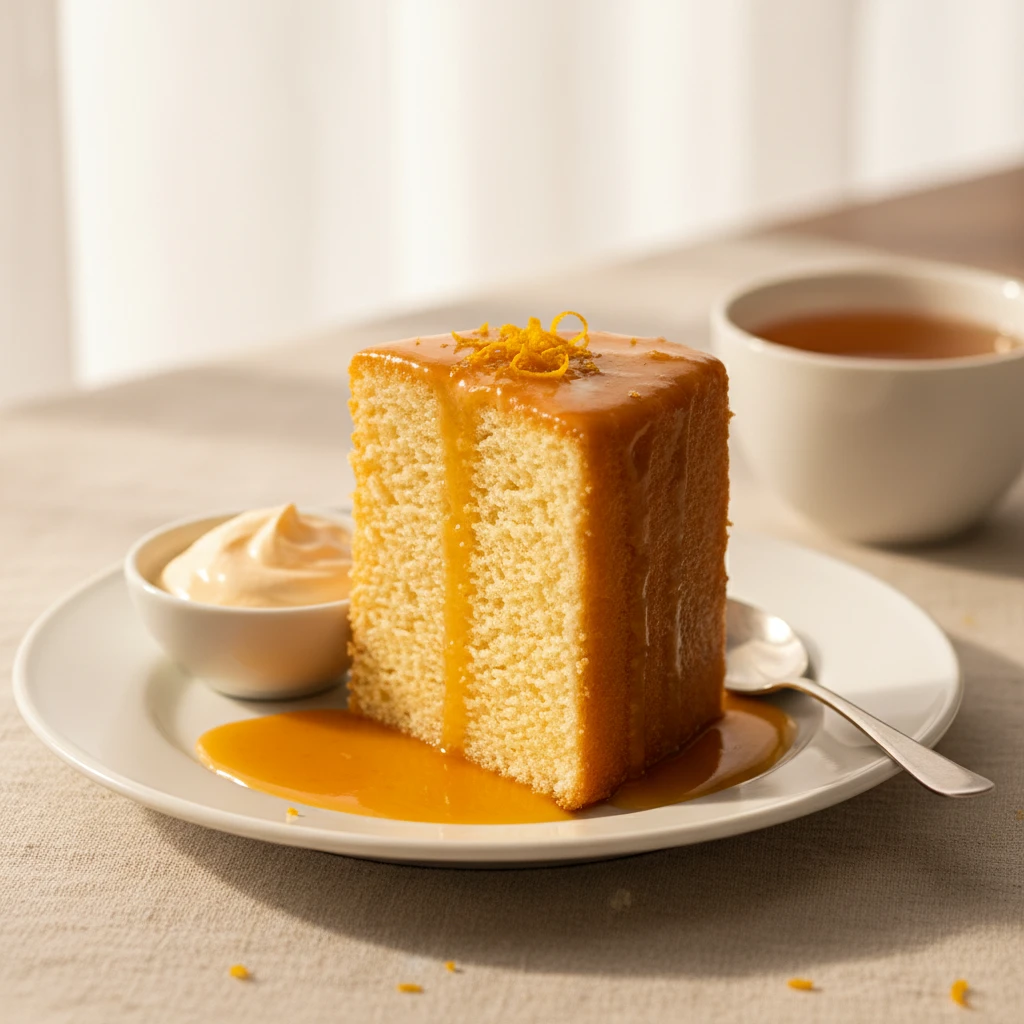
With Whipped Cream: Serve each slice with a generous dollop of freshly whipped cream (lightly sweetened with a touch of orange zest stirred in) on the side. The cloud-like cream complements the cake’s airy texture perfectly.
Afternoon Tea Service: Slice the cake into slightly thinner pieces for an elegant tea service. Arrange on a tiered serving platter with candied orange peel, fresh berries, and small tea cakes.
With Fresh Berries: Serve alongside fresh raspberries, blueberries, or strawberries. The tartness of berries balances the cake’s sweetness and citrus notes beautifully.
Chilled for Warm Weather: Refrigerate the finished cake for 1–2 hours before serving. The chilled version is particularly refreshing on hot days and pairs wonderfully with iced tea or cold lemonade.
Garnish Ideas: Top with candied orange peel, fresh mint leaves, or a light drizzle of white chocolate. The bright orange of the garnish and glaze makes for a visually stunning dessert.
Cake and Coffee Pairing: Serve with fresh brewed coffee, espresso, or herbal tea. The delicate citrus flavor doesn’t overpower subtle tea flavors and complements both hot and cold beverages beautifully.
Dessert Buffet: Cut into small cubes and arrange on a dessert table alongside other light desserts, fresh fruit, and cheese for an elegant gathering.
 Save
SaveStorage and Reheating
Room Temperature Storage: Store the finished cake in an airtight container at room temperature for up to 2 days. The delicate crumb stays fresh and the flavor actually improves slightly as the citrus notes meld. Keep it away from direct sunlight and heat sources.
Refrigerator Storage: For longer storage, wrap the cake tightly in plastic wrap or place it in an airtight container and refrigerate for up to 5 days. The glaze may become slightly softer when chilled, which is fine. The cake will taste fresher and feel lighter when served chilled.
Freezer Storage: Chiffon cakes freeze exceptionally well. Wrap the unglazed cake in plastic wrap, then in aluminum foil, and freeze for up to 3 months. Thaw at room temperature for 2–3 hours before serving. You can glaze the cake after thawing. If you’ve already glazed it, it will still freeze beautifully—just allow extra time for thawing.
Slice Then Freeze: Individual slices freeze well for up to 2 months. Wrap each slice separately in plastic wrap and place in a freezer bag. Thaw a slice at room temperature for 30–45 minutes as needed.
Not Recommended to Reheat: This cake is best served at room temperature or chilled and does not require reheating. If you prefer it warmed, allow a room-temperature slice to sit in a warm kitchen for a few minutes, but avoid microwaving, which will make the delicate crumb tough and rubbery.
Leftover Slices: Individual slices are perfect for breakfast the next day. Serve with a cup of coffee and fresh fruit for a light, elegant morning treat.
Frequently Asked Questions about Orange Chiffon Cake
Can I make this cake without a tube pan?
A tube pan is specifically designed for chiffon cakes because the center tube helps heat distribute evenly throughout the thick batter, ensuring even baking. If you don’t have a tube pan, you can use a 9-inch round cake pan, but you’ll need to reduce the baking time by 5–10 minutes and check doneness earlier. The cake may be slightly denser and won’t rise quite as high. For best results, invest in a tube pan—they are inexpensive and worth having on hand.
What if I don’t have cream of tartar?
Cream of tartar stabilizes egg white foam, making it easier to reach stiff peaks. If you don’t have it, you can use a tiny pinch of lemon juice (about 0.125 teaspoon) as a substitute, though the foam may not be quite as stable. Alternatively, proceed without it—your egg whites will still whip to stiff peaks, but it may take slightly longer. Do not skip the ingredient entirely if you can help it, as it does make a noticeable difference.
Why did my cake sink or collapse after cooling?
This is usually caused by one of two issues: (1) The egg whites were not whipped to true stiff peaks, or (2) the cake was not cooled completely upside down or was flipped too early. Ensure your egg whites are room temperature, your bowl is completely grease-free, and that you beat them until peaks stand straight up. Always keep the cake inverted for the full 2–3 hours of cooling. Never flip it back over early.
Can I use bottled orange juice instead of fresh?
While bottled juice will work technically, it lacks the brightness and complexity of fresh-squeezed juice. The flavor will be more muted and slightly flat. For the best results and most authentic orange flavor, squeeze oranges fresh. If you must use bottled, look for 100% pure juice with no added sugars or preservatives. Avoid concentrate—it will make the flavor too intense and alter the liquid ratios.
How do I know when the egg whites are whipped enough?
The egg whites are ready when stiff peaks form—when you lift the beater out of the bowl, the peaks should stand straight up and not curl over or fold down. The mixture should be glossy, thick, and very white. If peaks are still droopy or fold over, keep beating. It’s hard to overbeat egg whites to the point of graininess with a mixer, so err on the side of more beating rather than less. The mixture should look like fluffy clouds.
Can I reduce the sugar in this recipe?
Chiffon cakes depend on sugar for structure and volume in the egg white foam, not just for sweetness. Reducing sugar by more than 0.25 cup (4 tablespoons) will compromise the cake’s rise and texture. If you want a less sweet cake, make the glaze less sweet by adding more orange juice or using less powdered sugar. The cake itself is already fairly balanced in sweetness, so keep the main recipe as written.
Can I make this cake ahead for a party?
Yes! Make the cake up to 2 days ahead and store it in an airtight container at room temperature, or up to 5 days in the refrigerator. You can glaze it the day before or the morning of your event. For freezing, wrap the unglazed cake and freeze for up to 3 months, then thaw at room temperature and glaze just before serving. Chiffon cakes actually keep well and taste great when made ahead.
Nutrition Facts (Per Serving)
| Nutrient | Amount |
|---|---|
| Calories | 285 |
| Total Fat | 8g |
| Saturated Fat | 1g |
| Cholesterol | 62mg |
| Sodium | 145mg |
| Total Carbohydrates | 48g |
| Dietary Fiber | 0g |
| Sugars | 36g |
| Protein | 5g |
Note: Nutrition facts are estimated based on USDA data and may vary depending on specific ingredients used. This analysis assumes 12 servings per cake.
Orange Chiffon Cake
Ingredients
- 2 cups cake flour
- 1.5 cups granulated sugar
- 1 tablespoon baking powder
- 0.5 teaspoon salt
- 0.5 cup fresh orange juice
- 0.25 cup vegetable oil
- 4 large egg yolks
- 2 tablespoons orange zest
- 1 tablespoon vanilla extract
- 8 large egg whites
- 0.5 teaspoon cream of tartar
- 2 cups powdered sugar
- 3 tablespoons fresh orange juice
- 1 tablespoon butter softened
- 1 teaspoon orange zest for garnish
- Fresh orange slices for garnish
Instructions
- Preheat and prepare: Preheat your oven to 325°F. Use a 10-inch tube pan (the removable bottom type). Do NOT grease or oil it—the cake needs the friction of the dry pan sides to climb up and rise properly. This is non-negotiable. (5 minutes)
- Sift dry ingredients: Sift cake flour (use a sifter or fine-mesh strainer), 1 cup of granulated sugar, 1 tablespoon baking powder, and 0.5 teaspoon salt into a large mixing bowl. Sifting removes lumps and aerates the flour. (3 minutes)
- Create the yolk mixture: Make a shallow well in the center of the sifted flour mixture. Add 0.5 cup fresh orange juice (squeeze it fresh if possible—bottled lacks brightness), 0.25 cup neutral vegetable oil, 4 large egg yolks (separated from whites), 2 tablespoons fresh orange zest (use a microplane grater for fine texture), and 1 tablespoon vanilla extract. Using an electric mixer on medium speed, beat for about 2 minutes until the mixture is pale, smooth, and well combined. It should look like thick batter. Checkpoint: The yolk batter should be completely smooth with no streaks of flour visible. (5 minutes)
- Prepare egg white bowl: In a completely clean, dry bowl (any grease will prevent proper rising), add 8 large egg whites at room temperature and 0.5 teaspoon cream of tartar. Cream of tartar stabilizes the foam and helps it reach maximum volume. (1 minute)
- Whip egg whites: Using an electric mixer on high speed, beat the egg whites for 2–3 minutes until they become foamy and increase in volume. Gradually add the remaining 0.5 cup granulated sugar while continuing to beat. Continue beating for another 3–4 minutes until stiff peaks form—when you lift the beater, the peaks should stand straight up and not fold over. The mixture should be glossy, white, and thick. Checkpoint: The egg whites should not slip around in the bowl when you tilt it slightly. They should be thick and hold their shape. (7 minutes)
- Fold in egg whites (first addition): Pour about one-third of the beaten egg white mixture into the yolk batter. Using a rubber spatula, gently fold by cutting down through the center, sliding along the bottom, and bringing the mixture up and over the top. Rotate the bowl and repeat 8–10 times until the whites are mostly combined but some streaks remain. This first addition incorporates the whites gently without deflating them too much. (2 minutes)
- Fold in egg whites (second addition): Add half of the remaining egg white mixture and fold gently the same way until partially combined—a few white streaks are fine. (2 minutes)
- Fold in egg whites (final addition): Add the remaining egg white mixture and fold until just combined. The batter should look light and fluffy with no visible white streaks, but handle it very gently to preserve the airy texture. Overmixing at this stage will deflate the cake and make it dense. Checkpoint: The batter should be light, fluffy, and mousse-like. When you scoop a spoonful, it should feel airy and light. (3 minutes)
- Pour into pan: Gently pour the batter into the ungreased 10-inch tube pan, smoothing the top with a spatula. Do not tap the pan on the counter—this can deflate the batter. (2 minutes)
- Bake the cake: Place the pan on the middle oven rack. Bake at 325°F for 50–60 minutes. The cake is done when the top is golden brown, it springs back when lightly touched (but don't press hard), and a wooden toothpick inserted into the center comes out clean with no wet batter attached. The cake should not jiggle when you gently shake the pan. Checkpoint: The top should be golden, not pale, and a toothpick should come out clean. If the top is browning too quickly, tent loosely with foil for the last 10 minutes. (55 minutes)
- Cool upside down immediately: This is critical for chiffon cakes. As soon as you remove the cake from the oven, immediately invert the pan upside down. If your pan has legs or a removable center tube, place the center tube over a glass bottle neck or place the outer ring on a tall cooling rack so air can circulate underneath. The cake must hang as it cools to maintain its height and prevent it from shrinking back into the pan. Let it cool upside down for 2–3 hours at room temperature. Do not skip this step. (120 minutes)
- Remove from pan: Once completely cooled, use a thin, sharp knife (a long serrated knife works well) to carefully run around the outer edge of the pan, sliding it between the cake and the metal. Then run the knife around the center tube the same way. If your pan has a removable bottom, press up from underneath to release it. Carefully invert the cake onto a serving plate. The cake should release cleanly. (5 minutes)
- Make the glaze: In a small bowl, whisk together 2 cups powdered sugar, 3 tablespoons fresh orange juice (adjust the juice amount if the glaze is too thick or thin—it should be pourable but coat the back of a spoon), and 1 tablespoon softened butter. Whisk until completely smooth and no lumps remain. The glaze should be thick enough to drip slowly but not so thin that it runs off immediately. (3 minutes)
- Glaze the cake: Slowly pour the glaze over the top of the cooled cake, letting it drip naturally down the sides. Use the back of a spoon to help guide it if needed. Let the glaze set for 10–15 minutes before serving. (15 minutes)
- Garnish and serve: Just before serving, sprinkle 1 teaspoon fresh orange zest over the top of the cake and arrange fresh orange slices around the base or on top as a garnish. Slice with a serrated knife using a gentle sawing motion—don't press down or you'll crush the delicate crumb. Serve at room temperature or chilled. (5 minutes)