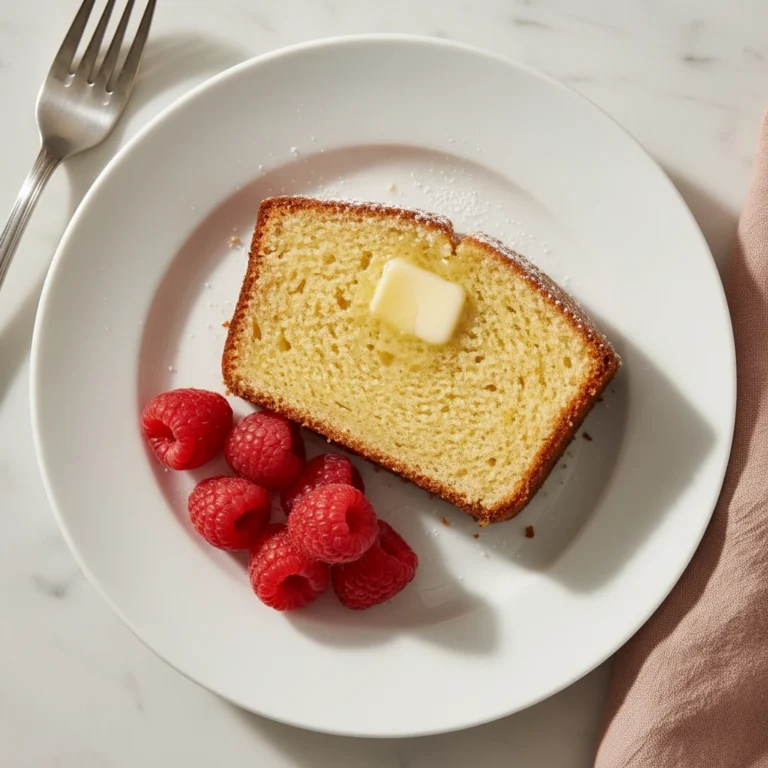
There’s something timeless about a slice of sour cream pound cake — tender, moist, and subtly tangy with a delicate crumb that melts on your tongue. This classic dessert has graced American tables for generations, beloved for its simplicity and sophisticated flavor. The secret lies in using sour cream, which adds richness and moisture while creating an irresistibly soft texture. Whether enjoyed plain with coffee or dressed up with fresh berries and whipped cream, this pound cake is pure comfort in every bite.
Reasons to Try Sour Cream Pound Cake
Unmatched Moisture and Tenderness: Traditional pound cakes can be dense, but sour cream adds a luxurious moisture that keeps each slice soft and tender. The subtle tang also enhances the vanilla flavor without overpowering it.
Simple Ingredients, Complex Flavor: With just a handful of pantry staples, this cake delivers sophisticated flavors. The combination of vanilla and almond extracts, plus a hint of lemon zest, creates a well-rounded, elegant taste profile.
Versatile and Forgiving: This recipe is ideal for both novice and experienced bakers. It’s nearly impossible to over-mix, and it tolerates slight temperature variations beautifully. It’s also a perfect base for creative variations.
Long-Lasting Freshness: Unlike many cakes, sour cream pound cake stays fresh and moist for up to five days when stored properly, making it ideal for meal prep or gifting.
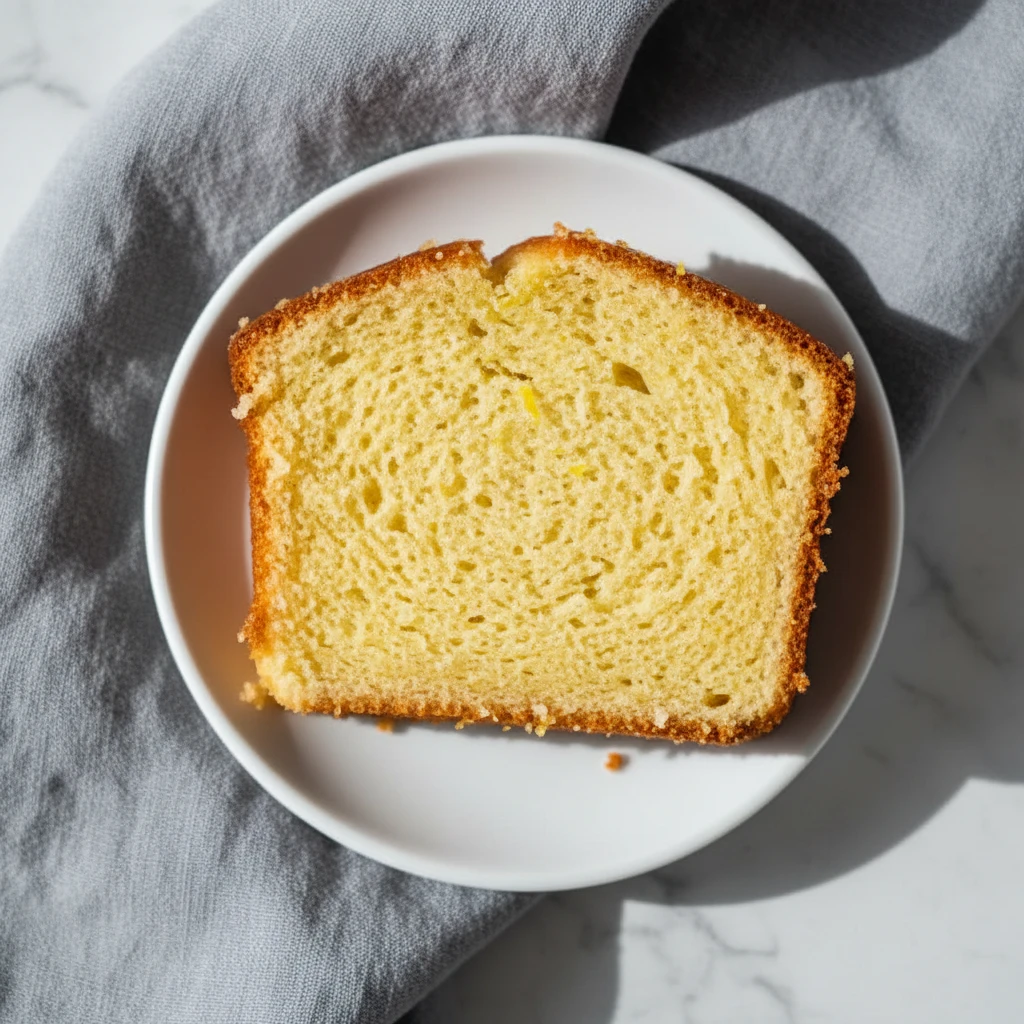
Beautifully Golden Exterior: The rich butter and sour cream create a naturally golden, slightly crispy exterior that contrasts beautifully with the tender crumb inside.
 Save
SaveIngredients Notes
- All-purpose flour — provides structure; spoon and level for accuracy
- Baking soda — activates the acidity of sour cream to create lift
- Salt — enhances all flavors and balances sweetness
- Unsalted butter — use softened to room temperature for proper creaming
- Granulated sugar — creams with butter to incorporate air
- Large eggs — room temperature eggs blend smoothly with batter
- Sour cream — brings moisture, tang, and tender crumb; must be room temperature
- Vanilla extract — provides warm, classic cake flavor
- Almond extract — adds subtle depth without almond flavor prominence
- Lemon zest — brightens the flavor with subtle citrus notes
How to Make Sour Cream Pound Cake
- Preheat oven to 325°F and position rack in the lower third. Grease and flour a loaf pan or bundt pan, tapping out excess.
- Whisk together flour, baking soda, and salt in a bowl. Set aside.
- Cream softened butter and sugar together for 3–5 minutes until light and fluffy, scraping bowl frequently.
- Add eggs one at a time, beating well after each addition. Add vanilla extract, almond extract, and lemon zest. Mix until combined.
- Alternate adding flour mixture and sour cream in three additions, beginning and ending with flour. Mix on low speed until just combined after each addition.
- Pour batter into prepared pan. Smooth the top gently.
- Bake for 60–75 minutes until a toothpick inserted in the center comes out clean or with just a few moist crumbs. The cake should be golden brown.
- Cool in pan for 15 minutes, then turn out onto a wire rack to cool completely.
What You Must Know About Sour Cream Pound Cake
Room Temperature is Essential: All ingredients — especially eggs and sour cream — must be at room temperature. Cold ingredients don’t blend smoothly with the butter-sugar mixture, resulting in a lumpy, dense cake. Remove eggs and sour cream from the refrigerator 30 minutes before baking.
Don’t Over-Mix: This is the most common mistake. Once you add the flour and sour cream, mix only until you don’t see white flour streaks, then stop immediately. Over-mixing develops gluten and creates a tough, dense cake instead of the tender crumb you want.
Low and Slow Baking: This recipe uses a lower oven temperature (325°F instead of the typical 350°F) to prevent the outside from browning too quickly before the inside bakes through. This ensures even cooking and a moist center.
Use an Oven Thermometer: Many home ovens run hot or cold. A simple oven thermometer ($5–10) ensures accurate temperature and prevents over-baking or under-baking.
Test for Doneness Carefully: Insert a toothpick in the very center of the cake. It should come out clean or with just a few moist crumbs — not completely dry or wet with batter. Err on the side of slightly under-baked; the cake will continue to cook slightly as it cools.
Cool Completely Before Slicing: Resist the urge to slice into a warm cake. It will crumble and fall apart. Wait for complete cooling (1–2 hours) so the structure sets properly.
Lemon Zest Adds Subtle Brightness: The zest (not juice) prevents added moisture that could throw off the recipe balance. It brightens the vanilla flavor without making the cake taste lemony.
Helpful Tip — Make Ahead: Sour cream pound cake actually improves after a day or two as the flavors meld. Wrap the cooled cake tightly in plastic wrap and store at room temperature. It stays fresh for up to five days.
Helpful Tip — Pan Selection: A loaf pan or 10-cup bundt pan works best. If using a bundt pan, add 10–15 minutes to the baking time since the cake is slightly thicker. A bundt shape also creates a beautiful presentation.
Variations and Substitutions
Classic Vanilla Version: Omit the almond extract and lemon zest for a pure vanilla pound cake. This is a timeless option that lets the sour cream’s tang shine.
Citrus-Infused Cake: Replace lemon zest with orange or grapefruit zest for a different citrus twist. Use the same amount — about 1 tablespoon of finely grated zest.
Cardamom Spice Cake: Add 1 teaspoon of ground cardamom and 1/2 teaspoon of ground nutmeg to the dry ingredients. Omit the almond extract. This creates a warm, aromatic version.
Cream Cheese Version: Replace 1/4 cup of the sour cream with softened cream cheese (beat it with the butter and sugar). This adds a subtle tang and richness.
Gluten-Free Adaptation: Replace all-purpose flour with a 1-to-1 gluten-free flour blend. The baking soda remains the same. The texture will be slightly more delicate, so handle carefully.
Dairy-Free Option: Replace sour cream with Greek yogurt (thinned with 2 tablespoons of plant-based milk to match sour cream consistency), and use dairy-free butter. Results will be slightly less tender but still delicious.
Brown Butter Richness: Brown the butter before creaming with sugar for a deeper, more complex flavor. Let it cool to room temperature first, then proceed as directed.
Add-Ins: Fold in 1/2 cup of mini chocolate chips, fresh raspberries, or chopped pistachios after the final flour addition. Do not over-mix; fold gently to distribute evenly.
Serving Suggestions for Sour Cream Pound Cake
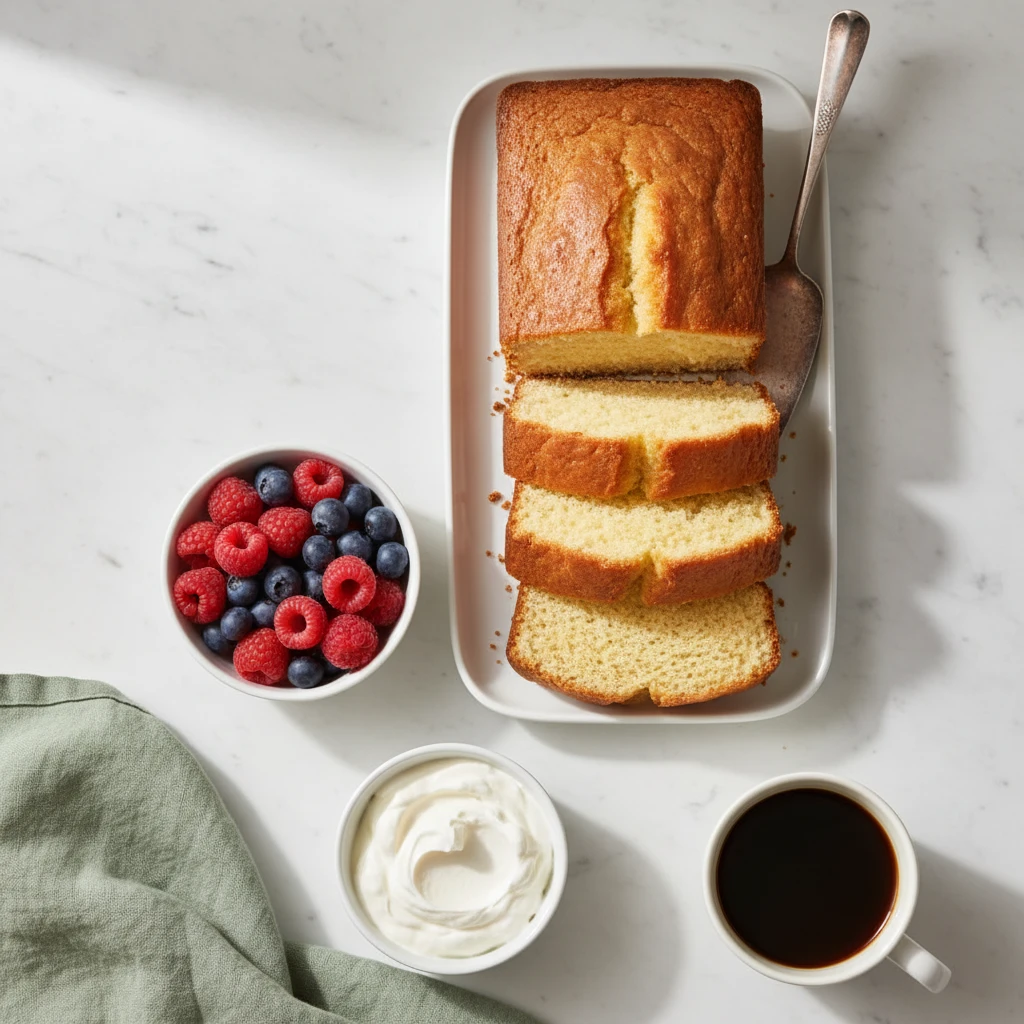
Simple Elegance: Serve thick slices plain with a cup of coffee or tea. The cake’s delicate flavor shines without embellishment, making it perfect for afternoon tea or a simple dessert.
Whipped Cream and Berries: Top each slice with fresh whipped cream and a handful of fresh raspberries, blueberries, or strawberries. The tartness of berries complements the cake’s subtle tang beautifully.
Lemon Glaze: Mix powdered sugar with fresh lemon juice and a touch of water to create a thin glaze. Drizzle over cooled cake for added brightness and visual appeal.
Buttery Caramel Sauce: Warm homemade or store-bought caramel sauce and drizzle over slices. Serve with vanilla ice cream for an indulgent dessert.
Fresh Fruit Compote: Top slices with a warm compote of macerated berries or stone fruit mixed with a touch of honey. The warmth contrasts beautifully with the cake’s tender crumb.
Powdered Sugar Dusting: Dust cooled slices generously with powdered sugar for a simple, classic presentation. This works especially well if serving at a brunch or afternoon gathering.
Pound Cake Parfait: Crumble leftover cake into layers with whipped cream and fresh fruit in a glass or jar for an elegant individual dessert.
French Toast Twist: Slice day-old pound cake thickly, dip in egg custard, and pan-fry until golden for a luxurious pound cake French toast. Serve with maple syrup and fresh fruit.
 Save
SaveStorage and Reheating
Room Temperature Storage: Once completely cooled, wrap the entire cake (or individual slices) tightly in plastic wrap, then place in an airtight container or resealable bag. Store at room temperature for up to 5 days. The cake will actually improve slightly as flavors meld.
Refrigerator Storage: For extended freshness (up to 1 week), wrap the cooled cake tightly in plastic wrap, then foil, and refrigerate. Cold cake will taste slightly denser but remains moist and delicious.
Freezer Storage: Wrap the completely cooled cake tightly in plastic wrap, then foil, and place in a freezer-safe bag or container. Label with the date. Freeze for up to 3 months. Thaw overnight at room temperature still wrapped — this prevents condensation from forming on the cake.
Individual Slices: Wrap individual slices in plastic wrap and freeze in an airtight container. Thaw at room temperature for 1–2 hours before serving.
Reheating: This cake is best served at room temperature, but if you prefer it warm, wrap a slice in foil and warm in a 300°F oven for 8–10 minutes. Do not microwave, as this dries out the cake. Alternatively, serve cold slices straight from the refrigerator.
Refreshing Day-Old Cake: If the cake’s texture seems dry after a day or two, wrap the entire cake in foil and warm in a 300°F oven for 10–12 minutes. This revives the moisture.
Frequently Asked Questions about Sour Cream Pound Cake
Can I use Greek yogurt instead of sour cream?
Yes, but thin the Greek yogurt with 2 tablespoons of milk to match sour cream’s consistency. Greek yogurt is thicker, so the adjustment is necessary to maintain proper cake texture. The result will be slightly tangier.
Why is my pound cake sinking in the middle?
This typically happens because the oven temperature is too high or the cake was under-baked. Use an oven thermometer to verify your oven is at 325°F. Also, ensure the toothpick inserted in the center comes out clean or nearly clean — a slightly wet center will sink as it cools and sets.
Can I make this cake in a standard cake pan instead of a loaf pan?
Yes, you can use a 9-inch round cake pan, but the baking time will be shorter — approximately 35–45 minutes. The cake will be thinner and bake faster. Check for doneness starting at 30 minutes.
Can I substitute almond extract for vanilla extract?
No, not in equal amounts. Almond extract is much more potent — use only 1/4 teaspoon of almond extract if you want to replace vanilla. For this recipe, the combination of both extracts is intentional and balanced.
How do I know if my cake is over-mixed?
Over-mixed cakes will be dense and tough with a gummy texture. This happens when you mix the batter too long after adding flour, which develops gluten. Mix only until white flour streaks disappear, then stop immediately. Use low speed for all flour and sour cream additions.
Can I skip the almond extract?
Yes. You can use all vanilla extract (increase to 3 teaspoons total) or omit it entirely. The almond extract adds subtle depth without almond flavor dominance, but it’s not essential. The cake will still be delicious without it.
My oven runs hot. How should I adjust the baking time?
If your oven runs hot, reduce the temperature to 315°F and add 5–10 minutes to the baking time. Use an oven thermometer to verify actual temperature. Check the cake at the recommended time, then every few minutes until a toothpick comes out clean.
Nutrition Facts (Per Serving)
| Nutrient | Per Serving |
|---|---|
| Calories | 385 |
| Total Fat | 18g |
| Saturated Fat | 11g |
| Trans Fat | 0.5g |
| Cholesterol | 120mg |
| Sodium | 285mg |
| Total Carbohydrates | 52g |
| Dietary Fiber | 0.5g |
| Total Sugars | 42g |
| Protein | 5g |
| Note: | Based on 8 servings per cake. Values are approximate and may vary based on specific ingredients used. |
Sour Cream Pound Cake
Ingredients
- 3 cups all-purpose flour
- 1 teaspoon baking soda
- 1 teaspoon salt
- 1 cup unsalted butter softened
- 3 cups granulated sugar
- 6 large eggs room temperature
- 1 cup sour cream room temperature
- 2 teaspoons vanilla extract
- 1 teaspoon almond extract
- Zest of 1 lemon
Instructions
- Preheat your oven to 325°F (160°C) for 10–15 minutes. Position the oven rack in the lower third, where heat circulates evenly. Grease a loaf pan (9x5 inches) or bundt pan thoroughly with butter, then dust it with flour and tap out the excess. This prevents sticking. Checkpoint: Your pan should be fully coated and your oven should be preheated.
- In a small bowl, whisk together 3 cups all-purpose flour, 1 teaspoon baking soda, and 1 teaspoon salt. Mix for 20–30 seconds until evenly combined with no lumps. Set this dry mixture aside. Checkpoint: Your dry ingredients should be uniform and light in color.
- In a large mixing bowl, add 1 cup unsalted butter (softened to room temperature, which should feel like soft clay) and 3 cups granulated sugar. Beat on medium-high speed with an electric mixer for 3–5 minutes, stopping to scrape down the bowl sides with a spatula every minute. The mixture should turn pale yellow, fluffy, and increase in volume by about 50%. This step is critical — it incorporates air that helps the cake rise. Checkpoint: The butter-sugar mixture should be light, airy, and pale, with no visible sugar crystals.
- Add 6 large eggs (at room temperature) one at a time. After adding each egg, beat on medium speed for 30–45 seconds, scraping the bowl, until the egg is fully incorporated and the mixture looks smooth. If the batter looks slightly curdled after adding eggs, this is normal — it will come together. Checkpoint: After all eggs are added, the batter should be glossy and smooth.
- Add 2 teaspoons vanilla extract, 1 teaspoon almond extract, and the zest of 1 lemon (about 1 tablespoon of finely grated zest). Beat on low speed for 20–30 seconds until the extracts and zest are evenly distributed throughout the batter. You should see small yellow flecks of lemon zest throughout. Checkpoint: The batter should smell fragrant and have visible lemon zest.
- Now alternate adding the dry flour mixture and 1 cup sour cream (at room temperature) to the batter in three additions. Start with dry ingredients: add one-third of the flour mixture and beat on low speed for 15–20 seconds until just combined. Stop as soon as you don't see white streaks. Checkpoint: White streaks of flour should be mostly gone.
- Add half of the sour cream (1/2 cup) and beat on low speed for 15–20 seconds until just combined. Again, stop when you don't see white streaks. Checkpoint: The batter should look smooth with no white streaks.
- Add another third of the flour mixture and beat on low speed for 15–20 seconds until just combined. Checkpoint: Batter should be smooth and uniform.
- Add the remaining sour cream (1/2 cup) and beat on low speed for 15–20 seconds until just combined. Checkpoint: Batter should be smooth.
- Add the final third of the flour mixture and beat on low speed for 15–20 seconds until just combined. Stop mixing as soon as you don't see any white streaks — do not over-mix, as this can make the cake tough. Checkpoint: Your batter should be smooth, thick, and uniform in color with no visible flour streaks.
- Pour the entire batter into your prepared pan, filling it about two-thirds to three-quarters full. Use a spatula to gently smooth the top of the batter, but do not press down hard. Checkpoint: The batter should be level and the pan properly filled.
- Place the pan in the preheated 325°F oven on the lower-third rack. Bake for 60–75 minutes. The cake will rise and a thin golden-brown crust will form on top. Halfway through baking (around 30 minutes), quickly open the oven door and look at the cake — it should be rising and the top should be starting to turn light golden. Close the door gently. Checkpoint: At 30 minutes, the cake should be rising and light golden on top.
- At 55–60 minutes, insert a wooden toothpick into the center of the cake. The cake is done when the toothpick comes out clean or with just 1–2 small moist crumbs clinging to it. If the toothpick comes out with wet batter, bake for 5 more minutes and test again. The top should be deep golden brown, not dark brown or burnt. Checkpoint: Toothpick comes out clean or nearly clean, and the top is deep golden brown.
- Once done, remove the cake from the oven and place it on a cooling rack or heat-safe counter surface. Let the cake rest in the pan for 15 minutes — this allows the structure to set. During this time, the cake will pull away slightly from the sides of the pan. Checkpoint: The cake should feel slightly firm and pull away from the pan edges.
- After 15 minutes, carefully run a thin knife around the inside edges of the pan to loosen the cake. Place a cooling rack or serving plate on top of the pan, then flip the pan and rack together so the cake falls out onto the rack. Gently lift off the pan. If using a loaf pan, the cake may be turned out onto a cooling rack. Checkpoint: The cake should release cleanly from the pan with no pieces stuck inside.
- Let the cake cool completely on the rack at room temperature for 1–2 hours. Do not slice it while warm, as it will crumble. The cake should reach room temperature before serving or storing. Checkpoint: The cake should feel cool to the touch and be firm enough to slice cleanly.