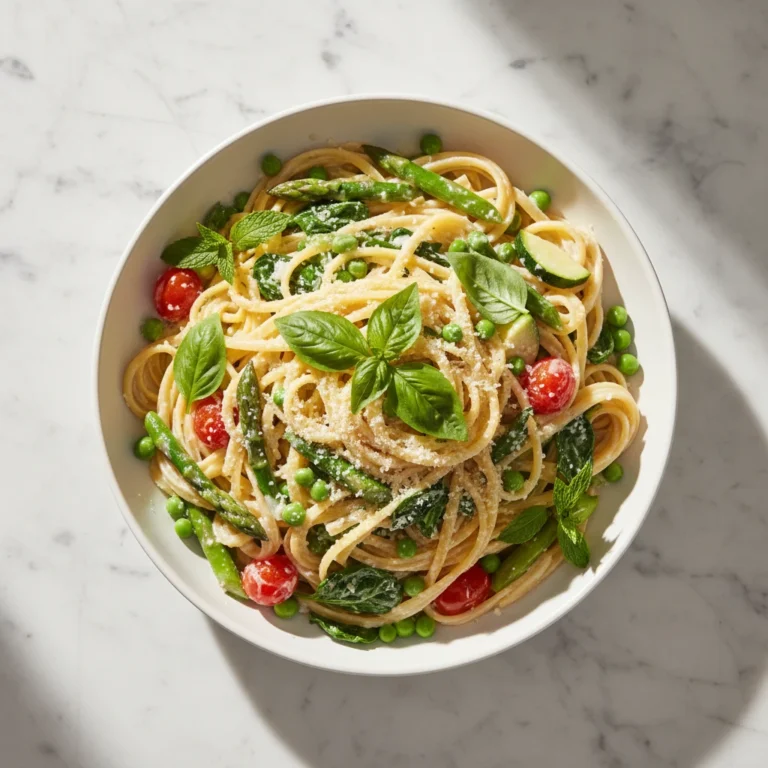
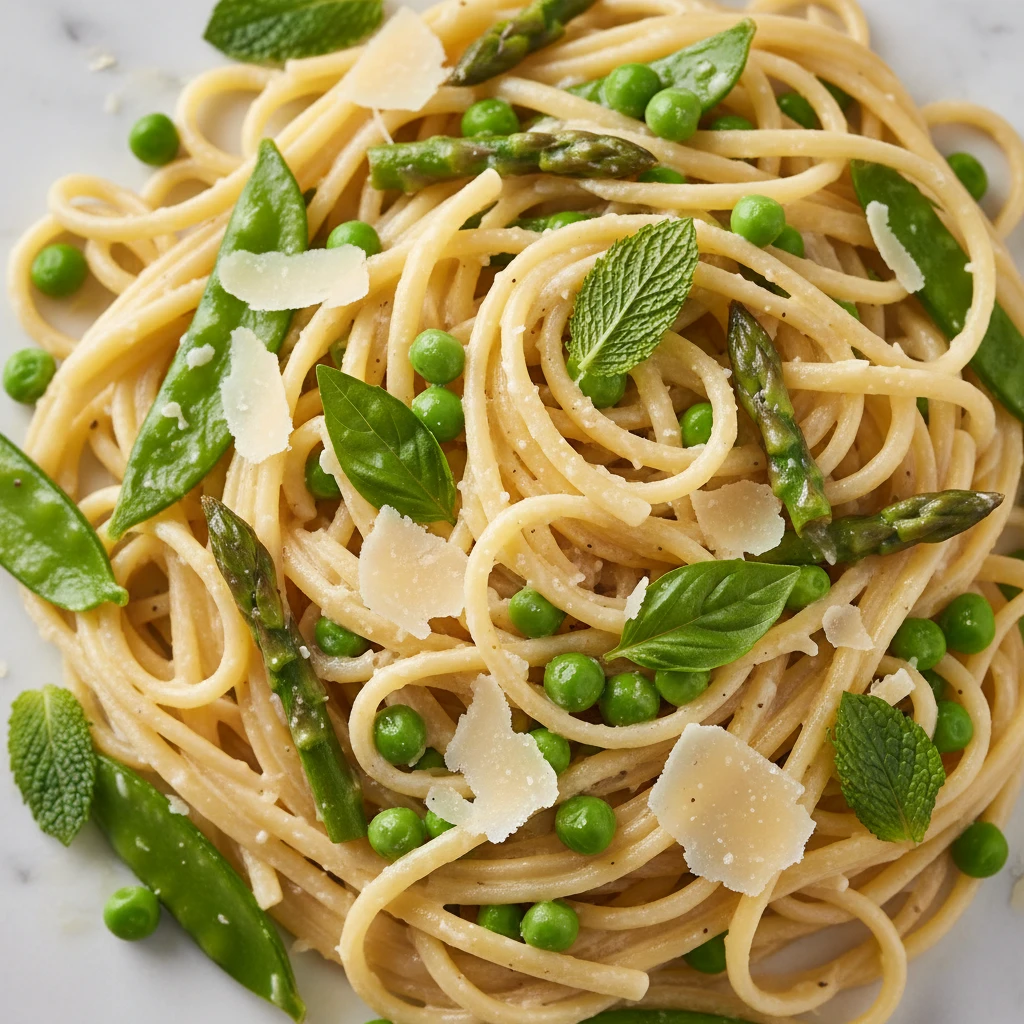
Spring vegetable pasta is a celebration of the season’s freshest bounty in every vibrant, delicious bite. This light and elegant dish features tender asparagus, snap peas, fresh peas, and crisp zucchini tossed with silky pasta and creamy ricotta. Perfect for spring dinners and lunch gatherings, this recipe brings together seasonal ingredients that are at their peak flavor and nutritional value. Quick to prepare yet restaurant-quality in presentation, it’s an ideal choice for weeknight cooking or special occasions.
Reasons to Try Spring Vegetable Pasta
This dish is a masterclass in simplicity and flavor. Here’s why it deserves a spot on your dinner table:
- Celebrates Seasonal Produce: Spring vegetables like asparagus, snap peas, and fresh peas are at their absolute best during this time, offering peak flavor, nutrients, and affordability.
- Light Yet Satisfying: Unlike heavy cream-based sauces, the ricotta creates a luxurious coating without the heaviness, making it perfect for warmer weather.
- Bursting with Fresh Herbs: Basil, dill, and mint add aromatic depth and a garden-fresh quality that elevates simple pasta into something special.
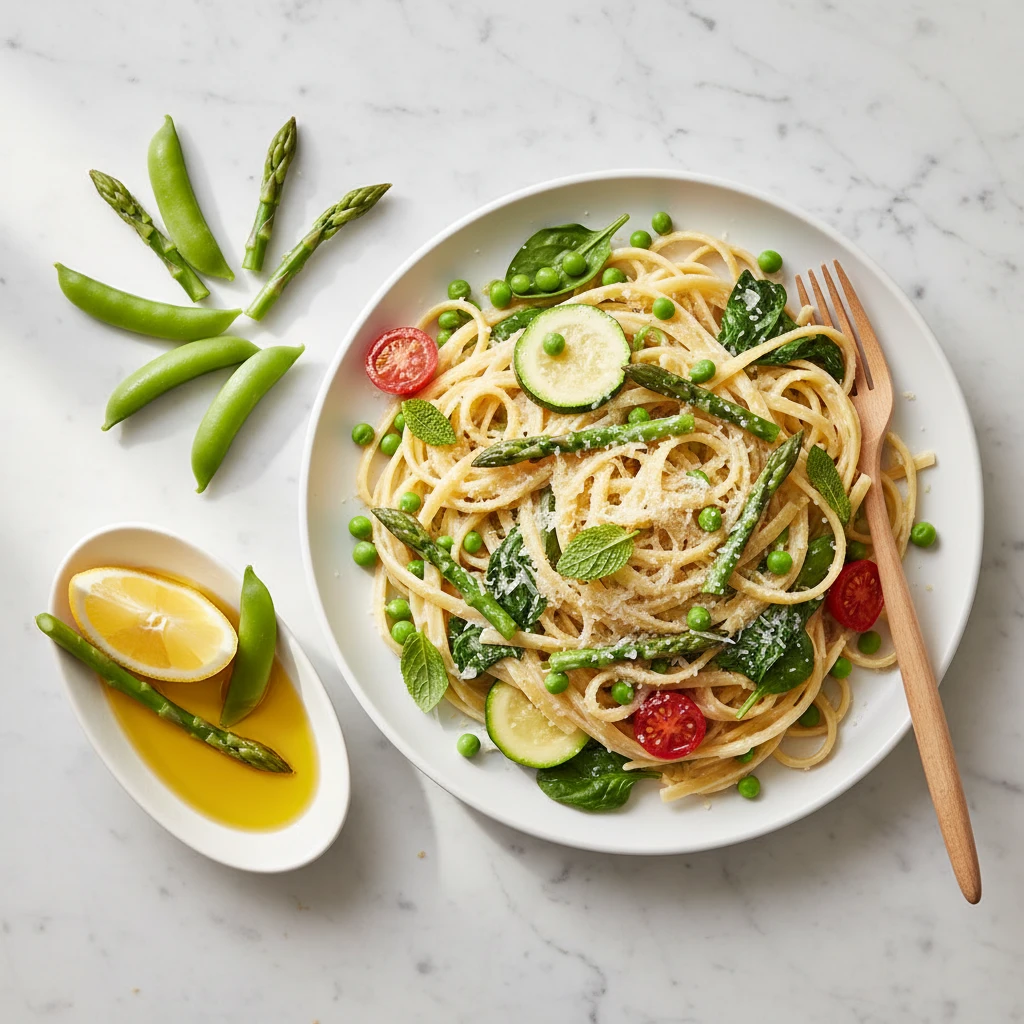
- Naturally Colorful: The mix of green asparagus, snap peas, bright peas, zucchini, and red cherry tomatoes creates a visually stunning plate that’s as pretty as it is nutritious.
- Quick and Weeknight-Friendly: Ready in just 20 minutes, this pasta is perfect for busy schedules without sacrificing quality or taste.
- Vegetarian and Customizable: Naturally vegetarian, and easily adaptable for various dietary preferences and restrictions.
 Save
SaveIngredients Notes
- Fresh pasta (from the refrigerated section) cooks faster than dried but both work beautifully
- Asparagus should be bright green and firm; avoid limp or yellowing spears
- Fresh peas are ideal, but frozen peas work if fresh aren’t available—add them directly to the warm pasta
- Snap peas should be crisp and bright; they retain their crunch best when added near the end of cooking
- Baby spinach wilts quickly and adds nutritional value without overpowering the delicate vegetables
- Cherry tomatoes can be halved or left whole depending on preference; look for ripe, fragrant ones
- Fresh ricotta is milder and creamier than aged ricotta; buy it from the dairy section or specialty cheese counter
- Lemon juice brightens flavors and prevents the creamy sauce from feeling too heavy
- Fresh herbs make a tremendous difference—use them as close to serving time as possible for maximum aroma and flavor
- Pasta water contains starch that helps emulsify the sauce; reserve it before draining
How to Make Spring Vegetable Pasta
- Bring a large pot of salted water to a boil. Add pasta and cook until al dente according to package directions. Reserve 1/2 cup pasta water before draining.
- Heat olive oil in a large skillet over medium heat. Add minced garlic and sauté for 30 seconds until fragrant.
- Add asparagus and snap peas to the skillet. Cook for 2–3 minutes, stirring occasionally, until they begin to soften but remain crisp.
- Stir in zucchini and fresh peas. Cook for another 2 minutes until the peas turn bright green.
- Add baby spinach and cherry tomatoes. Toss gently for 1 minute until spinach wilts.
- In a small bowl, whisk together ricotta, lemon juice, basil, dill, and salt and pepper.
- Add cooked pasta to the vegetable skillet. Pour in the ricotta mixture and toss gently, adding reserved pasta water a little at a time until you reach desired consistency.
- Taste and adjust seasoning with salt, pepper, and red pepper flakes.
- Divide pasta among bowls. Top with Pecorino Romano cheese, fresh mint, and a drizzle of olive oil. Serve immediately.
What You Must Know About Spring Vegetable Pasta
This dish relies on timing and ingredient quality to shine:
- Keep the Heat Moderate: High heat will cause ricotta to seize and become grainy. Cook all vegetables over medium heat and add the ricotta to warm (not hot) pasta.
- Reserve Pasta Water: This starchy liquid is essential for creating a silky sauce. Never skip this step—it’s what transforms simple ingredients into a cohesive dish.
- Use Fresh Herbs: Dried herbs won’t provide the same bright, garden-fresh quality. Add them as close to serving time as possible for maximum flavor.
- Don’t Overcook Vegetables: Spring vegetables are best when they retain some crunch and bright color. Add them sequentially by cooking time so everything finishes together.
- Choose Quality Ricotta: Fresh ricotta from a cheese counter tastes vastly better than shelf-stable ricotta. It creates a creamy sauce without need for heavy cream.
- Serve Immediately: This pasta is best served within minutes of finishing. The vegetables stay crispest and the ricotta sauce coats the pasta most beautifully right away.
- Lemon is Key: Don’t skip the lemon juice. It brightens the dish and prevents it from tasting heavy or one-dimensional.
Variations and Substitutions
- Add Protein: Top with grilled chicken breast, seared shrimp, or crispy pancetta for a heartier meal. Crumbled goat cheese or burrata also work beautifully in place of ricotta.
- Different Vegetables: Swap seasonal vegetables freely—spring onions, radishes, fresh peas, or baby artichokes all work. Avoid watery vegetables like mushrooms, which can make the dish soggy.
- Dairy-Free Version: Replace ricotta with cashew cream (soaked cashews blended with lemon juice and pasta water) for a vegan alternative that’s equally creamy.
- Cheese Options: Use feta, mascarpone, or burrata instead of ricotta. Burrata especially creates a luxurious, almost indulgent version.
- No Fresh Herbs Available? Fresh dill can be replaced with tarragon or chives. If using dried herbs, use about one-third the amount since they’re more concentrated.
- Pasta Variation: This recipe works with any pasta shape. Farfalle, penne, or orzo offer different textural experiences. Fresh ravioli can also be used and cooked according to package directions.
- Add Garlic Lovers Edition: Increase garlic to 4–5 cloves or add a spoonful of roasted garlic to the ricotta mixture for deeper flavor.
- Spicy Version: Include 1/4 teaspoon red pepper flakes with the garlic, or finish the dish with a drizzle of spicy olive oil.
Serving Suggestions for Spring Vegetable Pasta
- Plating: Twirl pasta onto a shallow bowl or plate. Arrange vegetable pieces on top so they’re visible. Garnish with fresh herbs, a generous pinch of Pecorino Romano, and a small drizzle of extra-virgin olive oil. Add a few fresh mint leaves for color and aroma.
- Accompanying Courses: Serve with a crisp white wine like Sauvignon Blanc, Pinot Grigio, or Vermentino. A light salad of arugula with lemon vinaigrette or butter lettuce works well as a starter.
- Bread Pairing: Warm crusty ciabatta or focaccia is perfect for soaking up any remaining creamy sauce. Garlic bread is less recommended as it may overpower the delicate herbs.
- Seasonal Sides: A simple spring salad with fresh greens, radishes, and lemony vinaigrette complements this pasta beautifully. Roasted new potatoes with herbs also pair well.
- Garnish Ideas: Lemon zest added at the last moment adds brightness. Crispy sage leaves, toasted pine nuts, or panko breadcrumbs add textural contrast. A few paper-thin shaved radishes add peppery crunch.
- Elegant Presentation: For special occasions, use shallow pasta bowls and create height by twirling pasta with tongs. The vegetables will cascade down the sides artfully.
- Meal Timing: This is an ideal late spring or early summer dinner when you want something fresh and light but still satisfying. Serve as a main course or in smaller portions as a light lunch.
 Save
SaveStorage and Reheating
Storage: Spring vegetable pasta is best enjoyed fresh, but leftovers can be stored in an airtight container in the refrigerator for up to 2 days. The pasta will continue to absorb moisture, so it may become thicker than when first served. The vegetables will lose some of their crispness over time.
Reheating: Reheat gently over low to medium heat in a large skillet or saucepan for 2–3 minutes, stirring occasionally. Add a splash of pasta water or vegetable broth to restore the creamy sauce consistency. Do not microwave, as this can cause the ricotta to separate and become grainy. The pasta may taste best at room temperature or chilled as a pasta salad the next day, lightly tossed with a bit more lemon juice and fresh herbs.
Freezing: This pasta is not recommended for freezing due to the delicate vegetables and ricotta-based sauce. The texture and quality suffer significantly when frozen and thawed.
Frequently Asked Questions about Spring Vegetable Pasta
Can I use frozen vegetables instead of fresh?
Yes, frozen vegetables can work, but fresh vegetables are strongly preferred for this dish. Fresh vegetables maintain their crunch and bright flavor, which is central to the appeal of spring vegetable pasta. If using frozen, thaw them first and add them more briefly to the skillet since they’re already partially cooked. Avoid frozen vegetable mixes that contain starchy vegetables or added sauces.
What if I can’t find fresh ricotta?
You can use whole milk ricotta from the dairy section (though fresh is superior), or substitute with mascarpone, burrata, or even goat cheese. For a lighter option, you can make a quick cashew cream by blending soaked cashews with lemon juice and pasta water. Each option will produce slightly different flavor profiles but will still be delicious.
How far in advance can I prepare the vegetables?
You can prep vegetables up to 2 hours in advance and store them separately in the refrigerator. Keep cut asparagus and snap peas in a small bowl with a damp paper towel to maintain crispness. However, don’t cut the vegetables too far in advance as they’ll oxidize and lose their bright color and crispness. Fresh herbs should be chopped just before serving.
Is this pasta dish gluten-free?
Not with regular pasta, but it can easily be made gluten-free by using gluten-free pasta instead. The cooking time may vary slightly with gluten-free pasta, so follow package directions. All other ingredients in this recipe are naturally gluten-free, making the substitution straightforward.
Can I make this pasta vegan?
Yes! Replace the ricotta with cashew cream (blend soaked raw cashews with lemon juice, garlic, and reserved pasta water until smooth and creamy), and skip the Pecorino Romano cheese or use a vegan parmesan alternative. All vegetables and herbs are vegan-friendly, making this an easy plant-based adaptation.
What’s the best way to reheat leftovers without the sauce separating?
Reheat gently over low heat in a skillet for 2–3 minutes, adding a splash of vegetable broth or reserved pasta water to loosen the sauce. Stir gently and frequently. Avoid high heat or the microwave, which can cause ricotta to separate and become grainy. The pasta tastes wonderful at room temperature as a light lunch the next day too.
Can I prepare the ricotta mixture ahead of time?
Yes, you can make the ricotta mixture up to 4 hours ahead and store it in the refrigerator. However, add the fresh herbs (basil, dill, and mint) just before serving so they retain maximum flavor and color. Let the ricotta come to room temperature for a few minutes before adding it to the warm pasta for best results.
Nutrition Facts (Per Serving)
| Nutrient | Amount per Serving |
| Calories | 385 kcal |
| Protein | 15g |
| Carbohydrates | 58g |
| Dietary Fiber | 8g |
| Sugars | 7g |
| Total Fat | 12g |
| Saturated Fat | 4g |
| Cholesterol | 18mg |
| Sodium | 425mg |
| Calcium | 185mg |
| Iron | 3.2mg |
| Vitamin C | 42mg |
| Vitamin A | 680 IU |
* Nutrition facts are estimated based on standard ingredient values and 6 servings. Values may vary based on specific brands and cooking methods. This is calculated as a vegetarian pasta dish without additional protein additions.
Spring Vegetable Pasta
Ingredients
- 1 pound fresh pasta or dried linguine
- 2 tablespoons olive oil
- 3 cloves garlic minced
- 1 cup fresh asparagus cut into 2-inch pieces
- 1 cup fresh snap peas halved
- 1 cup fresh baby spinach
- 1 cup fresh peas shelled
- 1 medium zucchini diced
- 1 cup cherry tomatoes halved
- 4 ounces fresh ricotta cheese
- 1/2 cup reserved pasta water
- 2 tablespoons fresh lemon juice
- 2 tablespoons fresh basil chopped
- 1 tablespoon fresh dill chopped
- 1/4 cup grated Pecorino Romano cheese
- Salt to taste
- Black pepper to taste
- Red pepper flakes to taste
- 1 tablespoon fresh mint chopped
Instructions
- Bring a large pot (at least 6 quarts) of salted water to a rolling boil over high heat, about 8–10 minutes. The water should taste like seawater. Checkpoint: Large bubbles are rapidly breaking the surface.
- Add 1 pound fresh or dried pasta to the boiling water and stir immediately to prevent sticking. Cook according to package directions (fresh pasta typically 2–3 minutes, dried 8–10 minutes) until al dente, which means tender but still firm when you bite it. Before draining, scoop out and reserve 1/2 cup of starchy pasta cooking water in a small bowl. Set aside. Drain pasta into a colander but do not rinse. Checkpoint: Pasta should bend easily but have no white uncooked center when you bite a piece.
- While pasta cooks, prepare your vegetables: Cut 1 cup fresh asparagus into 2-inch pieces, halve 1 cup snap peas lengthwise, dice 1 medium zucchini into small bite-sized pieces, halve 1 cup cherry tomatoes, and measure out 1 cup fresh shelled peas. Mince 3 cloves garlic finely. Checkpoint: All vegetables are prepared and ready to add to the skillet quickly.
- Heat 2 tablespoons olive oil in a large skillet (12-inch is ideal) over medium heat for 1–2 minutes. The oil should shimmer and move easily when you tilt the pan. Checkpoint: Oil is hot but not smoking.
- Add minced garlic to the hot oil and stir constantly for 30 seconds. You should smell a strong, fragrant aroma. Do not let it brown or it will taste bitter. Checkpoint: Garlic is fragrant and light golden but not brown.
- Add the asparagus and snap peas to the skillet. Stir every 15–20 seconds for 2–3 minutes total. The vegetables should begin to soften slightly but still feel crisp when you bite one. They will continue cooking after you add other ingredients. Checkpoint: Asparagus is bright green and tender-crisp, snap peas are still snappy.
- Add the diced zucchini and fresh peas to the skillet. Stir frequently for exactly 2 minutes. The fresh peas should turn from pale to bright green. Zucchini should soften slightly but remain firm. Checkpoint: Peas are bright green, zucchini edges are soft but centers are still slightly firm.
- Add 1 cup baby spinach and halved cherry tomatoes to the skillet. Toss gently and continuously for 1 minute using a wooden spoon or tongs. The spinach will wilt and turn dark green; this is correct. Checkpoint: Spinach is completely wilted and dark green, tomatoes are warm.
- In a small bowl, combine 4 ounces fresh ricotta, 2 tablespoons fresh lemon juice, 2 tablespoons chopped fresh basil, 1 tablespoon chopped fresh dill, 1/2 teaspoon salt, and 1/4 teaspoon black pepper. Whisk together with a fork until well combined and slightly loose. The ricotta should be spreadable, not stiff. Checkpoint: Ricotta mixture is creamy, fragrant, and free of lumps.
- Add the drained pasta to the vegetable skillet. Pour the ricotta mixture over the pasta and vegetables. Using tongs or two wooden spoons, toss everything together gently but thoroughly for 1–2 minutes. Checkpoint: Ricotta is beginning to coat the pasta strands.
- While tossing, slowly pour in the reserved pasta water, a little at a time (start with 2 tablespoons), while continuing to toss. Add more pasta water only if the pasta looks dry or clumpy. You want a silky sauce that coats the pasta, not a soup. This should take 1–2 minutes. Checkpoint: Pasta is evenly coated in a creamy sauce; no dry spots or excess liquid pools at the bottom.
- Taste a bite of the pasta. If it needs more salt, add 1/4 teaspoon at a time and toss. If it needs brightness, add a squeeze more lemon juice. If you like spice, sprinkle 1/8 teaspoon red pepper flakes and toss. Adjust until the flavors feel balanced and fresh. Checkpoint: Flavors are bright, balanced, and delicious.
- Divide the pasta among 4–6 serving bowls (serve immediately so it stays warm). Top each bowl with 1 tablespoon grated Pecorino Romano cheese, a small pinch of fresh mint leaves, and a light drizzle of olive oil. Checkpoint: Pasta is served hot, creamy, and fragrant.