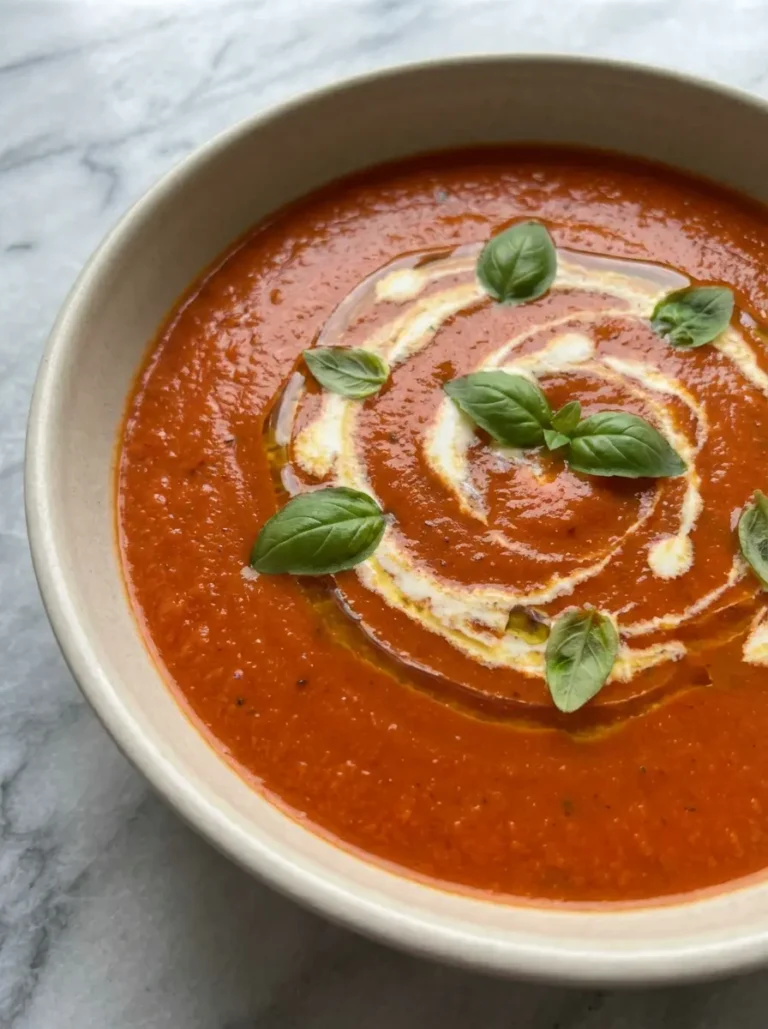
Tomato soup brings comfort to your table with just a few simple ingredients and basic cooking techniques. This recipe transforms fresh tomatoes into a smooth, creamy soup that tastes better than anything from a can. You’ll get a bright red bowl of warmth that fills your kitchen with the smell of roasted tomatoes and herbs.
I’ve made this soup hundreds of times over the years, and it never fails to satisfy on cold afternoons or busy weeknights. The best part? You probably have most of these ingredients sitting in your pantry right now. This recipe works for beginners and experienced cooks alike, taking less than an hour from start to finish. You can serve it with a grilled cheese sandwich for a classic meal, or enjoy it on its own as a light lunch. The flavors develop beautifully, making this soup taste even better the next day.
Reasons to Try This Tomato Soup
This tomato soup stands out because it uses real tomatoes instead of relying on canned tomato paste alone. The roasting process brings out natural sweetness that balances the acidity perfectly. You get a velvety texture without adding heavy cream, though you can include it if you prefer.
The flavor profile hits all the right notes with savory garlic, aromatic basil, and a hint of sweetness from the tomatoes themselves. Unlike store-bought versions loaded with sodium and preservatives, you control exactly what goes into your bowl. The soup has enough body to feel satisfying without making you feel overly full.
Another reason to make this recipe? It’s incredibly forgiving. If you slightly overcook the tomatoes, they just become sweeter. If you add too much garlic, you get a more robust flavor. This flexibility makes it perfect for those days when you’re cooking while juggling other tasks.
The cost factor matters too. Making tomato soup at home costs a fraction of buying organic versions from specialty stores. You can make a large batch and freeze portions for quick meals throughout the month.
 Save
SaveWhere Did Tomato Soup Come From?
Tomato soup became popular in America during the late 1800s when Joseph Campbell introduced condensed tomato soup to the market. Before that, tomatoes were actually considered poisonous by many Europeans until the 1700s. Italian immigrants brought their tomato-based cooking traditions to America, which helped change public opinion. By the early 1900s, tomato soup had become a staple in American households, often paired with grilled cheese sandwiches during the Great Depression because both items were affordable and filling. The combination remains iconic today. Traditional recipes varied by region, with some adding milk, others using chicken stock, and many including garden-fresh herbs. This homemade version honors those early recipes while keeping the method simple and accessible.
Ingredients Notes
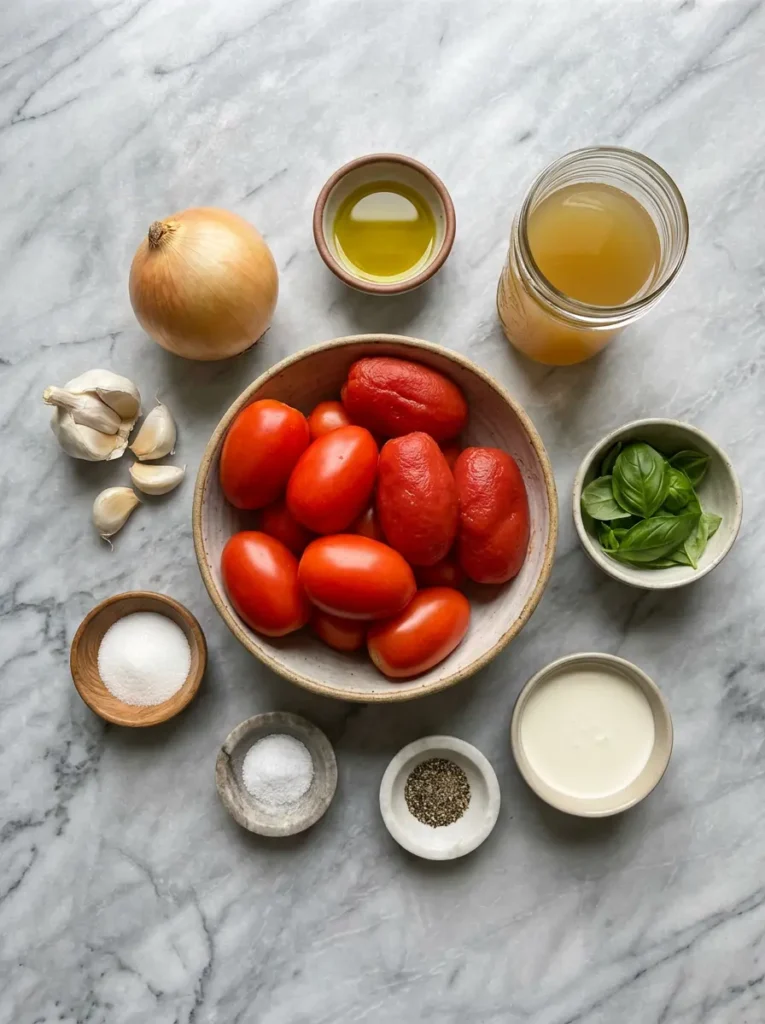
Tomatoes: Use ripe, red tomatoes for the best flavor. Roma tomatoes work exceptionally well because they have fewer seeds and more flesh. During winter months, canned whole tomatoes actually taste better than out-of-season fresh ones. I prefer San Marzano tomatoes when using canned varieties because they have a sweeter, less acidic flavor.
Garlic: Fresh garlic cloves provide the most flavor. Avoid pre-minced garlic from jars, which tastes bitter when cooked. The roasting process mellows the garlic’s sharpness and adds a subtle sweetness.
Onions: Yellow onions create a balanced base flavor. Sweet onions like Vidalia make the soup slightly sweeter, while white onions add more bite. Dice them finely so they break down completely during cooking.
Olive Oil: Extra virgin olive oil adds richness and helps the vegetables caramelize. The quality of your olive oil affects the final taste, so use one you’d enjoy on salad.
Vegetable Stock: Low-sodium vegetable stock lets you control the salt level. You can substitute chicken stock if you’re not keeping the recipe vegetarian. Homemade stock always tastes better than store-bought, but quality boxed stock works fine.
Basil: Fresh basil leaves transform this soup from good to great. The herb adds a peppery, slightly sweet flavor that complements tomatoes perfectly. Dried basil works in a pinch, but use less because dried herbs have concentrated flavors.
Sugar: A small amount of sugar balances the natural acidity in tomatoes. You can skip it if your tomatoes are very sweet, or add more if they’re particularly tart.
Heavy Cream: This optional ingredient makes the soup richer and creates that classic orange color. You can use milk for a lighter version, or skip dairy entirely for a vegan soup.
 Save
SaveHow to Make Tomato Soup
Step 1: Heat your oven to 400°F. Cut the tomatoes in half and place them cut-side up on a large baking sheet. If using whole canned tomatoes, drain them and arrange on the sheet.
Step 2: Peel the garlic cloves and scatter them around the tomatoes. Peel and quarter the onion, then add it to the baking sheet. Drizzle everything with olive oil and sprinkle with salt and pepper.
Step 3: Roast the vegetables for 35-40 minutes. The tomatoes should look slightly charred on the edges and the onions should turn golden brown. The kitchen will smell amazing at this point.
Step 4: Remove the baking sheet from the oven and let it cool for 5 minutes. Transfer all the roasted vegetables and any juices from the pan into a large pot.
Step 5: Add the vegetable stock to the pot. Tear the basil leaves and add them to the mixture. Bring everything to a boil over high heat, then reduce to a simmer.
Step 6: Let the soup simmer for 15 minutes. This allows all the flavors to blend together. Taste the soup and add the sugar if your tomatoes taste too acidic.
Step 7: Remove the pot from heat. Use an immersion blender to puree the soup until smooth. If you don’t have an immersion blender, carefully transfer the soup in batches to a regular blender. Always hold the blender lid down with a towel because hot liquids expand and can spray.
Step 8: If you want a creamier soup, stir in the heavy cream now. Return the pot to low heat and warm through for 2-3 minutes. Taste and adjust the seasoning with more salt and pepper if needed.
What You Must Know About Tomato Soup
Never fill a regular blender more than halfway when blending hot soup. The steam creates pressure that can blow the lid off and cause serious burns. Always hold a kitchen towel over the lid as extra security.
Tomato soup continues to thicken as it cools. If your soup seems too thick, add more stock or water to reach your preferred consistency. You can always thin it out, but you can’t take liquid back out once it’s added.
The acid in tomatoes can react with certain pots and pans. Avoid using aluminum or non-enameled cast iron, which can give the soup a metallic taste. Stainless steel or enameled pots work best.
Taste your tomatoes before cooking. If they’re very tart, you’ll need extra sugar. If they’re sweet, you might not need any. This simple check prevents you from making soup that’s too acidic.
Don’t skip the roasting step by just simmering raw vegetables. Roasting caramelizes the natural sugars and removes excess moisture, which concentrates the flavors significantly. This step makes the difference between average soup and excellent soup.
Helpful Tips
Save the liquid from canned tomatoes if you’re using them. This juice adds extra tomato flavor to the soup without making it too thick.
Toast a slice of bread, rub it with a cut garlic clove, drizzle with olive oil, and float it on top of each bowl. This creates a simple but impressive presentation that also adds texture.
Make a double batch and freeze half. Pour cooled soup into freezer-safe containers, leaving an inch of space at the top for expansion. The soup stays good for up to three months.
For a smoother texture, strain the soup through a fine-mesh sieve after blending. This removes any remaining seeds or skin pieces, creating a restaurant-quality consistency.
Add a parmesan rind to the soup while it simmers. The rind melts slightly and infuses the soup with rich, savory flavor. Remove it before blending.
 Save
SaveVariations and Substitutions
Replace half the tomatoes with red bell peppers for a sweeter, smokier flavor. Roast them the same way as the tomatoes.
Use coconut milk instead of heavy cream for a dairy-free version. The coconut flavor stays subtle and adds nice richness.
Add a pinch of red pepper flakes with the other ingredients if you like heat. Start with just a small amount because you can always add more.
Stir in cooked white beans before blending for extra protein and fiber. This makes the soup more filling and adds a creamy texture.
Try adding a tablespoon of tomato paste with the stock. This deepens the tomato flavor and gives the soup a richer color.
Replace fresh basil with fresh thyme or oregano for a different herb profile. Both work beautifully with tomatoes.
For a chunky soup, blend only half the mixture and stir the smooth part back into the remaining chunks.
Serving Suggestions for Tomato Soup
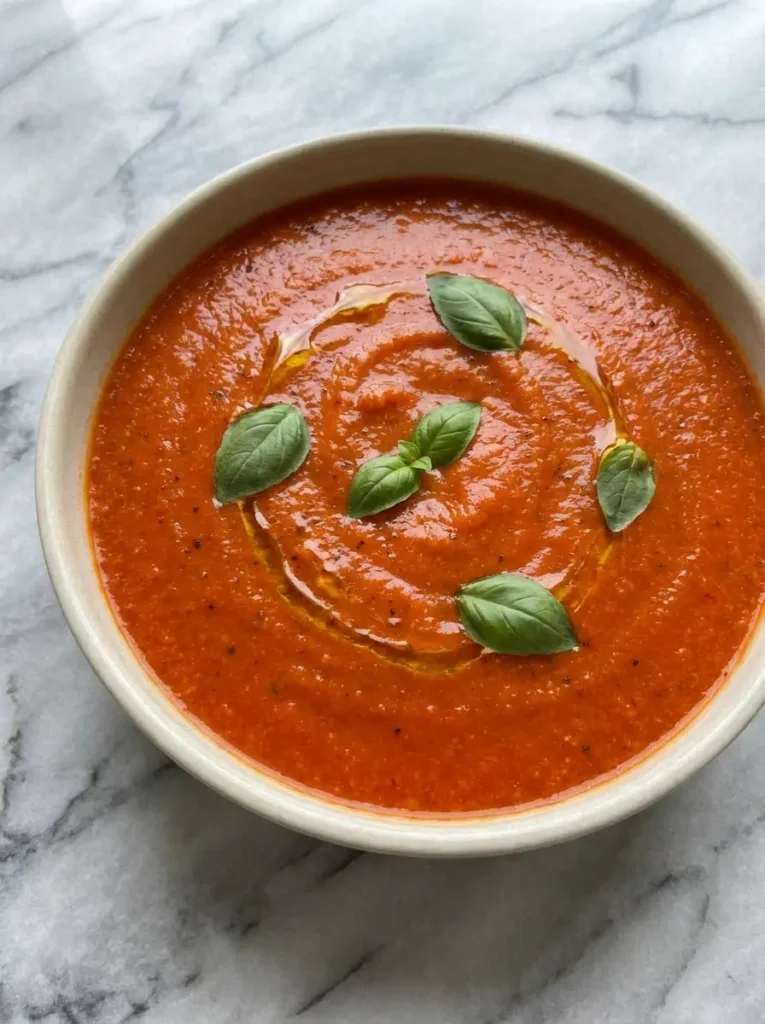
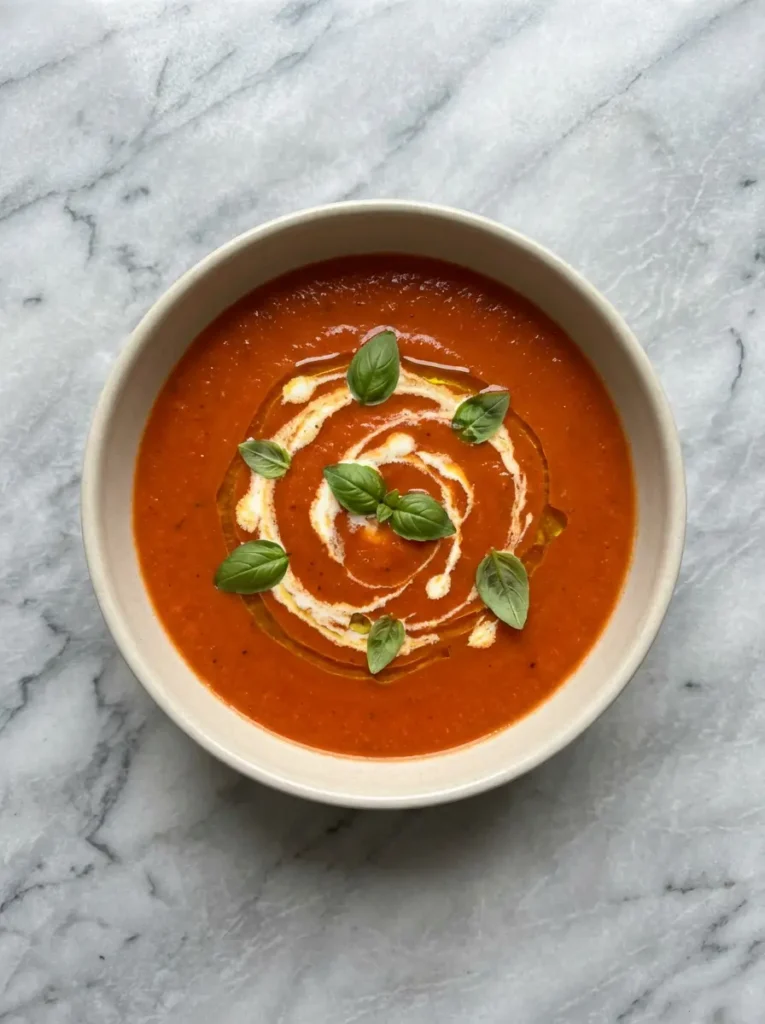
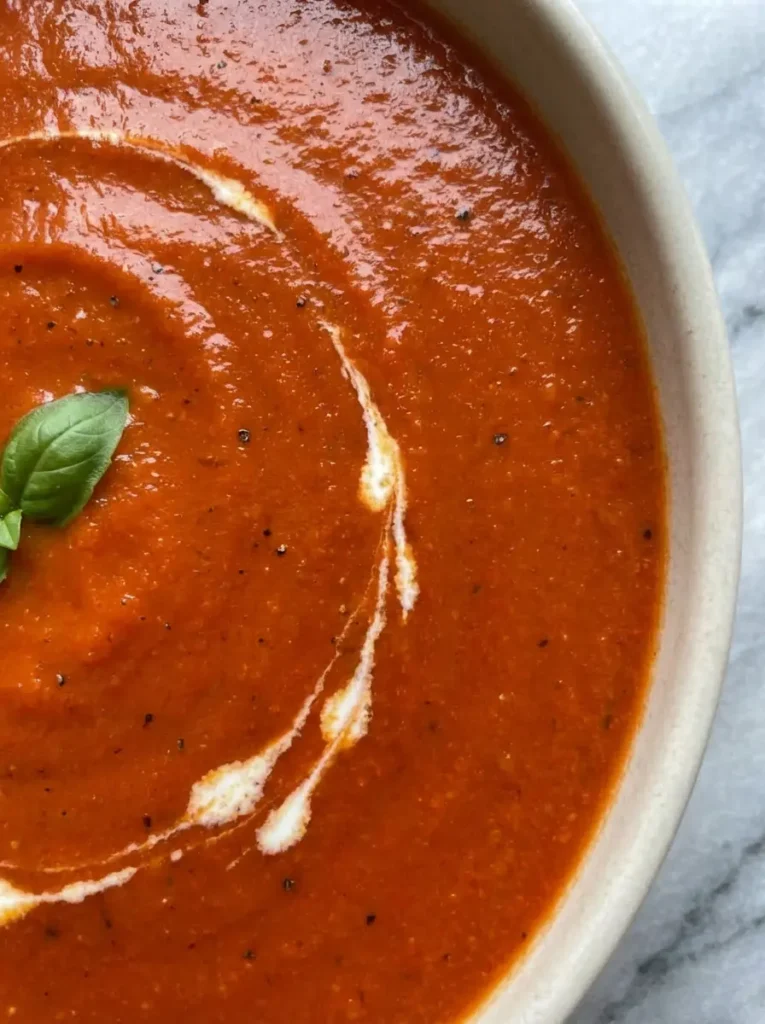
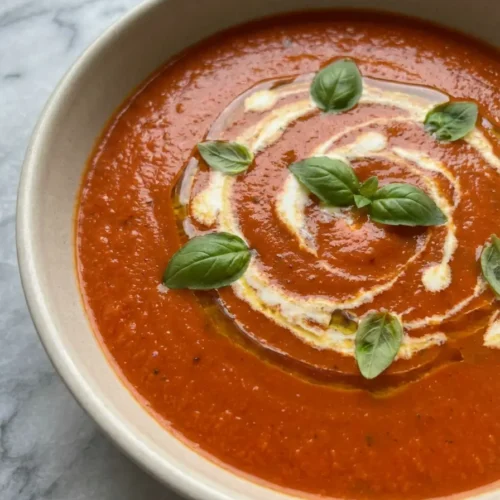
Serve the soup in warmed bowls to keep it hot longer. A swirl of cream or olive oil on top adds visual appeal.
Pair it with grilled cheese sandwiches made with sharp cheddar and sourdough bread. Cut the sandwiches into strips for dipping.
Top each bowl with crispy croutons made from day-old bread. Toss bread cubes with olive oil and bake until golden.
Add a dollop of pesto or a spoonful of fresh ricotta cheese on top. Both complement the tomato flavor without overpowering it.
Sprinkle fresh herbs like chopped parsley or chives over each serving. This adds a pop of color and fresh flavor.
Serve alongside a simple green salad with a light vinaigrette to balance the richness of the soup.
For a fancy presentation, garnish with microgreens and a few drops of balsamic reduction drizzled in a pattern.
 Save
SaveStorage and Reheating
Store leftover tomato soup in an airtight container in the refrigerator for up to five days. The flavors actually improve after a day or two as they continue to blend.
Pour the soup into containers once it has cooled to room temperature. Never put hot soup directly in the fridge because it raises the internal temperature and can affect other foods.
For freezing, use freezer-safe containers or heavy-duty freezer bags. Lay bags flat in the freezer until solid, then stack them to save space. Frozen soup stays good for three months.
Reheat the soup gently on the stovetop over medium-low heat. Stir occasionally to prevent scorching on the bottom. Add a splash of stock or water if the soup has thickened too much.
You can also reheat individual portions in the microwave. Use a microwave-safe bowl and heat in 1-minute intervals, stirring between each interval.
Avoid reheating the soup multiple times. Only heat the amount you plan to eat. Each time you reheat and cool the soup, you increase the risk of bacterial growth.
If you added cream to your soup, it may separate slightly when frozen and reheated. Just stir vigorously or give it a quick blend to bring it back together.
Frequently Asked Questions about Tomato Soup
Can I use cherry tomatoes instead of regular tomatoes?
Yes, cherry tomatoes work very well and are naturally sweeter. You may need less added sugar. Use about 2 pounds of cherry tomatoes and cut them in half before roasting.
How can I make this soup thicker?
Simmer the soup uncovered for 10 to 15 minutes to reduce excess liquid. You can also add a diced potato while cooking, which thickens the soup naturally when blended. Blending in a slice of white bread is another effective option.
Why does my tomato soup taste too acidic?
Some tomatoes are more acidic than others. Add sugar one teaspoon at a time to balance the flavor. A small pinch of baking soda can neutralize acid, but use it carefully. Adding cream also helps mellow acidity.
Can I make this soup without roasting the vegetables?
Yes, but the flavor will be less deep. Sauté onions and garlic in olive oil, add tomatoes and stock, then simmer for 25 to 30 minutes before blending. The soup will still be good, just less rich.
What can I do if my soup is too thick?
Add vegetable stock or water a quarter cup at a time until you reach your preferred consistency. Reheat the soup after thinning. Milk or cream also works if you want to keep it rich.
Is tomato soup healthy?
Homemade tomato soup is much healthier than canned versions. Tomatoes provide lycopene, vitamin C, and potassium. Without cream, the soup is low in calories and suitable for vegan and vegetarian diets.
Nutrition Facts (Per Serving)
| Nutrient | Amount |
|---|---|
| Calories | 145 |
| Total Fat | 8g |
| Saturated Fat | 3g |
| Cholesterol | 15mg |
| Sodium | 420mg |
| Total Carbohydrates | 16g |
| Dietary Fiber | 3g |
| Sugars | 10g |
| Protein | 3g |
| Vitamin A | 25% DV |
| Vitamin C | 45% DV |
| Calcium | 6% DV |
| Iron | 8% DV |
Nutritional information is calculated based on the recipe with cream included. Values may vary based on specific ingredients used.
Amazing Homemade Tomato Soup Recipe (Ready in 1 Hour!)
Ingredients
- 3 pounds ripe tomatoes or two 28-ounce cans whole tomatoes
- 1 medium yellow onion
- 6 cloves garlic
- 3 tablespoons extra virgin olive oil
- 3 cups vegetable stock
- 10-12 fresh basil leaves
- 1-2 teaspoons sugar to taste
- 1 teaspoon salt
- 1/2 teaspoon black pepper
- 1/2 cup heavy cream optional
Instructions
- Preheat oven to 400°F and prepare a large baking sheet.
- Cut tomatoes in half and place cut-side up on the baking sheet.
- Peel garlic cloves and scatter around tomatoes.
- Peel and quarter the onion, adding it to the baking sheet.
- Drizzle vegetables with olive oil and season with salt and pepper.
- Roast for 35-40 minutes until tomatoes are charred and onions are golden.
- Let vegetables cool for 5 minutes, then transfer to a large pot with all pan juices.
- Add vegetable stock and torn basil leaves to the pot.
- Bring mixture to a boil, then reduce heat and simmer for 15 minutes.
- Taste and add sugar if needed to balance acidity.
- Remove from heat and blend until smooth using an immersion blender or regular blender.
- Stir in heavy cream if using, return to low heat, and warm through for 2-3 minutes.
- Adjust seasoning with additional salt and pepper to taste.
- Serve hot with desired garnishes and accompaniments.