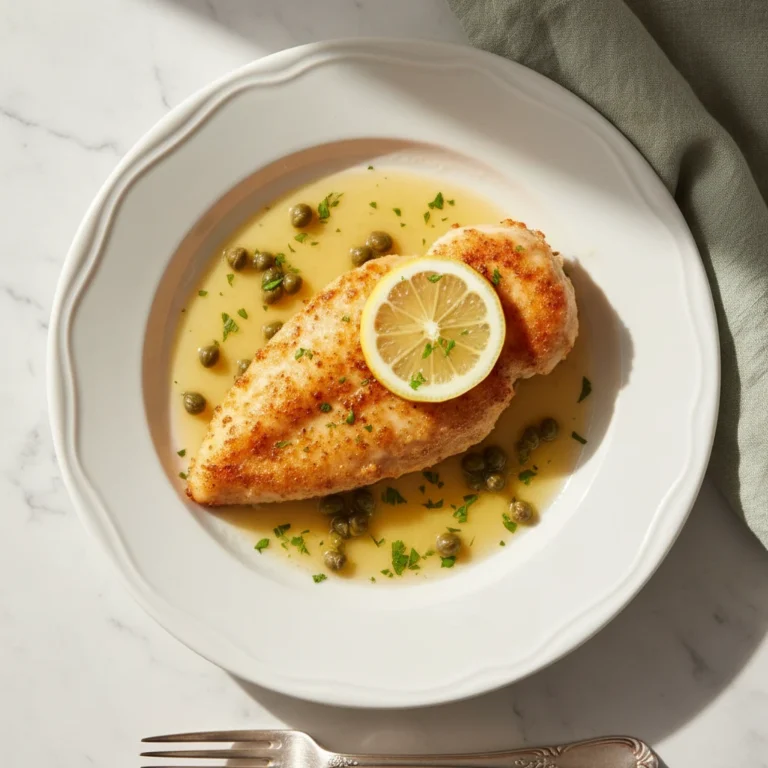
Chicken piccata is a classic Italian-American dish featuring tender, pan-seared chicken breasts finished in a bright, tangy lemon and caper sauce. This elegant yet simple recipe delivers restaurant-quality results in under 30 minutes, making it perfect for weeknight dinners or special occasions. The combination of crispy breaded chicken with a vibrant, citrus-forward sauce creates a perfectly balanced meal that’s both satisfying and light.
Reasons to Try Chicken Piccata
Quick and Elegant: Despite its impressive presentation, this dish comes together in less than 30 minutes, making it ideal for busy weeknights or entertaining guests without stress.
Bright and Tangy Flavors: The lemon juice and capers create a vibrant sauce that cuts through the richness of the chicken and butter, offering a fresh, Mediterranean-inspired taste profile that feels light and sophisticated.
Naturally Gluten-Free Option: By swapping the flour coating for cornstarch or almond flour, this dish easily accommodates gluten-free diets without sacrificing texture or flavor.
Versatile and Crowd-Pleasing: Chicken piccata pairs beautifully with pasta, rice, roasted vegetables, or a simple green salad, making it adaptable to any meal plan or dietary preference.
Restaurant-Quality at Home: The technique of pounding and pan-searing the chicken, combined with the elegant lemon-caper pan sauce, gives you a dish that feels like it came from an upscale Italian restaurant kitchen.
Pantry-Friendly: With just a few staple ingredients—chicken, lemon, capers, and white wine—you likely have everything needed to create this impressive meal without special shopping trips.
 Save
SaveIngredients Notes
- Boneless, skinless chicken breasts (about 6 ounces each)
- All-purpose flour
- Salt
- Black pepper
- Garlic powder
- Olive oil
- Butter
- Dry white wine (such as Pinot Grigio or Sauvignon Blanc)
- Chicken broth
- Fresh lemon juice
- Capers (drained and rinsed if very salty)
- Garlic (minced)
- Red pepper flakes
- Fresh parsley (chopped)
- Lemon (sliced into thin rounds for garnish)
How to Make Chicken Piccata
- Place each chicken breast between two pieces of plastic wrap and pound to an even 1/4-inch thickness using a meat mallet.
- Combine flour, salt, pepper, and garlic powder in a shallow dish, then coat each flattened chicken breast on both sides.
- Heat olive oil and 1 tablespoon of butter in a large skillet over medium-high heat until shimmering.
- Working in batches if necessary, add chicken breasts and sear for 3-4 minutes per side until golden brown. Transfer to a plate.
- In the same skillet, add minced garlic and red pepper flakes, stirring for about 30 seconds until fragrant.
- Deglaze the pan with white wine, scraping up browned bits from the bottom, and let simmer for 2 minutes.
- Add chicken broth and lemon juice, stirring well to combine.
- Return the chicken breasts to the skillet and simmer for 3-4 minutes until heated through.
- Stir in the capers and remaining 1 tablespoon of butter until incorporated and sauce is smooth.
- Taste and adjust seasoning with salt and pepper as needed.
- Transfer to serving plates, spoon sauce over chicken, and garnish with fresh parsley and lemon slices.
What You Must Know About Chicken Piccata
Pounding the Chicken: This step is non-negotiable. Pounding chicken breasts to an even 1/4-inch thickness ensures they cook through quickly without drying out. Uneven thickness leads to overcooked edges and undercooked centers. Use a meat mallet’s flat side and work from the center outward with gentle but firm pressure.
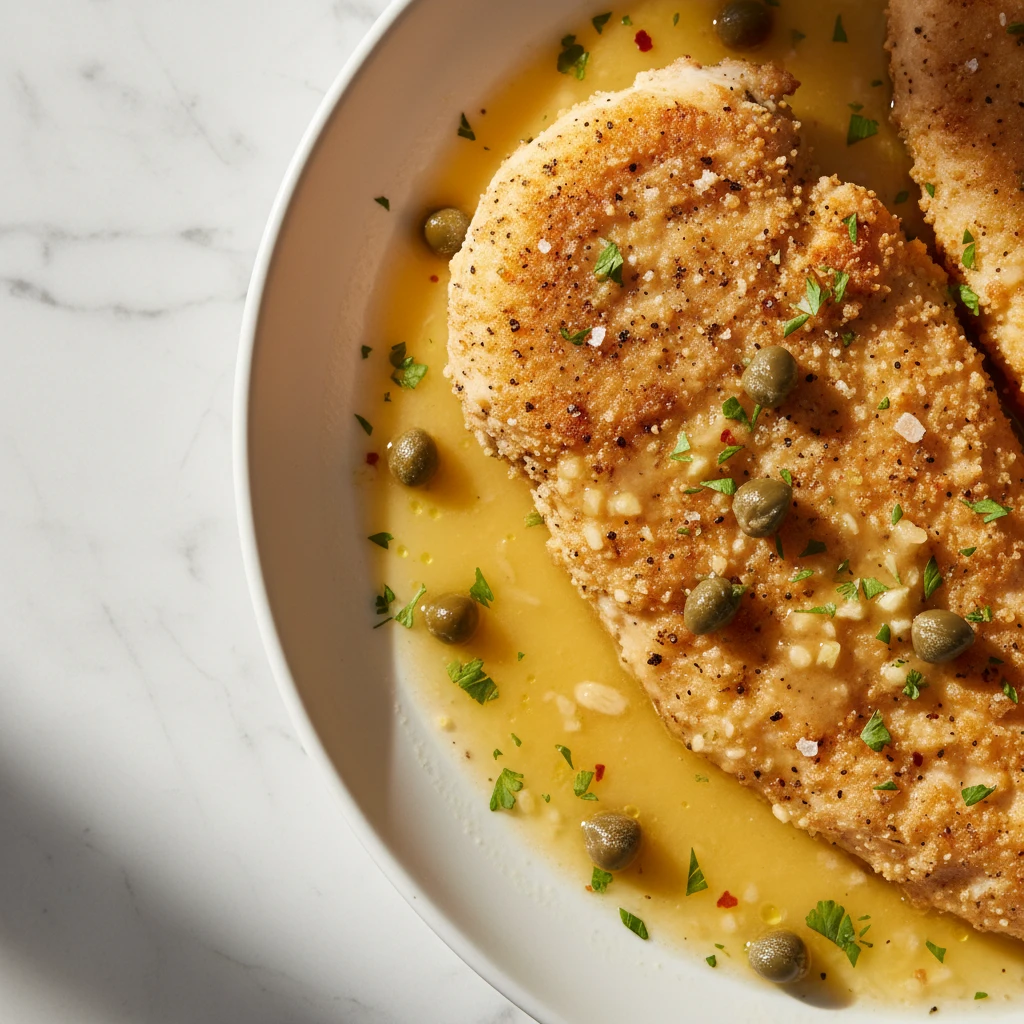
Don’t Skip the Searing: The golden-brown crust on the chicken is essential for flavor and texture. This crust comes from the flour coating and high heat—it seals the chicken and adds a satisfying crunch that contrasts beautifully with the tender, juicy interior. Medium-high heat is critical; too low and you’ll steam the chicken instead of sear it.
Use Fresh Lemon Juice: Bottled lemon juice tastes noticeably different and more artificial than fresh. Squeeze fresh lemons just before cooking for the bright, authentic flavor that defines this dish. Room-temperature lemons yield more juice; roll them on the counter before cutting.
Deglaze the Pan Properly: When you add the wine after searing the chicken, those browned bits (fond) on the bottom are pure flavor. Use a wooden spoon to scrape them up vigorously. This step adds depth to the sauce and ensures nothing is wasted.
Capers Make the Difference: Capers—brined flower buds—give piccata its signature tangy, slightly salty kick. They should be rinsed before using to avoid an overly salty sauce. If you dislike capers, use green peppercorns or fresh thyme as substitutes, but the classic dish always includes them.
Don’t Overcook the Final Simmer: Once the chicken returns to the pan in the sauce, simmer gently for only 3–4 minutes. Any longer and the chicken will dry out again, undoing all your careful pounding and searing work.
Helpful Tips: To make this dish even faster, have all ingredients measured and prepped (mise en place) before you start cooking. The actual cooking takes only 20 minutes once you begin. For a lighter version, skip the butter and use only olive oil, or reduce it to 1/2 tablespoon total. To make it heartier, serve over buttered pasta or creamy risotto. If you want extra brightness, add a splash of white wine vinegar (1 tablespoon) to the finished sauce. For meal prep, cook the chicken and sauce separately, refrigerate, and reheat gently on the stovetop before serving.
Variations and Substitutions
Veal or Pork Piccata: Substitute thin-cut veal cutlets or pork medallions (pounded to 1/4 inch) for chicken. Veal is traditional in Italian cuisine and offers a more delicate flavor. Pork works beautifully too and is often more affordable. Cook times remain the same.
White Wine Swap: If you don’t have dry white wine, use chicken broth, dry vermouth, or even a splash of apple cider vinegar mixed with a little water. Avoid sweet wines like Riesling or Moscato, which will make the sauce cloying.
Lemon Substitute: For a different citrus profile, replace half the lemon juice with fresh lime juice for a Mediterranean-Asian fusion vibe. This pairs especially well with rice instead of pasta.
Gluten-Free Coating: Replace all-purpose flour with cornstarch, rice flour, or almond flour. Each will give a slightly different texture—cornstarch creates a crispier crust, almond flour adds nuttiness. Use the same amount as the all-purpose flour.
Add Artichokes or Sun-Dried Tomatoes: Stir 1 cup marinated artichoke hearts or 1/3 cup sun-dried tomatoes (chopped) into the sauce along with the capers for extra flavor and texture.
Mushroom Piccata: For a vegetarian version, use thick slices of portobello mushroom or firm tofu pounded thin, floured, and seared the same way. The texture is surprisingly satisfying and the cooking time is identical.
Rich and Creamy: After finishing the sauce with capers and butter, add 2–3 tablespoons heavy cream or mascarpone for a silkier sauce. This makes it richer and slightly less acidic.
Anchovy Depth: Chop 2 anchovies finely and add to the garlic when making the sauce base. This adds savory depth without making the dish taste fishy—use sparingly if you’re unsure.
Serving Suggestions for Chicken Piccata
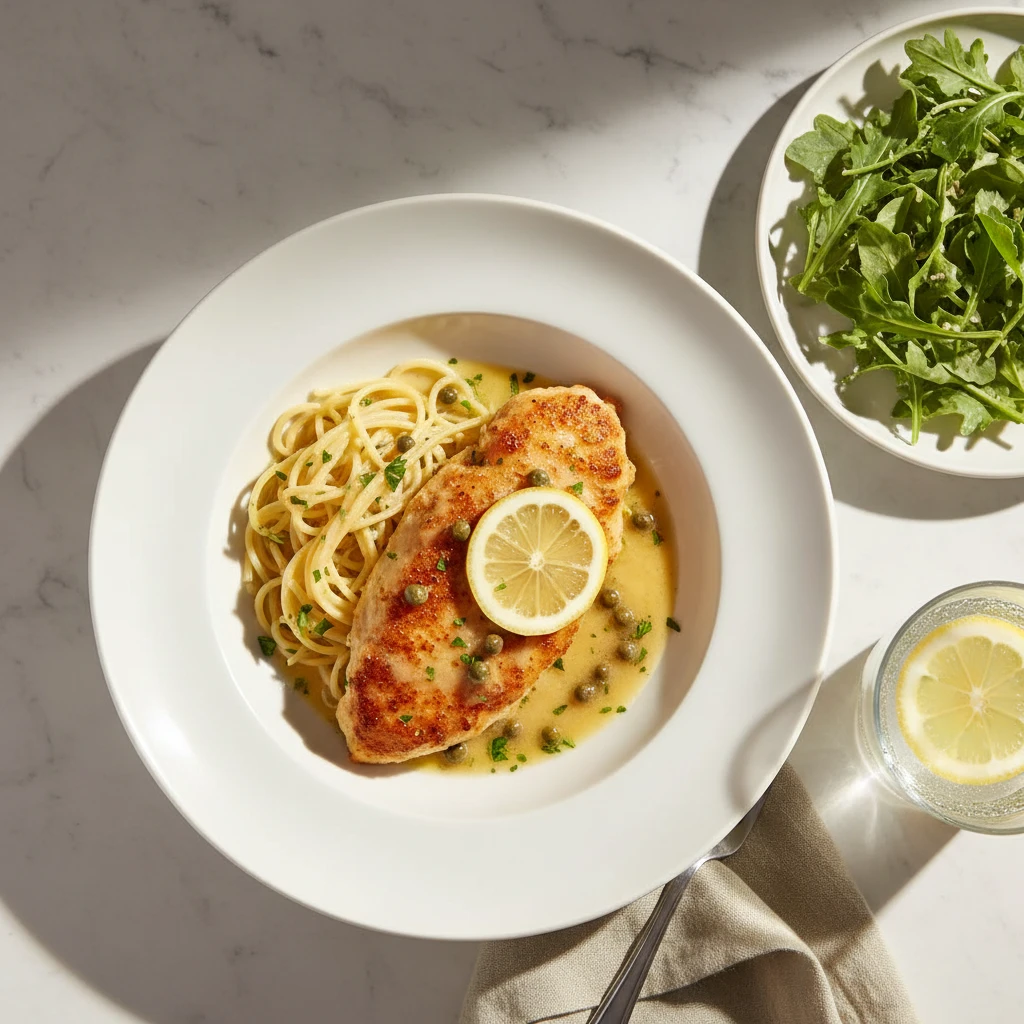
Over Pasta: Serve chicken piccata over buttered egg noodles, fettuccine, or angel hair pasta. The tender pasta soaks up the lemon-caper sauce beautifully and creates a classic Italian restaurant experience. Toss the pasta with a bit of extra sauce before plating for maximum flavor.
With Creamy Polenta: For a luxurious presentation, serve the chicken and sauce over soft, buttery polenta. The creamy cornmeal base complements the bright sauce and adds richness to the plate.
Alongside Rice or Orzo: Spoon the sauce-soaked chicken over risotto (especially lemon risotto), wild rice pilaf, or pearl couscous. These options add substance without overwhelming the delicate lemon flavors.
With Green Vegetables: Plate the chicken with steamed or roasted asparagus, broccolini, green beans, or zucchini on the side. These vegetables are light enough to pair with the bright sauce while adding color and nutrition. A drizzle of the pan sauce over the vegetables ties everything together.
Simple Arugula Salad: Serve alongside a peppery arugula salad dressed with lemon vinaigrette and shaved Parmesan. The peppery greens complement the tangy chicken beautifully and add a fresh, crisp element to the meal.
Roasted Lemon Potatoes: Pair with small roasted baby potatoes tossed with olive oil, fresh thyme, and lemon zest. The potatoes are hearty enough to anchor the plate while echoing the dish’s citrus notes.
Garlic Bread or Crusty Focaccia: Serve with warm, crusty bread to soak up every last drop of the silky lemon-caper sauce. Garlic bread or herb-brushed focaccia makes this a complete, satisfying meal.
Plating Tip: For an elegant presentation, place the pounded chicken breast slightly off-center on a warm plate. Spoon the sauce and capers around it, allowing some to pool. Top with a thin lemon slice and a small handful of fresh parsley. If serving with pasta or vegetables, arrange them artfully beside the chicken. The golden-brown chicken against the pale yellow sauce is visually stunning on a white or light gray plate.
 Save
SaveStorage and Reheating
Refrigerator Storage: Store leftover chicken piccata in an airtight container for up to 3 days. Keep the chicken and sauce together so the meat stays moist. Cool to room temperature before refrigerating to avoid condensation, which can make the coating soggy.
Freezer Storage: While chicken piccata doesn’t freeze as beautifully as some dishes due to the delicate sauce, it can be frozen for up to 1 month. Transfer to a freezer-safe container, leaving 1/2 inch of headspace. Thaw overnight in the refrigerator before reheating. The sauce may separate slightly upon thawing, but a gentle stir will recombine it.
Reheating on the Stovetop: This is the best method to preserve the chicken’s texture. Place the chicken and sauce in a skillet over medium heat, covered with a lid or foil. Heat for 5–7 minutes, stirring occasionally, until heated through. If the sauce seems too thick, add a splash of chicken broth or white wine to loosen it. Avoid high heat, which can toughen the chicken.
Reheating in the Oven: Preheat the oven to 350°F. Transfer the chicken and sauce to an oven-safe dish, cover with foil, and bake for 8–10 minutes until heated through. This gentle method works well if you’re reheating a large portion.
Microwave (Not Recommended): While possible, microwaving can unevenly heat the chicken and toughen the coating. If you must use a microwave, place the chicken in a microwave-safe dish, cover loosely with a paper towel, and microwave on 50% power for 2–3 minutes, checking halfway through.
Make-Ahead Tips: You can pound and flour the chicken up to 4 hours ahead; cover and refrigerate until ready to cook. The sauce can be made separately and stored in the refrigerator for up to 2 days, then reheated gently before tossing with freshly cooked chicken for the best texture. This is ideal for entertaining.
Frequently Asked Questions about Chicken Piccata
Can I make chicken piccata without white wine?
Yes, absolutely. Replace the white wine with an equal amount of chicken broth, vegetable broth, or a mixture of apple cider vinegar (1 tablespoon) and water to add acidity and depth. Dry vermouth also works well. The sauce will taste slightly different but still be delicious. Avoid sweet wines or regular vinegar, which will throw off the balance of flavors.
What’s the best way to pound chicken breasts evenly?
Place the chicken breast between two pieces of plastic wrap or parchment paper on a cutting board. Using a meat mallet’s flat side, start from the thickest part in the center and pound outward toward the edges with gentle but firm, even strokes. Flip and repeat on the other side if needed. Aim for 1/4-inch thickness all over. This method prevents splashing and ensures even thickness so the chicken cooks uniformly.
Can I use frozen chicken breasts for this recipe?
It’s best to use fresh or fully thawed chicken breasts for even cooking. If you have frozen chicken, thaw it in the refrigerator overnight before starting. Never pound or cook chicken straight from frozen, as it will cook unevenly and become tough. If you’re in a rush, use the quick-thaw method: seal the frozen chicken in a bag and submerge in cold water, changing the water every 30 minutes until thawed (usually 1–2 hours).
Is there a dairy-free version of chicken piccata?
Yes! Simply omit the butter or replace it with extra-virgin olive oil (use about 2 tablespoons instead of 1 tablespoon butter). The sauce will be slightly less rich and silky, but it will still taste fresh and delicious. Some cooks add a splash of olive oil at the end to add richness without dairy. This version is naturally dairy-free and still incredibly flavorful.
How do I know when the chicken is done cooking?
The safest method is to use an instant-read thermometer. The internal temperature should reach 165°F in the thickest part of the chicken. If you don’t have a thermometer, cut into the thickest part; the meat should be white throughout with no pink, and the juices should run clear. Since this recipe uses thin, pounded chicken breasts, they cook very quickly—usually 3–4 minutes per side—so monitor them closely.
Can I make this recipe with bone-in chicken thighs or breasts?
Yes, but adjustments are needed. Bone-in, skin-on pieces are thicker and will take longer to cook—about 8–10 minutes per side depending on thickness. You may want to remove the skin first or skip the flour coating for a lighter dish. The cooking method remains the same, but increase the simmering time in step 10 to 8–10 minutes to ensure the chicken is cooked through. A meat thermometer is especially helpful here.
What should I do if the sauce breaks or looks separated?
If the sauce separates or looks curdled after adding the butter, remove it from heat and whisk in 1–2 tablespoons of cold chicken broth or water off the heat. This should bring it back together. Alternatively, carefully pour the sauce into a blender, blend on low speed for a few seconds, and pour back into the pan. Avoid overheating the sauce once butter is added, as high temperatures can cause separation. Keep heat at a gentle simmer throughout.
Nutrition Facts (Per Serving)
| Nutrient | Per Serving |
|---|---|
| Calories | 285 |
| Total Fat | 12g |
| Saturated Fat | 3g |
| Trans Fat | 0g |
| Cholesterol | 98mg |
| Sodium | 620mg |
| Total Carbohydrate | 6g |
| Dietary Fiber | 0g |
| Total Sugars | 0g |
| Protein | 38g |
| Calcium (% DV) | 3% |
| Iron (% DV) | 8% |
Dietary Notes: This recipe is naturally gluten-free if all-purpose flour is replaced with cornstarch, rice flour, or certified gluten-free flour. It’s low in carbohydrates and high in lean protein, making it suitable for low-carb or keto diets. The dish is also high in Vitamin C and other nutrients from the fresh lemon juice and capers. Sodium content may be high due to capers and chicken broth; use low-sodium broth to reduce. This is a relatively light dish at about 285 calories per serving, making it appropriate for various dietary goals. Contains eggs in the flour coating (as refined wheat flour typically includes egg in processing) and may contain shellfish derivatives in some capers.
Chicken Piccata
Ingredients
- 4 boneless skinless chicken breasts (about 6 ounces each)
- 1/2 cup all-purpose flour
- 1 teaspoon salt
- 1/2 teaspoon black pepper
- 1/2 teaspoon garlic powder
- 3 tablespoons olive oil
- 2 tablespoons butter
- 1/2 cup dry white wine
- 1 cup chicken broth
- 1/3 cup fresh lemon juice
- 1/4 cup capers drained
- 3 cloves garlic minced
- 1/2 teaspoon red pepper flakes
- 2 tablespoons fresh parsley chopped
- 1 lemon sliced into thin rounds
- Salt and pepper to taste
Instructions
- Prep the chicken: Place one chicken breast between two pieces of plastic wrap on a cutting board. Using a meat mallet (flat side), pound gently and firmly from the center outward until the chicken is an even 1/4 inch thick all over. This should take 1–2 minutes per breast. Repeat with remaining breasts. Checkpoint: All chicken pieces should be roughly the same thickness so they cook evenly.
- Make the flour mixture: Pour 1/2 cup all-purpose flour into a shallow plate or wide bowl. Add 1 teaspoon salt, 1/2 teaspoon black pepper, and 1/2 teaspoon garlic powder. Stir with a fork until combined. Checkpoint: The mixture should look evenly seasoned with no lumps.
- Coat the chicken: Take one pounded chicken breast and dredge it in the flour mixture, pressing gently so the coating adheres. Flip and coat the other side. Tap off excess flour and place on a clean plate. Repeat with all chicken breasts. Checkpoint: Each piece should have a light, even flour coating with no bare spots.
- Preheat the skillet: Place a large skillet (10- to 12-inch) on the stovetop and set to medium-high heat. Add 3 tablespoons olive oil and 1 tablespoon butter. Heat for 2–3 minutes until the butter foams and the oil shimmers. Tilt the pan to coat evenly. Checkpoint: A drop of water should sizzle immediately in the hot oil.
- Sear the chicken (first batch): Carefully lay chicken breasts flat in the hot skillet, leaving about 1 inch of space between them. Do not move them for 3–4 minutes. The bottom should turn golden brown. Flip each breast and cook the other side for 3–4 minutes until golden brown. The internal temperature should reach 165°F on an instant-read thermometer. Transfer to a clean plate. Checkpoint: Both sides should have a deep golden-brown crust.
- Sear the chicken (second batch, if needed): If you have more than 2 chicken breasts, repeat step 5 with the remaining pieces, adding a bit more oil if the skillet looks dry. Transfer all cooked chicken to the plate.
- Make the sauce base: In the same skillet (do not rinse), add 3 minced garlic cloves and 1/2 teaspoon red pepper flakes. Stir constantly for 30 seconds—45 seconds until the garlic becomes fragrant and light golden. Do not let it burn. Checkpoint: You should smell a strong, pleasant garlic aroma.
- Deglaze with wine: Carefully pour 1/2 cup dry white wine into the skillet. Use a wooden spoon to scrape the bottom, loosening all the browned bits (called fond) stuck to the pan. This adds huge flavor. Let the wine bubble gently for 2 minutes until the liquid reduces slightly and smells less sharp. Checkpoint: The wine should reduce by about one-third, and most of the alcohol smell should be gone.
- Add broth and lemon juice: Pour 1 cup chicken broth and 1/3 cup fresh lemon juice into the skillet. Stir well and let simmer for 1 minute. Checkpoint: The sauce should look light yellow and smell bright and tangy.
- Return chicken to the pan: Lay all cooked chicken breasts back into the skillet, nestling them into the sauce. Simmer gently (small bubbles rising slowly) for 3–4 minutes, turning once halfway through, until the chicken is heated all the way through. Checkpoint: The chicken should feel hot when you touch it lightly with a clean finger.
- Add capers and butter: Drain 1/4 cup capers in a colander and rinse under cold water if they taste very salty. Add the rinsed capers to the skillet. Cut 1 tablespoon cold butter into small pieces and add to the sauce. Stir gently for 1 minute until the butter melts completely and the sauce becomes smooth and glossy. Checkpoint: The sauce should coat the back of a spoon and look rich and silky.
- Taste and season: Carefully spoon a tiny bit of sauce into a clean spoon, let it cool for a few seconds, and taste. Add a small pinch of salt and pepper if needed. Stir to combine. Checkpoint: The sauce should taste bright (lemony), salty (from capers and salt), and slightly peppery with no single flavor overpowering the others.
- Plate and garnish: Transfer one chicken breast to each serving plate using tongs. Spoon the sauce and capers generously over and around each piece. Sprinkle 1/2 tablespoon fresh chopped parsley on top of each plate. Lay a thin lemon slice on top or to the side as decoration. Checkpoint: The plated dish should look elegant with a light yellow sauce, visible capers, green parsley, and a yellow lemon slice.